

Mahasweta Devi: The Work of Witnessing
On Saturday, 15 August 2026, ASAP | art brought together Tathagata Bhattacharya, Sohini Chattopadhyay and Joshy Joseph for a panel discussion titled Mahasweta Devi: The Work of Witnessing, moderated by Shamya Dasgupta. Marking Mahasweta Devi’s birth centenary and silhouetted against seventy-nine years of India’s independence, the conversation approached her inimitable legacy from multiple vantage points. It traced a complex figure whose literary, political and intellectual labour persistently sought to rewrite prevailing systems of power, representation and justice.
Mahasweta Devi’s work refused the separation of literature from lived realities, insisting on writing as a form of active witnessing. Through the course of her life, she returned insistently to the intersecting possibilities of fiction, reportage and political testimony, producing interfaces through which these forms could be contested and reimagined. Over time, however, the ‘idea of Mahasweta’ has been retrospectively consolidated into a more singular public image—one that is easier to categorise and apprehend. The distance between the radicality of her work and its subsequent canonisation, then, is worth attending to: What happens when a writer who strove to unsettle dominant structures comes to be viewed as a fixed cultural figure? What becomes more legible in the process, and what falls away?
In this edited conversation, the panelists approached these tensions through their distinct relationships with Devi and her legacy—whether it was Tathagata Bhattacharya’s recollections of his grandmother, Joshy Joseph’s films and travels with her, or Sohini Chattopadhyay’s biographical research. Together, they shed light on a person whose commitments and solidarities took shape through fierce alliances, activism and forms of knowledge she helped bring into view. Devi’s engagement with Adivasi communities was not only deeply tied to her political convictions but also to the contradictions of her own position as a non-tribal, bhadralok (a nineteenth-century Bengali term for the Savarna/ upper-caste, intellectual elite) writer. The same attention to positionality extends to how her life and ideas have been preserved and transmitted. Devi’s work as the editor of Bortika, in particular, complicates the tendency of remembering her solely as an author; instead it invites us to look closely at her role in creating spaces for other voices, especially those of the marginalised.
To read Devi today is to return to the enduring contemporaneities that her texts place before us: Aranyer Adhikar (Rights over the Forest, 1977) asks us to reconsider narratives of Adivasi resistance through the figure of Birsa Munda; “Draupadi” (1978) continues to resonate against histories of militarisation and sexual violence; “Rudali” (1979) remains attentive to the intersections of caste, gender, labour and the commodification of grief. Such a spectrum asks us to hold together the possibilities and limits of writing and of socio-political advocacy. Rather than resolve these dichotomies, we might instead resist the impulse to reconcile them, allowing their meanings to shift with each reading. Perhaps now, we inherit Devi not with the instinct to preserve but to highlight the complexities within her subjectivity and her method, and to ask what her continued presence and citation across disciplines and institutions makes visible—or leaves behind—as well as what her particular practice of witnessing might demand of us at the present moment.
Joshy Joseph is a filmmaker and writer whose work explores the intersections of the personal and the political. He has received six National Film Awards for his films and the National Film Award for Best Writing on Cinema. Marking the centenary of Mahasweta Devi, he is currently working on a rollercoaster memoir film, Writer-in-Residency.
Sohini Chattopadhyay is a writer, National Award winning film critic and teacher. Her writing has been translated into German, Tamil, Hindi, Urdu and Bengali. Her book The Day I Became a Runner (2023) offers a women’s history of the republic through the lens of sport. She is working on Mahasweta Devi’s biography.
Tathagata Bhattacharya is a journalist and sustainability expert who divides his time between the plains of Delhi and the mountains of Uttarakhand. He has over two decades of experience in writing and reporting as well as editorial management of diverse teams and media verticals. His current obsession is the mainstreaming of climate change–friendly habitats. He is the only child of cult Bengali writer Nabarun Bhattacharya and the only grandchild of noted playwright-director Bijon Bhattacharya and writer-activist Mahasweta Devi. General Firebrand and His Red Atlas (2024) is his first novel.
Shamya Dasgupta is a sports journalist, currently working as Deputy Editor with ESPNcricinfo. He is also a cinema aficionado and the editor-curator of Unmechanical: Ritwik Ghatak in 50 Fragments (2025) and the author of Don't Disturb the Dead: The Story of the Ramsay Brothers (2017). He has authored two sports books—Cricket Changed My Life: Stories of Hope and Despair from the IPL and Elsewhere (2014) and Bhiwani Junction: The Untold Story of Boxing in India (2012). He has also translated Mahasweta Devi's Laayl-e Aasmaner Aayna into English as Mirror of the Darkest Night (2019). He lives and works in Bengaluru.
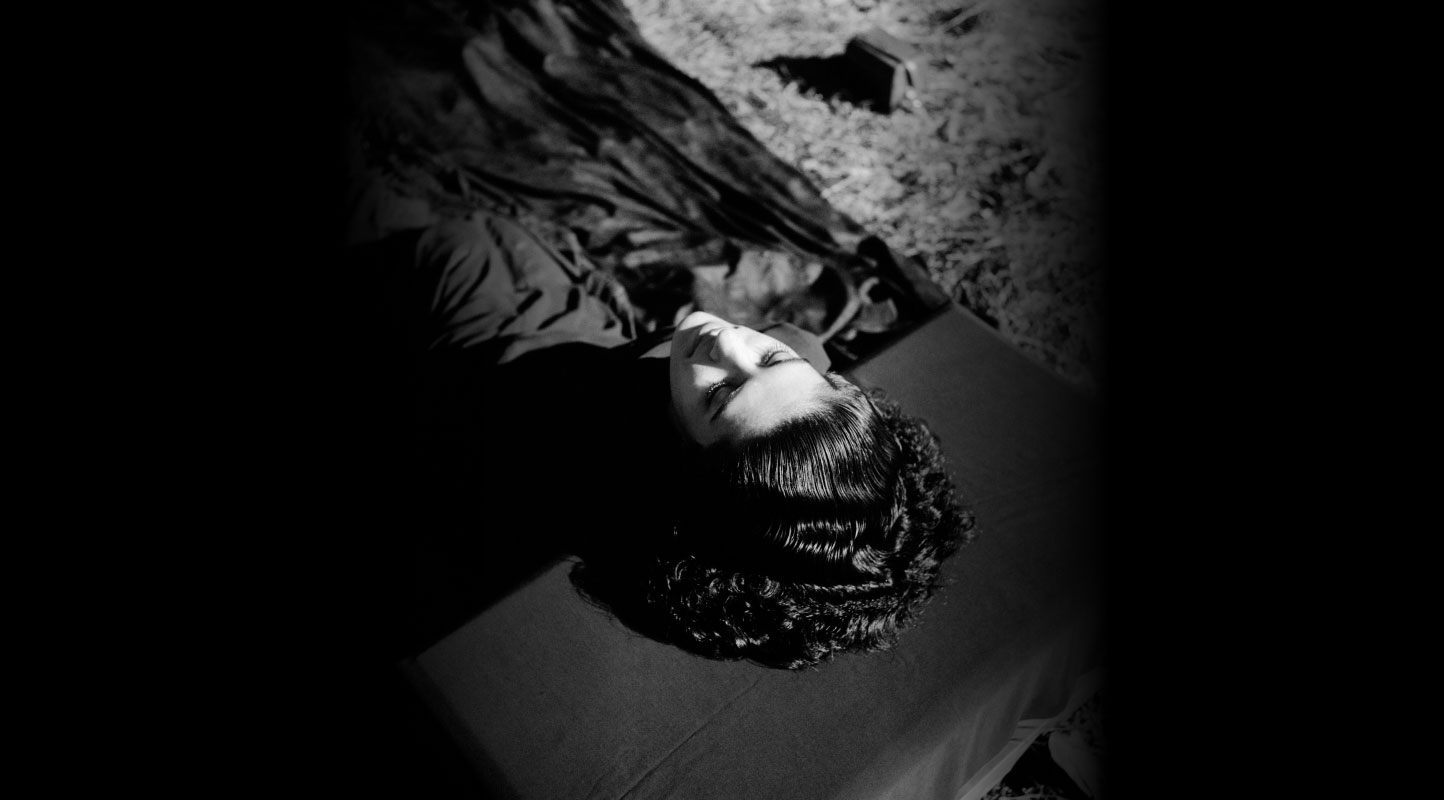
(Featured image: Photograph of Mahasweta Devi by Raghu Rai. Image courtesy of Shamya Dasgupta.)
Recorded on 15 August 2026.
To learn more about literary and cultural figures with sustained activist practice, read Ankan Kazi’s review of Akshay Indikar’s documentary portrait of Marathi writer and critic Bhalchandra Nemade, Sukanya Deb’s exploration of Parijat’s life and work through photographs from the Feminist Memory Project (2018–), K. Sajaya’s tribute to G.N. Saibaba and Shaon Basu’s reflections on Somnath Hore’s Tebhaga Diary.
To learn more about Bengali artists’ engagement with socio-political realities, caste-class struggles and lives of marginalised communities in post-independent India from 1950s-80s, read Shamya Dasgupta’s conversation with Aparajita Roy Sinha, Joy Bimal Roy and Rinki Roy Bhattacharya on Bimal Roy’s legacy, Ankan Kazi’s two-part interview with Omar Ahmed on Indian Parallel Cinema and conversation with Shamya Dasgupta and Moinak Biswas on Ritwik Ghatak’s oeuvre, Koyna Tomar’s reflections on Ritwik Ghatak’s Amar Lenin (1970) and Ananya Dasgupta’s essay on the exhibition exploring the family archive of Arundhati Devi.