

On Bimal Roy: In Conversation with Aparajita Roy Sinha, Joy Bimal Roy and Rinki Roy Bhattacharya
Auteur filmmaker Bimal Roy, who brought an incisively neorealist sensibility to Hindi cinema, turned his undivided attention to caste, rural poverty and the social inequalities shaping post-independence India. Rather than romanticising idyllic pastoral life, he lit his frames with restraint, favouring an understated visual language that emphasised lived realities. As an avid reader, he engaged deeply with literature, adapting works such as Sarat Chandra Chattopadhyay’s Devdas (1917) with great care, while also moving between social drama, romance and popular cinema. Films such as Madhumati (1958) and Bandini (1963) held popular appeal alongside moral and emotional complexity, while his mentorship of filmmakers including Hrishikesh Mukherjee and Gulzar extended his influence beyond his own filmography. Today, this body of work is understood as an important precursor to the socially conscious Parallel Cinema, which also explains the continued relevance of a nearly eight-decade-old oeuvre. Thus, in September 2025, Bimal Roy’s Do Bigha Zamin (1953) had its world premiere in a new 4K restoration at the 82nd Venice International Film Festival. Led by The Criterion Collection and Janus Films in collaboration with the Film Heritage Foundation, L’Immagine Ritrovata, Resillion and the Bimal Roy family, this retrospective brings renewed recognition of of Roy's work and a tangible marker of how alive his legacy remains—one built on a life-long examination of a nation’s uneven struggle towards a more equitable society.
In this edited conversation, Bimal Roy’s children, Aparajita Roy Sinha, Joy Bimal Roy and Rinki Roy Bhattacharya speak about the memories and legacy of their father as well as the determining role of their mother, photographer Manobina Roy. In the first part of this conversation, Aparajita Roy Sinha and Joy Bimal Roy recall growing up within a vast family shaped by cinema and the community that gathered around them, revisiting some of their favourite—and undeniably classic—films, including Do Bigha Zamin, Devdas (1955), Madhumati and Bandini. In the second part, Rinki Roy Bhattacharya offers an intimate portrait of her father, resisting the easy contours of hagiography through her own long engagement with his life and work. Her recent publication, Suhana Safar: Memories on the Path Forward (2026) chronicles the near three-decade history of the Bimal Roy Memorial Committee (BRMC), which she founded to preserve and celebrate his enduring influence—one that continues to extend vividly beyond the films themselves. Many creative, almost familial, communities that formed around Roy’s films and his home now offer another way of thinking about his artistic vision, which was never solely about the figure of the auteur in isolation but about a network of relationships and forms of trust that sustained and nurtured ingenuity.
Bimal Roy is widely regarded as one of the greatest Indian filmmakers, mainly active in the 1950s and 1960s, and is best known for his realistic, socially-conscious films like Bandini (1963), Sujata (1959), Do Bigha Zamin (1953) and Parineeta (1953) as well as popular films like Madhumati (1958) and Devdas (1955), all of which are classics of Hindi cinema. Roy won two National Awards, an International Prize at the Cannes Film Festival and eleven Filmfare awards, besides other recognitions. No one has won more Filmfare awards for best director than Bimal Roy (on seven occasions), and he has the distinction of winning the award each time he was nominated and in three consecutive years on two occasions (1954-56 and 1959-61).
Rinki Roy Bhattacharya is a writer, editor, critic and has made a documentary film, Char Diwari (1985), on domestic violence in India. Her books include Suhana Safar: Memories on the Path Forward (2026), Suhana Safar: The Journey of Bimal Roy's Madhumati (2024), Bimal Roy's Madhumati: Untold Stories from Behind the Scenes (2014), Janani: Mothers, Daughters, Motherhood (2006), Bengal Spices (2004), Behind Closed Doors: Domestic Violence in India (2004), Bimal Roy: A Man of Silence (1994) and Cuisine Creations from Bengal (1993).
Aparajita Roy Sinha grew up around cinema and developed a love for it early. She started the Brief Encounters Film Club (2022) in Mumbai, which followed her co-founding of Moving Images Film Club (2004) as well as a cultural organisation, Sanskar (1991) in Hyderabad. She has also worked as a film subtitler, first as part of Nasreen Munni Kabir’s team and later independently, including on her father Bimal Roy’s first Bengali feature film, Udayer Pathey (1944).
Joy Bimal Roy began his career as an assistant director to Shyam Benegal, then moved through music and satellite TV before turning to design: interiors, sarees and weddings. Roy has been recently featured in Unmechanical: Ritwik Ghatak in 50 Fragments (2025). Now writing his second book, he has previously authored Ramblings of a Bandra Boy (2023) and made the film Remembering Bimal Roy (2007).
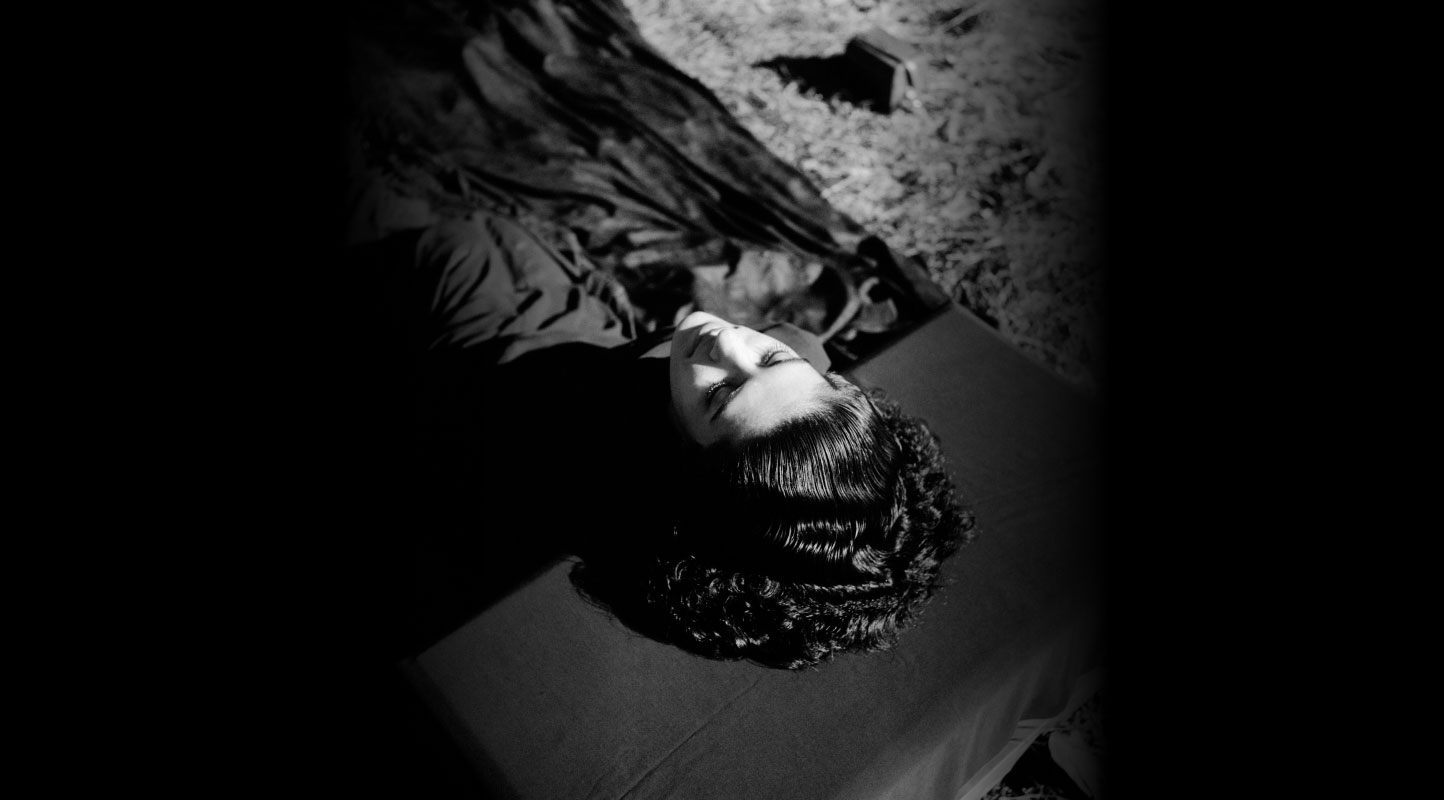
(Featured image: Portrait of Bimal Roy by Manobina Roy. [Between Bombay and Mahabaleshwar, 1963/64.] Image courtesy of Joy Bimal Roy.)
Recorded on 27 June 2026
To learn about Indian Parallel Cinema, read Koyna Tomar’s essay on Ritwik Ghatak’s Amar Lenin (1970), Sanjita Majumder’s observations on Govindan Aravindan’s Thamp̄ (The Circus Tent, 1978), Akshay Shelar’s reflections on Shyam Benegal’s Charandas Chor (1975) and Kshiraja’s review of John Abraham’s Amma Ariyan (Report to Mother, 1986).
To learn more about Hindi cinema of 1950s-70s, read Madhubanti De’s two-part essay on Samhita Sunya’s book Sirens of Modernity: World Cinema Via Bombay (2022) and Ankan Kazi’s review of Salma Siddique’s book Evacuee Cinema: Bombay and Lahore in Partition Transit, 1940–1960 (2022).