


Indian Parallel Cinema and the Global South: In Conversation with Omar Ahmed
Film curator and scholar, Omar Ahmed’s book The Revolution of Indian Parallel Cinema in the Global South (1968–1995): From Feminism to Iconoclasm (2025) offers a valuable challenge to the Eurocentric genealogy of film modernism by tracing the emergence of independent filmmaking in India, much of which, although enabled by state financing bodies, constituted a major radical film movement of the postcolonial Global South. While Ahmed identifies several significant precursors, including certain films, film-society movements and politically subversive experiments in theatre such as the Indian People’s Theatre Association (IPTA), he locates the Parallel Cinema “revolution” in the wake of the Manifesto of the New Cinema Movement (1968), authored by Arun Kaul and Mrinal Sen. The writing of this manifesto was followed in 1969 by an informal triptych of films that responded to the political ferment gripping India at the time: Sen’s Bhuvan Shome, Mani Kaul’s Uski Roti and Basu Chatterjee’s Sara Aakash. All three were produced with support from the Film Finance Corporation (FFC) and photographed by KK Mahajan, whose work was crucial to the development of a distinctive variation on the direct cinematic image within Indian Parallel Cinema. In this regard, Bhuvan Shome is significant because it exemplifies a new cinematic syntax emerging at the intersection of institutional support, political rupture and formal experimentation, one which continues to have resonance today. In fact, in Anjan Dutt’s recent film Chaalchitra Ekhon (2024), he recounts his experience of working with Mrinal Sen for the first time in the 1981 film Chaalchitra as a young actor. The 1981 Chaalchitra's cinematographer was Mahajan, who appears in a slightly fictionalised form in the newer film, played by the actor Suprobhat Das.
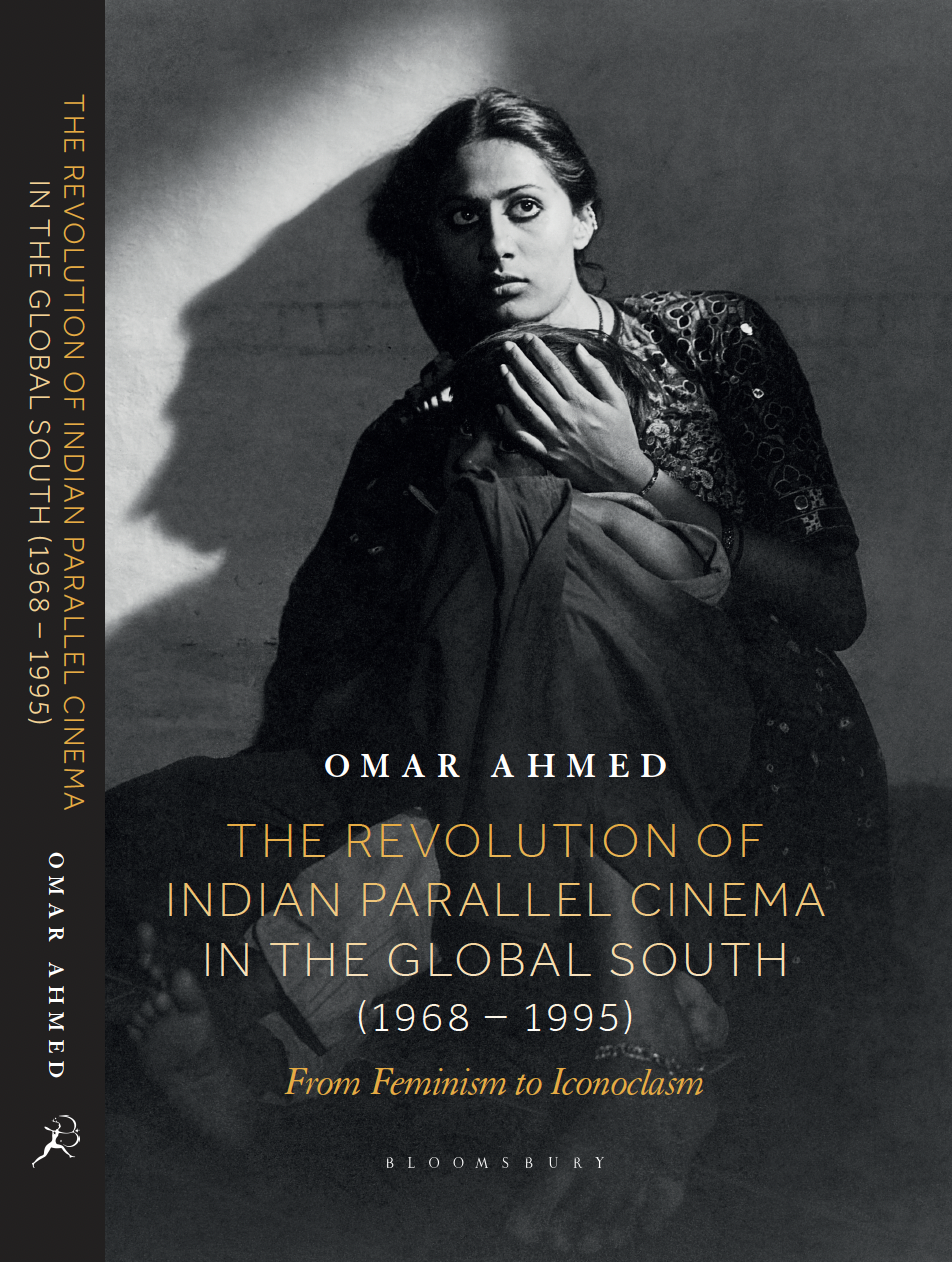
Rather than presenting Parallel Cinema as a homogeneous movement associated primarily with figures such as Satyajit Ray, Shyam Benegal or Mrinal Sen, Ahmed maps its changing political and aesthetic formations—from its origins in the late 1960s, through Emergency and its institutional and commercial consolidation in the 1980s, to its decline amidst liberalisation, the rise of Hindutva politics following the Babri Masjid demolition in 1992 and the increasing dominance of Bollywood. Further, the book approaches Parallel Cinema as a historical formation shaped not only by the distinctive visions of individual filmmakers but also by changing structures of production, financing and patronage. By also considering regional language films, the book goes beyond the languages of Hindi or English, which are traditionally held to be more "national" than other Indian languages. Ahmed is particularly attentive to the resourcefulness of filmmakers such as Shyam Benegal, who sought private financing through his background in advertising and also crowd-sourced to realise some of his projects, revealing the movement’s dependence on and attempts to work beyond the institutional frameworks that had initially enabled it.
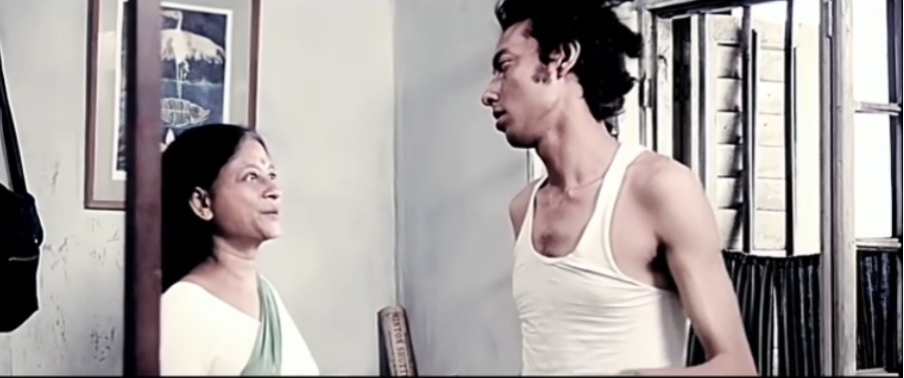
The book contains several immersive readings of landmark films emerging from this canon, such as Uski Roti, Ketan Mehta’s Mirch Masala (1987) and John Abraham’s Amma Ariyan (Report to Mother, 1986), which sought to develop alternative ways of representing marginalised voices and experiences in postcolonial India. Although often framed by artists that did not belong to such groups, these films are attempts to develop alternative modes of historical representation, foregrounding questions of gender, caste, class, rural life, political violence and subaltern worldviews. These projects often relied on highly sophisticated cinematic forms, drawing not only on experiments across the Global South but also on the work of politically committed artists from Europe and the United States, which partly explains, with a few exceptions, why so many of these films failed to attract wide or mass audiences.
In this edited conversation, Ahmed speaks about thinking through the relationship between cinematic form and political representation, and how formal experimentation is not merely a departure from the conventions of mainstream cinema but a means of challenging dominant ways of seeing, organising and narrating social reality.
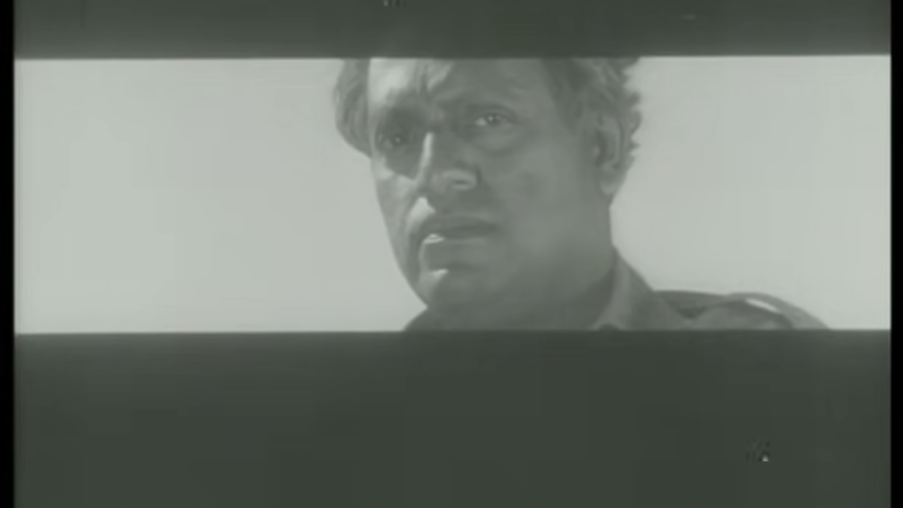
Ankan Kazi (AK): You have pointed to the damage caused by false hierarchies between Indian popular cinema and its arthouse alternatives when there were regular exchanges in ideas, personnel and practices. Do you see mainstream Indian cinema today as bearing any traces of the Parallel Cinema legacy? Or is this trend largely confined to film festivals in Europe or America, where funding sources for such films tend to originate in lieu of the relative lack of funding from bodies like the National Film Development Corporation (NFDC)?
Omar Ahmed (OA): I think the question of regular exchanges and just how porous the boundaries between Parallel Cinema and the mainstream were during the period of the Parallel Cinema movement remains largely unexplored. If we take the critical moment of 1968–69, for example, Parallel Cinema is clearly anchored in films such as Bhuvan Shome and Uski Roti, which retrospectively form the core of its canon. Yet from this period onwards and well into the 1980s, we can identify numerous examples of mainstream films that bear the influence of Parallel Cinema. Yash Chopra’s Ittefaq (1969) is a case in point: a songless genre film featuring major stars, something highly unusual for its time. The question of how we define the Parallel Cinema canon and the criteria used to determine it remains ambiguous, unwritten and in flux; arguably, it is still unclear what the canon actually is. Satyajit Ray’s Aranyer Din Ratri (Days and Nights in the Forest, 1970) was also released in 1969, as were Louis Malle’s documentary films on India. In addition, the work of Merchant Ivory in the 1960s, including films such as The Guru (1969), has largely been excluded from the canon, although there are certainly grounds on which one might argue for its inclusion. In relation to contemporary mainstream Indian cinema, the spirit of Parallel Cinema is undoubtedly present in the wave of new Indian independent cinema that emerged from around 2010 onwards, with filmmakers such as Anurag Kashyap and Dibakar Banerjee among others.
The anti-establishment impulses, aesthetic innovations and periodic incursions of the mainstream recall aspects of Parallel Cinema, although it is important to recognise that the historical and industrial contexts are entirely different. It is perhaps among independent and avant-garde filmmakers working on the periphery such as Amit Dutta, Gurvinder Singh, Chaitanya Tamhane, Anup Singh, Rajat Kapoor and more recently, Payal Kapadia, that we see a more explicit acknowledgement of the tradition, lineage and influence of Parallel Cinema. In the case of Kapadia, it is also important to note that her mother, Nalini Malani, is a significant modern Indian artist who played a foundational role in the emergence of contemporary modernism in India, and Kapadia’s links to the avant-garde and the work of Mani Kaul and Kumar Shahani may therefore have been absorbed less directly but more through this artistic lineage. Kapadia’s most recent, award-winning film, All We Imagine as Light (2024), clearly shows influences from European cinema, yet the presence of Kaul and Shahani lingers unmistakably. That said, she has developed a distinctive personal style, which, while deeply tactile and sensorial, is more broadly connected to the avant-garde tradition in Indian cinema, one that was never confined solely to Parallel Cinema.
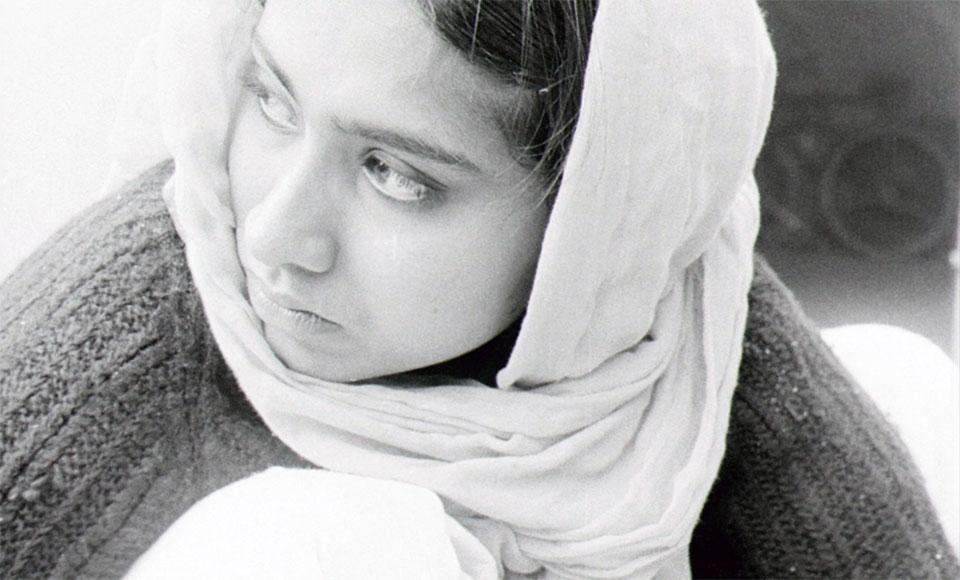
AK: I was intrigued by your attempt to include regional cinema within the rubric of Indian Parallel Cinema, when conventionally some scholars see these as expressing various degrees of alternative or sub-nationalism(s). How do their various trajectories align with the larger scheme of Indian cinema in your view?
OA: I think it is particularly interesting, with the benefit of hindsight, to revisit the moment of Parallel Cinema and recognise it as a much broader national movement with strong regional influences. This feels especially significant in light of the contemporary shift in how Indian cinema is defined and perceived, given that much of today’s innovation and creativity has increasingly emerged from outside Bombay, particularly from the southern regions. It is evident that the richness of Parallel Cinema was deeply rooted in the Kannada, Malayalam, Bengali and Tamil film industries. It was within these contexts that many of the most imaginative and politically engaged films were produced. The regional achievements of Parallel Cinema served to reiterate and amplify an alternative history of Indian cinema, one in which regional film industries had long played a central role in shaping Indian cinema as a whole.
My decision to foreground regional cinemas within a history of Parallel Cinema also stems from a counter-hegemonic ideological position, aimed at unsettling the monolithic and linear narratives through which Indian cinema has often been written. That said, one could just as readily construct discrete histories of Malayalam Parallel Cinema or Bengali Parallel Cinema. I would nevertheless argue that these regional formations still belong to the broader ‘church’ of Parallel Cinema. While regional specificities and divergences certainly exist, including for instance, the vehemently anti-caste themes that characterise many regional Parallel Cinema films, these differences ultimately enrich rather than fragment the movement, underscoring its complexity and national scope.
AK: You have written how Tamil filmmakers were among the last to join the Parallel Cinema wave due to the influence of popular film stars in the industry. There is, however, an alternate narrative presented by scholars such as MSS Pandian that explores how Tamil cinema is committed to anti-caste and politically emancipatory ideas through the language of popular filmmaking—a mode that is still in evidence. Is this something that can potentially complicate the debate between a politics of form and critical subjectivity, especially for a mass audience that is potentially uninitiated in modernist debates on form?
OA: What you have touched upon is arguably a blind spot for me. I did not have the opportunity to visit India to research more on this particular aspect of Parallel Cinema and had to suffice with what secondary materials I could access. I do agree with scholars on a Tamil cinema committed to a didactic political cinema that is not strictly confined to alternative, independent films. This alternate narrative significantly complicates the debate between the politics of form and critical subjectivity. Scholars like MSS Pandian show that Tamil cinema’s political work did not depend on modernist or parallel forms but was embedded in popular idioms such as melodrama and stars that were palatable to mass audiences. Rather than seeing popular form as ideologically compromised, this perspective suggests that political critique, whether it is anti-caste, Dravidian or anti-Brahminical, can be articulated through familiar forms, not in opposition to them.
The second part of this conversation will delve into Ahmed’s observations on global influences in the Indian Parallel Cinema movement and how it is positioned within Indian cinema as a curatorial intervention in contemporary international film festivals.
Omar Ahmed is a freelance scholar, author and film curator from Manchester, UK. He completed his PhD in Screen Studies at the University of Manchester in 2019. He is the author of The Revolution of Indian Parallel Cinema in the Global South (1968–1995): From Feminism to Iconoclasm (Bloomsbury, 2025), the first monograph on RoboCop (Auteur/Liverpool University Press, 2018) and Studying Indian Cinema (Auteur/Liverpool University Press, 2015), alongside book chapters on Indian cinema, including contributions on Ramesh Sippy’s Sholay (1975) and Shyam Benegal. He has curated programmes for HOME, Manchester, a retrospective on Smita Patil at the Leeds International Film Festival (2024), and landmark seasons on Indian Parallel Cinema at the Barbican Centre, London (2024) and Il Cinema Ritrovato, Bologna (2022). Ahmed is the co-founder of The Cloud Door, the first boutique home video label dedicated to South Asian cinema. He is currently writing a book on Mani Kaul's Uski Roti (1969), which will be published by Bloomsbury as part of the BFI Film Classics series, and has been writing on Indian Cinema on his website Movie Mahal since the early 2000s.

To learn more about Indian Parallel Cinema, read Arindam Sen’s essays on Mani Kaul’s Desert of a Thousand Lines (1981), and Dhrupad (1982), Akshay Shelar’s review of Shyam Benegal’s Charandas Chor (1975), Kshiraja’s article on John Abraham’s Amma Ariyan (Report to Mother, 1986) and Satyavrat KK’s mapping of BV Karanth’s oeuvre.
To learn more about regional Indian cinema, read Steevez’s essay on Tamil political cinema and reviews of films from PK Rosy film festival (2025), Sumaiya Mustafa’s reflections on Arun Kathick’s Nasir and Samuvel Arputharaj’s Manjolai, and Satyavrat KK’s mapping of the decline of Bengaluru's Kannada Film Industry and the evolution of cinema in Karnataka.