

The Charge of the Political
On Saturday, 14 February 2026, ASAP | art organised a panel discussion with Shamya Dasgupta and Moinak Biswas, moderated by Ankan Kazi, on Dasgupta’s edited volume of writings, titled Unmechanical: Ritwik Ghatak in 50 Fragments (2025). Ritwik Ghatak’s temperament and unconventional aesthetic response to his present—a period of transition from a colonised to an independent nation with the scars of Partition and a failed revolution—was often considered baffling and has been marked by preconceived notions. Instead, the book provides a rare glimpse into the life of the renowned Bengali filmmaker.
The 1940s was a formative decade in Ghatak’s life and a particularly violent and transformative moment in Indian and South Asian history. What concerned artists like Ghatak, who was at the time associated with the left progressive movement in Bengal, especially through the Communist Party’s cultural front, the Indian People’s Theatre Association (IPTA), was how to react and respond to these historical events and find a form to describe what he saw and felt, instead of registering passive acceptance. As some writers on Ghatak often contend, Ghatak’s art was provoked by an increasing sense of denying or failing to accept the Partition of Bengal in 1947. And, in fact, after the 1971 Bangladeshi liberation war, Ghatak shot Titas Ekti Nadir Naam (A River Called Titas, 1973) in Bangladesh, featuring a primarily Bangladeshi cast and produced by Dhaka-based Habibur Rahman Khan. These inflections find new resonance in the present moment, insisting on shared cultural legacies; as Khan says in his chapter in the book: “If Ritwikda had been alive, I would have wanted him to direct another film for me. About the death of democracy in Bangladesh, my Bangladesh, his Bangladesh.”
In this edited conversation, the participants discuss how failure seems to have persisted in the lives of Ghatak and his friends and contemporaries, for instance, Chittaprosad and Ramkinkar Baij as well as their counterparts in Dhaka such as Zainul Abedin or Qamrul Hassan; the thematic of despair in Ghatak’s works; his participation in and negotiation with Indigenous tribes in Bihar, Jharkhand and western Bengal, mediated partly through anthropology and its ideals from the lens of Bhadralok (upper-caste, upper-middle class Bengali genteel) romantics; and the centrality of the figure of the refugee.
Shamya Dasgupta is a sports journalist, currently working as deputy editor with ESPNcricinfo. He is also a cinema aficionado and the editor-curator of Unmechanical: Ritwik Ghatak in 50 Fragments (2025) and the author of Don't Disturb the Dead—The Story of the Ramsay Brothers (2017). He has authored two sports books: Bhiwani Junction—The Untold Story of Boxing in India (2012) and Cricket Changed My Life: Tales of Hope and Despair from the IPL and Elsewhere (2014). He has also translated Mahasweta Devi's Laayl-e Aasmaner Aayna into English as Mirror of the Darkest Night (2019). He lives and works in Bengaluru.
Moinak Biswas is Professor of Film Studies and the initiator of The Media Lab at Jadavpur University, Kolkata. He writes on Indian cinema and culture. Among his publications are Apu and After, Revisiting Ray's Cinema (2005), Chaplin (1997, 2000) and Drishyantar parba (2026). He edits the Journal of the Moving Image and the Bengali little magazine Kolkata 21. He has written and co-directed the award-winning Bengali feature film Sthaniya sambaad (2010). His video installation Across the Burning Track was commissioned for the 11th Shanghai Biennale (2016). More recently, he has made a documentary on Partha Chatterjee, PC: Calcutta New York Kolkata (2025).
Ankan Kazi is a writer, translator and researcher. He has a Ph.D. from Jawaharlal Nehru University’s Centre for English Studies, and is currently working as a researcher and curator for DAG Museums, for which he has led curatorial projects, exhibitions and arts engagement programmes in Delhi, Kolkata and Mumbai. His writings have appeared in publications including The Wire, Caravan, The Indian Express, Serendipity Arts, ASAP | art and PIX.
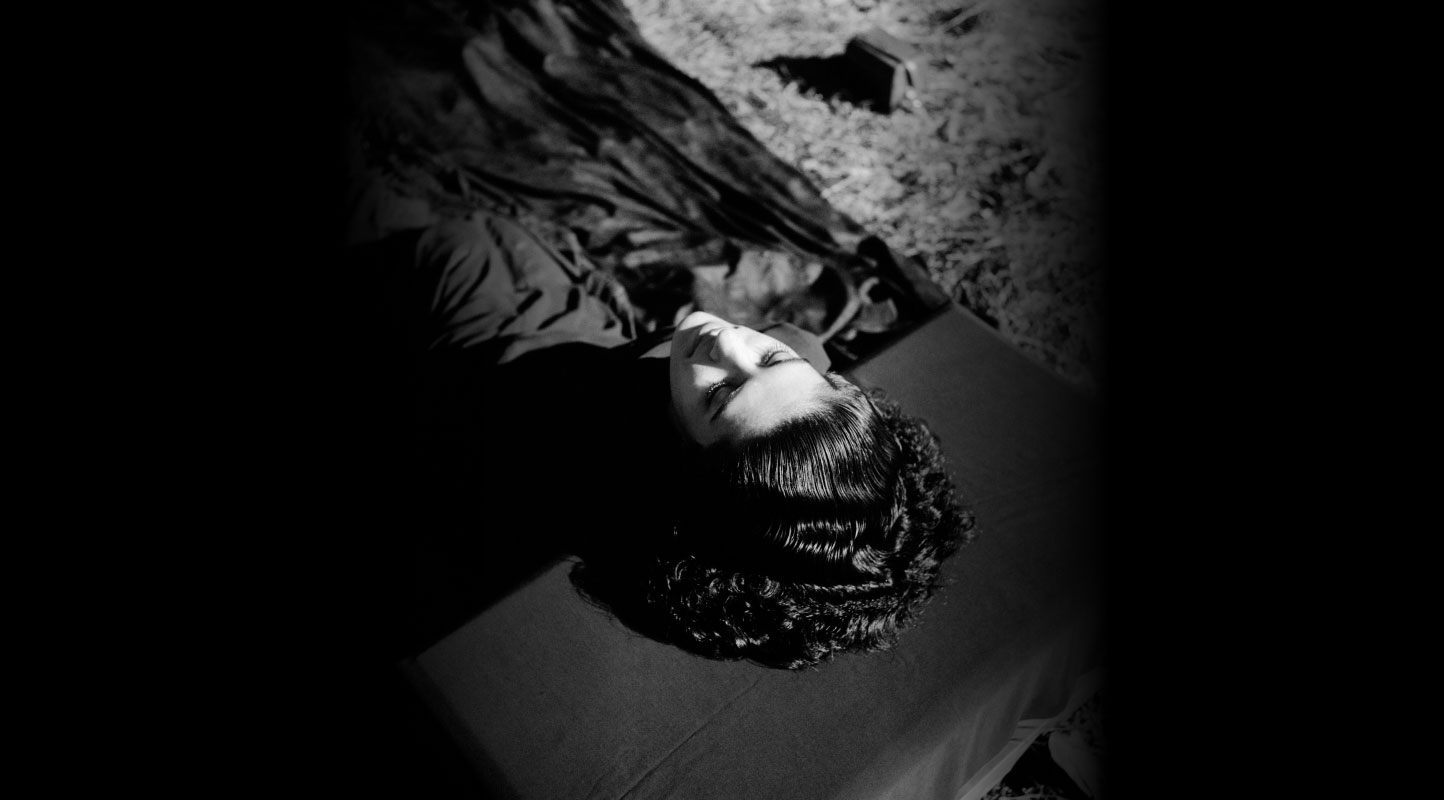
(Featured image: Illustrations from Unmechanical: Ritwik Ghatak in 50 Fragments [Westland Non-Fiction, 2025]. Images courtesy of the publisher.)
Recorded on 14 February 2026.
To learn more about Ghatak and his legacy, read Koyna Tomar’s essay on Ghatak’s Amar Lenin (1970), an online public talk by Ashish Rajadhyaksha as he discusses his book, John–Ghatak–Tarkovsky: Citizens, Filmmakers, Hackers (2023), Ankan Kazi’s essay on In Search of Ajantrik (2023) by Meghnath, Kshiraja’s reflections on John Abraham’s Amma Ariyan (1986) and Arindam Sen’s two part essay on the influence of Dhrupad on Mani Kaul.
To learn more about left politics during the period of decolonisation, read Shaon Basu’s reflections on Somnath Hore’s Tebhaga Diary, Ankan Kazi’s observations on Sohail Akbar’s essay “Modern Sensibilities: An Exploration of the Early History of the Nation through Personal Photographs” and his translation from Bengali to English of Siddhartha Ghosh’s interview with Sunil Janah, read Fathimah Fildzah Izzati’s essays on Bachtiar Siagian’s Turang (Comrade, 1957) and the afterlives of Indonesia’s Lekra as well as Natasha Gasparian’s reflections on Johan Grimonprez’s Soundtrack to a Coup d’État (2024).
To learn more about responses to the aftermath of the Partition in Bengal and the formation of Bangladesh, read Sukanya Deb’s essay on Naim Mohaiemen’s presentation from his book Bengal Photography's Reality Quest (2024) and Ankan Kazi’s essays on the photography of Sayeeda Khanum, on the emergence of short films in Bangladesh as alternative cinema and his curated album featuring images of the Mukti Bahini from the collection of Kazi Anirban.