

The Weight of the River: Jafar Muhammad’s Pankauri
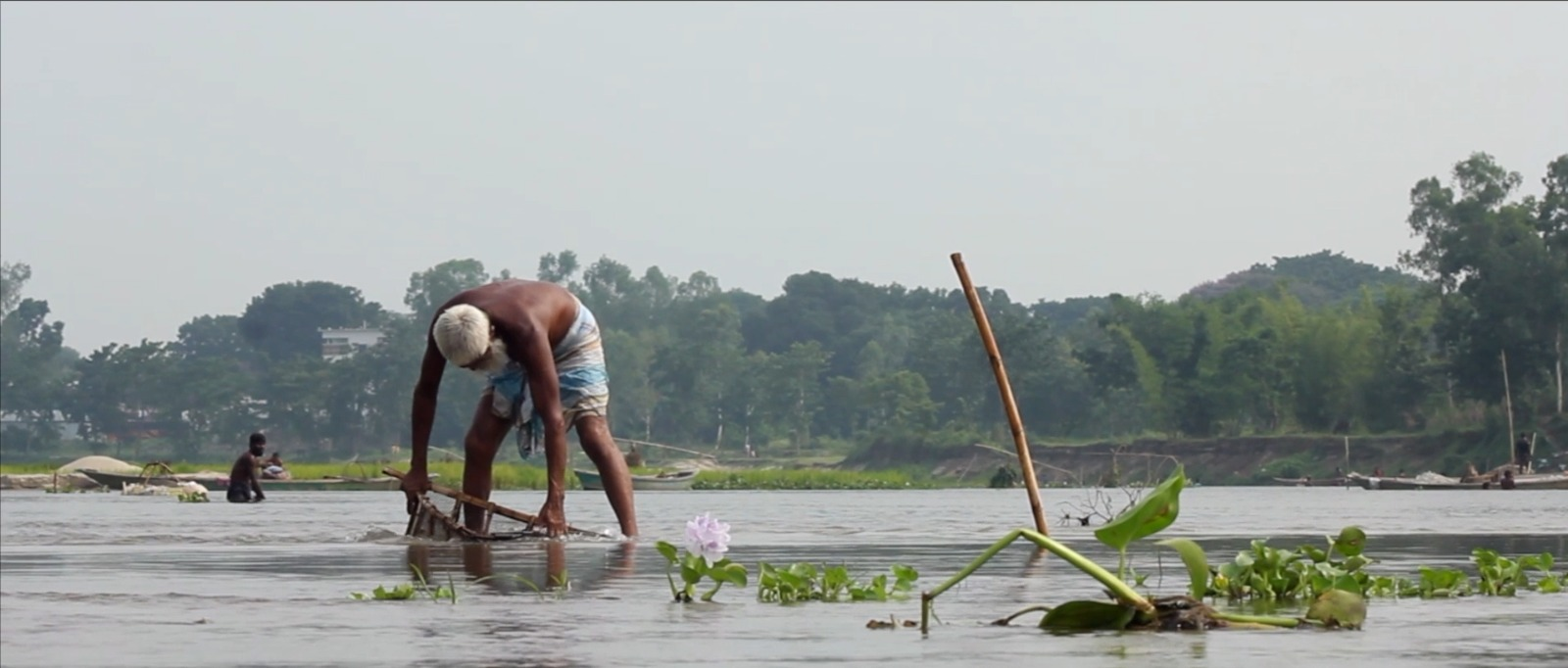
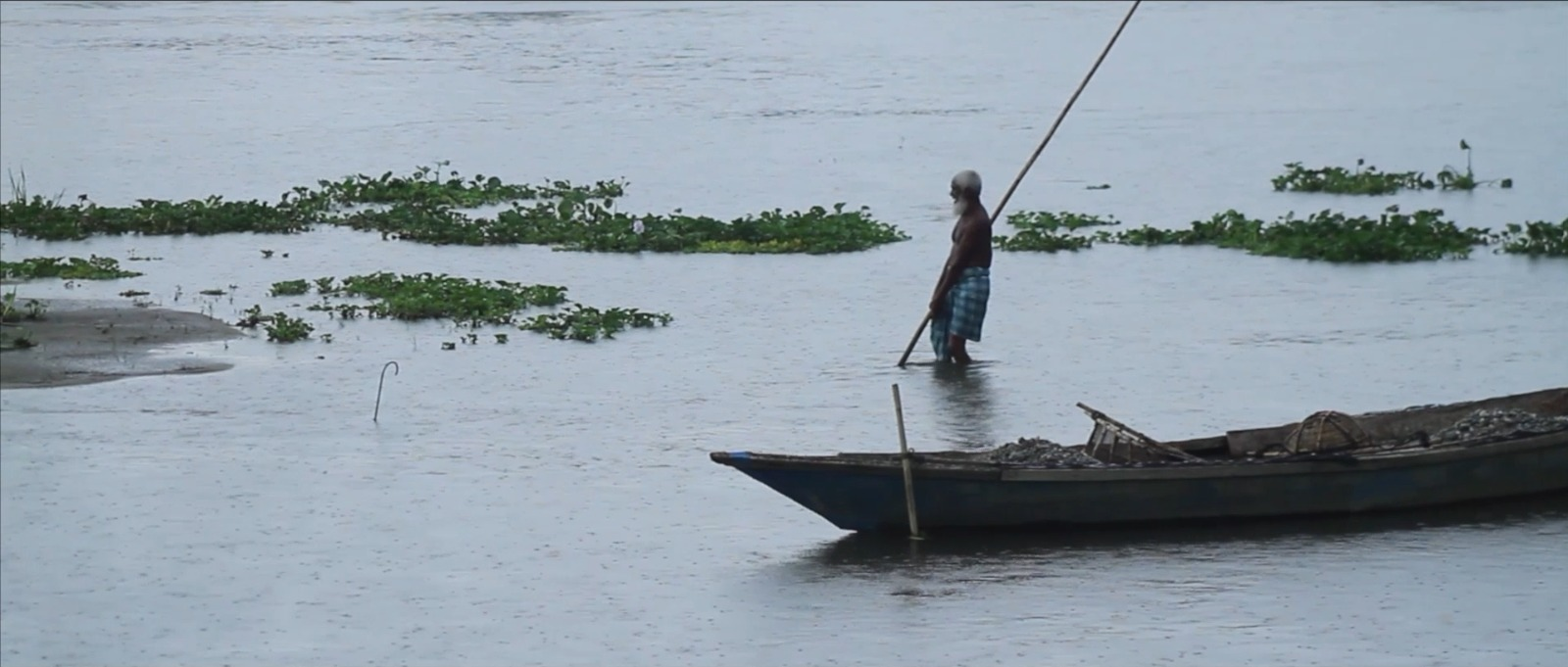
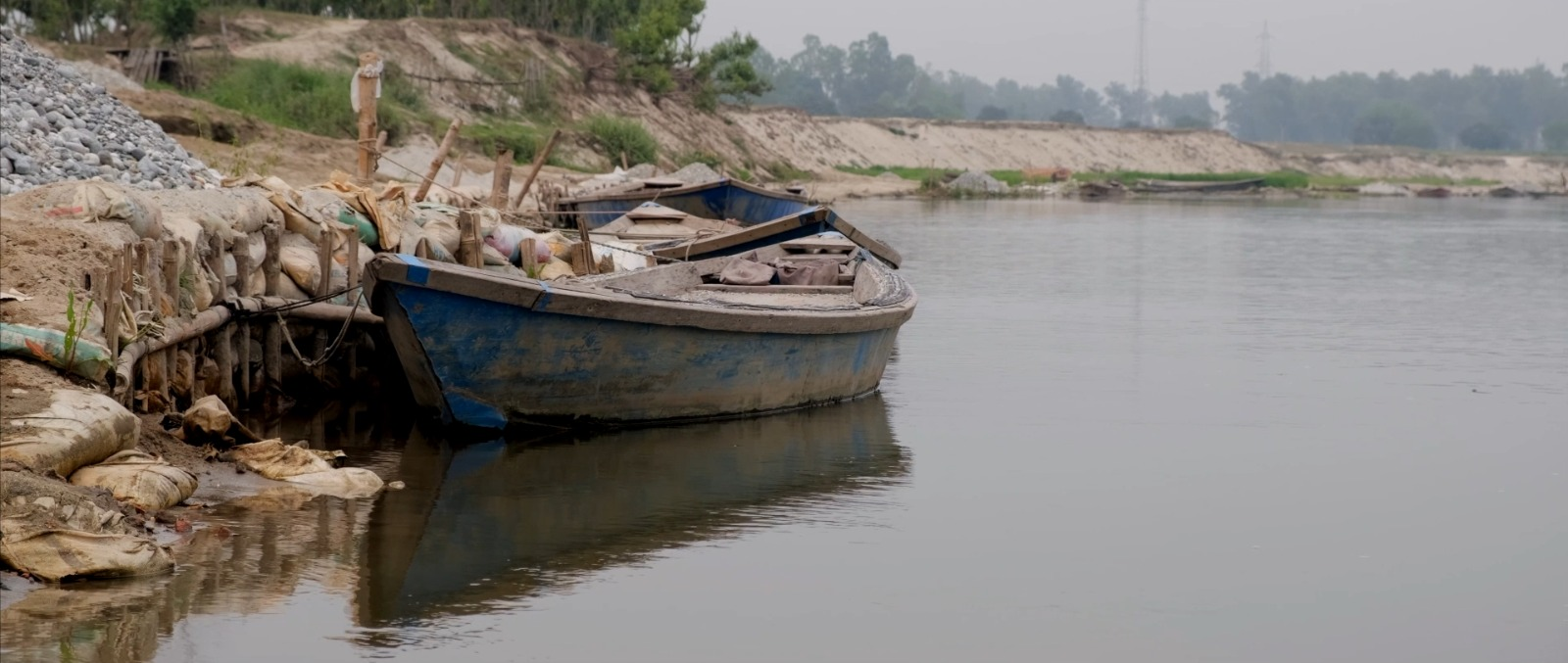
Jafar Muhammad's eighteen-minute film, Pankauri (2025)—which was screened at the Kolkata People's Film Festival held from 23 to 26 January 2026—starts with a strong look at the Karatoa River, which flows through the northern part of Bangladesh. The very first scene depicting this parched river immediately draws attention to the continuing environmental damage in the surrounding region. In its shallow, slow water, one can see people bent over, working hard at the difficult job of collecting small stones on their canoes. The Karatoa River is more than just a water tributary; it is a hard, unforgiving employer. For the people living along its banks, life is measured not in years but in the number of pebbles collected from the riverbed.
Through its protagonist, Mujibur Rahman, who has spent fifty-six years doing this exacting work, Pankauri explores the deep reality of a community caught in an endless cycle of manual labour. Here, the income is meagre—if you are healthy enough to bend over and pick up a stone, you eat, if you get sick you starve, like Mujibur, whose body, after long years of toil, is now breaking down. Thus, while the film documents the human cost of ecological degradation, it also dwells on the economic despair that ties generations to a physically demanding, precarious life.
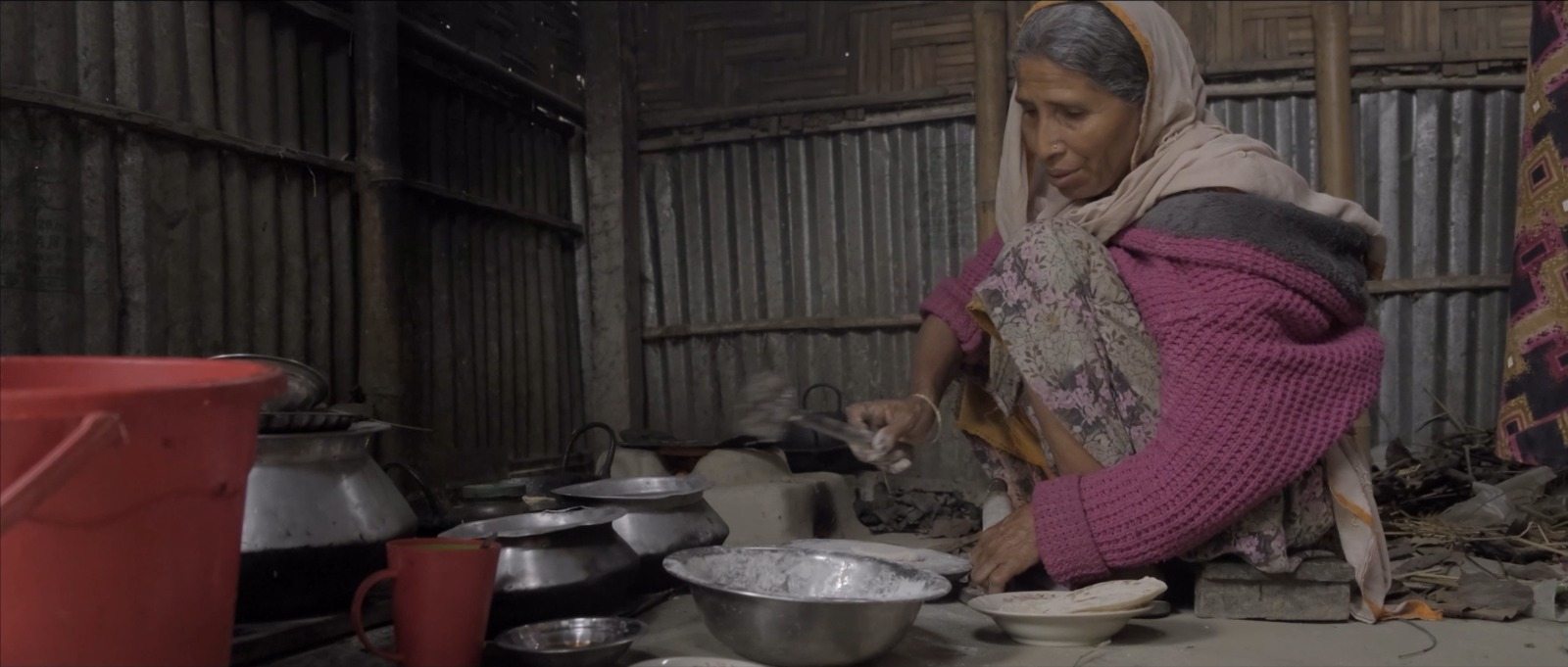
The conditions of deprivation affecting the characters’ lives are brought out right from the outset; four minutes into the film, a woman—from the Gypsy tribe living near the river, whose son died recently—enters the frame seeking alms from Mujibur. He responds, "We are ourselves struggling," and goes on to explain his difficult life: working in the cold; gathering pebbles from the river; the lack of work; and having no son to support him in his old age. This scene subtly reveals the bottom of the poverty trap while also highlighting the plight of a community where everyone is drowning and no one has a hand free to pull another person up.
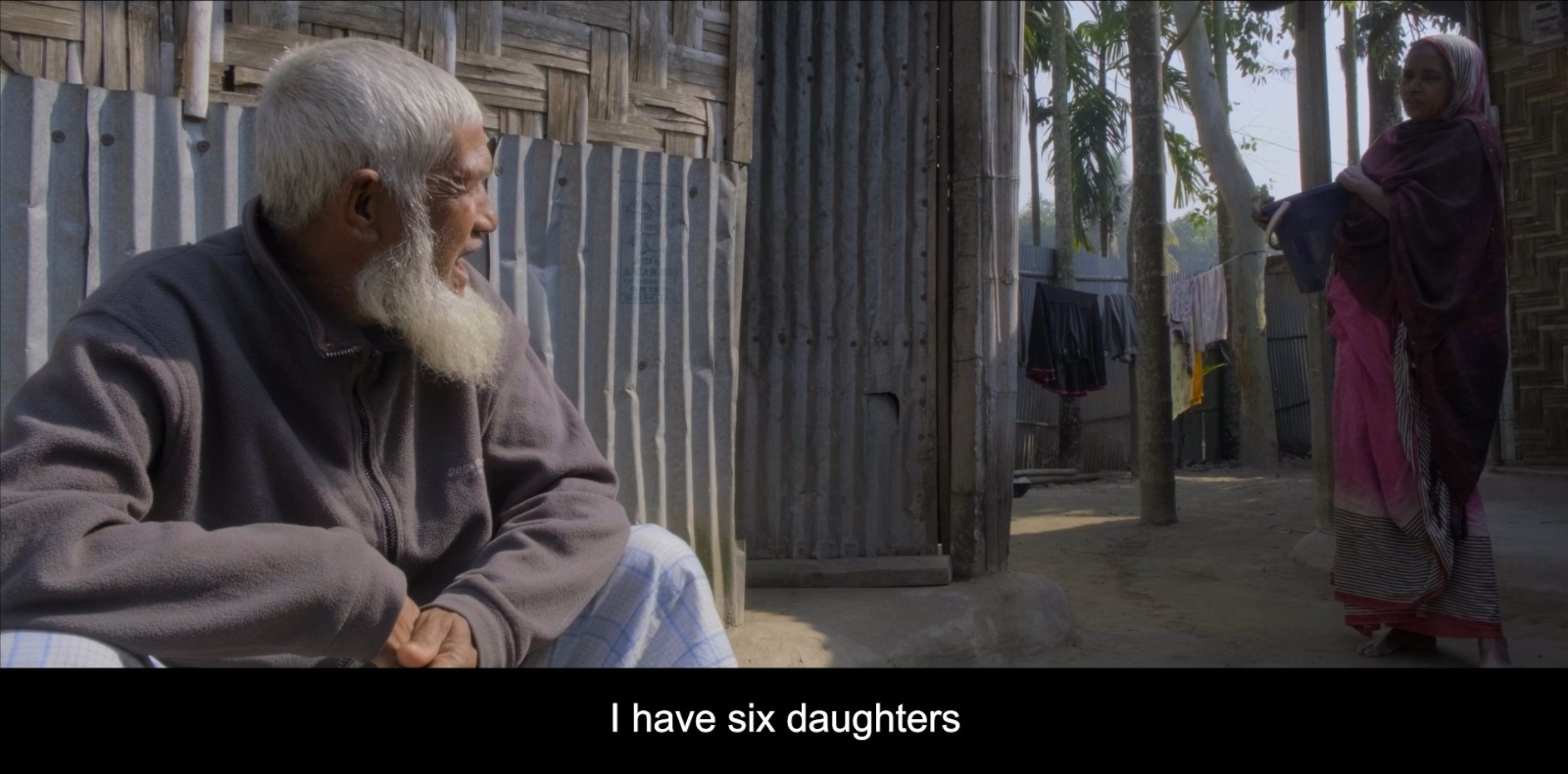
Tracing Mujibur's everyday life, the documentary sketches a "slice of life" narrative by following his household—a bustling, almost overwhelmingly female space, where Mujibur resides with his wife and their six daughters. While five of the daughters are already married, one remains at home. This family dynamic sets the stage for the film's broader social commentary, where daughters are often viewed not as blessings but as burdens—financial and social liabilities that must eventually be settled.
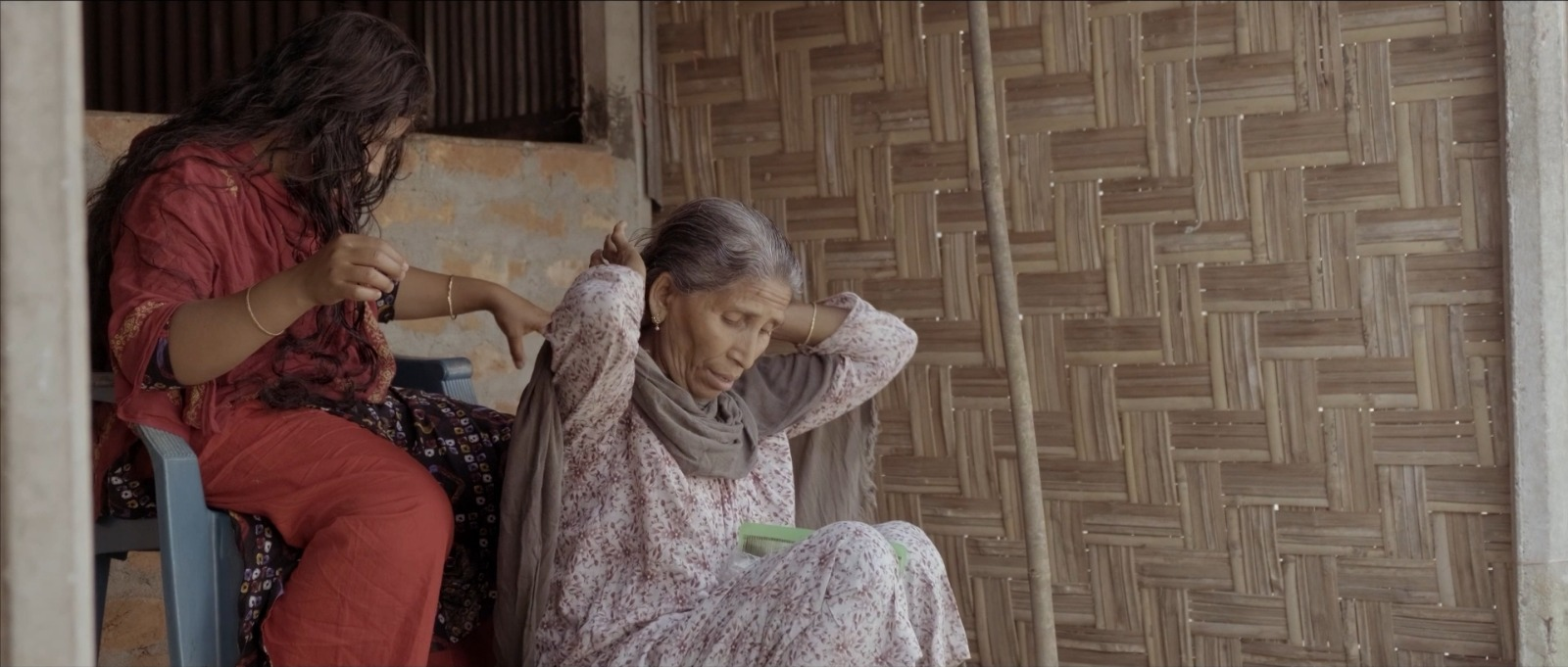
Through the experiences of Mujibur’s family, particularly the difficult process of arranging marriages, the documentary exposes how the institution of marriage has been corrupted by societal norms around matrimony as well as by economic interests—which transform what should be a union based on character and love into a ruthless transaction. When Mujibur mentions to the Gypsy woman—who had earlier wandered into his home asking for help—that he has no sons and has to marry off his last daughter, she says, “Sometimes, sons-in-law are better than sons.” Mujibur’s wife then points out, “If you give money to your son-in-law, then he’s good. If you can’t, he won’t care about you at all.” She therefore insists that possessing significant wealth is the only reliable way to attain a decent, or at least outwardly respectable man, into the family.
The film makes clear that for Mujibur’s family and others in similar situations, securing a "good" son-in-law has almost nothing to do with assessing his morality, kindness or affection for the bride. Instead, the groom’s worth is determined overwhelmingly by his own wealth and the price the bride's family is willing to pay. Accordingly, to them, this appears as a necessary condition to not have their daughter enter a difficult marriage where she has to suffer physical and mental violence—as well as to find a man who is willing to take care of them in their old age.
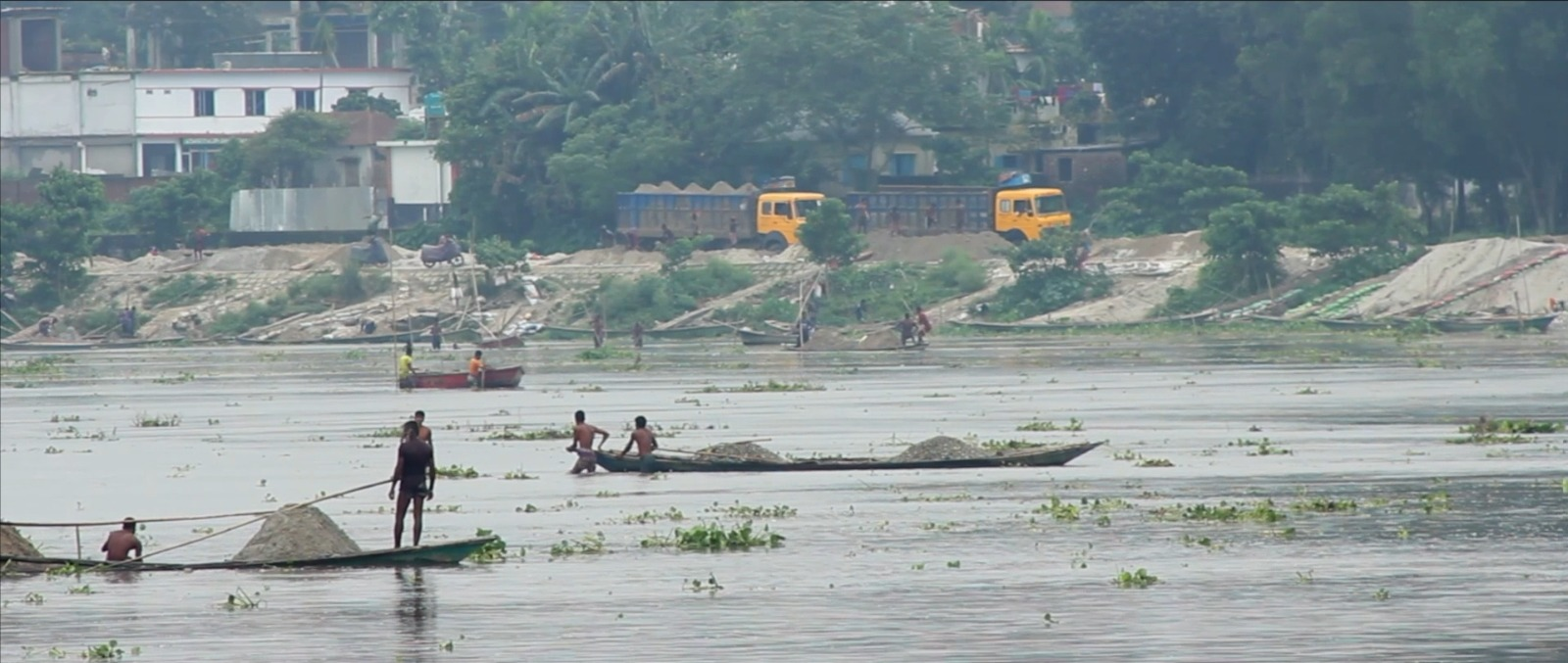
In the middle of the film, Muhammad, the filmmaker himself—who works at the intersection of ecology, society and human resilience—asks Mujibur questions about the river, breaking away from a fly-on-the-wall or observational approach towards a more participatory one. When Muhammad inquires whether Mujibur could move to a different location if the pebbles run dry, Mujibur’s response is telling: "No, pebble collectors are everywhere." Even when the filmmaker persists and presses him about what he would do if no pebbles were found at all, Mujibur simply states that they must find a way to earn regardless, as daily expenses never stop. The interaction underscores a grim reality that, for Mujibur, there is nowhere else to go. The river is not a choice; it is an obligation.
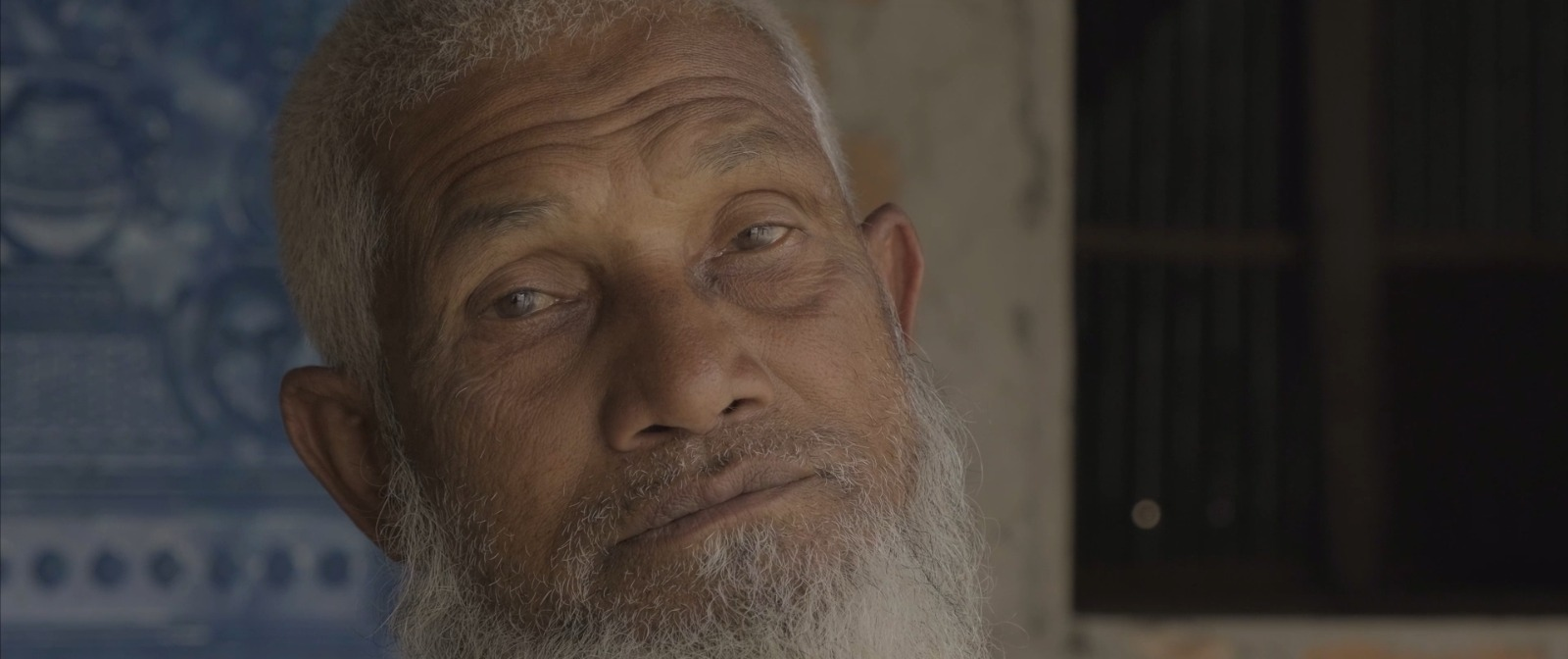
As the film sets into the final phase we see Mujibur’s deteriorating health. Once strong, he has gradually become gravely ill with severe breathing issues; his lungs, likely worn out from decades of damp hard labour. He is not able to work anymore and with the pebble income gone, the family faces an immediate crisis. To survive, Mujibur is forced to sell his cow—the most precious asset of a family in a village. The need to sell a cow is a sign of total desperation, signifying that the family has run out of options and is now living on borrowed time.
This film is a story about the invisible people who continue to build our world while living in precarity; the silent architects of modern civilisation whose contributions are cemented into the foundations of the cities we inhabit but who themselves remain on the periphery. Pankauri is a powerful, lucid and moving critique of a society that eagerly consumes the fruits of labour but ignores the hands that cultivated them. Every stone in a city skyscraper has a story that often belongs to a man like Mujibur who worked for more than five decades and ended up with nothing but an empty barn and a breathless chest.
To learn more about artists tracing the impact of ecological crisis and urban developmental projects on communities with livelihoods inextricably tied to natural landscapes, read Alfa M. Shakya’s reflections on Samagra Shah’s photo series on hydropower sites in Nepal, Mallika Visvanathan’s conversation with Biswajit Das and Chandan Borgohain on the dwindling cultural legacies shaped by the Kulsi river in Assam, Daisy Gidwani’s exploration of Ashish Birulee’s photo-documentation of after-effects of uranium mining and radiation exposure in Jadugoda, Jharkhand, and Radhika Saraf’s essay on Sonum Sumaria’s film Under the Open Sky (2024) that reflects on the challenges faced by Fakirani Jats in Kachchh to access grazing lands and two-part conversation with Mekh Limbu on the struggles of the Adibasi-Janajati Yakthung community to protect their land and preserve their relationship to it.
For more insights into socio-economic marginalisation of construction workers, read Mallika Visvanathan’s conversation with Suhel Banerjee on his film Cycle Mahesh (2024) and Kamayani Sharma’s essay on Megha Acharya’s Meelon Dur (Miles Away, 2023).
All images are stills from Pankauri (2025) by Jafar Muhammad. Images courtesy of the director.