

Valley of Sorrow: Ashish Birulee’s Documentation of Uranium Mining
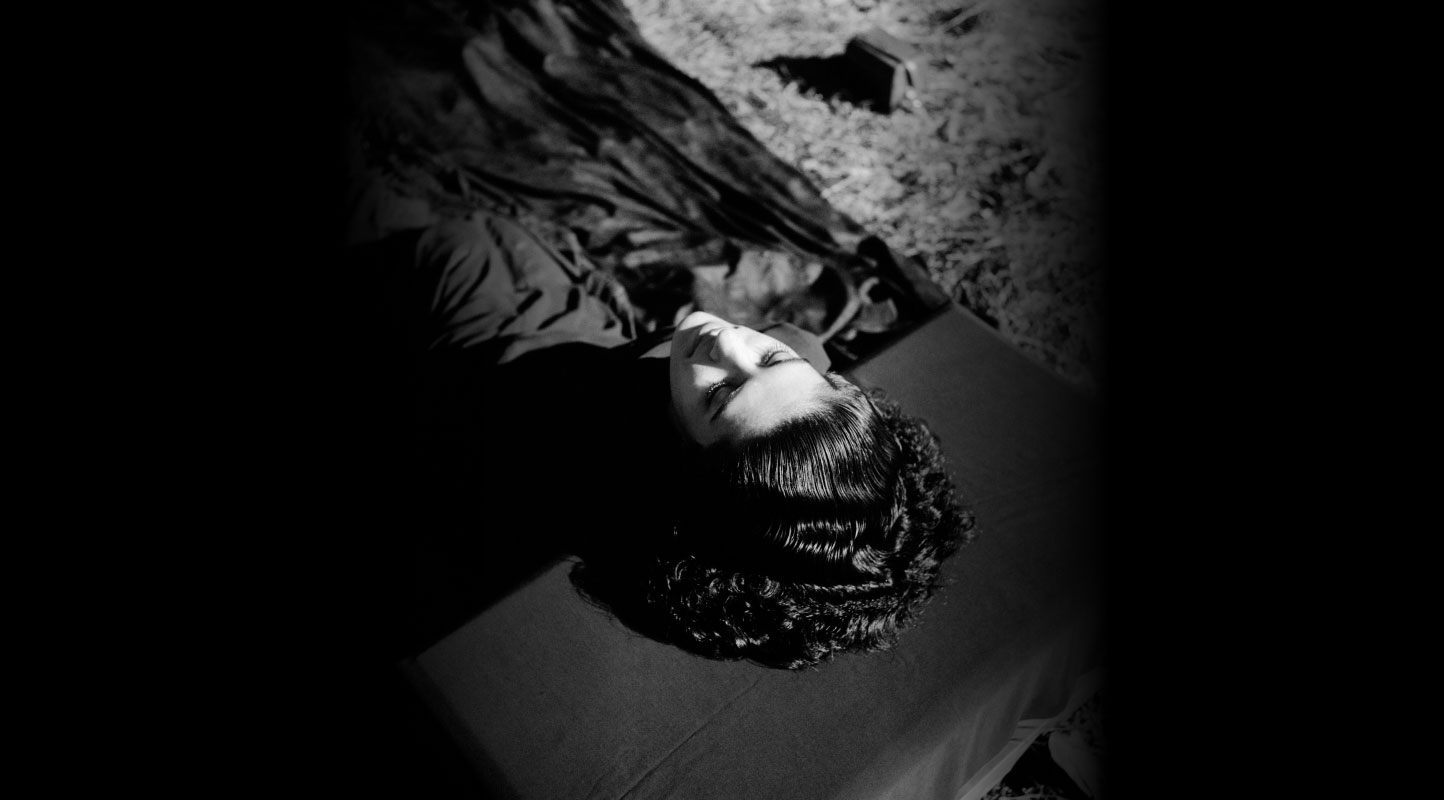
Jadugoda, derived from the Santhal word “Jaragoda” (castor), is a nondescript valley town in the East Singhbhum district of Jharkhand, about 20 kilometres from Jamshedpur. The story of this mineral-rich region’s tryst with uranium began in 1967, when Jadugoda became the site of India’s uranium programme and later, home to the country’s first uranium mining entity, Uranium Corporation of India Limited (UCIL). Locally known as the “Uranium Company,” it employed local Adivasi communities, such as the Santhal, Ho, Bhumij and Oraon. But extractive processes over decades have turned Jadugoda’s landscape into barren mine land dotted with tailing ponds which carry radioactive slurry, posing increasing health risks to its people. For over a decade, Ashish Birulee has been documenting the after-effects of uranium mining and radiation exposure in Jadugoda.
His photo essay, The Nuclear Wound: Stories of Survival from Jadugoda (2013–ongoing), has been exhibited in Brazil and Canada, as well as Osaka and Hiroshima in Japan, and is currently on view at the Kochi Biennale until 31 March 2026. It is a series of stark black-and-white images which capture the grim effects of radiation on the landscape and its people. Birulee says,
“I developed this understanding that when you are covering something impactful, something sensitive, colours sometimes distract from the story. My main intention was that the people who are reading, or our audience, should not be distracted by colours. I want to convey, and they also need to understand, that the storyteller himself is not celebrating. The stories I cover cannot be celebrated.”
The area once boasted of an elephant corridor in its vicinity. The ponds and rivers, where people could swim and fish, are now contaminated. Its abundant natural topography, with many species of birds and animals—stories Birulee learnt from his grandmother—is now dotted with tailing ponds that carry slurry from UCIL. The Jadugoda movement began during the 1990s, with nuclear activists, photojournalists and scholars coming together to highlight the aftermath of uranium mining. Then a young boy growing up in Jadugoda, Birulee was one of the few children who could attend an English-medium school, and was tasked by his father, a local activist who voiced his concerns against radiation, to guide these researchers around the area.
Birulee tells me how a Japanese architect and photographer lent him his camera for the first time. It was then that he captured the first few photographs of Jadugoda’s tailing ponds, which are used to store radioactive waste slurry. Many more experiences added to Birulee’s understanding of the subject, with the biggest turning point coming when he visited Hiroshima in Japan as a student. Here, he learnt how other communities around the world are dealing with the aftereffects of nuclear warfare. In response, Birulee picked up the camera and set out to document life around him, capturing stories of people who bore the aftermath of mining. The artist shares:
“For movements like Jadugoda, it is very important that our stories should be heard by many people. Photo stories, like articles in newspapers, are the only media available through which our stories can be widespread to people living in urban areas or nationwide. We were dependent on media persons because, in my community, there were no journalists and storytellers, like digital storytellers.”
In order to tell the stories of Adivasis on a larger scale, in 2016, Birulee co-founded Adivasi Lives Matter—with the associated Instagram handle @adivasilivesmatter—which is spread across eight states in India and trains Adivasi youth in digital storytelling.
To learn more about artists examining issues around nuclear power and its consequences, read Gulmehar Dhillon’s observations on Amirtharaj Stephen’s series Koodankulam: In My Backyard (2012), Ankan Kazi’s reflections on Jahnavi Phalkey’s Cyclotron (2020) and Najrin Islam’s essay on Himali Singh Soin’s static range (2020–ongoing).
To learn more about mining, see Sharanya Nayak’s curated album from photographs by Sankaraa and Narendra Mohanty on the mobilisation by the Ma Maati Mali Surakhya Mancha in Tijmali, Daisy Giwani’s curated album from Ajay Dhoke’s series Waghoba (2018–ongoing), Ishtayaq Rasool’s reflections on Fileona Dkhar’s Ancestral Echoes (2022), Radhika Saraf’s observations on Sonum Somaria’s Under the Open Sky (2024) and Nikita Jain’s documentation of Adivasi resistance in Bastar.
All images are from The Nuclear Wound: Stories of Survival from Jadugoda (2013–ongoing) by Ashish Birulee. Images courtesy of the artist.
Click on the image to view the album