

Against Censorship: On Remembrance at the PK Rosy Film Festival 2025
On 6 April 2025, the fourth day of the PK Rosy Film Festival—organised as part of the Vaanam Art Festival conducted by Neelam Cultural Centre in celebration of Dalit history—there was more than the usual audience of eighty to hundred; it seemed to be a full house. People began streaming into the LV Prasad Preview Theatre, Chennai, much earlier than 9 AM, when the first film was scheduled to be screened. As the line grew longer, a sense of confusion slowly took over. There were whispers of the screening being stopped, which was confirmed by the organisers. The movie in question was Santosh (2024), written and directed by Sandhya Suri. A film set in northern India, which was chosen as the United Kingdom's official entry for the Best International Feature Film category at the 2025 Oscars but banned for public viewing in India due to “concerns about its portrayal of misogyny, Islamophobia and violence within the Indian police force.”
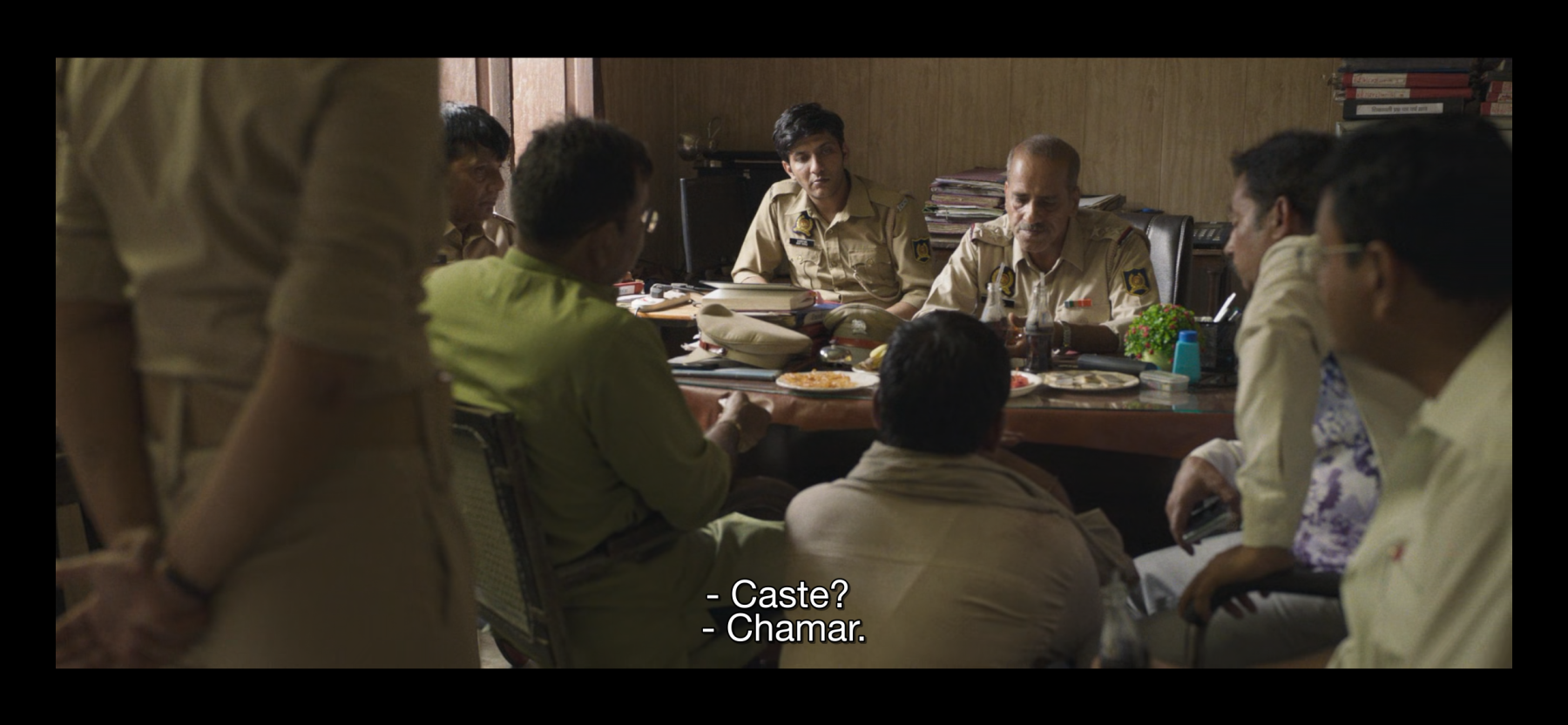
Still from Santosh. (Sandhya Suri. 2024. Image courtesy of the director.)
The irony was impossible to miss. A film praised abroad for its courage and complexity was silenced in the very country whose wounds it sought to confront and commemorate. As a nation, we continue to choose erasure over reflection, forgetfulness over remembrance.
The Vaanam Art Festival has, over the years, fostered and built a platform for forms of expression—film, theatre, visual art, literature and, most notably, folk performance arts—that mainstream cultural circuits, shaped by dominant caste and class sensibilities, have often ignored. Similarly, this year’s edition of the PK Rosy Film Festival, curated by director Arun Karthick, displayed a breadth and political awareness rarely seen elsewhere.
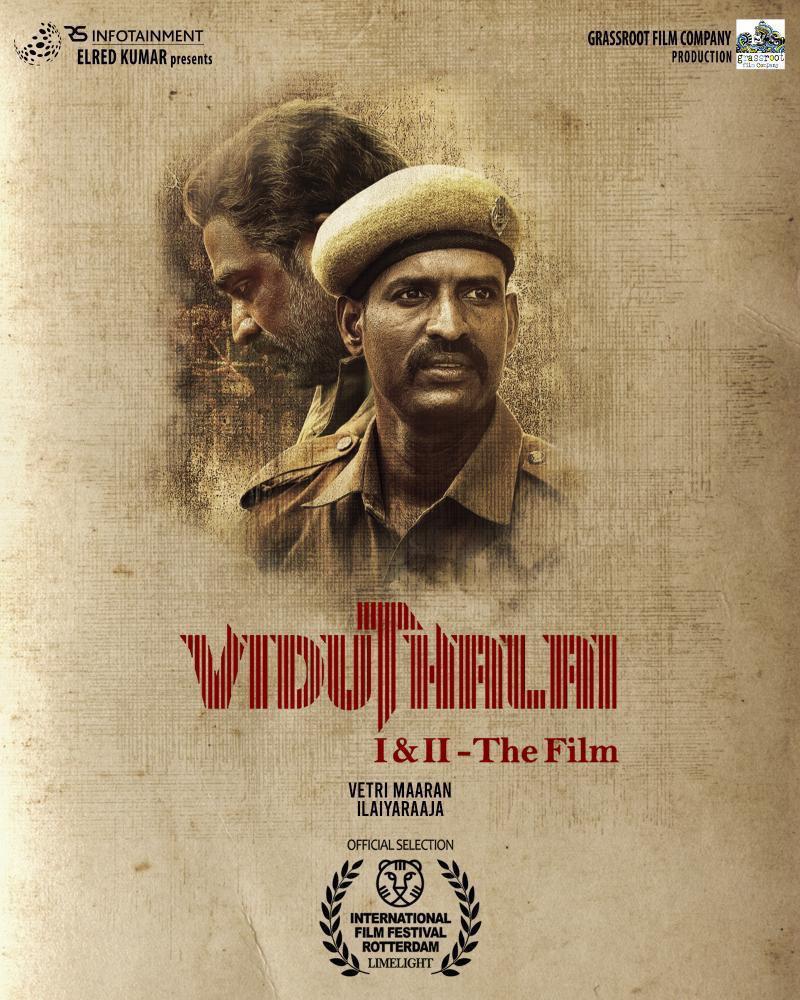
Poster for Viduthalai. (Vetrimaaran. 2024. Image courtesy of the director.)
The Festival also included films like Viduthalai (2024), directed by Vetrimaaran which was cut into two parts for commercial reasons; Viduthalai I had its theatrical release on 31 March 2023 and Viduthalai II on 20 December 2024. However, even after their edited versions, the film was subjected to stringent cuts as suggested by the Central Board of Film Certification (CBFC). What eventually reached theatres was a didactic and dull couple of films, reminding the audience, rather cruelly when taking into consideration the content of the film, that the master’s tools will never dismantle the master’s house. Even a director like Vetrimaaran, who in the past has made films like the unapologetic Visaranai (2015), is now being subdued by state censorship.
In contrast, at Viduthalai’s world premiere at the Rotterdam International Film Festival in January 2024, the film had a runtime of over 250 minutes. “Audiences in Rotterdam are in for a treat... audiences here can experience the full epic story as originally imagined by the director!” writes Stefan Borsos in the official film listing on the Rotterdam Festival’s website.
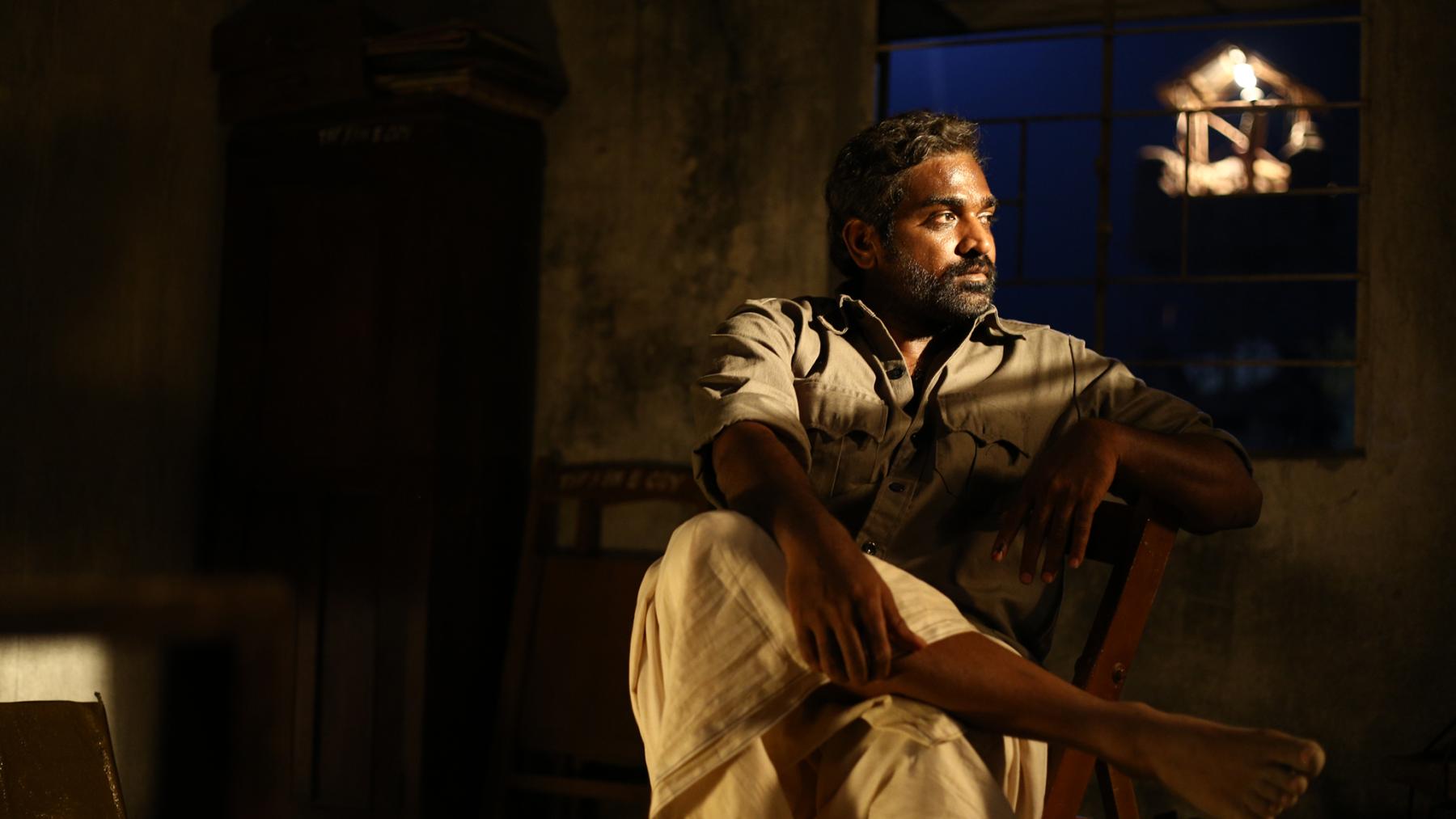
Still from Viduthalai. (Vetrimaaran. 2024. Image courtesy of the director.)
At the PK Rosy Film Festival, for the first time since the theatrical release of the two parts in 2023 and 2024, Tamil audiences were able to see the film as the director had intended. This cut of the film, which excluded the filmy flashback portions, the heroic background music composed by Ilaiyaraaja for scenes where the police conduct encounter killings on screen, and other changes that were part of the theatrical release(s), was structurally entirely different from the defanged version shown to the public. The festival edition is almost entirely Kumaresan’s (played by Soori) confession; he serves as a symbol of the last remnant of humanity within the brutal police machinery. As the film ends, a rather apt line from the letter he writes to his mother, “நம்ம கதைய நம்ம சொல்ர வரைக்கும் அது தப்பா தான் மா இருக்கும் (Till the day we tell our own stories, we will always be in the wrong)," echoes through the dense jungle.
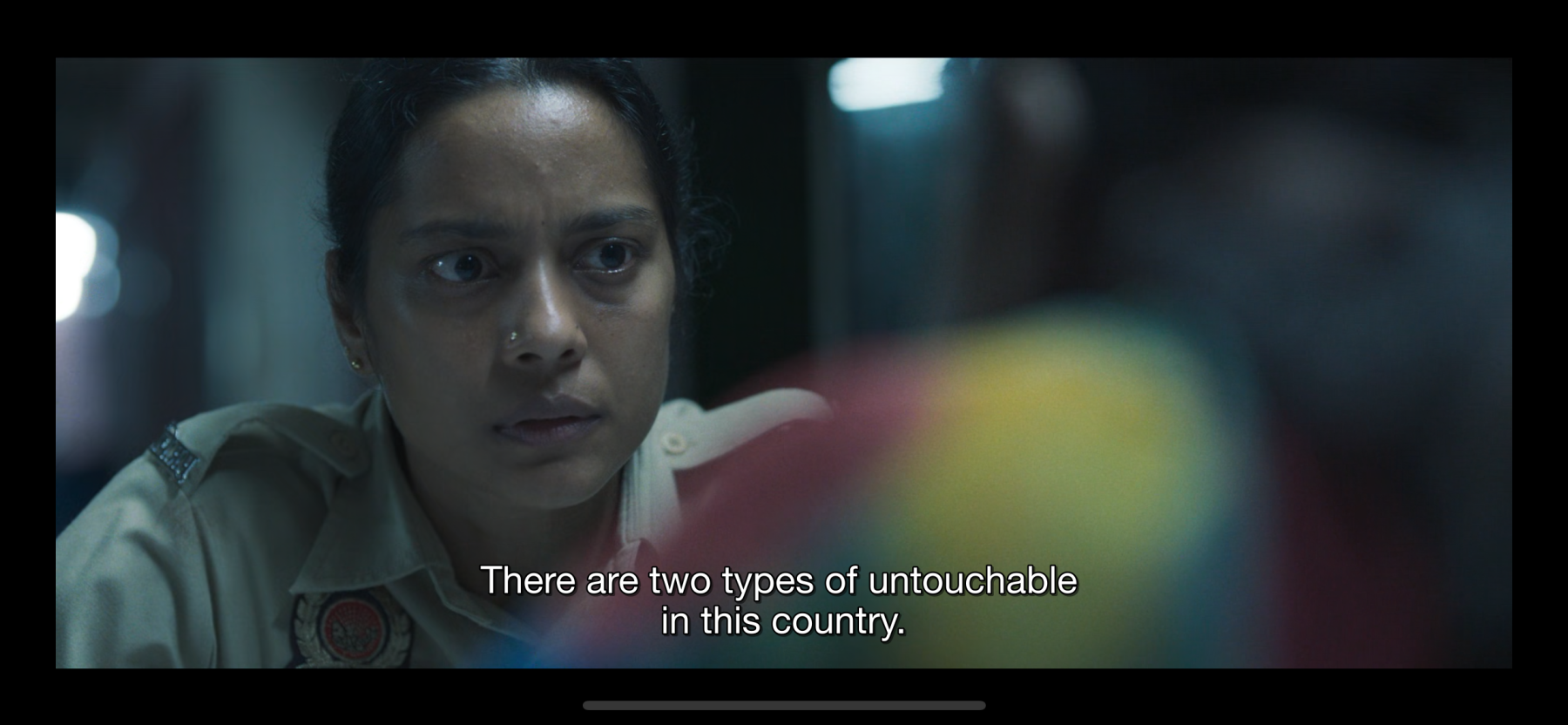
Still from Santosh. (Sandhya Suri. 2024. Image courtesy of the director.)
The predicament faced by Santosh bears obvious parallels to that of Viduthalai, with the only difference being that the reaction to the former, owing to its obvious global acclaim, has been much more acerbic and heavy-handed. The festival curator Arun Karthick’s film Nasir (2020) too, faced a similar fate. Premiering at the International Rotterdam Film Festival on 27 January 2020, Nasir went on to win the NETPAC Award for Best Asian Film. As of now, it is still restricted by the CBFC, and the OTT release on SonyLiv, scheduled for 6 May 2022, never happened. Nasir, which was scheduled to be screened at this year’s edition of the PK Rosy Festival, was also unfortunately stopped.
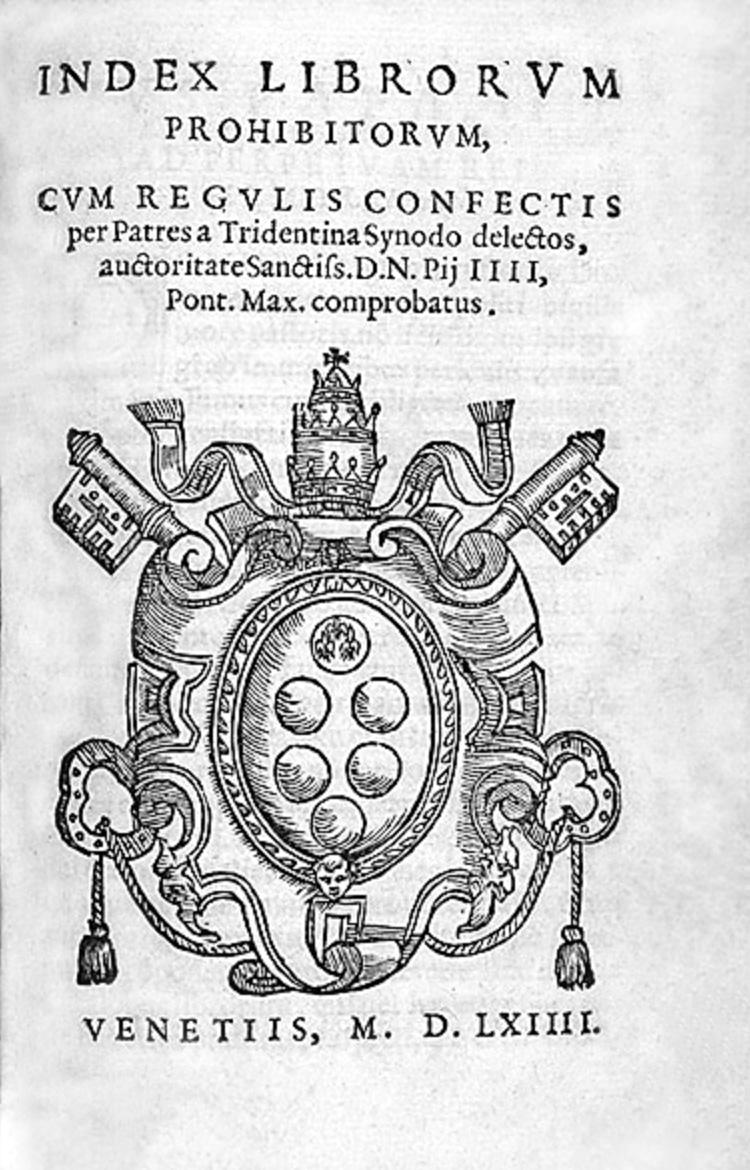
Cover of Index Librorum Prohibitorum (List of Prohibited Books). Image Courtesy of the Wikimedia Commons.
To understand this abuse of censorship by the state and the necessity of such overreach for certain political parties, one must look into the origin of the word itself and work our way to the present. The word “censor,” which is derived from Latin, initially gestured towards a wider understanding of the term along the lines of “to assess/estimate.” The authoritarian institutionalisation of this practice and the ossification of censorship into its current form was seen most sharply in the Church’s actions through the Middle Ages. The Church censored texts that they deemed heretical, thus setting an example for the suppression of narratives that challenged (religious) authority. They established the Index Librorum Prohibitorum (List of Prohibited Books) in 1559, which was one of the first institutionally consolidated lists of prohibited material. The index was active until 1966 and included Simone de Beauvoir, Sartre, and many others, but at no point did it include Hitler’s Mein Kampf. This reliance on suppression expressly for conservative mythmaking marks the start of censorship as we know it today.
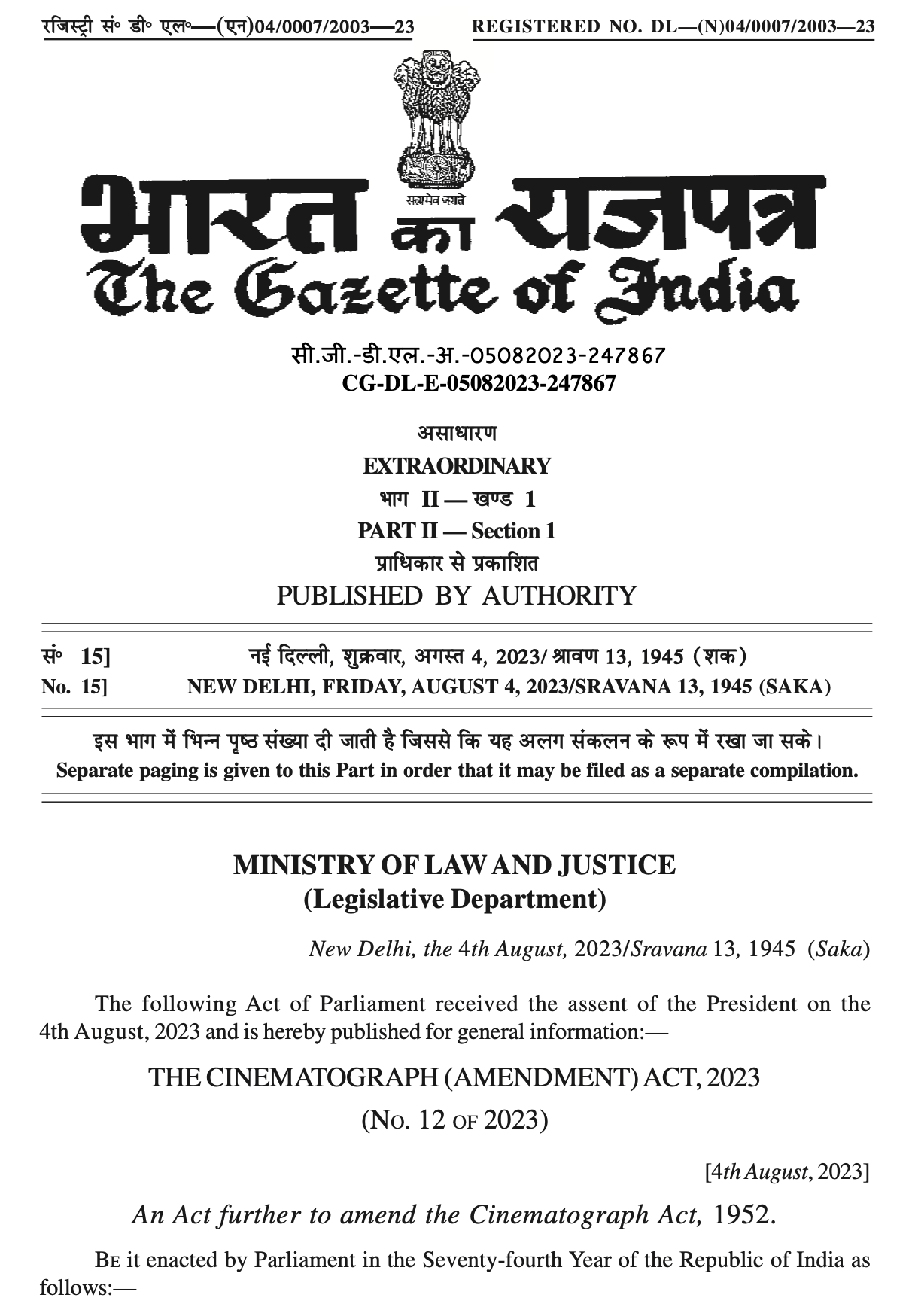
The Cinematograph (Amendment) Act, 2023, in The Gazette of India. Image Courtesy of The Gazette of India.
Within the Indian context, the current Central Board of Film Certification in India (CBFC) was initially based on the first Cinematograph Act (1918) which was instituted during British rule and was introduced as a means of controlling what their Indian subjects could and could not do and say, and also to curb the rise of unity amongst the population. Post-independence, the first amendment to this Act was in 1952, forming the current CBFC. The Act has since been amended multiple times, most notably in 2023, when the Film Certification Appellate Tribunal (FCAT) was abolished. This meant that filmmakers who were previously able to appeal the CBFC’s decisions through the FCAT were now forced to route their appeals through a judicial system which was already flooded with unfinished cases. While systemic changes such as the 2023 amendment betray an increasingly authoritarian tilt, this is by no means restricted to India. Art across the world has been subjected to such state-sponsored suppression, further strengthening the idea that censorship gains strength under conservative regimes; for instance, Iranian filmmaker Jafar Panahi has been banned from making films and travelling since 2010. His major breakout work This is Not a Film (2011) was shot on an iPhone and smuggled inside a cake to Cannes for its world premiere.
Returning to the PK Rosy film festival, even the festival’s namesake, PK Rosy—the first Malayalam film lead on screen and a Dalit woman—faced backlash for portraying an upper-caste Nair woman on screen. The first silent Malayalam feature film, Vigathakumaran (1928), directed by J.C Daniel, had the audience throw stones at the screen when Rosy appeared. The angst of caste Hindus was loud and clear. The continued backlash and harassment eventually led to Rosy fleeing the scene entirely. Such vitriol and suppression being directed at individuals is not new either. One can see parallels to PK Rosy’s plight in the life of Fredi Washington, who faced similar backlash and erasure for playing the character of a light-skinned Black American passing as White in segregated America in the movie Imitation of Life (1934).
All of this also makes one wonder about the possibility of emancipatory cinema making it to screens at all. It is here that one is confronted with the fact that Kollywood, in a trend that might seem to stand in stark contrast to the state of affairs in the rest of the country, has produced quite a few movies in the recent past (Attakathi, Asuran, Visraranai, Pariyerum Perumal, etc.) that question the upper caste and class assumptions that had become commonplace throughout Kollywood and Indian cinema at large and instead bring to the fore lives and stories that were thus far ignored. To understand this phenomenon, one must look into the history of cinema as a medium for political messaging in Tamil Nadu.
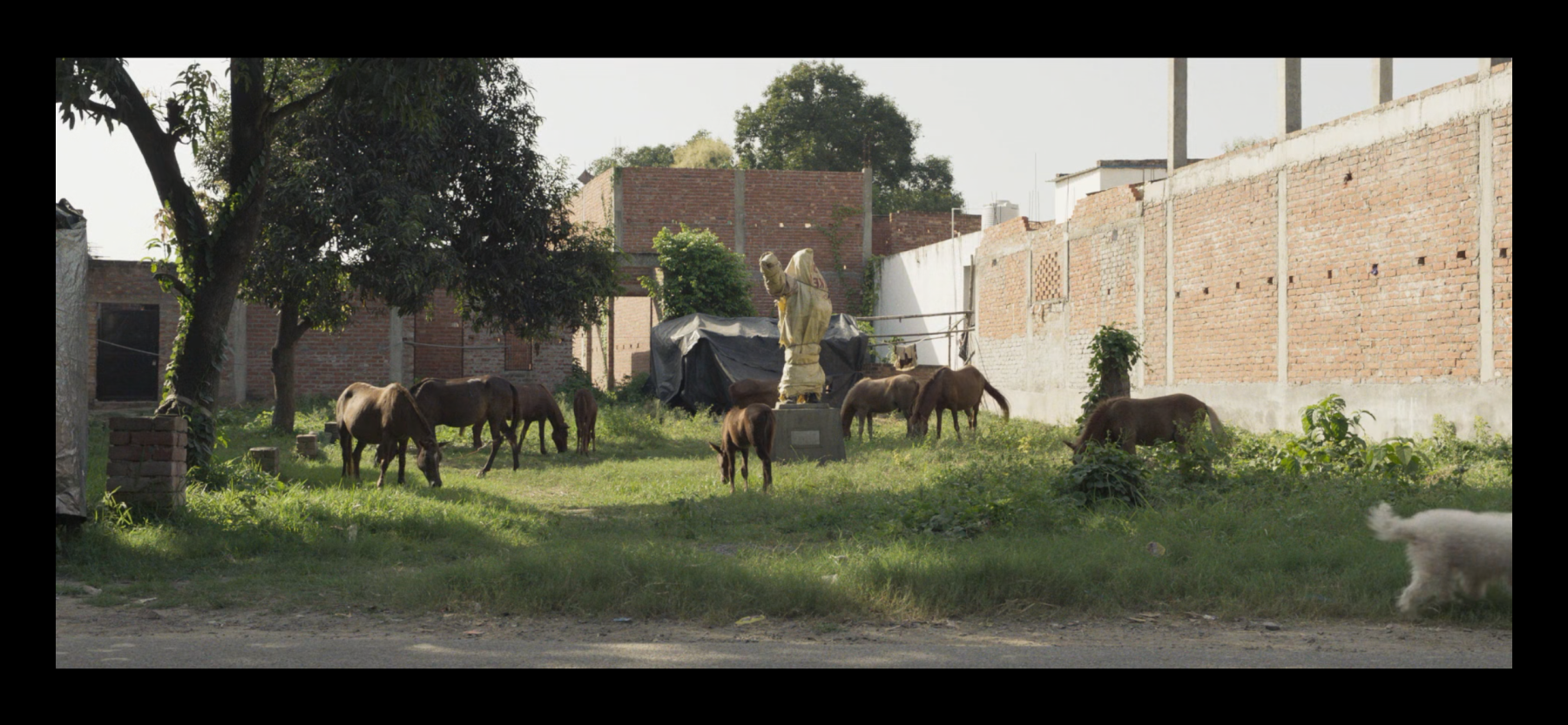
Still from Santosh. (Sandhya Suri. 2024. Image courtesy of the director.)
To learn more about censorship and Kollywood, read the second part of the essay here.
To learn more about the PK Rosy Film Festival, read Steevez's essay on MKP Gridaran’s Dalit Subbaiah: Voice of the Rebels (2025) and Sumaiya Mustafa's two part essays on Samuvel Arputharaj’s Manjolai (2024) and Arun Karthick's Nasir (2020). Also read Stephi Saleth's reflections on the panels hosted at "Verchol," a Dalit Literature Festival organised as part of the Vaanam Art Festival.