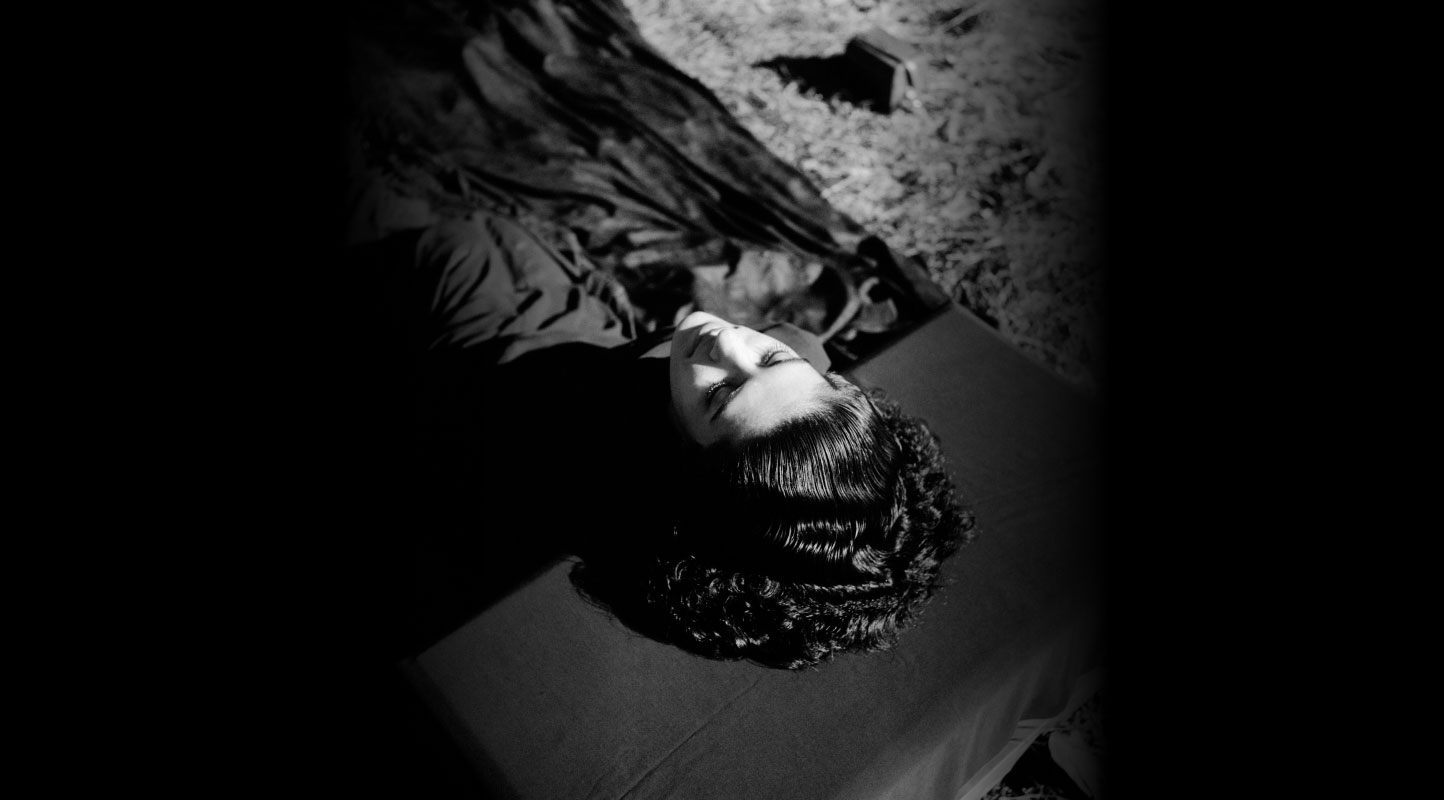

Emily Jacir's Where We Come From: After Twenty Five Years
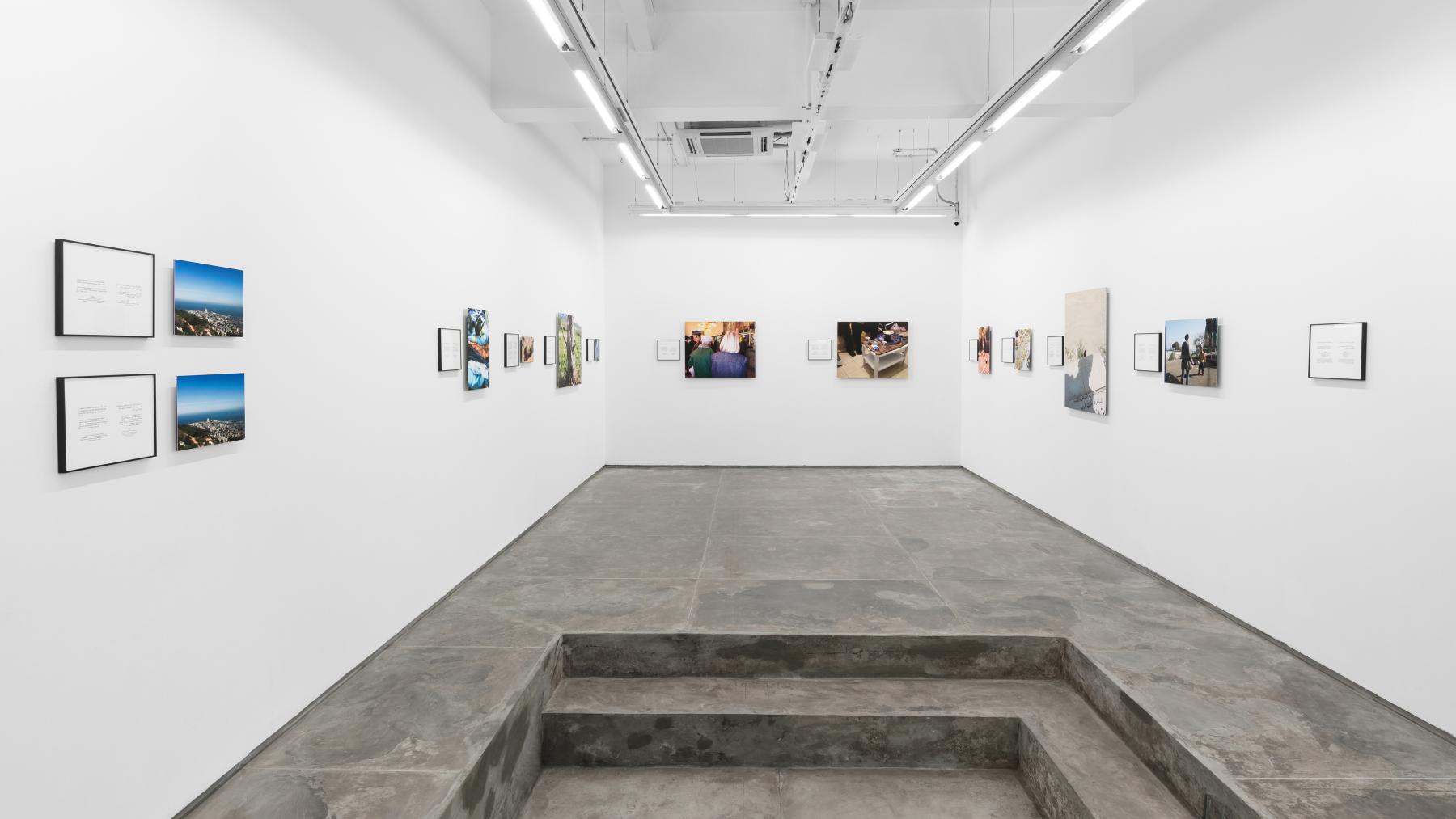
Much of Jacir’s work is about entangled networks and connections, and the first part of this essay examines how they continue to pulsate in their enforced stasis by Israeli occupation. Jacir materialises this desire for and towards movement that reverberates throughout these works—cementing walking and moving from one place to another—as an element informing most of her early practice which was located across Europe, New York and Bethlehem. In our conversation, she reflects back:
“This work came out of my personal experience of the constant back and forth between Palestine and elsewhere as the child of migrants sending remittances back home . . . You are always carrying things in and out for people—slippers for someone’s grandparents, a favourite food for someone who is forbidden from returning, a shirt for an uncle—connecting people. It was a deep extension of my real life and this work drew from those already existing kinship networks like my students at Birzeit University and other communities I am part of, as well as through networks in Chile, emails and a few Palestinian newsletters around the world.”
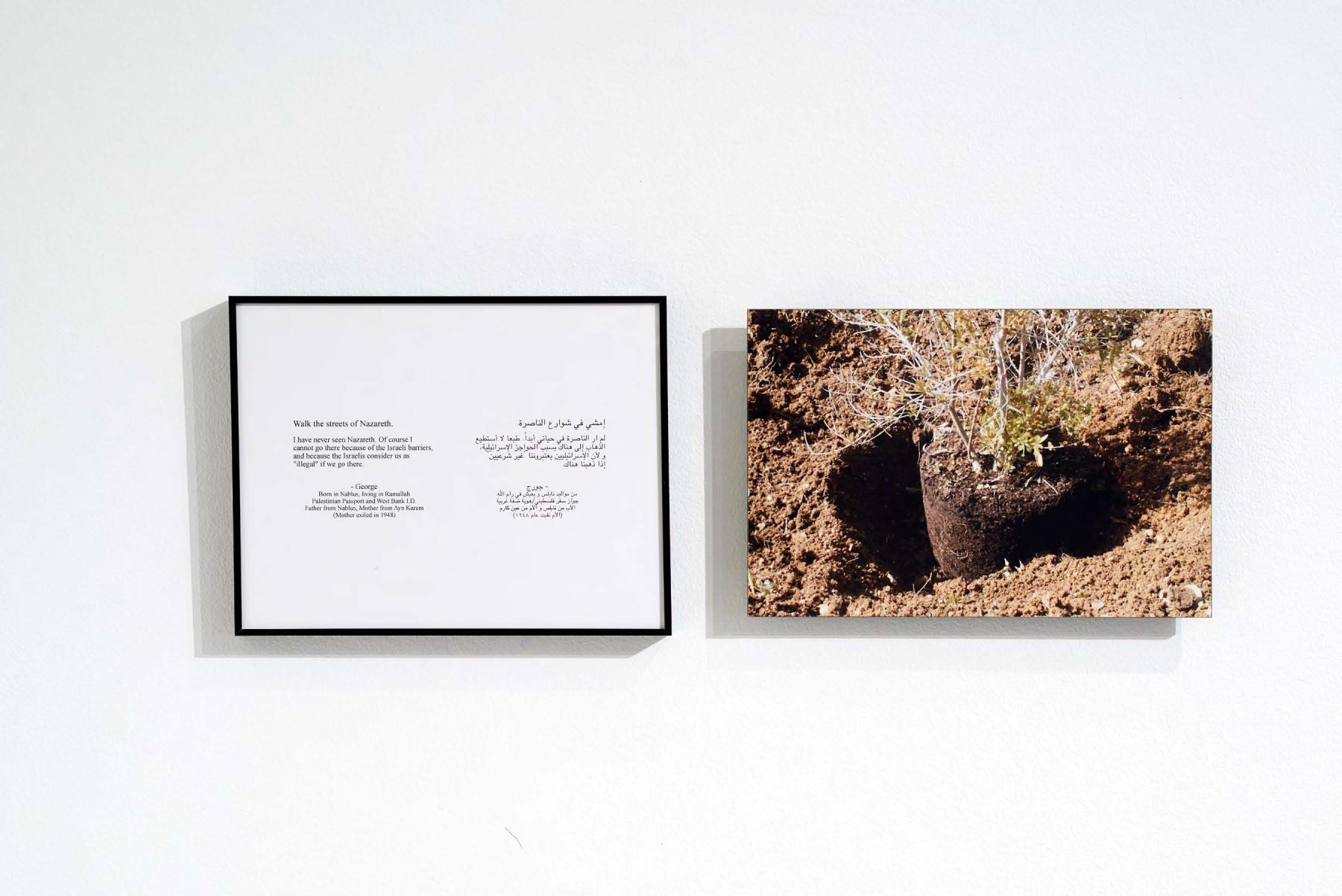
Walking emerges as a practice Jacir is directed to—by some of the requestees like George in Ramallah who requested her to “walk the streets of Nazareth” or Maha from Cairo who wanted her to “climb Mount Carmel from Haifa and look at the Mediterranean from there”. She adds how walking can make her know a place and map changes with first-hand knowledge—it is this that makes her use walking as a teaching methodology with her students.
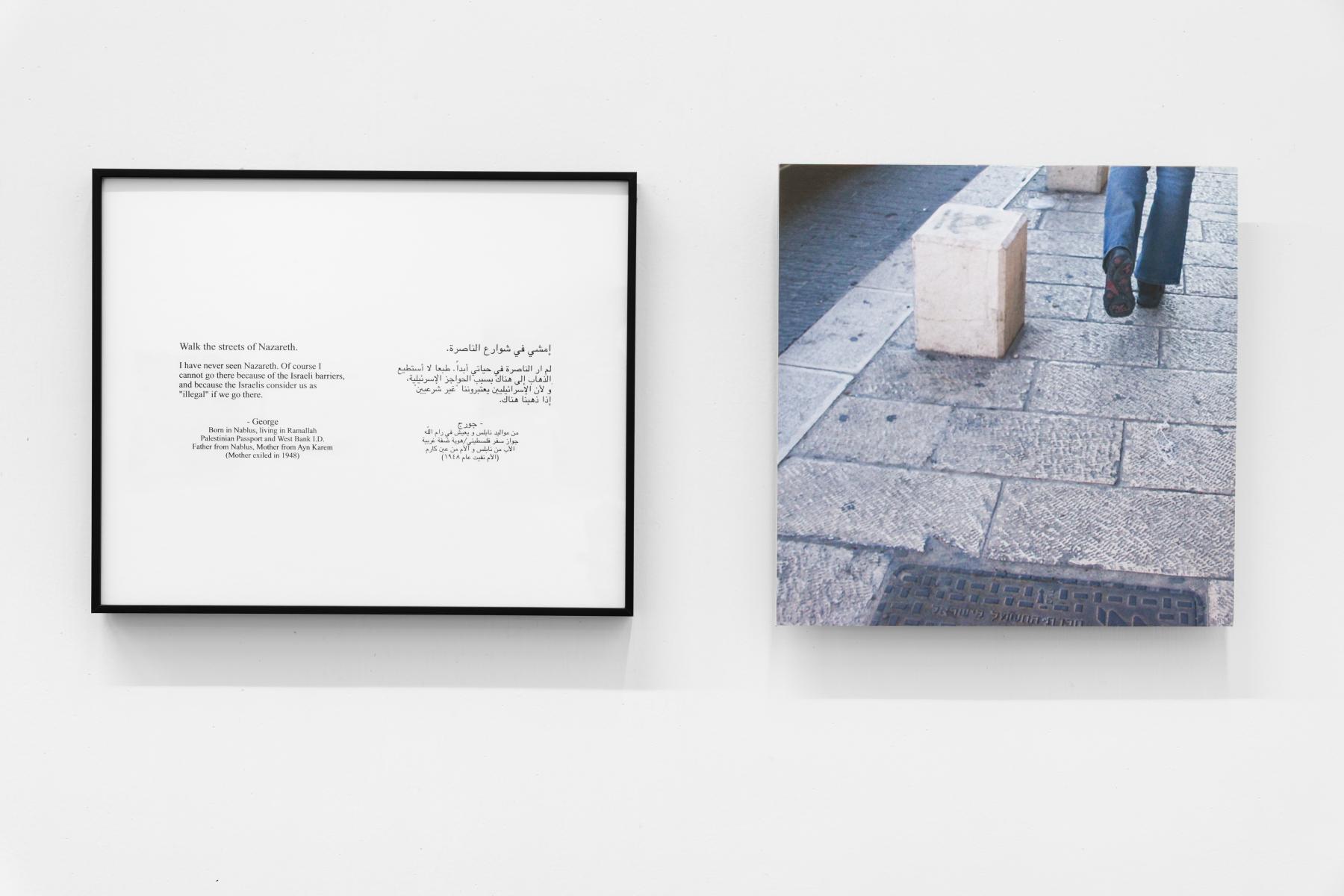
Taken together with Jacir’s camera, the act of looking and walking become investigative tools towards preserving an embodied and visceral narrative of Palestine under occupation. By walking and simultaneously recording, she attempts to document changing neighbourhoods and sites of conflict—where for instance, she once blew up a video to make out the hidden Israeli soldier who shot a shard into her leg as she was walking towards a site where tear gas had been discharged. It becomes part of an evidentiary document in her film letter to a friend (2019) that she addresses to Forensic Architecture requesting them to start an investigation at her family home in Bethlehem, Dar Jacir.
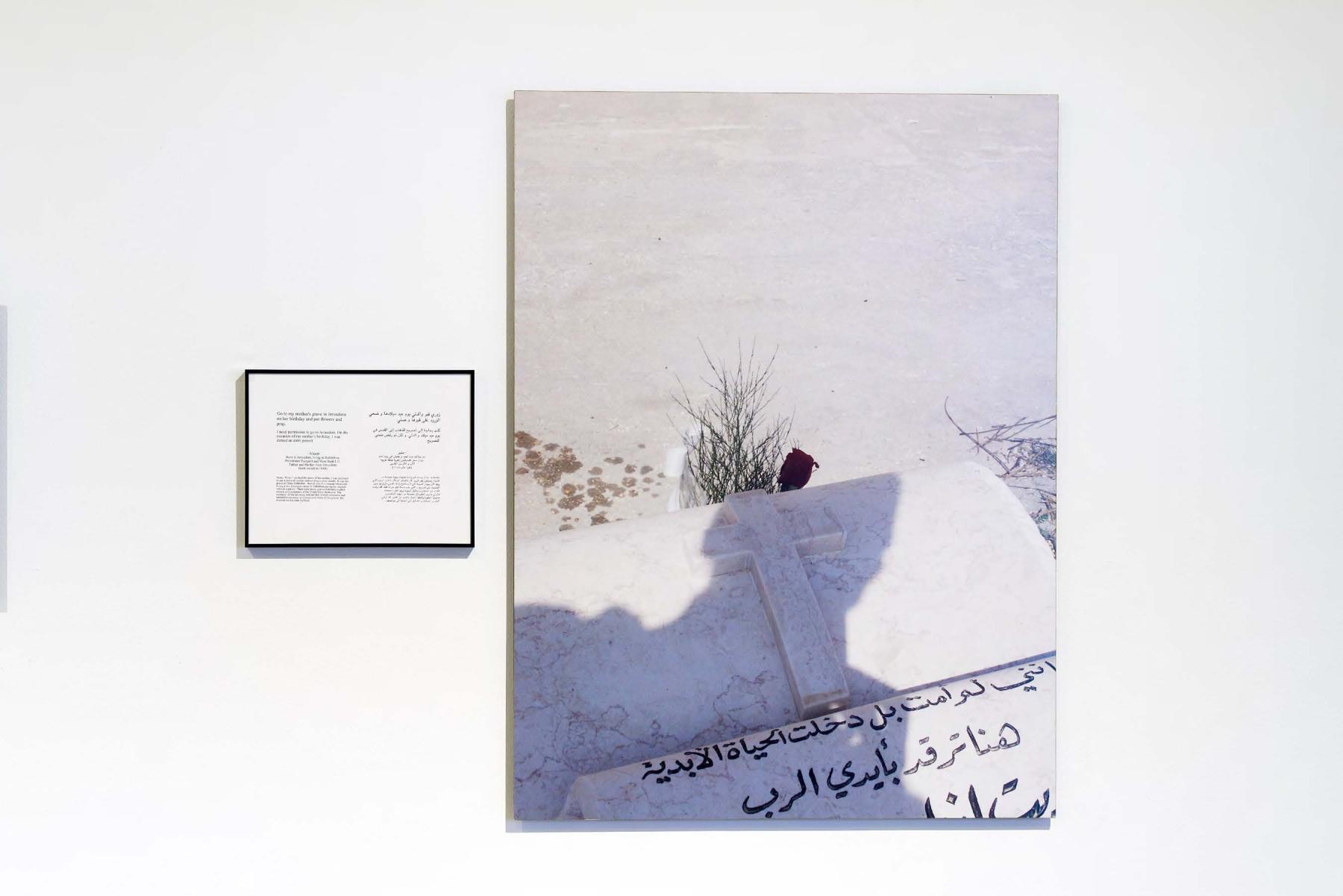
The camera in Jacir’s hands becomes a surveilling device to stubbornly gaze back at the occupying forces in acts of counter-surveillance. Elia Suleiman's Divine Intervention (2002) interprets such acts of defiance in the face of surveillance through humour which cracks open the state machinery—like an army tank’s muzzle uselessly monitoring a Palestinian man walking about taking a phone call. Similarly, in Al Jaar Qabla al Daar (The Neighbour Before the House, 2009-11), Mumbai based artist collective, CAMP manipulated surveillance CCTV cameras for Palestinians to annotate their thoughts while looking at their Israeli neighbours who had taken over their homes. Jacir’s camera gazes back at the Israeli police stationed beside her home, silently staring at their activity, just like they monitored her home day and night.
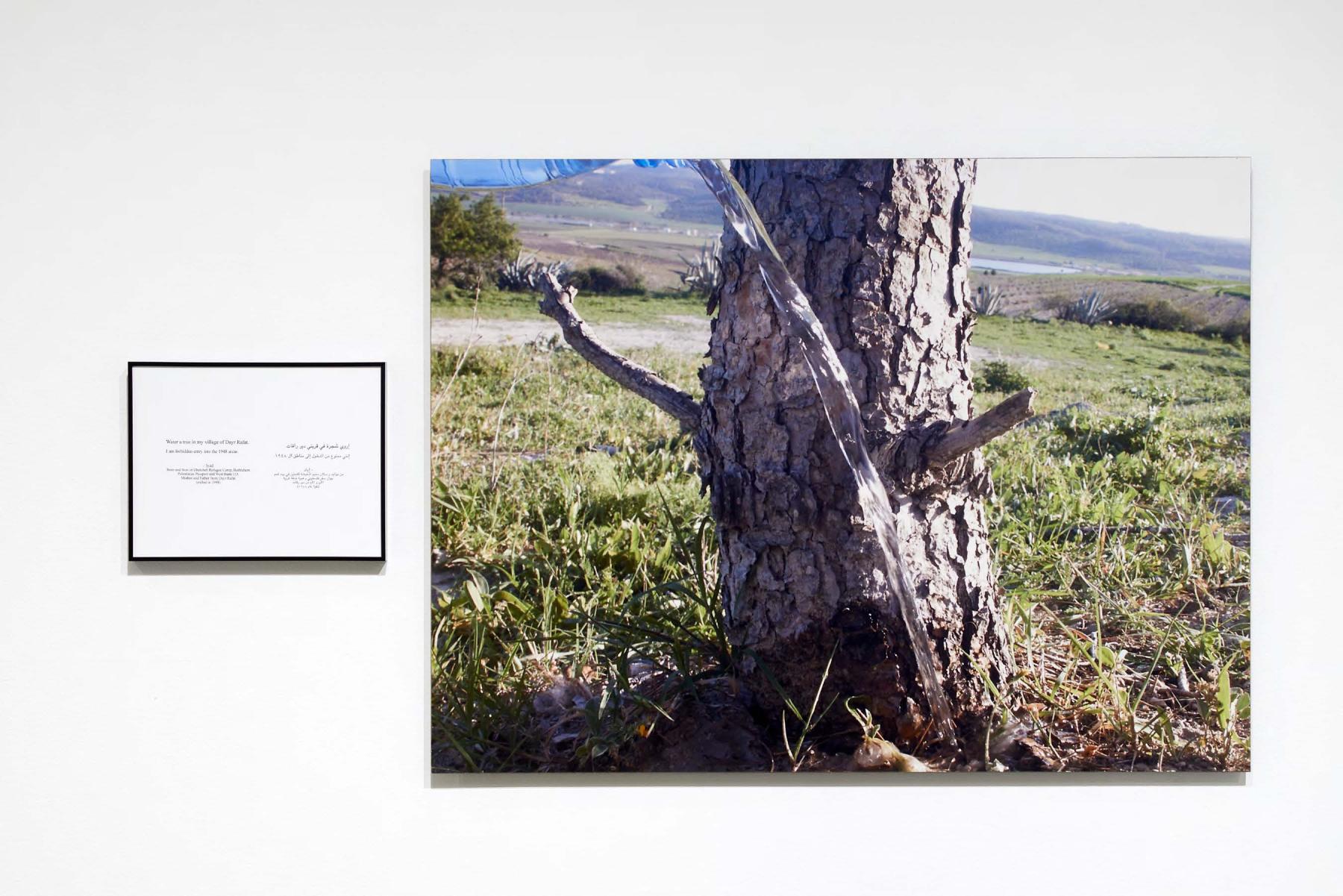
In many ways, such annotation, in the form of verbal or written text alongside image, becomes significant across Jacir’s work, where she seems to imply that the image does not always reveal the multitudes it contains within. In a video collage of moments from Akka, Jerusalem, Hebron, Ramallah, Gaza City and Bethlehem in 15 Palestinian Minutes in Palestine (2001)—which almost seem like a motion accompaniment to this project—such underlying tensions are perhaps more obvious as Jacir’s camera stays on a worn-out door of her parents’ house fitted with four locks.
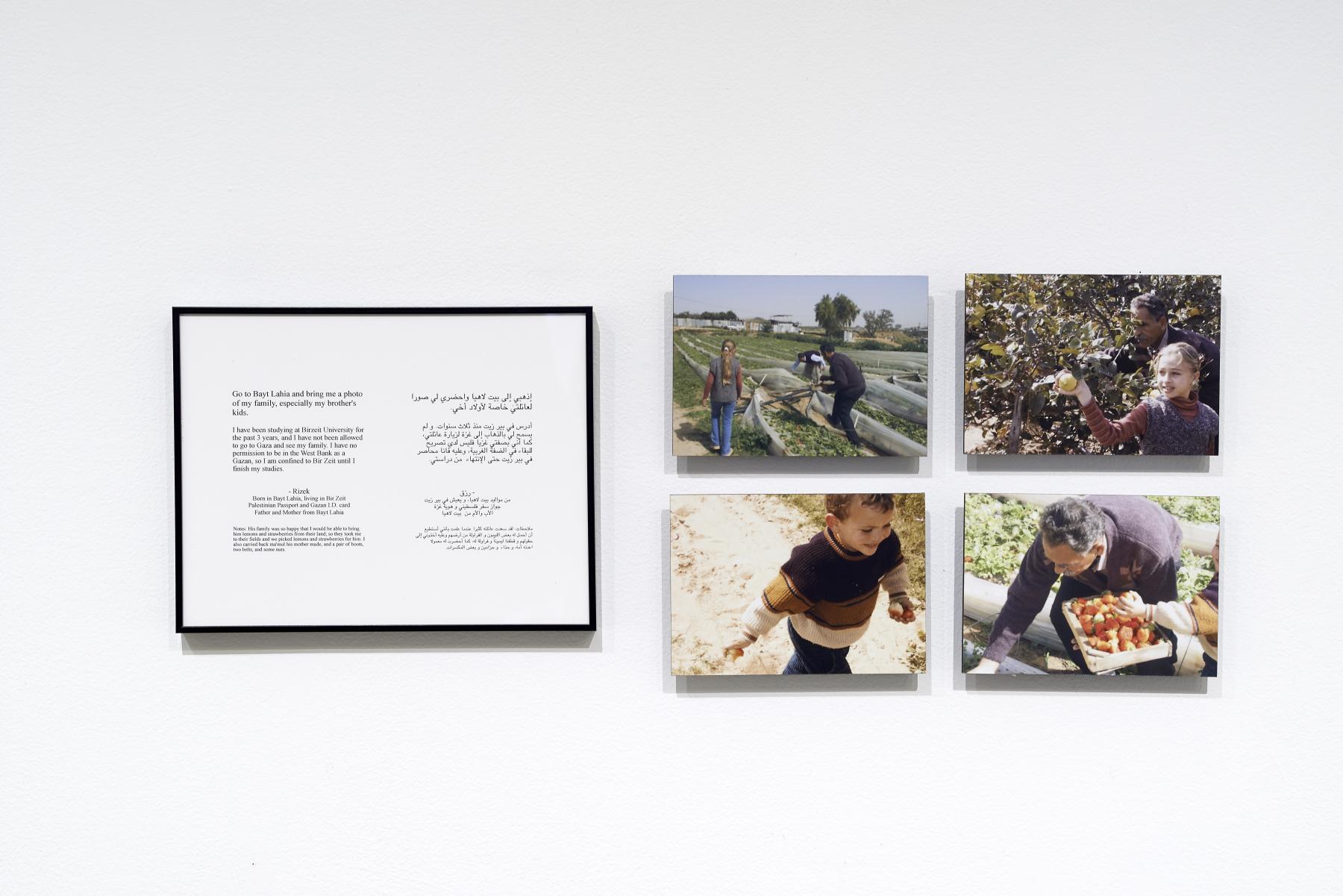
Jacir’s images remain layered, even in moments of joy: When one sees photographs of Rizek’s smiling family in Bayt Lahia where children pick an abundance of lemons and strawberries in their family field, it is significant to read it alongside the systemic Israeli destruction of citrus orchards and olive trees, which took away many Palestinian livelihoods. It has become a strategy of destruction that mingles with environmental degradation, like in Jabal Abu Ghneim which originally had 60,000 pine trees until 1997 when Israelis started uprooting them to build the Har Homa settlement as Jacir would note in her letter to a friend. Therefore, watering a tree in Dayr Rafat, planting pomegranate tree seeds across Palestine, and photographing a young boy clutching a bunch of strawberries and his sister holding onto a lemon—as requested by Jacir’s friends—become significant acts of reclamation.
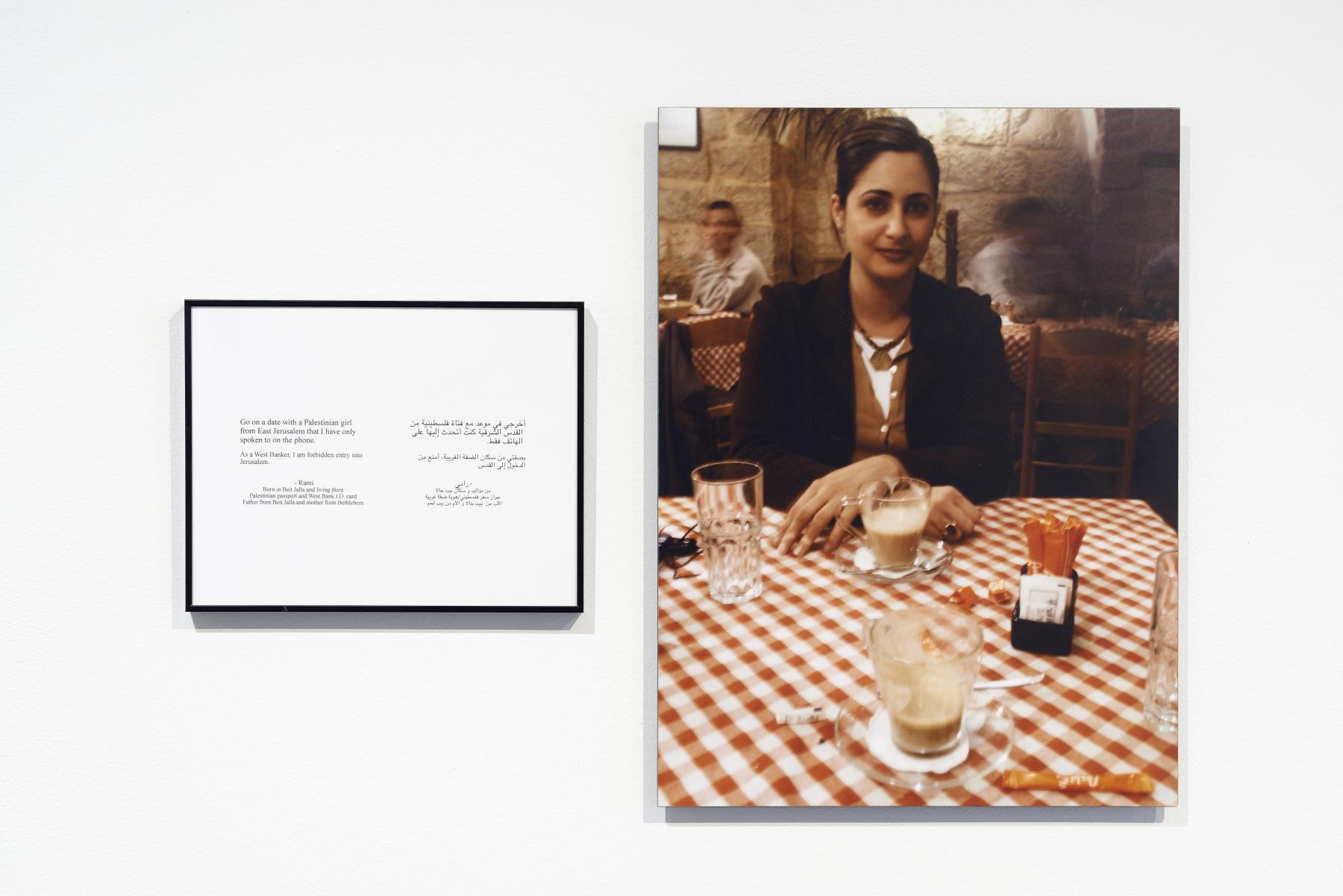
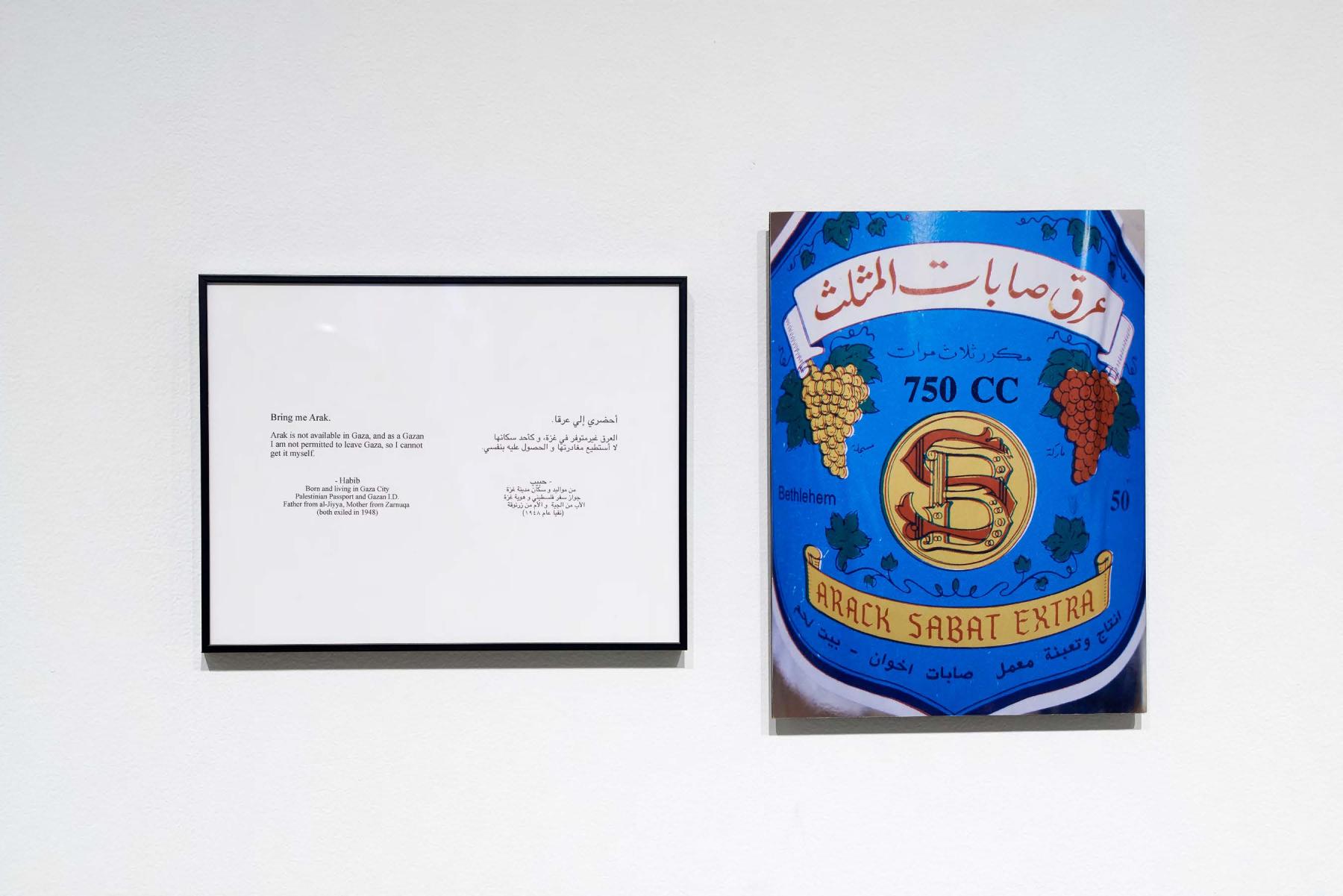
Jacir stretches these tenuous moments of connectivity between families separated by classified identities, placing them within locational boundaries by being a middle agent—going on a date with a Palestinian girl from Jerusalem for Rami from the West Bank, both of whom would never end up meeting. She zooms into every particle of Melben bread available in the West Bank, capturing every air hole and sesame seed in it, and also takes a close-up shot of the swiftly printed sticker on a bottle of local Arak whose colour shifts beyond the black lines, as it proudly reads out “Bethlehem.”
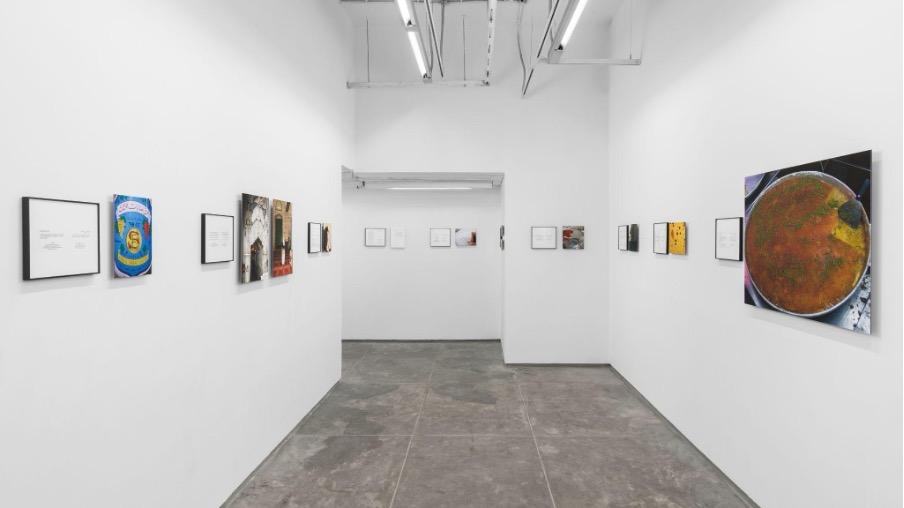
Lined up along the gallery, Jacir’s prints read as postcards meant to be circulated. Realising this nature of the prints, Jacir initially compiled the work into a black-and-white printed magazine and wanted it to be shared in Jerusalem, but this desire was thwarted by extreme Israeli violence and surveillance as a response to the Second Intifada, which made it impossible for anyone to reach Jerusalem. However, her wish to circulate it around the country was somewhat realised, Jacir recalls:
“I called the magazine (im)mobility which was a pun, as in Palestine mothers are called Ilm Suleiman (the mother of Suleiman) after the oldest son, so it translates to “the mother of mobility.” We circulated it all over the country from Gaza City to Akka and people came back with more requests. Everyone was deeply engaged with it and super curious to know what other Palestinians in different conditions would ask for.”
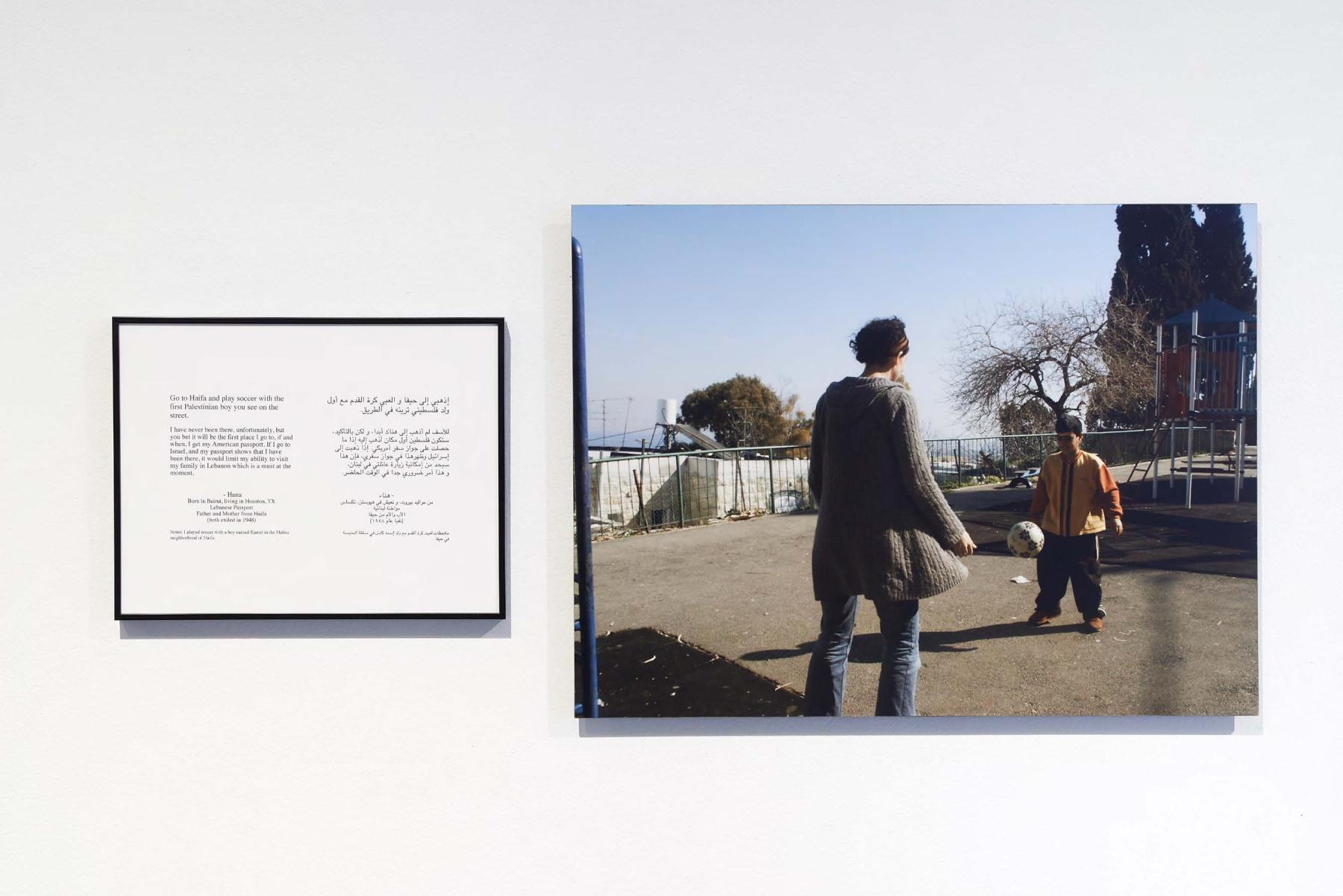
The project ended in 2003 as it became physically difficult to continue—and Jacir reminisces on the impossibility of making such a work today considering the internal and external checkpoints, closed military areas, buffer zones and more than 700-kilometres of concrete wall and electronic fence. Today, Israel’s naval blockade of the Gaza Strip prevents any outsiders or even food aid from reaching them, even as freedom flotillas attempting to breach the blockade have been intercepted and the activists aboard these continue to be subjected to torture in Israeli prisons. A simple photograph of playing football with a Palestinian boy today bears the subtext of football-shaped cluster bombs being dropped by Israel in Lebanon, which detonate upon being picked up by children.
This exhibition is not Jacir’s first showcase in India—last year, her work was displayed in a curated presentation at the Kochi-Muziris Biennale (2025-26), by Dar Yusuf Nasri Jacir for Art and Research, an artist-led space founded by Jacir, and letter to a friend and 15 Palestinian Minutes in Palestine ran at Experimenter. Jacir was not able to travel to the showcase, considering the travel restrictions, and at the time when I was writing this essay, she was allowed to visit her sister for the first time in ten years. This becomes an important moment to look back at a work created almost three decades ago—the genocide in Gaza continues even as the Indian government continues to form strategic partnerships with Israel while being one of their biggest arms suppliers and buyers, to the extent that it is Israel that is supplying military tech currently being deployed in Kashmir. Moreover, Indian labour continues to replace Palestinian workers whose work permits are cancelled, and colder places in India like Himachal have become a refuge for Israeli soldiers after their participation in the genocide.
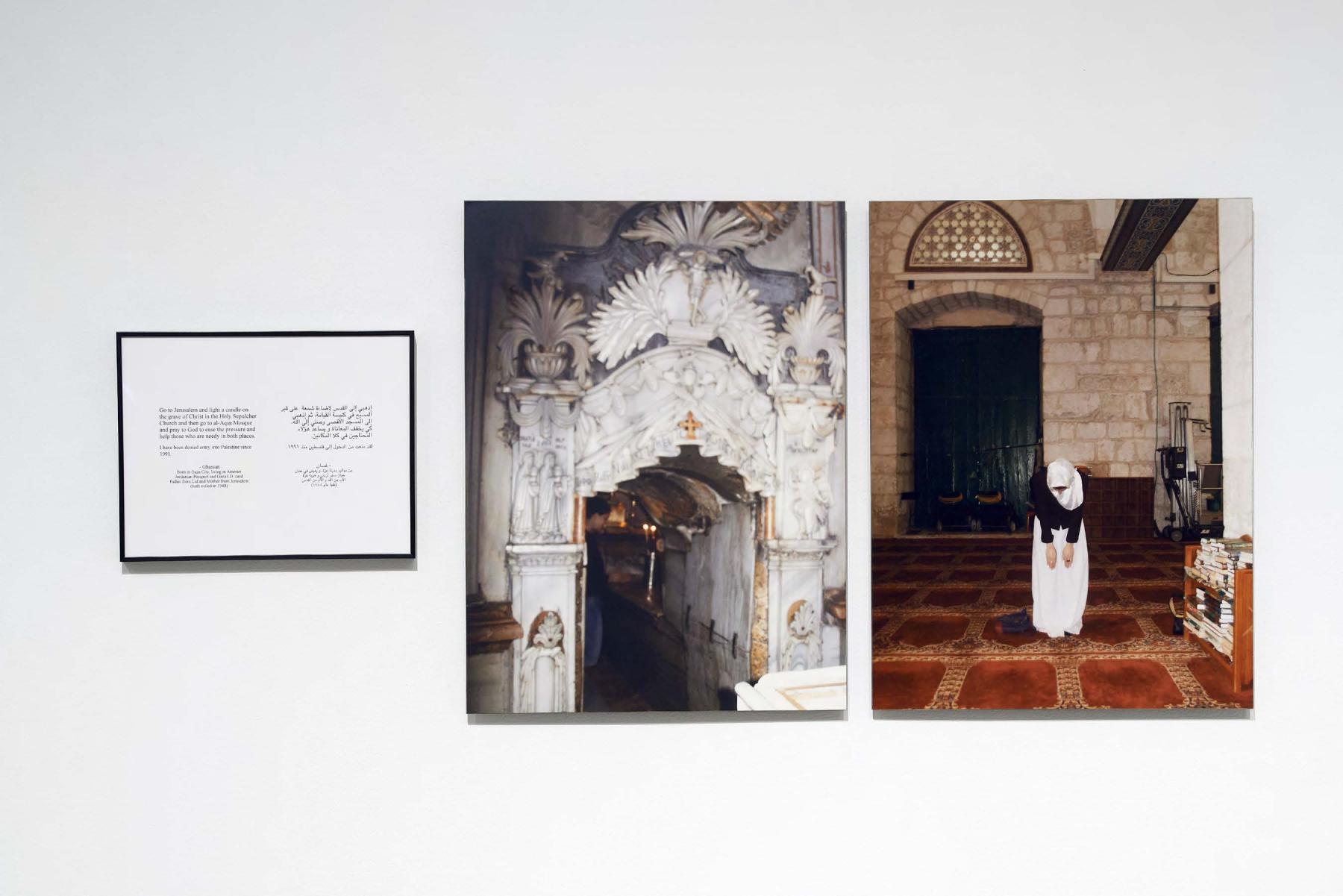
“Surrounded by restrictions devised by the modern bureaucratic mentality laws and scraps of paper that either permit you to go somewhere or prevent you from going, the Palestinian has to resort to improvisation or persistent stubbornness to overcome these obstacles,” Edward Said would write in his review of Jacir’s work in Grand Street magazine in 2003. Even though Jacir is not allowed mobility, the work continues to move, like the original magazine always intended to, so that Where We Come From remains a reminder of the significance of navigating ways to overcome the laws of Occupation—towards seeking out connectivity and collective remembrance, for resistance always thrives within circulatory networks.
In case you missed the first part, read it here.
To learn more about image-making practices by Palestinian artists, read Dev Saraswat’s essay on Ahlam Shibli’s photographic practice and documentary aesthetics, Prabhakar Duwara’s reflections on Ahmed Alaqra’s conversation with yasmine eid-sabbagh and Mallika Visvanathan’s conversation with yasmine eid-sabbagh at PhotoKTM6 (2025), Santasil Mallik’s reviews of Mohammad Bakri’s Jenin, Jenin (2002) and Maha Haj’s Upshot (2024), Kshiraja’s essay on Yousef Srouji’s Three Promises (2023) and Kamayani Sharma’s conversation with photographers Maen Hammad and Dina Salem on their activation Against Abstraction.
All images are installation views of archival pigment prints mounted on alu-dibond and framed inkjet prints on paper of variable dimensions from Emily Jacir’s Where We Come From (2001-03), on display at the exhibition, Emily Jacir | Where We Come From at Experimenter. (Kolkata, 2026. Images courtesy of the artist and Experimenter. Photography by Vivienne Sarky.)