
The World is Blind: In Conversation with Ahmed Alaqra and yasmine eid-sabbagh
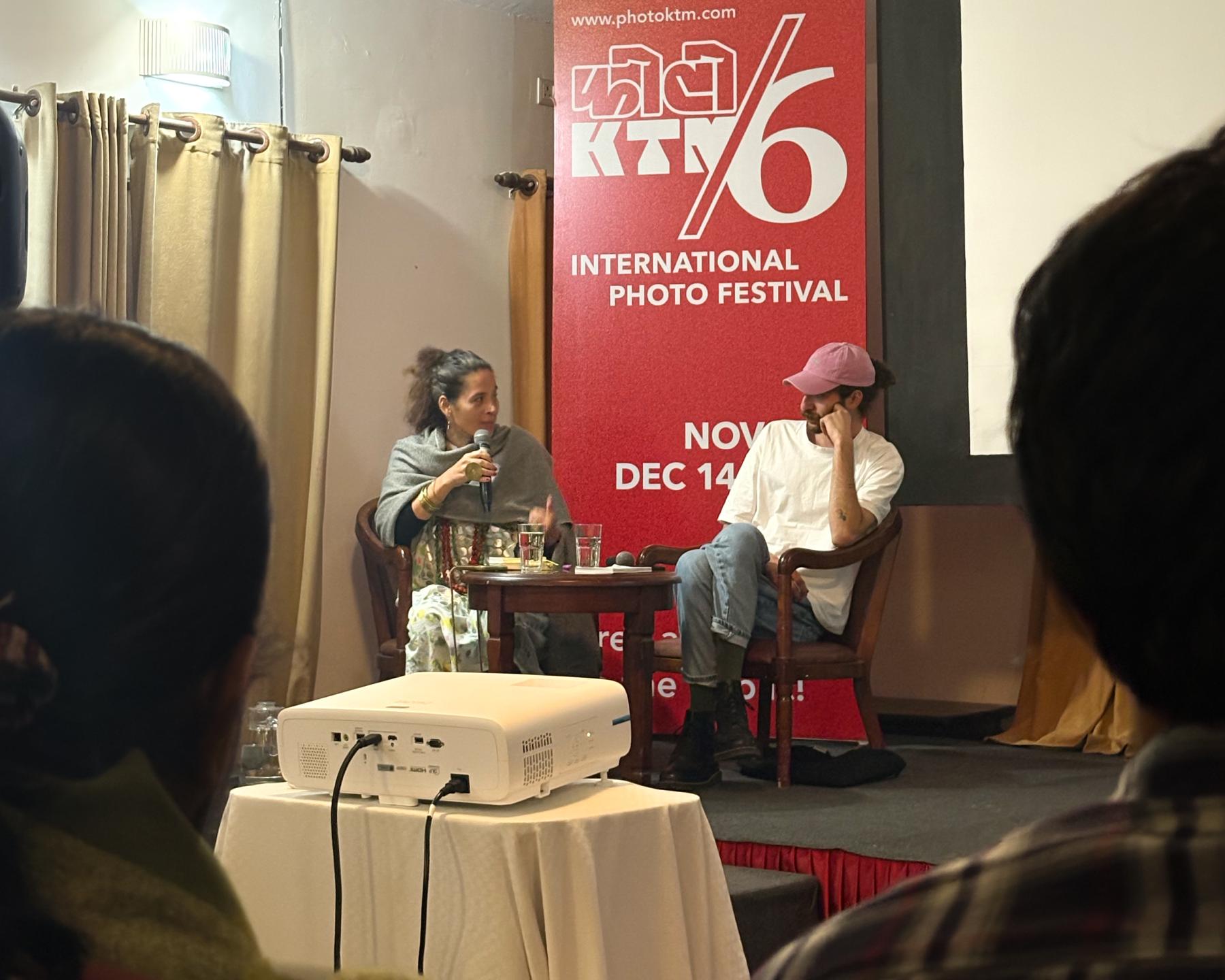
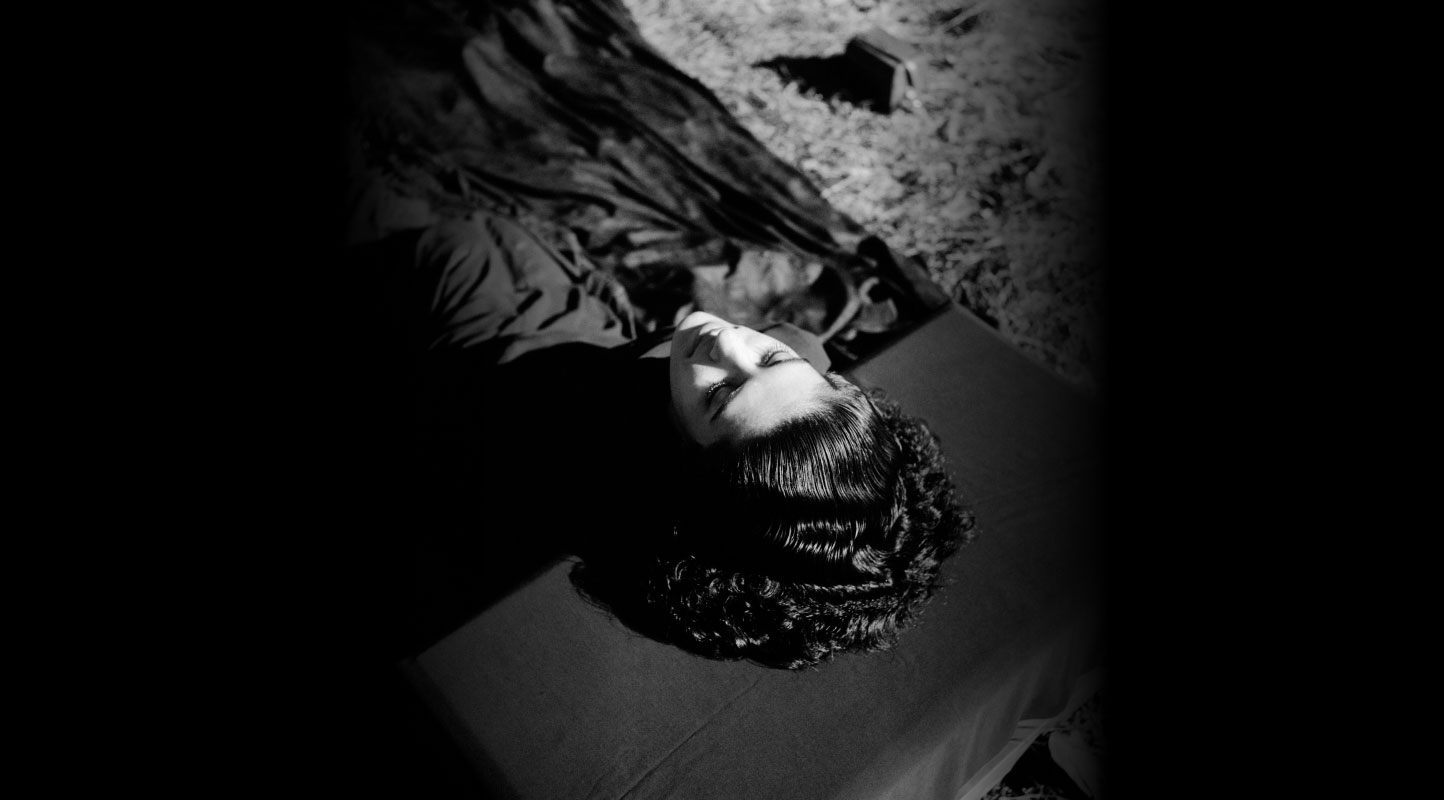
Ahmed Alaqra’s Between Us, A Thread is an ongoing project that started as email exchanges with fellow artists and friends scattered across the globe, tied together through their memories of Palestine and people they love. In the opening week of PhotoKTM6, Alaqra and yasmine eid-sabbagh were in conversation about this work and what it might mean for Palestinians to make images in the present moment, two years into the current phase of the ongoing genocide of the Palestinian people by Israel. Held on 17 November 2025, their conversation titled “When the World is Blind–Images by Palestinians” was structured around these exchanges—many short, some long—that circulated with the instruction “please respond whenever you can.”
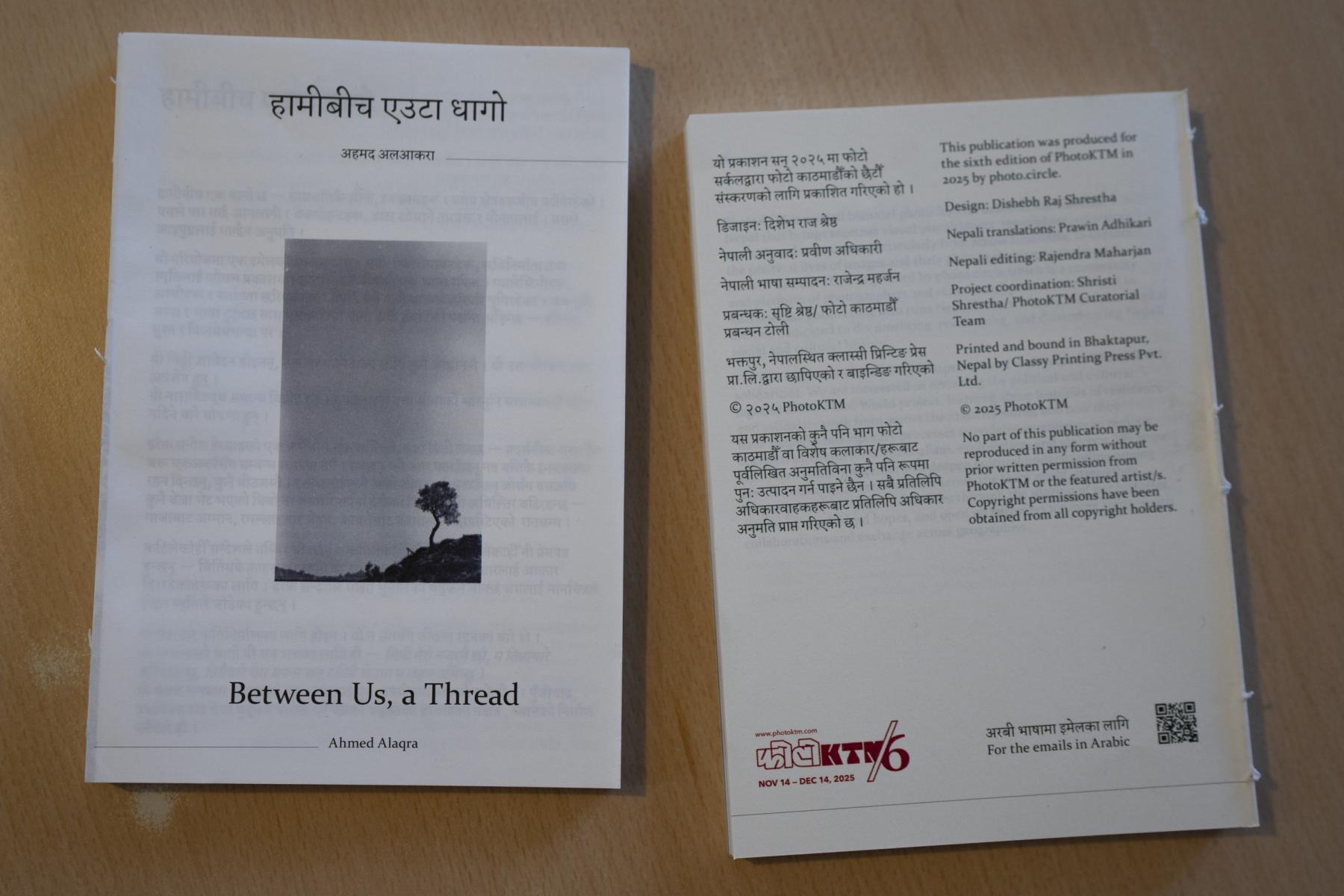
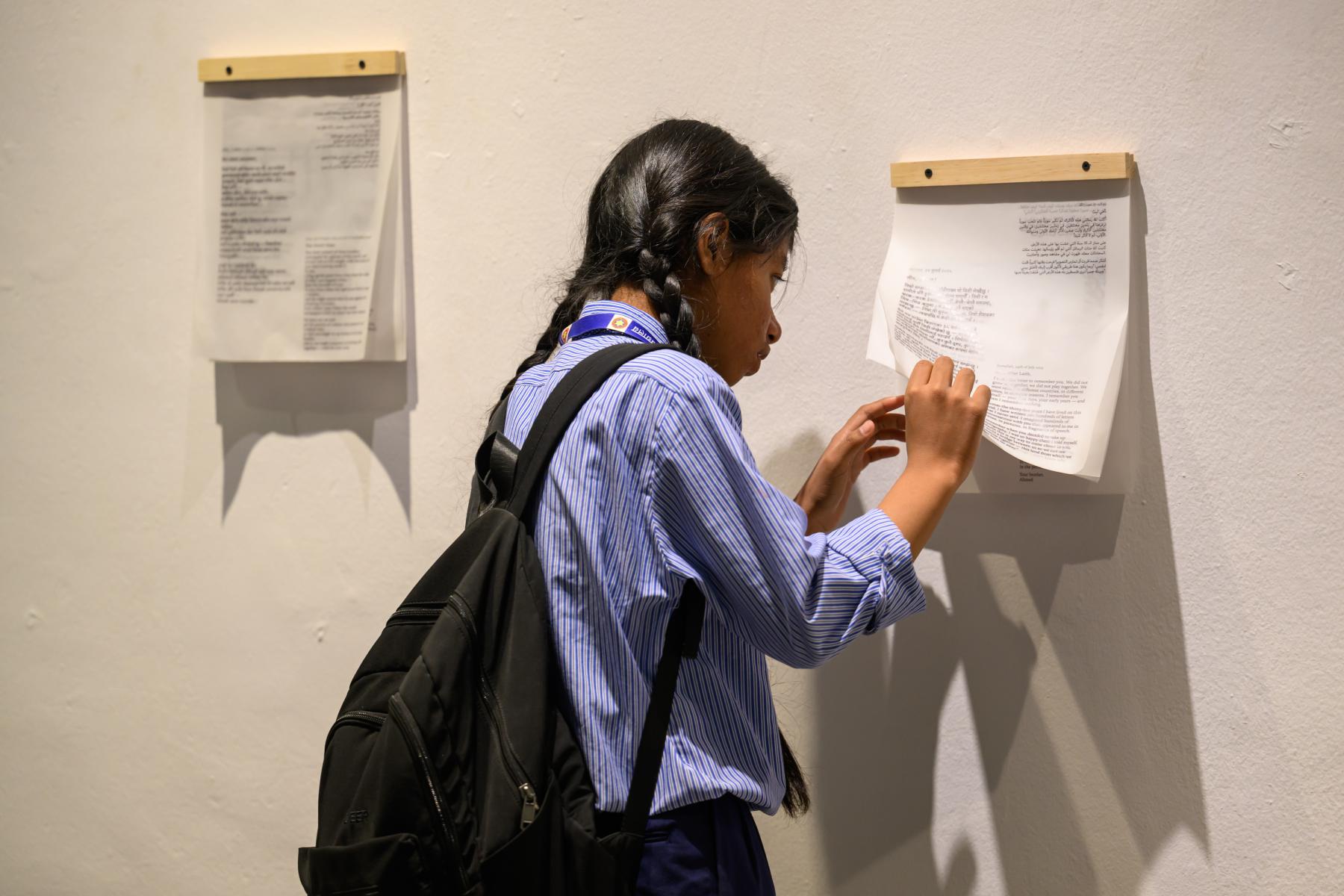
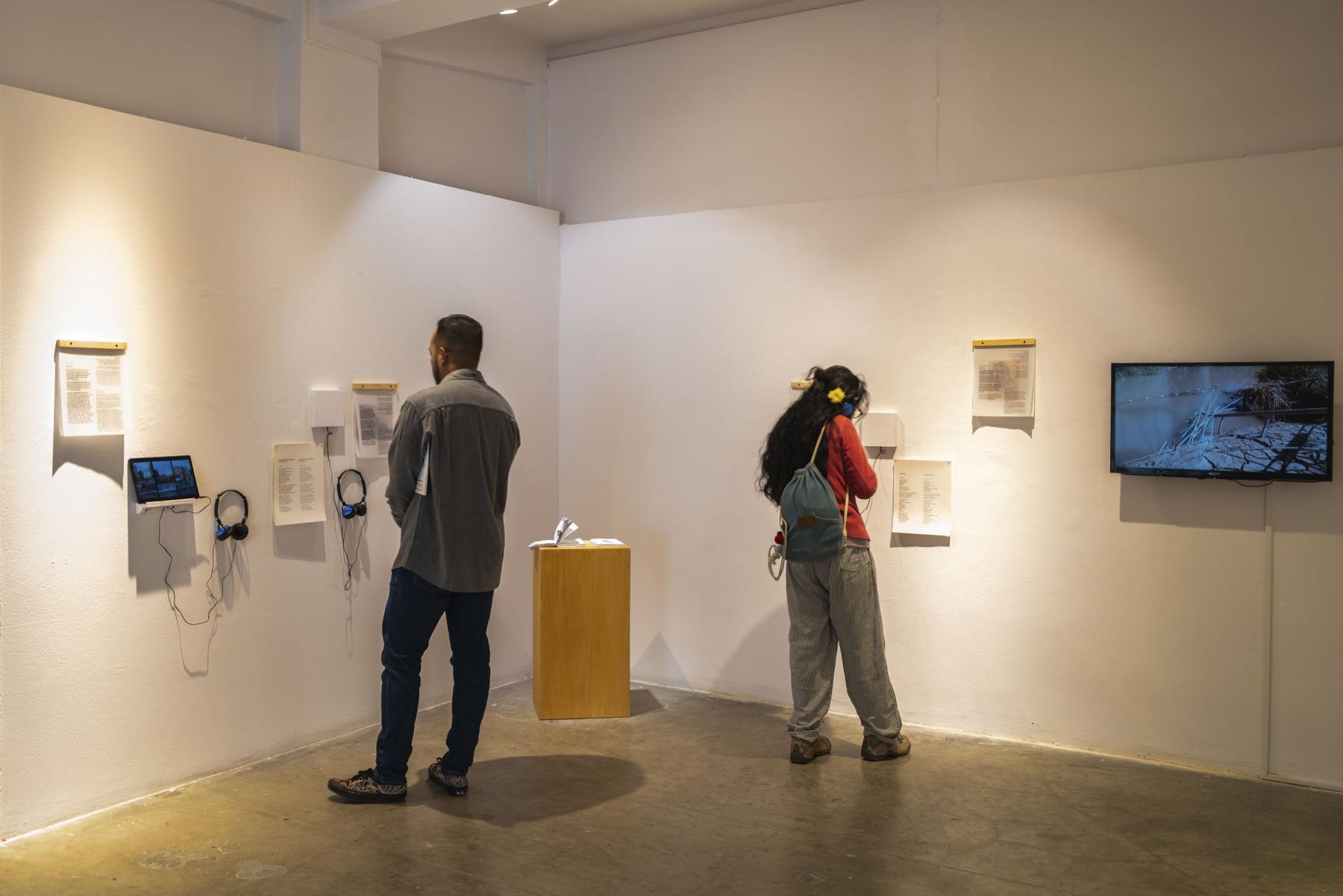
The work exists as letters and audio recordings that were up on display at the Nepal Art Council, but they were also distributed for free in the form of a publication. These intimate exchanges were printed in English and Nepali, the two most accessible languages for the audience at the festival. The Arabic text for the letters was also available for people to scan and read through a QR code.
At the beginning of the conversation, eid-sabbagh reminded the room (that is filled to slightly above capacity) about one of the main reasons why the conversation was titled “When the World is Blind,” and why this work has come into being. During these last two years, we have been witnessing how young people in Gaza who have taken up the responsibility to document and photograph the genocide have been purposely targeted and killed by Israel. They were murdered in their homes or on the way to work, all while being clearly identifiable as mediapersons. They were targeted specifically because they bore witness. She mentioned Hossam Shabat, who was twenty-three-years-old, and Anas Al-Sharif, who was twenty-eight-years-old, and also emphasised the need for everyone in the room to read up about the lives of the nearly 300 journalists who have been killed, so that we can try to grasp the personal cost of these deaths. The latest update from Reporters without Borders states that nearly half the journalists killed around the world in 2025 were based in Gaza.
Alaqra and eid-sabbagh then spoke about how they were in conversation with NayanTara Gurung Kakshapati, the director of PhotoKTM, trying to consider how they could address Palestine at the festival. When Alaqra and eid-sabbagh spoke to Palestinian photographers and visual artists to try and understand what they might be interested in doing, most of them replied by saying there is nothing that feels meaningful or possible at this time when their colleagues in Gaza are being murdered for taking photographs. They then reoriented their question to “What can we do that would be meaningful for you?”
Alaqra had the idea to start an email exchange with photographers in Palestine as well as the Palestinian diaspora, eventually extending to Arab artists across the world. The aim of such an exchange was to actually spend time with each other rather than think of a public audience or what needs to be represented. With the heaviness that comes with witnessing this genocide and losing so many friends, this initiative allowed for a small opening where they could speak to each other about the mundane, a place where these little everyday stories that they were not otherwise sharing could rest. It allowed for connection, but the heaviness and the collapse of the mind and the body obviously do not go away.
Speaking about Palestinian geography, eid-sabbagh then went on to mention how the state of Israel divides Palestinian society into isolated places. There are different permits for people in the West Bank, for those in the North or in the South or in Jerusalem. Kinship gets broken into pieces in this process. The obstacles and hurdles for Palestinians that the settler colonial state keeps creating are constant and countless. An immediate example of this was the fact that Alaqra, who is from Ramallah, was not allowed to board his flight to Kathmandu from Amman. In reality there was no law that prevented him from boarding this flight, but the Israeli state came up with some reason. He had to defy the system and go through the ordeal of going through the airport again without any changes to his visa or passport, and somehow made it for PhotoKTM. These blockades, checkpoints and permits are deliberate obstacles to curtail the freedoms of Palestinian people in whatever way possible, and eid-sabbagh pointed out how the publication offers some glimpse of free circulation, even if it is just the circulation of words.
Alaqra took this further to mention how the question of the ordinary feels like a question of privilege to him and other Palestinians. To seek out the ordinary feels like seeking out luxury. Within this ordinariness, the artist was really struck by what he identified as impulsiveness in his friends’ responses to his questions. There were people who talked about what is holy, while some questioned the sacramental. Some people talked about death, while others talked about their mothers. There were even people talking about their apartment in Beirut. He had asked them to respond when they could, so some of them did so while traveling in public transportation or while taking pictures of the street. Others took the time to draft a whole email with careful articulation, so you can see the responses oscillate between vastly different impulses.
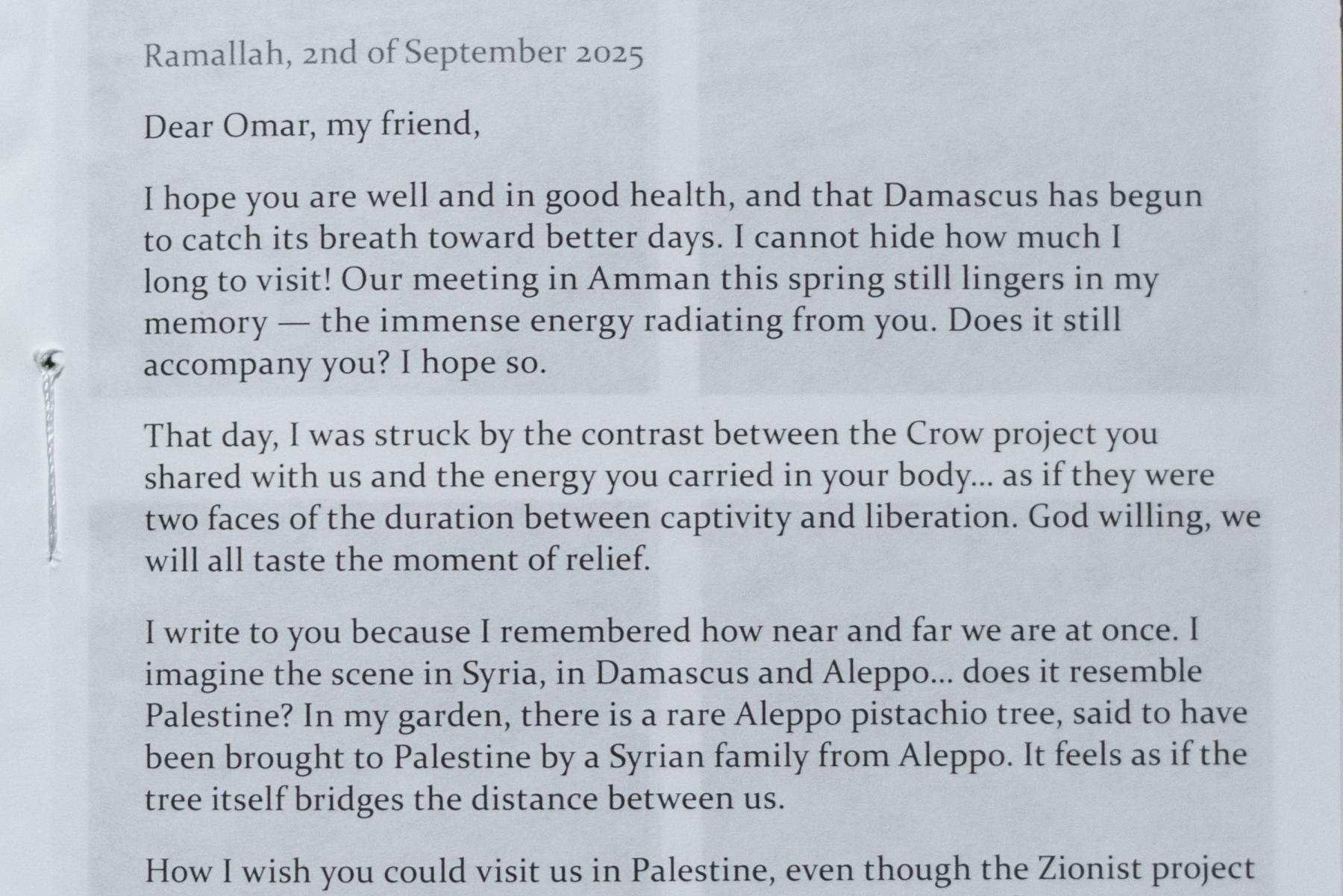
The first exchange of letters in the publication is between Alaqra and Moayed Abuammouna, a visual artist and filmmaker based in Gaza. Alaqra read out Abuammouna’s reply, where he says, “I write to you not knowing whether words can save a life, whether an image can stop a massacre, but I write full of what cannot be said, because if we fall silent, we die twice.” Alaqra emphasised on this feeling of inadequacy that comes with trying to represent the shared heaviness, whether through words or images, but he also reiterated how he felt it was necessary to keep asking these questions. He mentioned another exchange, with Rotana Shaker, who lives in Riyadh, Saudi Arabia. In her letter she talks about how the geography of Palestine grew in her mind as fragments—from still images in news articles, paintings of an older generation of artists and descriptions whose sources she could not even pin down. These images of a land which felt familiar but was still so distant became the thread between her and Alaqra, and eventually between all the other people who keep extending this thread of letters.
Alaqra also shared an anecdote from his parents’ home in Ramallah, where they own a small piece of land with olive trees. He spoke about how he was working on a project on the landscapes of Palestine, and how memory is fabricated, which involves conversations with his family. Alaqra came back home one day to find that they now have a settler in their land, whose name is David. His mother said, "We have a settler. His name is Daoud. "The underlying point was how the landscape of Palestine often changes overnight, but this idea of “having” a settler, and his strange presence in this land—never directly visible except for the appearance of his drone—allowed for a moment of shared laughter. The artist then went on to talk about how humour is another way of dealing with this heaviness and the anger. He shared another small excerpt from a small letter by Ruba Alfaraouna, a Palestinian artist, to give an example: “On the way to Shakib from Jerusalem in a bus that smells like settlers' sweat. And all I want right now is to reach the desert and stay there.”
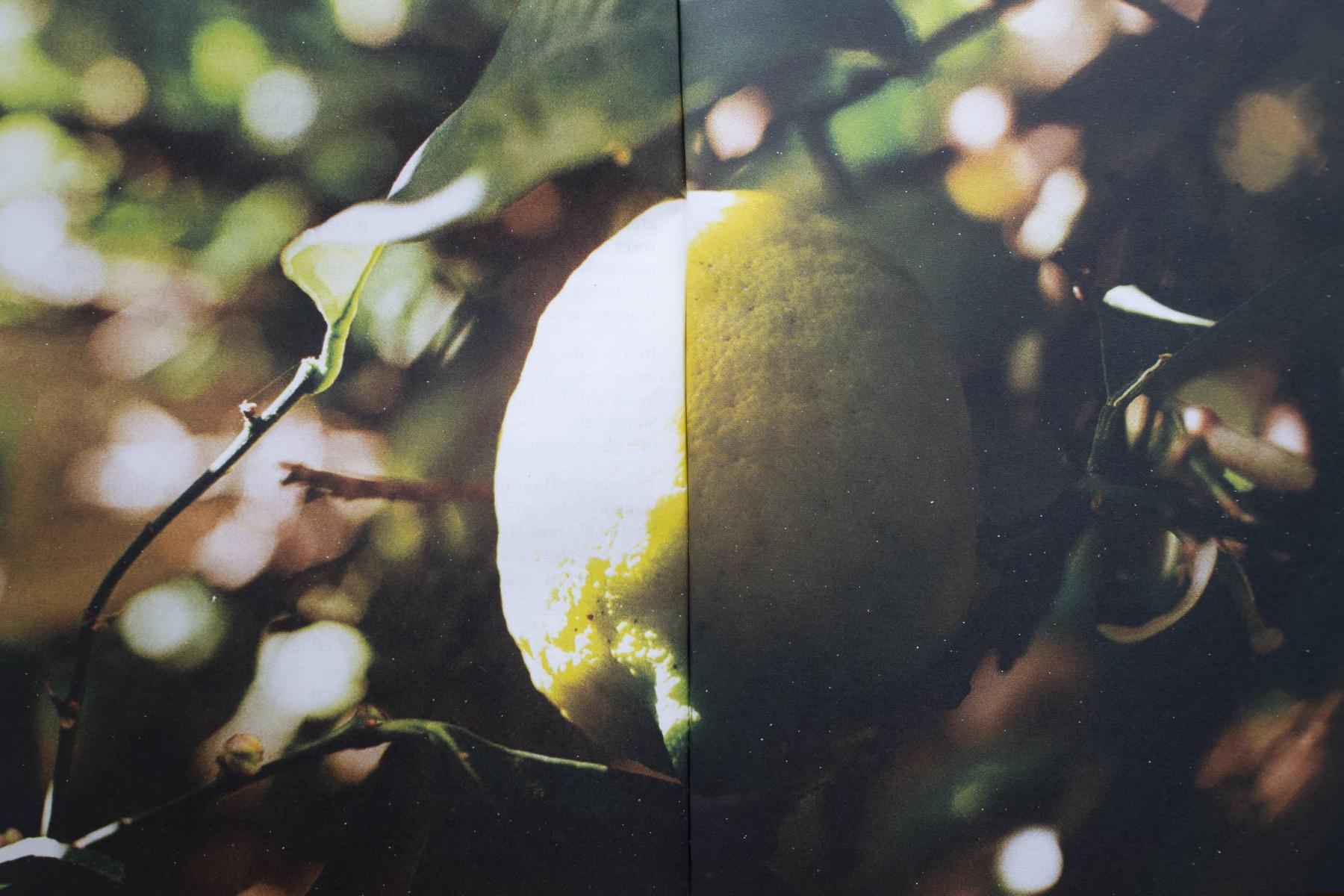
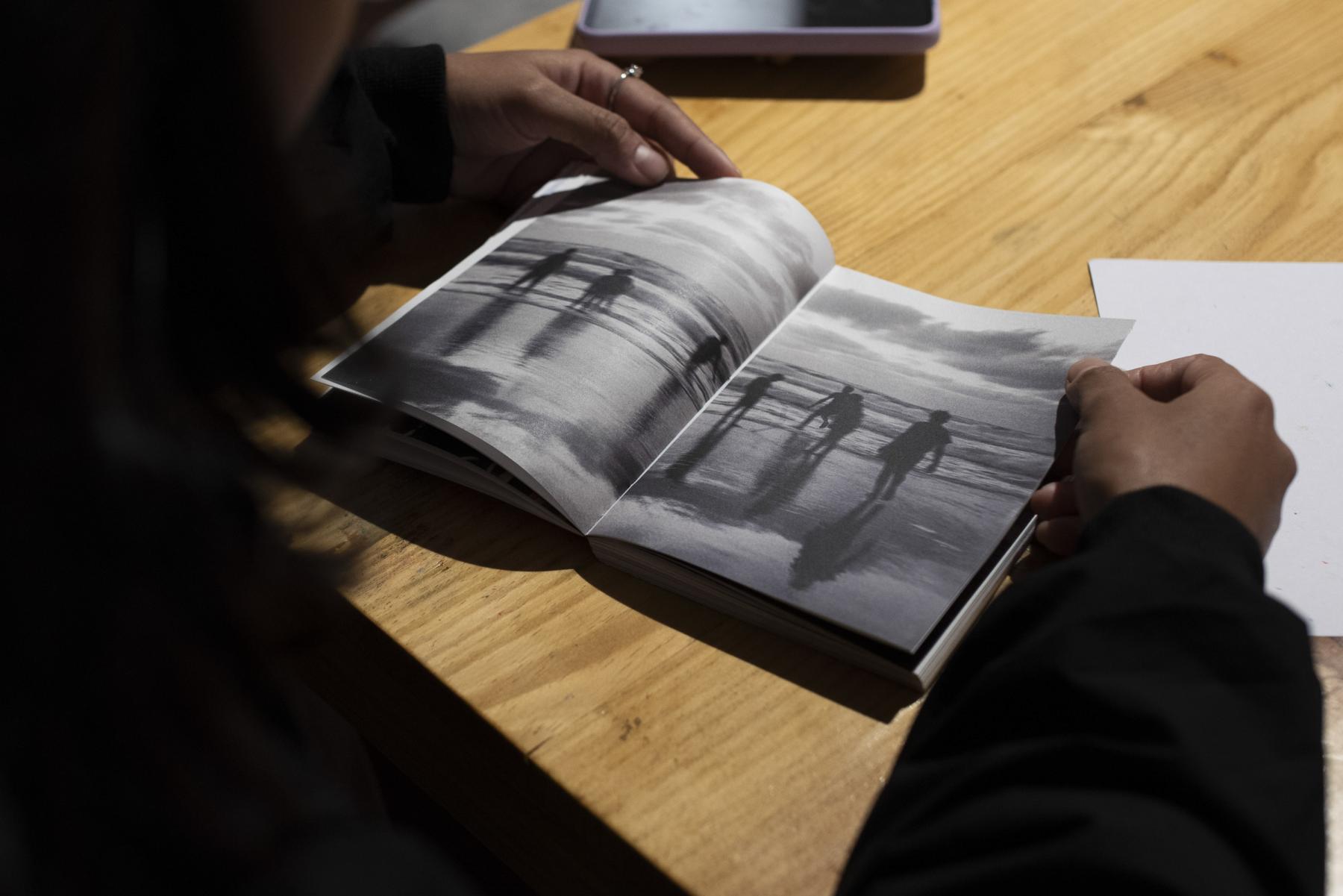
For a long while, Alaqra questioned the slogan “existence is resistance,” but over the last two years, it has become clear that being able to exist in Palestine under these violent apparatuses of power is indeed a form of resistance. Between Us, A Thread speaks to the difficulty of being Palestinian, because there are so many different people with their own histories and trajectories, and at the forefront are the people in Gaza who are resisting by staying on their land and fighting against the genocide. The publication is also an attempt to share this heaviness with anyone who might want to pick it up. With photographs that paint vivid pictures interspersed between the letters, it is a document which offers the reader a responsibility towards what is visible and what is not, to uphold a civil contract of photography beyond nation states. The world decides when it wants to be blind and when it does not, so the publication tells the reader: "You are part of the world, refuse to be blind."
To learn more about artists responding to the ongoing genocide, read Santasil Mallik’s observations on Gaza Lives as part of Filmworks for Palestine in Toronto and Kamayani Sharma’s conversation with Palestinian photographers Maen Hammad and Dina Salem about their work Against Abstraction.
To learn more about this edition of PhotoKTM, read Mallika Visvanathan’s conversations with yasmine eid-sabbagh about her work Possible and Imaginary Lives and Diwas Raja KC on the approach of the curatorial team, Birat Bijay Ojha’s reflections on public talks by Sasha Huber and Siona O’Connell and Prabhakar Duwarah’s two-part interview with Isadora Romero and Tanvi Mishra on seed sovereignties as part of the work Humo, Semilla, Ráiz.