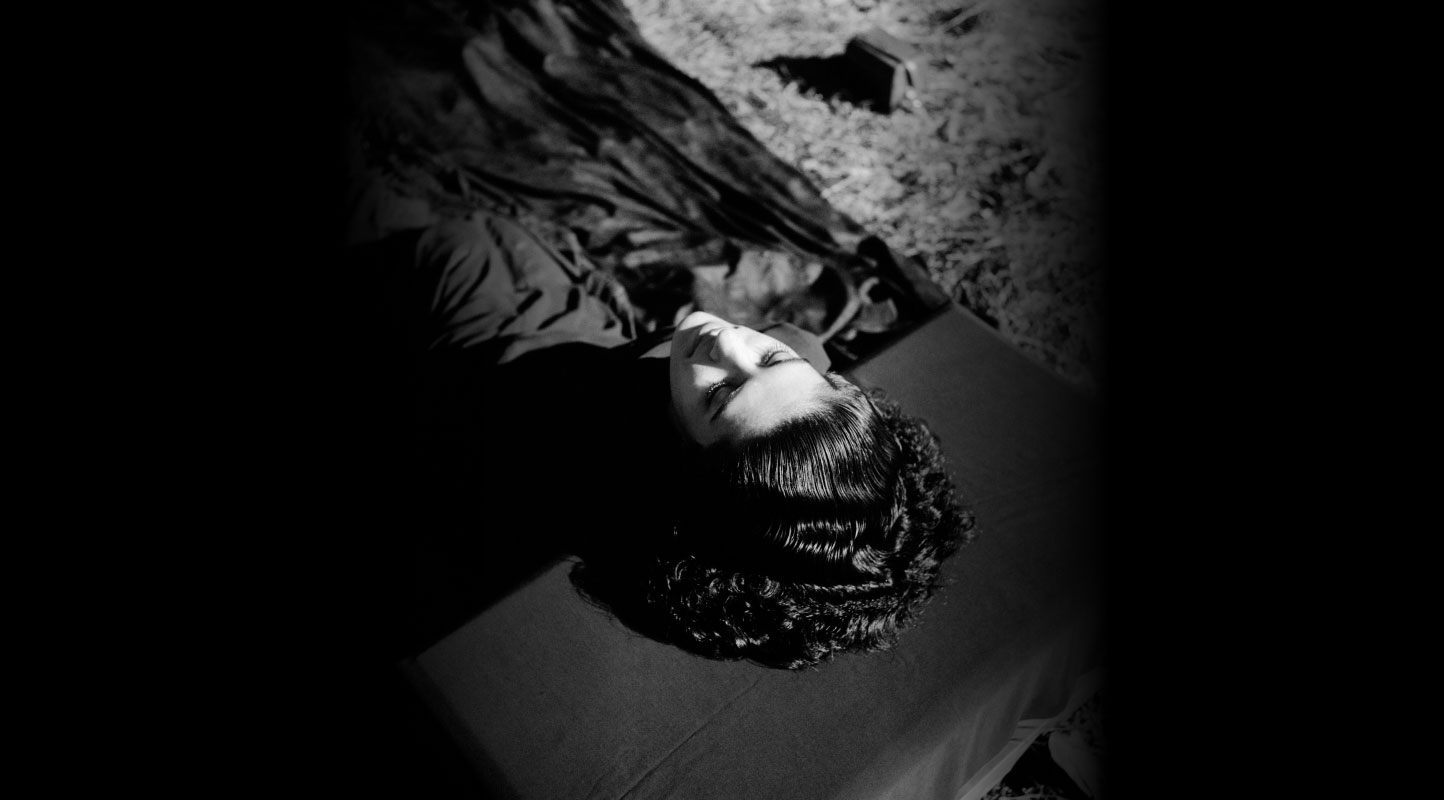


Child as Witness: Everyday War in Nooreh
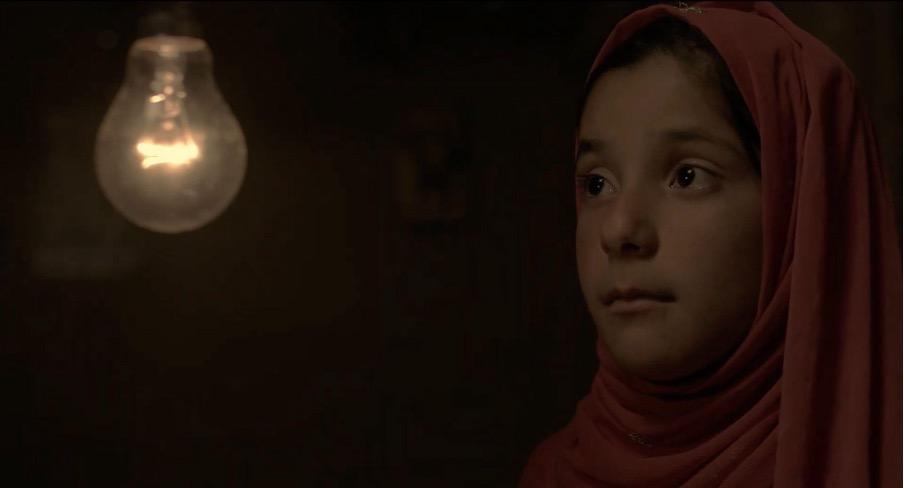
Ashish Pandey’s twenty-two minute short film Nooreh (2018), which premiered at the Busan International Film Festival in South Korea and won the Sonje Award for Best Asian Short Film in 2018, probes how conflict is absorbed into a child's psychological world.
Situating itself within a growing body of South Asian independent cinema that resists spectacle in favour of intimate, ground-level storytelling, the film is set in Gurez—a remote border valley in northern Kashmir near the Line of Control (LoC), where nights are fractured by the cross-border firing. In this delicate scenario, Noor (Saima Latief), an eight-year-old girl, believes she has found a way to stop the firing, simply by staying awake. In the child's logic, vigilance becomes a form of protection that initially appears as innocence but gradually degenerates into something more disturbing: a psychological adaptation to a world where the unpredictable is the norm.
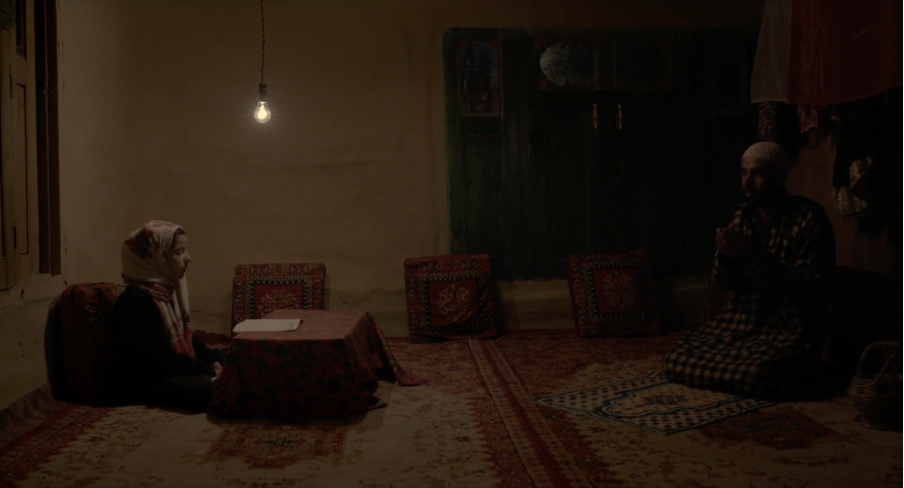
The film opens in near darkness. A dim bulb lights a modest room where Noor studies while her father completes his evening prayers. The scene is ordinary, almost unremarkable, until suddenly it is shattered by the sound of gunfire. From that moment on, sleep ceases to be comfortable and becomes a state of disenchantment; the night is not a pause in life but a threshold of uncertainty.
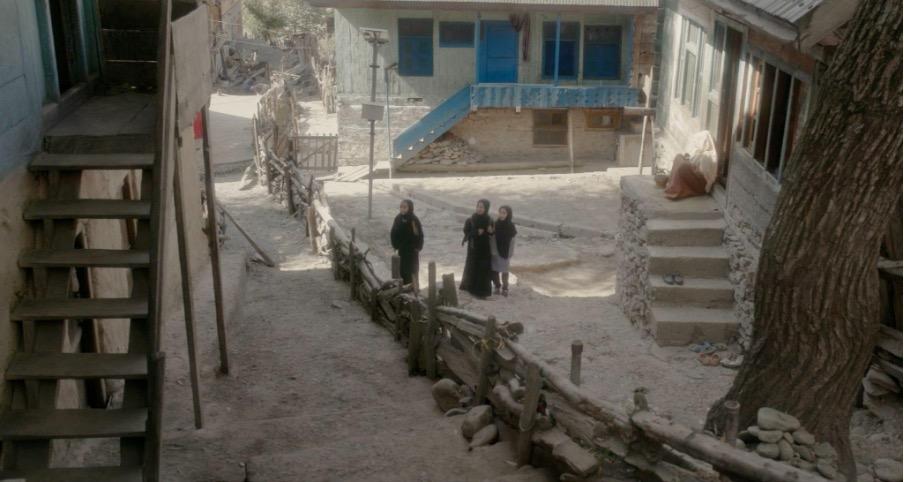
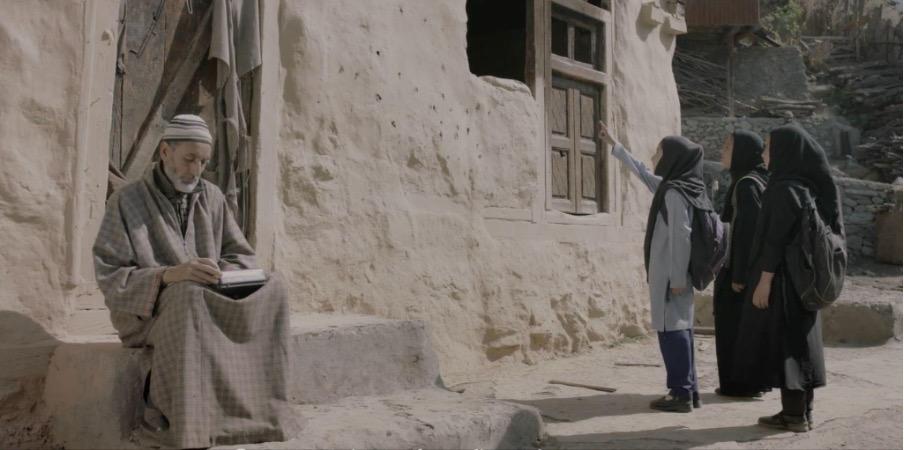
In the daylight, life resumes with a quiet, unsettling routine: children walk to school with walls marked by shellfire; an old man listens to the radio; Noor and her friends describe the previous night's explosions with accustomed accuracy; an old woman nearby dismisses the question when Noor asks who died there, insisting that Ishaq (her son) will return. Violence is not uncommon—it is pervasive, an embedded condition of everyday life that shapes attention, discourse and memory.
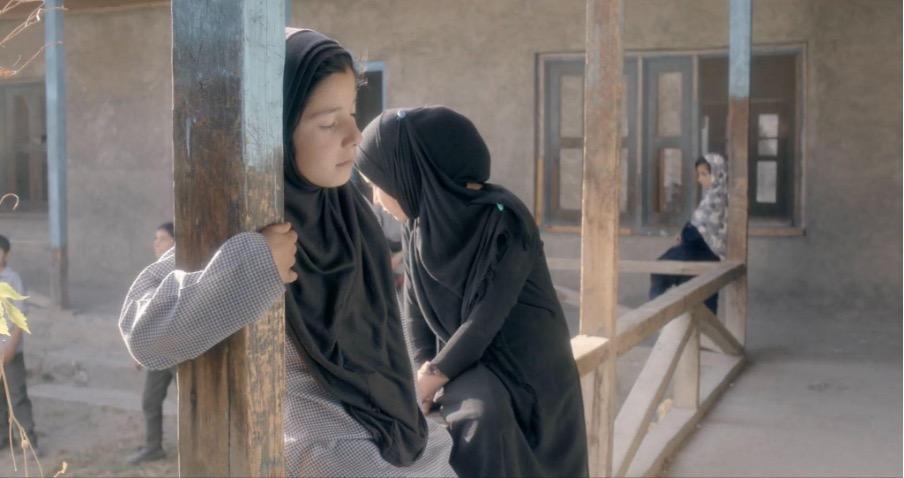
At school, lessons continue until an announcement interrupts: last night's heavy shooting may force a shutdown. Children respond not with fear but with conversation. While one wonders whether the wedding will be delayed, another hopes the conflict can wait until after her birthday so she can get a toy helicopter. War enters their lives not as an abstraction but as disruption—an interruption in schedules that reorders desire in small, precise ways.
Noor's belief that her wakefulness can stop the gunshots forms the emotional centre of the film. She resists sleep through small acts such as washing her face, drawing and counting steps, which gradually becomes exhausting. When a night passes without incident, her belief is confirmed. The film does not resist her consolation but neither does it permit her the comfort of reason. Her vigilance is not effective; it is compensation that seems like agency. In fact, a child's attempt to harmonise in an unexpectedly constructed environment that at first reads as a misunderstanding gradually reveals itself as a coping mechanism: an attempt to find control in an uncontrollable world.
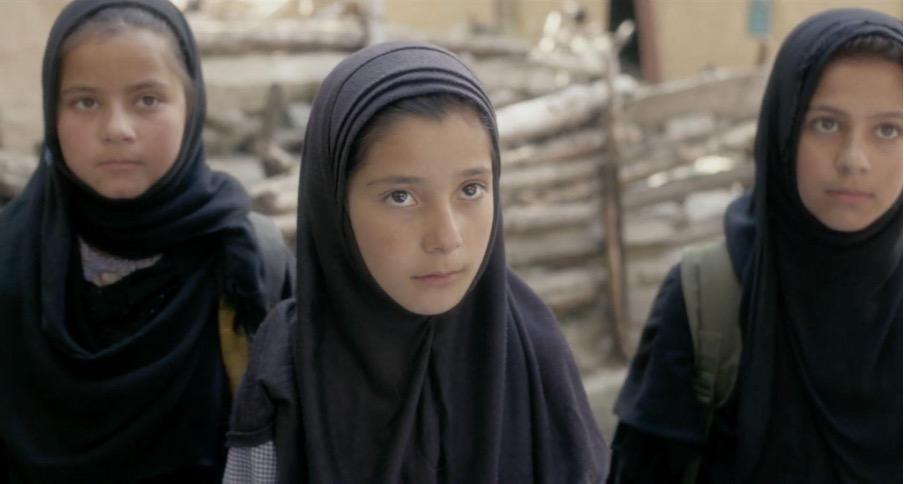
The film's production process reflects its themes of endurance and adaptation. Pandey describes the initial shoot as difficult, marked with communication barriers and logistical challenges. Yet as filming progressed, young actor Latief began to inhabit the character of Noor with stunning realism. At one point, she fell asleep between takes during a night shoot—a quiet, unmediated instance that revealed the tension between the body’s need for rest and the film’s premise of wakefulness. There are moments where the boundaries between character and child break down, an unscripted barrier that subtly contradicts the film’s central point of view.
Stylistically, Nooreh works with restraint, avoiding exposition while leaning on duration, silence and the off-screen sound of gunfire, which is often heard rather than seen—its presence made felt rather than shown. The film occupies a space between fiction and observation, echoing the minimalist sensibilities of filmmakers like Iranian director Abbas Kiarostami (1940–2016), where meaning emerges through attention rather than explanation. The result is a narrative that feels less constructed than inhabited, as if it were lived rather than performed.
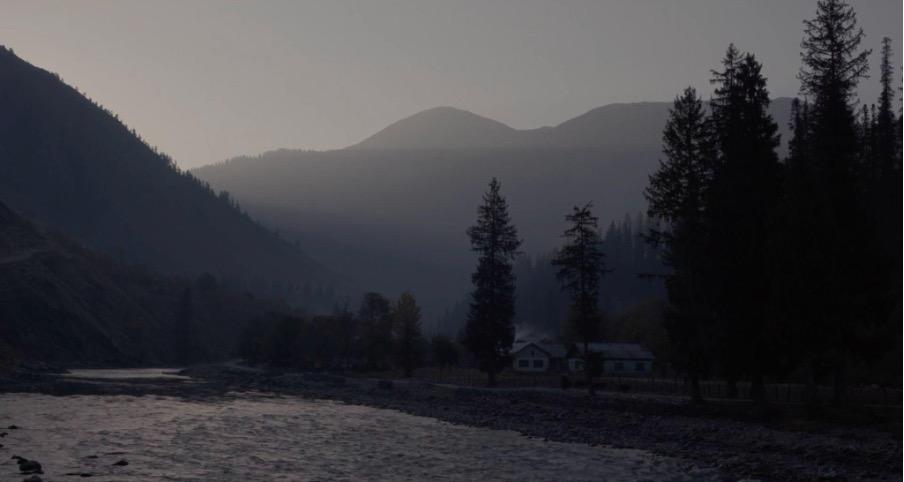
What began as a script in the Hindi language gradually changed with the support of local communities. "We did not want to impose language," Pandey says. "People should speak in whatever language they are comfortable." The film is notable for being the first short fiction in Shina, a Dardic language spoken across parts of Kashmir, extending into Gilgit-Baltistan and the broader trans-Himalayan region. This linguistic choice is not accidental; it anchors the film in a specific cultural milieu that is often absent from mainstream representations of Indigenous tribes in Kashmir. Shina is not used as a stylistic flourish; instead, its everyday rhythms, expressions and silences convey intimacy, fear and internalisation of violence that shape the way the characters experience and understand their world. This is similar to the language of the film—rather than engaging directly with geopolitics, it focuses on how violence resides in memory, routines and perception.
Pandey describes Nooreh's origin as instinctive—a recurring image rather than a constructed idea. "It felt like something that came naturally," he says, "like I was chosen as a medium to tell this story." Being unfamiliar with Gurez before making the film, Pandey initially explored Rajasthan and Punjab while looking for a border village before turning to Kashmir. He then discussed the idea with his friend Raja Shabir Khan, a documentary filmmaker from Kashmir, who suggested exploring Kashmir's border fence and landscape. They both scouted several villages in South Kashmir, where Khan had worked earlier, but none of those were suitable for the film, and the region was quite sensitive at the time due to militancy. Eventually, the suggestion of Khan's relatives in Bandipora brought them to Gurez. In 2017, they travelled for six to seven hours from Srinagar to Gurez, over rough roads and without network connectivity, entering a place that felt completely cut off from the world. “It felt like we were going nowhere,” Pandey recalls, “until the sight of a military post at Razdan Pass confirmed that we were on the right track.” Crossing the pass, he reached Bagtore, a village near the LoC that later became the main filming location.
Nooreh’s relevance stretches beyond its immediate setting. Periodic escalations along the LoC continue to displace communities and adversely affect civilian life—most recently in May 2025, when renewed tensions forced evacuations from border villages. For those living in these regions, such disruptions are cyclical, embedded in personal and collective memory.
When Pandey returned to Gurez to screen the film in schools in 2019, he was met with a huge reception from the community and the film, he says, “No longer felt like ours; it was theirs.” A moment like this underscores the moral foundation of the film—that it comes from the experiences of the community.
For viewers outside Kashmir, Nooreh offers a point of entry into the intimate realities of border life that is far removed from the abstractions of policy or media headlines. For those living within such contexts, it reflects a psychological truth that is rarely articulated about how children learn to live with, interpret and silently resist the circumstances imposed upon them.
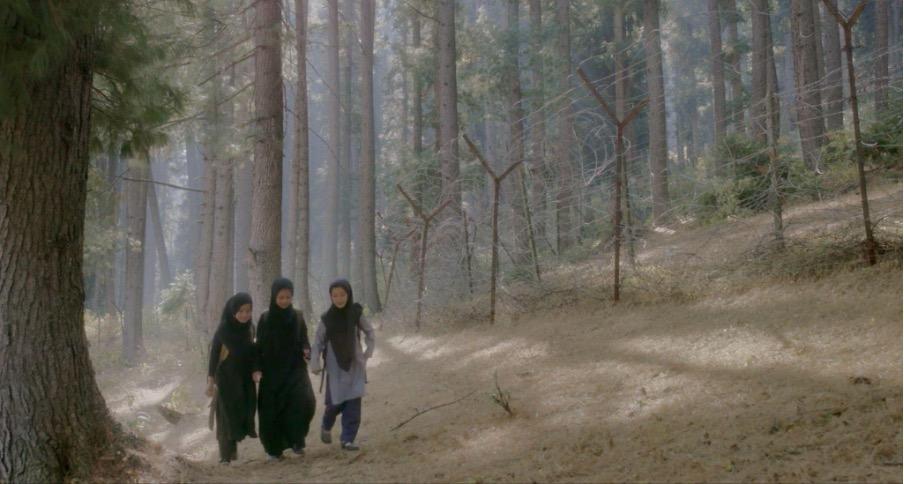
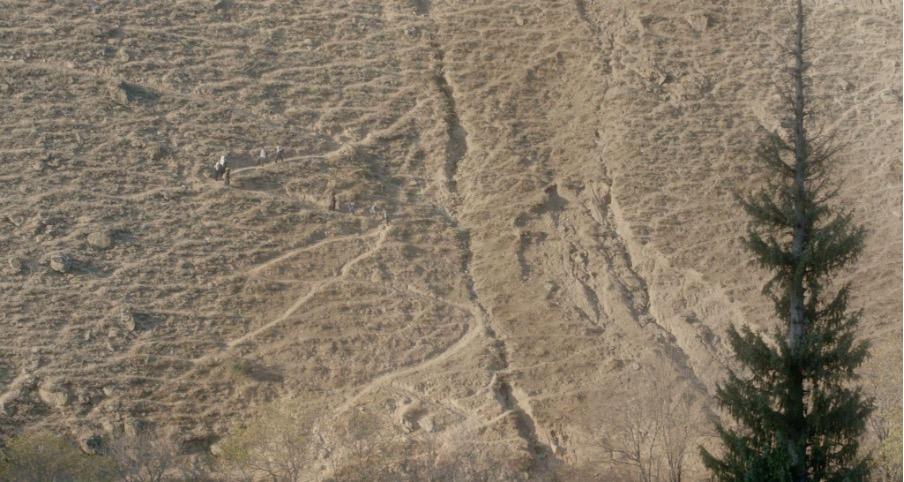
The film closes with children walking down a narrow mountain road, their small figures set against a vast, indifferent landscape—an image that leaves the film unresolved. Hidden in Noor's sleepless nights is a question that extends far beyond the frame: what does it mean to grow up in a world where safety is temporary?
Nooreh is not simply a story of resilience; it is a meditation on inheritance—on what it means to come of age in a place where conflict precedes understanding. Through its restrained gaze and evocative voice, the film transforms awareness into memory, asking us to listen closely to how fear, imagination and the routines of borders are intertwined.
To learn more about filmmakers exploring Kashmir’s complex identity and volatile landscape through lived experiences, read Ishtayaq Rasool’s essay on Mohamad W. Ali’s Searching for Grandpa (2025), Abdul Basit’s reflections on Iffat Fatima’s Khoon Diy Baarav (Blood Leaves Its Trail, 2015) and Sanjay Kak’s Jashn-e-Azadi: How We Celebrate Freedom (2007) and Ayushi Koul’s article on Danish Renzu’s film Songs of Paradise (2025).
All images are stills from Nooreh (2018) by Ashish Pandey. Images courtesy of the director.