

Why Don’t You Dance?: A Presentation by Hannah Darabi
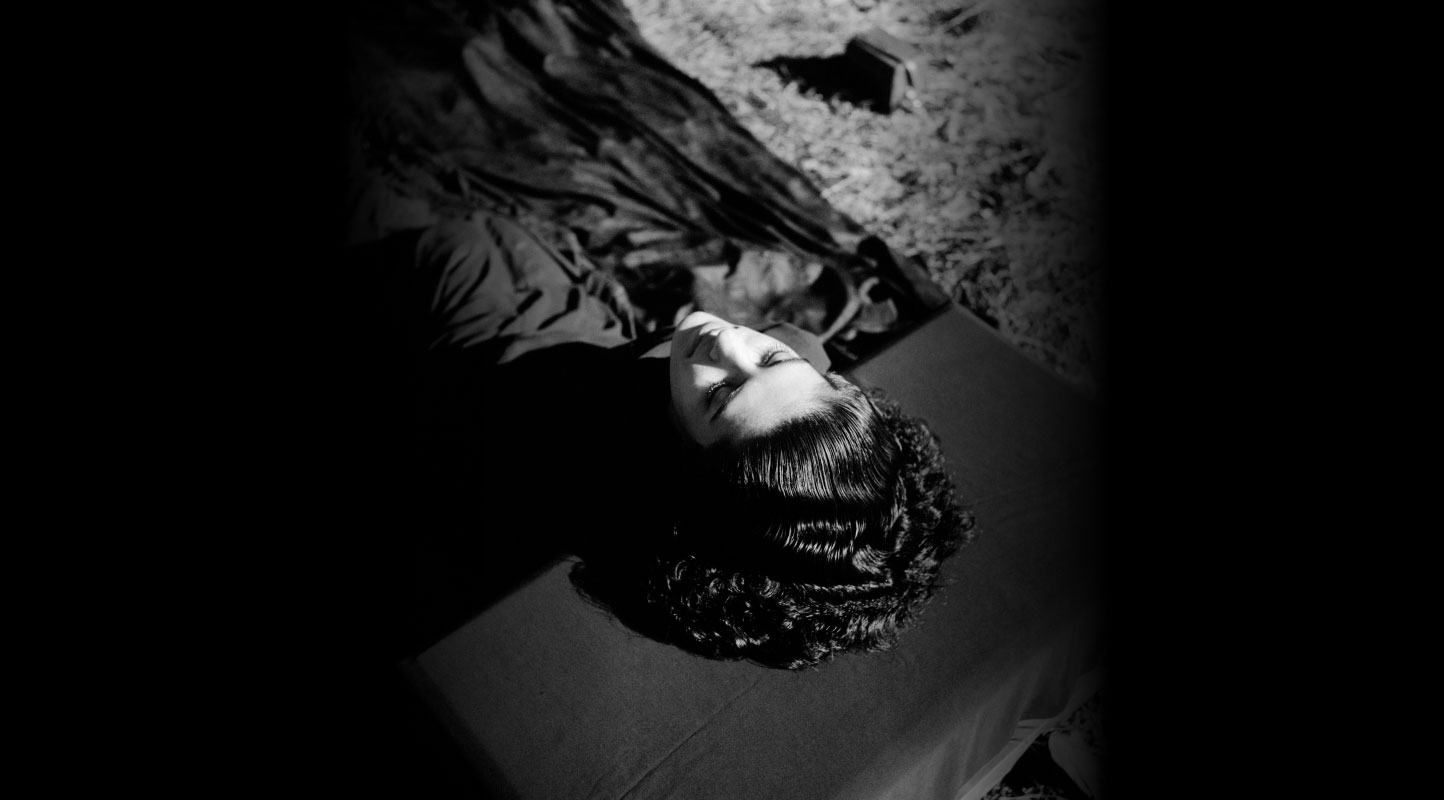
On Saturday, 12 September 2026, ASAP | art hosted an online talk by Hannah Darabi on her project Why Don’t You Dance? (2026), which traces the enduring presence of dance within Iran’s shifting social and cultural landscape through photographs, video stills and archival material to consider how dance has persisted as embodied resistance, and as a source of joy.
The establishment of the Islamic Republic after the 1979 Revolution in Iran led to restrictions on public performance and greater control over the visibility of women's bodies. Taking as her point of departure the “Woman, Life, Freedom” movement—which gathered momentum following the death of Jina Mahsa Amini in September 2022 and brought questions of bodily autonomy into renewed focus—Darabi revisits the archive to explore the popular cultures that have grown within and around the space of dance as resistance. Looking at public figures such as Jamileh, a renowned exponent of belly-dance and Jaheli dance, and Mahvash, a leading cabaret figure of the 1950s Iran, she complicates the distinction between entertainment and political expression, showing how cultural forms carry histories and solidarities beyond the circumstances of their making.
In these struggles, songs, memes, chants, poetry and images become dissident archives—insubordinate acts of collection—whose censorship has only prompted resurgence through alternative channels of circulation. What emerges is a defiant popular culture, continually reassembled through the very attempts to suppress it. For Darabi, the archive is not simply a repository of what is past but a spatiality through which images, pedagogies and lives can be made to speak differently. Her research not only excavates Iran’s history of resistance but also offers a larger inquiry: what has changed with regard to women and their voices in public spaces, and might a revolution be imagined not solely through sacrifice but through joy?
Hannah Darabi (b. 1981, Tehran, Iran) studied at the Faculty of Fine Arts in Tehran before continuing her education at Université Paris 8 Vincennes-Saint-Denis in France. Working with the social, cultural and political dynamics of Iran, Darabi has been awarded the Bernd and Hilla Becher Award (2022) by the City of Düsseldorf for her entire artistic output; and the Prix de la Photo Madame Figaro-Arles (2023) for her exhibition at the Rencontres d’Arles. Her book Rue Enghelab: A Revolution Through Books, Iran 1979–1983 (Spector Books/Le Bal, 2019) has received several awards, and her writings and works are held in various public and private collections. She lives and works in Paris, France.
(Featured image: “Mahvash’s Book of Pleasure,” Why Don’t You Dance? (2026) by Hannah Darabi. Image courtesy of the artist.)
Recorded on 12 September 2026.
To learn more about Iran’s cultural and political history, read Upasana Das’ observations on Hooria Ahmadi’s Tehran Youth Diaries (2025), Shefali Khan’s reflections on Marjane Satrapi’s oeuvre and her work Persepolis (2000-03), Sucheta Chakraborty’s essay on Abbas Kiarostami’s Homework (1989) and its production through Kanoon, and Samira Bose’s reflections on Firouzeh Khosrovani’s Radiograph of a Family (2020).
To learn more about performance as resistance, read Upasana Das’ conversation with Hind Meddeb on her documentaries, two-part essay on Sameer Farooq’s The Silk Road of Pop (2013) and review of Azeem Rajulawalla’s More Punk than Punk (2025), Natasha Gasparian’s observations on Johan Grimonprez’s Soundtrack to a Coup d’État (2024) and Vishal George’s reflection on Aditi Maddali’s Songs of Our Soil (Pani Paata Poratam, 2019).