

Punk is Not Dead: The Renegade Sonic Practice of Aki Nawaz
.png)
Growing up amidst the regularly scheduled national television programming of Indian classical music and everything ‘proper’ in the UK during the 1980s, a generation of South Asian youth were rocking out to the fresh alternative sounds of punk, garage or jungle. They infused these with bhangra, qawwali or the twanging strains of the sitar to come up with something completely new, which would form what we now know as the "Asian underground." The mainstream did not capture this scene beyond Nitin Sawhney or Talvin Singh, but it was Aki Nawaz’s post-9/11 ‘terrorist’ punk which made them sit up—uncomfortably.
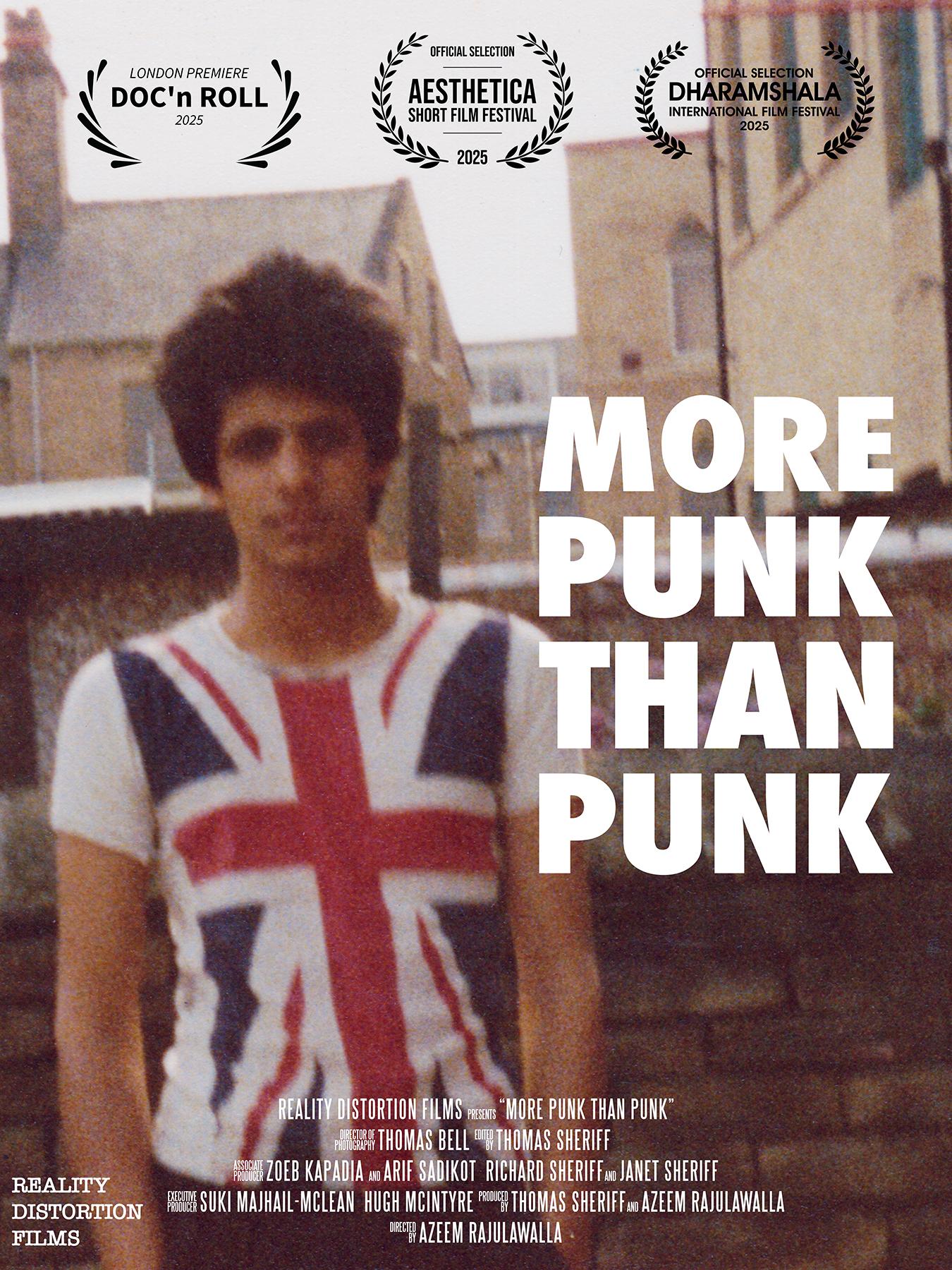
This discomfort is freshly goaded in Azeem Rajulawalla’s More Punk than Punk (2025), which screened at the recently concluded Dharamshala International Film Festival. The film presents a juxtaposition of volatile television interviews, blurry archival performance footage and follows Nawaz around a quiet Bradford—where it all began for him and his brother after listening to a record by the English rock band Clash who were one of the early ones to inaugurate punk into the county. In skinny pants and eyes fully concealed under a tousled mohawk, Nawaz from the ’80s could have been any poster child of English punk, rolling in with Ian Astbury, the studded belted drummer in the punk band they founded, Southern Death Cult which was loved by BBC’s radio presenter John Peel who had singlehandedly introduced Irish rock to the world by choosing to play “Teenage Kicks” by emerging rock band The Undertones, twice.
The film starts to lose its thread at a pivotal point when Nawaz’s music takes a radical turn after seeing Black Muslims protesting in America. This may possibly be—we are not told— the Nation of Islam, which integrated ideas of Black nationalism and Islam, and had Malcolm X as a prominent figure. This moment culminated in the formation of Nawaz’s band Fun-Da-Mental, which sang on the discriminatory experiences of being Black and Muslim and helplessly witnessing the strife in Palestine and the ruins of post-colonial civilisations landing at the British Museum. Obviously audiences were eating out of their hands—a concert poster from 1994 flashed across the screen—considering they were performing with Rock Hall of Fame legends like Radiohead and Red Hot Chilli Peppers. They also performed alongside others who were perhaps more on their wavelength, like Cop Shoot Cop, speaking against police brutality. The mohawk had transformed into balaclavas and hooded scarves, which was all well and good until 9/11.
.png)
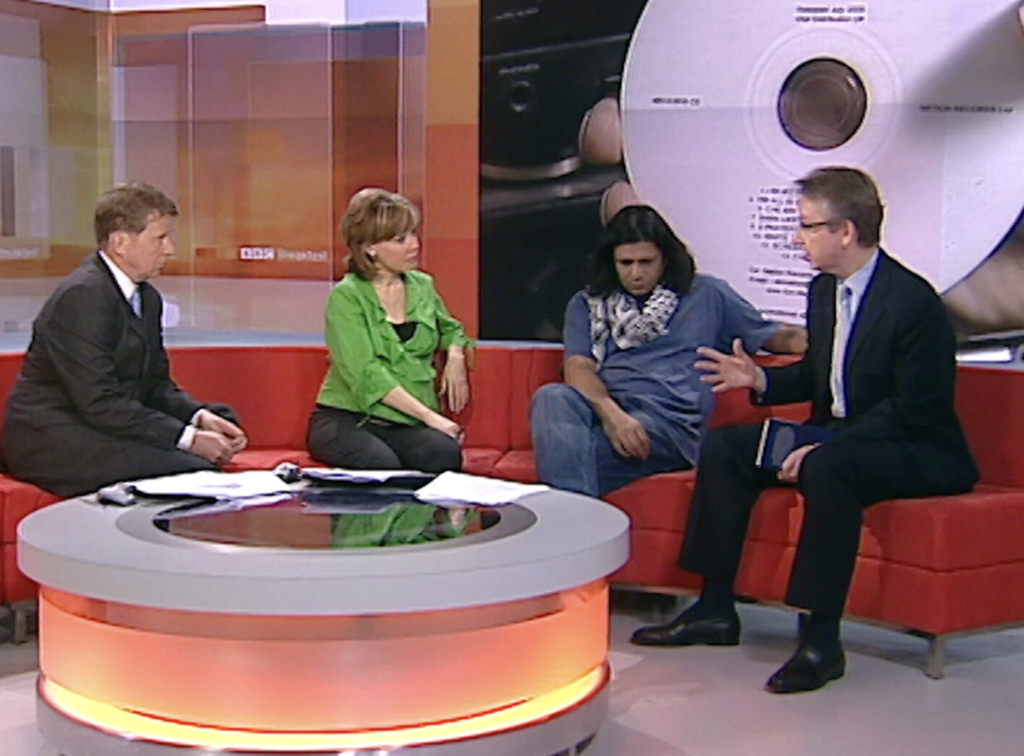
“This is a pretty funny picture,” says punk musician Shahjehan Khan, in Omar Majeed’s Taqwacore: The Birth of Punk Islam (2009), pointing towards a photograph of his grandfather and “some random dude” holding guns. “Every time my white friends come over, they are like, ‘Oh, it is the terrorist picture!’” he jokes. Rajulawalla shows how post-9/11 national television in the UK was an opinionated wasteland which gave space to far-right party leaders like Nick Griffin of the British National Party—a party which has historically adopted the view that the UK should only be for white people and was then running a campaign against “anti-white racism”—to rage about the “Muslim problem.” This is where the film tears through visually with video collages of what seems like a press conference by George Bush and Tony Blair following through with their tanks in Iraq for their promised, "War on Terror" juxtaposed with lyrics from “786 All is War”—part of Fun-Da-Mental’s post-9/11 album All is War, which proclaimed the fall of the Statue of Liberty.
.png)
That is when the hooded man from Abu Ghraib prison in Iraq, perpetually on the verge of being electrocuted, rises to take their place by replacing Liberty on the album cover of All is War in 2006. By then an entire generation who was being fed the Bush narrative of “liberation from dictatorship” were amply shocked by documents and performative images of torture—that often used religion as a device—being uncovered from the prison during the early years of the Iraq War when the US forces had taken over. The cover collage was by anti-war political cartoonist Leon Kuhn, and Nawaz recalls the furore surrounding the album. It is interesting how most missed the point of a song like “Cookbook DIY” which added another layer to state-sponsored terrorism by placing governments accountable for supporting terrorism through taxpayer money, like the Iraq invasion—exactly what is funding the genocide in Palestine now—and for capitalistic gains, like desiring control over the Gulf’s oil reserves by replacing Saddam Hussein during the Iraq War.
1.png)
It was a provocation, no doubt, for discussion—which never really took place amidst the UK’s strong history of industrial music. This was a genre of alternative music where musicians worked with sounds of an industrial society like factory machinery, and performers like visual artist Genesis P-Orridge attempted to incite using extreme sonic and visual aids in their performances. In Shock Factory: The Visual Culture of Industrial Music, Nicolas Ballet writes how P-Orridge was invested in the mind control sounds deployed by the US army during the Vietnam War. They turned these on their head in their performances as a counterstrategy to “awaken” people from their stupor of being caught up in capitalistic consumer culture propagated by devices like national television—in a way the Abu Ghraib images were that for Nawaz’s generation. P-Orridge noted how low-frequency music made audiences feel very ill and “they felt this undirected fear as if we were controlling them.” Many industrial artists would use it similarly.
.png)
The film does not delve into Nawaz’s idea of religious warfare beyond understanding it as only an expression of rebellion against superpowers. Neither did Nawaz have the wider artistic support that many punk Muslim artists speaking out against the same issues did: like a group of taqwacore punk artists whooping around Riz Ahmed a few years later in a club basement as he rapped, “So listen, terrorism isn’t caused by religion or an old school vision of Islam… the problem is modern and it’s all local factors, dictatorships, injustices and wars cause fatwas” or Shahjehan yelling slurs at George Bush with much enthusiastic hollering after their concert in Pakistan. It is more direct than Nawaz’s Pandora's box of political satire which was a deliberate act to provoke the right people—which it did and fully to the desired effect that Nawaz had anticipated. However, the film does not delve deeper into Nawaz’s radical music-making practice that compared Osama bin Laden to Che Guevara, which the film ought to have done, being one of the only documents that exists beyond national television to attempt a comprehensive documentation of a performer. Or a deeper exploration of Nawaz’s politics beyond scattered thoughts of how he validates the reasoning behind going for jihad. This film offers a peek—like a trailer or a smaller cinematic initiative—but is not a close enough look at a hard-hitting sonic legacy and an even more complex political ideology buried under a bad reputation.
1.png)
To learn more about artists that explore music as forms of protest and resistance, read Upasana Das’ reflections on Rich Peppiatt’s Kneecap (2024) which also screened at DIFF, Shefali Khan’s observations on Nemahsis’ oeuvre, Steevez’s review of MKP Gridaran’s Dalit Subbaiah: Voice of the Rebels (2025) and Sagorika Singha’s essay on viral anti-CAA rap songs in Assam.
To learn more about films screened at DIFF this year, read Mallika Visvanathan’s conversations with Suhel Banerjee on his film Cycle Mahesh (2024) and Sruthil Mathew on his film Dinosaur’s Egg (2024) as well as the episodes of In Person featuring Surabhi Sharma on her film Music in a Village Named 1PB (2025) and Sivaranjini on her film Victoria (2024).
All images are stills from More Punk than Punk (2025) by Azeem Rajulawalla unless otherwise mentioned. Images courtesy of the director.