


On Exploitation in The Delivery Guy: In Conversation with Debarun Dutta
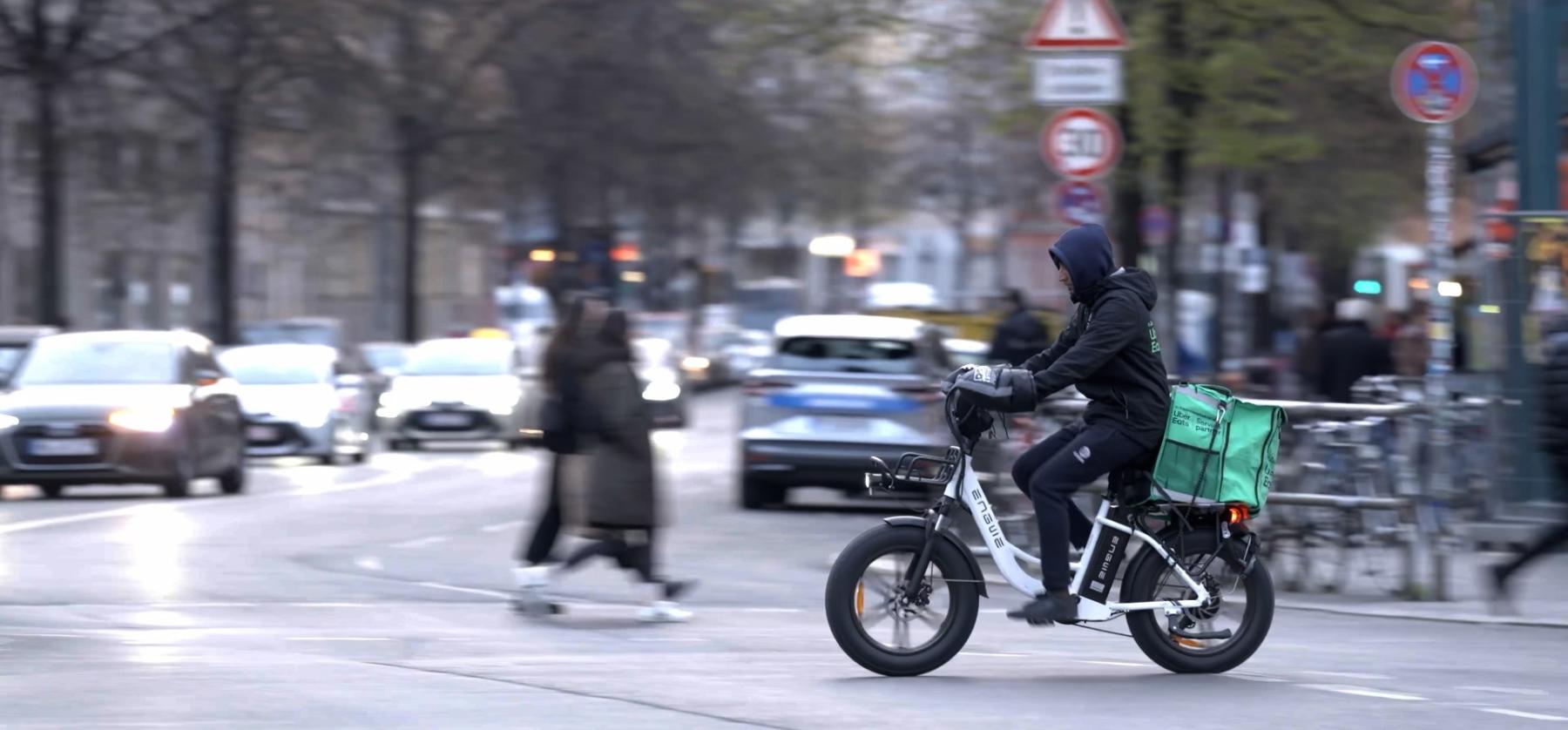
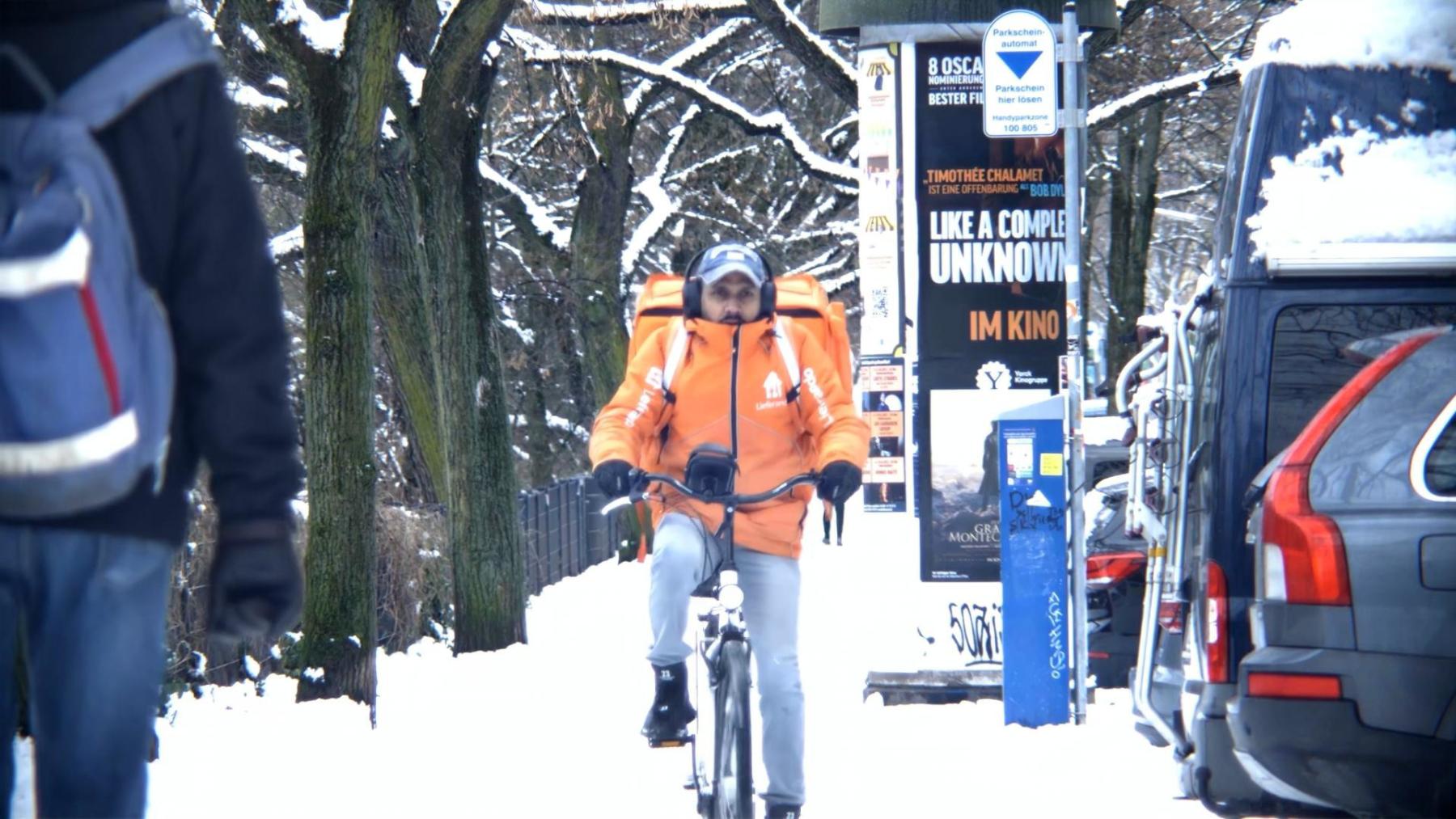
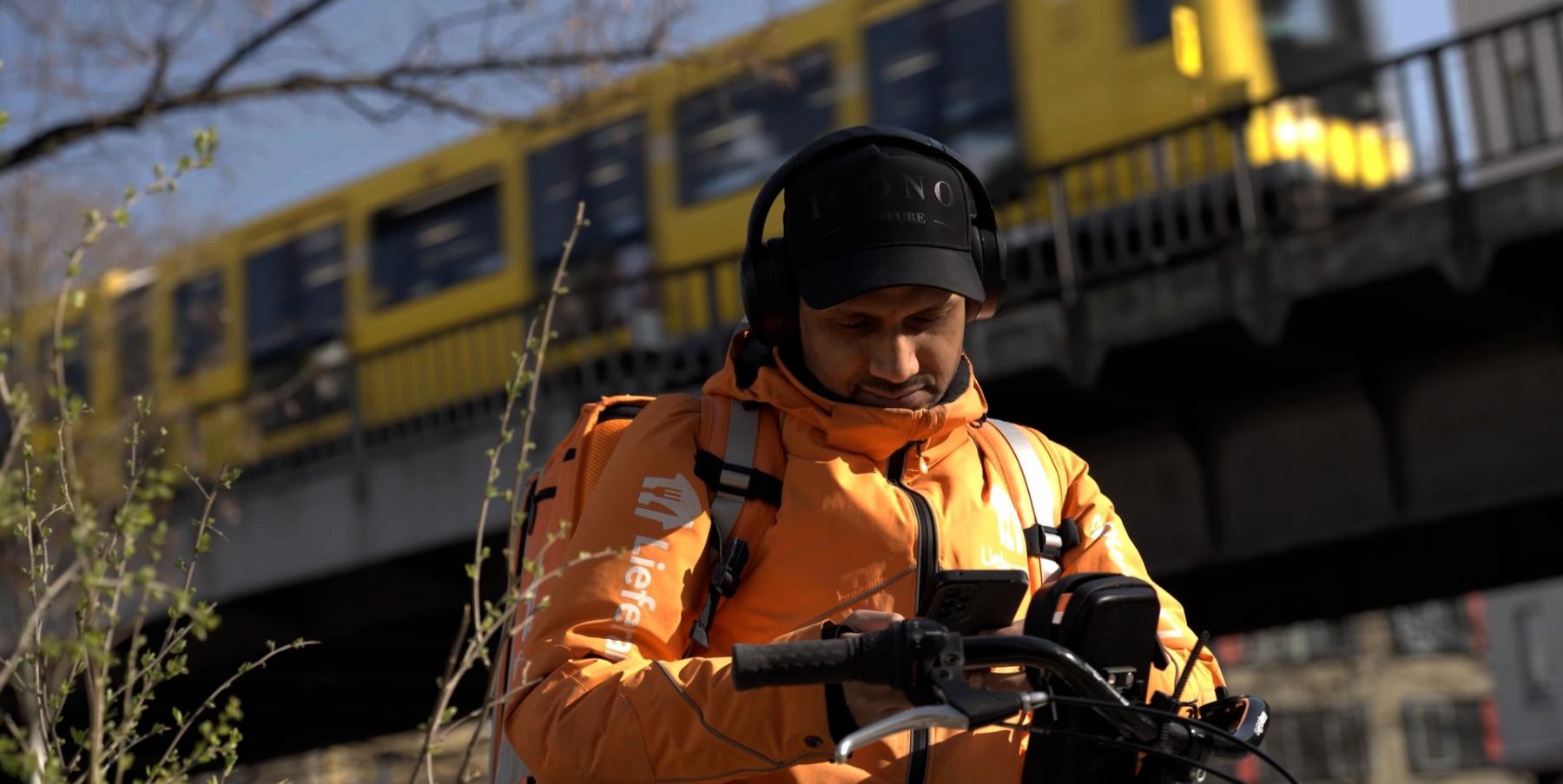
On 31 December 2025, Swiggy and Zomato gig workers in India went on strike for the first time, protesting the unrealistic standards of having to deliver within a few minutes, that are pushed onto them by companies through app algorithms. While they expected solidarity from online consumers in the form of abstaining from their non-essential purchases, they were to face disappointment as the last day of merrymaking held its usual record order rates, causing additional pressure on workers who could not afford to strike. This apathy from end users is nothing strange and is propelled further by the app now even publishing updates about reasons for delays by delivery partners, for instance, if their bikes have broken down. The gig economy scenario does not seem much different in Germany—in policy researcher and filmmaker Debarun Dutta’s short documentary The Delivery Guy (2025), we witness how Nitesh faced an accident while delivering in the snow. The film traces the lives of South Asian delivery workers who migrated to Germany with the hopes of creating better lives, only to realise that the system was rigged against them.
Caught in a cycle of being deceived by money-minded unaccredited private universities in Germany and by migration agencies in India which place them at these universities, Indian students—largely from working-class backgrounds—are offered illusions of university degrees becoming the gateway for getting white-collar jobs in a foreign city. While Dutta was making his film, another longer investigative documentary was being made by DW (Deutsche Welle) entitled Delivered! - The Courier Driver Business (2026), which follows how working-class Indian students are left with no employment opportunities and are forced to sign up as gig workers with nefarious subcontractors to companies like Uber and Wolt— without any office space and without a traceable owner to hold accountable, the entire business descending into a front for criminality.
Screened at the Kolkata People’s Film Festival (KPFF) held from 23 to 26 January 2026, Dutta’s film continues to be a stark reminder of an unregulated industry whose insidious machinery goes deeper than what meets the eye. However, even though the situation in India remains desperate, the film provides a sense of hope in so far as the right to unionise is seeing a degree of change, leading to better working conditions in certain companies in Germany. In the first part of this edited conversation, Dutta speaks about how this vicious cycle of trapping young immigrant students into the delivery business in Germany functions, a process that begins with migration agencies in India.
Upasana Das (UD): What propelled you to make The Delivery Guy?
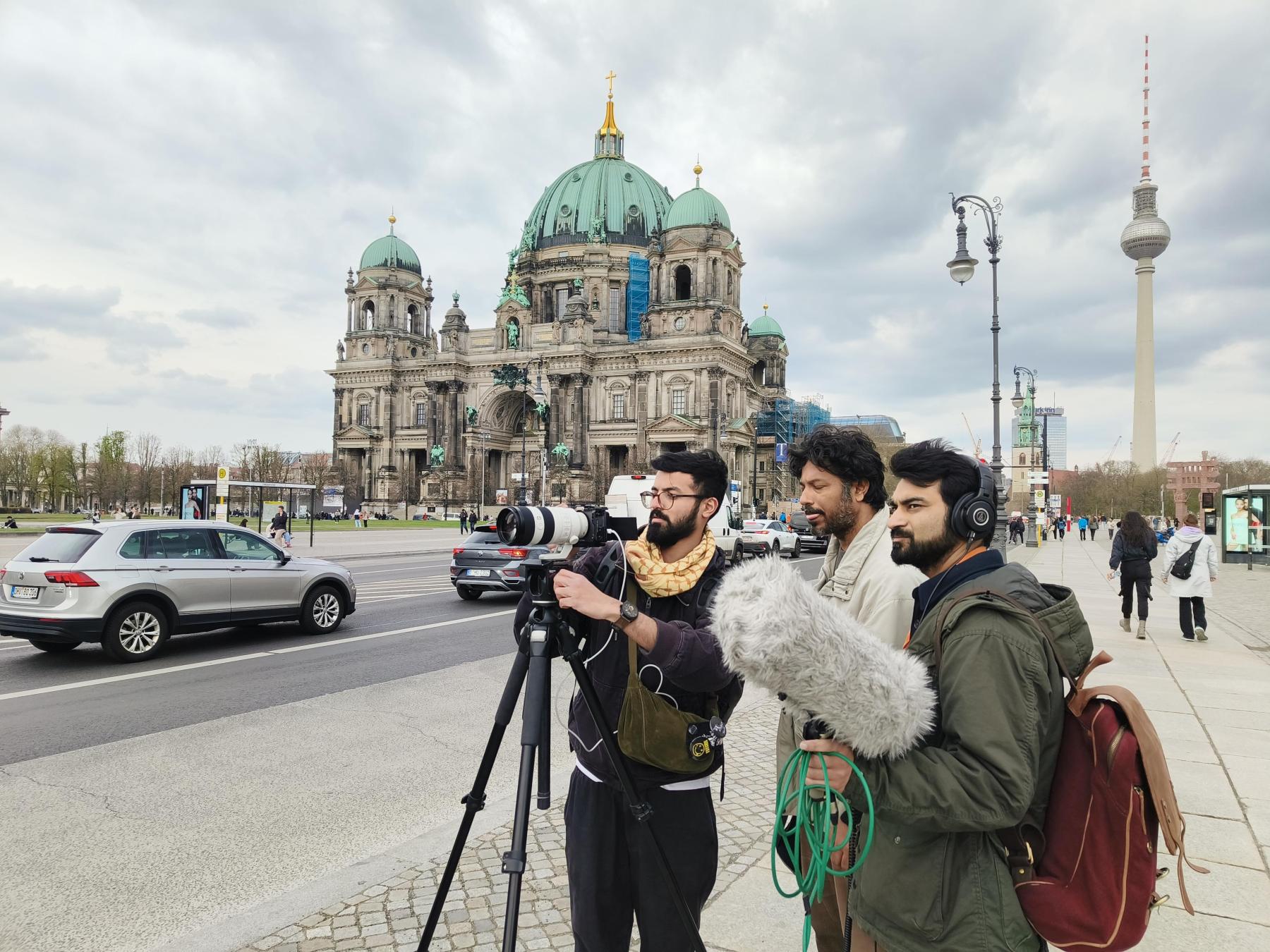
Debarun Dutta (DD): I went to Berlin to do a Master's in Public Policy and while there, I came across food delivery workers who are mostly South Asian. I would wonder why so many South Asians were recruited in this job, not only in Berlin, but also in many other European cities. It was a stark visual—seeing South Asians speaking in Haryanvi amidst European architecture in the winter. Before going to Berlin, I had been making films in India for a while and for the last four years in Berlin, I have been tracking this particular kind of migrant labour through conversations with unions and organisations, which found expression in the film.
UD: Your film talks about how private universities in Germany have tie-ups with training institutions in India and bombard students with advertising through social media to lure them to Germany. What is the reason behind this targeted drive toward recruiting migrants, particularly in the current anti-immigration atmosphere in Europe?
DD: Most of the developed world lives in a conundrum of having to manage an aging population but they do not want to foreground that because the rise of the right has made it difficult to accept migration. Therefore, politically speaking, the policy environment operates within a contradiction. Europe's focus right now is towards labour migration while pushing back on asylum seekers, as it has been the case for a while. Most countries in Europe have never been the first choice of migration because of difficulties with languages as well as the lack of an easier permanent citizenship route, unlike Canada, Australia or New Zealand. Now, because other channels of citizenship such as in the United Kingdom, the United States and Canada are closing down, Europe has become the new destination; they admit migrants because they need cheap labour but the time it would take for translating that into citizenship would be at least a decade.
India seems to be a “safer country” from which Europe can tolerate migration, primarily because it is not an Islamic country and the current prevalence of Islamophobia in Europe makes India, Nepal or Sri Lanka preferable over Pakistan and Bangladesh; this also explains the agreements between nations in the European Union (EU) and India. Besides its massive geographical size, India is able to supply substantial labour, especially due to the prevailing levels of unemployment in the country. These are the ground conditions under which this exodus, if we may call it that, is happening. There has been a huge jump in the number of work or student visas in Germany—some 20,000 pre-COVID, which is now close to 80,000 a year—with Indians now amounting to the largest number of immigrants living there.
Private universities in Germany do not have tie-ups with the Indian government but they definitely have tie-ups with migration agencies in India. Most of the people going to these agencies will be offered the private university route. They are definitely riding on the wave of Germany-India diplomatic relations—with German Chancellor Olaf Scholz coming to India or Modi going to Berlin resulting in agreements such as the Migration and Mobility Partnerships agreement—according to which, India will send 80,000 skilled labourers to Germany every year. However, because of the ambiguity of what is meant by and required under “skilled work,” the realities of such migration and mobility routes are different from what is portrayed, permitting migration agencies to continually bypass legal frameworks and dubiously showcase an image of smooth movement to those aspiring to go abroad. As students find that Germany is the new space that requires labour, studying in these private universities seems to them to be a stepping stone towards finding employment there. However, the migration agencies do not mention that the kind of skilled labour that the companies there are looking for is for very specific trades such as nurses, butchers and welders, which require a proficiency in German.
UD: There is a certain vagueness in the language used around many new-age courses students would be studying in German universities, such as internet marketing and data analytics—which is also how the fleet companies employing them on behalf of the large delivery organisations operate. Did you find that the universities knew what the fate of these students would be after they graduate?
DD: Some of these private universities definitely rely on vagueness as they do not consider how students would get placed from there or how the course would benefit them. In my investigation, I found that their classes are held online and are irregular, easily accommodating 200 students in a class without requiring a classroom. In Germany, where education is held to certain standards of implementation, it is alarming to see how these universities are still able to operate. So, yes, that vagueness keeps the system going. The moment it becomes too evident, there is a crackdown, which recently happened with the IU International University of Applied Sciences, when the Berlin Immigration Office suddenly sent letters of deportation to students who went for a visa renewal, mentioning that they were doing a course which did not require their presence in Germany and there was no reason for them to be there. Ultimately, students were the most affected even though the deportation was stalled, perhaps by embassy intervention.
UD: The people being admitted by these private universities are mostly from working-class backgrounds or those who have racked up loans and have to send money home. Is this nefarious dealing targeted to certain social classes in India?
DD: It is a case of demand and supply. For example, someone with an IT (Information Technology) job or MBA (Master’s of Business Administration) degree here, probably will not want to take that risk. It is the family whose ward is facing difficulty getting a job even after doing a degree in India that will choose to take out loans toward this migration pathway in search of employment opportunities where there is enough growth. However, they must have some or the other asset as collateral to be able to obtain a student loan and they would also have to know people who have done it already, which is a huge factor in migration.
However, there is a risk calculation of the money they are investing—if they are spending twenty to twenty-five lakhs as fees, they will need to consider how much is needed for expenses when they reach there and when to start earning—which is why most of them go with a clear idea of wanting to work from day one. And yes, it is mostly a middle or lower middle-income group from rural areas, semi-urban or C-tier towns and cities in India. Their hope is that even if they end up saving 500-2000 Euros, it is a sufficient amount of savings that a young person can make in Germany as compared to in India, where they will earn the same amount only by the time they are in their 40s or 50s. They imagine that apart from studies, if they can figure out a twenty-hour gig, then they will be able to earn around 1200 Euros and with another ten-to-fifteen-hour, without-a-contract, cash-based work, they can further earn 500-700 Euros. By restricting expenditures to 600-700 Euros, they can probably send home 1000 Euros. Out of that, 300-500 Euros might be saved for the loan and then another 500 for something else. Here, we are assuming a best-case scenario—it is an extremely precarious condition. And it is really detrimental to their long-term aspirations because they have no time to build other skills like the German language or to network with other people who might find them a job later, especially a skilled job in which they have earned qualifications. They are stuck in this constant loop of hand-to-mouth living. If they lose any of those gigs, whatever the reason, their resources can be depleted in no time given the high cost of living.
The second part of this essay will look at the aftermath of a year of reportage and investigation on the business of private universities pushing migrant students towards delivery work, particularly with third-party contractors who slip through legalities.
To learn more about artists exploring immigrant lives of South Asians and their precarious socio-economic conditions read Vishal George’s conversation with Thomas Sideris on his film Gas Station or The Pigeons of Lahore (2024), Upasana Das’ essay on Shaheen Ahmed’s Naz̤ar: A Diary (2025) that traces the experiences of South Asian Muslim migrants in Athens, Abilaschan Balamuraley’s interview with Liz Fernando on her artistic work exploring lived experiences of Sri Lankan diasporic communities, Ankan Kazi’s observations on the online radio programme of Colomboscope 2022 that looked at immigrant experiences of South Asian communities through aural histories and Jennifer Chowdhry Biswas’ mapping of the project Gulf ⇄ South Asia.
To learn more about films screened at Kolkata People’s Film Festival 2026, read Ishtayaq Rasool's essay on Mohamad W. Ali's Searching for Grandpa (2025) and Alfa M. Shakya’s review of Kesang Tseten’s The Lama’s Son (2025).
All images courtesy of the director.