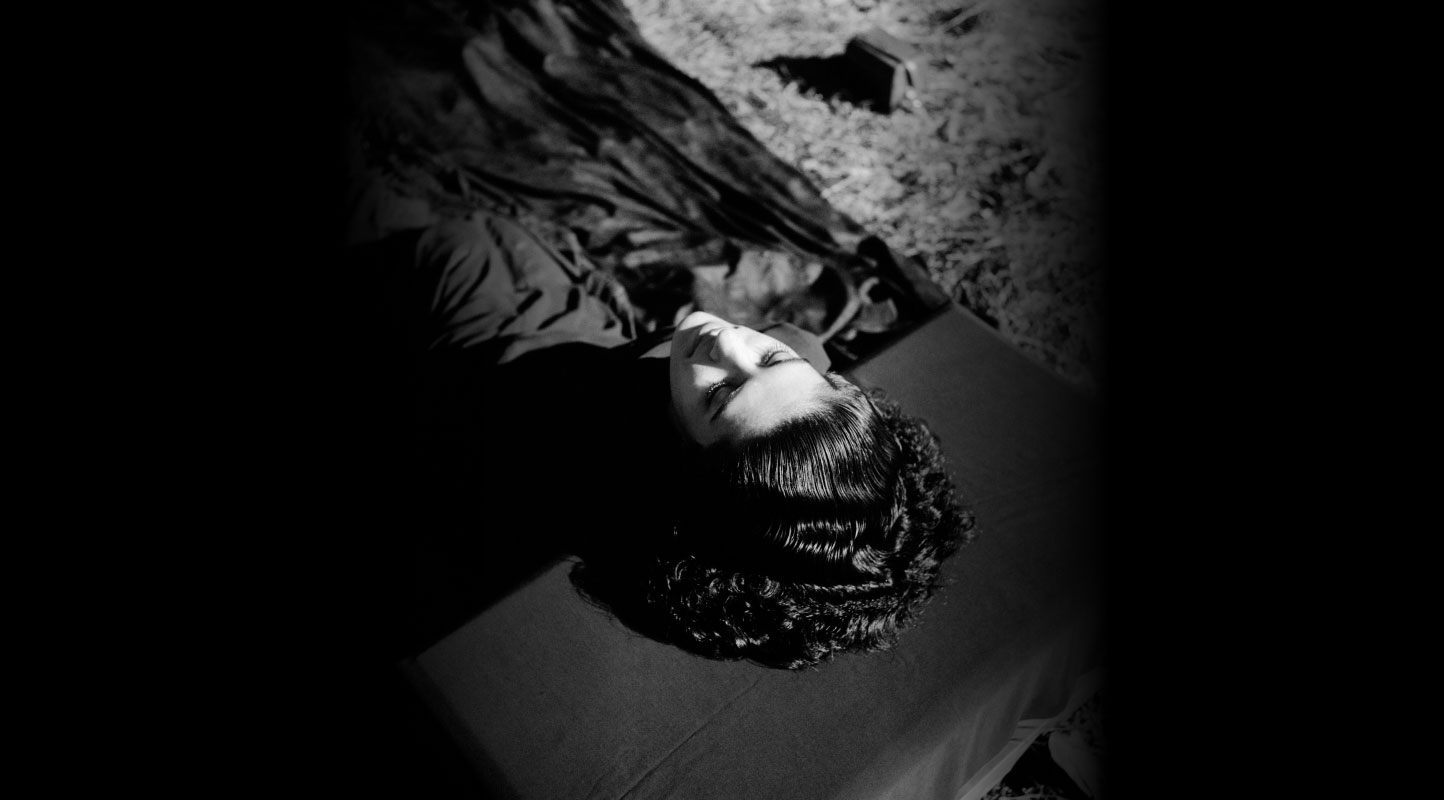


Archives of Excess: Cinephilia and Hindi Film Posters
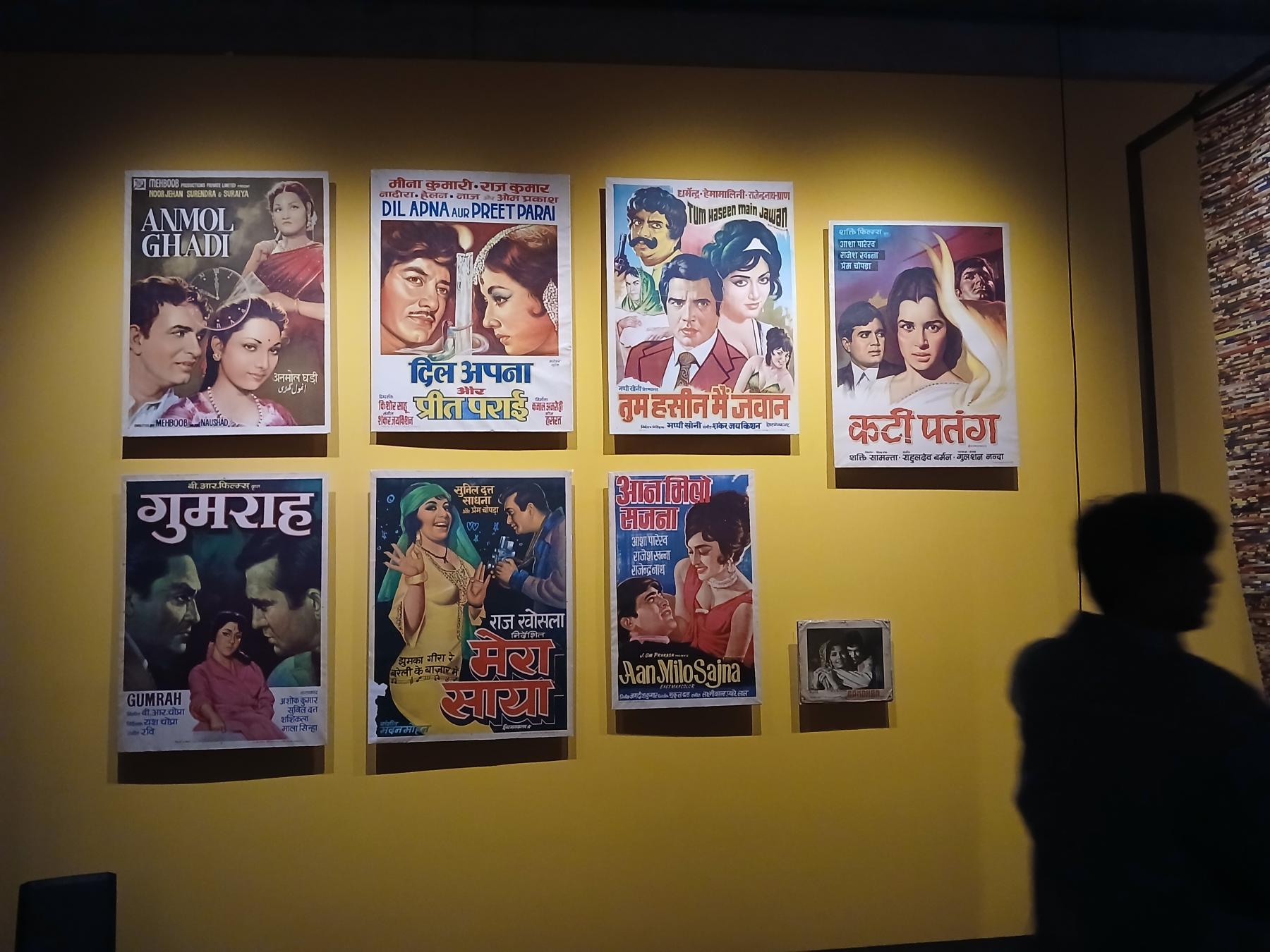
The exhibition Duniya Parchhaiyon Ki: Elusive Frames, Resonant Echoes curated by Ashish Rajadhyaksha at Arthshila, New Delhi from 27 September 2025 to 4 January 2026 consisted of a rich tapestry of cinephilia presented through a wide range of Hindi film posters, lobby cards, song booklets, video clippings and other film ephemera. The primary material came from the Takshila Art Collection’s various categories of posters—in-house prints of first releases, reprints made by local distributors and exhibitors, and Delhi-made second-generation film posters that reimagine older posters in a radically new language and colour palette. This static archive of posters is further mobilised through various multimedial interventions including Urdu literature, video installations and soundscapes, echoing cinematic longing and displaying an array of artistic potential.
Early posters designed by artists such as Diwakar Karkare, DR Bhonsle, JV Nachankar and Pamart studio, and printed in presses like Dnyansagar Litho Press or Prasad Process Pvt. Ltd. possessed a sophisticated visual language that mediated between painting, photography and typography. Moving away from these canonical ‘originals,’ the exhibition shifted attention towards the reprinted versions created by local enterprises, which adapted films to regional markets, adding lyrics, action sequences or montage-like insertions to intensify the spectacle. The poster thus ceased to be a stable publicity object and became, instead, a malleable surface responding to local economies of desire.
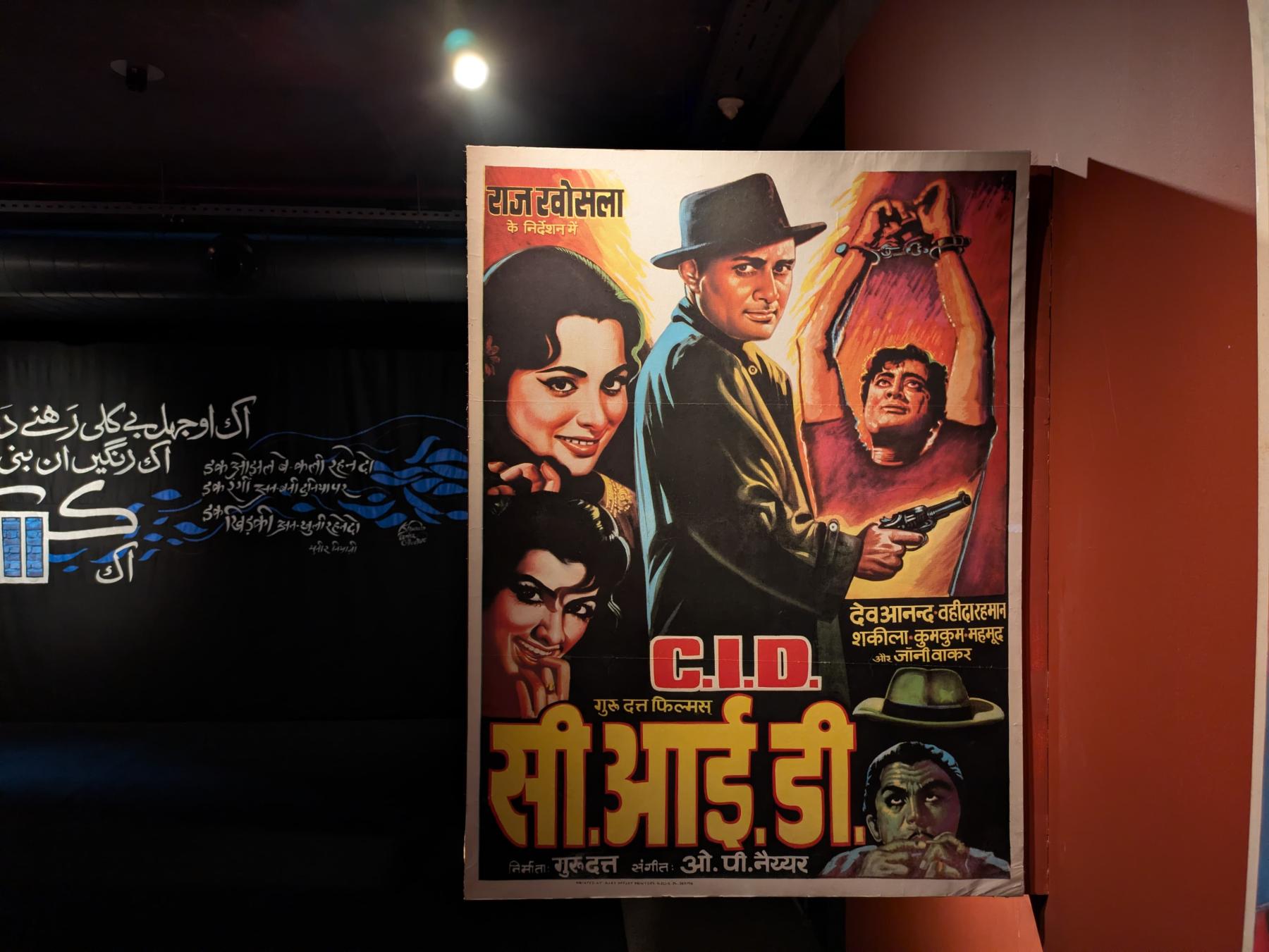
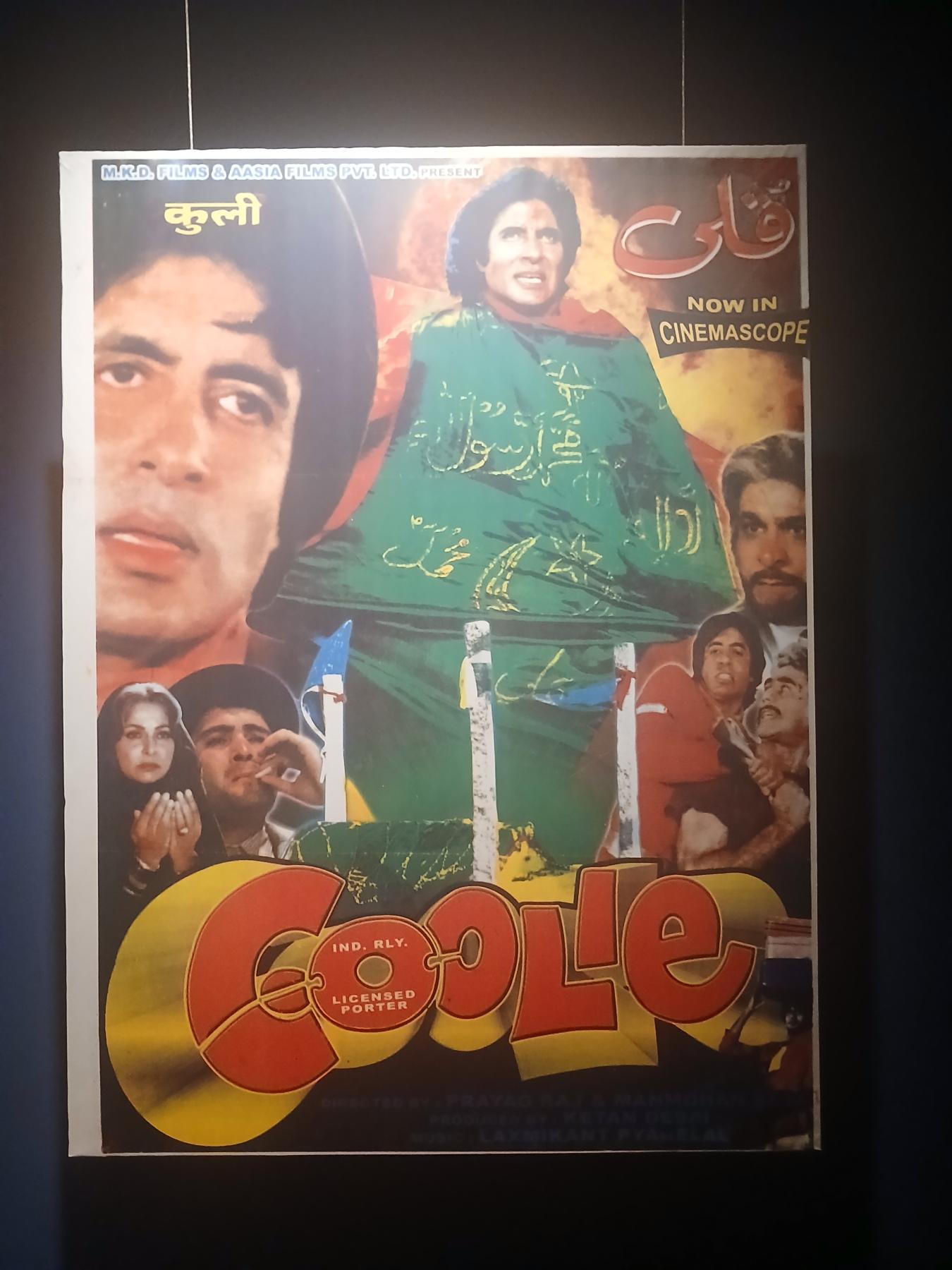
The exhibition particularly focused on visual ephemera emerging from the so-called Delhi School of poster-making. Originating around the 1970s, it proliferates through the 1990s, with artists such as Amar, Laxman, Narayan and Adhikar effectively remaking films through their posters. These artistic interventions resulted from their sustained engagement as fans with cinephilic investment. The versions produced were only tenuously related to the original publicity material: multiple faces crowded the frame; guns and helicopters exploded across the composition; women appeared in hypersexualised poses; and titles blazed in thick red Hindi fonts outlined in yellow. The palette-knife techniques amplified colour into lurid reds and greens, drawing equally from exploitation cinema, pulp illustration and pornographic visuality.
These posters functioned less as advertisements than as speculative acts of storytelling, promising another film hidden within the official film itself. Rather than preserving authenticity, they revelled in distortion, exaggeration and sensory overload, anticipating the logic of the meme long before digital culture, and producing endlessly reproducible and transformable images detached from any singular origin. Their alternative lexicon of cinephilic memory also represents the aesthetic diversity of collecting practices that emerged analogous to and became reflective of cinema itself.
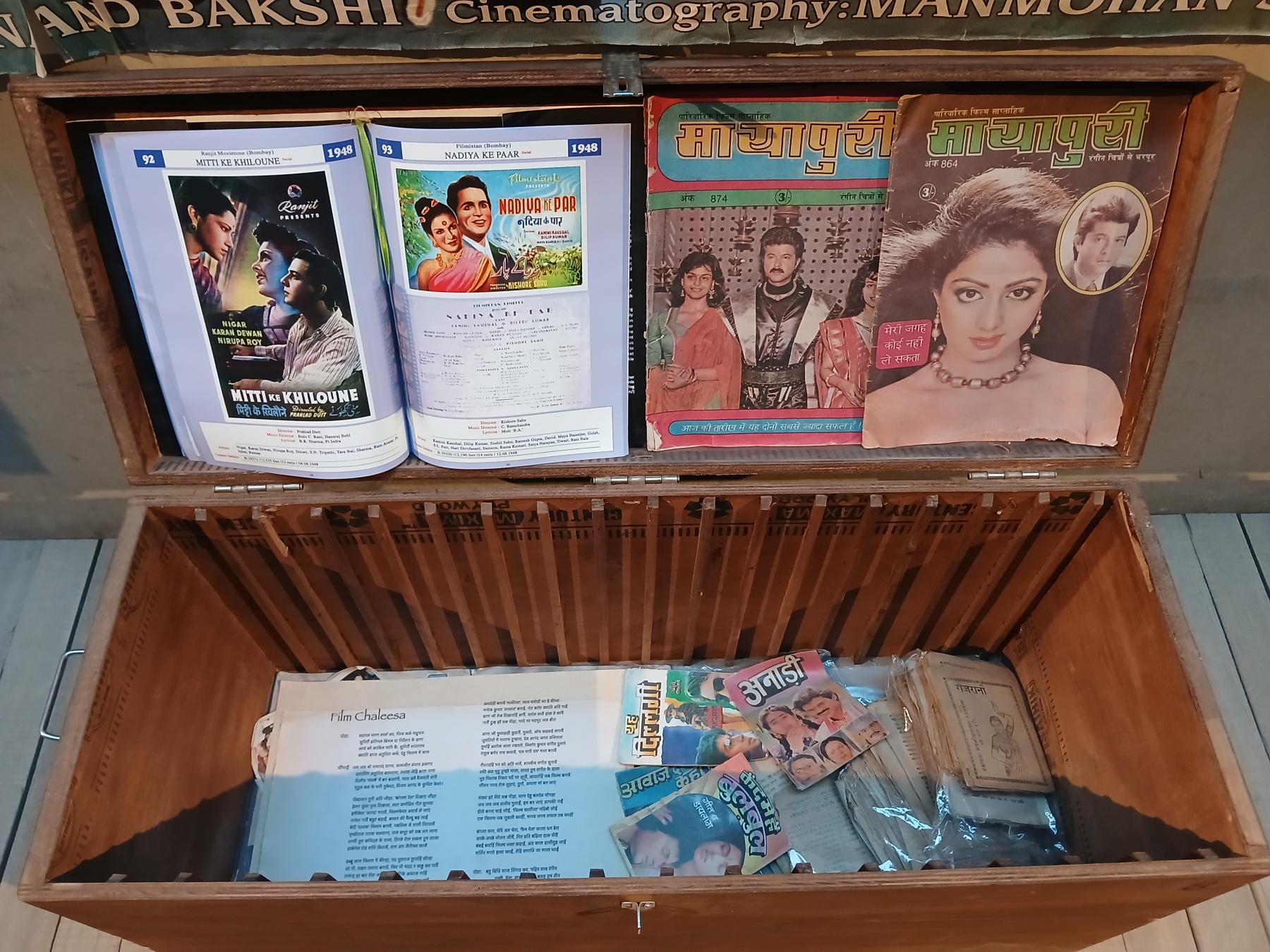
The exhibition rethinks the archive not as a stable institutional repository, but as a fractured and leaking accumulation of traces, memories, scraps and fantasies. When less than five percent of Indian cinema survives in official archives, the afterlife of cinema is not disappearance. Rather it comes to reside in informal, precarious and often illegitimate spaces: in the kabadiwala’s (scrap-collector) shop, in pirated VHS collections, in damaged lobby cards, in impressions of reruns and in the material debris of popular culture. The exhibition transforms these remnants into what may be called an “archive of memory traces,” where the poster becomes evidence not only of a film’s existence but also of its circulation, reception and emotional afterlife.
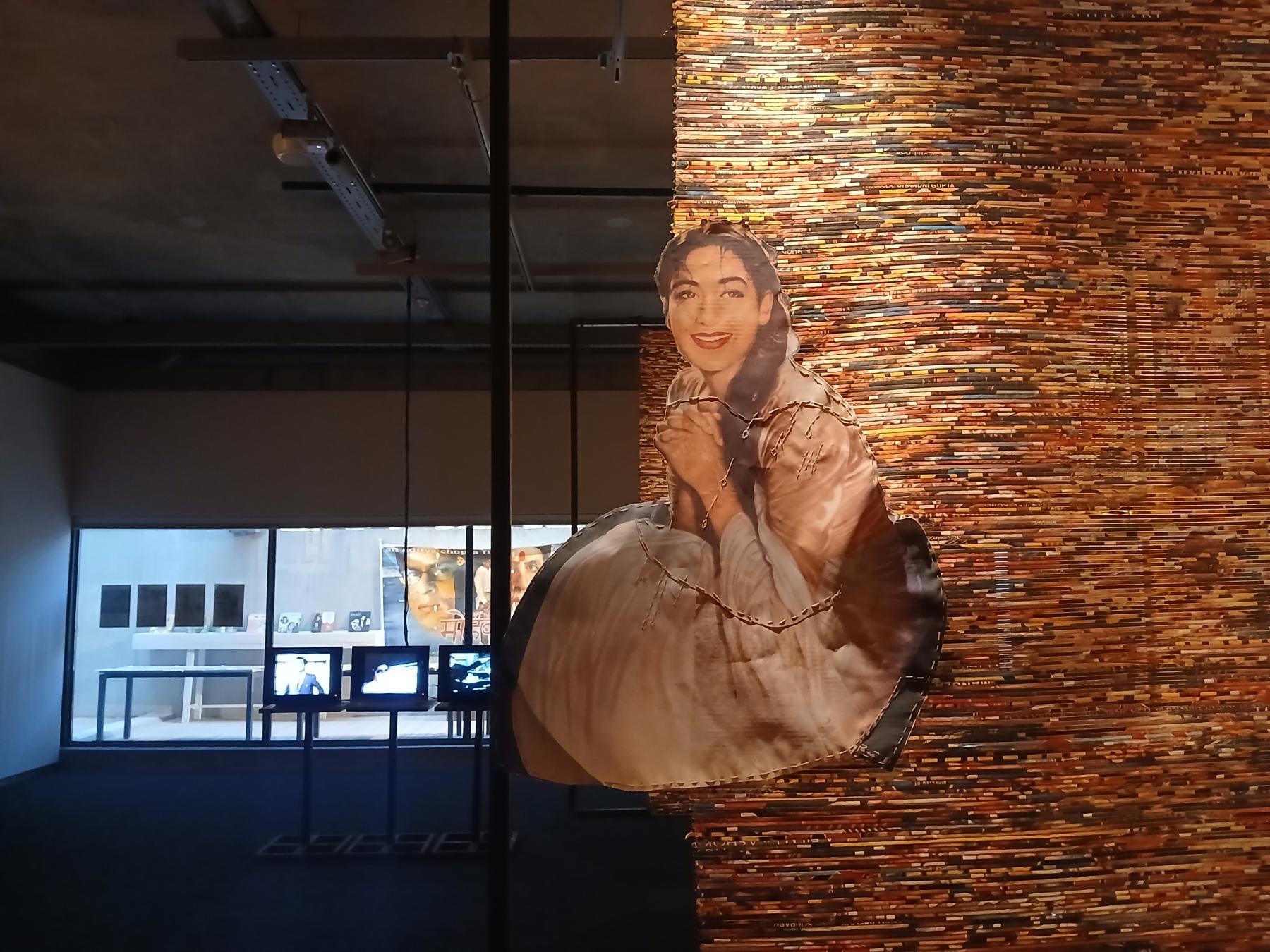
This idea acquires a particularly powerful spatial resonance through the staging of the exhibition at Arthshila in Okhla; the surrounding industrial landscape with its recycling markets, printing presses, stitched cloth and smoke-filled factory lanes mirrors the condition of the archive itself. The decorative handloom weave made of poster strips displayed at the centre of the exhibition materialises the transformation of cinematic waste into aesthetic objects: much like cinema is continually reconstructed through memory, fragmentary images of film stars, titles and scenes are rewoven into new surfaces. Consequently, the archive is no longer a fixed vault but an unstable field of affective renewal where history constantly leaks into the present.
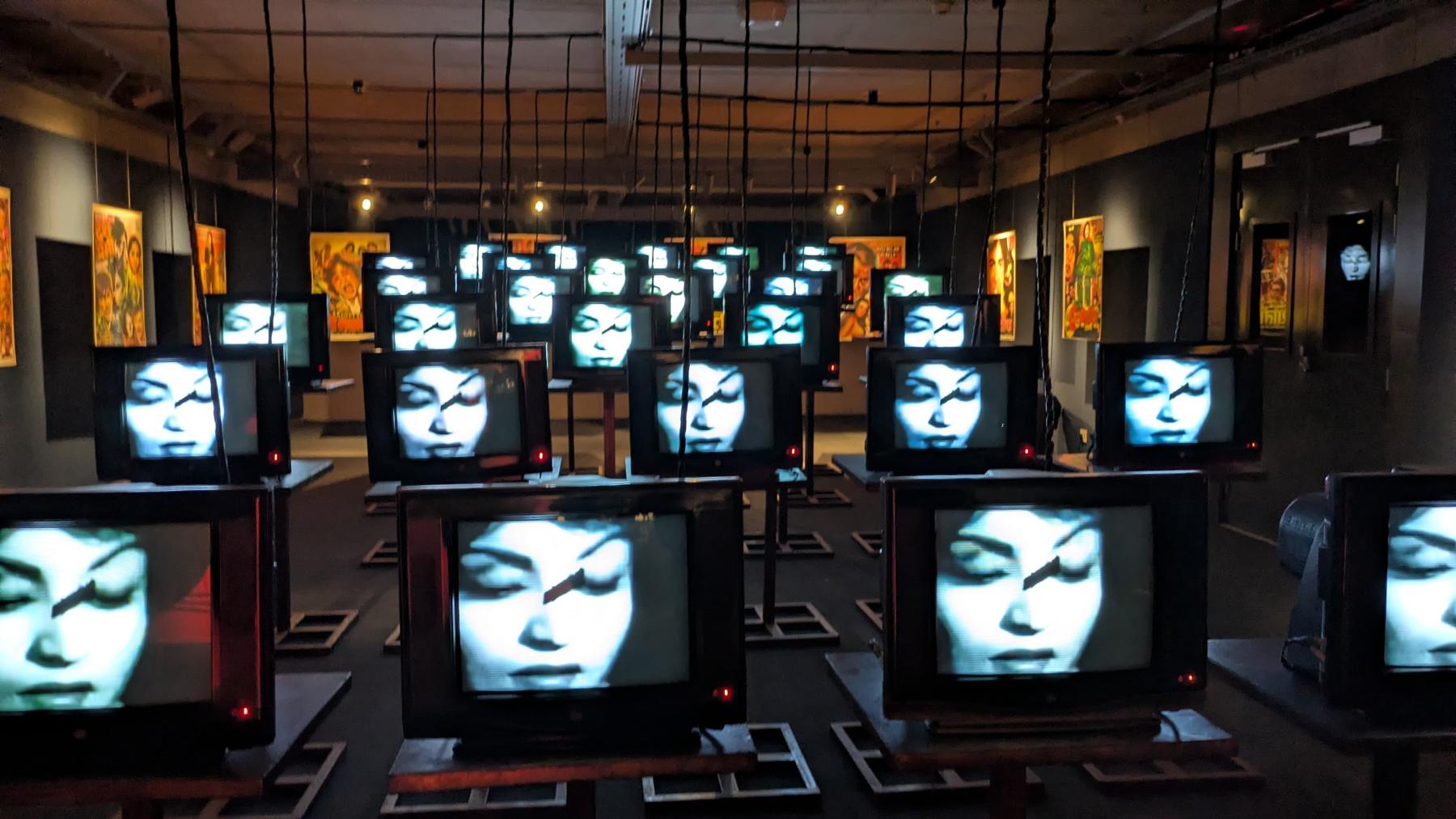
On the second floor of the exhibition space, Arbab Ahmad’s twenty-five-minute video titled Okhla: Dusre Sire Tak, filmed around Sanjay Colony, Bhoomiheen Camp and Okhla Container Yard shows images of construction/destruction, narrow lanes, huge storage racks with Lata Mangeshkar’s “Mera Saya Saath Hoga” (1966) playing in the background. On the same soundtrack, Yashaswini Raghunandan’s two-channel video runs on twelve cathode ray TVs and is made from edited footage of scenes of chases, trains and violence from Hindi films. These recreations further blur the distinction between cinematic phantasm and urban reality, advancing a crucial argument that cinema survives not through pristine preservation but through acts of reuse, recycling and hallucination.
By foregrounding unofficial visual cultures, Duniya Parchhaiyon Ki expands the category of cinematic heritage beyond canonical films and directors towards the anonymous artists, printers and exhibitors who collectively shaped the sensory experience of popular Indian cinema. The exhibition does not treat posters as dead historical objects; rather, it situates them within an ongoing ecology of cinematic memory that extends across generative AI, video, digital circulation and fan-made media. The interventions by Raghunandan and Ahmad as well as other exhibiting artists including Neelansh Mittra, Kinshuk and Goji establish this continuity between analogue remnants and contemporary image cultures. In many ways, today’s tribute posters, Instagram cinephile pages, YouTube video essays, GIF cultures and meme communities inherit the visual logic of the exploitation film poster.
During his lecture at the exhibition, Ravi Vasudevan stated that archivists are collectors and that their cinephilic preferences run across the archival work they do. The cinematic image survives through mutation, and the technological apparatus of collecting and preserving material is central to their functioning, which inevitably will continue to transform the archives of the digital era. Thus, just as Delhi poster artists once exaggerated spectacle through montage, saturated colour and sensational imagery, networked fan cultures now endlessly remix scenes, dialogues and celebrity images into new aesthetic and affective combinations. Such gestures render the archive decentralised, participatory and unstable, sustained by anonymous users rather than state institutions. What once appeared disposable, such as damaged posters, pirated copies and cheaply printed publicity materials, now gain archival value precisely because they preserve modes of spectatorship excluded from official histories.
Duniya Parchhaiyon Ki thus positions itself not merely as a retrospective of Hindi film publicity art, but as an inquiry into acts of copying, recycling and collective remembering, which testify to a cinema that refuses closure. Drawing upon Raúl Ruiz’s notion of the “secret film” hidden within every film, the exhibition foregrounds a cinephilia that searches obsessively for meanings outside the sanctioned text—in posters, song booklets and photographs. In doing so, it restores legitimacy to forms of love and labour that have long existed outside institutional frameworks and which remain central to the survival of cinema itself.
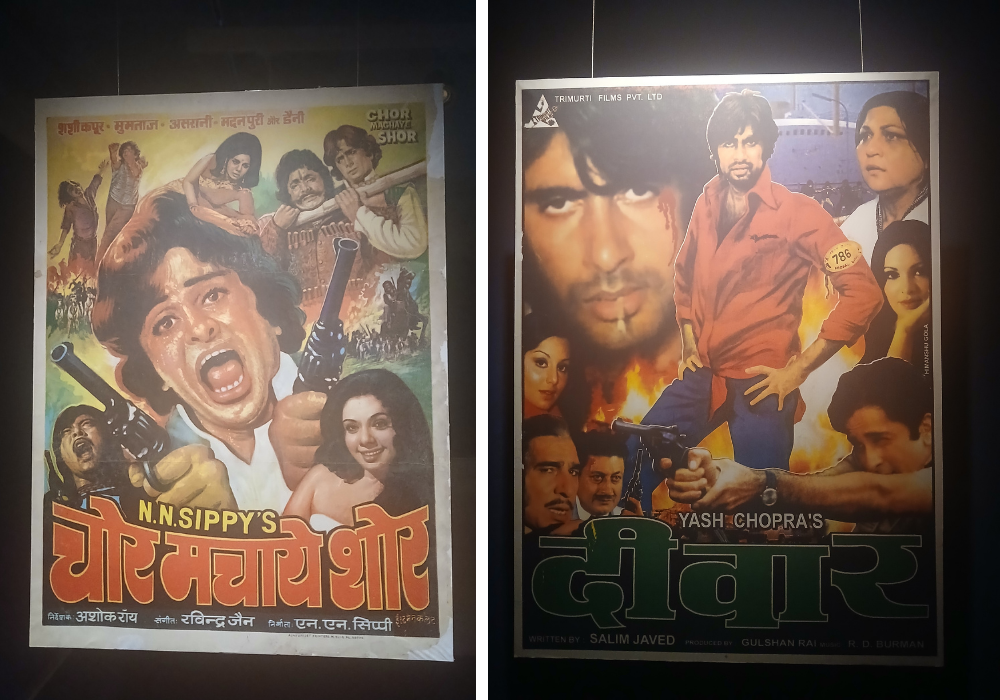
Left: Poster of Ashok Roy’s Chor Machaye Shor (1974).
Right: Poster of Yash Chopra’s Deewar (1975).
To learn more about visual culture of popular Indian cinema read Ketaki Verma’s introduction to Ranjani Mazumdar’s study of the Bombay film poster and analysis of Sabina Gadihoke’s essay “Selling Soap and Stardom: The Story of Lux” (2010), Madhubanti De’s two-part essay on Samhita Sunya’s presentation of her book Sirens of Modernity: World Cinema via Bombay (2022), Najrin Islam’s conversation with Anuj Malhotra on the Garga Archives and Arundhati Chauhan’s reflections on Josef Wirsching Archive.
All images are installation views of Duniya Parchhaiyon Ki: Elusive Frames, Resonant Echoes curated by Ashish Rajadhyaksha at Arthshila, New Delhi, 2025-26. Images courtesy of the respective artists and Arthshila, New Delhi. Photographs by Dev Saraswat.