


Labour Loopholes: Debarun Dutta on South Asian (over)presence in Germany’s Gig Economy
Debarun Dutta’s film The Delivery Guy (2025), screened at the Kolkata People's Film Festival which was held from 23–26 January 2026, interrogates the networks of education and exploitative workspaces that keep South Asian migrant students in Germany away from a viable living. The first part of this edited conversation with Dutta explored how private universities in Germany falsely advertise their offerings, partnering with migration agencies in India. In this part, Dutta uncovers the possibilities of change through unions, legalities and policy changes, which can be enacted in Germany.
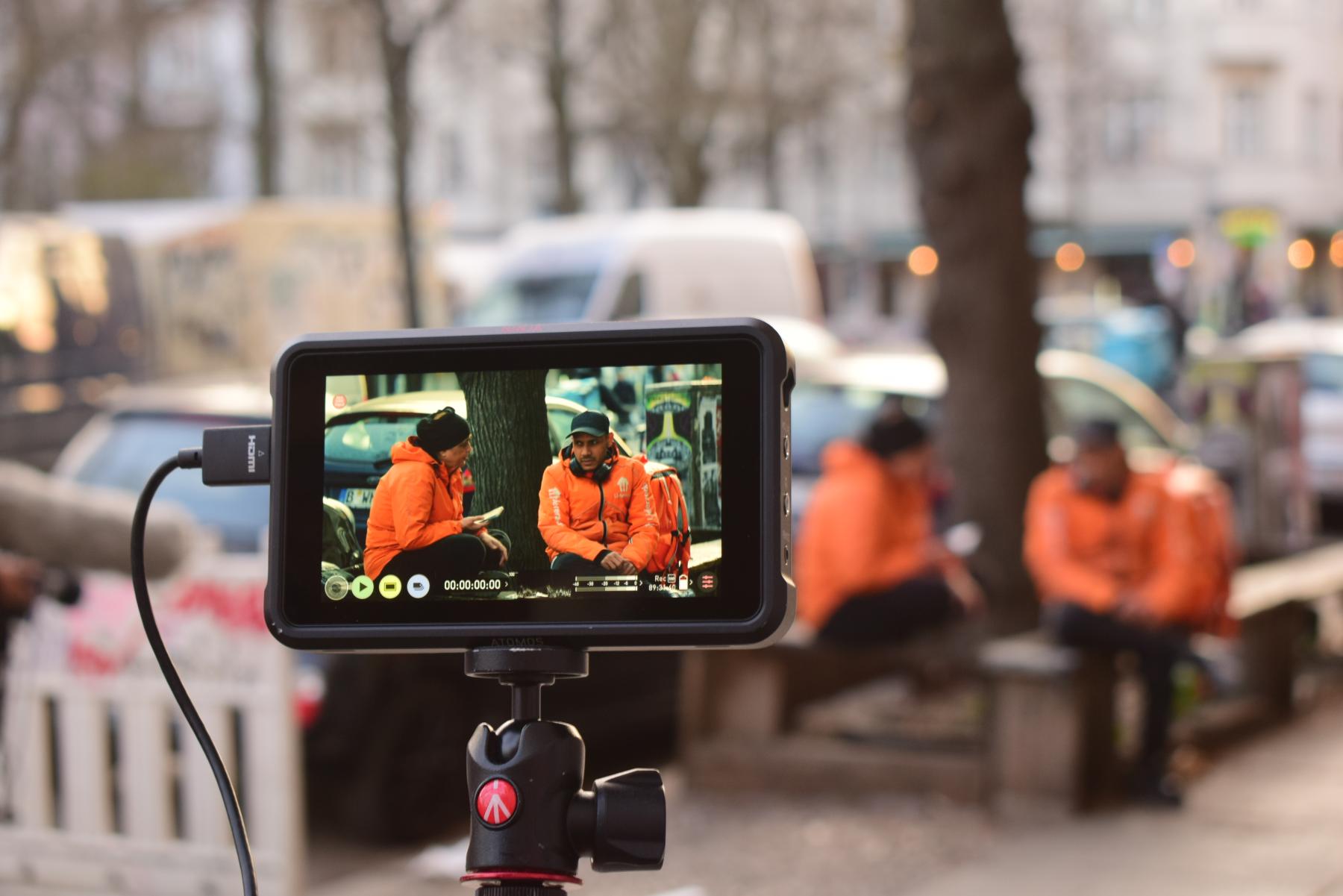
Upasana Das (UD): How strong are the labour laws in Germany, considering many subcontractors do not even have offices or identifiable owners—as the DW (Deutsche Welle) documentary investigated—with dealings turning to criminality when they beat up delivery men for unionising and protesting.
Debarun Dutta (DD): The labour laws in Germany are quite strong. Companies like Uber Eats or Wolt prefer that someone else hires and evaluates the personnel for them and they do not really care how they manage it. Subcontractors attempt to bust union-building efforts all the time with the more regular route being to not reissue the contract, after probation, of delivery workers who were found to have tried forming unions. It is especially so with Uber and Wolt; the workers do not have a contract from the company, they can only form a union as part of the subcontracting third-party and that is too small to make any dent in the larger system of exploitation. Since the subcontractors can flout the norms of the contract and can hire and fire them at any point, protests or any form of organising against the working conditions of these platforms has been very low—with the Lieferando Workers Collective (LWC) being the only existing strong labour union.
UD: Did you see any similarities in the situation with Swiggy and Zomato workers in India protesting against long hours and risk to safety in the expectation of ten-minute delivery?
DD: There are many aspects of how labour conditions operate in platform companies, be it in terms of contracting, risks and security, or the ability to organise. So, the basic difference between most countries and at least some in Europe is that most gig workers in India are classified as self-employed and are hence not given a contract whereas in Europe—at least for Germany—the law is very clear that one is a freelancer only when working for multiple companies. If one is working for a single company full time and is called a freelancer, that is considered a violation of the law. This is where these platform companies have adopted the route of subcontracting, since companies still have to offer a contract, unlike in many countries in the Global South, and the company that offers employment benefits bears more liability.
In terms of work processes, these apps are all similarly designed where the algorithm will push workers to their maximum. Now, the difference is to what extent one’s limits can be stretched; Germany is a smaller country with better implementation of labour laws but in India, if someone dies while succumbing to these companies’ unrealistic standards of fast deliveries, no one will even know. However, even in countries which are concerned about general security conditions, the algorithm and the company try to maximise the number of delivery orders for the rider. It is the same thing but positioned differently. Therefore, in European countries, the fight right now is more against subcontracting, and for provision of insurance and the ability to organise, rather than for basic work necessities which is still the case here in India.
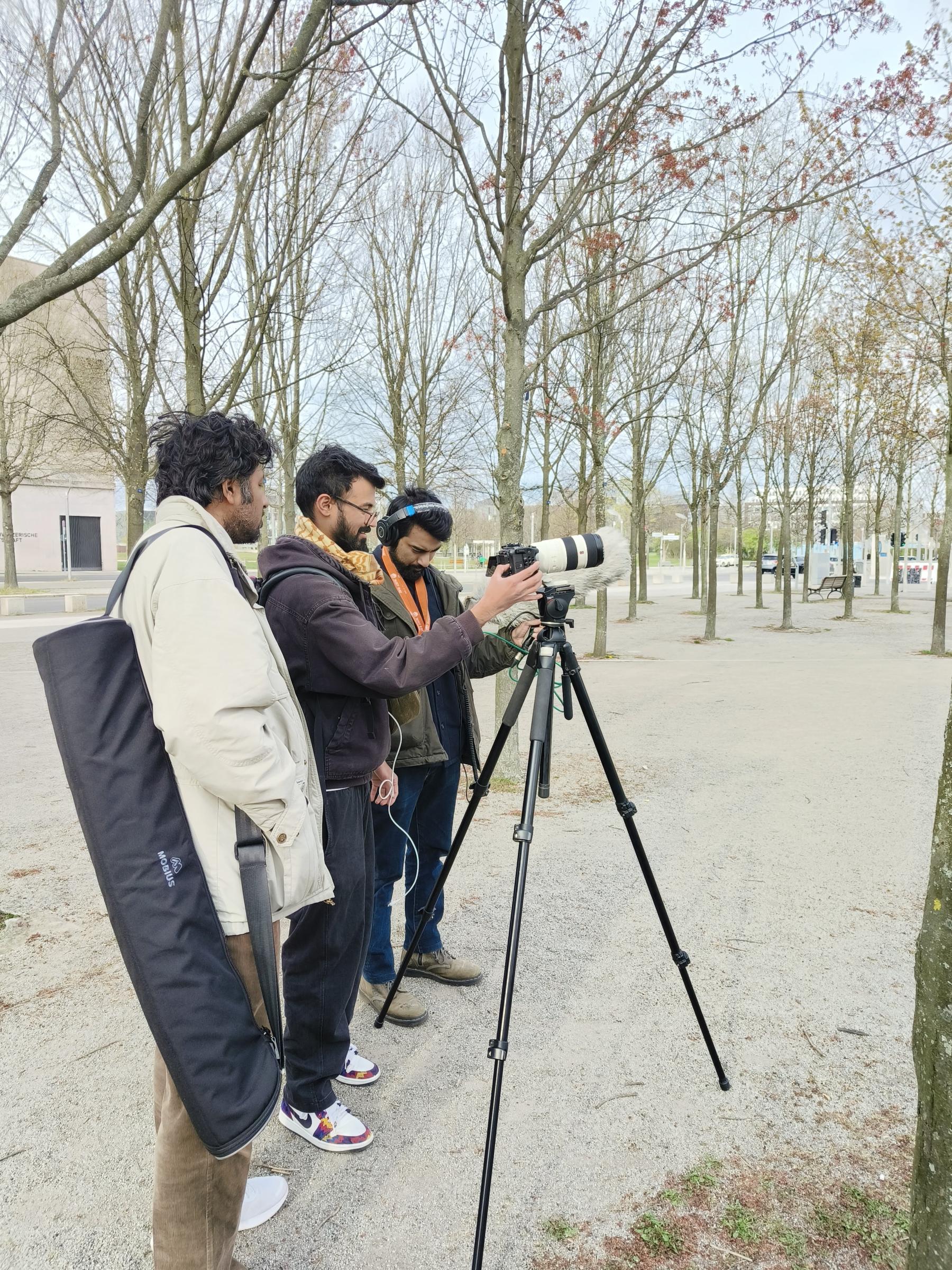
UD: Since there has been a wave of reportage around workers’ conditions over the past year, have you observed any change in their conditions or legal and governmental interventions in Germany?
DD: Unfortunately, this sector is not a big priority for politicians since gig work is mostly taken up by migrants and they are not voters. The pushback is being led by the union with constant efforts to make petitions and meet the ministers to talk about employment guarantee—which is essentially a fight against subcontracting to bring provisions for direct employment. The labour and workers councils actually do the most of that heavy lifting but besides that, there is not much in terms of other legal or policy procedures. The reason it has been hitting the media is because this situation is quite stark considering the labour standards in Germany. But it is very difficult for migrants to organise as there are severe risks associated with their presence in the country.
UD: What was your process of speaking with union members, delivery app workers and policy experts throughout the making of this film?
DD: Most of the things I learned did not come from film research but from other engagements such as my thesis—I had been presenting papers on the gig economy alongside working with a research organisation called Fairwork, which performs studies on labour across the globe, including in India. I look at it more holistically as not just platform work but as labour migration in the context of the Germany-India or European Union-India agreements, which have a significant role to play here. While volunteering with the union (Lieferando Workers Collective) during their election campaigns, I bumped into Nitesh who you see in the film during the Burgermeister protest. He seemed to be the only person who had the flair to protest as a migrant; there were a couple of other people from the union but he had this raw energy of trying to take it on. Another person I hung out with in other places works in Wolt through a subcontractor. In this process, I had thought of many people who could have been part of the film, particularly women riders since there is an added aspect of gender-based exploitation associated with their fight.
The union also struggles with the lack of ample participation; there are about eighty percent or maybe more migrant workers but out of that only sixty to seventy people are actively trying to push for changes through unionising. On the other hand, subcontractors have mastered the manipulation and flouting of norms, particularly through the algorithm. The unions have to be able to understand algorithmic data and its code as well as the unfair calculation of pricing to challenge the company’s assigned orders, which is very difficult for them to do as they do not necessarily have the resources or technical knowledge. This is a significant issue, and there are few tech civil society organisations who are trying to find ways of supporting unions as they receive legal notices from companies on a daily basis.
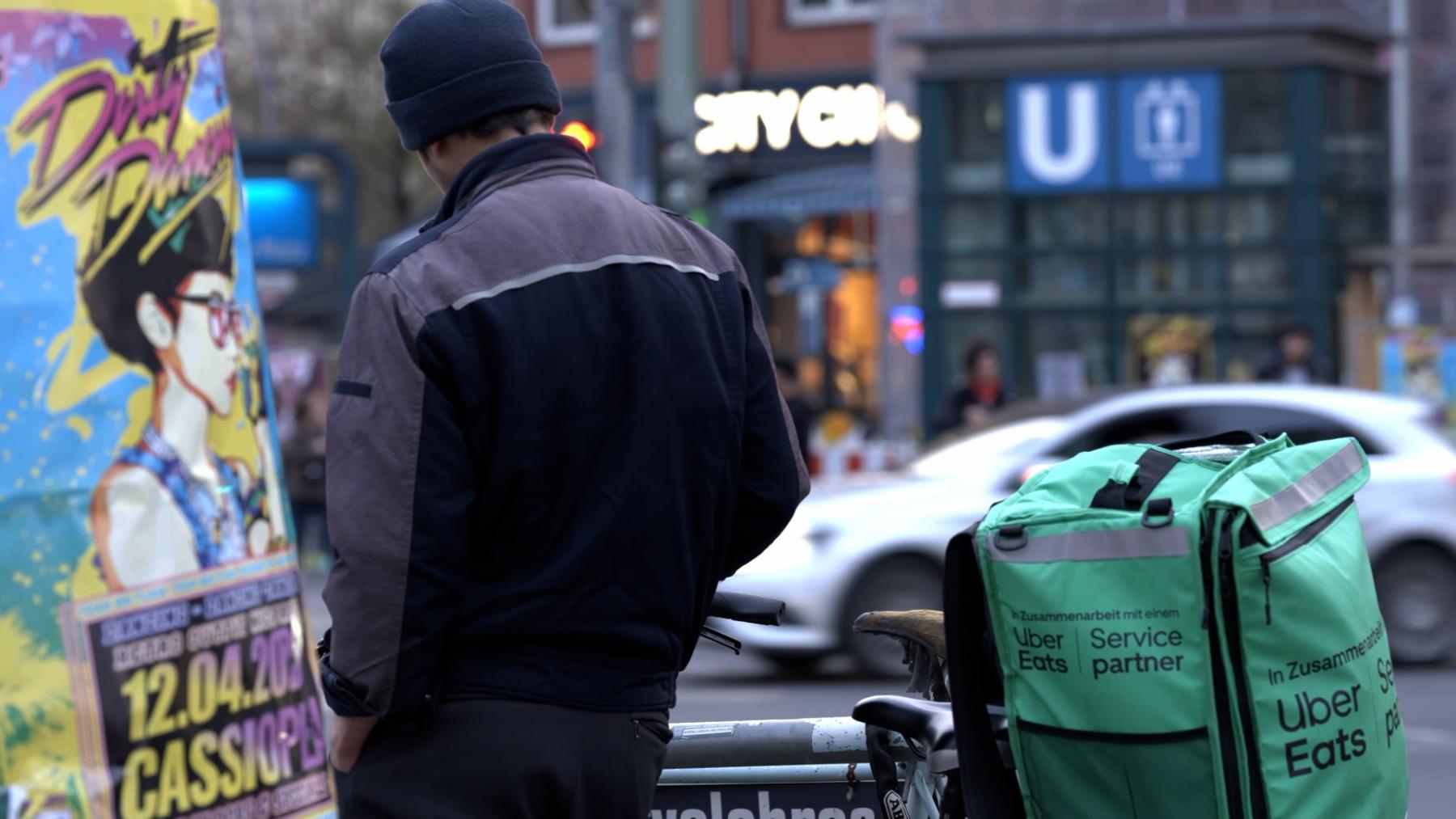
UD: It is interesting that you mention the algorithm, as a few years ago there were studies on how the Uber app pushes drivers to accept rides through its constant piercing sounds of notifications that induce anxiety and increase the likelihood of accepting the ride. Are organisations determining worker productivity using automation and AI since it is impossible for them to humanly monitor such a large base of workers?
DD: The company will use algorithmic data to tell workers that they are not adequate. For instance, if the app assigns seven orders in an hour and a worker fails to deliver even a single one, then that would be the excuse to not allow the worker back into the app anymore for three days and nothing can be done about it. The business process is definitely very automated but if a worker reaches out to the subcontractor once this deactivation happens and is able to furnish enough reason, then a human will reactivate it—that is the extent of human intervention in troubleshooting alongside the ability to read the larger algorithmic data to strategise. Due to this automation, there have been many complaints against Lieferando, such as the last order of the day being placed the farthest from the delivery workers’ homes. It seems to be built into the algorithm and of course, workers have somewhat figured out the way it works as many of them wait around certain points in the city with the most takeaway restaurants because the number of orders there are higher.
UD: The DW documentary mentions Shiwani S. who sued Wolt after not being paid by their subcontractor for months. It seems that workers would not hesitate taking the company to court in Germany, which is very different from the situation here in India.
DD: That is one of the things that the unions in Germany do very proactively. The Lieferando Workers’ Council (LWC), has taken up issues of other couriers as well. As in Abhay and Shiwani's case, the lawyer is generally hired by LWC because ideally, for the health of the larger ecosystem, there should not be any subcontractors. When the court case was ongoing, LWC did not have a policy for subcontracting in Germany, but they were trying to do it in other European cities. Therefore, a battle for someone who is employed by a Wolt subcontractor is also equally a fight for all. Many legal and quasi-legal people who are part of a different workers' collective support delivery workers even though they might not be workers themselves. For instance, even though I do not work as a delivery worker, I am part of a delivery workers' collective and in our different ways, we try to influence the situation. It does not come as a natural choice for most South Asians to use the legal route for grievance redressal as we are not familiar with the laws of the land but having a group like this definitely helps to find possibilities. Unfortunately, in India, it is difficult to take a company to court because even though the laws are there, issues are rarely fought over. This is largely because India allows workers in platform companies to be classified as self-employed. This creates a technical loophole that allows companies to evade accountability and responsibility since they are not the official employers of these workers. In such cases, changes in parliamentary law are perhaps a better route to regulate the unnecessary monitoring of workers—including the expectation of delivery within ten minutes—and to bring fundamental provisions for employees into the rubric of the gig economy.
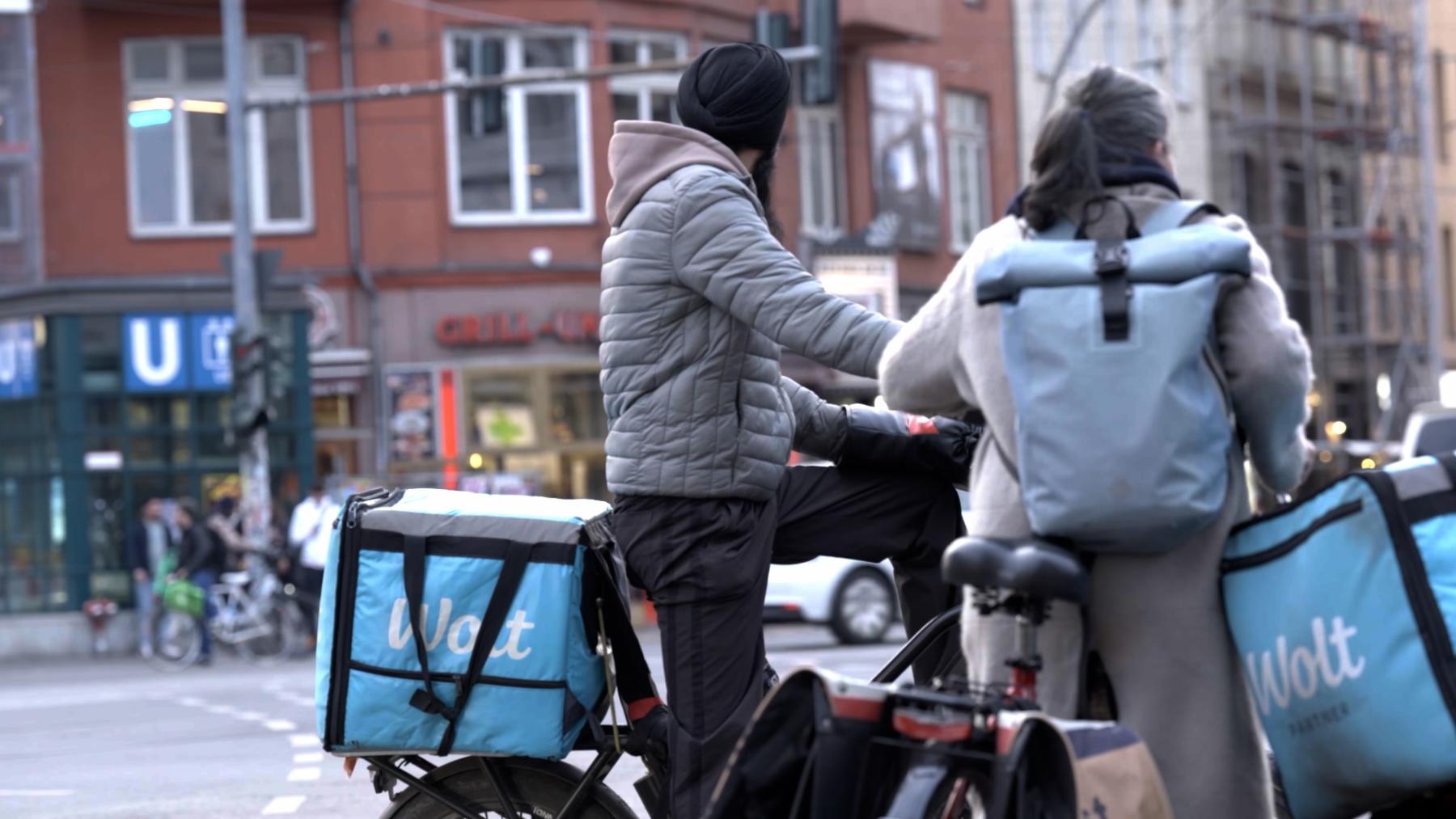
In case you missed the first part, read it here.
To learn more about artists tracing South Asian workers’ struggles and resistances, read Kshiraja’s essays on Sara Saini’s In the Wake of Remembering (2024), which reflects upon three women’s memories of the 1992 Burnsall strike, and John Abraham’s Amma Ariyan (Report to Mother, 1986), Sumaiya Mustafa’s two-part review of Samuvel Arputharaj’s Manjolai (2024), and Ankan Kazi’s observations on Ajay Bharadwaj’s documentary When the Tide Goes Out (2021).
To learn more about films screened at the previous edition of Kolkata People’s Film Festival, read Kshiraja’s conversation with the Ektara Collective on Mann ka Thela (Mind the Cart, 2024), Sahil Kureshi’s review of Sanjiv Shah’s Hun, Hunshi, Hunshilal (1992) and Pramodha Weerasekera’s essay on Dinesh Balasri’s Sagavaram (The Blessing of Immortality, 2024).
All images courtesy of the director.