


Spike Lee: The Torchbearer of Black Aesthetics
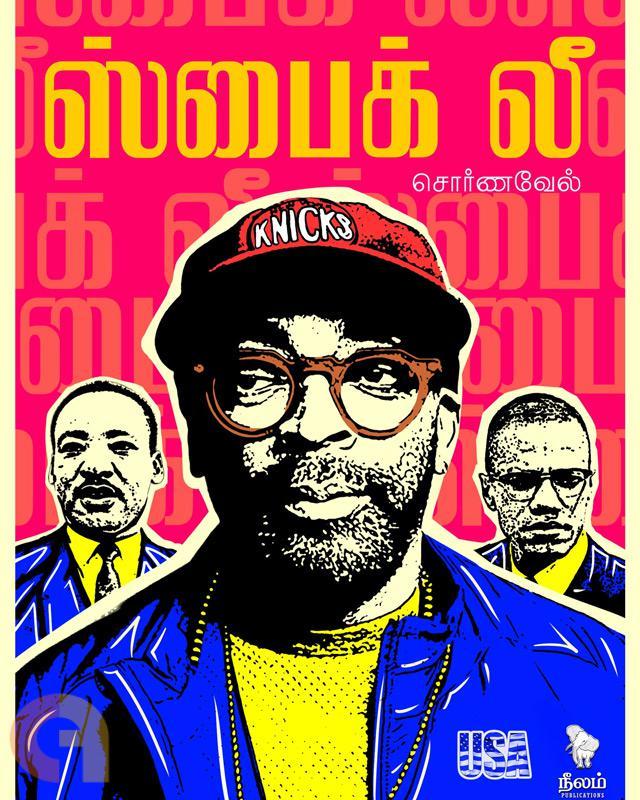
The African American director, Spike Lee, named his production company "40 Acres and a Mule Filmworks"—a reference to the historical injustice experienced by Black Americans. It is this intimate relationship between Lee and the Black struggle that filmmaker and film scholar, Swarnavel Eswaran Pillai foregrounds in the first scholarly Tamil book on Lee and his films, Spike Lee: Ōr Amerikkat Thiraippaṭa Iyakkuṉariṉ Aḻakiyal Araciyal Maṟṟum Paṇpāṭṭu Mukkiyattuvam (The Aesthetic, Political, and Cultural Significance of an American Film Director).
Published by Neelam Publications in 2025, this concise sixty-five-page volume, comprising ten essays, reads as a tribute to the director, his cinematic practice, and his political and cultural interventions. It brings together a series of lectures Eswaran delivered between 2017 and 2018 at filmmaker Pa. Ranjith’s library, Koogai (Owl)—a space that seeks to bridge literature and cinema while functioning as a learning ground for aspiring filmmakers. In a well-researched and accessible manner, the book offers a credible introduction to African American cinema, its history, politics and aesthetics for a Tamil readership.
The book begins with a brief introduction to Lee, emphasising his unique film language and narrative techniques that have strengthened the understanding of racial politics and Black cultural life—marking a powerful intervention in White-dominated mainstream American cinema. Engaging with Lee’s major films through the frameworks of film theory, Black cinema history and cultural-political analysis, Eswaran attends to Lee’s distinctive use of camera angles, visual composition and narrative strategies to negotiate race, identity and hegemony, and reflects on the wider cultural impact and continued relevance of his films.
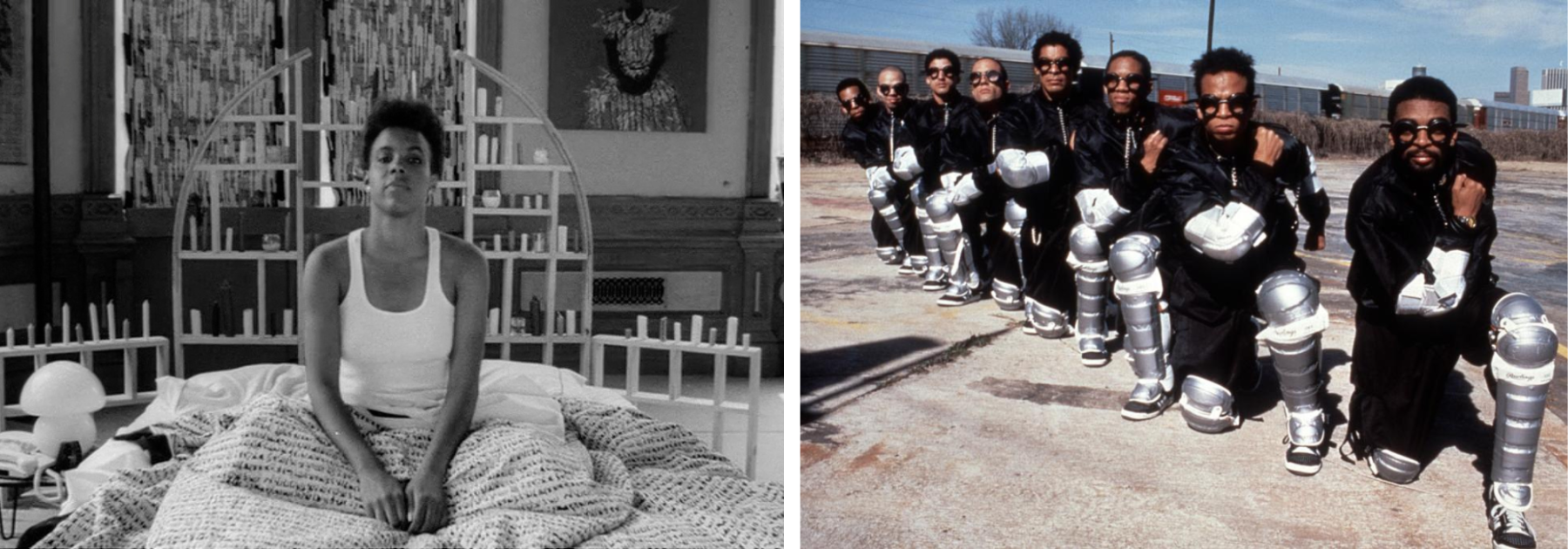
Left: Still from She’s Gotta Have It (1986).
Right: Still from School Daze (1988).
The author highlights Lee’s debut—a black-and-white film—She’s Gotta Have It (1986) as a significant work that marks the development of a distinct Black voice in cinema and challenges prevailing stereotypes. Discussing Lee’s second film, School Daze (1988) for its engagement with racial discrimination and class divisions within Black communities, Eswaran notes that even while Lee draws from the French New Wave, his work remains grounded in the everyday realities of Black American life.
Within a decade, Lee emerged as a key figure in shaping the new wave in Black cinema. Drawing from both Black popular culture and world cinema to foreground the urban experiences of Black communities, he connected individual and local Black narratives with a broader cultural critique. Thus establishing a distinct Black aesthetic on screen, Lee would become a torchbearer for a new generation of Black filmmakers following the Los Angeles (L.A.) Rebellion movement of the 1970s and 1980s—when a number of Black filmmaking students who entered UCLA Film School in the late 1960s through the Ethno-Communications Program began producing new cinematic styles. Drawing from the civil rights movements, global new waves and avant-garde films, they pioneered an independent Black cinema.
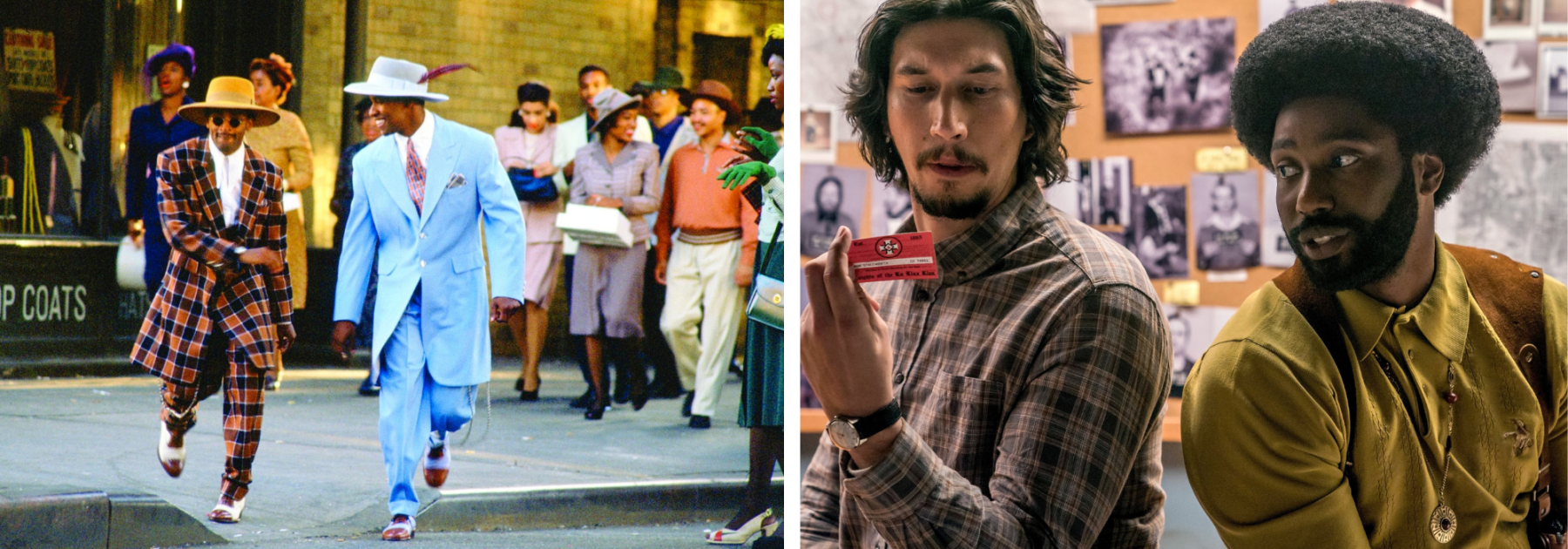
Left: Still from Malcolm X (1992).
Right: Still from BlacKkKlansman (2018).
Discussing the visual language adopted in Lee's early films, Eswaran examines how colour tones and camera angles express emotions and the power dynamics of characters and situations. The use of dark blue and red tones, along with Lee’s signature filmmaking technique—the double dolly shot—becomes notable and is later seen in works such as Malcolm X (1992) and BlacKkKlansman (2018). Eswaran also underscores the challenges Lee faced while representing an important Black leader such as Malcolm X and notes how this work engages with history and memory while bridging past and present struggles.
.jpg)
The book outlines how African American cinema emerged as an alternative to the dominant Hollywood template and discusses figures such as Paul Robeson and Oscar Micheaux, who pioneered the silent era. Engaging with Blaxploitation films and the subsequent criticism of the genre, it traces the Black Arts Movement and the arrival of Black independent filmmakers including Charles Burnett, Julie Dash, John Singleton, Ava DuVernay, Steve McQueen and Jordan Peele. Many practitioners formed production companies to support films and documentaries on Black history, culture and aesthetics to assert their rights, and Eswaran underscores how Lee occupies a distinctive position in this trajectory.
.png)
Charles Burnett aptly figures in the book’s exploration of American independent cinema—particularly for his documentation of the lives of the Black working-class and his active participation in the L.A. Rebellion. His films, influenced by Italian neorealism and African American oral histories, engage with questions of representation through experiments with actors, regions and jazz music, thus forming a sharp critique of the narrative style and visual grammar of Hollywood cinema.
In discussing landmark moments in Black cinema, Eswaran highlights the rebellious struggle of Paul Robeson, the independent cinema movement led by Melvin Van Peebles and the work of Sidney Poitier in redefining the portrayal of Black characters on screen. Describing the excellence of actors Djimon Hounsou, Morgan Freeman, Angela Bassett and Denzel Washington, he commends their seminal contribution to African American cinema.
.jpg)
The author’s incisive study of Lee’s work brings Black radical cinematic traditions into Tamil intellectual and cultural discourse, situating the filmmaker’s oeuvre within conversations on race, politics and visual culture. In so doing, the book not only contributes to Tamil film scholarship and readership on African American cinema—a field that remains relatively underexplored in mainstream film criticism in India—but is also generative for thinking about race and caste as well as the circulation of political film cultures across the Global South.
19 June is widely observed as Emancipation Day—or Juneteenth—in the United States to commemorate the abolition of slavery in 1865, over two years after the Emancipation Proclamation, which freed formerly enslaved people in the Confederate States. Over a century and a half later, the meaning of this freedom remains in question, with continuing forms of historical oppression and everyday brutality, as Saidiya Hartman notes in her powerful exploration of slavery and freedom in the U.S.—Scenes of Subjection: Terror, Slavery, and Self-Making in Nineteenth-Century America (1997). And yet, Black communities continue to organise and strengthen resistance movements for dignified lives and access to rights as free citizens. In this context, revisiting the filmmaking practice of Lee allows a critical reflection on the significance of revolutionary cinema in interrogating representation and socio-political transformation.
To learn more about Black aesthetics, read Deivendra Kumar’s review of the online lecture by Swarnavel Eswaran on African American cinema, Neringa Tumėnaitė’s essay on Souleymane Cissé’s film, Finye (The Wind, 1982), Natasha Gasparian’s essay on Johan Grimonprez’s documentary, Soundtrack to a Coup d’État (2024), "Blurred Belonging," a conversation by ASAP | Art with Sandra Brewster on her artistic practice and Ankan Kazi’s review of Jacqueline Ennis-Cole’s conference paper on photographer Maud Sulter (2021).
To learn more about Tamil cinema’s exploration of power dynamics, read Steevez’s two-part review of the PK Rosy Film Festival and Sumaiya Mustafa’s two-part essay on Mari Selvaraj’s Bison Kaalamaadan (2025).
All images are stills from Spike Lee's films and are courtesy of the director, unless otherwise mentioned.