


Understanding African American Cinema: A Lecture by Swarnavel Eswaran
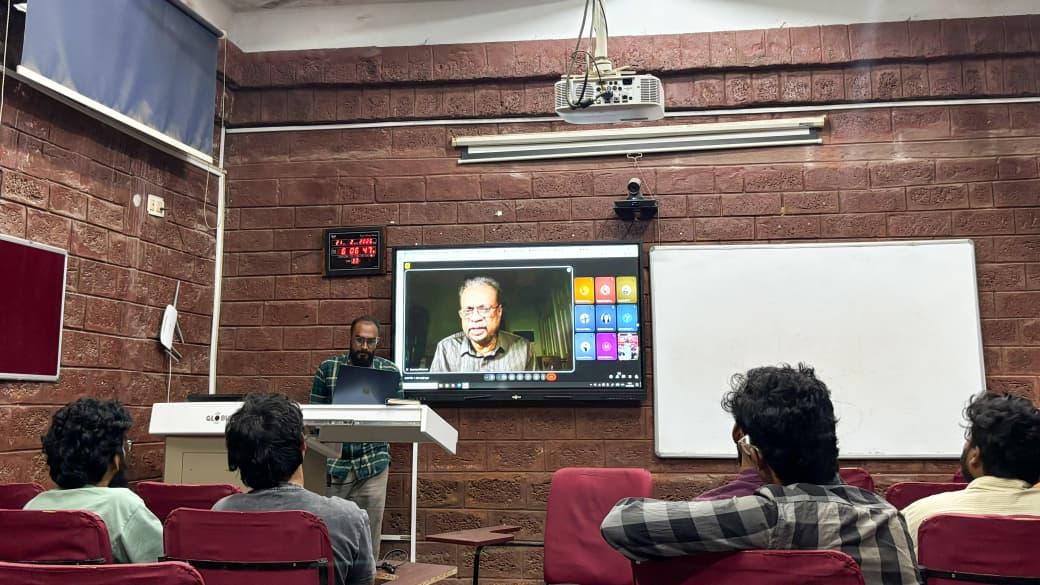
In present-day academia in India, the pedagogy on Black culture in literature and popular culture has significantly diminished and remains underexplored, often studied mainly through a comparative lens in dialogue with Dalit literature and caste-race connections. At the same time, Dalit literature and writings are being questioned in university syllabi, with multiple works, especially Dalit and Dalit feminist writings, being removed. However, with April marking Dalit History Month, it is an important act of solidarity to acknowledge the significance of Black History Month, as one attempts to redress the various histories that have been neglected, marginalised or completely erased.
Black History Month, also known as African American History Month, began in the United States as a way to commemorate important figures and historical events in African American history. It is celebrated every year in February with different themes, a practice that dates back to 1926 and is decided by the Association for the Study of African American Life and History (ASALH). When Carter G. Woodson established Negro History Week in 1926, he emphasised the importance of providing a theme to focus public attention on significant developments that deserve recognition. As 2026 marks the 100th year of this practice, the theme for this year is “A Century of Black History Commemorations.”
.png)
This also served as the theme for the online lecture by Swarnavel Eswaran, organised by the student representatives of the Sarojini Naidu School of Arts and Communication at the University of Hyderabad on 21 February 2026. Along with the lecture, the weekly film screenings at the school under the banner of SN School Collective were dedicated to Black cinema, featuring films such as Jordan Peele’s Get Out (2017) and Ryan Coogler’s Sinners (2025). Eswaran’s lecture, titled “Shadows and Light: The Evolution of African American Cinema—History, Aesthetics, and the Politics of Representation,” explored the historical trajectory and changing aesthetics of African American cinema. It shed light on how narratives representing Black identity, culture and political struggle became a space of resistance against racial stereotypes and marginalisation.
.jpg)
Beginning with the silent era, the “race films” developed between the 1910s and 1940s as a response to the racist representation of African Americans in Hollywood. For instance, mainstream films like The Birth of a Nation (1915) portrayed the community in deeply derogatory ways. Emerging as their own genre, “race films” were made by African American filmmakers on a small budget, produced independently and screened in segregated theatres. These films mirrored popular Hollywood genres such as westerns and melodramas while featuring all-Black casts. By showcasing educated professionals and stable families, they challenged racist perceptions of Black life, thereby representing respectability and social uplift politically for the community.
.jpg)
Eswaran also highlighted the contributions of filmmaker Oscar Micheaux, a pioneer of the early African American (race) cinema era, who independently produced and distributed films for Black audiences and challenged the dominant stereotypes. His notable films Within Our Gates (1920), Body and Soul (1925) and The Symbol of the Unconquered (1920) addressed racial injustice, classism and interracial relationships. Another pioneering figure whose role was addressed was actor and activist Paul Robeson, as his artistic practice emphasised broader political struggles, such as anti-colonial and labour movements.
.jpg)
In the context of the mid-century and the studio era (1940s–60s), Black actors increasingly appeared in mainstream Hollywood productions, often in restricted/marginalised roles, resulting in the “Poitier Effect.” Coined by scholar Sharon Willis, the term references how White audiences perceived racial progress in the films of the 1950s and 1960s (Guess Who’s Coming to Dinner [1967], In the Heat of the Night [1967]) due to Sidney Poitier's composed, dignified and non-threatening on-screen persona, while the deeper issues of racism and White privilege went mostly unchallenged despite the attempt to bridge racial divisions through such representation.
However, the Blaxploitation era of the 1970s resulted in the shift toward urban Black experiences in gritty city settings and iconic funk and soul soundtracks by artists such as Isaac Hayes and Curtis Mayfield. Films such as Gordon Parks’ Shaft (1971) and Gordon Parks Jr.’s Super Fly (1972) expressed empowerment through catharsis, with the hero finally winning either through force or hyper-muscular tropes.
.png)
Another significant event in this history was the L.A. Rebellion Movement of the 1970s and 1980s, led by filmmakers associated with the School of Theatre, Film and Television at the University of California, Los Angeles (UCLA), such as Charles Burnett and Julie Dash, who aimed to bring diverse stories to the screen. These filmmakers rejected both Hollywood and Blaxploitation, adopting neorealism, long takes and non-linear storytelling, and emphasising the poetic beauty of everyday life. These movements thus decolonised the gaze of the camera by prioritising Black interiority over White approval. This was exemplified in films and shows that used grainy 16mm black-and-white footage, real locations and non-professional actors as it depicted mundane, daily life. Burnett’s Killer of Sheep (1978) epitomises this approach, showcasing the struggles of a slaughterhouse worker in Watts, filled with poverty and the exhaustion of everyday life.
1.png)
The period of the late 1980s and 1990s was characterised by New Black Realism, led by filmmakers such as Spike Lee, John Singleton and Matty Rich. Lee’s Do the Right Thing (1989) opened the doors for a new generation of filmmakers. The use of saturated colours and the “double-dolly shot” added a new aesthetic appeal to the films of this period, presenting a systemic critique and addressing police brutality, racial and community tensions as well as conflicts.
Finally, Eswaran discussed contemporary developments in African American cinema, including the arrival of Ava DuVernay, with films such as Selma (2014) and 13th (2016), which worked as a cultural intervention to challenge the prison system and reclaim history and memory. Other trends in contemporary cinema include a new aesthetic approach to exploring Black joy, queer identity and ancestral memory, as seen in films like Barry Jenkins’ Moonlight (2016), Peele’s Get Out (2017) and Coogler’s Black Panther (2018). The latter two draw on Black horror and Afrofuturism respectively.
.png)
The lecture concluded by emphasising the growth and development of African American cinema, which evolved from early independent race films to globally influential productions. Notwithstanding these changes, its primary objective persists—to confront racial distortion, assert narrative authority and reflect the lived experiences of Black people. Eswaran also included a brief discussion on the parallels between Indian Dalit cinema and African American cinema in their shared engagement with histories of oppression and resistance, using film as a space for counter-narratives, cultural assertion and political critique, as well as the aesthetics of Afrofuturism. Both traditions foreground marginalised subjectivities, challenge dominant stereotypes and create alternative aesthetic and narrative forms rooted in lived experience.
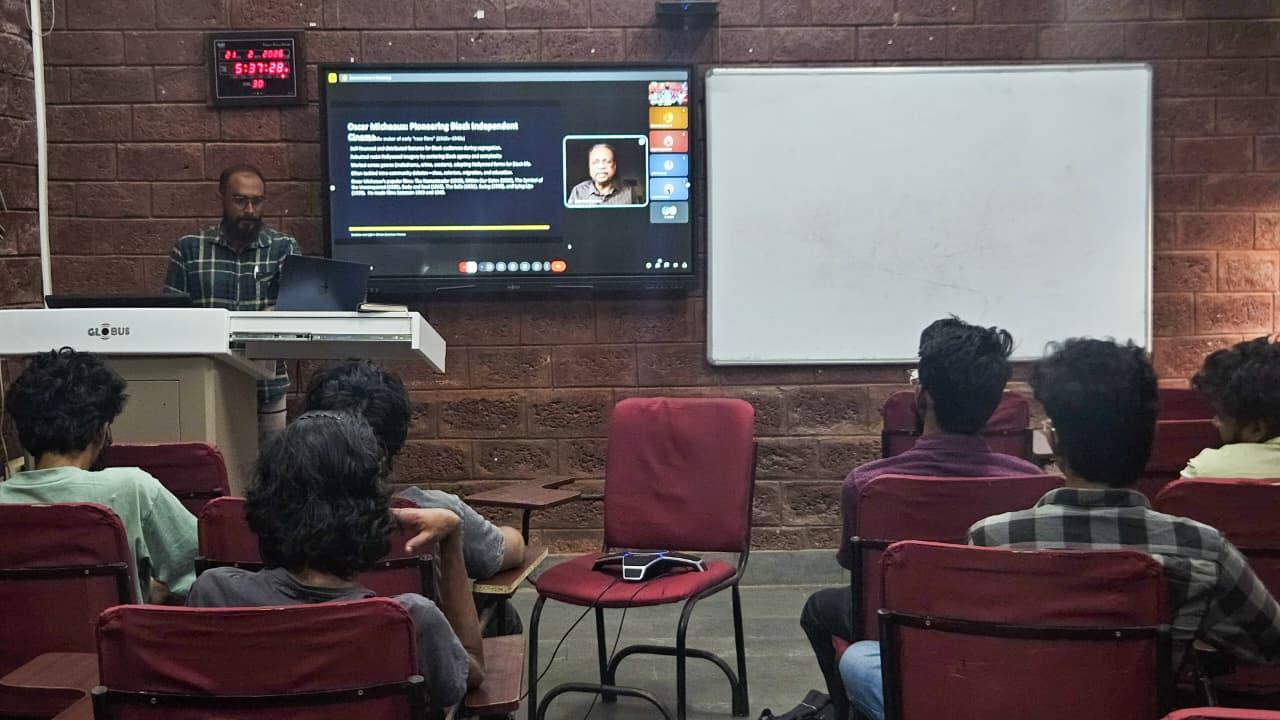
To learn about Black cinema, read Neringa Tumėnaitė's essay on Souleymane Cissé's Finye (1982), Natasha Gasparian reflections on Johan Grimonprez’s Soundtrack to a Coup d’État (2024) and Najrin Islam's review of Teboho Edkins' Days of Cannibalism (2020).
All images are stills from films unless otherwise mentioned. Images courtesy of the respective directors.