


Skygazing at Cinematic Form: Pinak Banik’s Ignorant Truthseeker
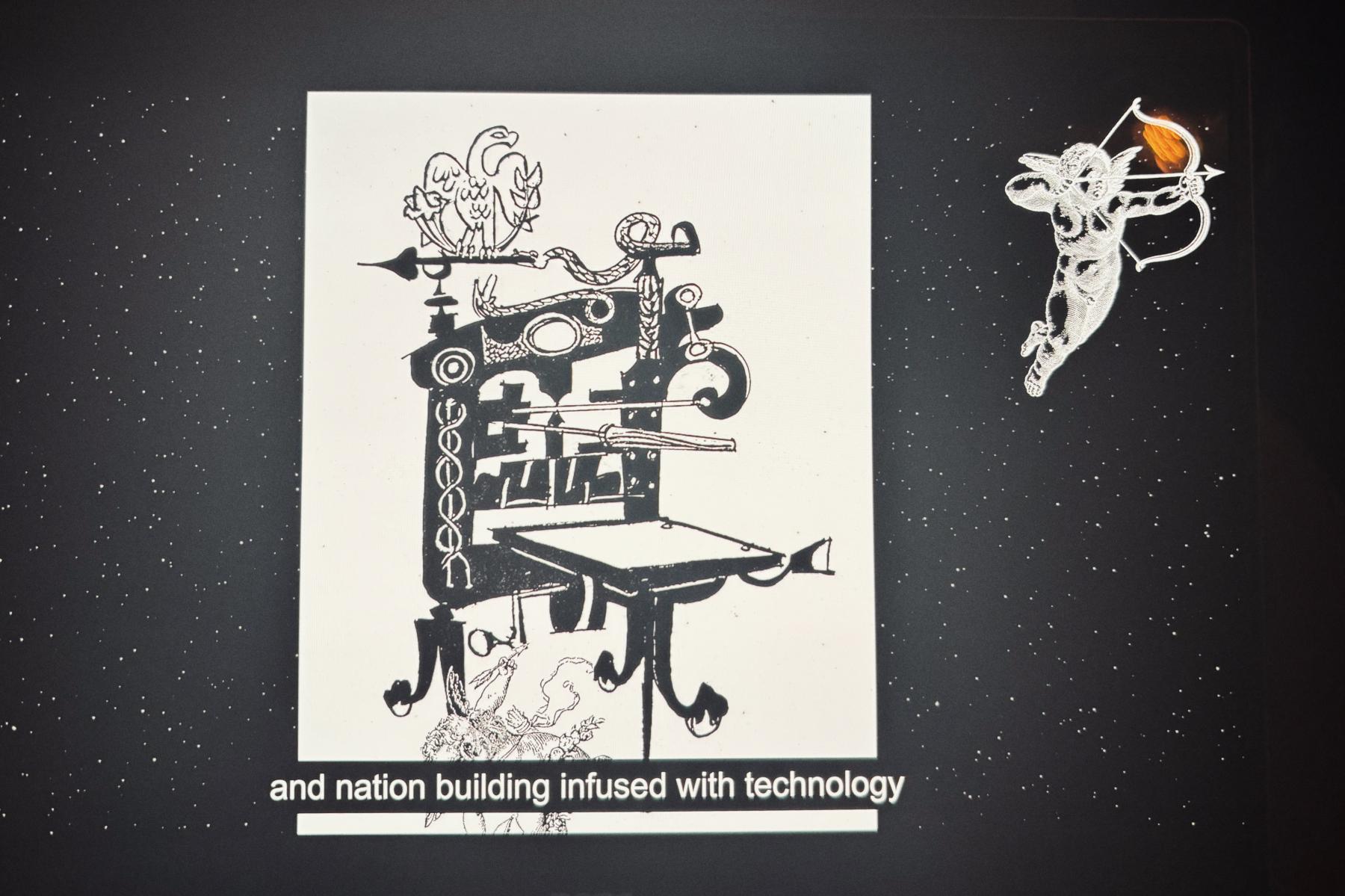
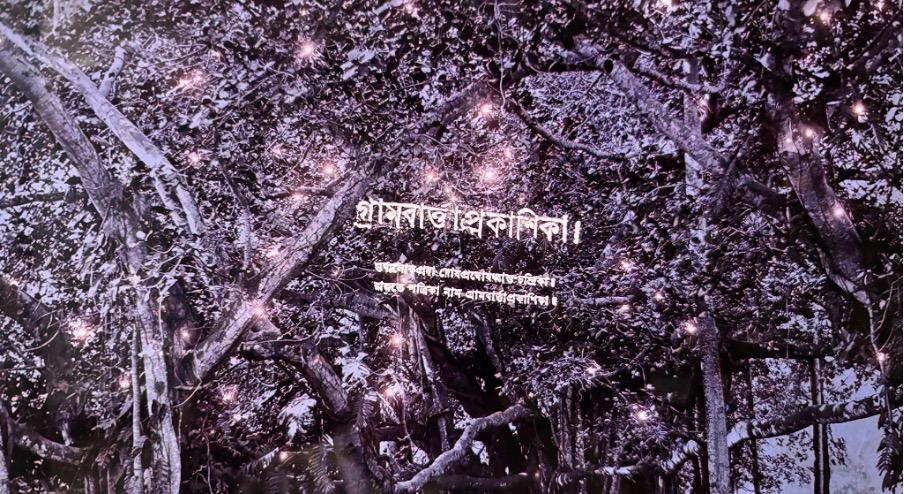
Pinak Banik’s film Obsolete Skygazer - Enlightened Observer - Ignorant Truthseeker - Emaciated Entourage (2025) being screened at the ongoing Emami Art Experimental Film Festival 2025 in Kolkata is a powerful cinematic take on historical being and becoming. The film—which received a Special Mention by the Jury in the long duration category of the official national selection—poses itself as a biopic of a printing machine. We learn that this machine ends up being used in colonial Bengal to publish Grambarta Prakashika, the pioneering periodical for rural journalism between 1863 and 1880, by the maverick Harinath Majumder. After this mouthpiece of sorts for the famine-stricken Bengal peasantry cannot hold its own against the oppositional moves of the British government and folds up, Majumder turns to an esoteric and spiritual life, transforming into the bard Fikir Chand. The two biographies converge, but only via an intriguing collage(?) of mythemes, objects, scenarios and sounds.
Banik’s film is no ordinary biography, either of a machine or of the critical figure of Majumder—not unknown, but often forgotten in favour of the predominantly urban illuminati of Bengali modernity. The film is shaped as an argument, scholarly in tenor. By the end, the authorial voice surges ahead of the multiple elements of this mixed media juxtaposition in a declamatory exercise, declaring Majumder’s ambivalence as suspended between materialist modes oriented to justice and transcendental inclinations borne of indigenous spiritual paradigms. The voice/narrator then continues in a trance of (awkward) prolixity to cast Majumder, the “ignorant truthseeker” as unable to fully comprehend the “psycho-epistemic disorder and destructive potential of modernity’s knowledge structures.”
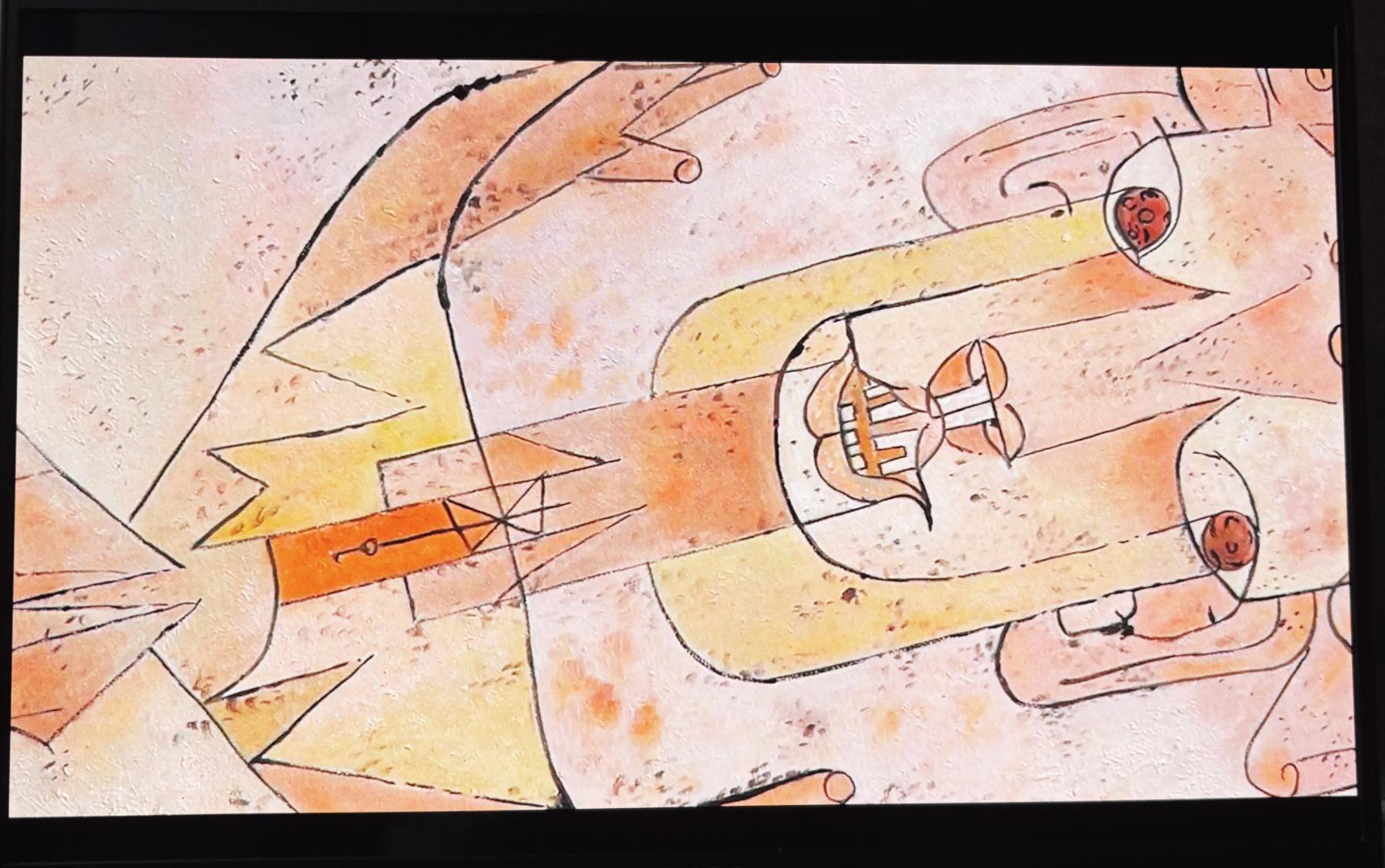
A little before, about thirty odd minutes into the film, Banik has placed his wager: recurrent cuts of Paul Klee’s Angelus Novus undoubtedly reference Walter Benjamin’s Thesis IX from his philosophy of history. Klee’s rendering of the angel, in Benjamin’s reading urges us to focus on the ruins left in the wake of progress, the pieces to pick up not quite adding up to any optimism for what has come about or is to come, and yet, without any nostalgia for the past.
Banik in no way shies away from argumentation and one part of my engagement here is a response to the substantive (should we say) academic heft to his film text. The denotative intent of the film—of posing the folk/esoteric/mystic against the onward march of Western rationality— is presented through many elementary forms, duly referenced at the end. Following the trail of these objects, sounds, scenes and the ways in which the director annotates them, one sharp and appreciably clear viewpoint on the lineages of our modernity emerges.
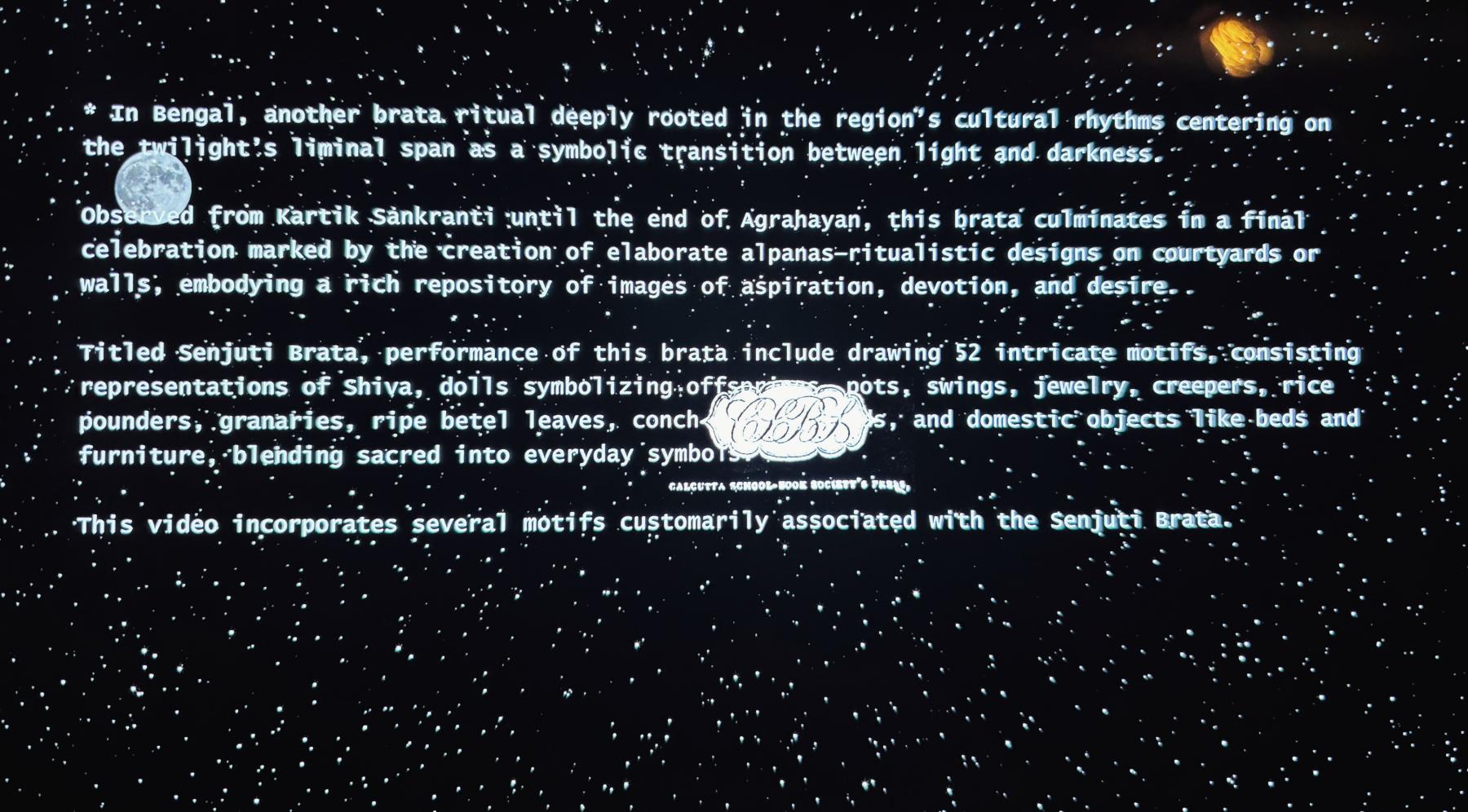
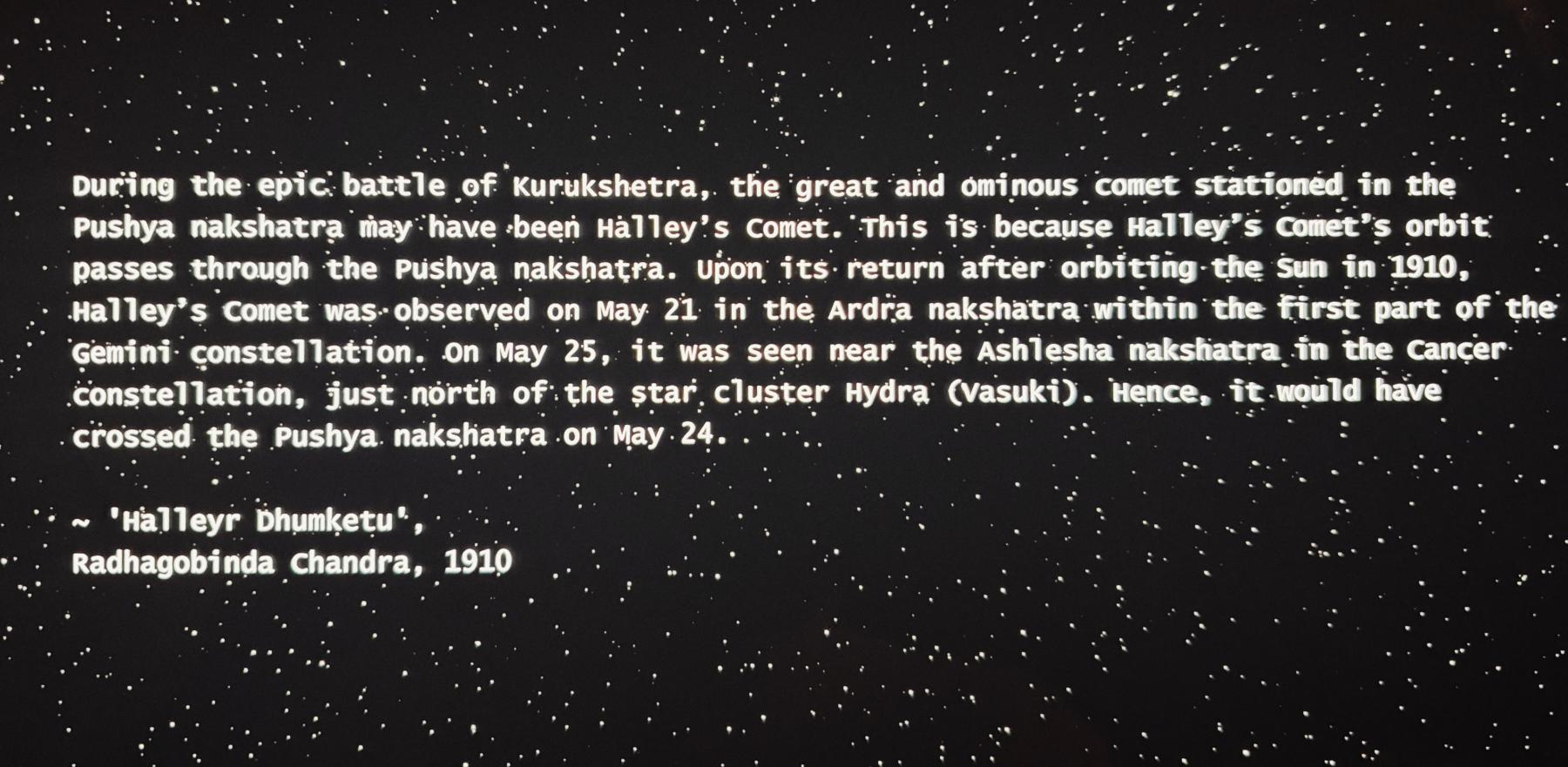
Between the folk and the modern, something of a displacement has occurred between, on the one hand, a feminine emphasis on an aesthetic and ethical syncing with the eternity of seasonal and celestial rhythms of nature (the obsolete skygazer), vis-à-vis the masculine takeover of time-sense via disciplined observation (the enlightened observer) on the other. In the latter group are astronomers Kalinath Mukherjee, the author of Popular Hindu Astronomy (1905), and Radha Gobinda Chandra. These male inductees into the dispassionate observation of celestial phenomena seemed to have different interests, for instance, in pursuing the historicist obsession in colonial India of exactly dating ancient events in epics like the Mahabharata in sequence with comet trajectories.
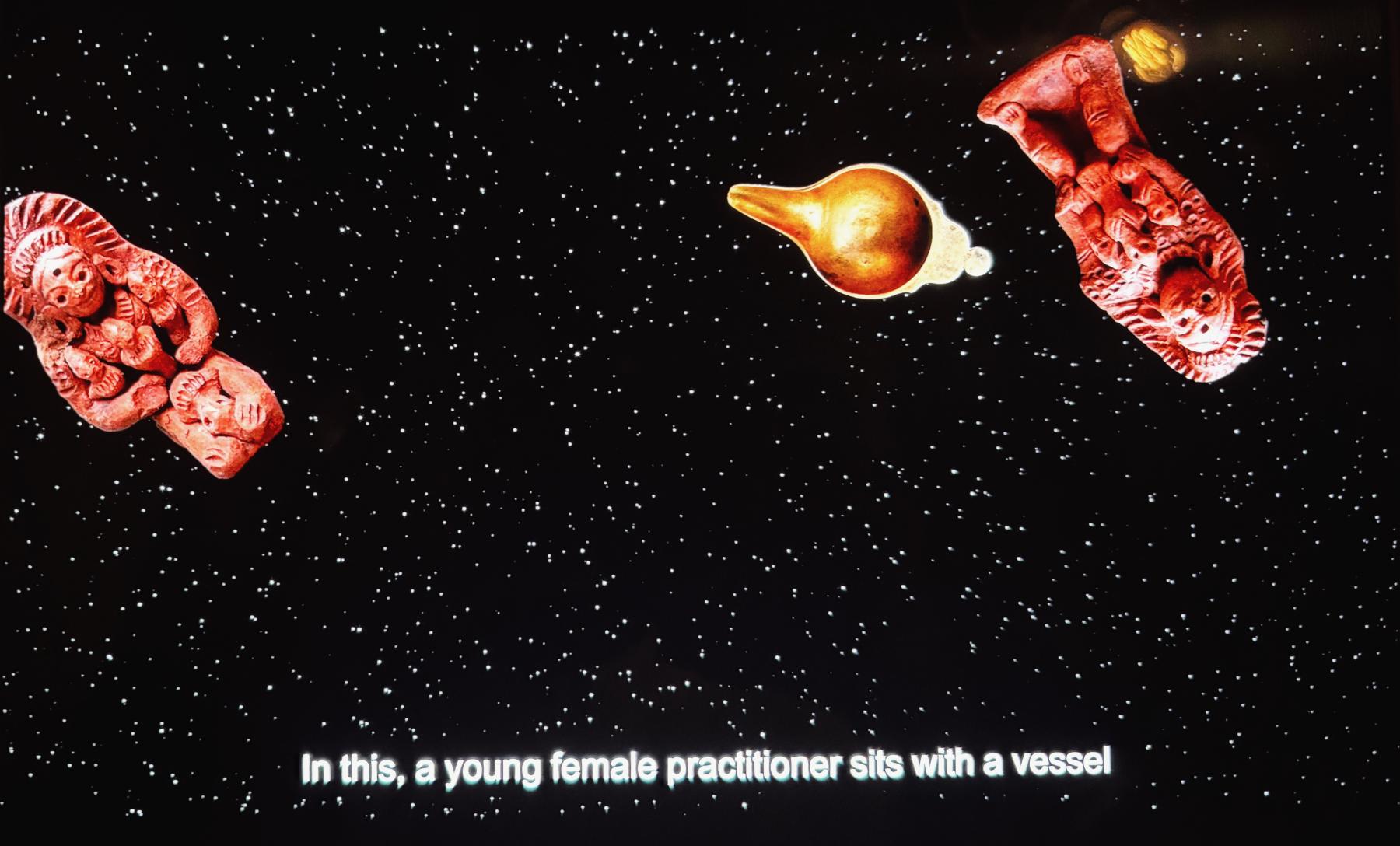
The archive of this male passage into modern, alienated observation is printed words and figures that emboss the screen and invite the viewer to measured reading. In contrast, the feminine folk pursuit of shaping human existence along natural rhythms appears through icons, objects, chants and practices, tossed across the frame without any seemingly purported organisation. Are such elementary forms of non-alienated being(?) less archival and more lived? Are they residual to the march of modernity, ruins that took blows from this heady progression, yet survived and continue to germinate, not despite but with the grief of the loss? Is the film then an exercise in re-mediating them to affective (more than contemplative) ends, performing a re-enchantment of our secular and worldly existence?
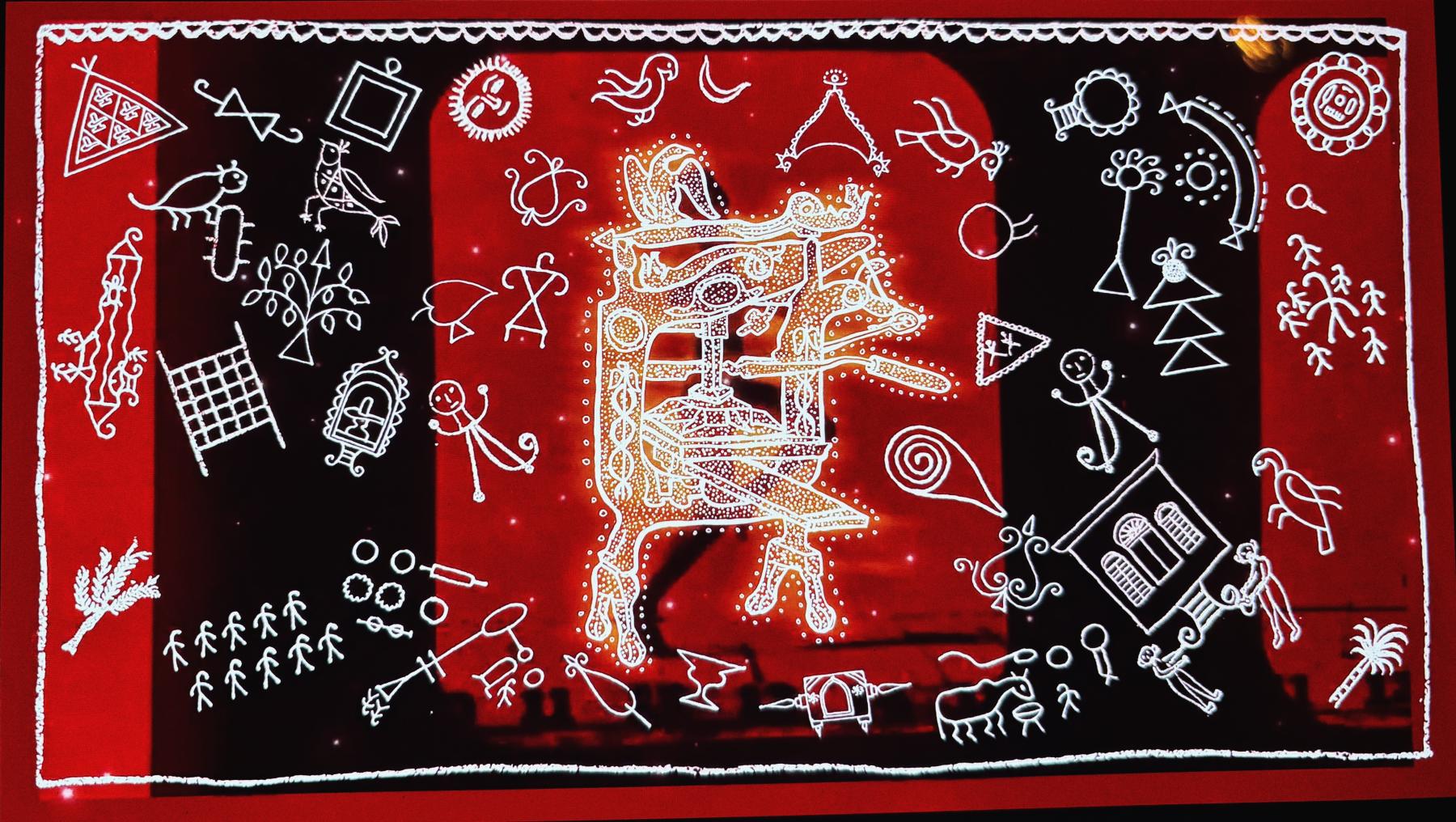
Banik, one speculates, will answer in the affirmative to all such questions. His viewpoint then does not entirely overlap (not that it has to), but lies obliquely across other subaltern perspectives, like for instance, that of the anti-caste movement in India. Arguably, this movement has a more affirmative view of modernity, aspiring to re-invent its terms, even while recognising how powerful caste elites have appropriated modernity’s premises to perform acts of reduction and other more direct kinds of violence. In line with such formations, one can venture sociological scepticism about Banik’s investment in unbroken continuities of folk and esoteric life, carried through fasts (bratas) of rural women in Bengal rhymed with nature’s motions and rendered into intricate alpana (ritual iconography) motifs. In a world of printed panjikas (almanac), professional astrologers and Brahmin priests, and the mechanical reproduction of icons galore, what point of externality is possible for such temporal subjectivities and forms of life to continue as residual to modern exertions?
Concluding with such unalloyed enlightened scepticism would, however, do great disservice to the aesthetic intent of the film, of rendering history, historical objects and archival dispensations in a strikingly immersive mode. There is way more than academic argument in the film, even as the authorial voice often inadvertently implicates the viewer in such definite summative stances. There is also an active effort to wrestle with the cinematic form, the modern medium par excellence. This wrestling essentially happens through a collage-like technique, where the aforementioned images, objects, scenarios, sounds and myths crowd the diegetic space as icons and indexes suspended in Brownian motion. These ground us objectively in historical reality, but do not immediately spell out a narrative arc.
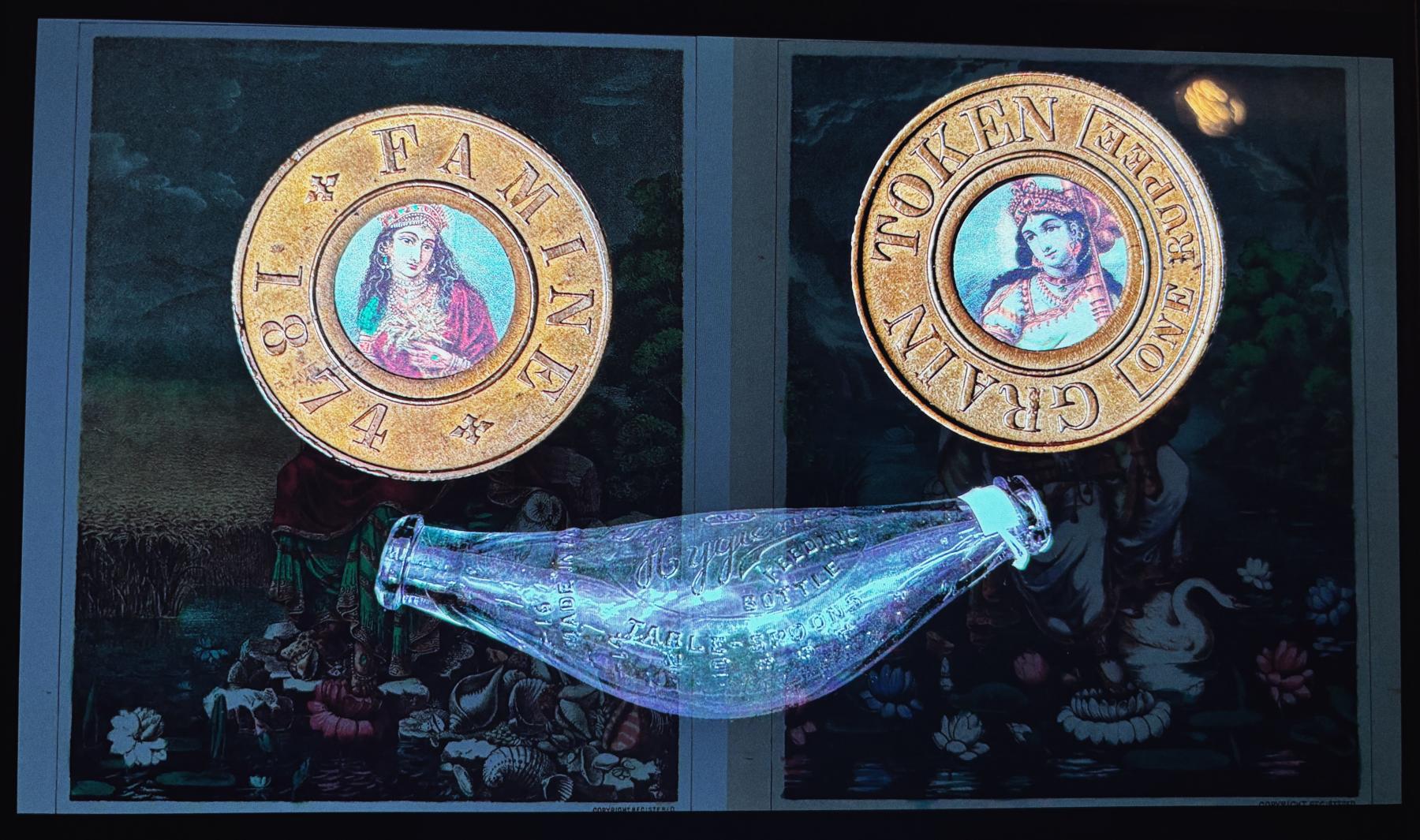
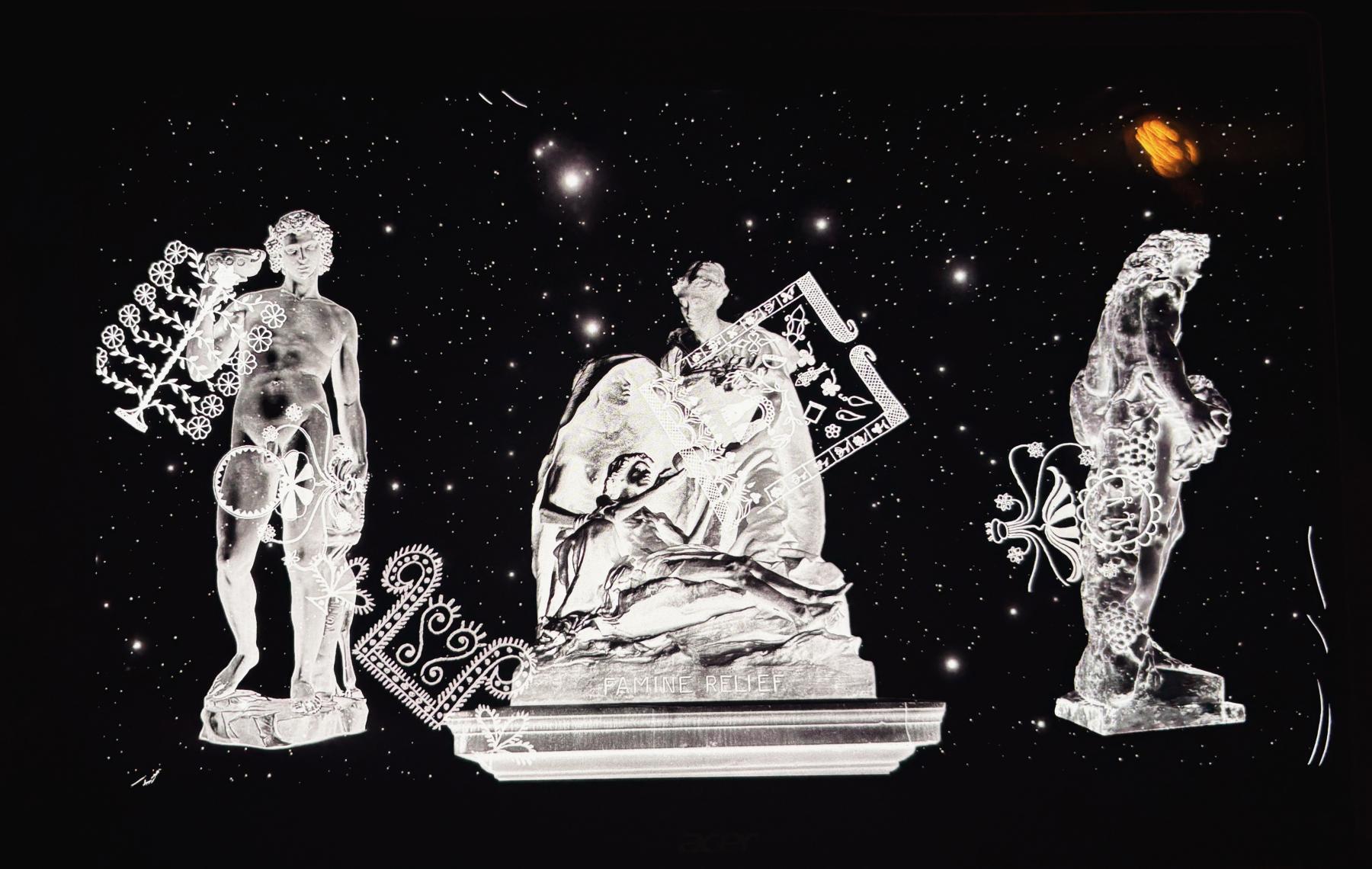
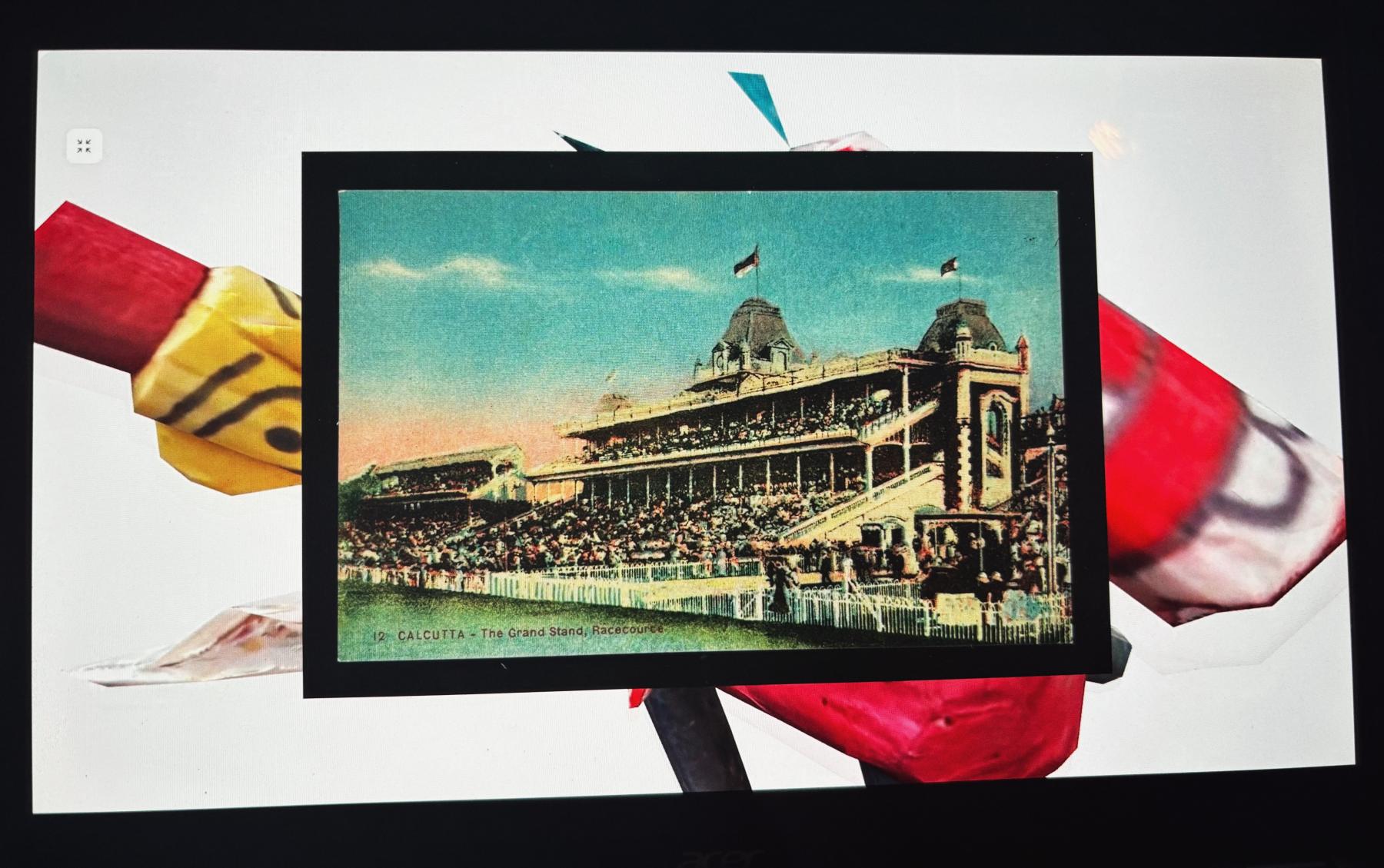
Nineteenth-century famine tokens and feeding bottles bounce off each other against the background of divinity. Occasionally a Biswakarma doll from a rural market trods into the Calcutta racecourse. Colonial monuments are scribbled over with alpana in a luminous celestial interaction. Various brandings of quirky machines promising, for instance, the illumination of knowledge, arrive from the pages of periodicals as screensaver icons to punctuate our waiting. These icons do not evidence anything; they serve tentatively in a cabinet of curiosities.
Then, the film is one such cabinet itself, a quirky machine that promises outcomes that cinema conventionally avoids since its plunge into narrative since the early twentieth century. Like the ambiguity of Majumder, the form adopted here is compellingly undecided. Particularly moving is the blend of scenarios, less through sharp cuts, and more over a sliding motion where fade-ins, fade outs and slow pans over the surface of images ask us to sail with time rather than occupy it in episodic bursts. The few directly photographic sequences of the ferry ghats at Jiaganj and Naihati hold us along a realist plane of the contemporary everyday commute as the haunting metaphysics of Majumder’s song “Paar koro amare (Take me across)” creates an eerie psychological levitation. One could go on and on here… but primarily, and as already mentioned, the Obsolete Skygazer creates a certain enchantment of media, different from cinema’s otherwise distinctively modern lineage. Irrespective of the struggle of the esoteric precolonial folk against our determinate postcolonial modernity, what Banik has offered is a productive caricature of the cinematic form itself, as if posing magical modes of blending time to cinema’s usual sequentiality. The later Majumder, Kangal Fikir would gladly occupy this vehicle of transcendence into another world beyond cinema’s normative confines.

Obsolete Skygazer - Enlightened Observer - Ignorant Truthseeker - Emaciated Entourage is being screened at the Emami Art Experimental Film Festival currently held in Kolkata from 11 to 14 September 2025.
To learn more about films screened at EAEFF 2025, read Santasil Mallik’s engagement with Maha Haj’s Upshot (2024), Vishal George’s reflections on Mohammed Jassim’s Bar Saar (2023) and Ishtayaq Rasool’s observations on Fileona Dkhar’s Ancestral Echoes (2022).
To learn more about films engaging with the encounter between the spiritual ethos and modern rationality, read Neringa Tumėnaitė’s reflections on Souleymane Cissé’s Finye (1982) and the second part of Radhika Saraf’s essay on Samira Makhmalbaf’s At Five in the Afternoon (2003).
All images are stills from Obsolete Skygazer - Enlightened Observer - Ignorant Truthseeker - Emaciated Entourage (2025) by Pinak Banik. Images courtesy of the director and EAEFF.