


The Grief of Khasi: Fileona Dkhar’s Ancestral Echoes
Being screened at the Emami Art Experimental Film Festival (EAEFF) 2025, visual artist Fileona Dkhar’s 14-minute film Ancestral Echoes (2022) explores the spirits that guide the Khasi hills in Meghalaya, capturing the haunting passage of time through landscapes. Traces of mining and the burden of the colonial past linger in caves, abandoned mines and sacred groves, carrying grief and memory into the present.
Fileona Dkhar, an artist and researcher based in the Netherlands, belongs to the Khasi, an indigenous Austroasiatic tribe in the eastern Indian state of Meghalaya, which is also known for its few remaining matrilineal societies in the world. Her work explores indigenous worldviews, intertwining the personal with mythology, history and ecology through photography, drawing, writing and filmmaking.
During the pandemic, while staying with her parents in Shillong, nearly 45 kilometres from her ancestral village, Dkhar observed a change in Khasi. The hills were being cut down rampantly as forests were stripped, highways were carved and mining went on unchecked. “I wanted to capture the sadness and the feeling of loss in the community,” she said. Focusing on hidden groves, which locals believed were home to spirits, Dkhar immersed herself in the landscape, centering sound as a medium for storytelling. Her narration is subtly altered to evoke multiple voices in Khasi, giving it a ghostly, surreal effect.

The film opens at dawn, with dimly lit bushes, leaves swaying on trees and mountains framed from a distance. Slowly, the clouds part, and the sun glistens into the sacred Khasi forest. A grunting voice in Khasi echoes, “There is no better measure of loss than the loss of what we once called home.” The land holds memories and identity apart from being home to ancestors who now roam these forests as spirits. When light approaches through the trees, it brings back the echoes of a forgotten past, alluding to the title of the film.
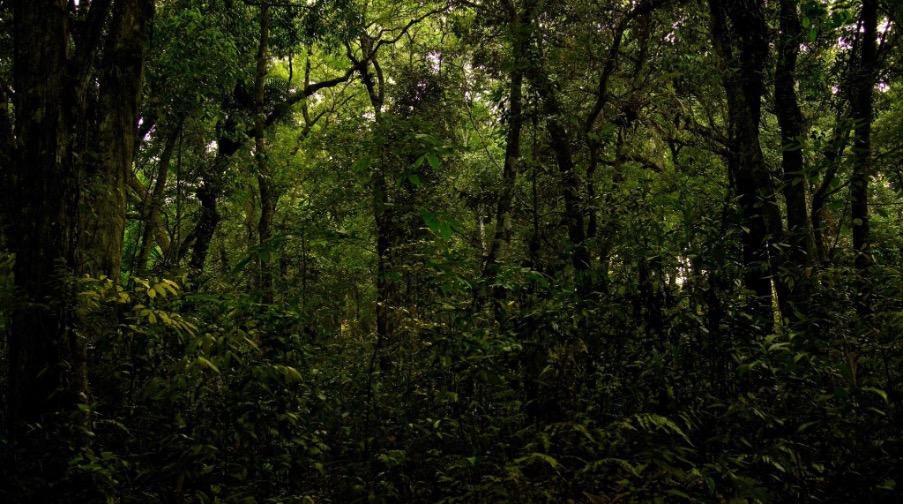
In Ancestral Echoes, vivid scenes of dense forest, barren hills, old paths and abandoned mines are accompanied by an ethereal soundscape that evokes a physical and spiritual sense of the native land. “In Khasi, nature is gendered female,” Dkhar explains. “Forests are like mothers. Mei Mariang—Mother Nature—who nurtures us but is also angry at man-made exploitation.” This approach develops the poetic flow of the film, making it more nuanced.
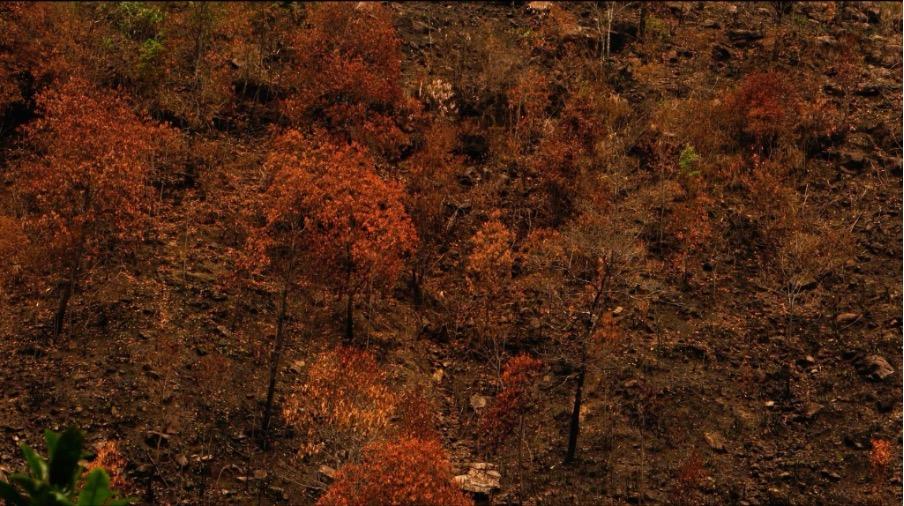
Despite this, these woods are now destroyed by fire and human intervention. Here, fire is understood both literally and metaphorically. The red bushes and rusty remains of mining reveal the resistance, toil and blood. Yet the landscape is terrifying, a symbol of the anger and pain that has endured for so long.
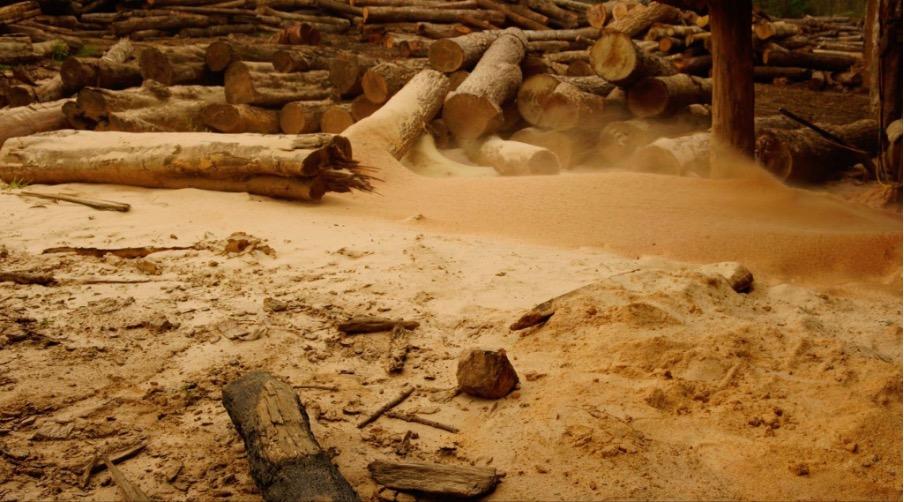
This film highlights how ancestral memories carry wrath and pain together, reflecting the emotions of the forest and the long violence of the past and its aftermath. These sacred forests, once guardians of the people, are now commodified into timber and reduced to mere profit. Stacks of cut trees are piled up, while the sawdust surrounding them depicts the man-made destruction.
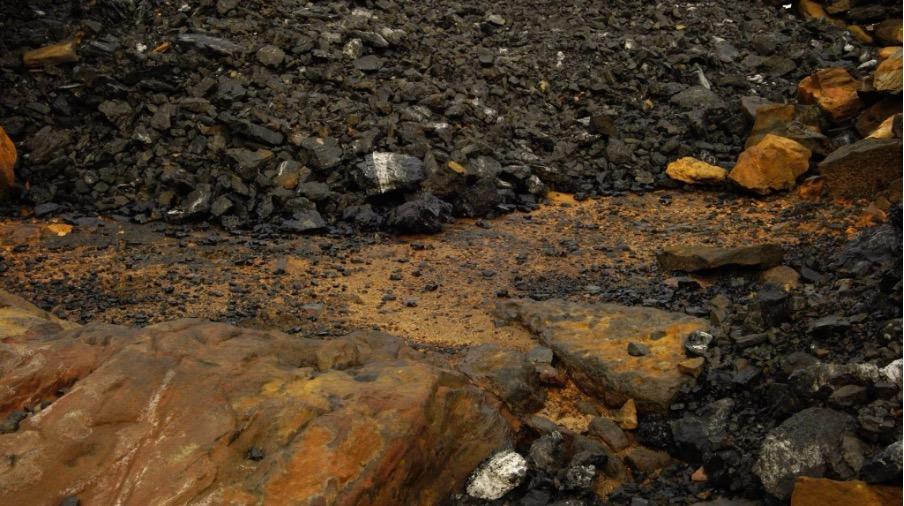
From an old path, the scene freezes for a while before taking its viewers through a cave to abandoned mines, where Dkhar's camera rests on a rusty cart and a pile of rocks ripped from the ground that speak of human greed and memories that refuse to fade.
The cart remains a relic of the Khasi people who once toiled here in brutal conditions. These holes are more than physical excavations; they are spaces dug into society.
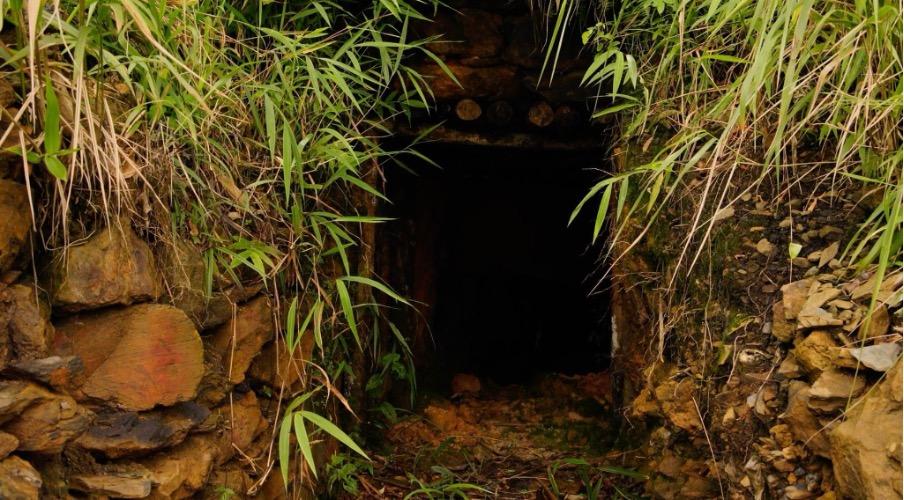
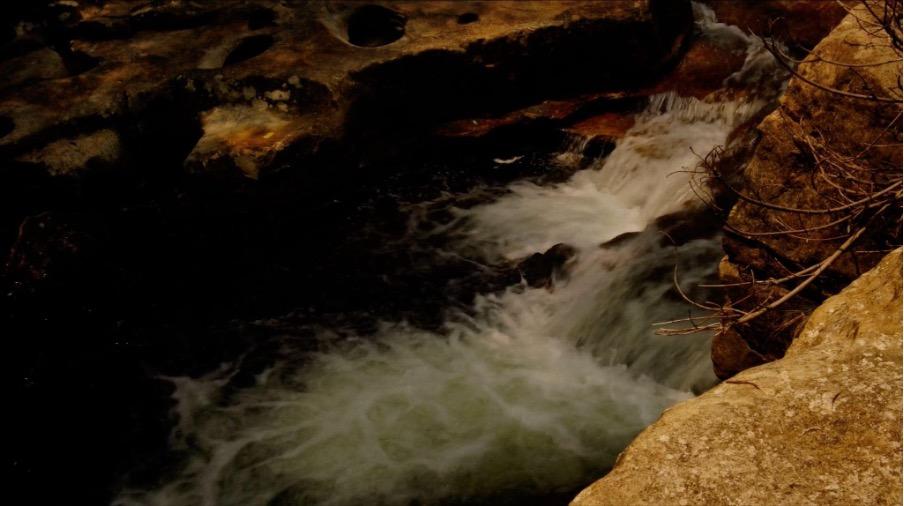
The film questions inheritance, ecology and survival. The violence that is linked to development: forests cut down, soil depleted and workers exploited. The Khasi gave their blood and bodies as they worked for survival, yet the benefits went elsewhere. In Dkhar’s hands, the film becomes a vessel for grief, anger and power, spilling out into the river and the sky as Khasi voices remain unspoken, and yet, they refuse to disappear. The echo is not merely memory; it is the final legacy, of those who worked and lost.
“This film was my first deep connection to my homeland,” Dkhar shares. “It is about understanding identity, the land, and the pain and violence embedded in it. It was emotional to think about my ancestors and their experiences in mining and exploitation.” Her connection with the landscape and memory gives the film a deep, profound and almost spiritual feeling, while connecting past and present as a meditative journey through memory, identity and the land.
Watching this film, I realised that it resembled other indigenous lands, including mine. I belong to an indigenous Dard-Shin tribe in Gurez, Kashmir, where the land is also burdened by conflict and ecological violence of man-made disaster. Anthropologist Mona Bhan has described the scenario of Gurez as angry and troubled by the dam, militarisation and displacement. In the Khasi hills, I heard the same anger, the same pulse of grief, that reflects a shared undercurrent of ancestral grief and resistance.
This film is then not merely a testament to memory and meditation but also a profound reflection on heritage, grief and the fragile relationship between the Khasi people and their indigenous land. Even in the midst of destruction, Khasi reminds us of what it means to belong and what it costs to lose that belonging. Through soundscapes and stunning visuals, Dkhar moulds grief into an acoustic archive, compelling one to listen to how history, labour and culture resonate across generations.

Ancestral Echoes is being screened as part of the Emami Art Experimental Film Festival being held in Kolkata from 11 to 14 September 2025.
To learn more about some of the films being screened at EAEFF 2025, read Arundhati Chauhan’s reflections on Suneil Sanzgiri’s Two Refusals (Would We Find Ourselves Unbroken? [2024]) and Mallika Visvanathan’s conversation with Gavati Wad about her film O Seeker (2024).
To learn more about indigenous communities being affected by large scale deforestation and displacement, see Anisha Baid’s piece on documenting displacement in Chitwan and interview with Subash Thebe Limbu on Adivasi Futurism, and Nikita Jain’s article on Adivasi resistance in Bastar.
All images are stills from Ancestral Echoes (2022) by Fileona Dkhar. Images courtesy of the director and EAEFF.