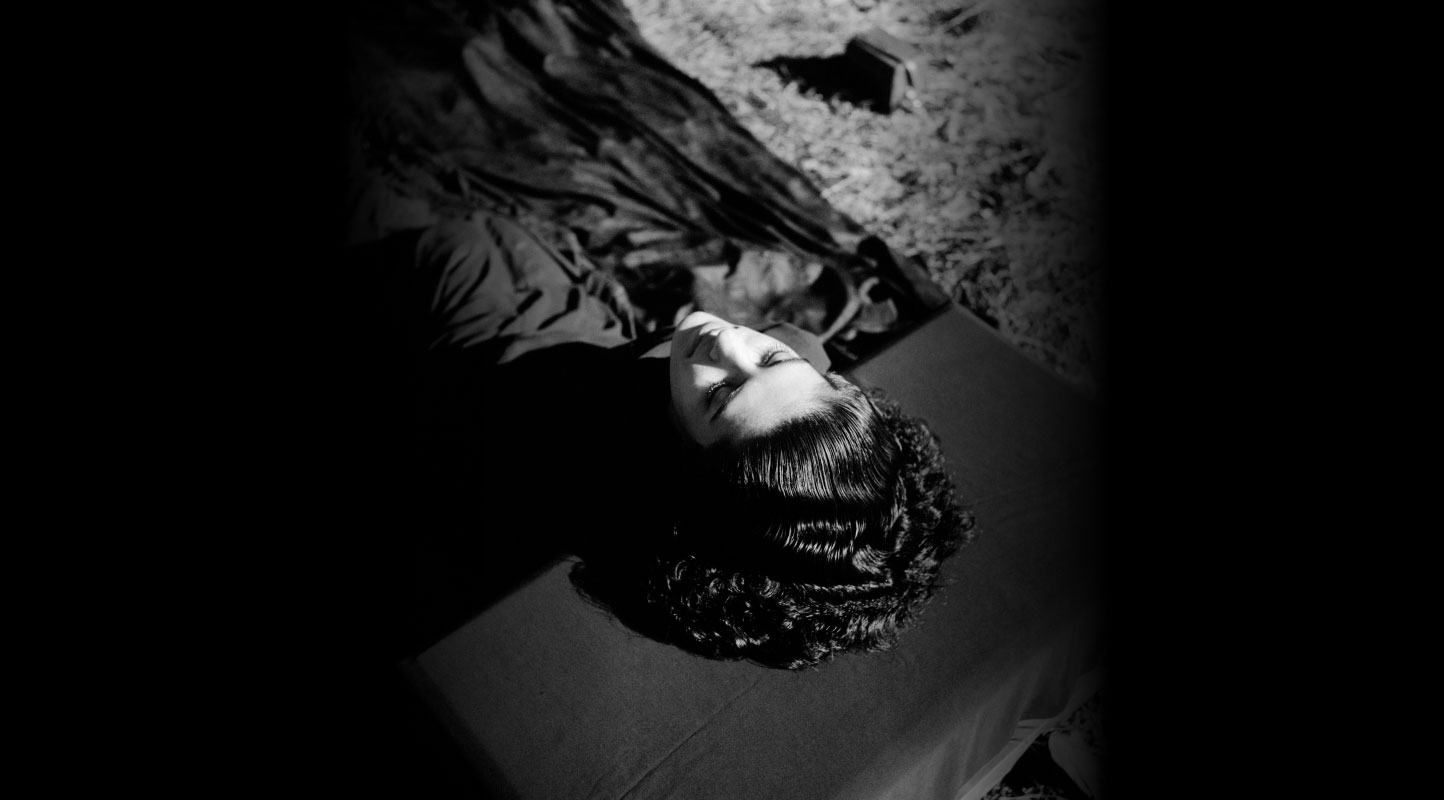


Fragile Solidarities of the Socialist Stillborn: Naeem Mohaiemen’s Raihan – Ghatak – Tarkovsky
2.jpg)
After the publication of Sarmila Bose's book, Dead Reckoning: Memories of the 1971 Bangladesh War (2011), Naeem Mohaiemen, alongside other researchers, would spend three months tracking down every assertion in the book, many of which appeared sans any footnotes or citations. His encyclopaedic response to Sarmila Bose appeared as the 10,000-word essay "Flying Blind: Waiting for a Real Reckoning on 1971" (2011) in India's Economic and Political Weekly. Subsequently, in “History is Hard Work, But Are We Willing?” (2013), Mohaiemen interrogates a certain history of Bangladesh which was being written based on stories and legends, buoyant merely on hearsay. However, he is not entirely dismissive of these rumours, which exist in trickster realms, with enough transgressive potential to often reveal more than what truth claims do.
In fact, in Mohaiemen’s installation, I am Not Afraid to Die (2009), rumours become unsaid dialogues from the night before the military coup of 1975, which would result in the killing of the President Sheikh Mujibur Rahman (also known as Sheikh Mujib), and its aftermath. One of many black slates from the series reads, “The coup was on the morning of the 15th / so enough people had known / to fear they needed to leave / but no one had warned the President.” Juxtaposed with photographs of an aeroplane getting further and further away and tempered safety glass which gave the illusion of having been perforated, what remained unsaid vibrated as a persistent bass tone, shifting the comfortable nationalistic image of history triumphing on the day of Bangladesh’s independence under the leadership of the Awami League.
When Mohaiemen returned to Bangladesh from the US (United States) as a twenty-four-year-old college graduate, supported by a Thomas J. Watson fellowship to collect oral narratives from 1971, he met the historian-journalist and left activist Afsan Chowdhury. The two began a mentor-friend relationship, and many years later it was Chowdhury who told him about the rumour of a missing can of film that the filmmaker Zahir Raihan was supposed to have produced during his stay in Kolkata, sometime within the nine months of the Liberation War of 1971. The rumours claimed that it could have caused harm to the new Bangladesh government, especially due to their worries about the rising leftists.
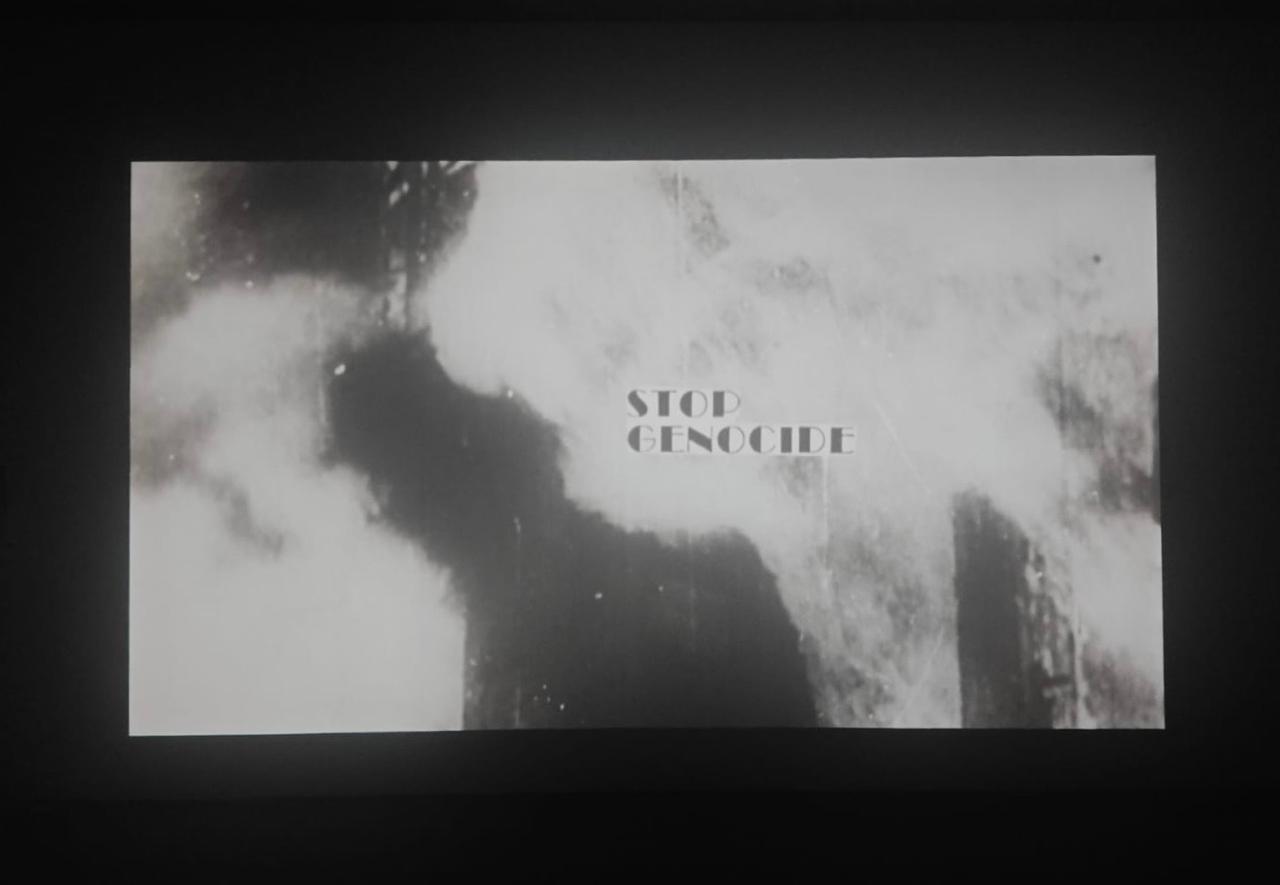
After the war, Raihan’s practice would be co-opted and reduced to a ventriloquistic kind of Bangladeshi nationalist cinema; the filmmaker having already been commissioned by the government-in-exile under Tajuddin Ahmad to make three films—one of which was Stop Genocide (1971). With its sharp BBC-like voiceover by filmmaker Alamgir Kabir, the film was created with the purpose of directing international attention towards the killing of Bengalis by the Pakistani army in Bangladesh, and to gather solidarity from “freedom-loving people” across the world—many of whom were involved in protests against totalitarianism such as the anti-Vietnam War sentiment in the US, particularly among young students, or the Naxal movement in neighbouring Bengal.
, 20261.jpg)
In Mohaiemen’s short film A Missing Can of Film (2025), showcased as part of the exhibition Raihan – Ghatak – Tarkovsky from 04 August to 10 October 2026 at Experimenter Gallery in Kolkata, he traces a phraseology of protesting against genocides. The film is spliced and collaged alongside some of Raihan’s other works—lesser known now under the weight of his more nationalist films such as Stop Genocide and Jibon Theke Neya (1970). In Mohaiemen’s selection of Stop Genocide, we see Raihan urging the United Nations to stop the genocide through a surreal telegrammic message. The text is collaged with Arun Ray’s cinematography (that includes photographs of victims from the war) and photographs from Auschwitz and Vietnam—alongside Raihan’s particular hyper-focused filming of countenances set in the foreground, like messiahs against the backdrop of immigration camps or preparatory marches by the adolescent armed guerilla resistance, Mukti Bahini (Liberation Army).
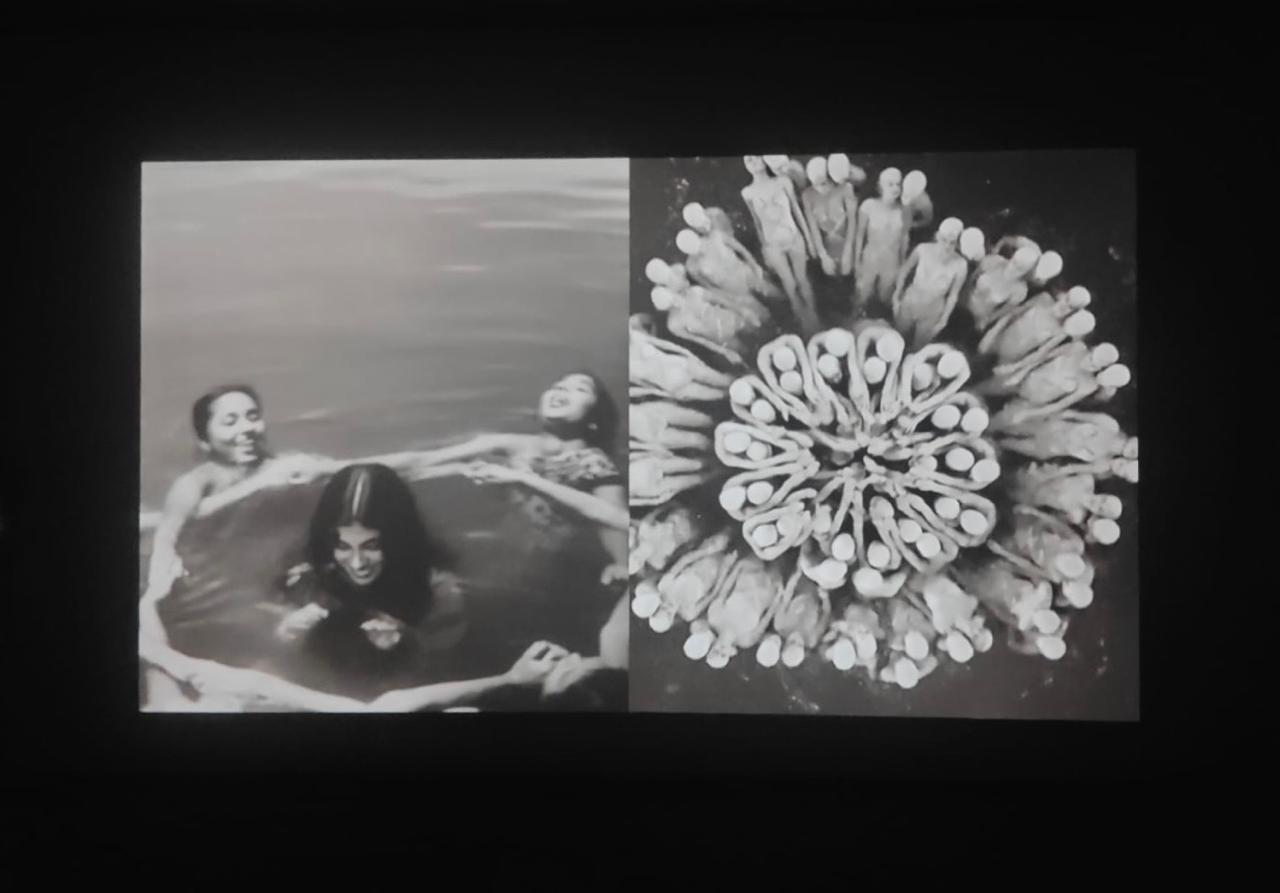
Mohaiemen consistently underscores how Raihan’s visuality drew from Soviet Realist techniques and Constructivist printed matter as he mapped heightened emotions on the visage during socio-political and therefore personal duress, not unlike filmmaker Sergei Eisenstein. It also alludes to how a previous generation of Communist Party members—such as Bengali artists Chittaprosad Bhattacharya and Zainul Abedin—rendered such affective charge in their stark sketches of emaciated physicality and malnourishment during the Bengal Famine of 1943.
In A State is Born (1971), the camera zooms into the thick, dark lines of works by the Bangladeshi artist Quamrul Hassan—who even became part of the film’s art department—protesting the Pakistani President Yahya Khan’s atrocities. Working with the moving image, Raihan resorted to the Kuleshov Effect, which gave emotive primacy to sequentiality through his rapid juxtapositions of fervour, horror and resignations on faces, leading to dream-like hallucinatory sequences of anxiety and suspense.
Mohaiemen’s textual work is marked by control and precision, almost like drafting a play where he is aware of the reader’s reactions. This attribute is also seen in Raihan’s Stop Genocide where every phrase is carefully placed to emulate the urgency of telegrammic language it is supposed to embody. Taking this relationship with text further, Mohaiemen’s film becomes a visual diary, which is quite reminiscent of the usage of text by Mrinal Sen—who would watch Raihan’s films when they were screened in Kolkata—such as in Padatik (1973) that explores the life of a young leftist in hiding.
1.jpg)
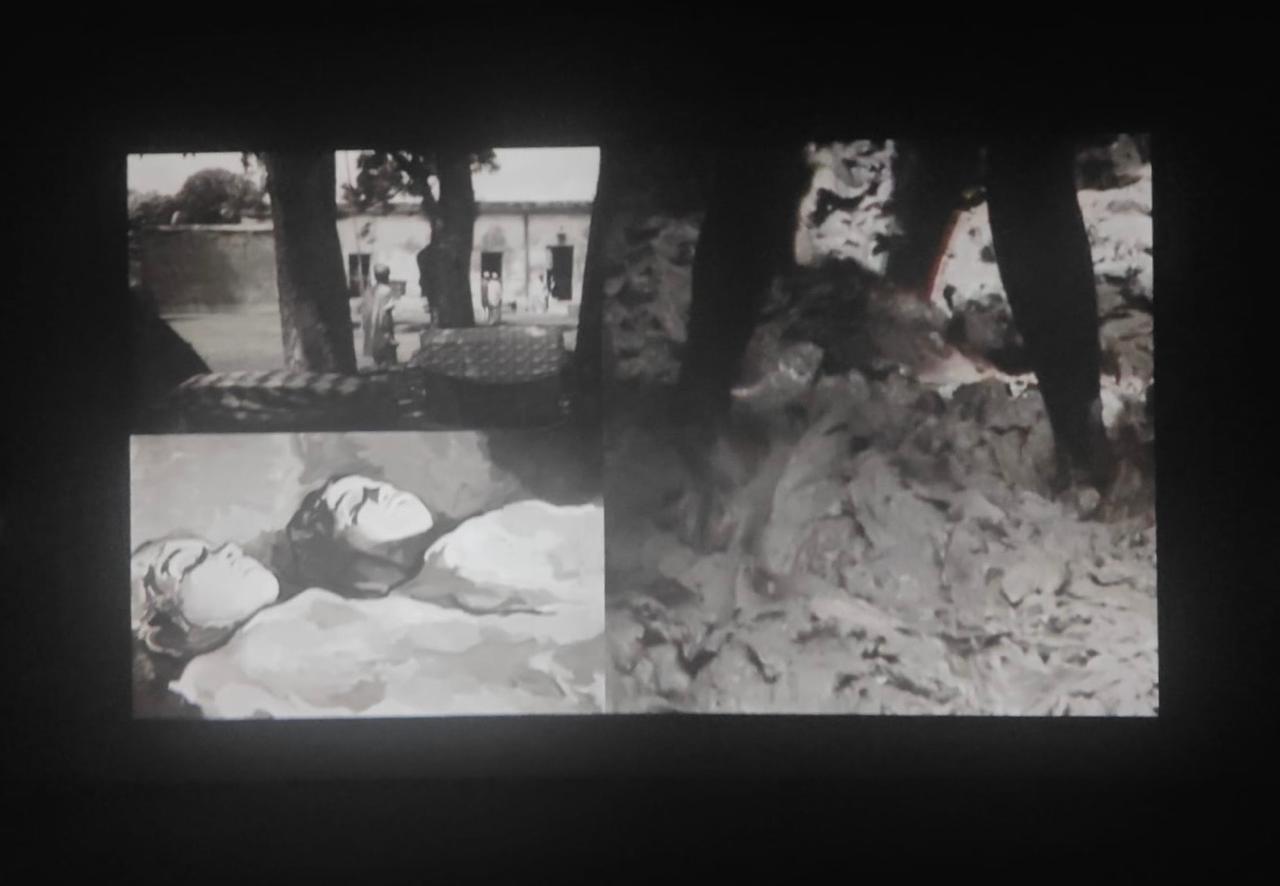
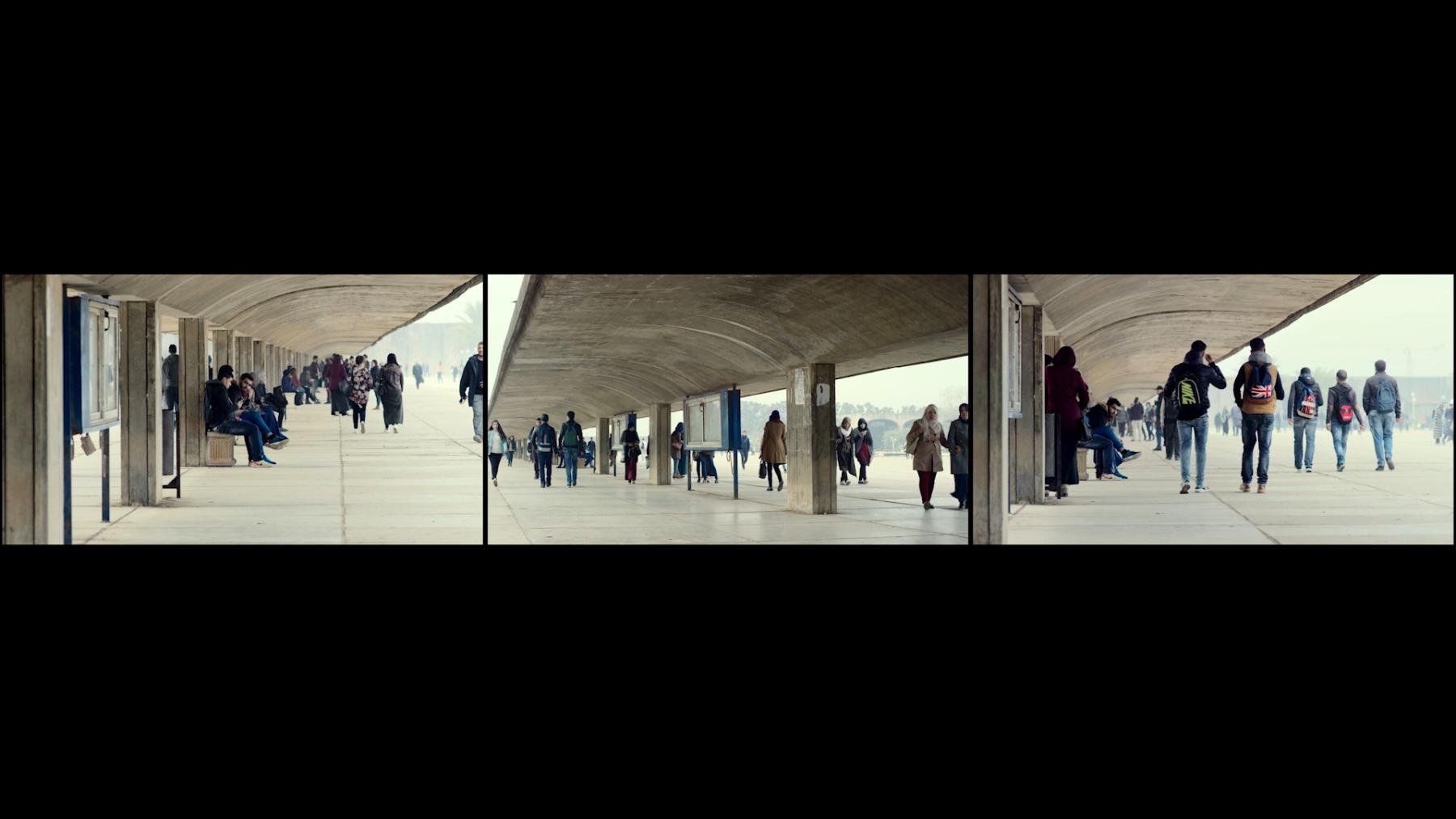
Mohaiemen splits the single screen into three views which sometimes dissolve into double and large single views, implying that one is always missing out on something. But perhaps this permits him to create collages of a male bildungsroman—or a portrait of a leftist artist—from the artist as a young man who creates work in his college studio, like in Raihan’s Kokhono Asheni (1961) to his family discussing his marital prospects in Kancher Deyal (1963), which is then juxtaposed with a carefree mainstream song sequence from one of Raihan’s few Urdu films, Sangam (1964). Subsequently, our political protagonist is catapulted into General Ayub Khan’s dystopia of torture and refugee crisis during the war. This narrative of progression is followed by many other films of the time including Raihan’s Jibon Theke Neya and Chashi Nazrul Islam’s Ora Egaro Jon (1972).
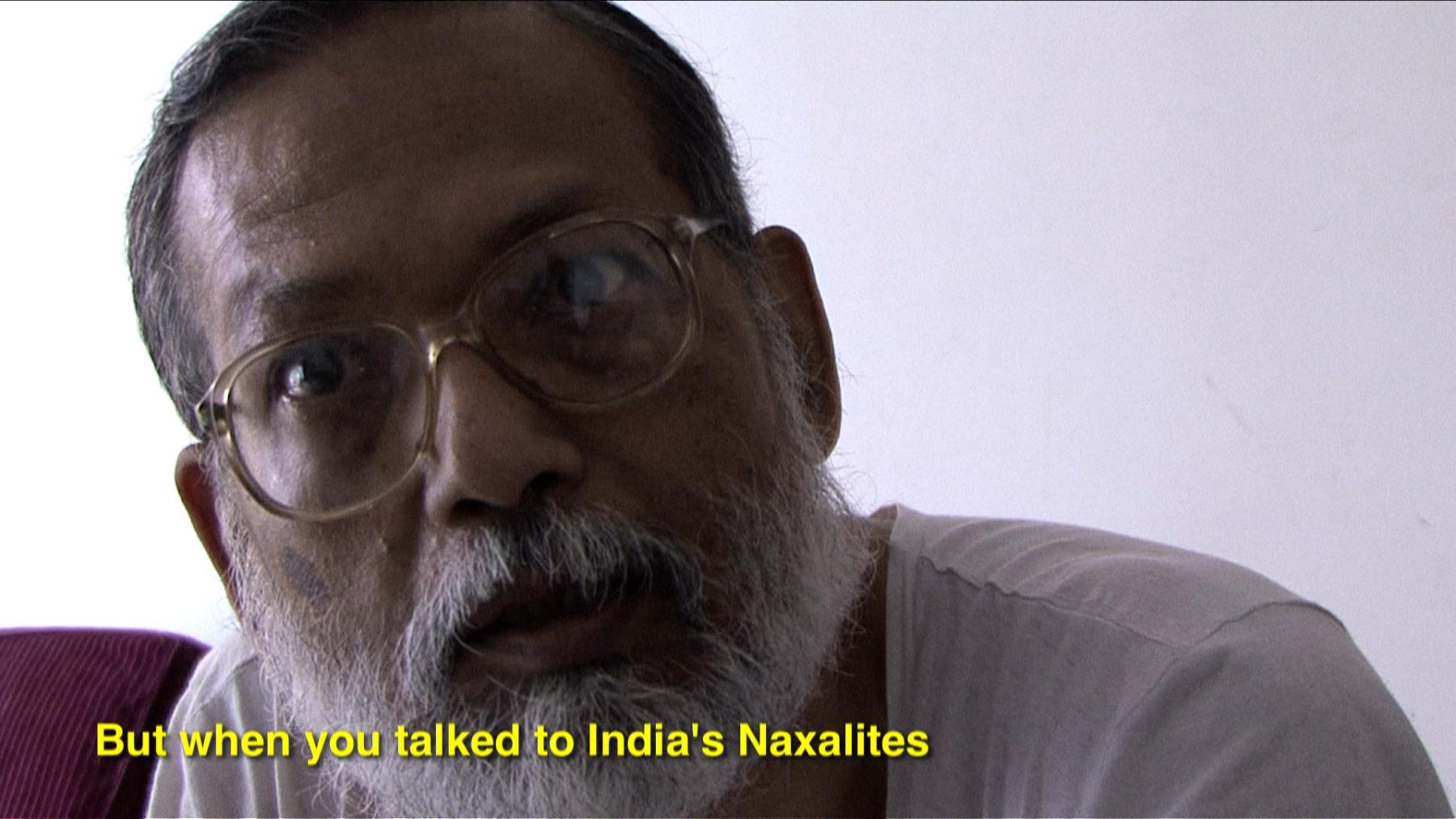
Within this utopian-dystopian decade of the 1970s, in his series, The Young Man Was, which he started in 2011 and concluded in 2017—A Missing Can of Film can quite easily be read as its sixth segment. For Mohaiemen traces the rise of the charismatic personalities of leftist masculinity through four figures: Afsan Chowdhury; Osamu Maruoka who was possibly codenamed ‘Dankesu’ and who hijacked a Dhaka flight in 1977; activist Peter Custers; and the Magnum photographer Chris Steele-Perkins’ group photograph of five Bangladeshi men in the PLO (Palestine Liberation Organisation).
Sheikh Mujib himself was not a leftist, but there were vague promises of a socialist government due to the third world zeitgeist of that time, and those ideologies were even enshrined in Raihan’s A State is Born. Looking back at the central space given to Bengali nationalism, Raihan’s practice of cinema as perhaps evidentiary of a certain truth falls into dislocation, as the League fell back on a single-party rule amidst questioning by other leftist parties like the Sarbahara Party, led by yet another charismatic leader, Siraj Sikder. It was only later that Mohaiemen got to know that the latter’s members were targeted by the Awami League even before they came into power, as he shows in the second part of The Young Man Was series, in Afsan's Long Day (2014), a film partially based on the diaries of Afsan Chowdhury. The Indian government’s fear of a pan-Bengal insurrection would not let the Bangladeshi leftists link up with Indian Naxalite forces. Alongside Raihan’s film, the series also dismantled an ideal around the 1971 Liberation which Mohaiemen, when he was younger, found an older generation construct.
To learn more about Naeem Mohaiemen’s practice, read Alfa M. Shakya’s essay on Aziz Sohail’s conversation with Naeem Mohaiemen and Eszter Szakács on their anthology Solidarity Must Be Defended (2023) at PhotoKTM6 2025, Sukanya Deb’s reflections on Mohaiemen’s presentation about his book Bengal Photography's Reality Quest (2024), Najrin Islam’s review of Mohaiemen’s film Jole Dobe Na (Those Who Do Not Drown, 2020) and an online conversation by ASAP | art with Mohaiemen, moderated by Arundhati Chauhan, around his book Midnight’s Third Child (2020).
For more insights on Bangladesh’s history, read Ankan Kazi’s essays on Tareque Masud’s Adam Surat (The Inner Strength, 1989), short film’s role in Bangladesh’s cinematic history, Mukti Bahini (Liberation Army), Sayeeda Khanam’s photojournalistic work and John W. Hood’s book The Bleeding Lotus: Notions of Nation in Bangladeshi Cinema (2015).