


Solidarity Must Be Defended: A Public Talk by Naeem Mohaiemen and Eszter Szakács
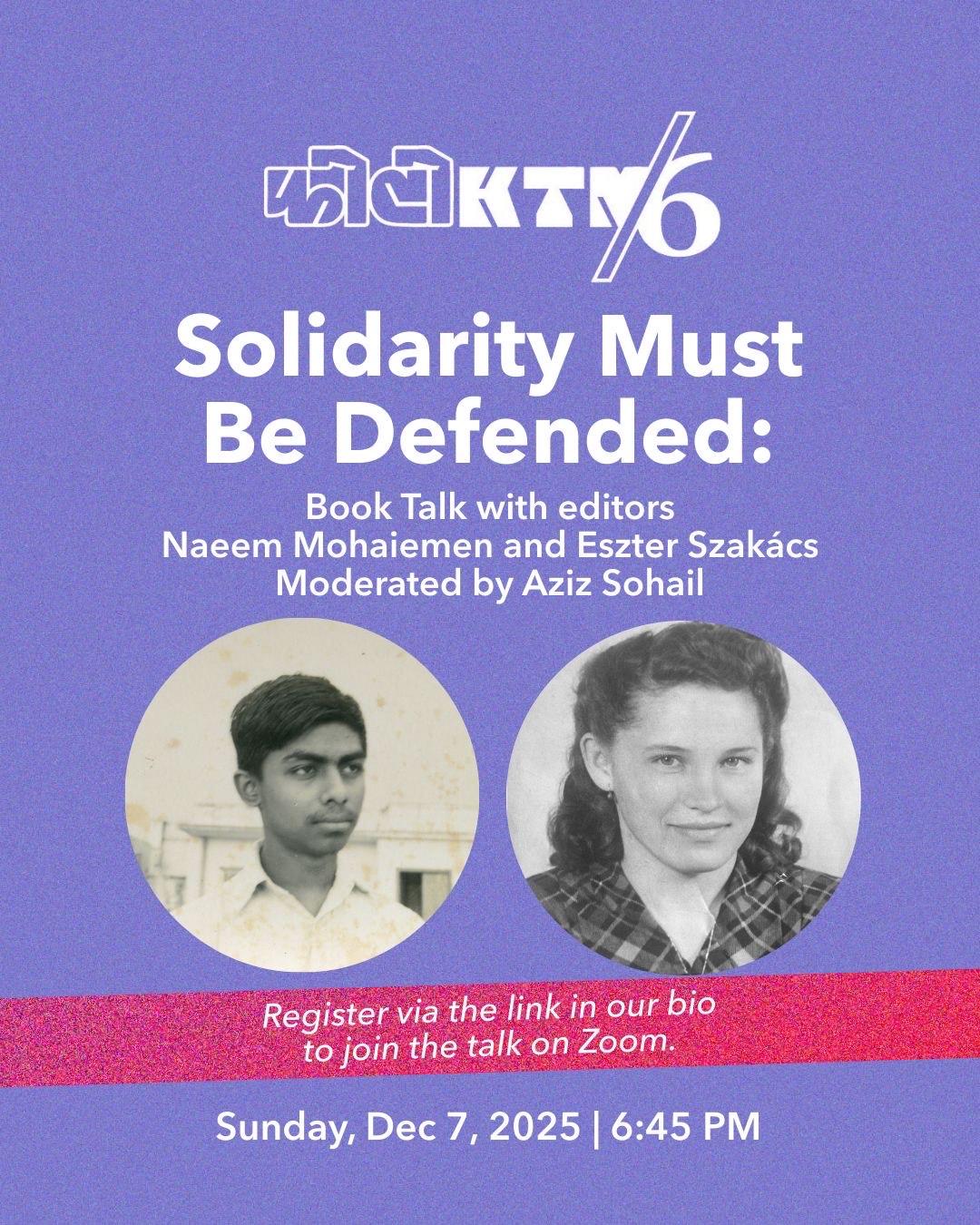
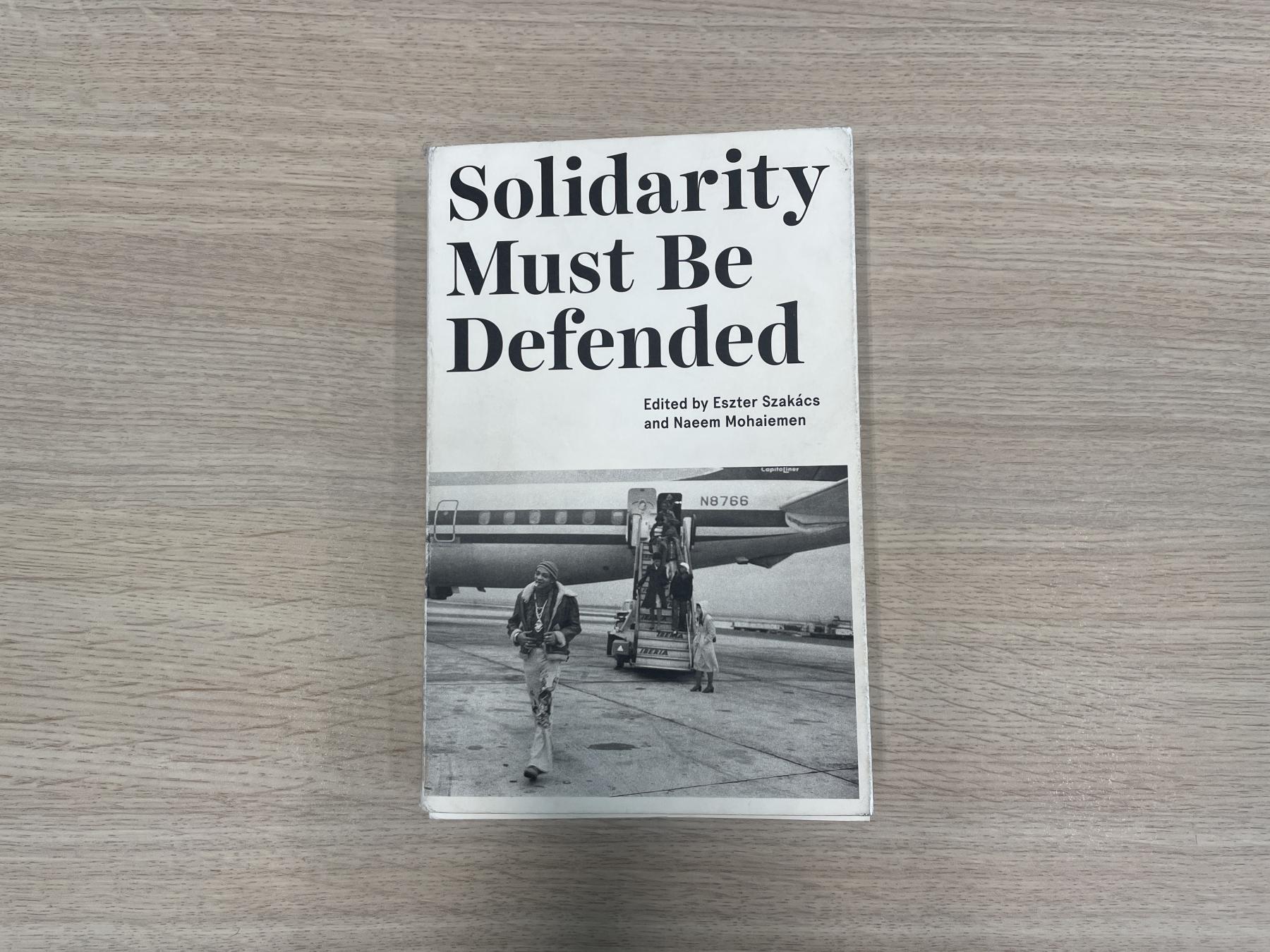
Solidarity Must Be Defended (2023) is an anthology of visual arts projects that explores how artists transgressed borders to express solidarity during the Cold War period, in an entangled, decolonising world. By weaving together "gestures and alignments within the visual arts," the book places "grand initiatives and tragic misfires" in dialogue and conflict with "non-alignment and the rebellious energy of liberation movements." On 7 December 2025, PhotoKTM6 hosted anthology editors Naeem Mohaiemen and Eszter Szakács for an online conversation moderated by Aziz Sohail on the nature and meaning of Global South solidarities—resonant with this edition’s theme of Global South and Third World Solidarity, through which the festival aimed to show alternate, counter and micro-histories to better understand what it means to be a person or an artist living in the Global South in our polarising present.
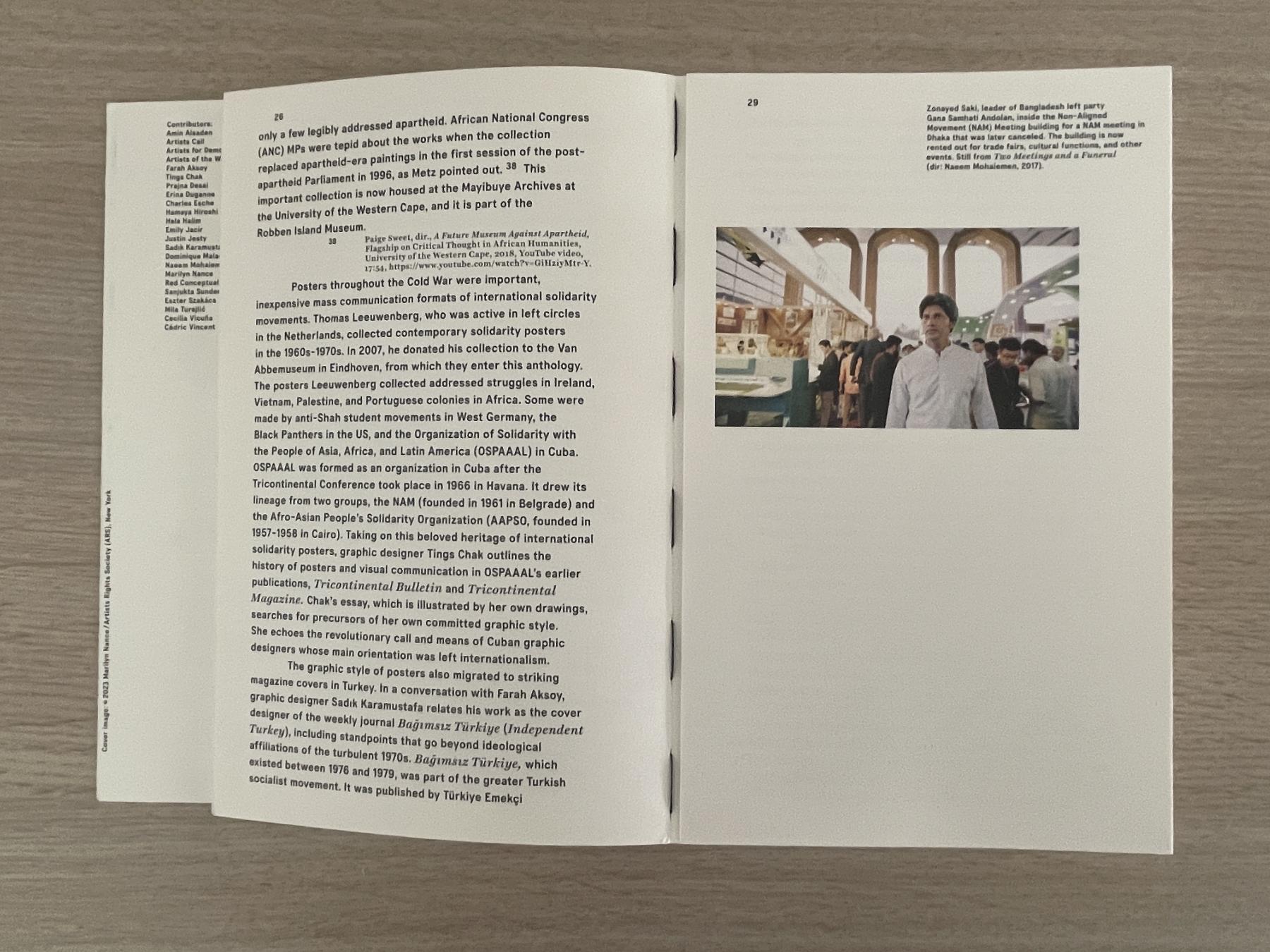
Mohaiemen and Szakács first met through Mohaiemen’s film, Two Meetings and a Funeral (2017), which explores the Third World project, the desire of the Global South to reconfigure world leadership and its eventual fizzling out. The focus of this film project was on the “unsteady alliance of Socialist-leaning state leaders, meditating on the lost moments, and mis-recognitions, at the crossroads of 1973–74.”
Initiated in the aftermath of the Ukraine war, the starting point for the book project was the online issue of the Mezosfera magazine (“Refractions of Socialist Solidarity”), which was in dialogue with the film. The Hungarian premiere of both the magazine and the film was held at the Hungarian Metalworkers’ Union—these points of intervention serving as the background for the discussion on their book. Film screenings and study groups looked at cross-border solidarity work and mapped the place of Eastern Europe within global histories, and expanding on the reading list eventually led to the making of the anthology. The title of the anthology comes from the first volume of Michel Foucault’s lectures at the Collège de France titled “Society Must Be Defended,” in which Foucault dealt with the new understanding of war as the permanent basis of all institutions of power in the early seventeenth century. The publication was supported by tranzit.hu (Budapest), with partners Van Abbemuseum (Eindhoven), Salt (Istanbul), Tricontinental (New Delhi), Asia Culture Center (Gwangju) and the Department of Art Theory and Curatorial Studies, Hungarian University of Fine Arts (Budapest).
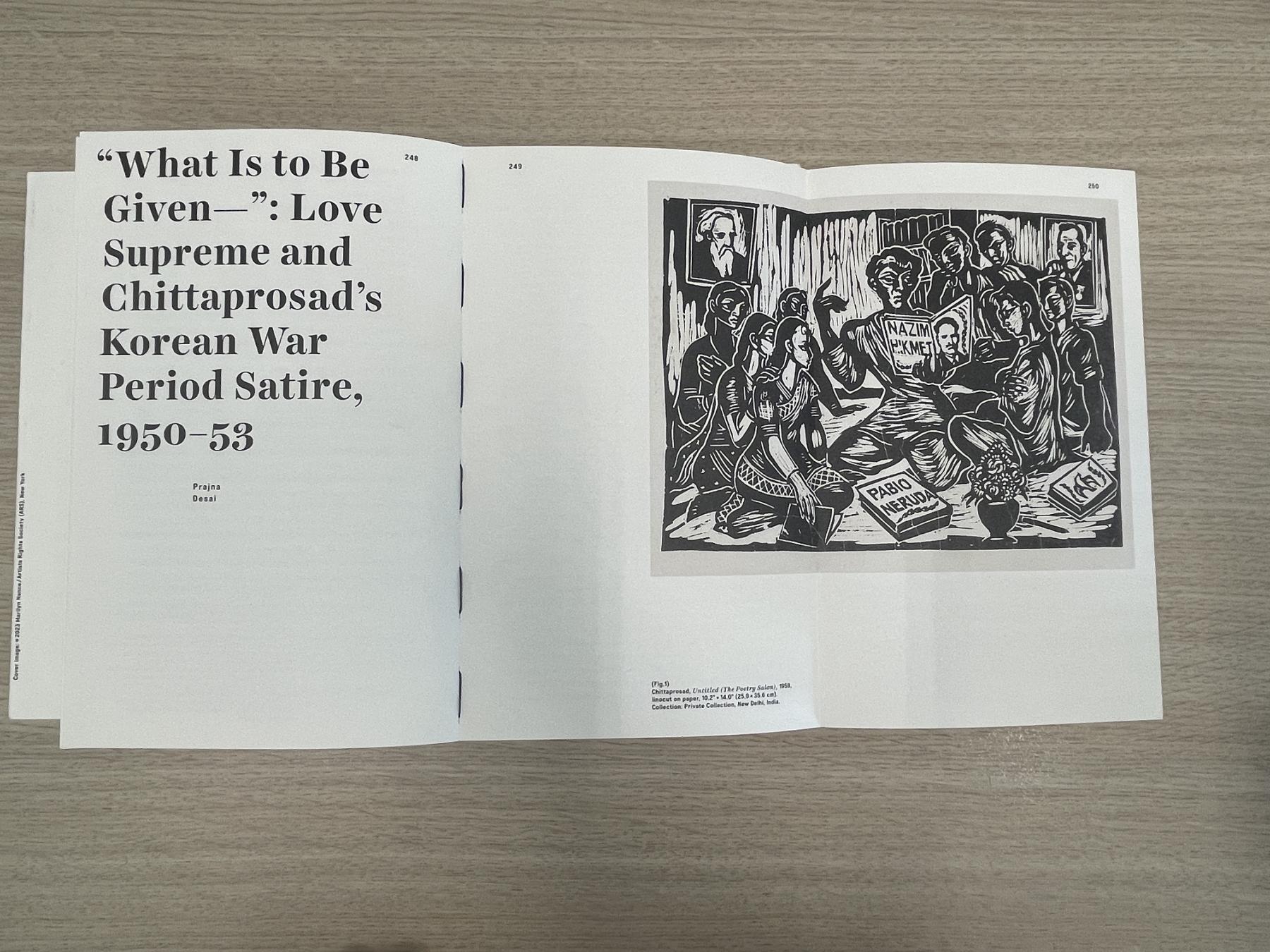
One of the main focal points of the book talk was the changing nature of solidarity. Mohaiemen shared that in the 1960s and ’70s, the political context was more amenable for demonstrating acts of solidarity; however, now the mechanisms are much tougher. Szakács brought in perspectives from Hungary and the country’s history of solidarity, especially when such acts were state sponsored. However, demonstrations of solidarity can often be less than straightforward for artists. The editors shared the example of Zainul Abedin, a renowned Bangladeshi painter, who showed his solidarity for Palestine while also dealing with his own migrant identity. After the India-Pakistan Partition in 1947, Abedin moved to East Pakistan, where he was a key cultural figure in the formation of Bangladesh. His own identity was constantly in flux as he travelled extensively during the Cold War period, practising a certain kind of cultural diplomacy. They also discussed how sometimes artists are unable to touch upon issues closer to their homes while showing solidarity for the same cause for other nations and communities.
Beyond their anthology, the conversation shifted to the process of bringing together a project like this. The editors stressed the need to look beyond state archives, emphasising that grassroots solidarities are likely not being recorded and may be more important than the ones that are on record. Mohaiemen added: “There is a lot to be done but not enough people working,” highlighting the need for unconventional archives and even simple ones like audio archives that can be easily created. He stressed on the importance of recording oral narratives, especially of older individuals around us: “Capturing the audio is much more important than the video.” He went on to share: “Once the camera comes up, the people are performing for the camera.”
The editors mentioned the changes they have experienced as they put together the anthology, with the word “messy practice” often coming up during their conversation. They also shared that the project has taught them to slow down, and to look beyond creating immediate impact and rather, move into creating more spaces for new alliances. For instance, the conversation was hosted over Zoom and serves as an example of spaces that can be created virtually without needing a lot of funds.
The talk wrapped up with a poignant thought by NayanTara Gurung Kakshapati, the festival director. She shared that many solidarities are imperfect and are constantly falling apart and being reborn; yet, there is the need, she stressed, to defend these “imperfect solidarities.”
To learn more about the sixth edition of PhotoKTM, read Alfa M. Shakya’s two part essay on All That the Land Holds, Prabhakar Duwarah’s reflections on the conversation between Ahmad Alaqra and yasmine eid-sabbagh titled “The World is Blind” and his two-part interview with Isadora Romero and Tanvi Mishra on seed sovereignties as part of the work Humo, Semilla, Ráiz.
Also read Birat Bijay Ojha’s reflections on public talks by Sasha Huber and Siona O’Connell and Mallika Visvanathan’s conversations with yasmine eid-sabbagh about her work Possible and Imaginary Lives and with Diwas Raja KC on the approach of the curatorial team.
All images are spreads from the book Solidarity Must Be Defended (2023) by Naeem Mohaiemen and Eszter Szakács unless otherwise mentioned. Images courtesy of the editors.