

The Promise of Historical Truth: Disenchanted Youth and the Character of Freedom
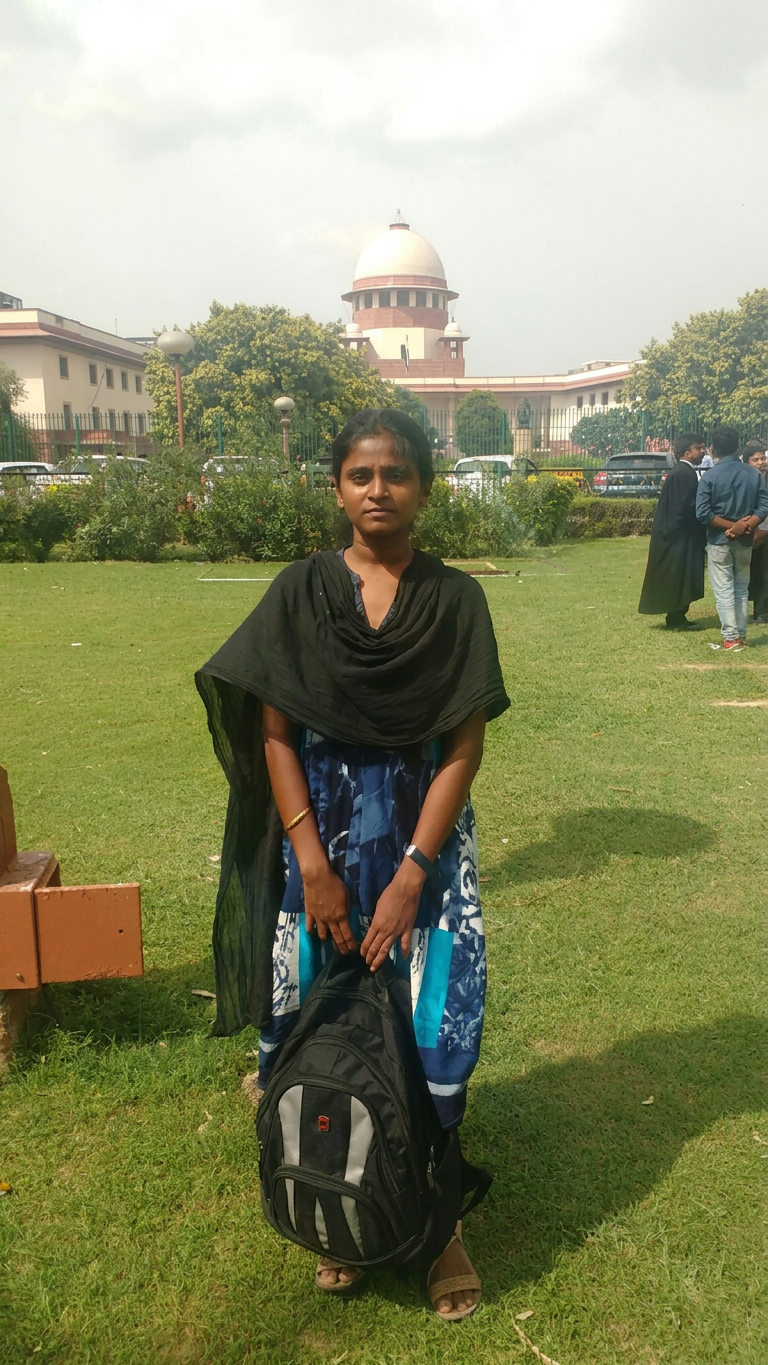
Anitha S, a seventeen-year-old Dalit girl from Kuzhumur village in Ariyalur district of Tamil Nadu—whose father is a daily wage labourer, a load man at the Gandhi Market in Tiruchi (Tiruchirappalli)—was a medical school aspirant and one of the respondents in the Supreme Court case challenging NEET. After having scored a remarkable 1176 from 1200 in the state board examinations, which would have secured her a medical seat, she was unable to pass the nation-wide NEET (National Eligibility cum Entrance Test [Undergraduate]) exam conducted by the NTA (National Testing Agency) for admission in undergraduate medical programmes. Anitha had lost her mother early, owing to lack of timely medical care, and this made her determined to become a doctor—as she said, “the first Dalit doctor in this district! Can you imagine?”
We ought to imagine.
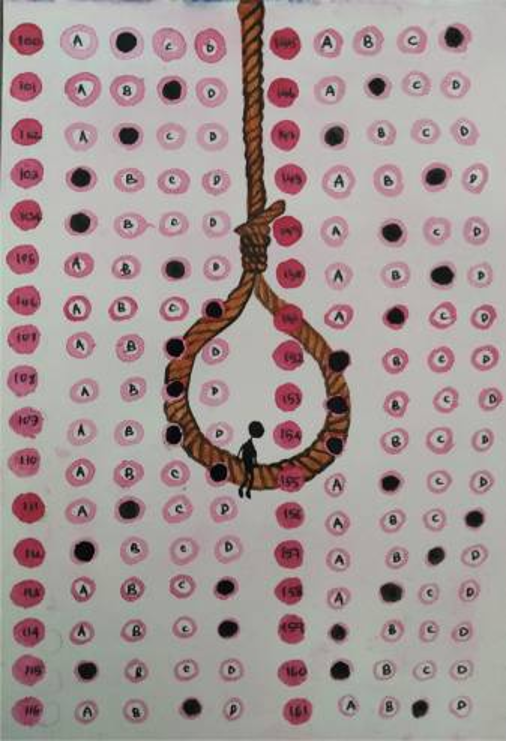
Correlation between NEET and student suicides. (Sujita Kumar Kar et al. 2021. “Student Suicide Linked to NEET Examination in India: A Media Report Analysis Study.” Indian Journal of Psychological Medicine 43 (2): 183-185. Image copyright with Indian Psychiatric Society – South Zonal Branch. Source: PubMed Central.)
“The human toll of NEET: 11 reported suicides after paper leak forced re-test,” “How many more suicides? NEET paper leak now takes life of Coimbatore aspirant; toll rises to 10,” “Ahead of NEET UG re-exam, 12 suicides in 37 days.”
These are only a few headlines from the last several weeks ahead of the NEET re-examination on 21 June 2026. NEET has been a cause of serious concern, triggering suicides of medical school aspirants: there were thirty-two reported cases of suicides from 2018-2020, of which sixty-five percent were women. When first introduced in 2012, NEET faced fierce legal opposition, particularly from states such as Tamil Nadu, Andhra Pradesh, Karnataka, Gujarat and West Bengal. Since education falls under the Concurrent List in the Seventh Schedule of the Indian Constitution, which enables states to make laws on the subject, there is significant variation between the central and state curriculum. NEET is based on content taught in the central curriculum, which significantly disadvantages students from state boards, who come largely from marginalised backgrounds and constitute a majority of medical school aspirants. They have articulated much fear and resistance against NEET, owing in no small part to caste and class-based inequalities within India’s education system as a result of the simultaneous existence of the central curriculum—which demands instruction in Hindi or English—and the state curriculum, where the language of instruction is the state language, often the student’s mother tongue. For students in rural India, especially those from Dalit, Bahujan, Adivasi and Minority (DBAM) communities, the language barrier sets up a de facto caste-based class divide, with students from urban and "upper" class and caste backgrounds opting for central board education, whereas rural and urban working-class students, largely from DBAM backgrounds, remaining with the state board.
Such de facto segregation means that central board students can pay for expensive NEET preparation coaching while state board students simply do not have access to these resources. With Plus Two (eleventh and twelfth standard board exams) no longer being the basis for qualification in medical school, state board students find their schooling years rendered wasteful and their dreams shattered before they can even begin their journeys. This is exacerbated by the fact that NEET is only a qualifying examination—the actual cut off for admission is much higher owing to the grossly limited number of seats in government (63,296) and private (73,643) medical colleges even after the recent increase—creating yet another barrier for students from marginalised backgrounds who cannot afford the prohibitive tuition fees in private medical schools that amount to as high as INR 1.5 crore and more. What we are left with is our most brilliant state-board students from disadvantaged socio-economic backgrounds no longer able to qualify for medical seats even as thousands of seats in private medical colleges continue to remain vacant every year—a system in rot.
Recognising these disparities—which would prevent a level playing field between students in urban and rural areas, as well as the need for “barefoot doctors” in remote parts of the country—in 2013, the Supreme Court cancelled the NEET exam, calling it unconstitutional, and delivered a ruling in favour of the 115 petitioners on the basis that the MCI (Medical Council of India) could not conduct a unified examination or interfere with college admission processes. However, in 2016, a five-judge Constitution bench recalled this verdict and restored NEET, permitting the Central Government and MCI to implement the test. Since 2019, it has been the sole entrance test for admissions to medical colleges in India, replacing entrance tests conducted by individual states and even medical colleges. In continuing opposition, in 2017, the Tamil Nadu Legislative Assembly passed the Tamil Nadu Admission to MBBS and BDS Courses Bill, 2017 and the Tamil Nadu Admission to Post Graduate in Medicine and Dentistry Bill, 2017 to seek a one-year exemption from the NEET exam. It also submitted the Indian Medical Council (Tamil Nadu Amendment) Ordinance, 2017 and the Dentist (Tamil Nadu Amendment) Ordinance, 2017 for promulgation but the President withheld assent. Tamil Nadu was forced to petition to the Supreme Court to pass the NEET Exemption Bill, arguing that not doing so would be a violation of federalism and would deny opportunities to disadvantaged students, “perpetuating privilege in the guise of merit,” which has a strong correlation with student suicides.
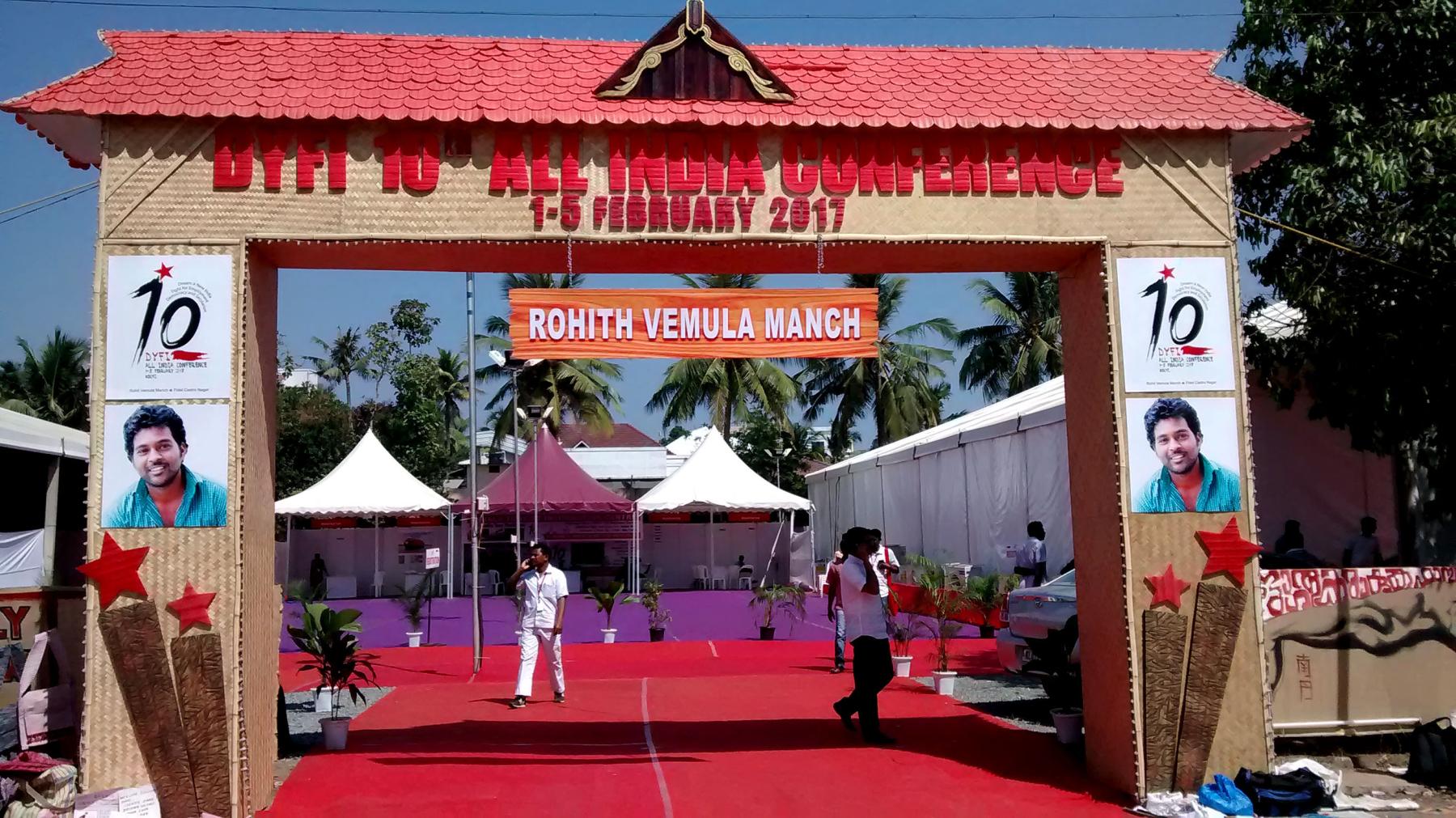
Portraits of Rohith Vemula at DYFI (Democratic Youth Federation of India) 10th All India Conference. (Kottakalnet, Kochi, Kerala, 2017. Source: Wikimedia Commons)
Less than two years after the institutional murder of Rohith Vemula—the Dalit scholar who was not permitted to overcome the “fatal accident” of his birth, whose mind was not treated as “a glorious thing made up of stardust,” and who was forced to commit suicide on 17 January 2016 —Anitha’s dream was shattered, her life snatched away from her.
The Supreme Court verdict made NEET compulsory based on the argument of advocate Nalini Chidambaram—wife of P Chidambaram, who served as a union minister in 2012, the year NEET was first proposed—against exemption from NEET. She would state, “Any further appeal against NEET can only be done to God.” Nine days later, on 01 September 2017, Anitha found that she was left with no other option but to commit suicide—by hanging, using a saree.
For many South Asian scholars of the humanities and social sciences, this series of events might evoke the image of the subject of Gayatri Spivak’s seminal essay, “Can the Subaltern Speak?” (1985) And this is precisely the problem, especially when one considers that one of the first rebellions against British colonisation was the Santhal Hul (revolution or uprising) of 30 June 1885—before the 1857 Mutiny—led by brothers Sidho and Kanhu Murmu with the support of their siblings Phulo, Jhano, Chand and Bhairav, and which forced the British to pass the Santhal Parganas Tenancy Act of 1876, banning the transfer of Adivasi land to non-Adivasis. The issue perhaps is not whether or not the subaltern can speak—it is that when they do, are they heard? “People Like Us” (PLU)—a term I first heard over a decade ago in Delhi, used in a self-referential laudatory manner for elite, apparently socially-conscious individuals invested in the upliftment of the country’s poor or those left in her margins—are supposedly par excellence at reading, patronising and making arguments for the subaltern. What PLU seem persistently and perversely incapable of is listening to the subaltern and altering the structures that enable their very existence. What is worse, they contribute to reproducing these structures—sometimes, unaware, but more often than not, in full consciousness—to prevent the subaltern from speaking, from dreaming, from living.
Today, it has become convenient to express cynicism and hopelessness about the future, and to lament lost socialistic utopias that were apparently—in gross misreadings of India’s socio-cultural elite—the bedrock of Nehruvian visions and the promise of independent India. And then, PLU can carry on with their lives, business as usual, in Savarna (caste Hindus), upper middle-class enclaves, while the masses continue to live in urban ghettos or in villages, putting each paisa together, making time go slower and pushing the body beyond its limits to prepare towards an alternative future—one that can break the chains of centuries-old oppression in which their families remain caught. In the lingua franca of Gen Z, they are burdened with the task of breaking the cycle of intergenerational trauma. And yet, their voice—that demands life—is not heard. What needs to be confronted is that it is an urban, English-educated elite, composed, in this case, of CBSE students and represented by Nalini Chidambaram—who filed a petition in the Supreme Court to challenge Tamil Nadu’s ordinance that sought exemption from NEET for state board students and reservation of eighty-five percent seats for them. It is PLU that is in part responsible for the very existence of NEET as the basis for medical school admissions. By direct consequence, PLU is abetting, with impunity, and is complicit in the continuing student suicides—which are, in fact, institutional murders of our country’s young seventeen-year-olds.
Who is afraid of Anitha’s dream and why?

NEET and the repeated instances of leaked papers have led to the circumstances for historical repetition (of the Anna Hazare anti-corruption movement) in the form of the Cockroach Janta Party (CJP)—the “Voice of the Lazy and Unemployed,” which has recently taken to the streets to protest, indefinitely since 20 June 2026 outside Jantar Mantar in New Delhi—not against NEET itself as Anitha did but against the manner of its implementation, which while serious, does not account for systemic inequity. Utilising the Gandhian hunger strike, their demand is the resignation of Education Minister Dharmendra Pradhan over NEET paper leaks—which first occurred in 2024 and have resurfaced in May 2026, affecting over 22 lakh students in the country, including at least twelve suicides by NEET aspirants in the thirty-seven days between the cancellation of the original exam (03 May 2026) on 12 May 2026 and the scheduled re-examination on 21 June 2026.
In a recent interview, CJP founder Abhijeet Dipke said that he is inspired by Nehru and Gandhi, and in an unlikely triumvirate, also by Ambedkar—an inherent contradiction given Gandhi’s devious use of the hunger strike to betray India’s Dalit populace by forcing Ambedkar to sign the Poona Pact in 1932 and sacrifice separate electorates for Dalits, forestalling attempts at freedom and relations of equality in political and hence socio-economic representation encoded within the notion of citizenship. To speak of freedom then is an act fraught with historical discrepancies of the grand narrative of nation-building that has time and again omitted from the public imagination, the struggles of those whose rights were compromised in the name of unity. Thus, it is essential to ask if the discourse of freedom actively considers the most marginalised in society—as exemplified by the Phule–Ambedkarite movement and the Adivasi struggle in India, and globally, by the Black radical tradition and Palestinian resistance amongst others. When reading the CJP in this context, one wonders: does it speak to concrete demands for concerns faced by DBAM communities? If the cockroach has been adopted as party mascot for its resilience, adaptability and refusal to be eliminated, surely, it must envisage its primary supporters to be our historically oppressed peoples?
Yet, at the protest site, when one of the CJP spokespersons, Saurav Das, was asked about Umar Khalid, Das said that the movement is built around a single issue—education—and introducing other questions could fracture unity since some of their supporters would be in agreement with Khalid’s unlawful incarceration for his participation in protests against the CAA (Citizenship [Amendment] Act 2019). Thus, these “other questions” relate to the fundamental question of citizenship: for, the CAA along with the NRC (National Register of Citizens) undermines India’s constitution by posing a threat of disenfranchisement and statelessness to India’s minority Muslim population as well as marginalised communities who lack documentation. This was made amply clear in the recent West Bengal elections where the SIR (Special Intensive Revision) deleted over 90 lakh voters from electoral rolls, disproportionately affecting Muslim voters and directly influencing the outcome of the elections. In this context, Das’ statement compels us to ask: What vision of education does the CJP and its supporters carry? Are they articulating a struggle against structural inequality? How do they conceptualise civil rights, and who are its beneficiaries? Does their vision of youth and its aspirations include those of Umar Khalid, Anitha S, Rohith Vemula, Suneeta Pottam, Raghu Midiyami? The ones who are not merely asking for transparency and accountability from within the existing system (to do so would be to agree to the design and robustness of the fundamentals of the system) but have taken seriously, the articulation of constitutional rights and measured against these written guarantees, the experience of the bearers of such rights, thereby questioning the very meaning of freedom and independence—not as abstraction but as lived reality.
The question before us is: who are the cockroaches?
In his novel The Revolt of the Cockroach People (1973), Oscar Zeta Acosta, Chicano attorney, author and activist, provides a fictionalised account of the 1970 Chicano Moratorium—a movement of Chicano anti-war activists who built a broad-based coalition of Mexican–American groups to organise opposition to the Vietnam War—and the death of the Los Angeles Times columnist Ruben Salazar, a civil rights activist and the first Mexican journalist to bring stories of the Chicano community to mainstream media. Acosta himself joined the Chicano Movement, or El Movimiento—which strove to embrace a Chicano identity and worldview to struggle against structural racism in the United States—as activist-attorney, most notably representing Chicano 13 of the 1968 East Los Angeles walkouts or Chicano Blowouts. These walkouts by thousands of Chicano high-school students for academic, administrative and infrastructural demands that targeted systemic inequities in public education faced by Chicano students in the Los Angeles area were identified as “the first major Mexican–American opposition to racial and educational inequality in the US.”
With the guidance of key organisers, Moctesuma Esparza, Victoria “Vickie” Castro and David Sanchez, the Chicano teenagers would organise themselves as Young Citizens for Community Action, which would later develop into the Brown Berets—a Chicano paramilitary organisation modeled after the Black Panther Party and part of the Third World Liberation Front—a multiracial coalition of student activists from Black, Asian, Latino and Native American communities who led landmark strikes at San Francisco State College in 1968 and UC Berkeley in 1969, which resulted in in the first collegiate Ethnic Studies departments in the US. They also strove towards increased admission and recruitment of minority and working-class students and the development of a curriculum reflecting minority communities. The Berets worked for educational reform, farmworkers’ rights, political representation, healthcare and employment for Chicanos, and against police brutality and the Vietnam War. For Acosta then, the cockroaches are the Chicano people. He recalls the Spanish folk song that was transformed as revolutionary anthem of the Mexican Revolution:
“La cucaracha, la cucaracha,
ya no puede caminar.
Porque le falta,
porque le falta,
marijuana pa’ fumar.”
(The cockroach, the cockroach,
Can no longer walk.
Because it does not have,
Because it lacks,
Marijuana to smoke.)
But the cockroach people are not only the Chicanos. In the novel, in his description of the demonstration/ protest on Christmas Eve 1969 by over 300 Chicanos in front of the newly constructed St. Basil’s Roman Catholic Church in Los Angeles, he expands the cockroach people to name Chicanos and oppressed peoples of the Third World. He says, “We were at the home base of the holy man who encouraged presidents to drop fire on poor Cockroaches in far-off villages in Vietnam.”
The day of 04 July 2026 marked 250 years since the American Declaration of Independence from the British crown; yet, its colonial roots and ambitions continue to reveal itself. Founded on the colonisation and dispossession of Native American peoples, its history as an independent nation is marked by the illegal trafficking of African peoples, which even though prohibited in 1808, continued until 1865 when the Thirteenth Amendment to abolish the practice and institution of slavery was ratified. But as Saidiya Hartman writes in her preface to the 2024 edition of her seminal work, Scenes of Subjection: Terror, Slavery and Self-Making in Nineteenth-Century America (1977, 2022, 2024):
“The exclusion and hierarchy constitutive of the discourse of rights and man and the racism of the white republic and the settler nation were robust and not to be eradicated by acts or proclamations or field orders or amendments. The movement from slave to “man and citizen” would be impeded, thwarted … With the advent of Emancipation, only the most restricted and narrow vision of freedom was deemed plausible: the physical release from bondage and the exercise and imposition of the contract—this and little more. In the aftermath of slavery’s formal demise, the old relations of servitude and subordination were recreated in a new guise ... The “gift of freedom” gave birth to the landless tenant and the indebted worker.” ... The liberty to sell one’s labor resulted in sharecropping, peonage, and immiseration, and the failure to exercise this liberty led to the chain gang or being leased as a convict. Coercion rather than consent defined the free market and free labor.”
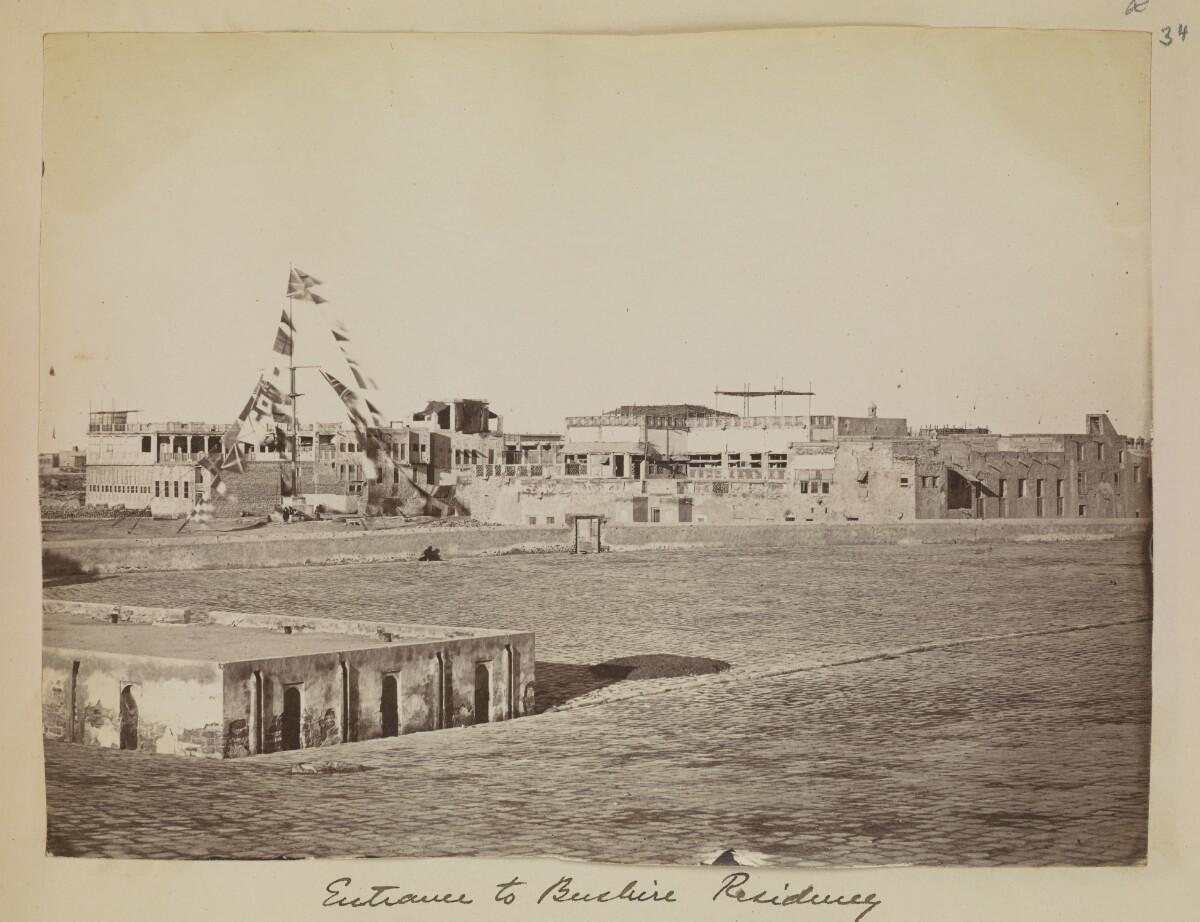
And in fact, America is guided by the “invisible hand” in Adam Smith’s Wealth of Nations (1776)—published in the same year as it declared itself a nation. America’s history, even post-Emancipation, is mired in colonisation and occupation: from the Philippines and Hawaii to Cuba, Haiti, the Dominican Republic and Puerto Rico, and, under the garb of world liberator in the farcical performance of being the evangelist of democratic principles and with the aid of most unlikely stooges like Saudi Arabia: from Venezuela, Iraq and Afghanistan to Iran and Palestine. What it is after is oil and control of at least a third of global reserves. Thus, in May this year, the US Congress announced the United States-Israel military integration plan, a provision in the 2027 US defence bill. Recently, US President Donald Trump announced the ceasefire with Iran over; his eyes and missiles are now not only on the Strait of Hormuz, they turn to Kharg Island, which handles approximately ninety percent of Iran’s oil exports and sits fifty-five kilometres off Iran’s coast in Bushehr province—which was the headquarters of the British Political Residency in the Persian Gulf, and subordinated to and administered as part of the Bombay Presidency from 1819 until 1873. The war is much closer home than we suppose.
The recent India-Israel Special Strategic Partnership for Peace, Innovation & Prosperity (2026) includes, among several things, an MoU (Memorandum of Understanding) to promote utilisation of advanced Artificial Intelligence and geophysical technologies for sustainable mineral exploration and data sharing, and regulated channels for Indian workers in Israel across manufacturing and services such as warehousing, cleaning, textiles, chemicals and plastics—apparently, to boost India’s demographic dividend and address Israel’s “labour shortages.” This partnership also brings into its fold an MoU between Nalanda University and the Hebrew University of Jerusalem for academic exchange including in fields such as Buddhist Studies and Archaeology—disciplines which primarily concern DBAM communities and their framing as historical subjects.
Only a few months before the India-Israel Special Strategic Partnership, the Supreme Court of India adopted a uniform definition of the Aravalli Hills as hills 100 metres or higher above local ground, which, as per an internal assessment by the Forest Survey of India, excludes over ninety percent of the Aravalli system, notably the foothills, valleys and connecting ridges. This has raised significant concern over ecological continuity, groundwater recharge and land degradation as a result of the weakening of the Aravalli natural barrier and possible expansion of the Thar desert eastward, and the region’s vulnerability to illegal mining. This is particularly relevant, given the extensive use of state violence justified by the conflation between Adivasi and Naxal in several mineral-rich regions of India.
Moreover, in the same year as the partnership, between February and June 2026—in what the Dalit Adivasi Shakti Adhikar Manch (DASAM) has termed as “caste-based structural violence”—more than fifty-five sanitation workers have died cleaning sewers and septic tanks despite the Prohibition of Employment as Manual Scavengers and their Rehabilitation act 2013 making manual scavenging illegal and the Supreme Court order in 2025 directing an end to manual scavenging and sewer cleaning. Today, the same groups of people—Dalit and Adivasi—who were made to cross the Kala Pani and into British colonies in the Caribbean as indentured labour to replace formerly enslaved Black people, will now be taken to Palestine to replace their comrades in arms. These working people will be our country’s youth—the ones whose homes have been torn down or torn apart, the ones who are not considered citizens, and the ones who are not even included in the growing sub-nation of cockroaches.
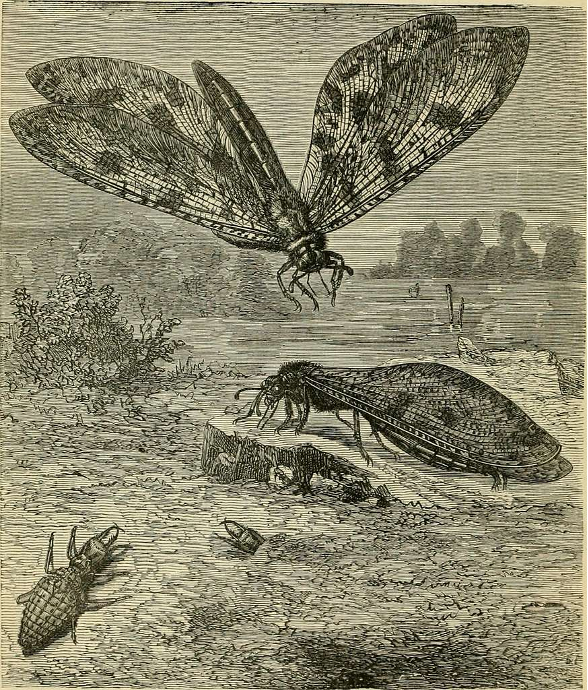
The transformations (or metamorphoses) of insects (Insecta, Myriapoda, Arachnida, and Crustacea): being an adaptation, for English readers, of M. Émile Blanchard's "Metamorphoses, moeurs et instincts des insects;” and a compilation from the works of Newport, Charles Darwin, Spence Bate, Fritz Müller, Packard, Lubbock, Stainton, and others. Philadelphia: Claxton, Remsen, and Haffelfinger (Peter Martin Duncan and Émile Blanchard. c. 1882. Image courtesy of the authors and publishers. Source: Smithsonian Libraries. Accessed from Wikimedia Commons [image posted to Flickr by Internet Archive Book].)
The Chief Justice of India, Surya Kant’s remark on 15 May 2026, in which he called activists and unemployed youth “cockroaches” and “parasites of society,” and which spurred the founding of the CJP has a much longer history based in Nazi propaganda and across various contexts to dehumanise historically and incite genocide against historically oppressed and marginalised populations and invite genocide against them. Thus, Franz Kafka’s Metamorphosis (1915), in which rather than naming his protagonist Gregor Samsa’s transformation as insect, parasite or monster, his choice of the word Ungeziefer—which roughly translates to “unclean animal unsuitable for sacrifice” and was commonly used in German for “vermin”—is often interpreted as a reflection of the routine stereotyping of Jews in Europe.
In Rwanda, the Radio Télévision Libre des Mille Collines which operated from 1993-94, would play in repetition, Tutsi people “are cockroaches. We will kill you,” inciting the Rwandan “radio genocide.” In 1983, former Israel army chief of staff General Rafael Eitan said at an Israeli parliamentary committee hearing that Arabs are like “drugged cockroaches in a bottle.” In October 2023, pro-Israel figure Arsen Ostrovsky published a Twitter post titled “Palestinians as cockroaches.” The post was a cartoon portraying a blue boot with IDF written on it crushing a caricature of a cockroach, identified as Palestinian by the red, white, green and black colours of the Palestinian flag. What is crucial here is the weaponisation of the trope of an insect, a dehumanised form, not a human—an animal—in the construction of history; the justification of genocide and the articulation of another’s oppression as political necessity for one’s own “freedom.” The rhythms are similar, the rituals familiar.
In what becomes a contest about truth, historical repetition demands of us to be neither a perpetrator nor a bystander but an ally, in solidarity with the historically oppressed victim—compelling us to ask: Who tells what story and from what perspective? Which story is heard by what powers? Whose story will we listen to and what do we do with the story we have heard? This is not to debate what really happened—as Italian historian Carlo Ginzburg fiercely asserts in his influential 1992 essay “Just One Witness: The Extermination of Jews and the Principle of Reality,” reality, without quotation marks, is what happened. Searching for historical truth through singular traces is how we reconstruct this objective reality.
It is now 3000 years since caste-based violence; 250 years since America’s independence did not translate to freedom but paved the conditions for historical oppression of people of colour; nearly 150 years since the first Census of India in 1881 laid the ground for demographic and religious discrimination of India’s minorities and turned the Jewish Question into a universal problem; seventy-eight years since Nakba; 1013 days since the start of the present genocide against Palestinians on 07 October 2023 and 138 days since the war on Iran. There is no dearth of historical truth that can be considered an approximate representation of reality. Perhaps the task is not to persuade but to continue production of knowledge that can listen to those who construct and confront reality, to intervene in historical time and to march alongside those who carry the traces of future freedoms—ours and others, for we are not free until everyone is free.
Hamidreza Afarideh, musician and composer, who taught 250 students at the Honiak Music Academy on Tehran’s Piroozi Street and which was blown up in an airstrike in March 2026, plays his kamacheh amid the rubble of the ruins of the school. He wants the last sound emanating from the building to be not of missiles but of music, he says: "This sound, maybe it will be the last sound of this school. And maybe even the last sound of me playing. Maybe I will not be here tomorrow either. But this sound will remain." (Video courtesy of the artist and Eyewitness News abc7NY. Source: YouTube)
To learn more about the history of resistance movements of marginalised communities, read Upasana Das’ conversation with Hind Meddeb on protest music in her films, Sharanya Nayak’s explorations of Sankaraa and Narendra Mohanty’s photo-documentation of women’s resistance to mining in Tijmali Hills in Odisha, K. Sajaya’s tribute to G.N. Saibaba, Sumaiya Mustafa’s review of Samuvel Arputharaj’s Manjolai (2024), Najrin Islam’s essay on Sofia Karim’s Turbine Bagh Project (2019–ongoing) and Radhika Saraf’s conversation with Mekh Limbu on his work Chotlung: traversing spirits, redemptive songs (2025) tracing protest, memory and history.
To learn more about youth-led dissent and protests against undemocratic systems, read Abdul Basit’s review of Sanjay Kak’s Jashn-e-Azadi: How We Celebrate Freedom (2007), Upasana Das’ reflections on Hooria Ahmadi’s Tehran Youth Diaries, Nikita Jain’s essay on her photo-documentation of recent protests by Adivasi youth in Bastar, Shahidul Alam’s essay on the 2024 quota reform protests in Bangladesh, Aishwarya Baidar’s reflections on Thanakrit Duangmaneeporn and Aekaphong Saransate’s Breaking the Cycle (2024) that traces the youth-led movements in Thailand and Sagorika Singha’s exploration of YouTube music videos by Assamese rap artists released during CAA protests in 2024.