

On Protest, Memory and History: In Conversation with Mekh Limbu
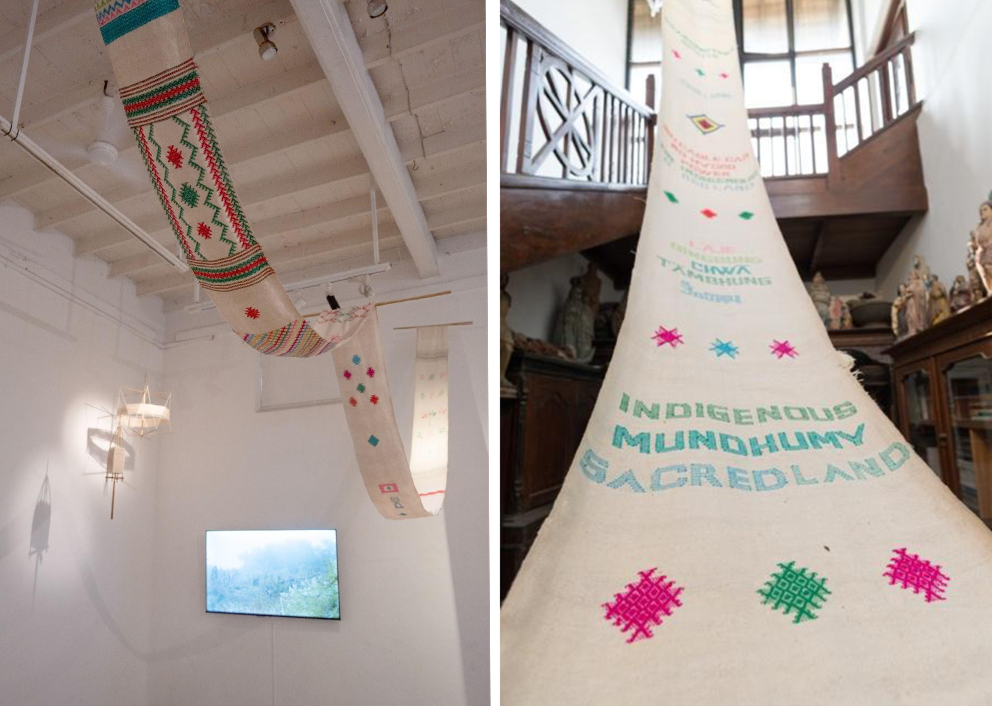
Recently exhibited at the ninth edition of Colomboscope: Rhythm Alliances, which was held from 21–31 January 2026 in Colombo, Mekh Limbu’s work Chotlung: traversing spirits, redemptive songs (2025) explores the personal and political journeys of intergenerational transfer of Indigenous knowledges. In the first part of this edited conversation, Limbu discussed the role of weaving and video in communicating the struggles encountered by the Adibasi-Janajati Yakthung community—to which Limbu belongs—in the face of state-backed infrastructural incursions that puts the community at risk of displacement and loss of sovereignty. In the second part, Limbu speaks about the relation between art and activism, the multiple and varied lives and afterlives of his works of art, and the role of memory in understanding the cosmology of the Yakthung people as guides in their struggle to protect their sacred landscape from the violent onslaught of capital.
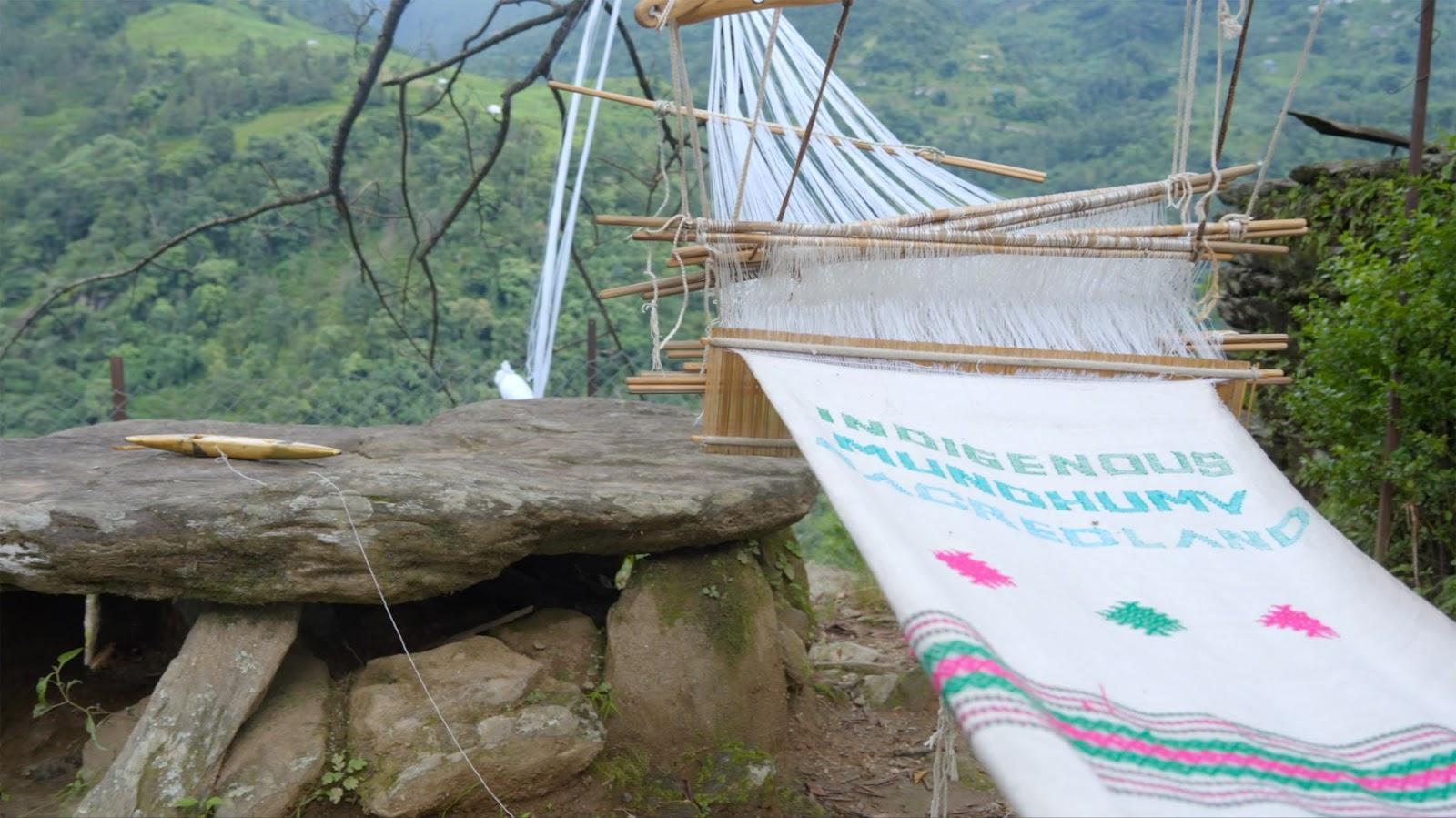
Radhika Saraf (RS): The woven piece was taken to the site during a protest that you were a part of—I was curious whether the work was made for the demonstration or primarily as an “artwork,” and what these distinctions might mean for you?
Mekh Limbu (ML): In the video, I have attempted to bring my understanding of weaving to the specific landscapes that are being extracted from at the moment. In the video, you see some of the looms, not all of them, appearing in the landscape. This is my personal attempt at connecting with the landscape through weaving, but often these moments have also coincided with larger collective demonstrations that have taken place.
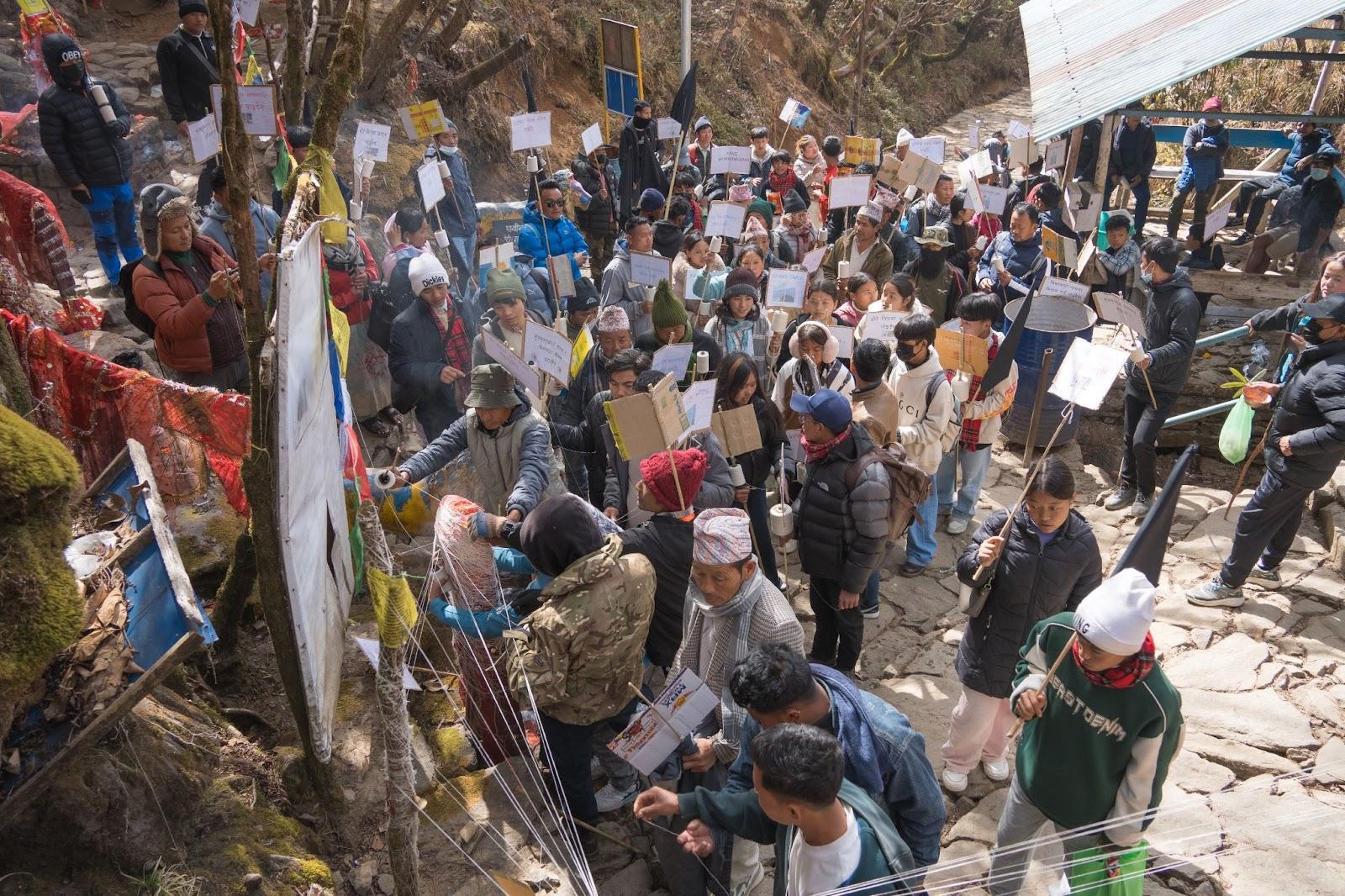
I am also a part of another artist collective called Yakthung Cho, which comprises many Indigenous artists from the eastern Himalayas who have been organising and protesting around these different infrastructural incursions in eastern Nepal. In that respect, the work responds to these larger artistic interventions to try to think about sacred landscape.
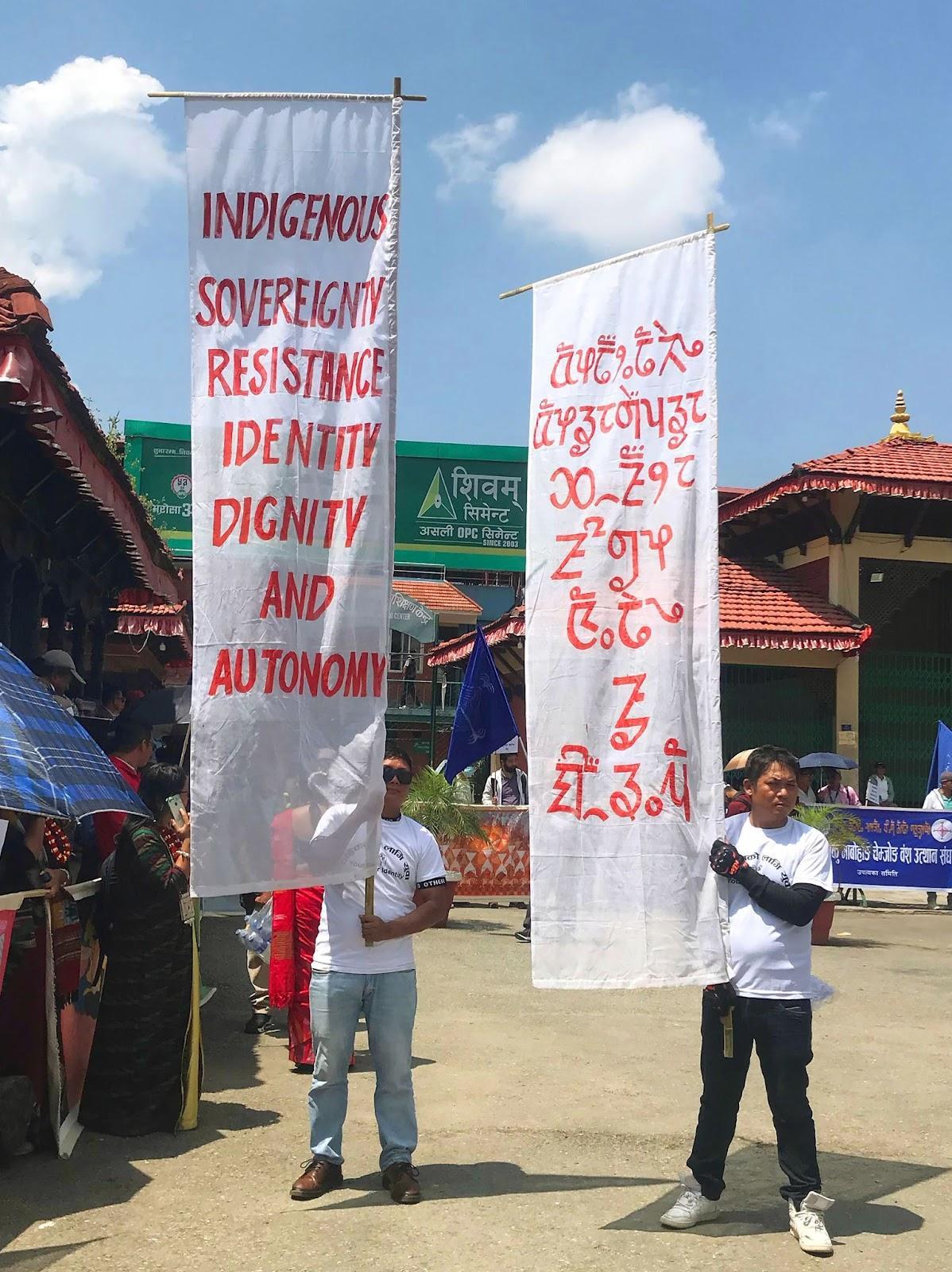
Some of the banners that you see hanging, even if they were not taken to the eastern Himalayas, there have been similar protests in Kathmandu, where those banners are being carried in solidarity by artists from the community itself, to bring attention to what is happening in eastern Nepal, in Kathmandu.
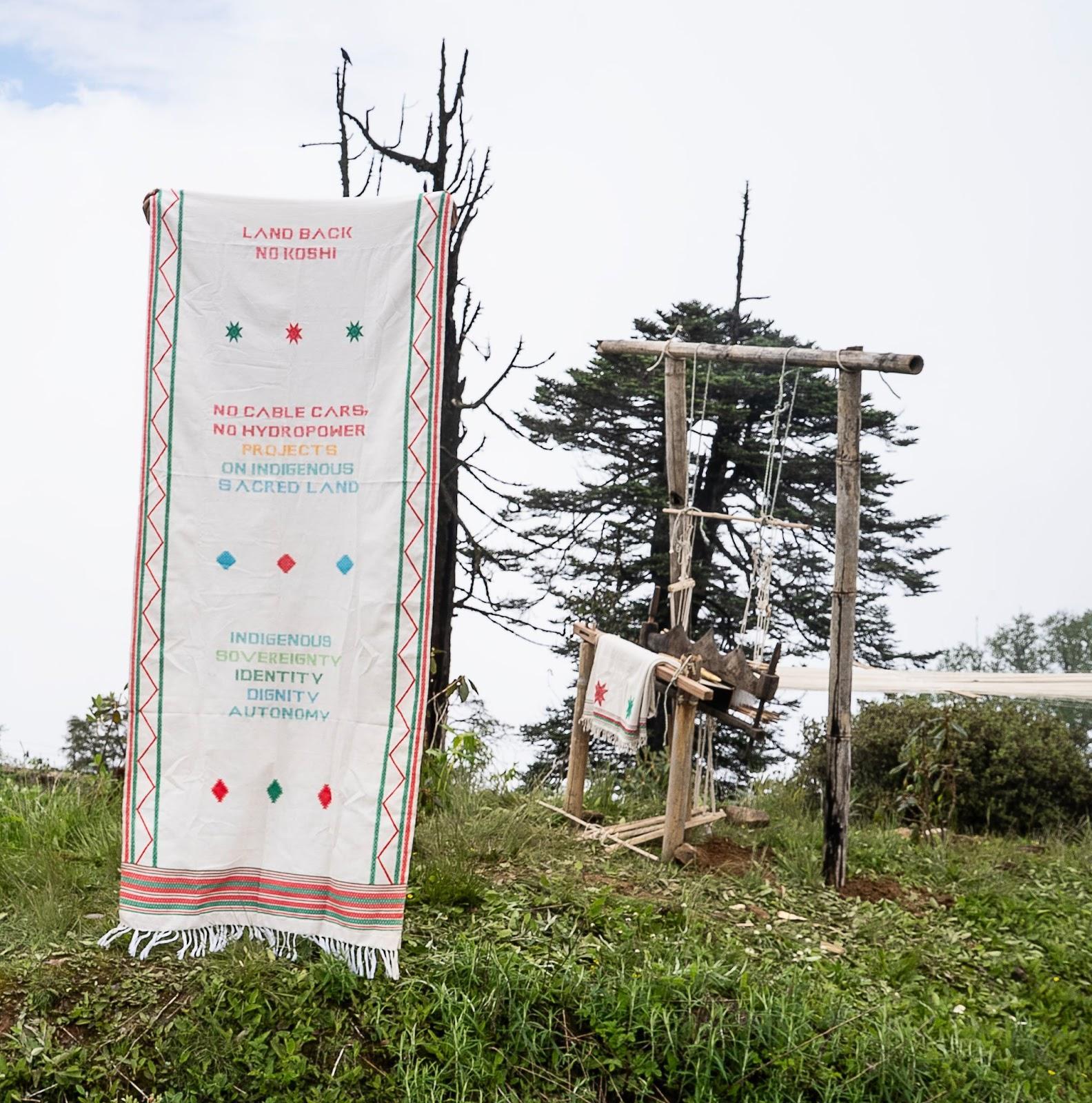
There was another loom that was brought to Colombo but not put on display. In fact, as soon as I go back, that loom is going to eastern Nepal for the protest next week! The work has been produced as a response to these “developmental” projects and what the community has been facing. They are a way of communicating to the community my observations and possible resolutions.
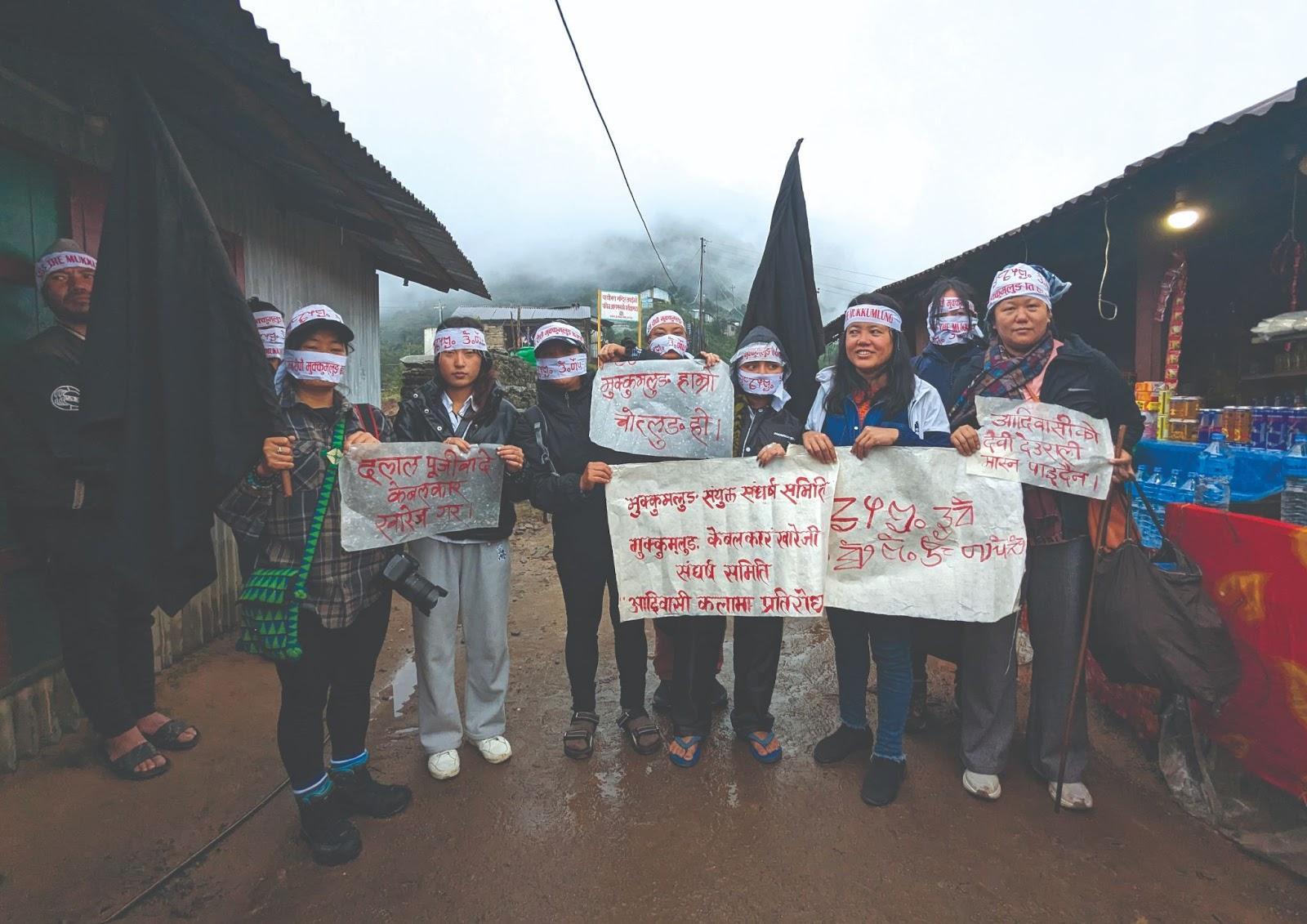
With regard to what I have put forward, the artwork is not necessarily the end. It is less about the art and more about the process—not only how it is being put together but also what it means for the people it is being put together for. Yes, it is being shown here in a more traditional gallery setup, but it has many lives.
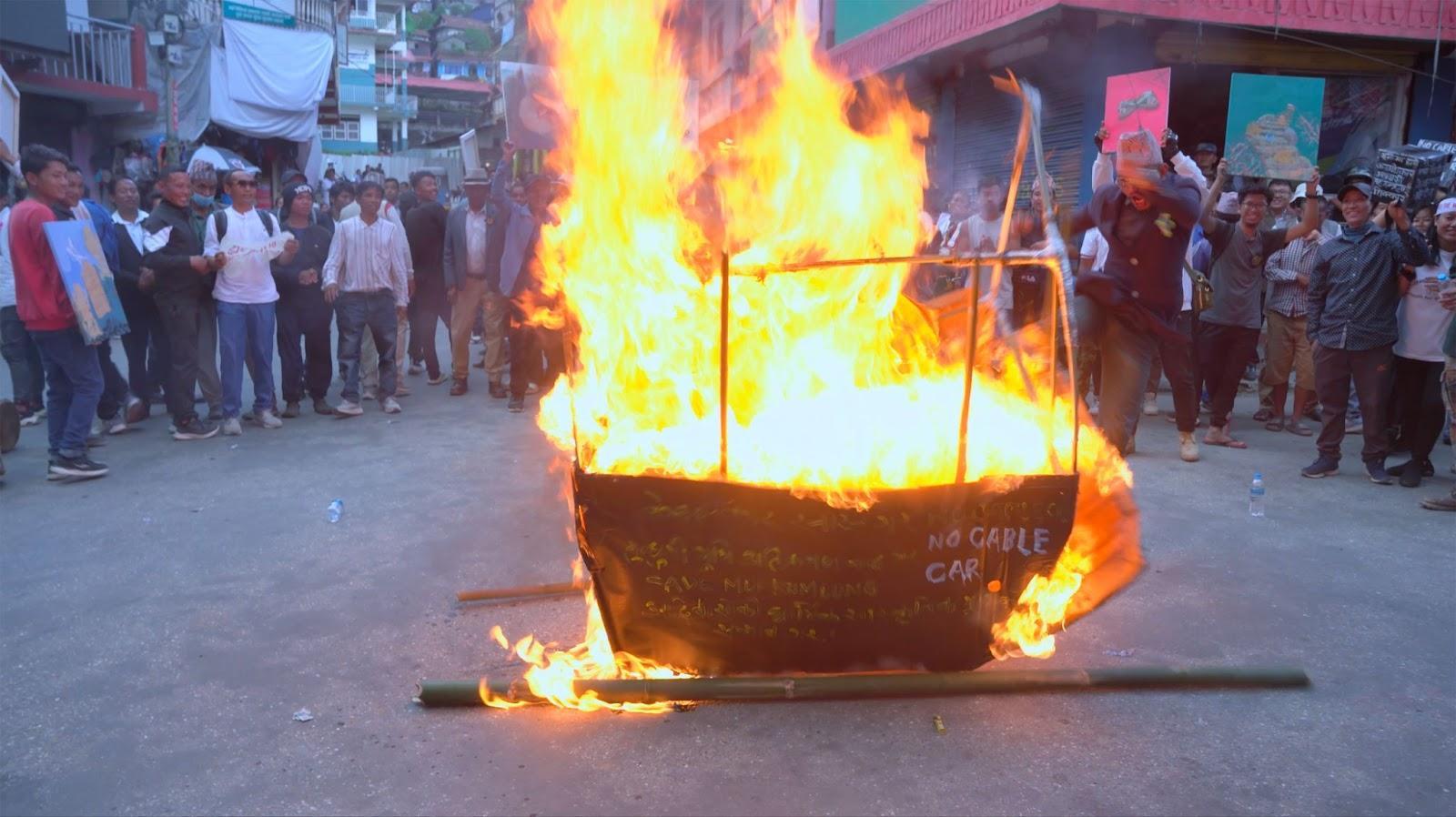
RS: Can you please share more about these other lives? You are both an artist and an activist—could you please share with us how you navigate these two identities? How do you think about the relation between the content of art in traditional gallery/festival spaces and the structural struggles outside of these spaces that the content of artworks often portray?
MS: In my artistic practice, in response to contemporary political struggle and needs, it is not possible to individually address or challenge these structures; it necessitates a coming together and collective effort to respond to such struggle. That is why, in Nepal, there are many collective efforts emerging, and not only the one I am a part of. There are many political spaces that approach artistic practice not in service to an individual but in service to many people. To think and respond to what the communities are facing definitely requires a collective coming together.
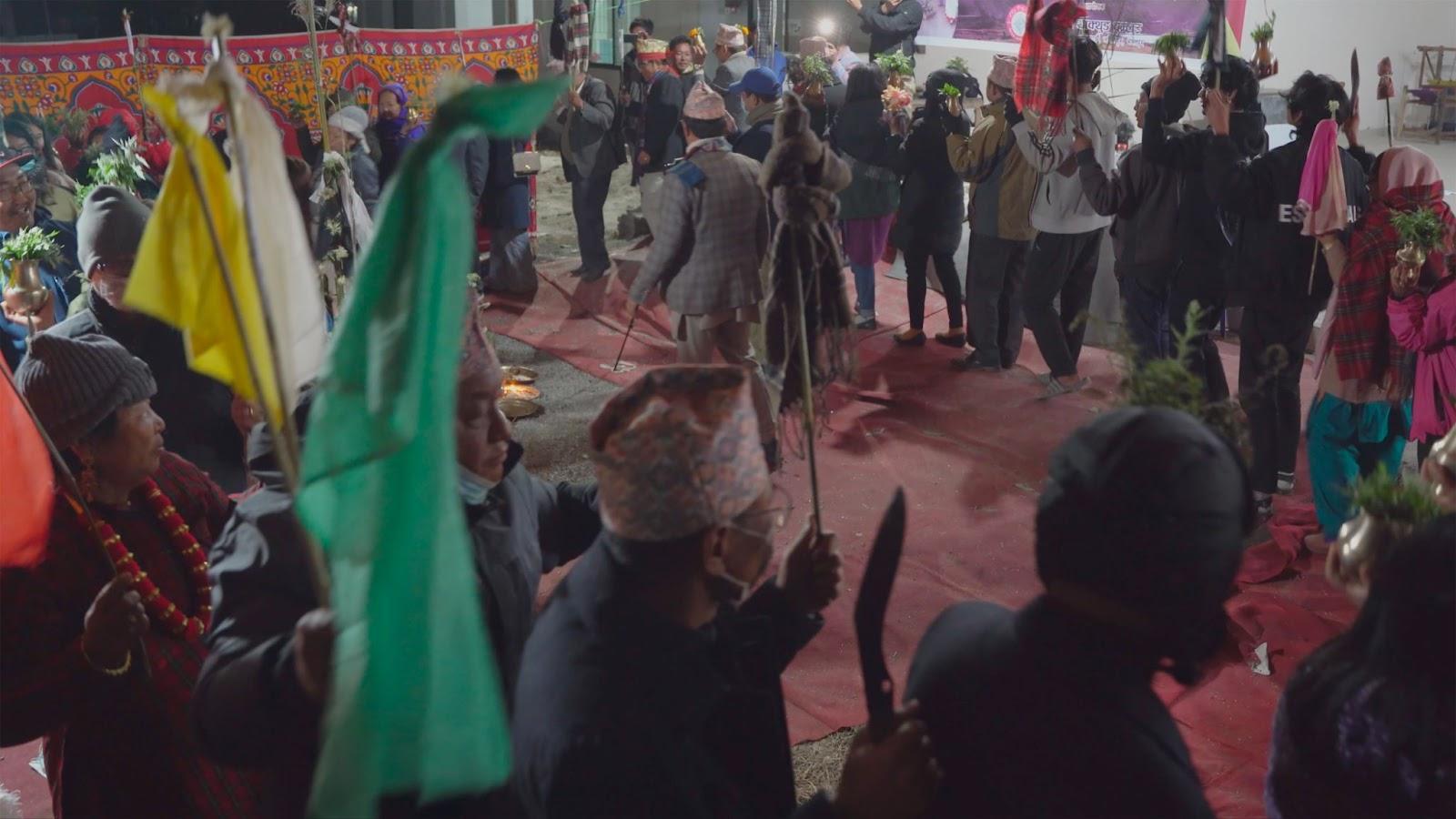
In respect to the other lives of the work, at least in the process of learning how to weave, like with many other practices in South Asia, the individuals who can actually teach these older practices are now fewer and fewer. There are not many elders left who hold such knowledge. At least when I was trying to find someone to teach me, there were only a few women in the community who were able to communicate what they knew to me.
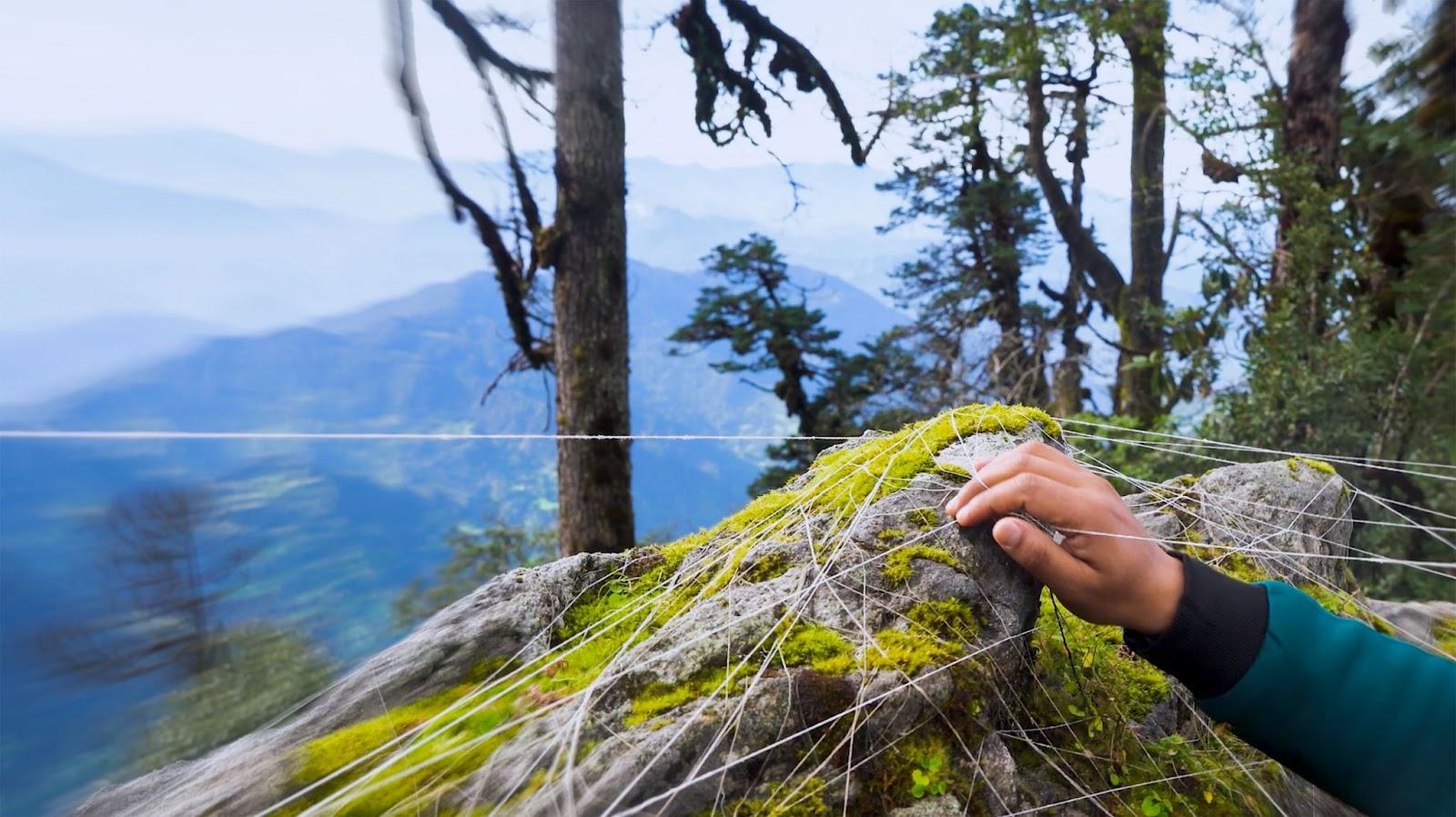
Interestingly, through the process of trying to learn how to weave and put this together, I have met a lot of young artists from the community who are interested in learning how to weave. In a sense, putting in this effort is also an attempt to connect the threads of trying to continue this practice. During my research process, when I consulted the elders and often showed them materials related to weaving, or had questions specific to certain patterns, they shared memories and histories about weaving. These were often told only because a specific object or association pushed forth these stories, making these memories also a part of these works.
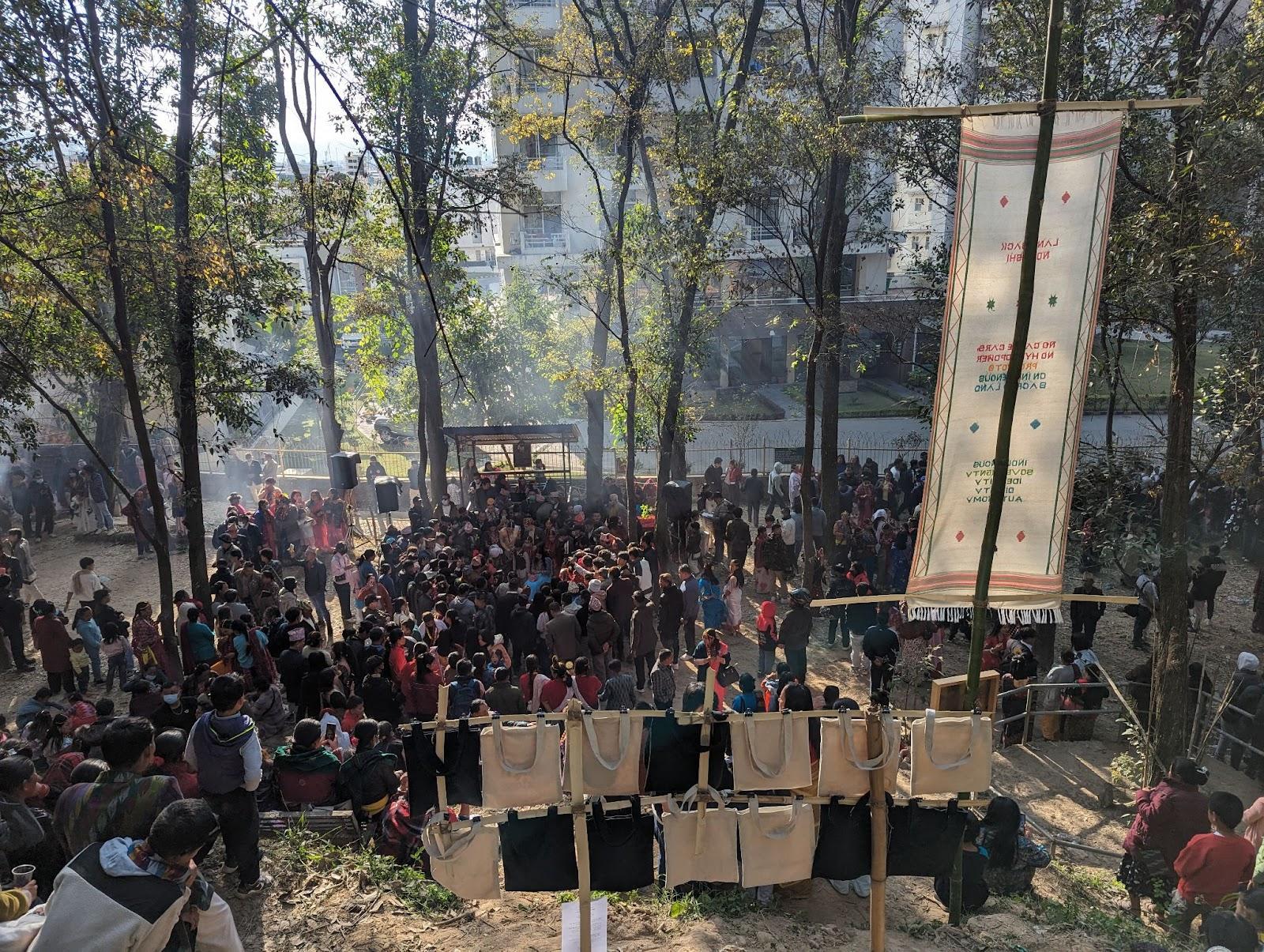
RS: It seems the primary audience of these works is the communities? Or, who do you hope is the audience for these works?
ML: When I put this work together, it was not with a specific audience in mind. It was more as a response to this specific time that my community is facing. It is a record of this specific moment. The object is supportive of my intention and the video can also be seen by multiple different audiences, whoever would like to view or respond to it. I consider myself to be part of an intermediary generation. I have the privilege to interact with and learn from the elders of the community. However, while making these works, it is also my intention to try to figure out how to communicate and bring into circulation these memories and knowledges that are being passed down to me, which is not necessarily the case for younger artists and the younger generation. For example, a lot of Indigenous youth in Nepal do not have either the experience or even the knowledge of witnessing certain rituals that were very essential for the community historically.
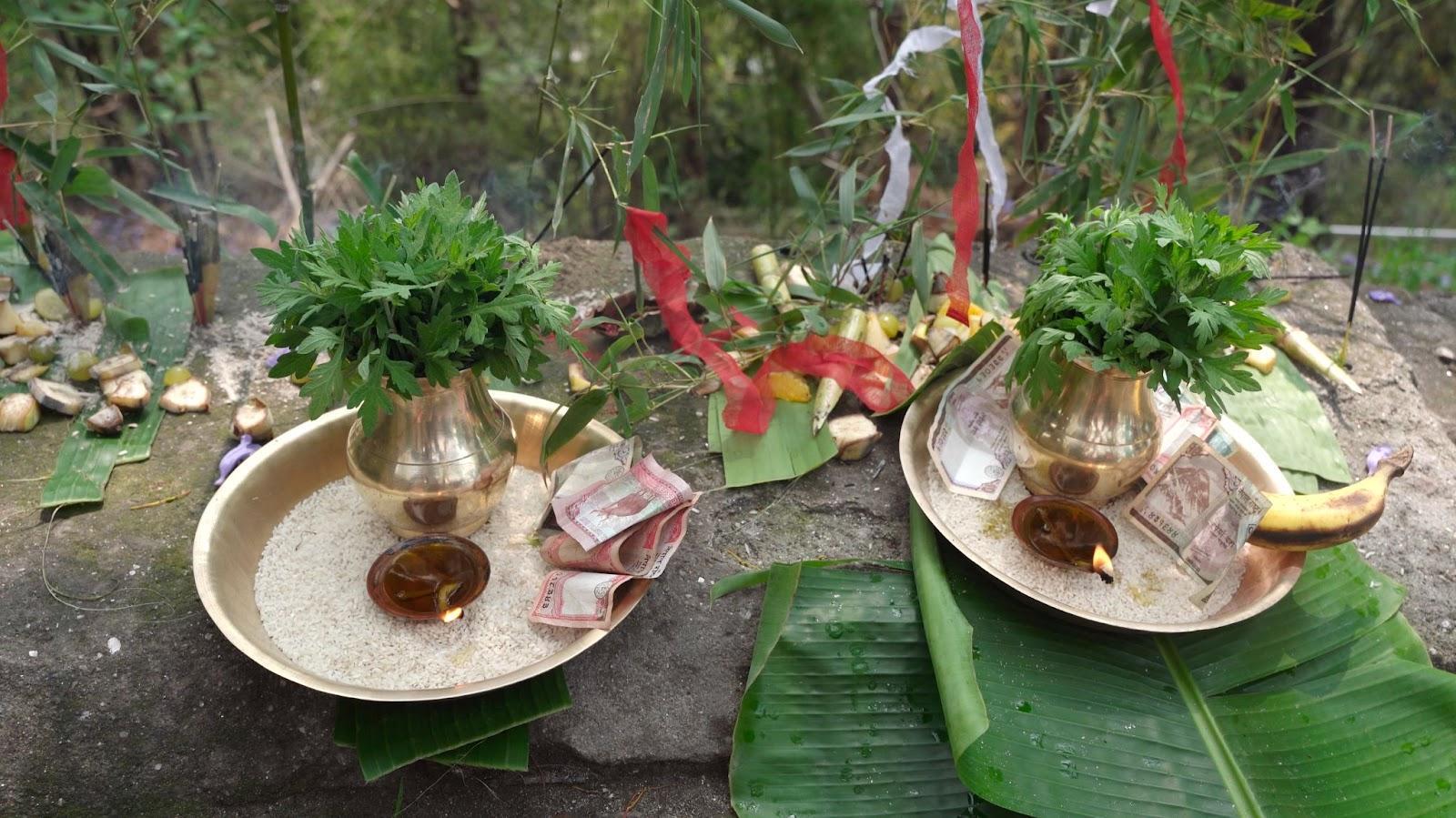
RS: It is a remembrance, without nostalgia, and also about the future…
ML: The work does look towards the future, but it is also trying to indicate that it will become difficult to think about the future if we do not know about our roots. This work in particular is an attempt to understand the cosmology, thinking processes and understandings of Indigenous communities that have existed for a very long period of time. Through such an understanding, one can then formulate ways of moving forward and going ahead. Trying to think of the future dissociated from this past would be disingenuous and not honest toward the sensibility of our communities.
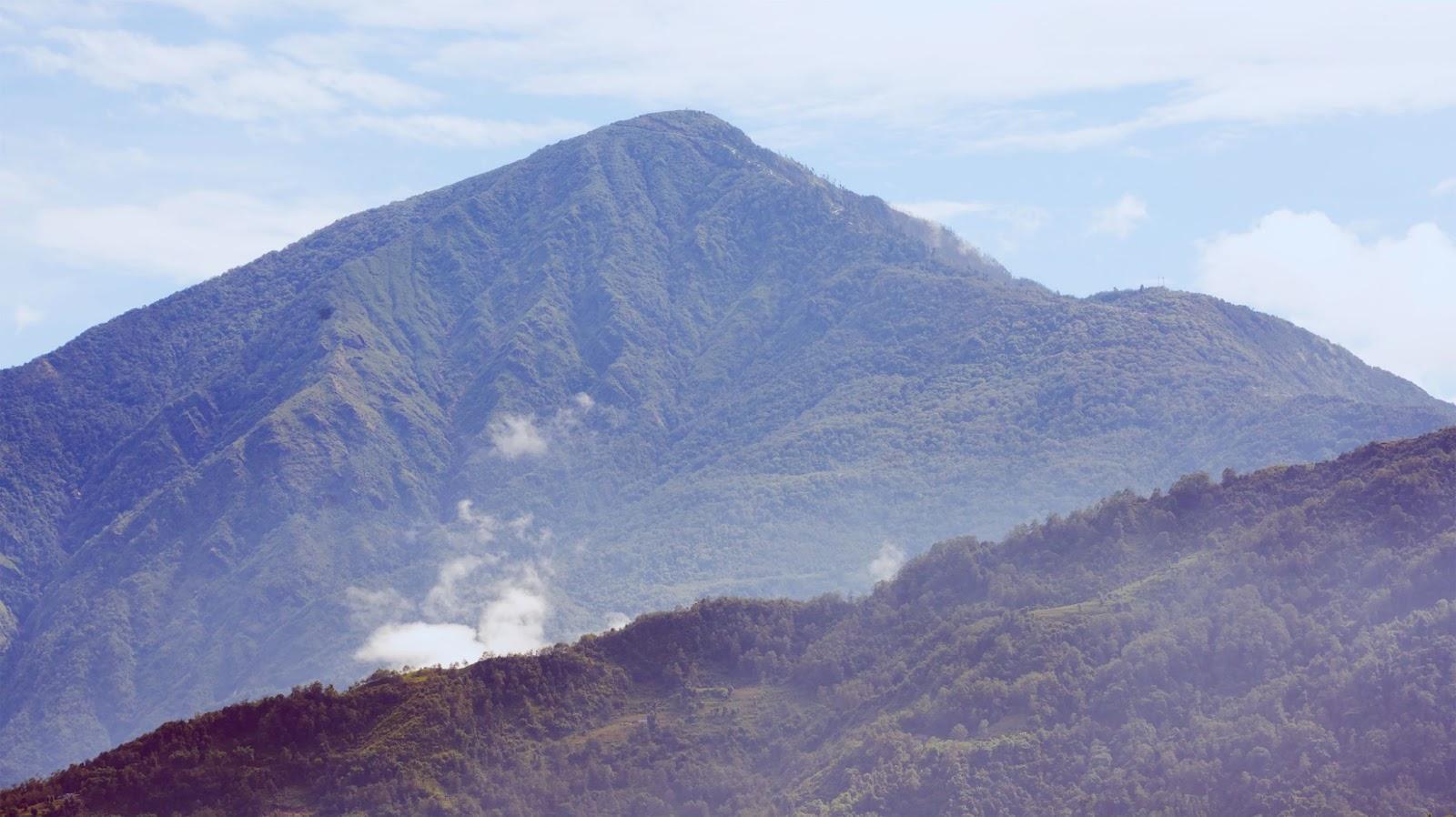
So while the work looks toward the future, it tries to get at a resolution and does not necessarily box itself up only as a traditional art form—or as a handicraft, as it is often called in South Asia—it is nevertheless rooted in a certain Indigenous and historical understanding of a specific land. In particular, this work is not just an individual effort, but rather requires a collective way of thinking about how to produce a work. Therefore, it has to be grounded in earlier understandings of interpretations, rituals and language.
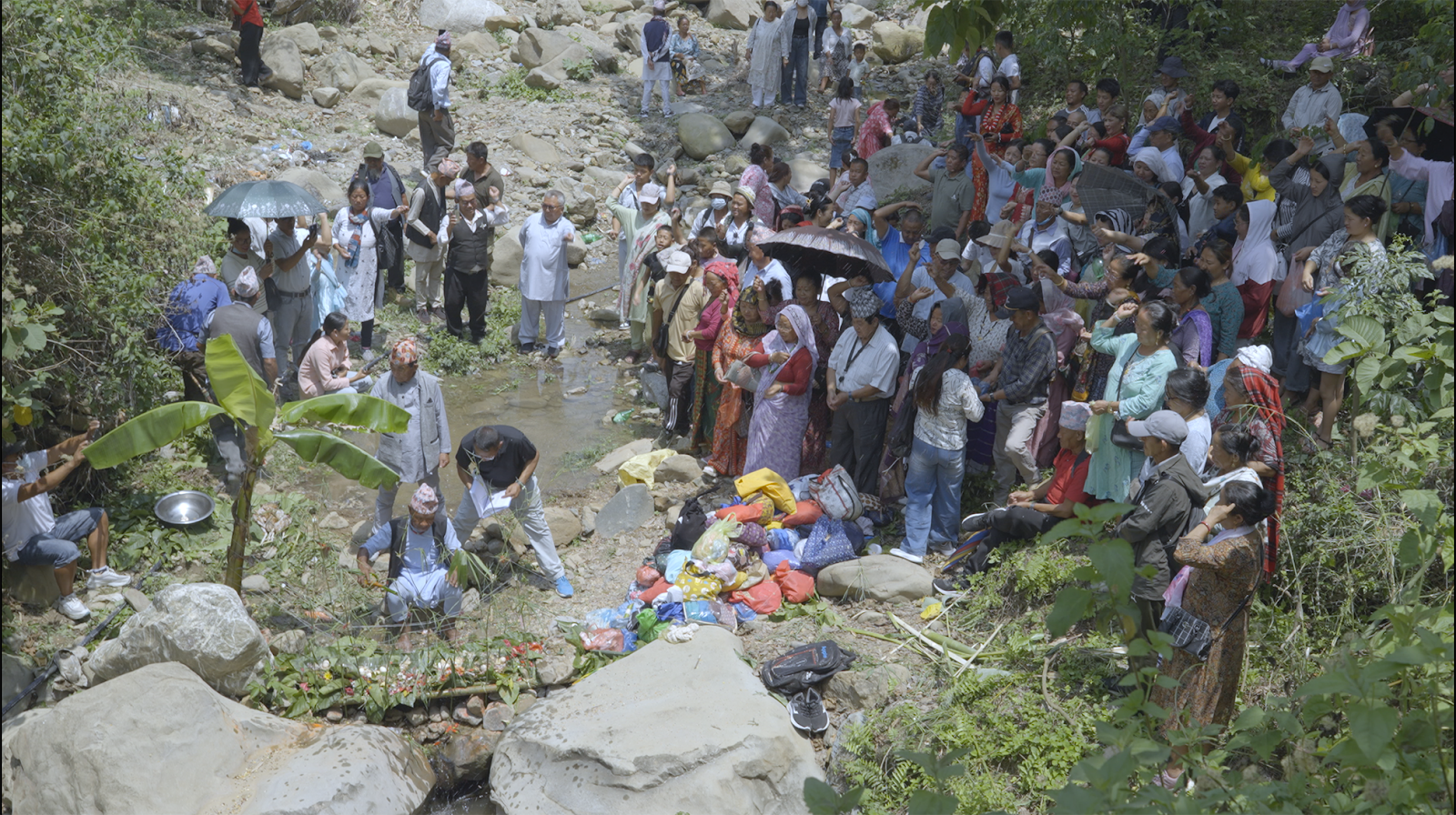
Thanks to Priyankar Chand for translating between Nepali and English and enabling this conversation.
Chotlung: traversing spirits, redemptive songs (2025) was co-commissioned by Colomboscope and Ghost 2568. It has also been supported by the Experimenter Generator Co-operative Art Production Fund, ArTree Nepal, Kalā Kulo, Yakthung Cho and Goethe-Institut Sri Lanka.
In case you missed the first part of the conversation, read it here.
To learn more about Colomboscope: Rhythm Alliances, watch the episode of In Person, in which Radhika Saraf speaks to Basir Mahmood about his work A Body Bleeds More Than It Contains (2026). To learn about previous editions of Colomboscope, read Pamudu Tennekoon’s reflections on Ruwangi Amarasinghe’s fantastical forests and notes on the discussion “Seeding a Grove of South Asian Solidarities” at Colomboscope in 2024 and listen to an episode of the ASAP podcast featuring the festival’s artistic director Natasha Ginwala, read Arushi Vats’ reflections on Pallavi Paul’s Walking as Alibi: Dreams of Cynthia (2022) and Annalisa Mansukhani’s observations on the programme “Artist Encounters” as part of Coloboscope 2022.
To learn more about artists exploring the relationship of Indigenous communities to land, watch Bhumika Sarawati’s discussion with Subhash Thebe Limbu as he speaks about Adivasi Futurism, Riddhi Dastidar’s review of The Land Sings Back (2025), Mallika Visvanathan’s curated album from Kunga Tashi’s Children of the Snowy Peak (2019–ongoing) and Sakhi Subramaniam Chowla’s album documenting Diyari Puja in the Bastar region of Chhattisgarh.