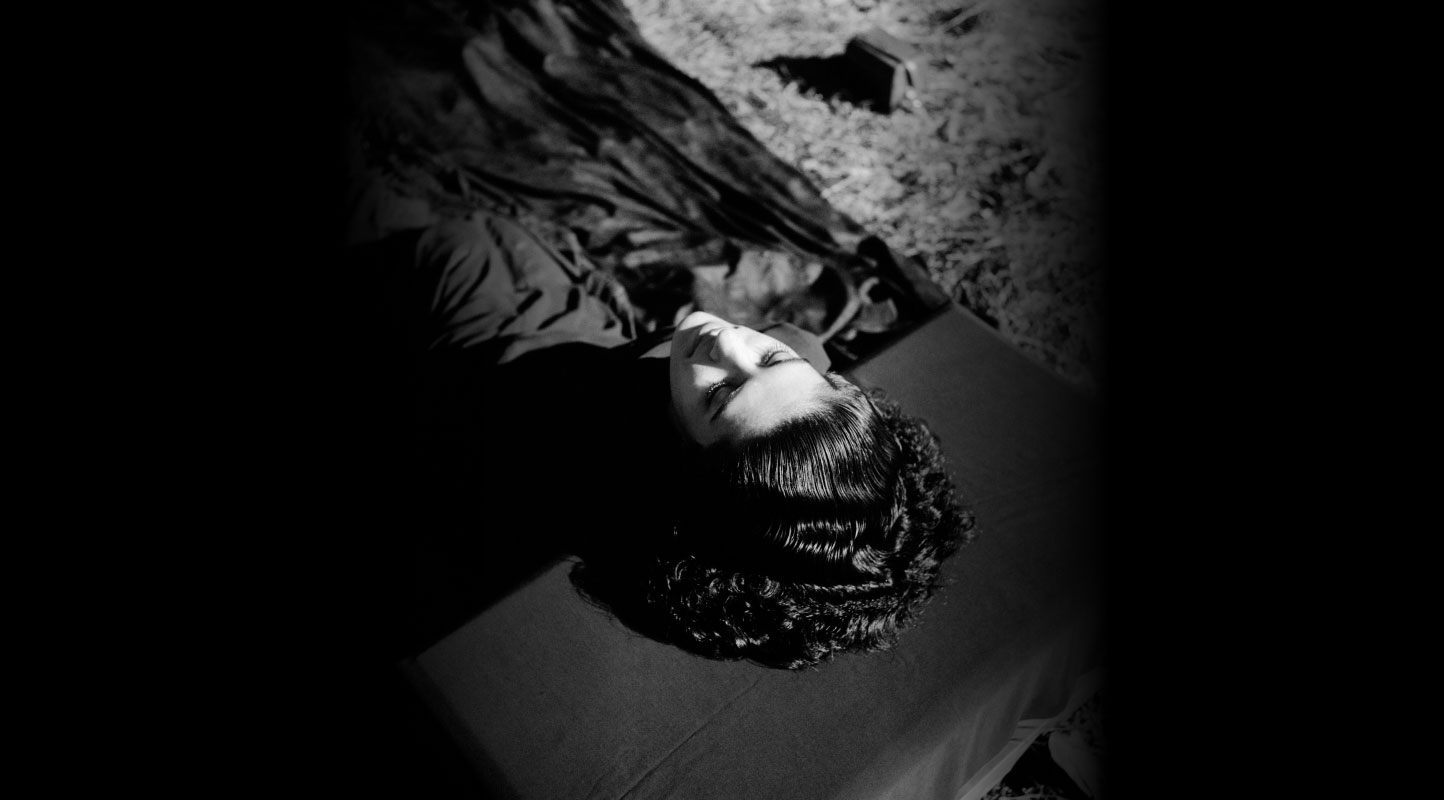


The Politics of Memory and Witnessing: Deconstructing the Archive with Sasha Huber and Siona O’Connell
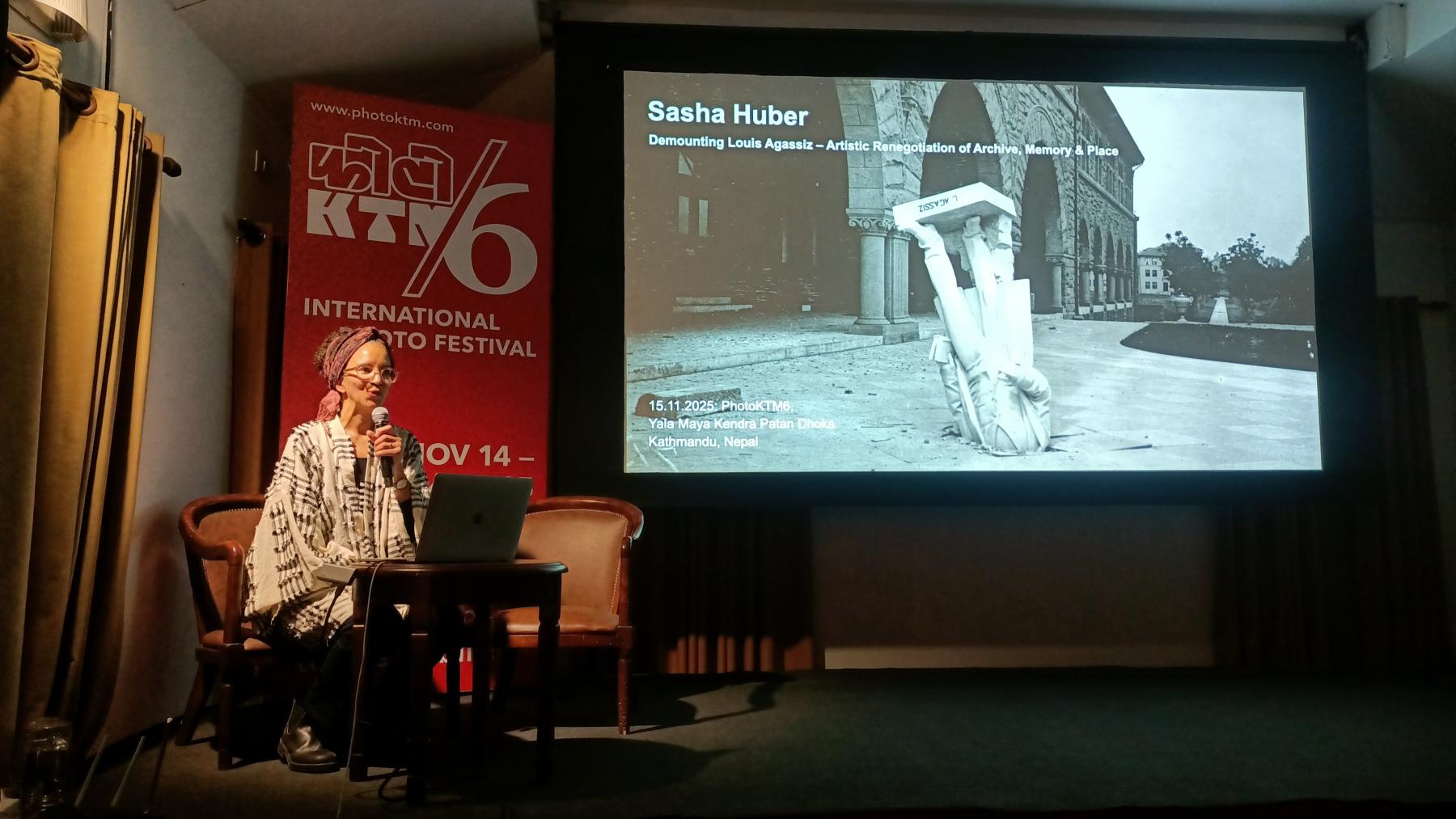
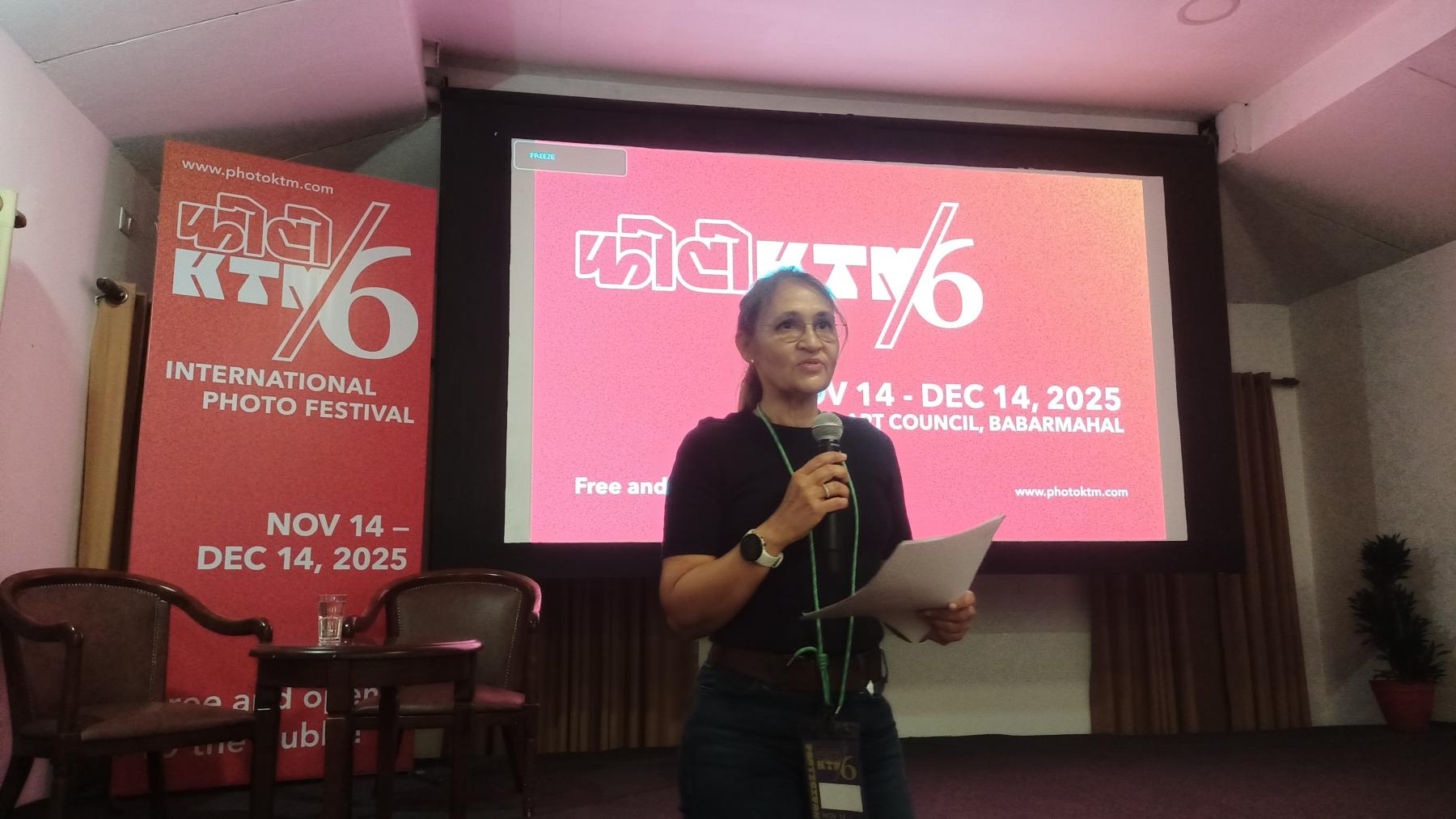
First two talks held as part of Photo Kathmandu’s sixth edition, the biannual photo festival organised by the Photo Circle, a platform for visual storytelling in Nepal, focused on restoring dignity and confronting racist histories. The talks titled "Demounting Louis Agassiz—Artistic Renegotiation of Archive, Memory & Place” by Sasha Huber and “Witness or Accomplice: Photography, Human Rights and the Question of Freedom” by Siona O’Connell, invited us to deconstruct archives that have been built on oppression.
Huber began her talk by showing two family photographs from her childhood. Born in Switzerland to a Swiss father and Haitian mother, Haiti became the starting point of her artistic practice, perhaps as compensation for being allowed there only as a child. Later, when she wanted to return, her mother would say, “Do not go; it is too dangerous.”
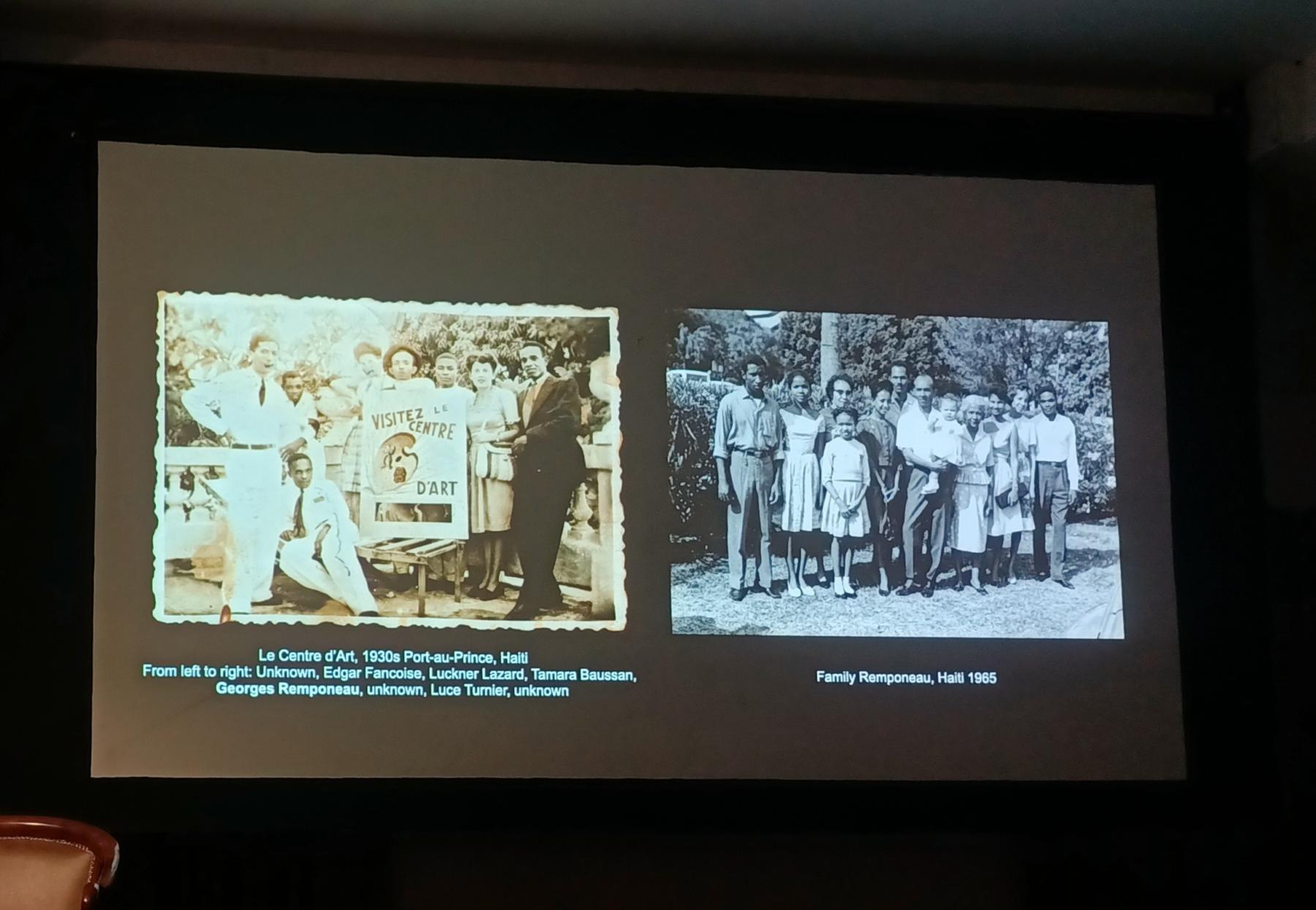
While studying graphic design in Helsinki, Huber discovered the staple gun; traditionally used to fasten materials like fabric, plastic or wood with heavy-duty staples, this became the red thread of her practice. When she first used it, it felt like a weapon. She then decided to use the staple gun to shoot back, literally, at figures responsible for the horrors in Haiti, and began with Christopher Columbus as a symbolic starting point.
Each shot was a way of pushing back at history and defending herself through art, but she eventually realised she was creating portraits of men already written into history. “It did not feel right. I did not want to spend my energy recreating their images. So I shifted my focus toward people whose histories were silenced, those who never found space in history books, including people connected to my heritage, but also far beyond it,” Huber points out.
One work from this period is Sea of the Lost (2016), a commemoration for over two million people who did not survive the Middle Passage during the trans-Atlantic slave trade. The staples form the waves of the Atlantic. The artist was also thinking of the Mediterranean today and how people continue to flee across the sea, often unwelcome, echoing histories of loss. She created portraits of people killed because of political or hate crimes, victims whose names and stories deserve remembrance.
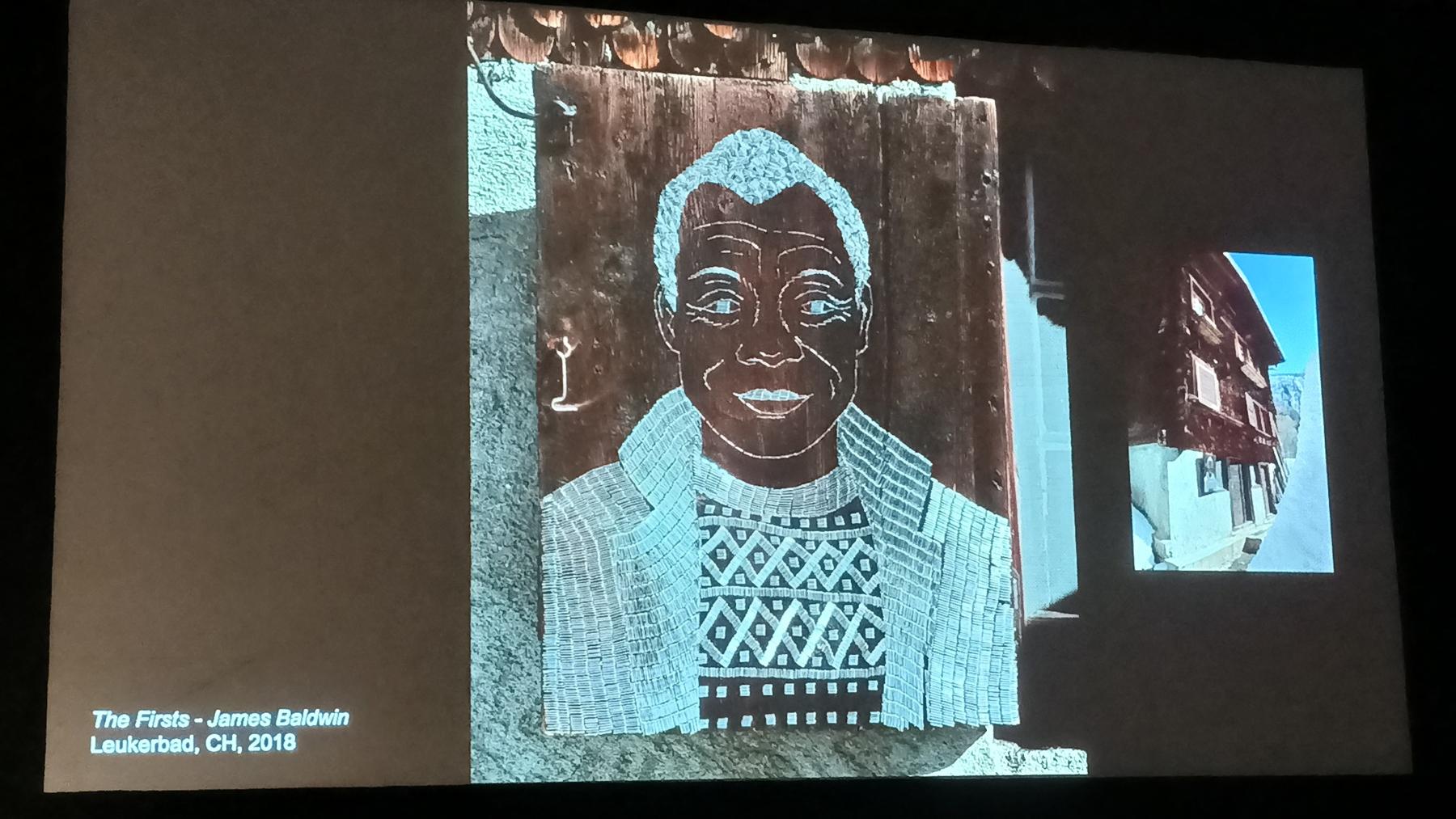
Huber also made the series The Firsts (2017–20), commemorating people who arrived from the African diaspora to Europe in the nineteenth and twentieth centuries. She portrayed James Baldwin in the Swiss Alps at Leukerbad, where he wrote parts of his first novel, Go Tell It on the Mountain, between 1951 and 1953. The Firsts was shown last year in Australia, connecting this work to the broader project Land Back Now, which she created in Morse code, a language familiar to her through her grandfather, a ham radio operator.
Then along came the project that changed everything.
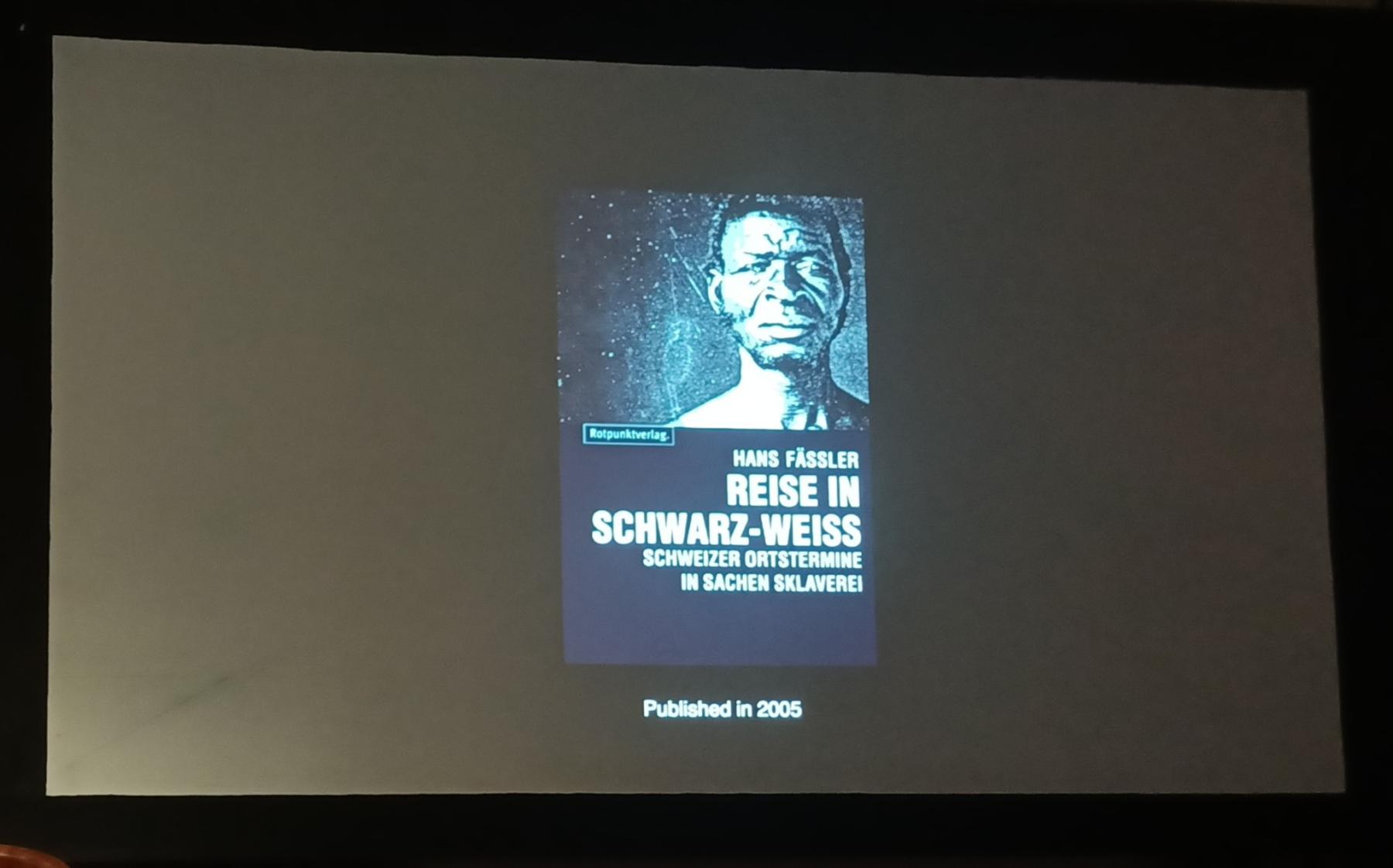
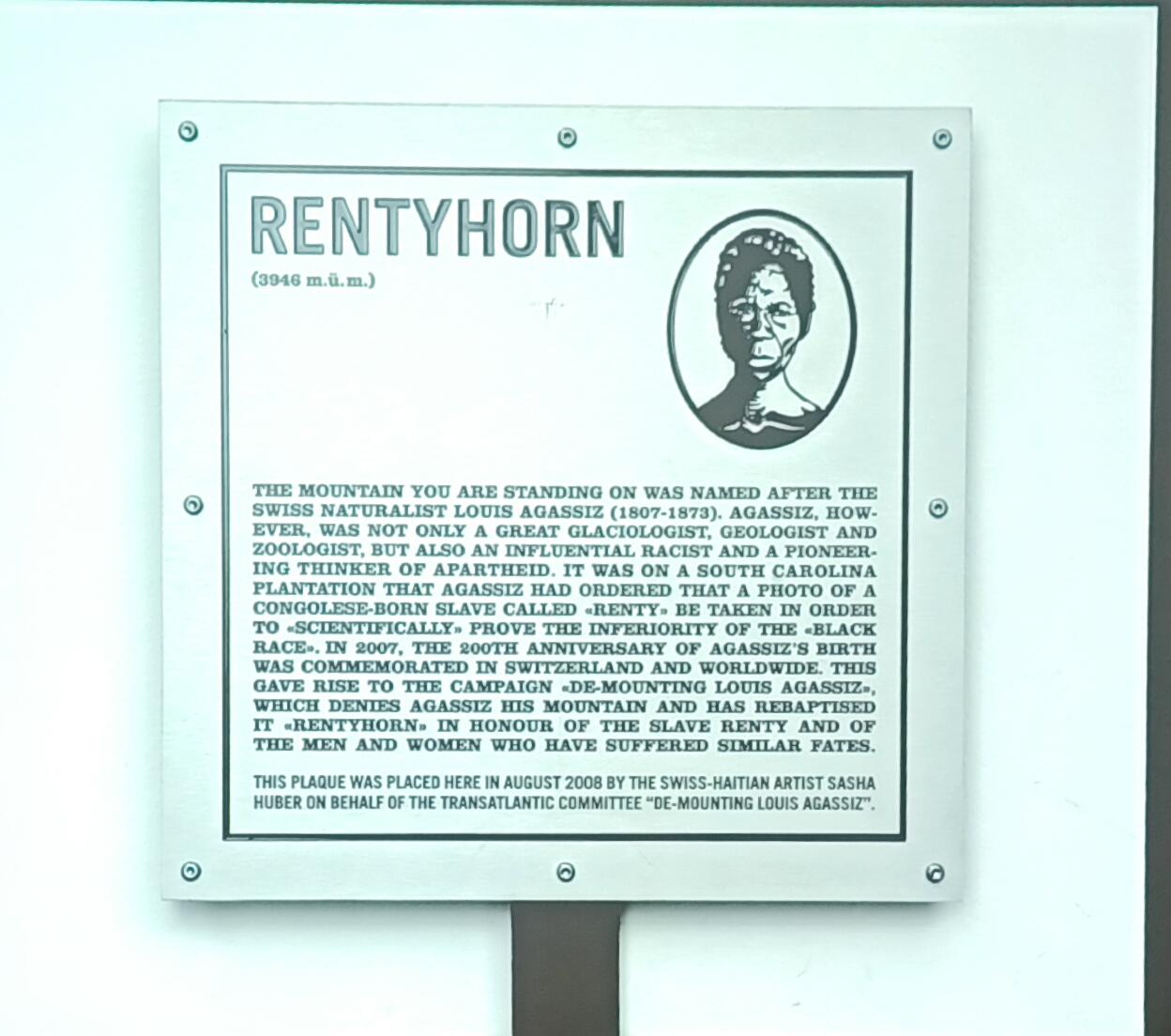
Her sister had gifted her a book by Hans Fässler on Swiss involvement in slavery and the slave trade. It covered things never taught in Swiss schools, including a chapter about Louis Agassiz, a prominent nineteenth century American naturalist. Agassiz made significant contributions to polygenism, in service of racist, white supremacist ideas and practices, and yet Switzerland was still celebrating him in 2007. Fässler founded the committee to demount Louis Agassiz, and proposed to rename Agassizhorn in the Swiss Alps to Rentyhorn, in honour of Renty Taylor—a formerly enslaved man from the Congo who was forced to be photographed in 1850 by Joseph T. Zealy at a South Carolina plantation. The images had been commissioned by Louis Agassiz and used to justify racist, pseudoscientific ideas.
“I was invited to join the committee and wanted to do more than lend my name,” Huber shares. She adds, “I am not a mountaineer, so the only way for me to get there was by air, paragliding, to physically enact the renaming.” Through this symbolic gesture, she understood the transformative power of art to imagine the world as it should be. The artist also created an online petition gathering over 3,000 signatures and drew Taylor in his Congolese clothing, restoring the dignity that had been stripped in the Zealy photographs. “We wrote letters to the mayors of the three communes responsible for the mountain and to UNESCO. “Slowly, responses came. None agreed to rename the mountain,” Huber sighs.
Four years later, Tamara Lanier, Renty’s great-great-great-granddaughter, found the petition website, wrote to the committee and publicly shared stories passed down orally through generations, something no archive held. Meanwhile, Fässler contacted Agassiz’s Swiss descendants, who opposed the initiative and threatened legal action. In 2017, Huber met Lanier in New York. Then, in 2019, Lanier filed a lawsuit against Harvard University for the return of the Zealy photographs. More than images, they were her ancestors. The case made international news. Then she received an email from Agassiz’s great-great-great-granddaughter. She and over forty descendants of Louis Agassiz wrote to Harvard supporting Lanier, deeply healing her.
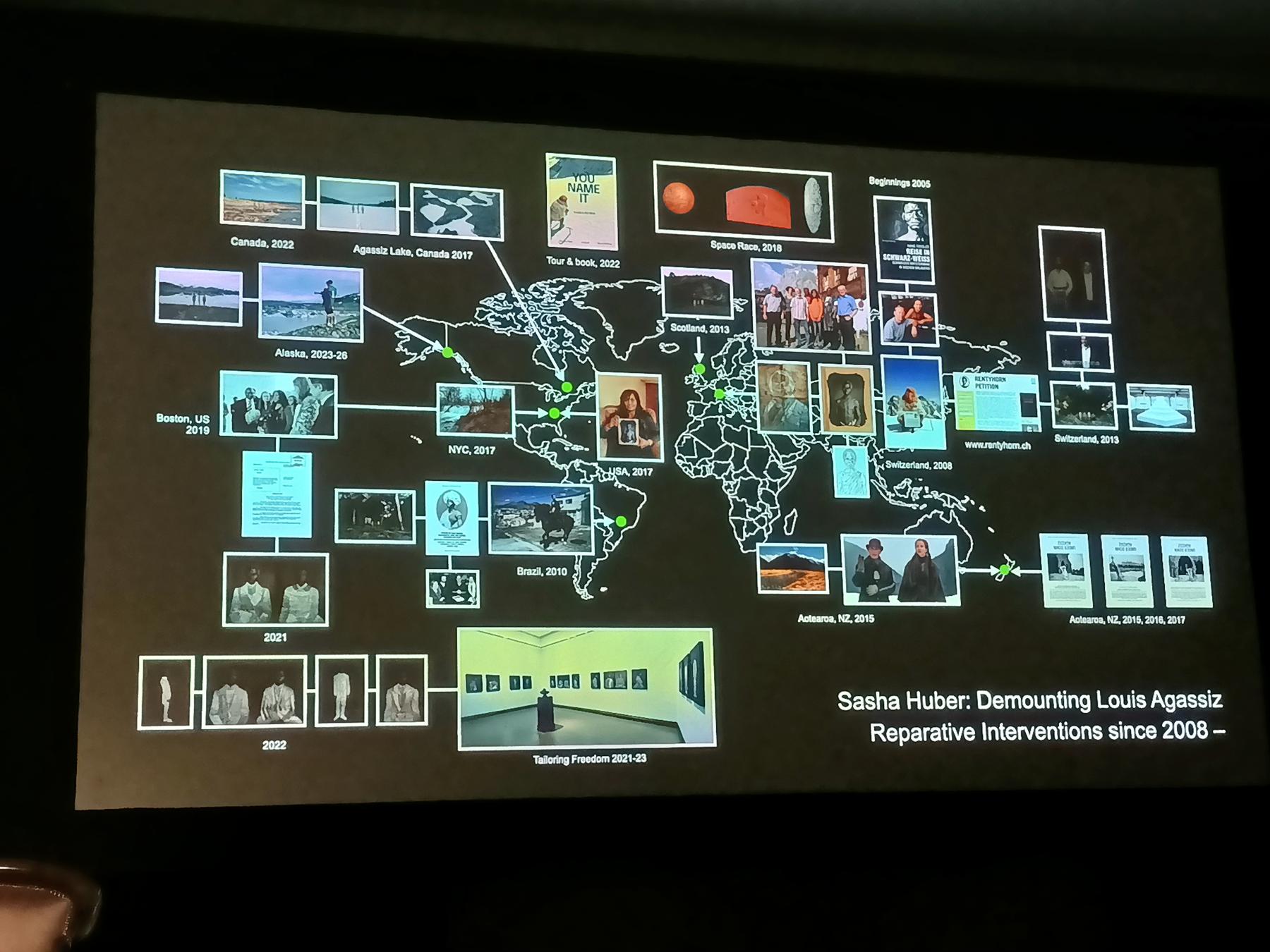
The only images Lanier’s family has from that era are dehumanising photographs taken without consent for racist science. This emotional and political landscape led Huber to revisit the archive and create Tailoring Freedom, dressing Renty Taylor and his daughter Delia in clothing inspired by Frederick Douglass, Harriet Tubman and Sojourner Truth. She later extended the series to all seven photographed by Zealy, though no descendants have emerged to fight for their freedom.
On 28 May this year, Harvard agreed to relinquish the Zealy photograph series to the International African American Museum in Charleston, South Carolina, where the photographs were originally taken. Huber hopes Tailoring Freedom can travel alongside them as a unified collection. She echoed that while we cannot change the past, we can challenge how it shapes the present.
Then, in the second talk, African studies scholar, social justice activist, and memory studies practitioner Siona O’Connell examined three South African photographers who documented apartheid-era resistance. She urged us to confront selective solidarity with historical struggles while ignoring contemporary human rights abuses.
“How can photographs with patterns of oppression persisting across borders and generations move us toward justice and freedom?” she asked. Her work, titled Martyrs, Saints and Sellouts (2016), is at PhotoKTM6 and features the work of Benny Gool, Garth Stead and Zubeida Vallie, created in collaboration with O’Connell and supported by Jade Mayne at the UCT Michaelis School of Fine Art.
Part of the curatorial note reads:
"The body language of survival is strikingly similar across contexts: shielding children, expressions of defiance, and collective gestures of resistance. Echoes appear in Gaza, Sudan, and countless other places. Dynamics of selective outrage and geopolitical considerations that allowed apartheid to endure persist in our response to oppression. There can be no hierarchy of suffering or acceptable casualties of convenience.”
While flying over the Himalayas on her way to the festival, O’Connell was struck by how mountains connect rather than divide. Her maternal grandfather came from a small village in Punjab, now Pakistan, a place remade overnight by lines drawn in 1947. But the Himalayas stretch across Afghanistan, India, Nepal, Bhutan and China, indifferent to borders or passports. Her grandfather crossed an ocean carrying these mountains in memory, a geography of loss close enough to remember but too far to return to. He landed in South Africa and named their house in Cape Town Vryheid, meaning “freedom,” something enacted daily, protected fiercely and passed on intentionally.
Her uncle had a darkroom in that house called "Freedom." Through fine-arts studies, the darkroom became a safe space during hardship. The dark taught her that seeing is not simple, and sometimes we must sit in the dark to understand what light refuses to show. “Photography is as much about what happens after the shutter clicks—what we develop and what we choose to show. Most importantly, freedom is a practice, and the camera, like freedom, must be wielded intentionally,” O’Connell claims.
She argued that the camera is a terrible instrument for comfort since it remembers what we would rather forget. It refuses to differentiate between one person’s suffering and another’s. A child’s face marked by loss in Gaza carries the same grammar of grief as a child’s face in Soweto or Aleppo. For her, the camera does not care about geopolitics or “complexity.” It simply shows violence, dispossession and systems grinding people down.
O'Connell called out humans performing moral gymnastics on which demolished home deserves outrage and which child’s face is evidence of injustice. On the other hand, the camera witnessing all of this does not blink.
For many years, Mayne and O’Connell have worked with photographs from South Africa’s liberation struggles, now part of Martyrs, Saints and Sellouts. These photographers pointed their cameras at apartheid machinery: funerals swelling into defiance, children facing armoured vehicles, and the infinite small violences of a system that wanted them erased.
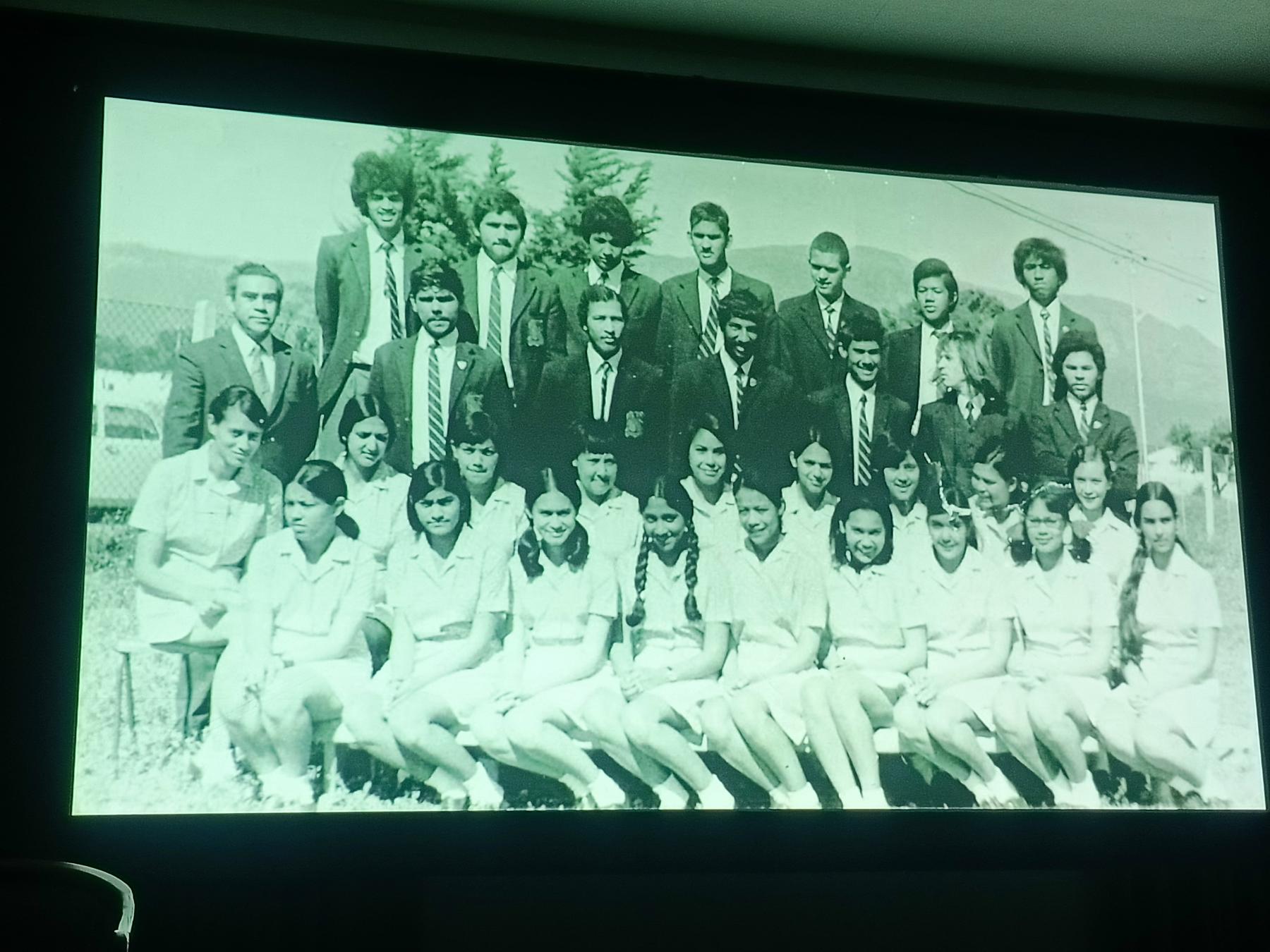
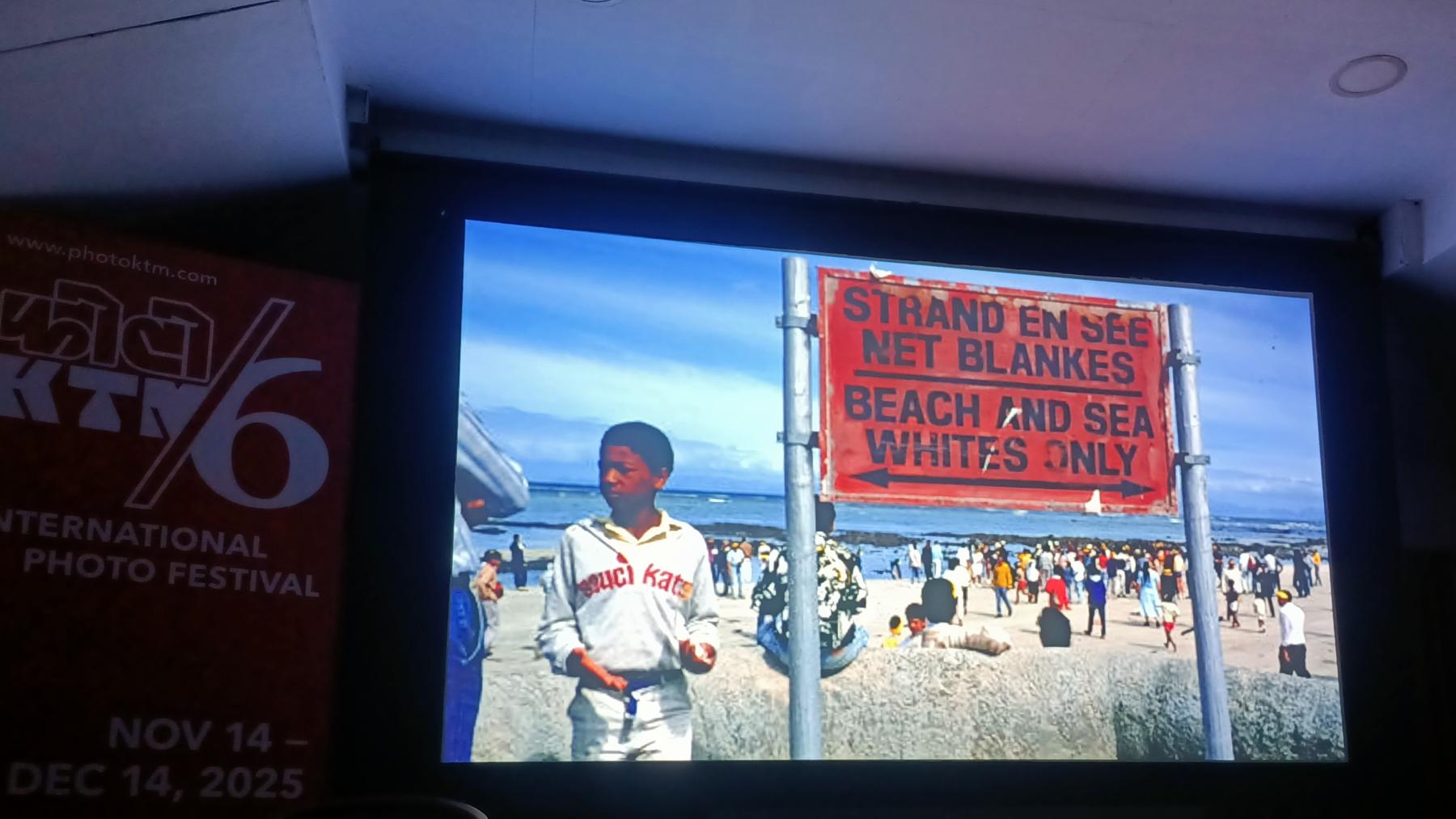
Flying over the mountains, O’Connell realised landscapes teach that what appears fixed or natural is often neither. Wynberg, classified under apartheid as a “Coloured” area, exemplifies how racial categories structured every aspect of life: where people lived, schools, beaches, marriages and futures. Cape Town today remains deeply segregated, a city still shaped by forced removals and spatial engineering. Understanding Wynberg is understanding apartheid’s precision.
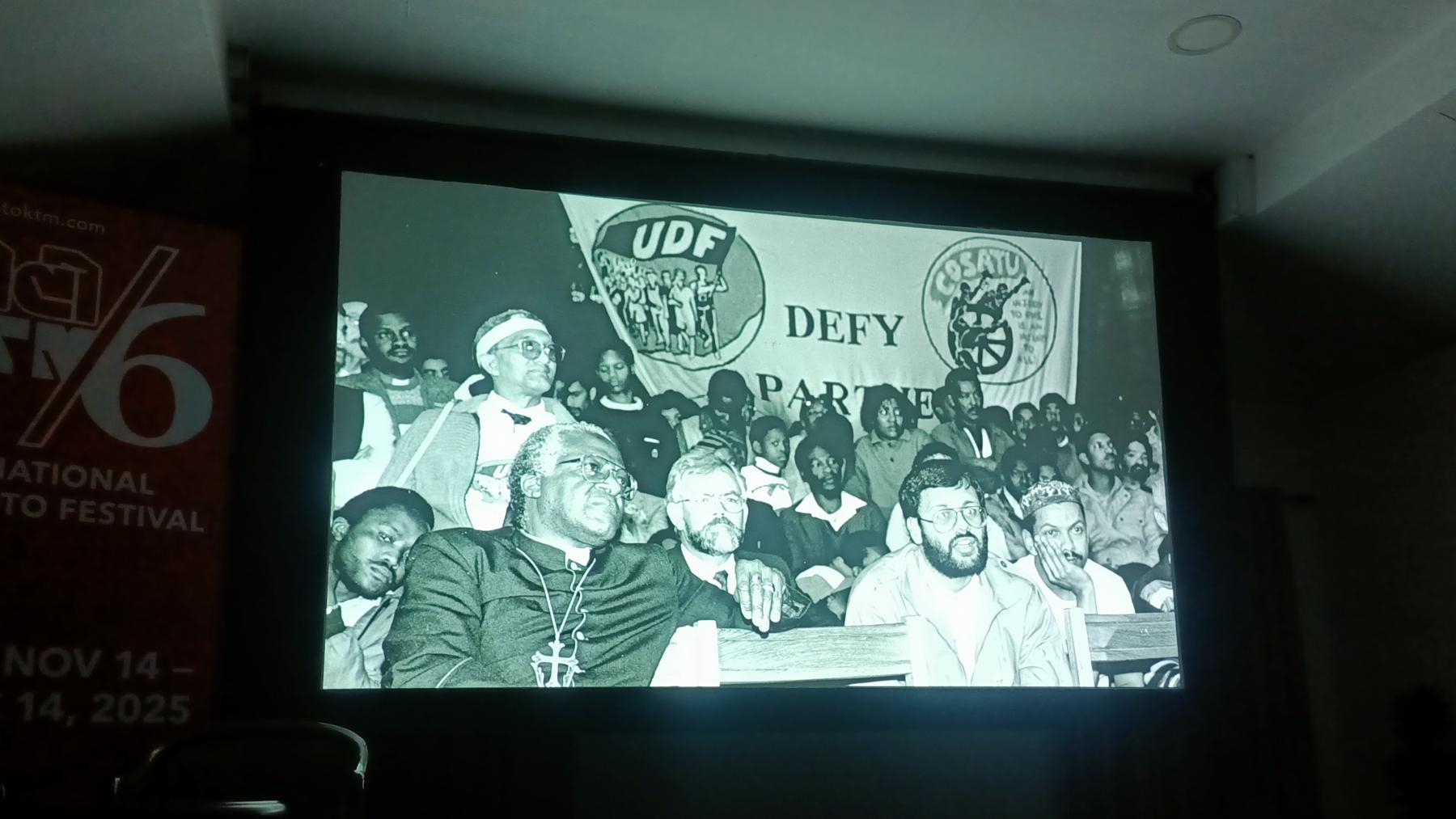
When speaking of “The Wynberg 7”, she described youth shaped by police violence, detention, censorship, poverty and surveillance. “Yet resistance persists: their ability to remember, to locate themselves within collective struggle, and to insist their story be told, even in fragments, even in silence.” For O’Connell, her work is to restore these fragments, honour ordinary acts of courage and show that liberation was won by countless networks, not a single hero.
As O’Connell stood in Nepal, she went back to the idea of connection. The Himalayas reminded her that landscapes hold histories larger than borders. South African resistance is not separate from struggles in Palestine, Sudan, Kashmir, or elsewhere. She hopes photography helps us recognise patterns not as distant tragedies, but as shared responsibilities. The question returns repeatedly: will we choose to be witnesses or accomplices to injustice?
Both Huber and O’Connell share a connecting thread of using art as a tool of justice. They confront archives and images shaped by violence, exclusion, or colonial power, asking whose stories are told and whose are erased. In essence, their work traces patterns of oppression and resistance across time and space, exposing the never-ending impacts of structural injustice.
To learn more about PhotoKTM6, read Mallika Visvanathan’s conversation with Diwas Raja KC on the approach of the curatorial team.
To learn more about the previous edition of the festival, read Shranup Tandukar’s reflections on Amar Kanwar’s The Sovereign Forest and Srizu Bajracharya’s essay on fostering community, poignantly depicted in Fazal Rizvi and Aziz Sohail’s lecture-performance. Also watch episodes of In Person featuring the artists in residence at the Jatayu Vulture Restaurant, the KTK-Belt Project and Mónica Alcázar-Duarte about their works on display at PhotoKTM5.
All images courtesy of the author.