

On Global South Solidarities: Diwas Raja KC on PhotoKTM6
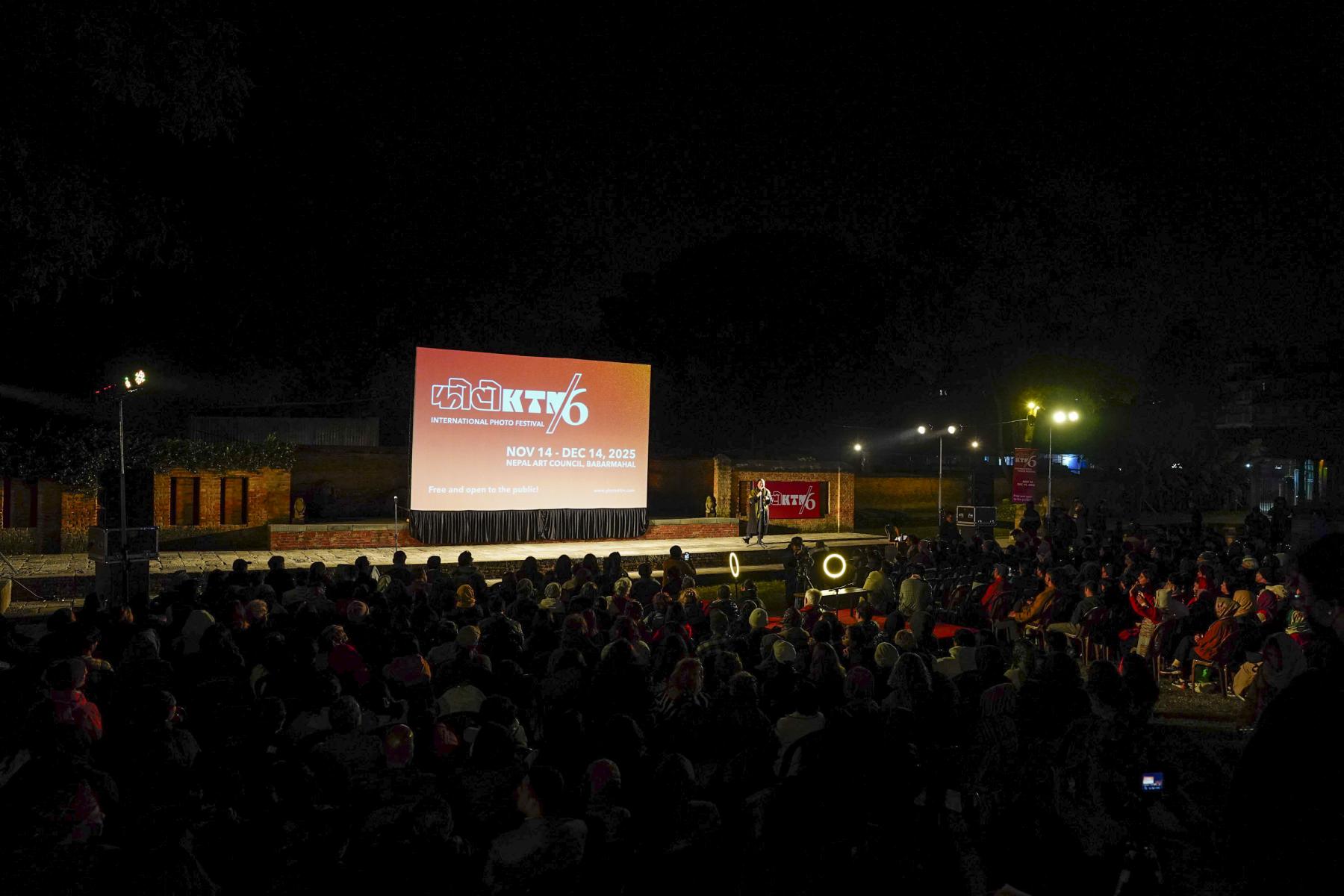
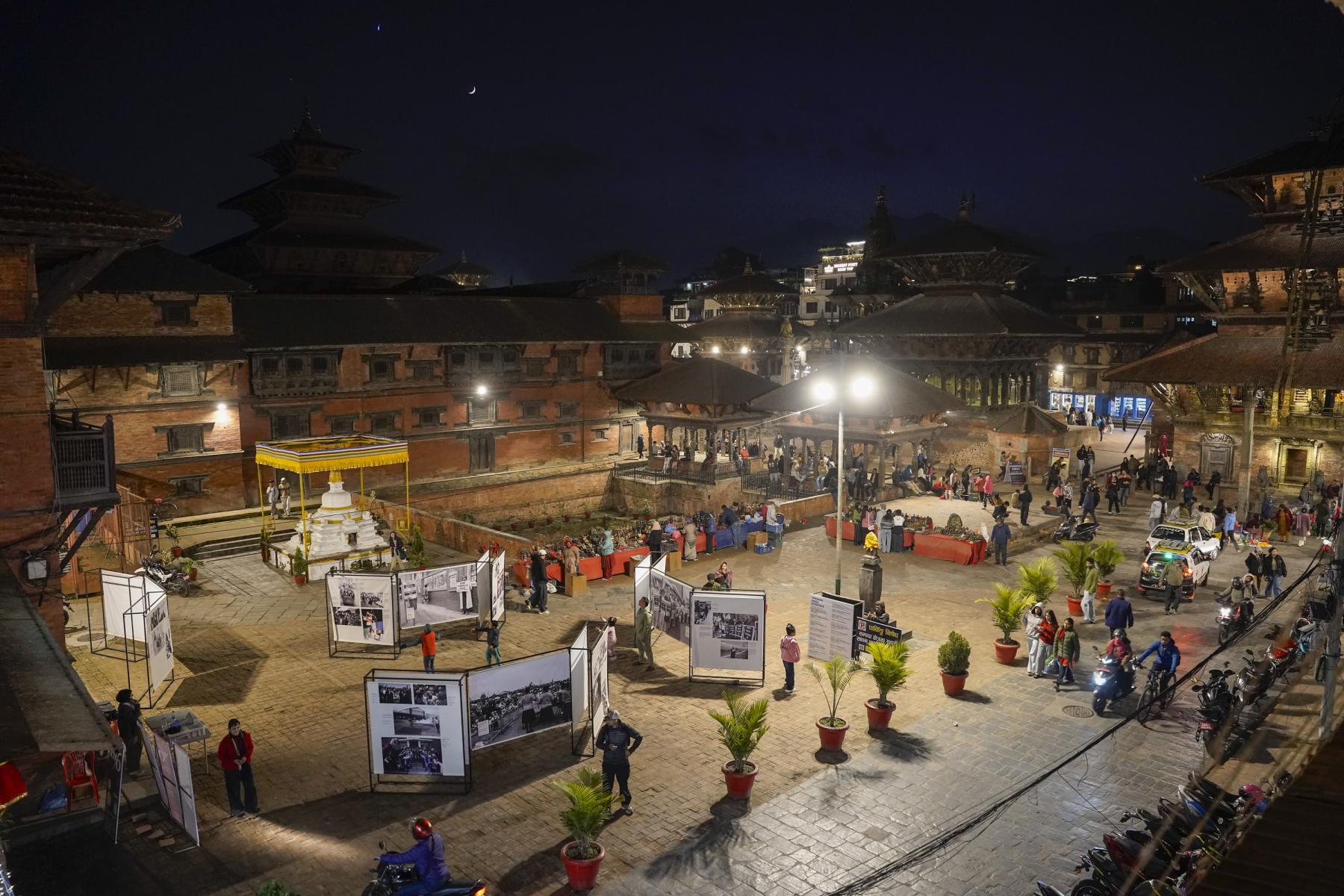
The sixth edition of PhotoKathmandu (PhotoKTM6) opened on 14 November 2025 and is on view till 14 December 2025 at the Nepal Art Council in Kathmandu. With the theme of Global South solidarity, the festival has reiterated the necessity of having dialogues and conversations between diverse artists and approaches to collectivisation through a series of public programmes accompanying the exhibitions. In this edited conversation, Diwas Raja KC, a member of the festival curatorial team, discusses what it means to critically engage with the moment we live in, create spaces for South-South solidarity and look to the legacy of the Third World as a creative resource.
Mallika Visvanathan (MV): This edition of PhotoKTM focuses on Global South solidarity. Could you tell us about your approach as part of the curatorial team and why it is crucial at this moment in time?
Diwas Raja KC (DR): There have been a couple of sources for why this particular theme became the focus for this edition of the festival. The broader conversation around solidarity is something that we have been engaged in for many years. In fact, if you look at the work we have done through the Nepal Picture Library, including Dalit Quest for Dignity and The Feminist Memory Project, a lot of the articulation about solidarity has come from being in those spaces with activists from different movements. That has shaped both the work we do and the kind of vision of the world that we imagine ourselves contributing to. Such investigations and conversations around intersectionality have been part of why and how we have been talking about solidarity.
Yet it became all the more crucial when the genocide started in Palestine. We really wanted to do something, but we are not able to do anything apart from just seeing the level of violence and what it reveals about the world order or about our place in the world. Things have really shifted in the last two years because of that. We started organising protests in Nepal in support of Palestine. For the last one and a half years, we have been trying to reach out to other communities and to politicians to see what kind of impact we can have through our solidarity for Palestine. We have been involved in creating spaces to engage with Palestinian artists and civil society not just through the festival and through our organisation, but as people in this society. Part of our conception and understanding of solidarity comes from the frustration that emerged within that space—of not being able to have an impact on the world that we want to see and create.
Several of us began to feel that the only way we can begin to address this is to return to some of the historical resources, especially Third World history. And by returning to the Bandung Conference, for instance, to learn from the vision that came out of that about how to face the incredible world-dominating structures, or systems that are in the place of Empire. We are trying to embed this in the longer project of solidarity building as well. We really feel that something needs to shift in the world order.
The way we can create space for our own voices is through committing once again to a project of Global South solidarity. That is one kind of thinking behind it. The other also, I would say, is the realisation of how much we are caught up by the economic and financial structures through which we function. That is the grants that we receive and consequences they have both in the programming we do and also our attitudes in what we say or do not say. This festival has also been an opportunity for us to rethink how we function and what we can do to revise our dependencies on specifically Western sources. As the world shifts, how do we situate or position ourselves so that we can function in a way that is different from the status quo right now? The wish to front and centre Global South solidarity really comes from that. We see this as an opportunity to build direct connections with other artists and communities in the Global South.
For instance all of us would travel to, let's say, Europe to a biennale, and that's a chance to meet a Nigerian artist or a South African artist. And somehow all of that is being channelled through the West, and the West, gets to hoard and shore up cultural capital through these associations and through what we do and what we want to do. So I think it's sort of a provocation, or what we are suggesting is that we might need to build institutions so that direct South-to-South exchanges can take place, and so that we have cultural institutions and cultural self-representations, forms of doing cultural work that can be founded in these other visions of South-to-South collaborations.
We really feel that the third world needs to come together once again. And that is the only guarantee against the imperial domination that functions in the world right now with full impunity, without accountability, where there is no longer even that pretence of liberal civilisational ideas. I feel like we are in a place now where the West is completely giving up on that and turning to not hegemony, but domination, as Gramsci used to say. So, yeah, I think part of it is also about how do we, as people belonging to the third world, can situate ourselves in the world that is coming.
MV: Speaking of the Third World, you curated the “Third Camera” series. I was curious about how you are thinking about the legacy of the Third World and the scope of this especially since Third Cinema has a particular connotation.
DR: Part of the suggestion specifically through Third Cinema is that we need to reach out to other kinds of cultural expressions and experimentation—something that I feel Third Cinema did really well. It started in a time in world history where a lot of countries were just gaining their independence from colonial rule and a lot of filmmakers and artists were wielding the camera and these technologies as a means to experiment with form and also to figure out how to tell stories of the Third World. A lot of them have very strong political commitments as well. They wanted to document and present that experience of gaining independence, anti-colonial struggles, but also a commitment to the people of the Third World—the masses. And we know that the reception of filmmakers who were initially influenced by these ideas have not really played out in a way that aligns with the manifesto of Third Cinema, given that a lot of them ended up in these very niche art circles. So what that would mean is consumption by the elites, whereas the intention really was to speak to the masses.
The curated series is also a gesture that we need a new resource for aesthetics and for cultural influence and inspiration. The image making that happened under Third Cinema is a good resource for us to reach out to. Partly also because Third Cinema was coterminous with the Third World movement—it started with it and died with it. It was the cultural output of the Third World movement along with the Tri-Continental magazine that came out of Cuba being a really crucial anchor for all of this. As was OSPAAAL, which is the Organisation of Solidarity of the Peoples of Africa, Asia and Latin America, that was based in Cuba as well. The posters that came out of that determined or shaped the visual language of the Third World, like images of Che that we continue to see today. As a cultural form, it takes us to that time of a very strong Third World sentiment. And obviously, the Bandung Conference and the non-alignment movement were at the core in terms of political and economic goals such as economic self-determination and sovereignty. Some of these struggles continue, while a lot of our governments have given up on those. The locus has shifted now to indigenous groups as as the champions of sovereignty, sovereign rule and self-determination are the indigenous people.
How do we connect the current conversations we are having about decolonisation with its deeper history? The earlier decolonisation, which is what the Third World movement was about, had a lot of problems. Their project of decolonisation was never completed. Maybe it did not even take off properly. But it is also a way for us to say that this is a longer history that we are part of. And I think a lot of that is meant to centre Palestine for us. If you understand the history of Palestine, you realise how central it is as an anchor to understand what has happened in the world from 1945 onwards, including the shape of the world, the form of imperial domination and the limits of self-determination. All of that becomes so clear when we focus our attention on Palestine, as we have gotten to do in the last two years.
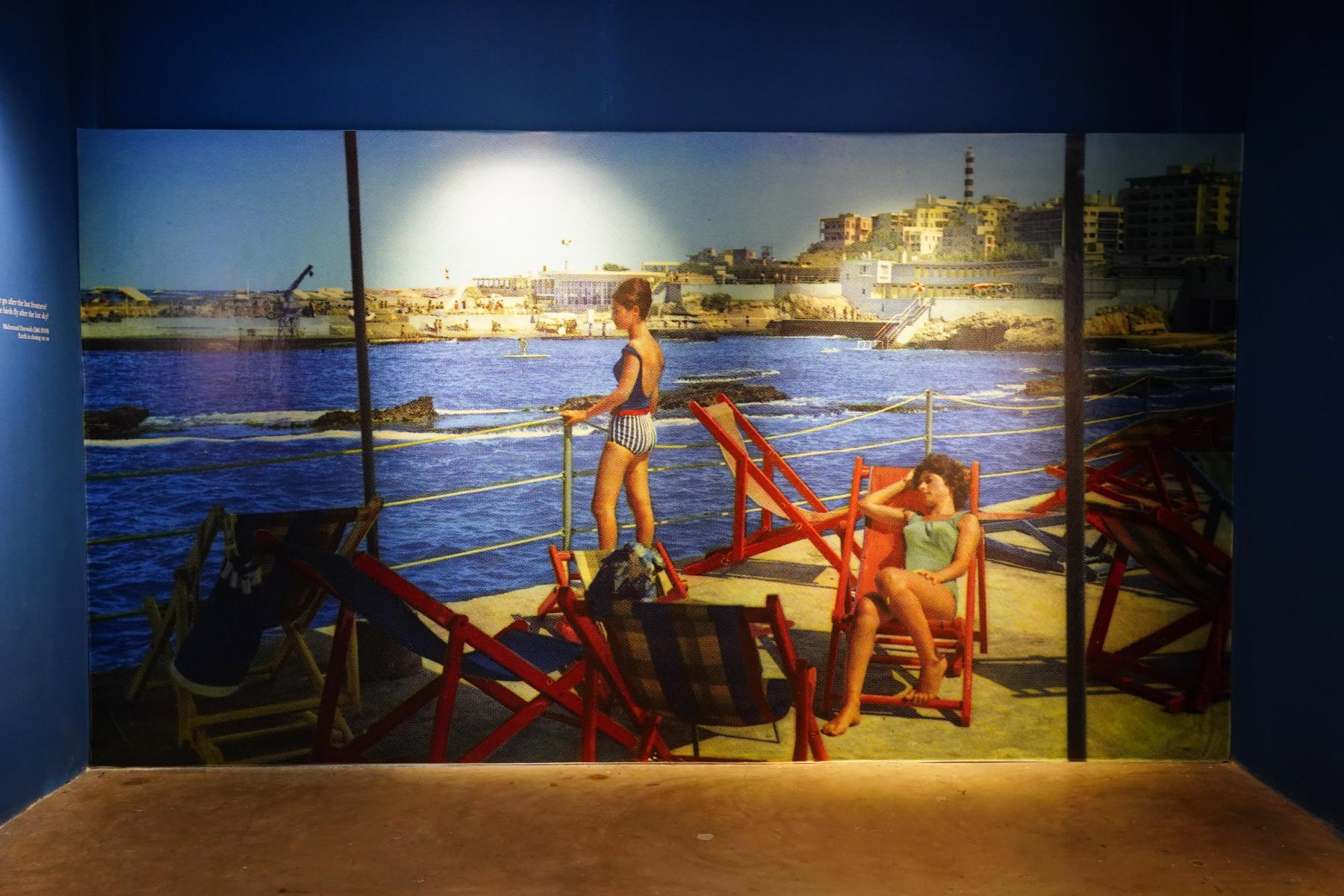
MV: The Nepal Picture Library recently showcased works from The Feminist Memory Project at the MoMA, as part of Lines of Belonging. Can you share that experience of showing the work at the MoMA?
DR: We are extremely thankful, specifically to Lucy Gallun, who visited us during the Photo KTM 2023. She has really championed the work, especially the Feminist Memory Project. What has also helped is that we published the book the same year. The book really has had an impact in a way that the exhibition did not have before because it reaches more people in a new format. We won the Paris Photo Award that year and partly because of that, the work got recognised, especially in the Western circles a little bit.
We are extremely thrilled by the prospect that the diasporic Nepali communities and others in New York might have a chance to encounter this work. The curatorial team at MoMA has been very great about collaboration and has really listened to us about the ethos and the commitments of the work and what it would mean to present a work like this in a space like MoMA.
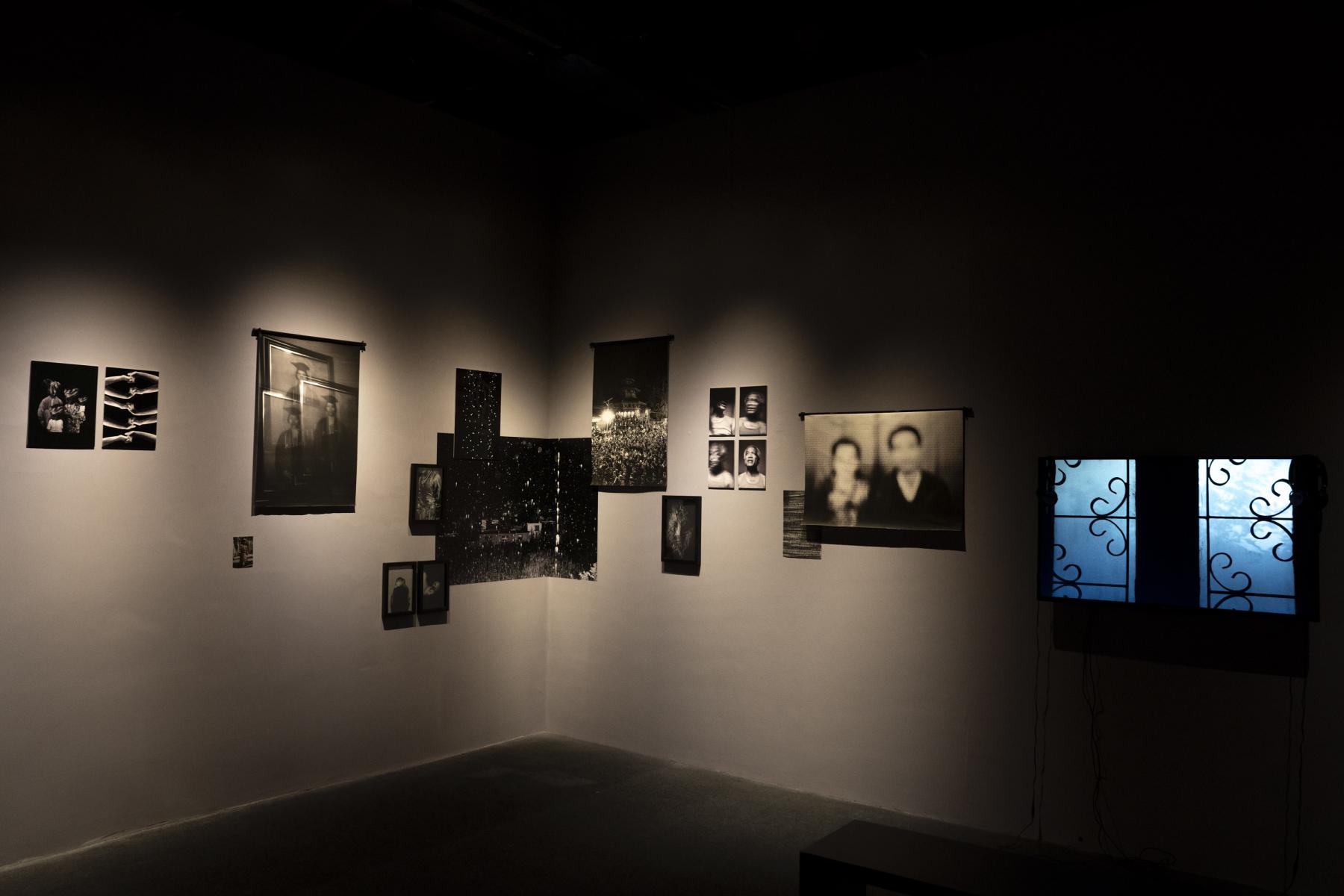
MV: What are some of the lessons or learnings that have emerged from the conversations or the dialogue at PhotoKTM6 so far?
DR: So, it is still ongoing for us. We have not had time to step back and reflect on what has happened over the course of the festival so far. That will happen in the months after the festival. Also, with regard to the new relationships that have been built during this course, what kind of longevity they will have, what kind of continuity they will have.
The Third Camera programming is very African-centric and compels us to really think about what this commitment to solidarity might mean in terms of direct relationship with artists and art communities in Africa and elsewhere in Latin America and other places, too. But also I think that in the kind of world we are in right now, the way that the art world functions, which involves a lot of travelling, for instance, is not sustainable. So we all have to figure out ways to do things here locally, have projects here, but have an embeddedness in these political commitments and visions of the world.
Those are things that I personally want to do through the Nepal Picture Library. In India, we have got a lot of interest from Kashmir and the Northeast because the work we do is counter-historical. It looks at how to build counter-narratives that can help us negotiate with the politics that we live in. We want to continue to empower other movements, other archives and other communities. These are all easier said than done, they are still funding-dependent. What we have learned are some of the ways we conceive our projects, about the subject matters we choose, those matter in these kinds of calculations.
To learn more about previous editions of PhotoKTM, read Ketaki Varma's conversation with NayanTara Gurung Kakshapati on art as collective action, Shranup Tandukar's reflections on Pooja Gurung and Bibhusan Basnet's films and Arundhati Chauhan's conversation with Mónica Alcázar-Duarte.