


In Panj Pirs: The Still Living Songs of the Saints
Travelling across the line that separates India from Pakistan, the first part of the essay examined the complex dynamics at play in three Sufi dargahs (shrines) in Jammu, ‘the City of Temples.’ This is a continuing reflection on the deep and scarring legacy of Partition on Jammu and its inhabitants.
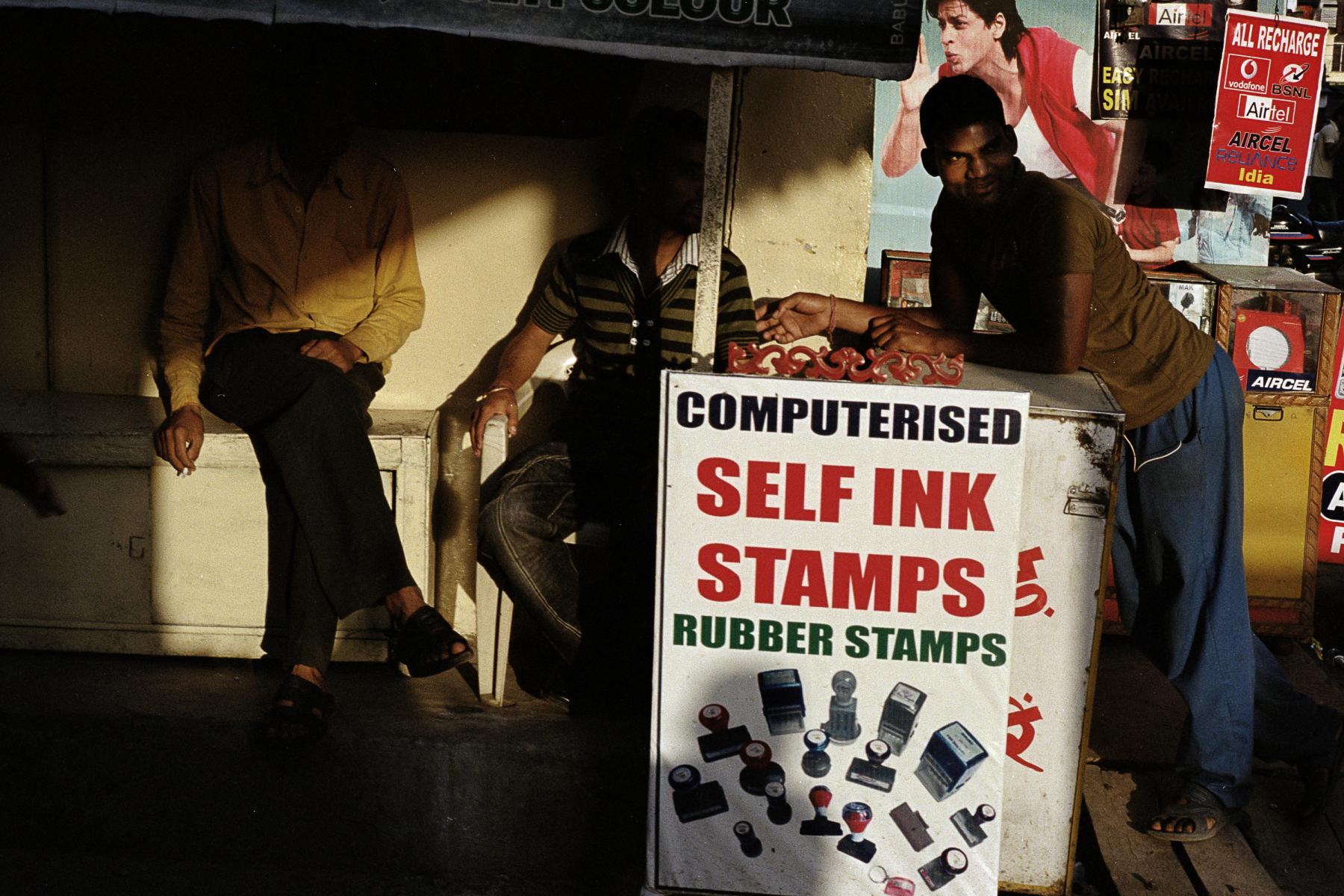
I stand at the side of a mountain road, by the shrine of the Panj Pirs—dedicated to five Sufi saints—built on a cliff that drops down to the broad bed of the Jhelum river. Behind me, every few minutes, a loaded bus or car drives by slowly as the occupants bend their heads and clasp their hands in reverence to the saints. Many use this road to get to the Vaishno Devi temple, one of Hinduism’s holiest shrines. The same road takes you to the besieged city of Srinagar in that ‘other’ Kashmir. It is late afternoon, and a few devotees are present at the shrine itself.
In his book, Sacred Spaces: Exploring Traditions of Shared Faith in India (2003), the writer and academic Yoginder Sikand notes that a Hindu mutawalli (caretaker) oversees the shrine. I ask around, but no one seems to know anything about that. Sikand points out that there are millions of followers of the five holy men, and small stone platforms with five raised, box-like compartments can be found in hundreds of villages and towns throughout North India. The shrine is well known and even fully loaded public buses on their way to and from points in the north reduce their speed to allow passengers to offer darshan (view of a saint or holy image) to the saints. I walk into the shrine’s sanctum and find a young bride sitting with her forehead pressed against one of the graves. Her bright red clothes and henna-covered hands suggest a newlywed. A young man in starched pants and a crisp yellow shirt stands smoking a cigarette outside. The groom? He and a few friends are on the terrace, looking out over the cliff and towards the imposing Ranbireshwar temple, which sits on the opposite bank of the river.
“This is a good place to come with friends and some cigarettes,” I hear Ranjit, the local journalist and friend who drove me here, say mischievously.
“All these beautiful young brides to admire!”
He breaks into laughter.
"When the neighbourhood was attacked, some members of the minority community were killed. The survivors fled. A couple, however, sought refuge in the cellar of their own house. For two days and nights, they waited in vain for the assailants. Two more days passed. They were much less afraid of death. They longed for food and water. Four more days went by. By then, the couple were no longer concerned with life or death. They came out of hiding. The husband tried to draw the people’s attention. ‘Please kill us. We’ve come to surrender,’ he said in a feeble voice. ‘Killing is a sin in our religion.’ They were Jains. They discussed the matter and handed over the couple to the people of another neighbourhood for ‘appropriate action’.”
-Saadat Hasan Manto
Suketa Mehta wrote that we killed each other because we loved each other. It was the murderous rage of a lover betrayed. The realisation of the unfaithfulness of someone we would have died for was too much to bear. I agree with him, because it is love that has allowed the shrines of these Sufi saints to survive one of the great cataclysms of human history.
In the otherwise nondescript city of Faridkot, I stood and watched throngs of Sikh devotees at the shrine of Baba Farid, a highly influential Chisti saint from the region of Pakpattan in what is now Pakistan. His followers were scattered throughout the entire area, spanning both Pakistan and India. Baba Farid’s poetic compositions have been incorporated into Sikhism’s holiest book, the Guru Granth Sahib. Across the border in Pakistan, I had travelled to interview the family of a suspect of an act of violence, who, coincidentally, was from a town also called Faridkot in Khanewal, Punjab.
“We are followers of the Baba,” a village elder told me when I questioned him about the presence of this suspect in his village.
“How could we, or our children, be involved in such activities?”
Baba Farid’s verses repeatedly speak of forgiveness and compassion:
"Farid, if you are wise, then do not write evil against others
Look into your own heart instead
Farid, do not turn and strike those who strike you
Kiss their feet, and return to your own home.”
Who else, then, was speaking to the children of the Baba?
“The governments have their own ideas of the story,” Mehta argued. “And they have the power of the state to spread their version through textbooks.” Today, it is not just textbooks that play this role. Regardless of the medium, the story of India's Partition remains one we prefer not to face. It is far easier and far more jingoistic to celebrate “independence” and a victorious arrival into History. Yet, this death-soaked arrival cannot shed its dark shadow. Instead, suspicion, hate and acrimony continue to run through our veins as we feign triumph.
Across this blood-soaked frontier, the Sufi saints still sing their songs, reminding us of the possibilities that remain for bridging the divide that has plagued this region for centuries. Ironically, I find that in Jammu, it is the city’s Muslims who are least prepared to hear the songs of the men who first brought Islam to this land and helped unite all its people under their words of tolerance and love. The shrines are shunned by Islam’s self-declared orthodox. Their rigid and simplistically canonical readings of the holy books preclude their participation in Sufi practices and traditions. On the other hand, Jammu remains a staunchly Hindu city, the forces of Hindutva shrill and seductive. And between these two blind armies of righteousness, the saints sing their little songs, as their shrines are lovingly and discreetly cared for by devotees from the entire breadth of India’s marvellous complexity and diversity. And they wait for the day when people may once again hear and understand those old lessons that are more relevant than ever before.
In case you missed the first part of the essay, you can read it here.
To learn more about representations of Kashmir, read Mehran Qureshi’s two-part essay on Kashmir as Poem and (Impossible) Picture, Najrin Islam’s essay on Moonis Ahmad Shah’s series Gul-e-Curfew (2021) and Irtiza Malik's work of fiction “Kitna Yaad Thayega?”
All images were taken in Jammu in 2009–10. Images by and courtesy of Asim Rafiqui.