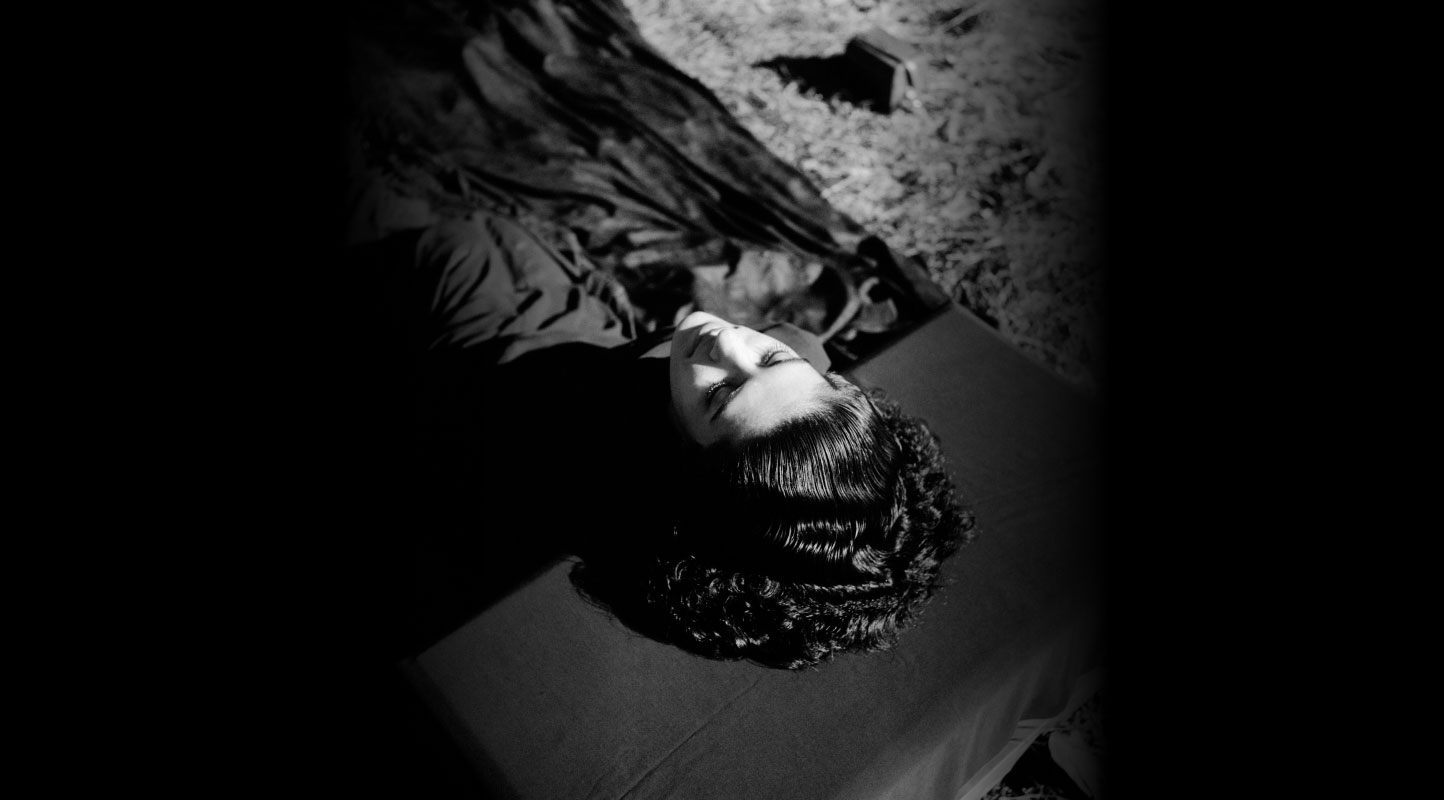


Sufi Shrines: In the Silences of a Blood-Soaked Frontier
The line that separates Pakistani Punjab from Indian Punjab has a million stories to tell, and all of them are of suffering, murder, mutilation, rape, hate, dispossession and displacement. Even though efforts have been made to record these stories, the fact is that the testimonies of Partition remain poorly catalogued, despite the centrality of this event in the history of modern India and Pakistan. It is as if the memories and realisations of the survivors are too complex to discuss even now. But by their silence, the generations of Partition have left us with a greater opportunity to repeat these mistakes. They have, in some ways, denied us the need to examine the historical, political, social and colonial factors that led us to this ignominious moment in our history. To say nothing of the fact that the new generation does carry the burdens of that cataclysm in the misunderstandings, hatred, fears and suspicions that still mar relations between India and Pakistan and between their citizens. To say nothing of the obfuscations that continue to taint our histories and those that we teach our future generations.
The horror of 1947 cleansed entire towns of their populations. Yet always along artificially precise sectarian lines. In Jammu, the Muslim majority population was massacred, driving nearly 500,000 refugees into the arms of a newborn Pakistan. By 1947, Jammu was a Hindu city even though the majority of its citizens were registered as Muslims. It was not only the seat of the Dogra rulers, a dynasty that expressed its legitimacy through the idioms and instruments of Hinduism, but also a stronghold of the Rashtriya Swayamsevak Sangh (RSS). As Pakistan looked to become a reality, certain Kashmiris raised their voices for joining the new nation. The Maharaja responded with a general massacre of Jammu’s Muslim population, resulting in nearly 200,000 deaths. Jammu became a Hindu city, the famous ‘City of Temples.’ A revolt in the Poonch led to the creation of what is known as Azad Kashmir. The children of those massacred and displaced now live within sight of this town, in and around Pakistani cities like Sialkot, Gujranwala and Muzaffarabad. It is here, along this bitter frontier, that organisations like the Lashkar-e-Taiba find their candidates.
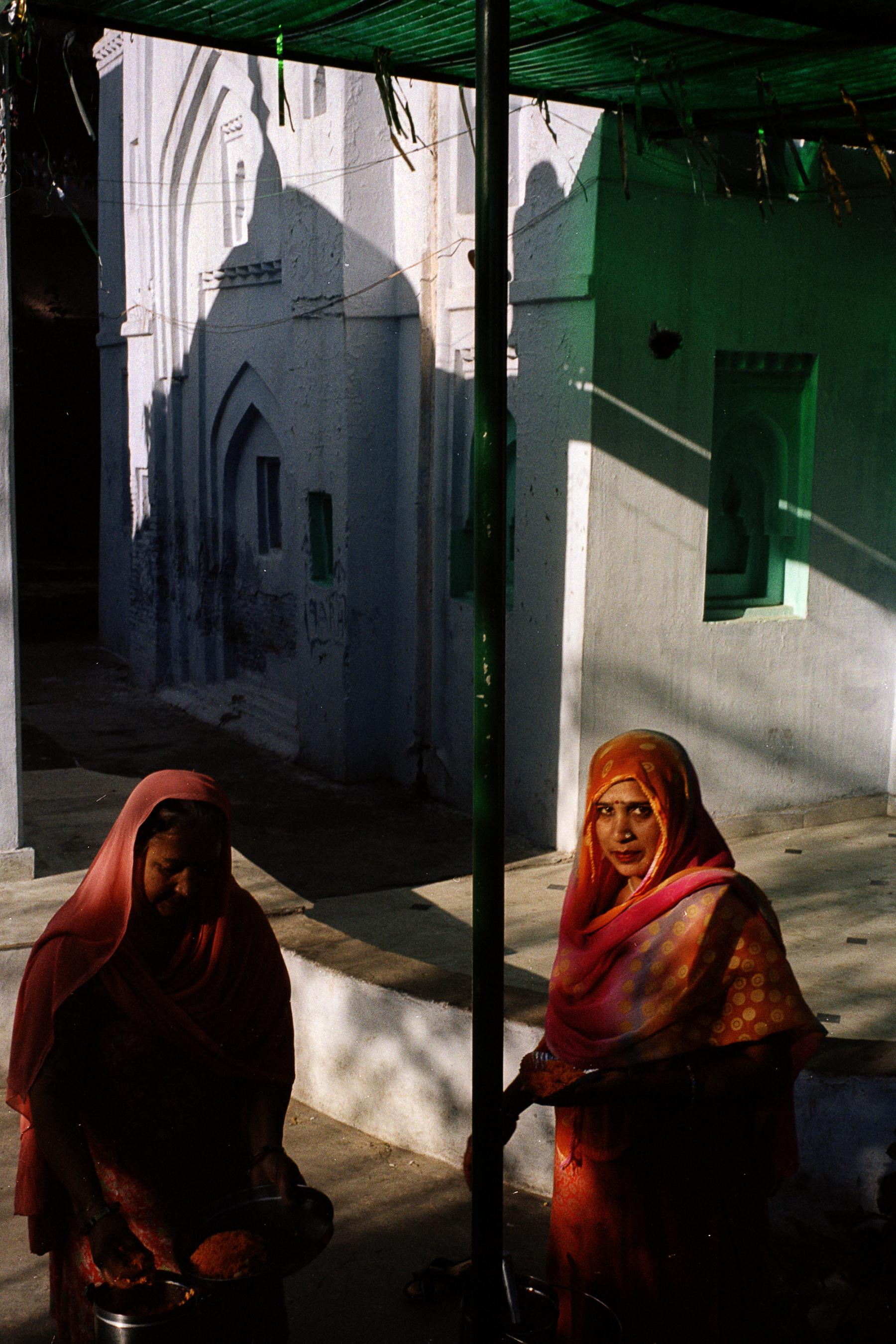
Even though a majority of Jammu’s Muslims were killed, the legacy of the Muslims still survives in this ‘City of Temples.’ Sufi dargahs (shrines) continue to flourish here, frequented by pilgrims of various faiths such as Hindus, Muslims and Sikhs, apart from politicians and those seeking a quiet place to relax or share gossip with friends. At the shrine of Pir Raushan Ali, possibly the earliest Sufi master to arrive in the city of Jammu, I sit and watch Hindu pilgrims walk by, most on their way to Jammu’s famous temple to the god Rama—Raghunath Mandir. They clasp and raise their hands to their foreheads in reverence to the saint. Occasionally, a family steps across the threshold of the shrine, garlands of marigolds and incense sticks in hand. They approach the inner chamber where the tombstone lies, covered in layers of silk cloth and surrounded by blessings of flowers.
The mutawalli (caretaker) is serenely indifferent to the comings and goings, sitting in a corner, sipping his tea and staring into the distance. Legend has it that after the death of the Pir, the shrine was constructed by a Hindu devotee, Raja Sarpala Dharma, the then Hindu ruler of Jammu.
“Prasad (blessed offering)?” I look up to see an elderly Hindu woman holding a fistful of sweet rice in her hands. I smile and accept her gift. She turns, bows to the saint and walks out into the market.
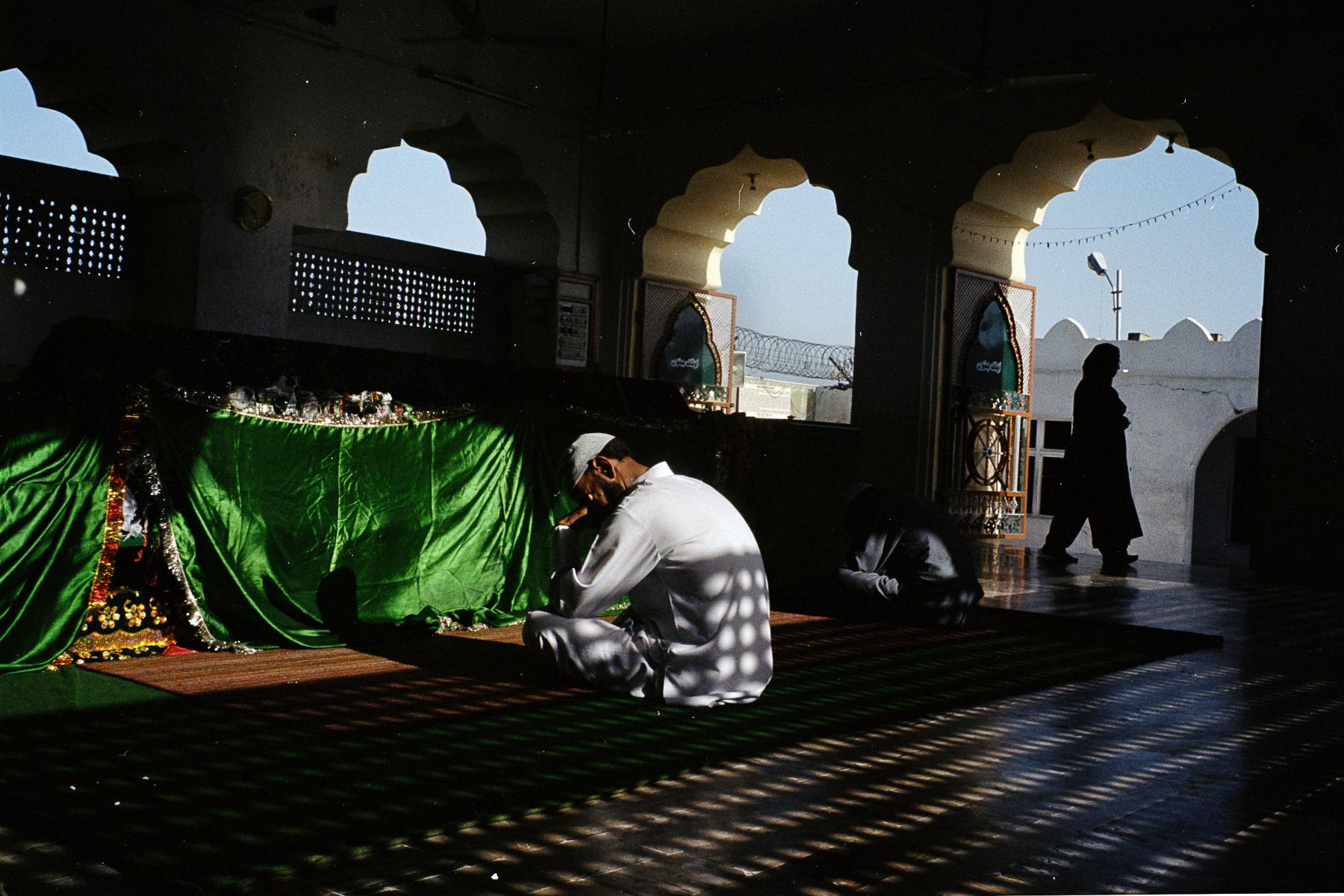
“They wanted to move the shrine. But they could not.” The mutawalli of the shrine of Baba Budhan Ali had a look of satisfaction on his face as he told his tale. “When the engineers started to move the dome, they were overcome by a sweet aroma coming from the shrine.” His audience, four young men from Srinagar, held on to their cups of tea but did not drink. “One of the engineers told the others to leave and reported the situation to his superiors. They then decided to leave the shrine where it was!” He has hardly stopped speaking when the deafening roar of a passenger jet coming to land forces us to cover our ears. The airport and the runway were extended, but rather than move the shrine of Baba Budhan Ali, they constructed around it. The landing gear of the jets touches the earth a dozen or so metres from where the shrine’s main hall stands. Every half hour or so, the noise of their screaming engines tears through the solemn and devout atmosphere of the shrine. The devotees, many of whom are either Sikhs or Hindus, seem resigned to this demeaning interruption of their prayers and contemplations. The Baba may prefer to move if given another opportunity.
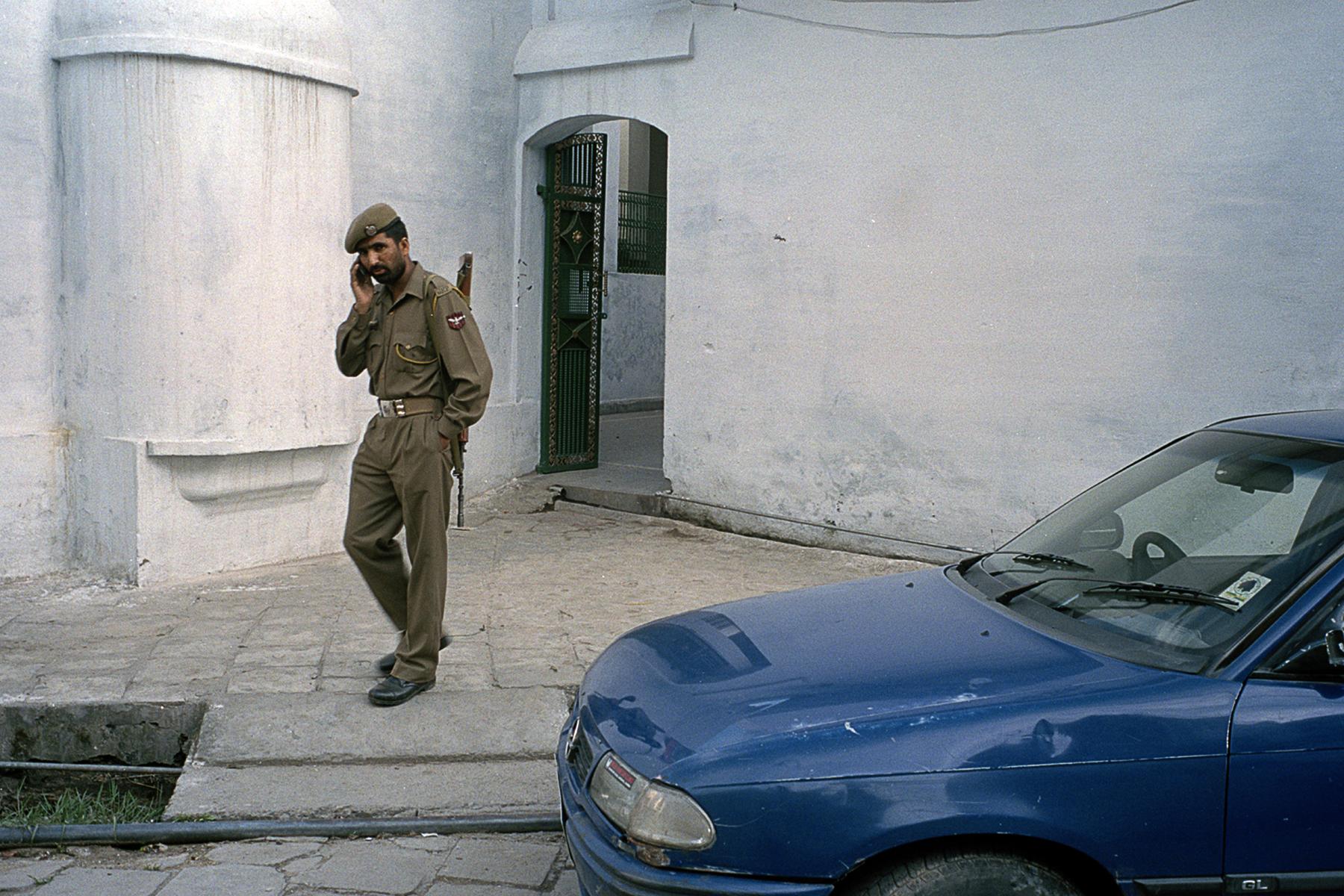
On the other side of the road leading up to the shrine are Indian military barracks, complete with barbed wire fences, security checkpoints and soldiers watching all movement on the streets. I had approached it nervously a few hours earlier, concerned that they would turn me away from visiting the shrine. Friends had already warned me that I would never be allowed to take pictures so close to a military base and an airport that also served the Indian Army Air Command. But the security posts were not for visitors to the shrine, and I had managed to walk in without being questioned. Now I was sharing a cup of tea with the mutawalli, who had earlier welcomed me as his guest and insisted that I partake of a cup of tea. In between his stories, devotees come up to him and quietly whisper into his ear, asking for a private moment. He excused himself to sit with them in a corner of the courtyard, receive their worries and prepare prayers and taweezes (talismans, with writings and prayers from the Quran) to be carried away with them.
I notice two young boys waiting for the mutawalli to give them his attention.
“Why are you here?” I ask after introducing myself.
“No particular reason. Just some worries.”
The younger one who answers is fidgeting and looks nervous. His constant poking has pushed his dastaar (turban) askew.
“What kinds of worries?” I pry. He smiles.
“Life. My family. They keep insisting on my coming back to solve some problem or the other.”
Then, turning towards me, he adds,
“I am studying in Amritsar, but every weekend I have to come home to solve some family problems. I hope Maulana Sahib can pray for me and help resolve this issue.”
“Is it interrupting your studies?” I ask as a way to make conversation.
“No! My love life!”
I was travelling with a book of Saadat Hasan Manto’s short stories, perhaps the finest chronicle of the madness and insanity of the violence of Partition, which will remain an archive of the horrors that will forever haunt us.
"At six in the morning, the man selling ice from a pushcart next to the petrol pump was stabbed to death. His body lay on the road until seven, while water kept falling on it in steady driblets from the melting ice. At a quarter past seven, the police took his body. The ice and blood stayed on the road. A tonga rode past. The child noticed the coagulated blood on the road, pulled at his mother’s sleeve and said, ‘Look, ma, jelly.'"
-Saadat Hasan Manto, "Jelly"
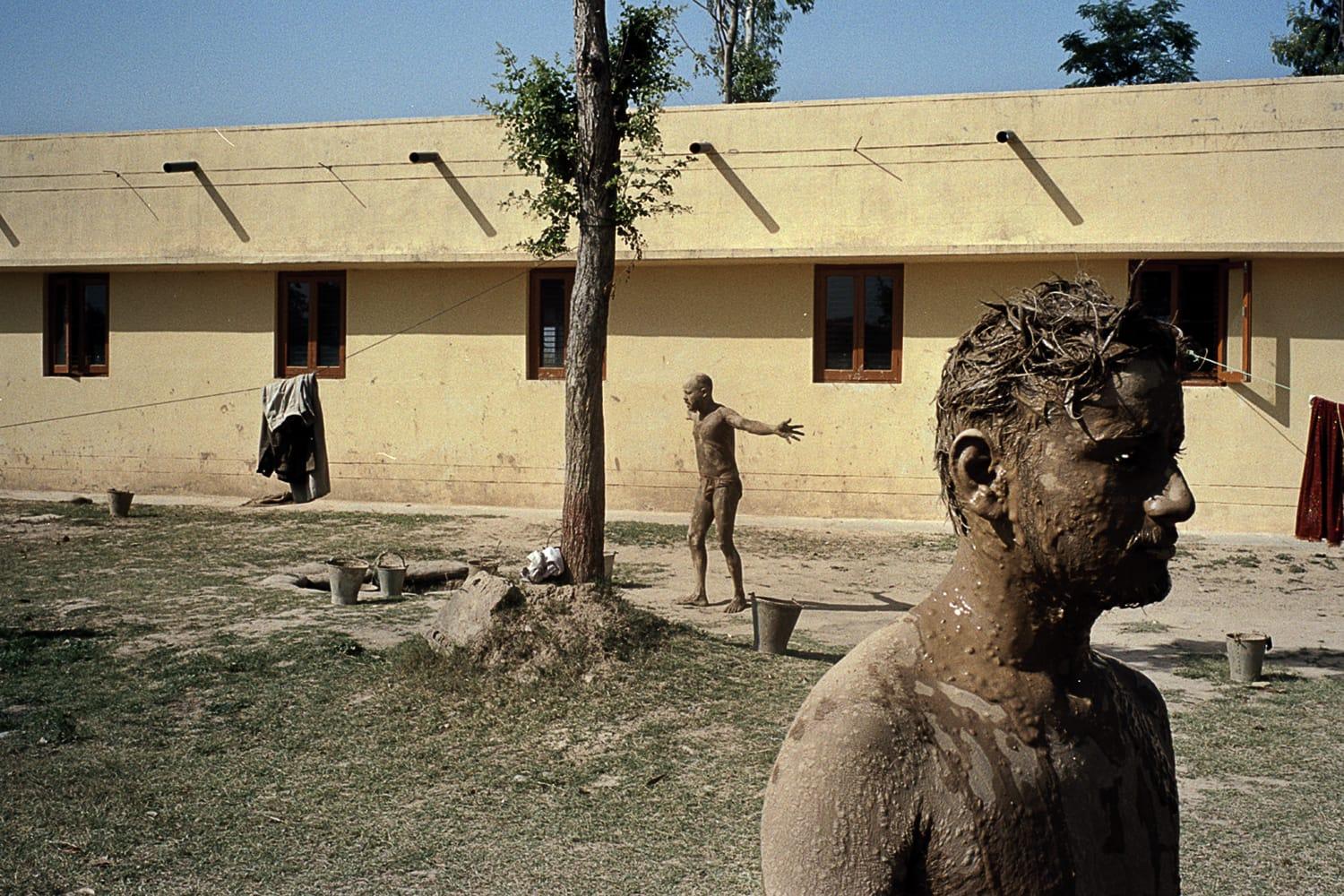
The sacred mud at the shrine of Baba Chamaliyal is worth stopping the war for. Each year, at the annual Urs (celebration on the death anniversary of a Sufi saint, usually held at the saint's dargah) at the shrine of Baba Chamaliyal, the soldiers of the Indian and Pakistani Armies make a small corridor in the otherwise impassable, mined and monitored Line of Control (LOC) to allow buckets of the mud to be transported to devotees on the other side. The sight of gaily dressed Pakistani devotees being handed buckets of the blessed mud and water from the well of the shrine by the Indian Border Security Force (BSF) jawans (soldiers) is nothing short of a miracle, given the mistrust and animosity that mark relations between the two nations the rest of the year. There is another shrine to the Baba on the Pakistani side. Still, legend says that he actually died here, at the shrine on the Indian side of the LOC, which is now surrounded by an Indian BSF cantonment and barracks.
Baba Chamaliyal’s origins are unknown; his life, like that of many of India’s Sufi saints, was shrouded in myths and legends. Some believe that he was a Hindu Rajput called Dalip Singh Minhas, while others think that he was a wandering Sufi dervish. Regardless, his deeds and words found an appeal to individuals of all beliefs and remain so to this day. The massacres that accompanied Partition cleared this side of the LOC of the Baba’s Muslim devotees, but tens of thousands return here for the Urs and wait anxiously to receive blessings from their Baba. The region of Ramgarh, where the shrine is located, is home to an exclusively Hindu population, resulting in the shrine at Chamaliyal being more of a Hindu mandir (temple) than a Sufi dargah. The walls of the shrine’s main sanctum were decorated with images of Hindu deities, and a small altar for puja (worship) had been set up at the foot of the grave.
The young pujari (Hindu priest) was finishing his prayers as I stepped inside and invited me to offer puja. I did. Across the gardens that separated the shrine from the LOC, a group of men lay caked in the sacred mud. Further beyond, BSF guards with binoculars sat torn between their duty to keep an eye on ‘the enemy nation’ across or to peer curiously at the newcomer with the camera. I walked towards them and sat down in the shade of a tree. I sensed that the BSF soldiers were getting nervous and kept edging closer towards me. I was not prepared to confront more rounds of questioning. I tried to appear calm and made some notes.
“Prasad?” It was the pujari holding out dry fruits and nuts towards me. I thanked him and then got up to leave.
“Please stay. We have not had a Muslim here in many weeks.”
“But the soldiers,” I say worriedly, “they appear concerned.”
He looked me in the eye and said,
“I, too, am a soldier—a BSF jawan. Stay. They will not say anything because you are with me.”
I stayed.
To read more about sites of pilgrimage that carry with them complex histories, read Asim Rafiqui’s essay on Ayodhya’s Sufi dargahs and Ninad Pandit’s reflections on the Khandoba temple in Jejuri.
To learn more about representations of Kashmir, read Ayushi Koul’s critical review of Danish Renzu’s Songs of Paradise (2025), Zoya Khan’s curated album from the series Skin of the City (2024–25) and Mehran Qureshi’s two-part essay on Kashmir as Poem and (Impossible) Picture.
All images were taken in Jammu in 2009-10. Images by and courtesy of Asim Rafiqui.