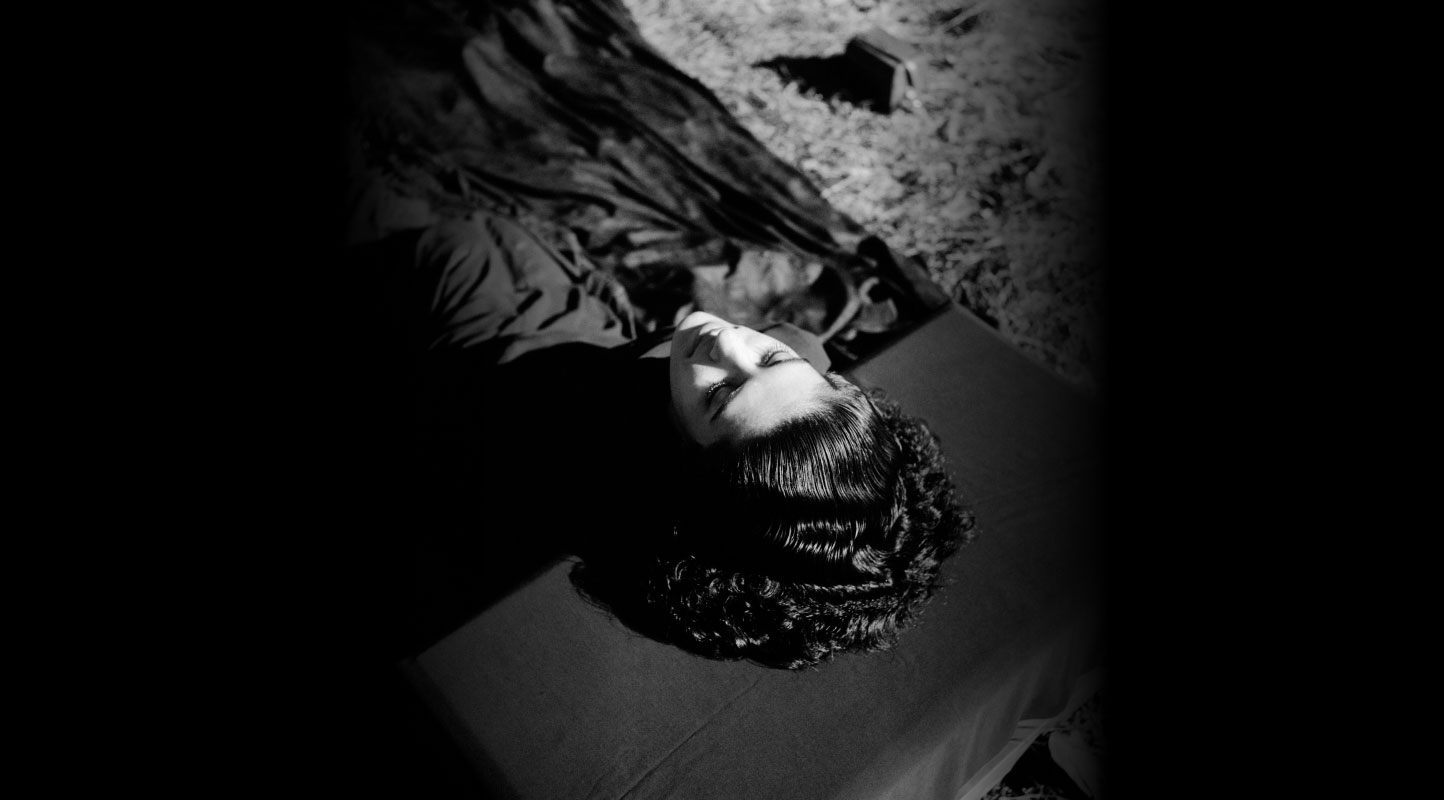


Estranged Fates: Alienation and Arvind Desai Ki Ajeeb Dastaan
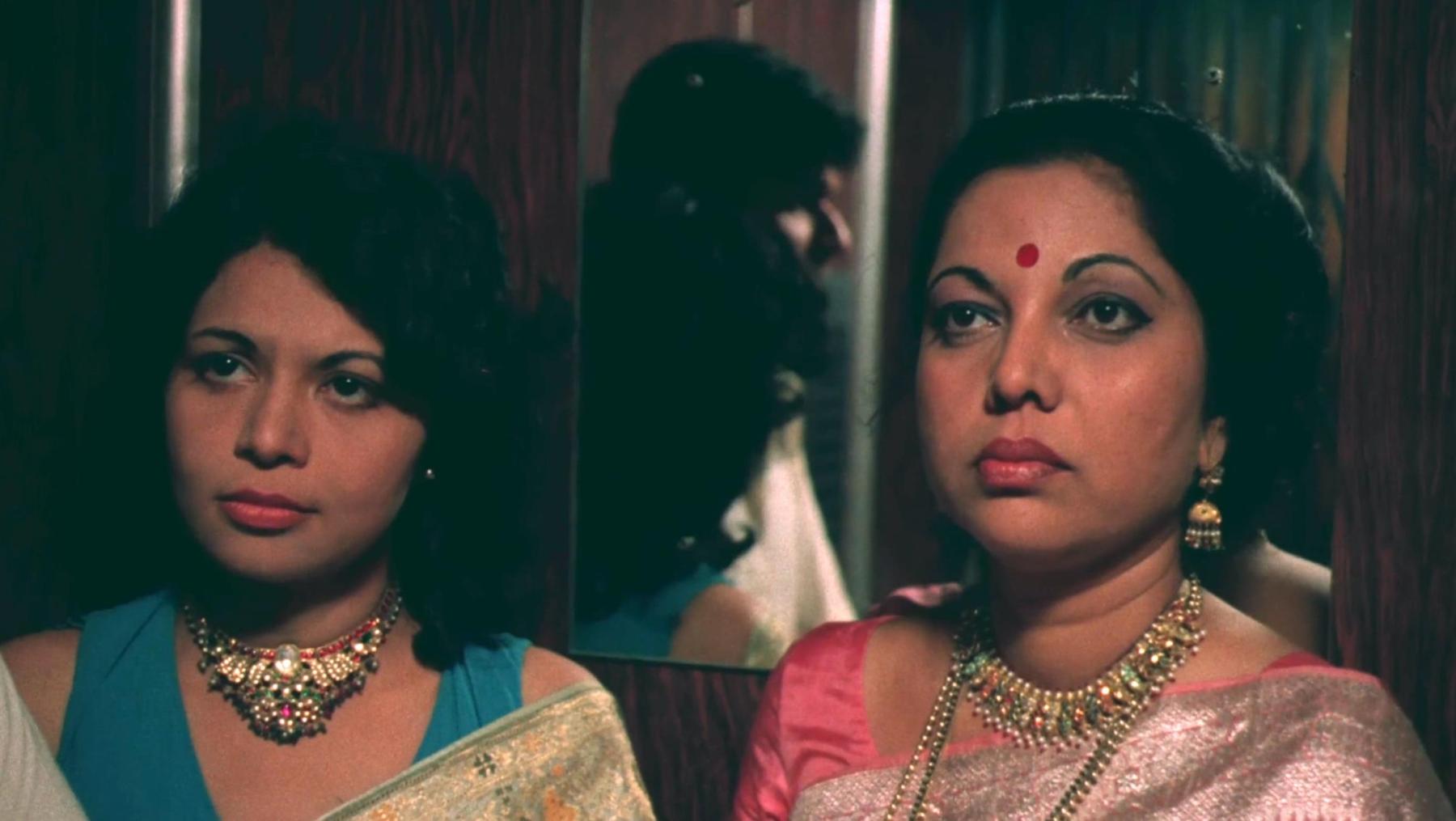
In what is perhaps the most inscrutable scene of Saeed Akhtar Mirza’s Arvind Desai Ki Ajeeb Dastaan (1978), the titular character rides an elevator to his sister’s apartment with two women, presumably from the same apartment building. As viewers, we know nothing about these women. For eighteen seconds of silence, we join Arvind in this elevator with them. The frame of the shot draws these lines; we only see Arvind like we see ourselves—peripherally, or in reflection. Between the two women, one glances directly at Arvind, and only for a split second; the other stares fixedly at a point in space that does not quite exist. Yet, we are aware that they have observed, scrutinised and judged.
Often overshadowed by his later and more polemical work like Salim Langde Pe Mat Ro! (Don’t Cry for Salim the Lame!, 1989), Mirza’s 1978 directorial debut, Arvind Desai Ki Ajeeb Dastaan (The Strange Fate of Arvind Desai), stands as a political work that leaves you with more questions than answers. It is also, perhaps, misunderstood in some respects. Set in Bombay of the 1970s, the film appears, at face value, to be the story of one man’s downward spiral, and is often read as an exploration of that character’s existential crisis. Arvind Desai, our protagonist, is the privileged son of a businessman, and for most of the time we see the world through his eyes. But the film reveals—even decades later—a more complex theme. And emphatically, it neither starts nor ends with Arvind Desai.

We begin our journey, not in Bombay but in an unnamed village, and we hear, not an urban soundscape but a riff that seems to echo the notes and rhythms of workers’ folk songs. Shots of the village and its inhabitants at daybreak lead to a montage of weavers in the village handcrafting an intricate carpet. Aesthetically, the sequence seems incongruous with the rest of the film. As soon as we see the finished product, the film cuts abruptly to a storefront in Bombay where the same carpet hangs—transported, in a flash, from the environment of its creation to that of its commodification. A close-up reveals that the store accepts “Americard” as well. By situating the object, at the outset, with its creators in the location and process of its creation, Mirza urges us to see it as the artisans’ work, their labour, before anything else. This leap, also signifying Mirza’s leap from documentary cinematographer to auteur, holds up a mirror to the audience.
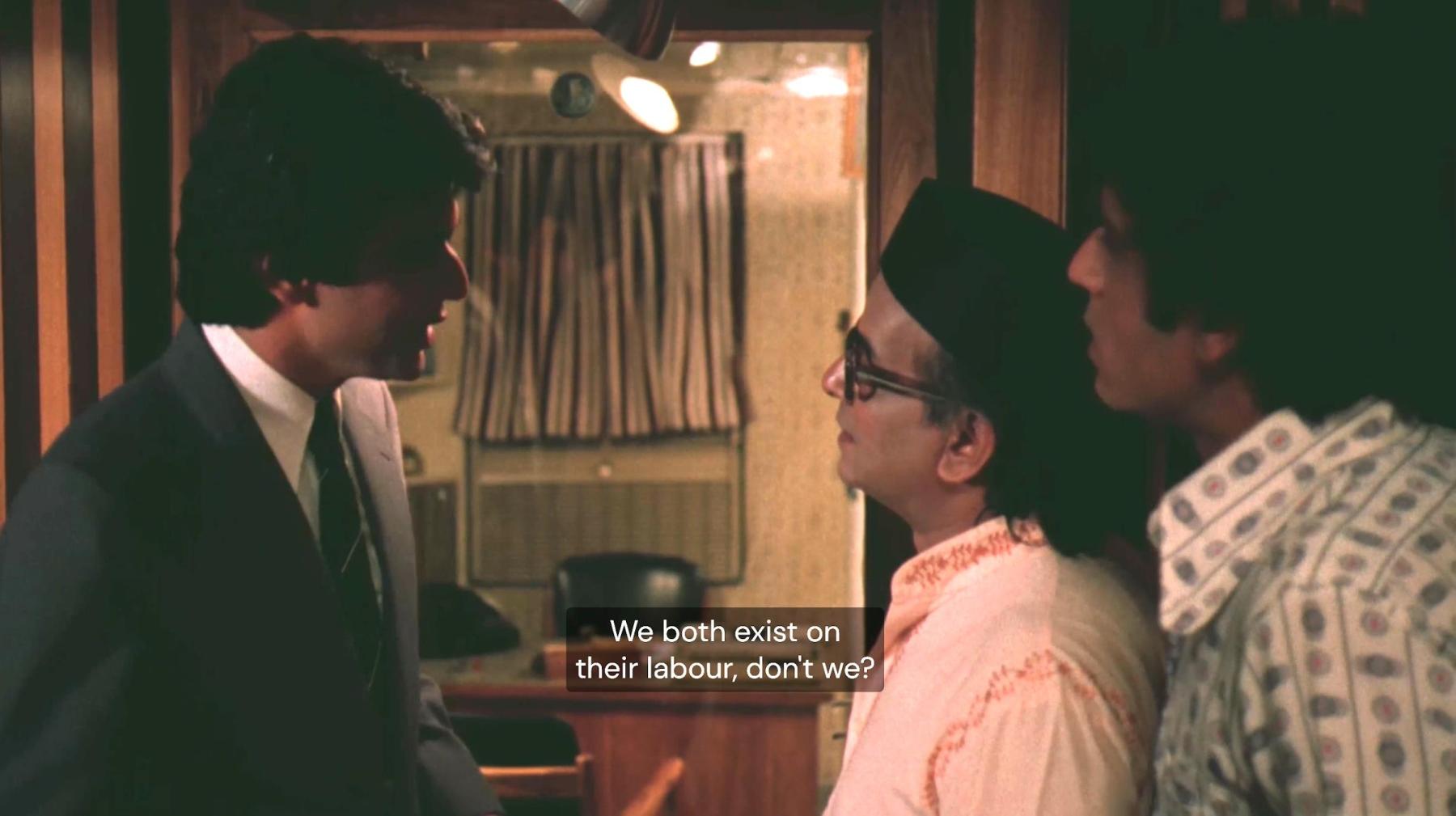
The carpet, as it turns out, is just one piece for sale among many at a handicrafts emporium owned by Arvind Desai, or to be more specific, his father. Arvind runs the shop, but more often than not, he wanders around the city looking for answers to questions he cannot articulate. He is often at odds with his business-minded father, pities his mother and eventually even his sister, dates his secretary Alice, and frequents a brothel. However, much like the film itself, the protagonist is not easy to pin down. He grapples with a fledgling class consciousness, questions his role in the capitalist system and seeks out his Marxist friend Rajan to feel less alone in his predicament.
The more we know about Arvind, the less we really seem to understand him. It also becomes increasingly apparent that he seems to have some trouble with this himself. He complains to his sister that their mother does not talk about anything, yet he never seems to listen to Alice, his girlfriend, when she tries to talk to him. He loudly critiques the obsession of the privileged and powerful with cleanliness—“We are very clean people, aren’t we? We cannot stomach squalor.”—an especially poignant line in the 1970s, given that the film was made in the aftermath of the Emergency, which saw numerous human rights violations including large-scale slum demolitions and the forced sterilisation of the poor. Yet, when he offers to drive Rajan to his university, he expresses the same disgust, aimed at the same squalor.
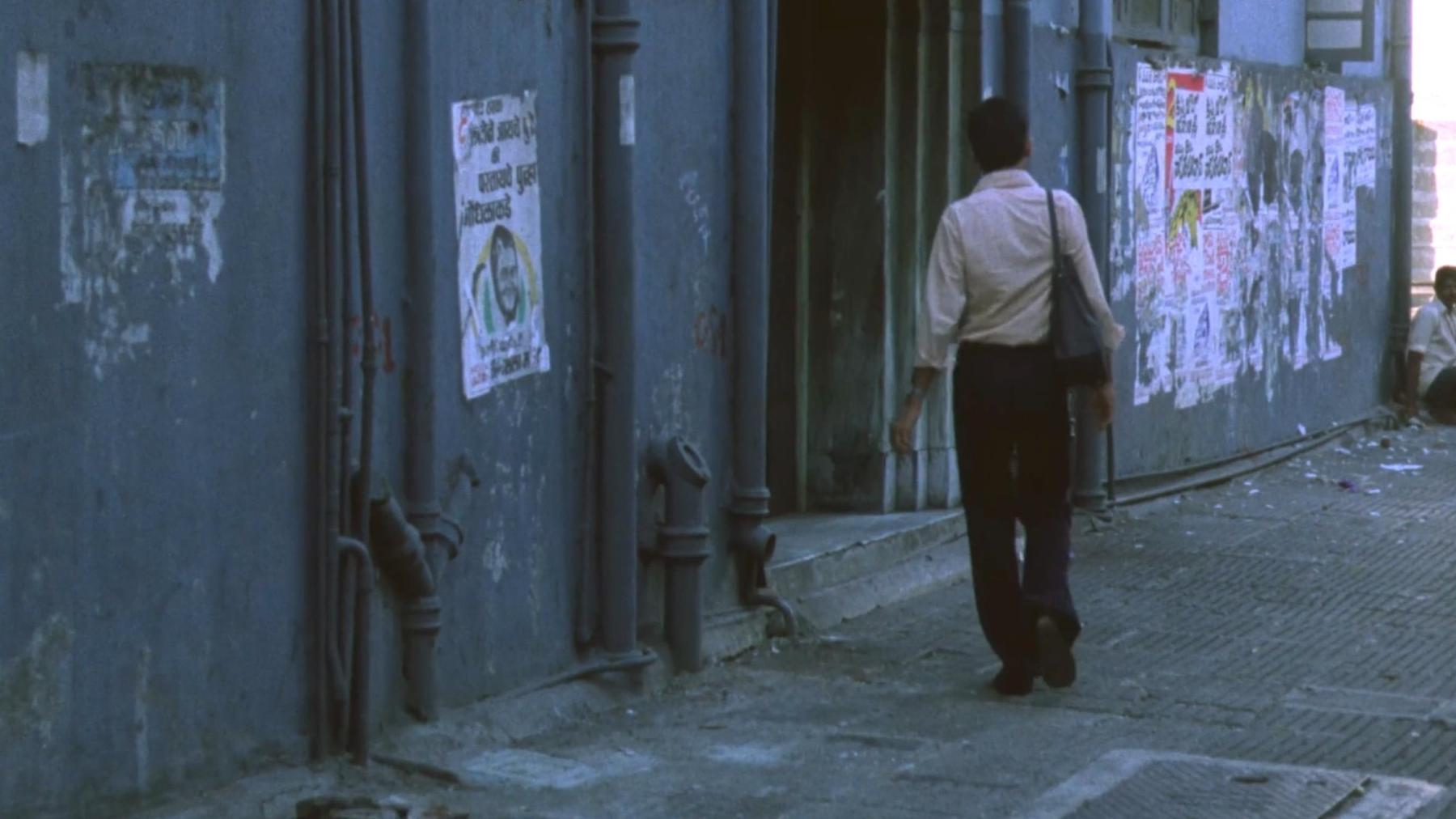
Dilip Dhawan plays the role of Arvind Desai with a slight aloofness and a simultaneous sense of melancholy. Occasionally, we see a crack in the facade to reveal a boyish charm, for instance, when he offers to drop a young couple at a railway station. The couple has just watched Roman Holiday, and Arvind—much like Audrey Hepburn in the film—pretends to be someone else, a “Ramesh Saxena,” who owns a farm outside the city. For a short while, we get a glimpse of who he really is and who he can never be.
This strange fate, however, is not reserved for Arvind alone. Every prominent character in the film seems to suffer, if not as outwardly, from a similar malaise. Alice, who never seems right as a meek girlfriend, is the sole breadwinner in her family of four, a responsibility she carries with a quiet sense of obligation. She seldom speaks, and when she does, you are never quite sure she says what she wants to. When Arvind—deep in his spiral now—asks her why they are together, she says, “Because I like you.” It does not ring true, but it does not ring false either. The only time we see the ‘real’ Alice, and the only time she happens to be alone on screen, is when she walks around in the city, window-shopping, after her work day.
Arvind’s sister Shilpa, who puts on a cheery face for everyone including her philandering husband, only seems to drop the mask momentarily when Arvind asks her if she is ever afraid of being alone. Determined not to turn into another ‘rich wife’ like the elevator women, Shilpa takes up charitable work—which happens to be exactly what her mother does, apart from reading prayer books. The mother also reveals herself only once, when she stares at her prayer book without reading it, in dismay after her husband refuses to give her money for her charitable cause. The father, too, we only really see when he sits alone at his table, coughing, determined to wash his hands off his disappointing son.
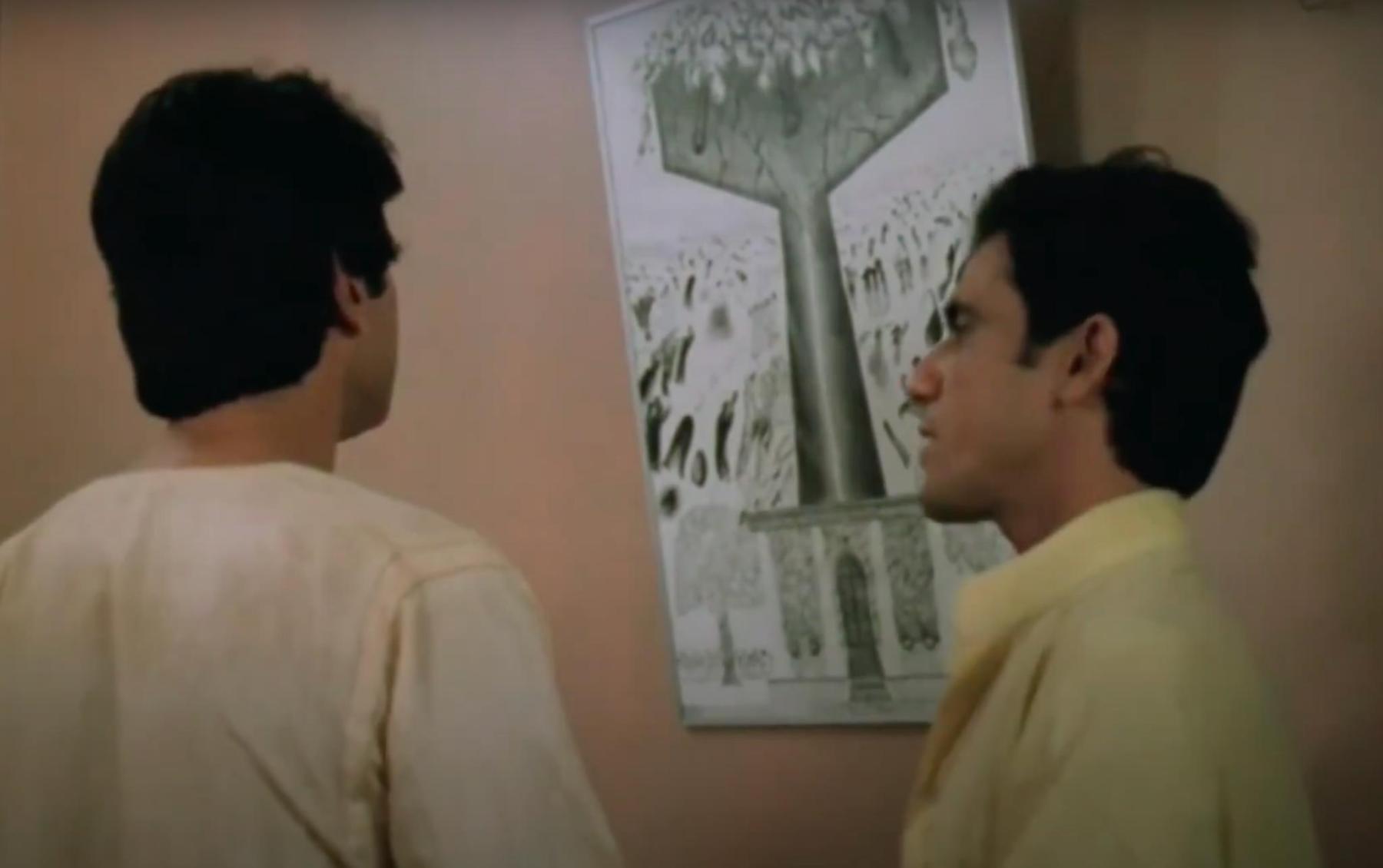
Even Rajan, the Marxist intellectual and possibly the logical and ethical compass of the film, does not seem to escape this fate. Visiting Rajan’s spartan apartment, Arvind finds himself drawn to a painting on the wall. When he asks about the artist, he misunderstands—true to his character—Rajan’s “It’s mine” to mean possession rather than creation. Taking advantage of the error, Rajan prods Arvind to articulate what the latter finds so fascinating in the painting. Arvind’s observation that the work is merciless in its appetite for destruction visibly unsettles Rajan, who is perhaps stunned that he could not see in his own work what a naive businessman so easily did.
Multiple fates—strange, sealed and disastrous. What we are witnessing is not a singular existential crisis, but a larger, collective crisis of alienation. The characters are all at odds with each other, the world and themselves. The absurdity of existence and the ensuing dread can only take us so far as the primary conflict in the lives of these people. Mirza seems keener to linger over the state of alienation than to direct his audience out of it, and the fuzziness of the film’s arc reflects this. Apart from the sequences that bookend it, the events in the film are held together by a loose logic, but we cannot quite pinpoint what happens when—surely Alice’s brother must have vandalised Arvind’s car after they broke up, but when exactly did they break up? Under Mirza’s direction, the film is a disorienting photograph of modern life. Instead of anticipating a quick fix, we are compelled to reflect on our own alienated state of being.
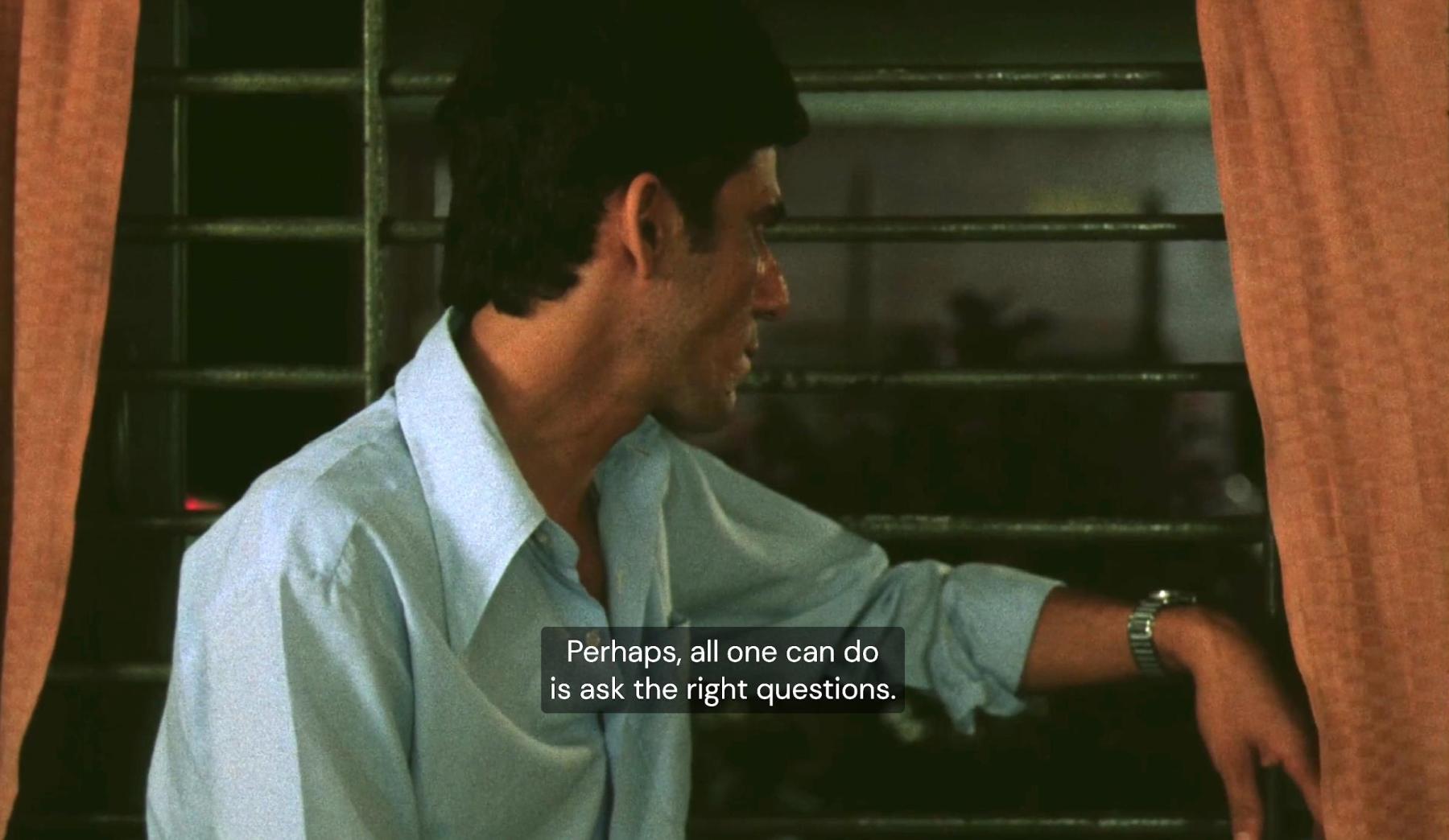
Nothing drives this point home more forcefully than Arvind’s final conversation with Rajan, who seems to acknowledge this estrangement with oneself in what can perhaps be seen as the film’s most didactic moment: "Perhaps, all one can do is ask the right questions."
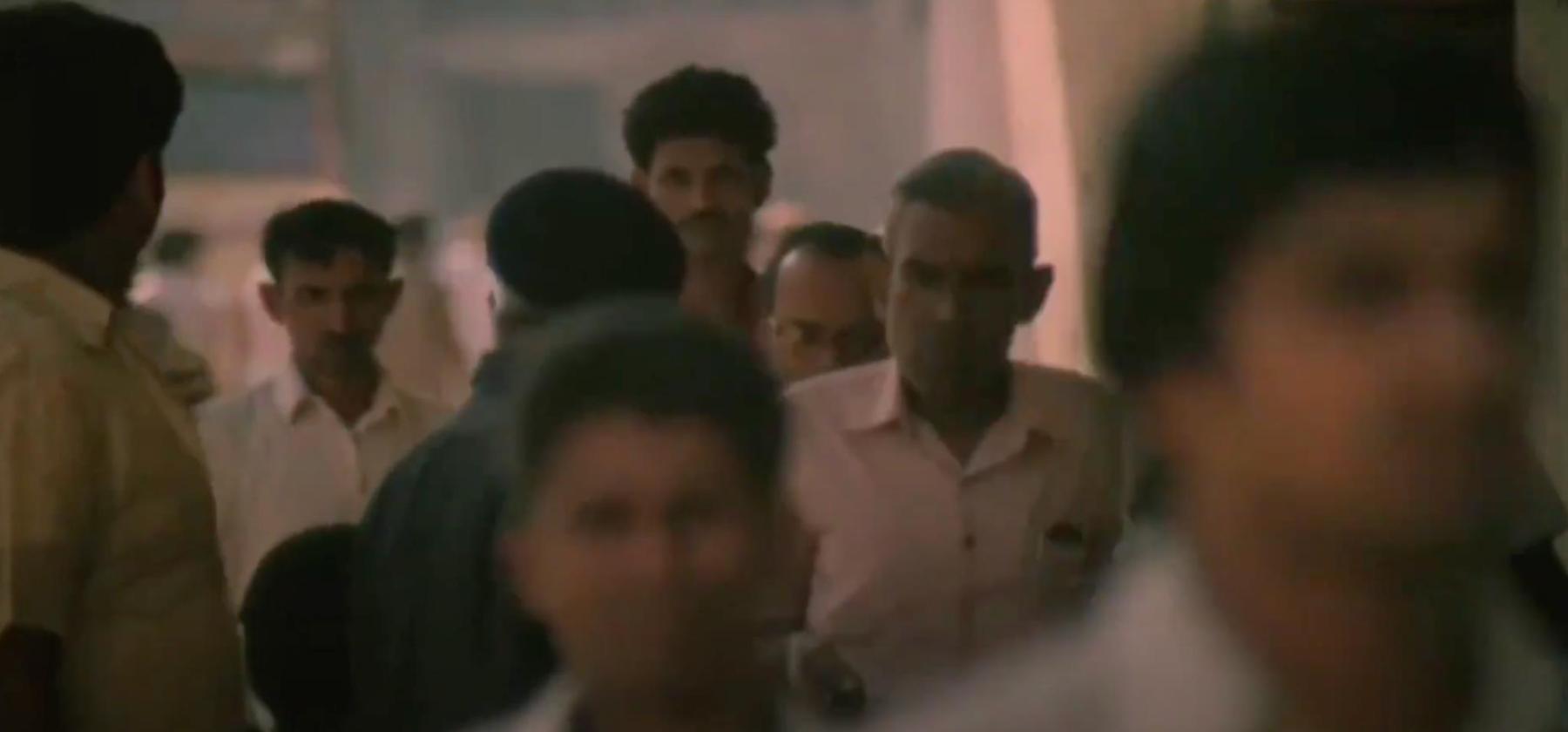
Mirza builds up to Arvind’s strange, untimely fate with kaleidoscopic views of Bombay, determined, it would seem, to make you see it for what it really is—a city made by, and of, workers. In fast-paced, visually striking clips—often shot from moving vehicles—of people either at, on their way to, or on their way from work, he reminds us of the multitudes of ajeeb dastaans in the city and the outside world.
We end, fittingly, at the beginning. But this time, the weavers who were busy at work in the first scene now look directly at us. A steady rhythm plays on in the score, and if we prick our ears, we might catch a whisper of the answers that have eluded us.
To learn more about films exploring alienation and questions of labour, read Jigisha Bhattacharya’s essay on Shishir Jha’s Dharti Latar Re Horo (2022), Akash Sarraf’s reflections on Hou Hsiao-hsien’s Goodbye South, Goodbye (1996), Vishal George’s observations on Aditi Maddali’s Songs of Our Soil (2019), Ankan Kazi’s essay on Meghnath’s In Search of Ajantrik (1958), Kshiraja’s reflections on John Abraham’s Amma Ariyan (1986) and Koyna Tomar’s reading of Ritwik Ghatak’s Amar Lenin (1970).
All images are stills from Arvind Desai Ki Ajeeb Dastaan (1978) by Saeed Akhtar Mirza. Images courtesy of the director.