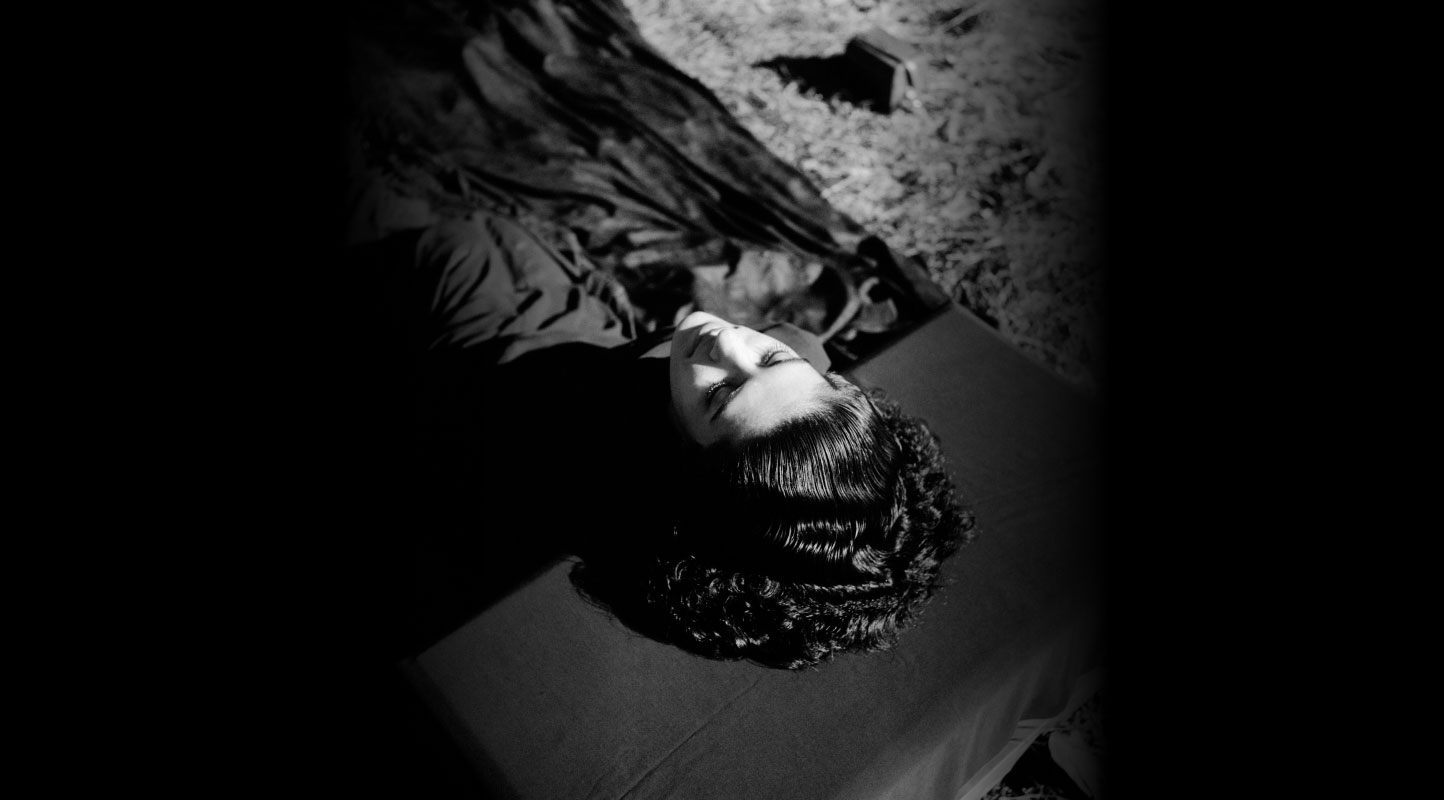


Neidhal Kaimanam: Coastal Lives, Recipes and Ecologies
Neidhal Kaimanam is a bi-lingual coastal cookbook with photographs by M. Palani Kumar. While “Neidhal” is the Tamil word for coastal terrain, “Kaimanam” is an abstract expression in the Tamil culinary lexicon measuring a cook’s adeptness that literally translates to the “sweet smell of the cooking hand.” Edited by Niranjana R, a scholar based out of London, and Bhagathsingh, a postdoctoral researcher from the French Institute of Pondicherry, the book merges the two defining aspects of the lives of fisherpeople—ecology and taste. Neidhal Kaimanam offers a carefully detailed account of how taste has been subject to ever-changing configurations as a result of human-made ecological shifts in the northern Coromandel Coast, including the sub-regions of Pazhaverkadu, Ennore, Kasimedu, Adyar and Puducherry.
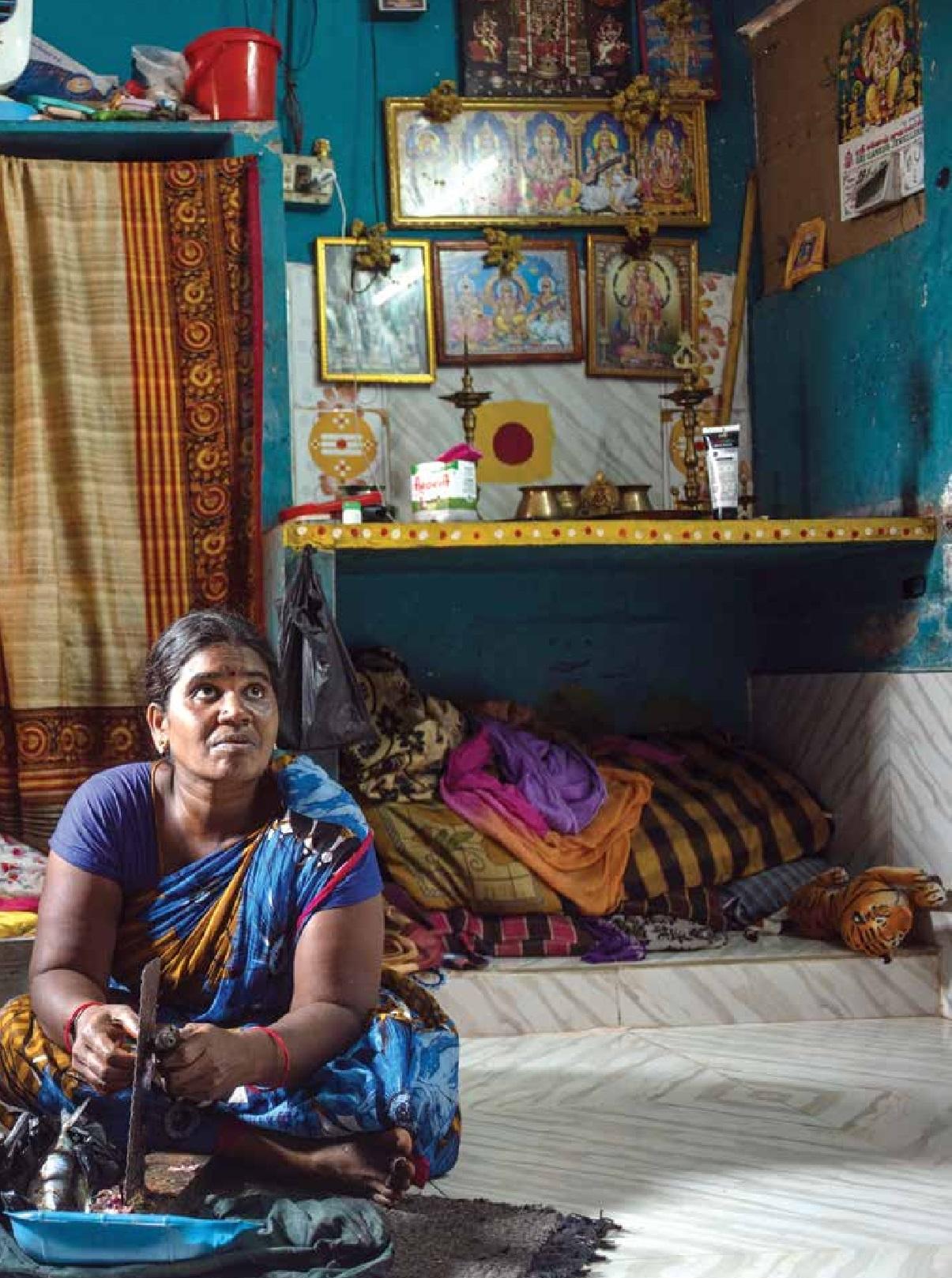
Suguna from Thazhakuppam is a fisher woman who doubles up as a fish cleaner in the market. She uses Arivalmanai, a sharp implement, to gut and clean the fish, a skill which is hard to master because a lot of deftness is required.
Neidhal Kaimanam’s editors claim no authorship. As academics, both are well aware of the intricacies of claiming authorship over recipes and stories, thereby choosing instead to simply call themselves “compilers” of the book. Thus, each chapter of the book is named after the interlocutors who shared their food and stories. Moreover, Bhagathsingh is not only a trained and credible ethnographer but also hails from Ennore, one of the five fishing sub-regions in and around the city of Chennai, making him an insider to fisher lives.
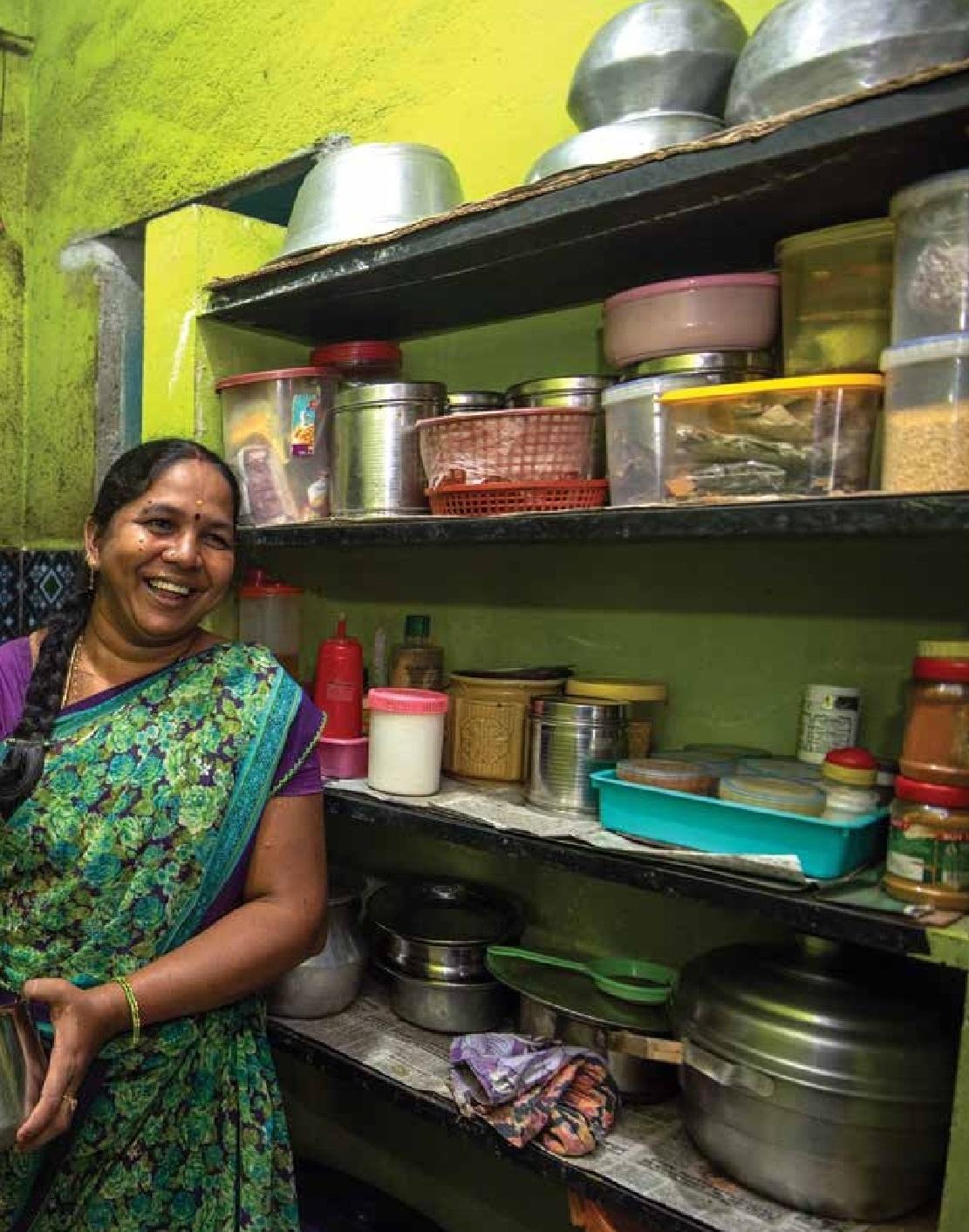
Mekala from Ennore’s Kattukuppam, where river fishing is practiced, demonstrates the cooking of dry roasted prawns and fried roe of Madavai fish.
The book begins with Bhagathsingh’s personal essay about his mother, an activist, performance artist and fisherwoman from Ennore. The essay touches upon the fundamentality of social living and the exchange of tastes through one simple social phenomenon—schooling. Bhagathsingh begins the chapter by recalling his school friends’ inquisitiveness about his meals every day for lunch which consisted of fish. What starts as a piece of food writing describing the cooking methods used by his mother—such as the cleaning, shelling and preparation of the prawns for Thokku that was handed over to him and his sister—abruptly switches to become a comment on the ecological disruption of Ennore. The author moves to describe the fly ash from the thermal power plant near the fishing villages that contaminates their otherwise abundant fresh prawns.
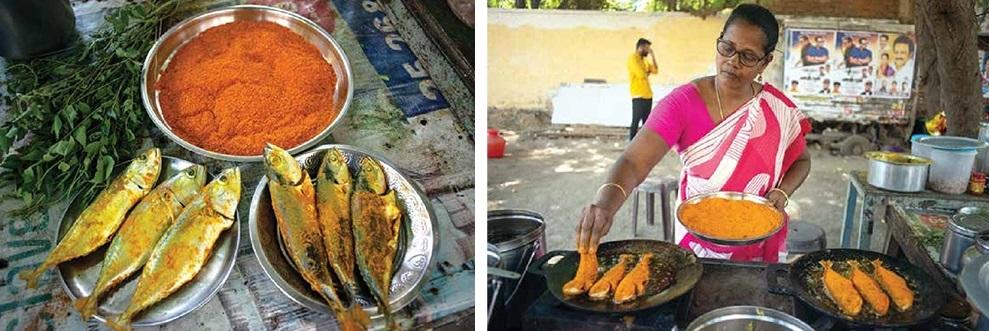
Uma from Besant Nagar’s Odaimanagar, a fisherpeoples neighborhood, runs a cart kitchen of seafood meals for lunch.Called "Akkakadis", literally translating to sister's shop, this is now a common phenomenon in Chennai's shoreside neighbourhood. Many fisherwomen in the city have turned to this business which also proves to be a rewarding one.
While the reader is already drawn into the world of fishers along the Coromandel Coast, Palani Kumar’s photographs conjure up a sensorium of the seaside. Most visuals are of women cooking in their home kitchens amidst an assorted rack of plastic bottles of spices behind them, long-standing stainless steel utensils with deformities and dents holding delectable delights. The visuals are a far cry from the sophistications of an academic marketplace where coastal ecology is a hot-selling fish.
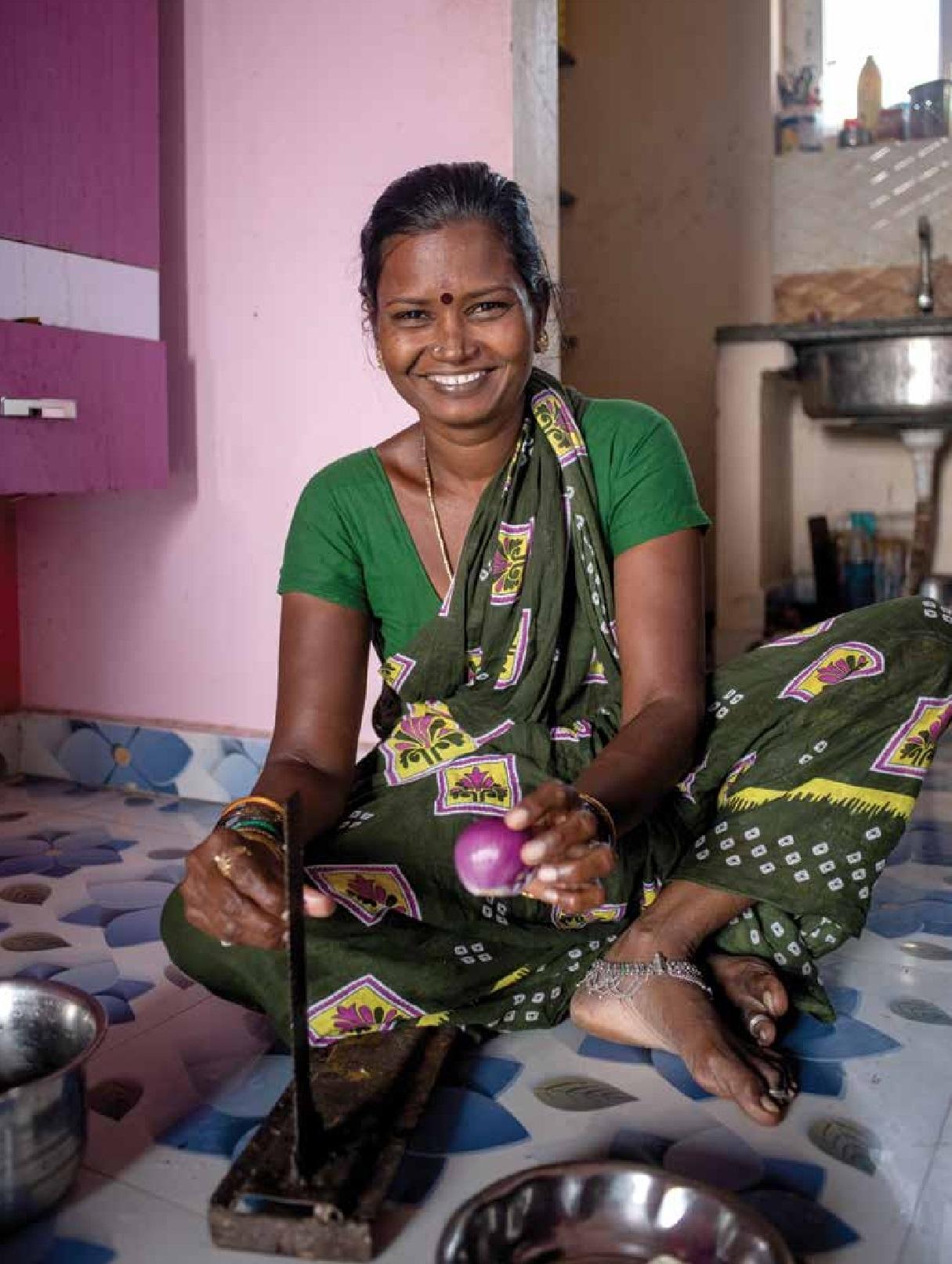
Images of wide smiles, purple onions, deep red tomatoes and listless-looking spices that charted the course of history fill most of the pages of Neidhal Kaimanam. Perusing the visuals of people as they stand against the brightly-coloured tiled kitchen walls, twist a ladle, chop vegetables or clean fish, one is made aware of their presence and contributions to the book. This makes reading Neidhal Kaimanam an engaging experience that stretches beyond the contours of reading. In a way, the visuals are a telltale of the process of the making of the book itself.
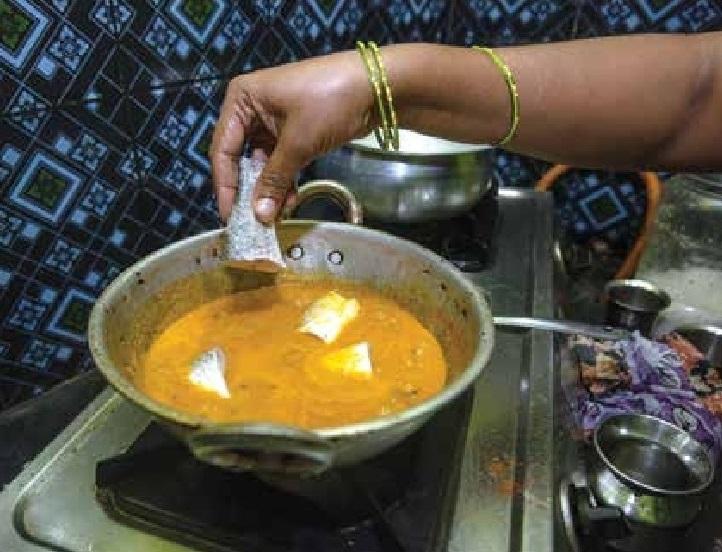
Madavai fish cooked in a coconut thick curry called Madavai Sunda Vachadhu by Mekala.
However, the book is not a comprehensive guide to the ecology or culinary customs of the entire northern coastal strip in the Coromandel and neither does it claim to be. I was reminded of an adage in Tamil which translates roughly to: one grain of rice from the pot on the hearth is enough to check if the entire pot is well-steamed. Likewise, each story behind a recipe in the book and the person that cooks it is enough to become a window into the everyday life of the fishing village they are part of.
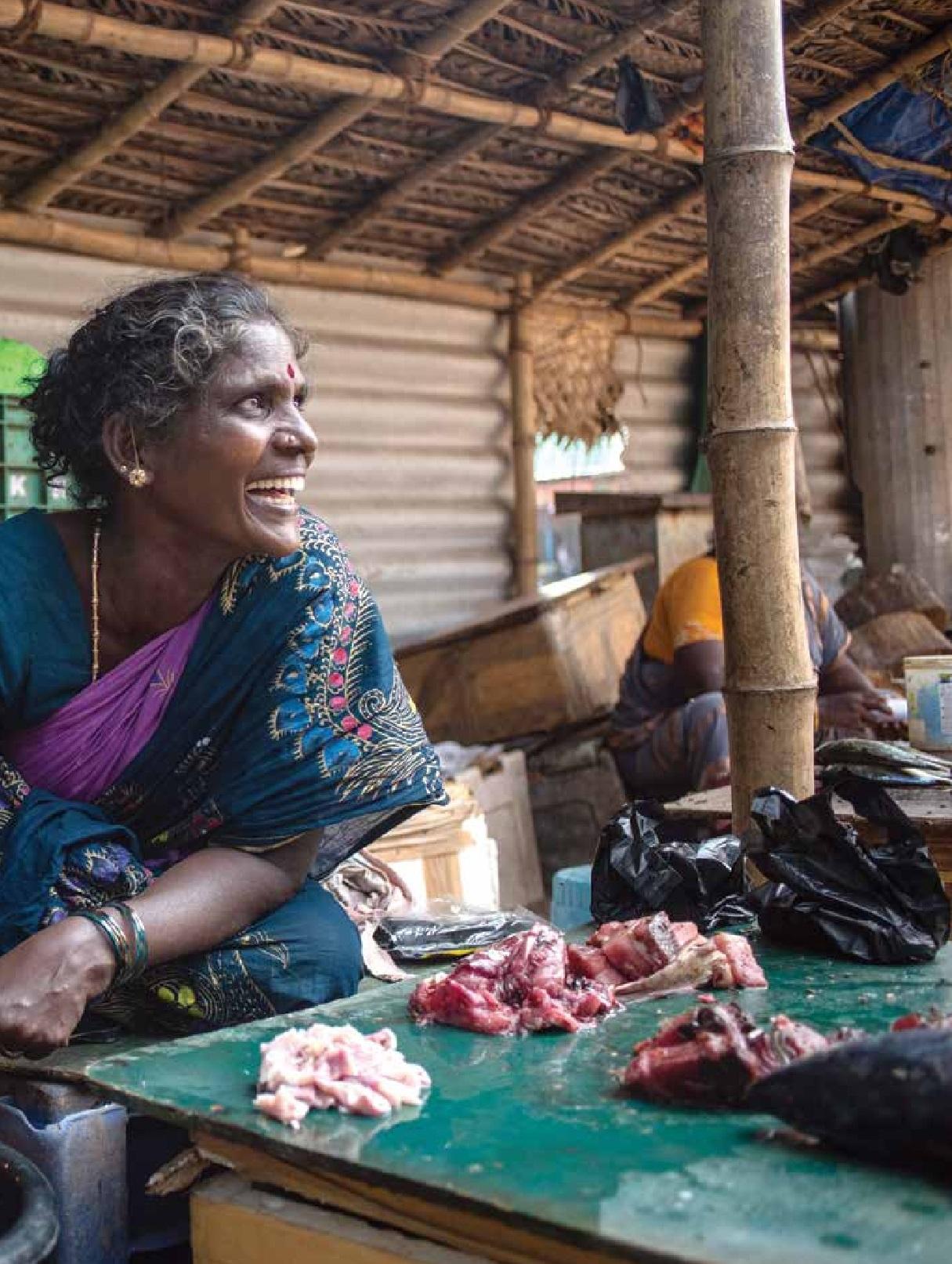
Suguna, an expert fish butcher, at work gutting trevally.
The book’s first section is dedicated to Ennore and begins with the broad geographical bifurcation of Ennore into Kattukuppam and Thazhankuppam, or river-fishing and coastal-fishing areas respectively. This informs a seachange of difference in the fishing techniques, nets and boats. In this section, a chapter called “Lakshmi and Saroja” explores the histories of Tamil fisher families who migrated during World War II from colonial Burma (present-day Myanmar) to colonial Madras (present-day Chennai).
Bommi from Ennore, an area that was once known for crabs, sells crabs sourced from the nearby Pazhaverkadu. Ennore's own waters no longer support a thriving crab population.
Another chapter, called “Bommi,” is about the crab-seller from Ennore’s Thazhankuppam, which reads like an unintended satire on non-fishing consumers of fish. Increased industrial activity, fly ash contaminants and ammonia gas leakage from nearby factories have nearly pushed out the mud crabs—usually found in abundance in Ennore—from their estuaries and into the deep sea. This has left the riverine fisherpeople of these parts struggling to find a good catch. Yet even today in markets like Thazhankuppam in Ennore, one finds hefty crabs and tiny ones alike. However, these come from Pazhaverkadu because the fish vendors undertake the arduous journey of sourcing it from there, not wanting to disappoint their clientele who still associate Ennore with its mudcrabs.
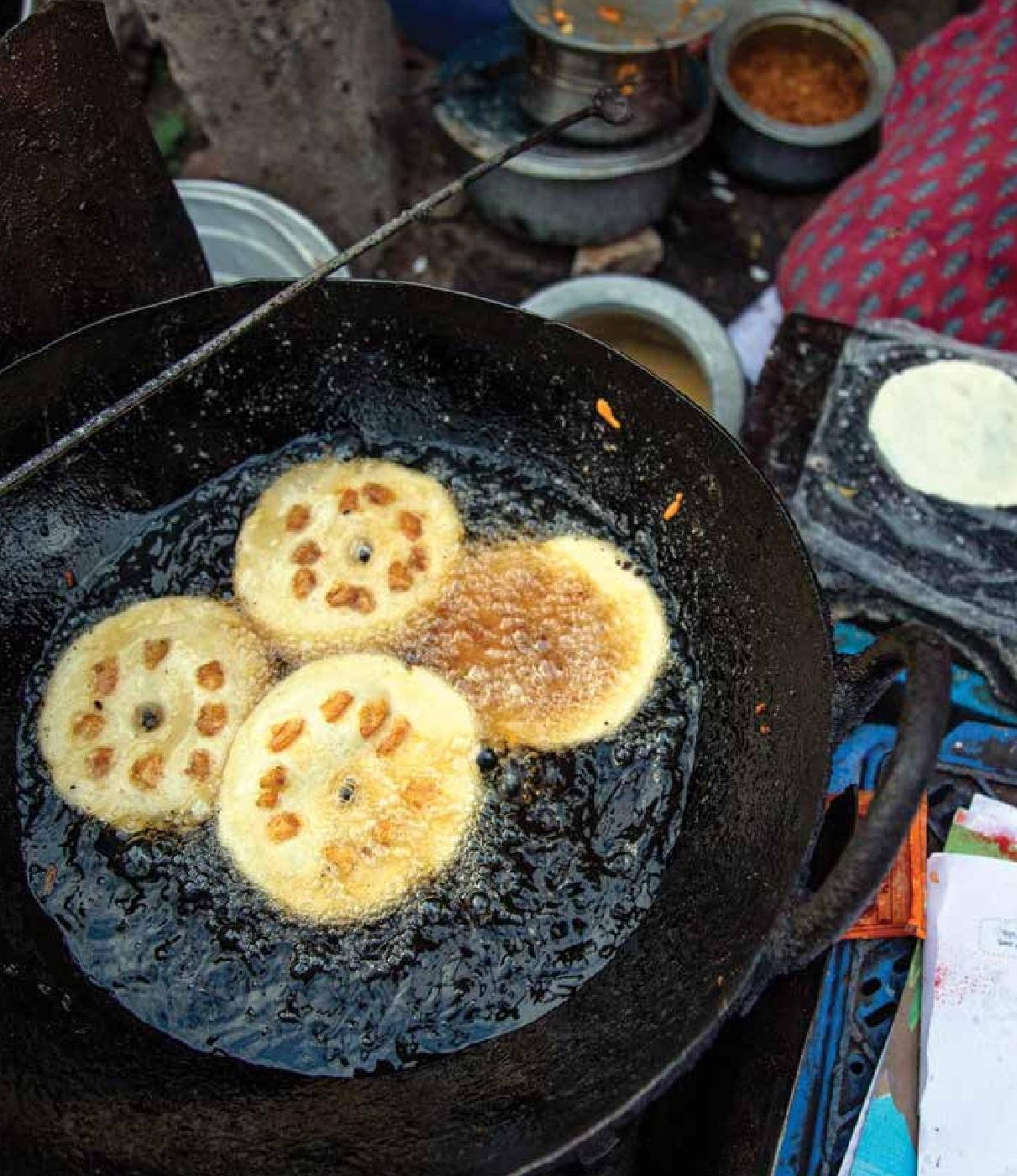
Prawns Vada made with rice flour dough.
The second section focuses on Pazhaverkadu, which is the northernmost part of Tamil Nadu’s coast. Here, the fisher community, especially women, decided to deal with the news of a proposed port project by hosting a fisher feast festival on a grand scale in 2021. They even invited the very politicians who were vying to benefit off the proposed project. This section also covers a cosmopolitan variety of fishing communities. Foregrounding one of the rich biodiversity hotspots of the country, the chapters on Dalit and Muslim fishers, and ornate culinary aesthetics ground the readers in the thought, “How little we know about our coasts!”
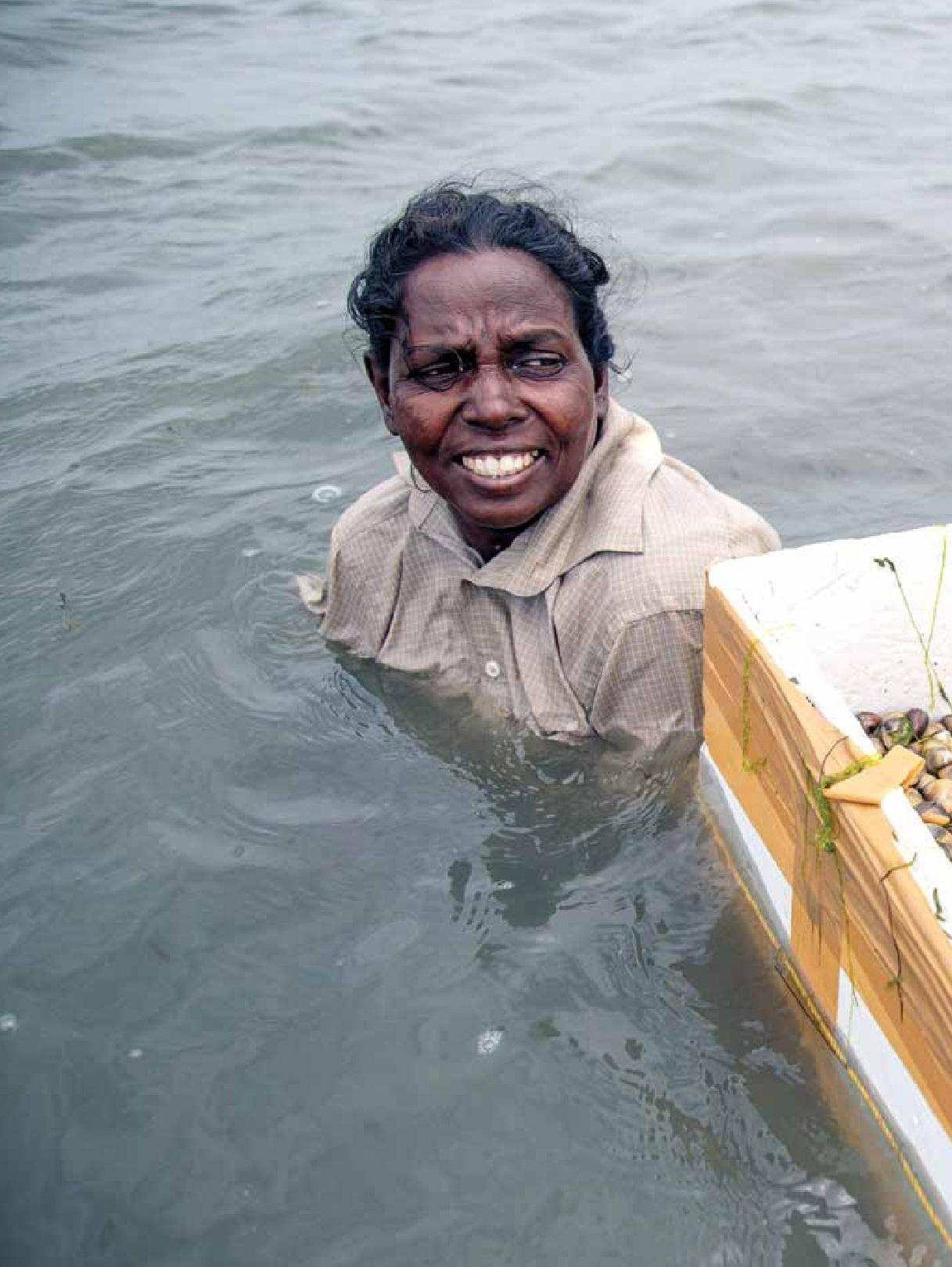
At Lighthouse Kuppam, Dalit and Adivasi fisherwomen catch clams in the brackish water, without any fishing implements, for their own kitchens.
The catch and lifestyle of Adidravidar, or the Dalit fishers of Pazhaverkadu, is reflective of our caste-ridden society. The clams they gather from the brackish waters—which neither has demand nor pays back well enough given the labour that goes into gathering it—highlights the stratified nature of access to fishing tools and techniques even among fishers. The chapter “Alumbu, Sarala and Nadiya” mentions how Alumbu, the Dalit fisher, works in the housekeeping department of one of the factories that pollutes the brackish water from where she forages clams for her subsistence.
The helplessness of fishers—especially artisanal fishers—takes other forms as their traditional techniques are now increasingly forgotten, forcing them towards the path of feeding the ultra-consumerist market. In the chapter called “Kala and Punitha” under the Ennore section, the fisherman Mayakrishnan from Periyakuppam has given up his primary gillnet fishing practice to become a trawl fisherman. He speaks of the superiority of mud crabs, prawns and other fish caught from the deep sea over the brackish marshy water to advocate for his own business.
The consumerist economy and digital universe can be rewarding in other ways too, an observant reader would think while reading the chapter about “the biryani couple” of Pazhaverkadu town, “K. Nemathulla and N. Subuhani Begum.” Coastal Muslims usually feast on coconut milk-based Neichor and meat preparations. However, the popular association of biryani with Muslim-ness and the idea that a Muslim’s biryani is sought-after helps entrepreneurs like K. Nemathulla and N. Subuhani Begum. Yet the following chapter, “Nazira,” is perhaps the “classic” coastal Muslim story. Coastal Muslims are often associated with a recipe for a prawn-based deep-fried delicacy which they call “Vaada” (unlike the popularly known Tamil Vadai or Vade with a single ‘a’). The story reflects this as Nazira sells prawn Vaada in Pazhaverkadu town.
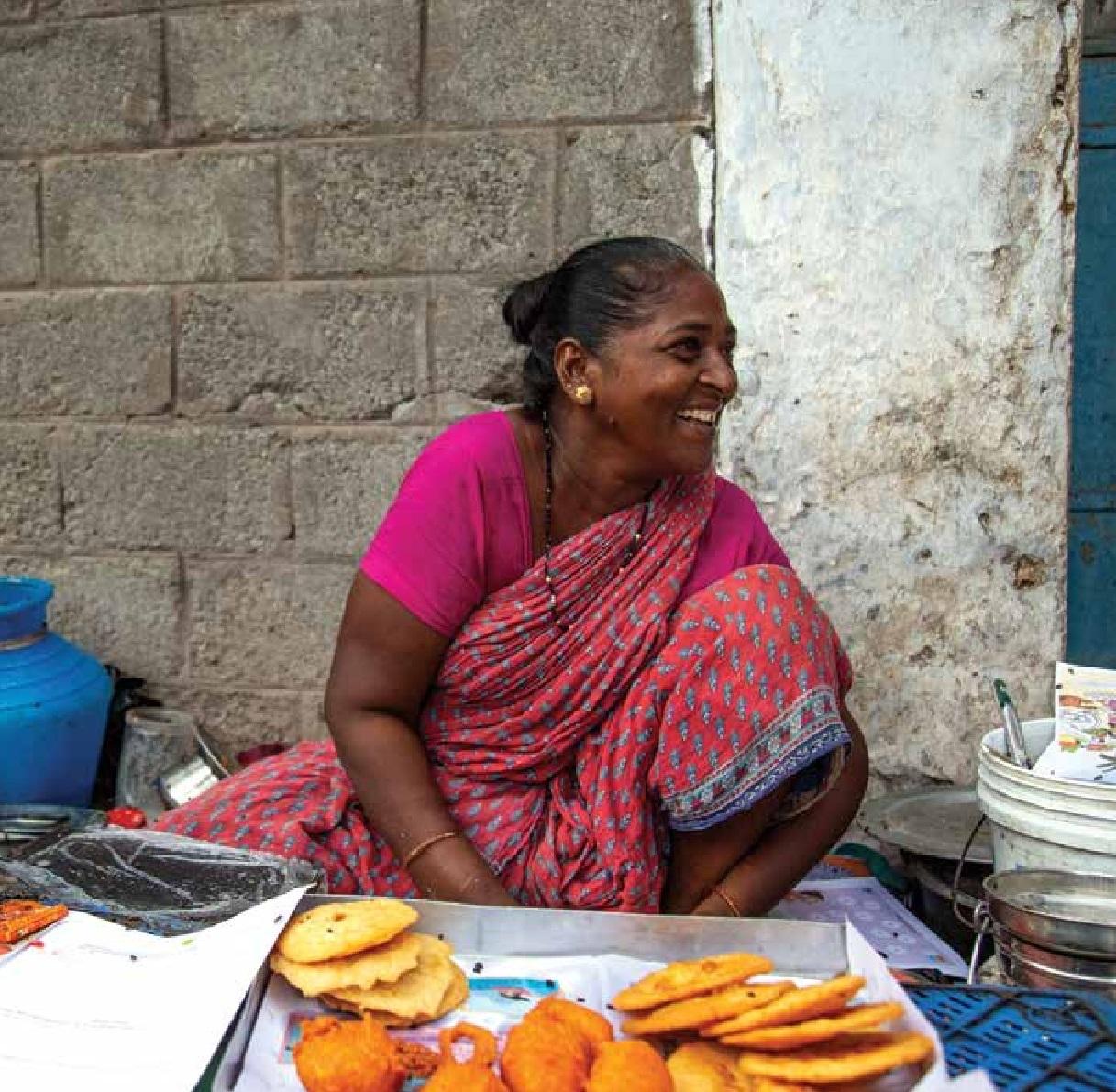
Nazira, a Muslim fisherwoman, sells prawns Vada regularly and prices them depending on the number of prawns stuck to the Vada.
There are also men in the book—two of them, both from Pazhaverkadu. One is Rajkamal and his unconventional venture into seafood pickling, who has authored the section called “Eat, Play, Protest: A Life With Prawns,” where he goes on to announce the complexity of a new breed of new-age non-fishing fishers. Rajkamal's words about his heroic fishing father who leaves most of his craft half passed-down to him in the fear of not wanting his child to end up in the profession is a familiar yet aching story. The chapter also evokes feelings of occasional abundance in the lives of fisherpeople when the author talks about the dried prawns they heavily snack on.
By the end of the first section, one can quickly recognise the pattern that disrupts the lives of fishers—the coming of a port, followed by an extension a decade or more later, and then a coastal road project connecting the metropolis and the port areas to ensure impeccable logistics. Though not explicitly mentioned, it makes a reader realise that shipping and fishing are two different industries that are made to lock horns, as there is a conflict of interest.
In the chapter “Lighthouse Kuppam,” set in a neighbourhood in Pazhaverkadu, we come to know of the Paadu system: a rotational system of access to water bodies by all the families in the area to ensure fairness. However, the changed ecology after the 2004 Indian Ocean tsunami and the state-led “developmental” port projects—which do not ensure sustainable and resilient system-building unlike the traditional fishers’ systems—have wiped out this centuries-old practice of livelihood and way of life in no time.
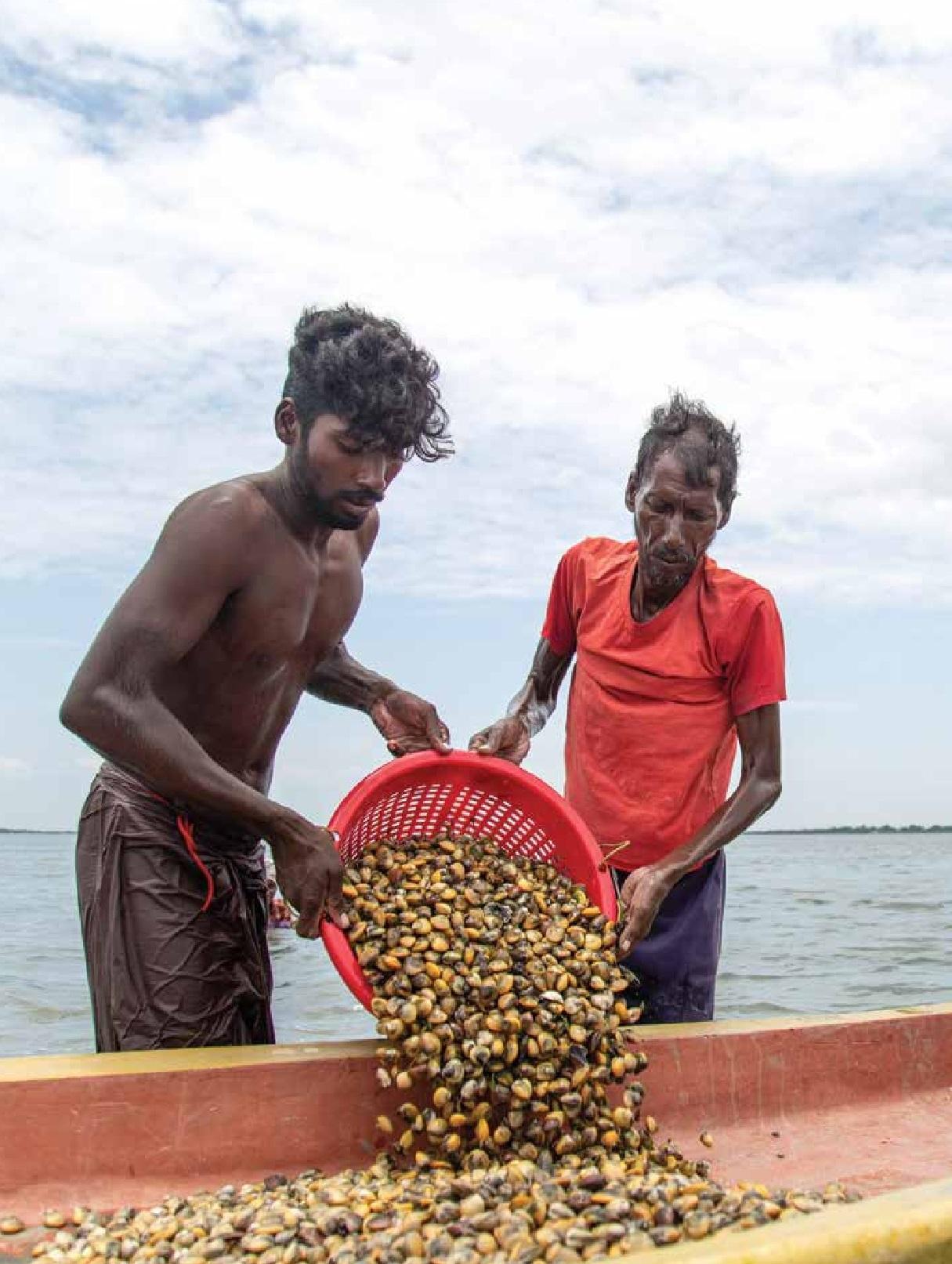
The small clams or Matti are sourced from brackish waters by Dalit and Adidravidar fisherpeople. These are sourced from brackish water, with bare hands. After being gathered, they are filled in the boat that is usually rented.
Neidhal Kaimanam carefully singles out fisher lives from the gaze of non-fishing, land-based communities with regards to the latter’s indifference to fisher concerns and the perils of uber-glorification. And it turns on its head the narrative of popular culture and media representation that spews hate on their food and creates comical settings over the hunch of their shoulders—mostly a mockery of their dialect. Dried fish, an ingenious native wisdom, was often touted as the food of the alcoholics by upper-caste-led movies and soaps in the past. As food scholar Krishnendu Ray said, “If you have disgust for other people’s food, then it is certain you have disdain towards them.” In Bhagathsingh and Niranjana’s hands, the very food that the indifferent mainstream has been exoticising is taken as a tool—just like a fishwife’s whetted machete—to work against both disregard and prejudice and to paint a picture of the fullness of fisher people’s lives.
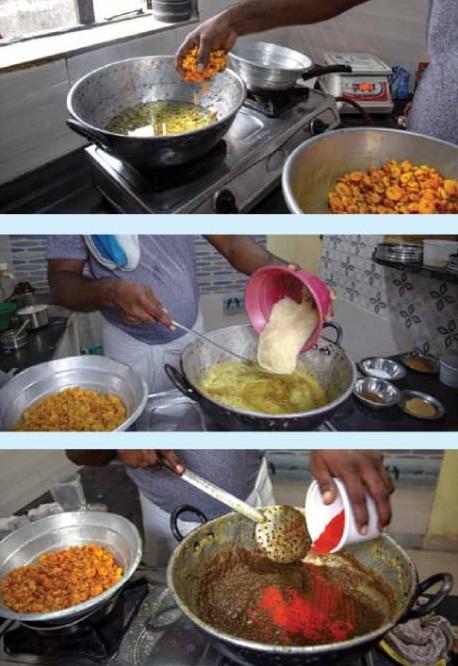
Bhuvanesh's seafood pickle business is an instance of fishermen from the northern Coromandel Coast venturing into value added businesses other than fishing.
To learn more about the lives of those in coastal zones in India, read Nithya K.’s essay on the struggles of fisherwomen in Puducherry, Kavyasri Saravanan’s essay on Coastal Regulation Zones, Gulmehar Dhillon’s curated album of M. Palani Kumar’s work with the seaweed farmers of Tamil Nadu, Sukanya Deb’s conversation with Paribartana Mohanty and Ketaki Varma’s reflections on Sohrab Hura’s practice.
All images are from the cookbook Neidhal Kaimanam (2025). Images courtesy of M. Palani Kumar.