

Working Collectively: On the KTM Assembly
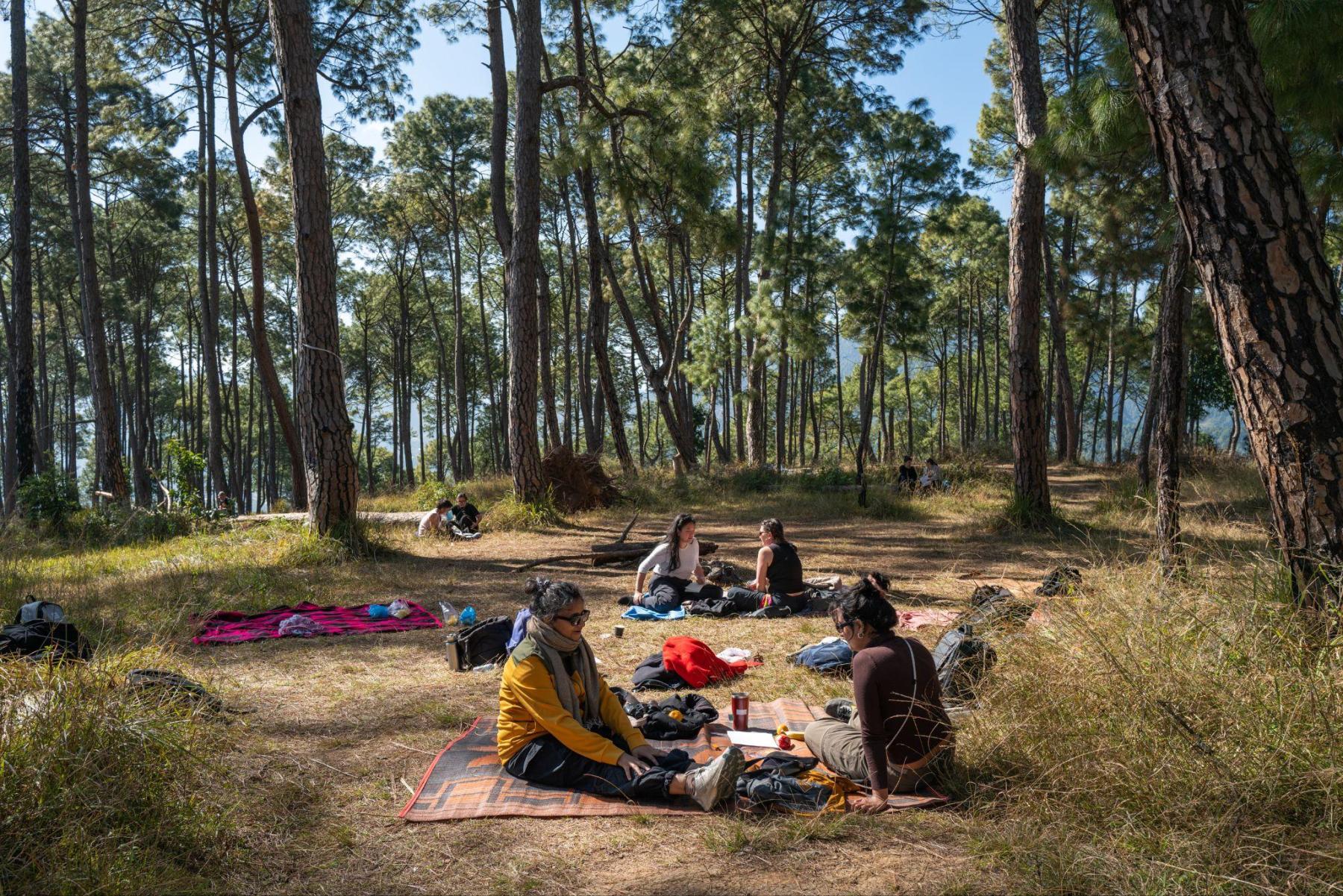
Conceived around the theme of “Global South solidarities,” PhotoKTM6 invited artists, cultural organisers, collectives and organisations to engage with the political and cultural legacies of the Third World movement. A special endeavour in this direction was the creation of the KTM Assembly. Held from 24–29 November 2025, the gathering was “informed by a stance honed through Imperfect Solidarities, a conversation series run by Prathama Raghavan and NayanTara Gurung Kakshapati in Kathmandu, and through various experimental, process-based projects led by yasmine eid-sabbagh.” Over the course of the five days, the cohort spent a significant time with each other to share their lived experiences, struggles and reflections on inhabiting the world in the present as we continue to bear witness to the ongoing genocide in Palestine. We spoke to some of the participants of the Assembly to understand their experience of coming together within such a space and some of the lessons they learned. Putri Permata Sari, an independent writer and translator from Yogyakarta, Indonesia, who is also part of the AC Zine club, shares about how the Assembly was a space where the participants were willing to learn, relearn and unlearn everything with and from each other. Tif Ng, a New York-based photographer and cultural worker who is the programs coordinator at the Magnum Foundation, discusses how exercises as part of the Assembly reinforced the idea of being connected and working collectively. Tabara Korka Ndiaye, a Senegalese writer, researcher and creative, reminds us that spaces such as these are very rare and that solidarity needs to be material.
Mallika Visvanathan: What were some of the questions you arrived with at the Assembly from your work? Can you share a bit about your experience?
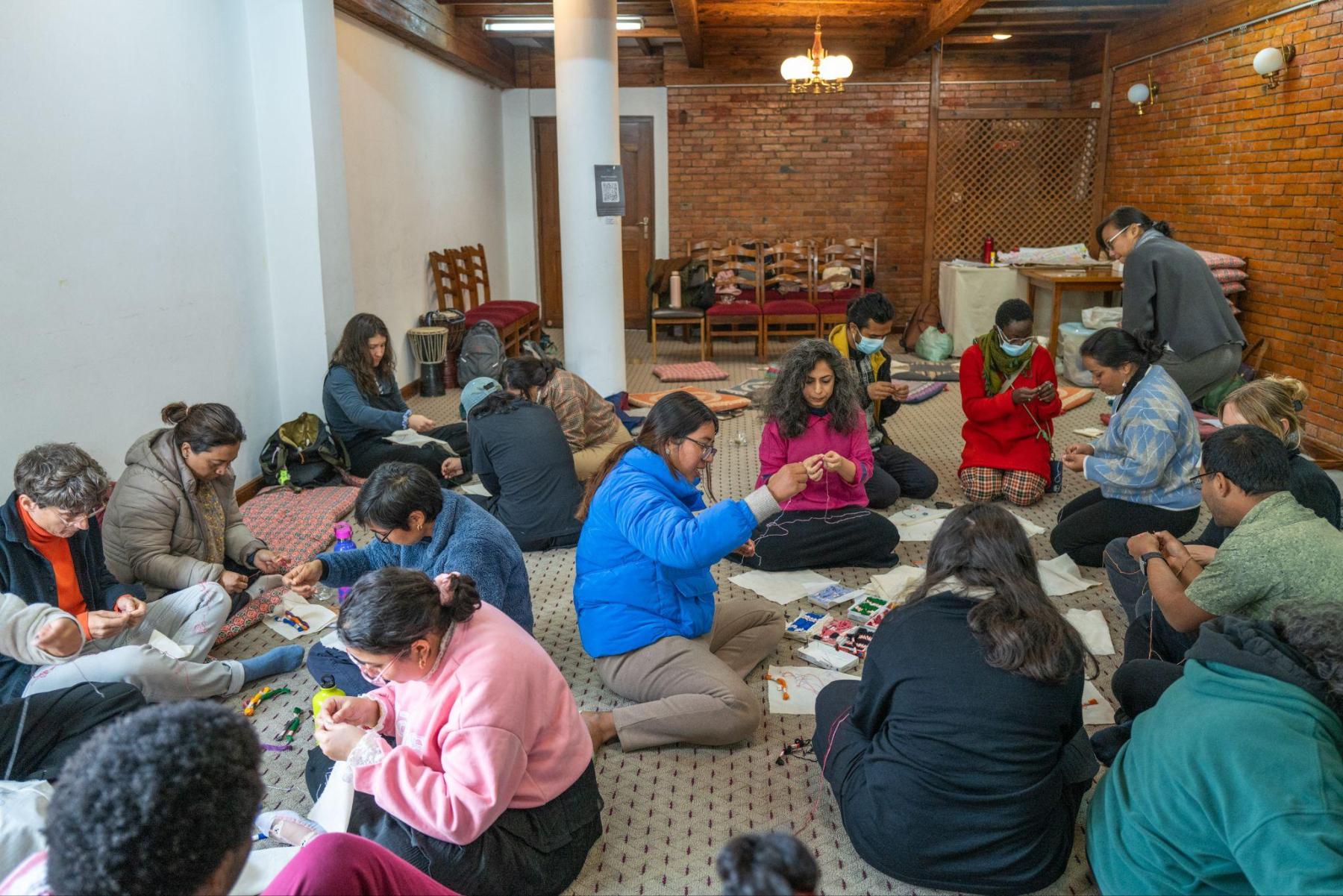
Putri Permata Sari: When I was invited to the Assembly, I did not know what to expect because it was my first time being invited to this kind of event where cultural practitioners, artists and others come together. I had spoken to NayanTara before coming to Kathmandu and she explained how the Assembly was imagined and the kinds of questions that they wanted to ask us as participants. As part of the AC Zine Club, we had planned a workshop at PhotoKTM around the zine The Tending the Soil by Ricardo Levins Morales, where he uses this metaphor to talk about how to strategise and organise. Through our work at the AC Zine Club, we try to relate these lessons to our own movements in our respective homes—Yogyakarta, Nairobi, Kampala and Mumbai. And we tried to connect our struggles together and talk about it through the zine. As I entered into the Assembly, I was wondering about others' experiences around how they organise their work and practice with their own community and in their own country because every method is very situation-based and there is no one right way to organise ourselves.
I am an independent writer and translator, but I come from an activist circle in Yogyakarta. So my work consists of writing about my lived experiences as an activist and cultural worker. And my focus is always on how we can sustain our movement, how we can sustain ourselves outside of the movement as an individual and as a collective—as friends. I was really impressed by other participants, now my friends, who told me about their experiences and how they find different ways to care despite everything that is happening in the world right now. It is difficult because we are compelled to isolate ourselves, to work hard just to survive. But then maybe we assume that the only way to survive is to see ourselves individually, separately. And despite all of that, when I met them, I was very touched by their resilience and their consistency in always finding ways to care for one another. For me, care is about maintaining and increasing each other's agency and autonomy. And that is what happened at the Assembly as well, because we were willing to learn, relearn and unlearn everything with and from each other.
I feel like we connected more after the Assembly. Now that we know each other, we try to tell each other: let's reconnect when the chance is there, when the chances exist. That is beautiful—the willingness to keep connecting with each other after the Assembly. And I would love to see where it goes after the Assembly. I am not expecting the Assembly to keep happening (in PhotoKTM) but that kind of space is rare, especially in the context of Global South solidarity. But I would really love to have that kind of assembly in Yogyakarta, for example, and in other places that need it. I do really hope that we can keep doing this and keep holding this kind of space and opening it up for more people to come. That is already a good start for me.
Tif Ng: As one of the five facilitators of the 2025 South Asia Incubator Programme, I spent an incredible first week with nine practitioners from the region. We were all learning and supporting one another about everyone’s work—from photography to publishing, pedagogy and organising work. Apart from this, PhotoKTM had organised many talks and screenings. I learned so much from my first week that I was still processing that I was not sure what to expect with the Assembly in the second week. I just wanted to arrive as a blank slate—to be like a sponge and absorb what I could—and learn from different organisations in the region about how they organise and connect. Magnum is a nonprofit organisation based in the US. So while we are not part of the Global South, we do give out a lot of grants internationally. And to be able to understand a little bit more about what the photography scene is like in the region was really eye-opening and inspiring.
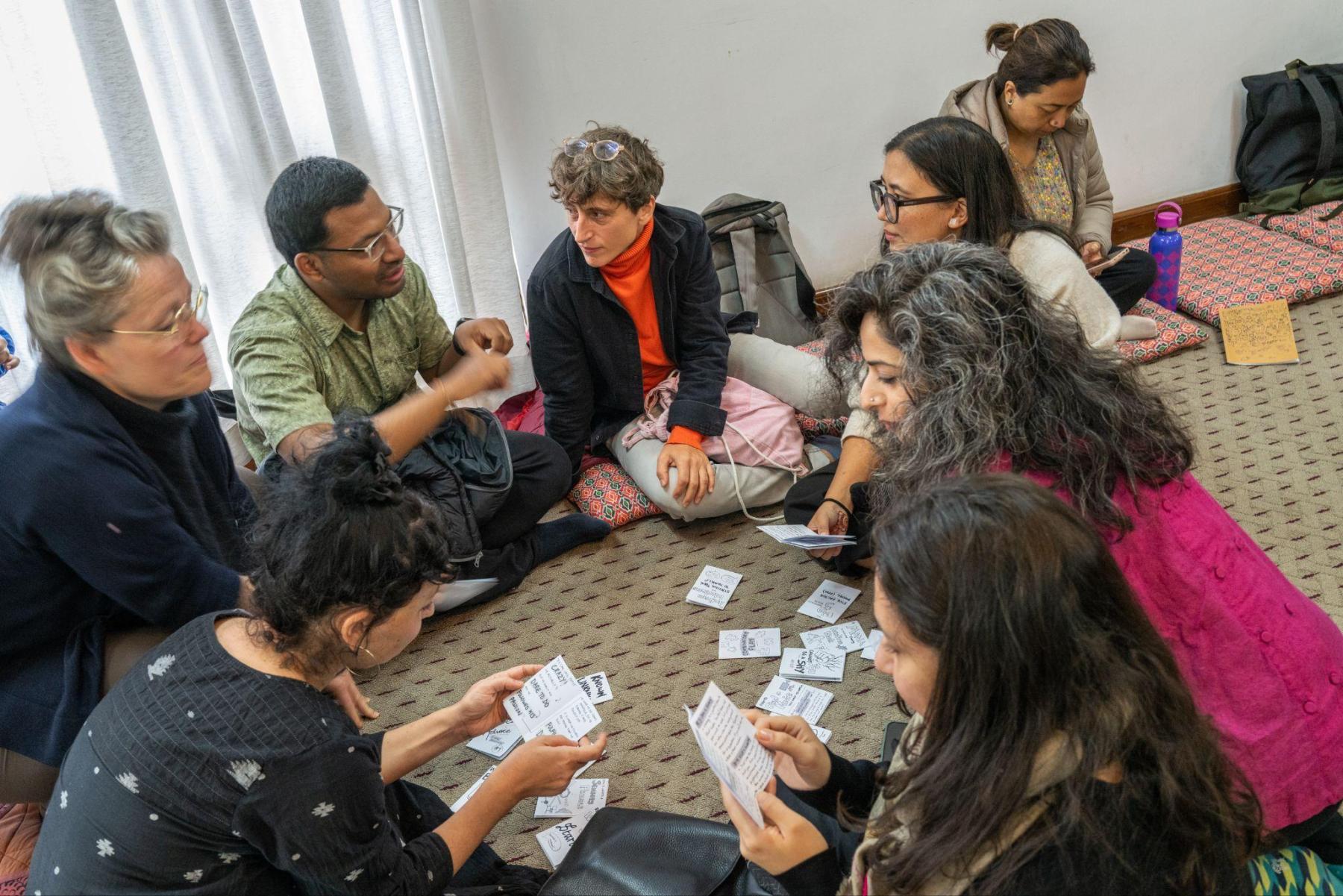
There were a few exercises from the Assembly that really stood out. One of them was a very simple rowing exercise. We all stood in a circle, one behind the other, and had to pretend to row in one direction. At any moment, someone could call out, “Change, or turn!” Then everyone would have to shift direction, and it would become chaotic because there would be some confusion. Once we rowed enough times, people would fall into a rhythm. But then someone would change or turn and we had to shift again. It was interesting to watch it unfold because you could see people working with each other, noticing what other people are doing and then getting into a rhythm together. I thought it really beautifully encapsulated what all of us try to work with in the world. I know that is a very broad statement, but just as organisers and artists, we are always thrown challenges and struggles, so then how do we work together as a community? The exercise was a visual and physical depiction of that, which was a really nice introduction to the Assembly.
Another really interesting group exercise involved the idea of witnessing. An artist or someone from a collective or an organisation would be the storyteller, the interviewee. There was one person who was in charge of being the interviewer with the list of questions that were designed by members of the Assembly. And finally, there were two listeners or witnesses. They were made to sit behind the person being interviewed, out of sight, just listening and taking notes. After the interview, the witnesses recounted what they had heard. The witnesses would process the story and naturally, with their own lived experiences, add on layers of their own personal experiences and perspectives to retell the story to the storyteller. When we are so close to what we do, sometimes it is hard to step back and observe from a different perspective. So to have someone listen deeply to you and then tell your story with care and tenderness, and point out things you never noticed, or remind you of why you do the work in the first place, was so meaningful. All of the people who were interviewed cried. I do not have any other words to describe that back-and-forth besides saying it was a very special moment—a true connection of not feeling like you are alone.
The conversations that blossomed after the exercise were really incredible. In the groups that I was a part of, the image of a bridge came up a lot, as did the image of a web—the idea being that you do not have to be a container for everything and hold everything. You can be bridges—you can connect people to different ideas, opportunities and practitioners. To think about it that way was really helpful in addressing some of the questions that I myself arrived with: I am an artist, I work in community organising groups and then I also work at a nonprofit foundation in the United States—is what I am doing enough? How do we collectively resist? It was really helpful to have these images in my head—of bridges and webs, where you cannot do it all, you cannot do it alone. And it is in moments or spaces like the Assembly that PhotoKTM provided—where you are able to deeply connect with someone, to have these conversations and actually learn about their circumstances, their struggles and how they deal with these struggles—that sparks different ideas and brings everyone together.
Tabara Korka Ndiaye: The Assembly was a particular space, and I got to come with so many questions. I am very preoccupied with questions around how do we live in this world right now? What we are witnessing in Congo, Sudan and Palestine are genocides. And I live this in my body. I try to think about how to be a witness in times of genocide. What does it entail to live in the world like ours right now? What are our obligations towards one another? How do we show solidarity? What does solidarity mean? What are some of the things that we can learn from past histories of resistance?
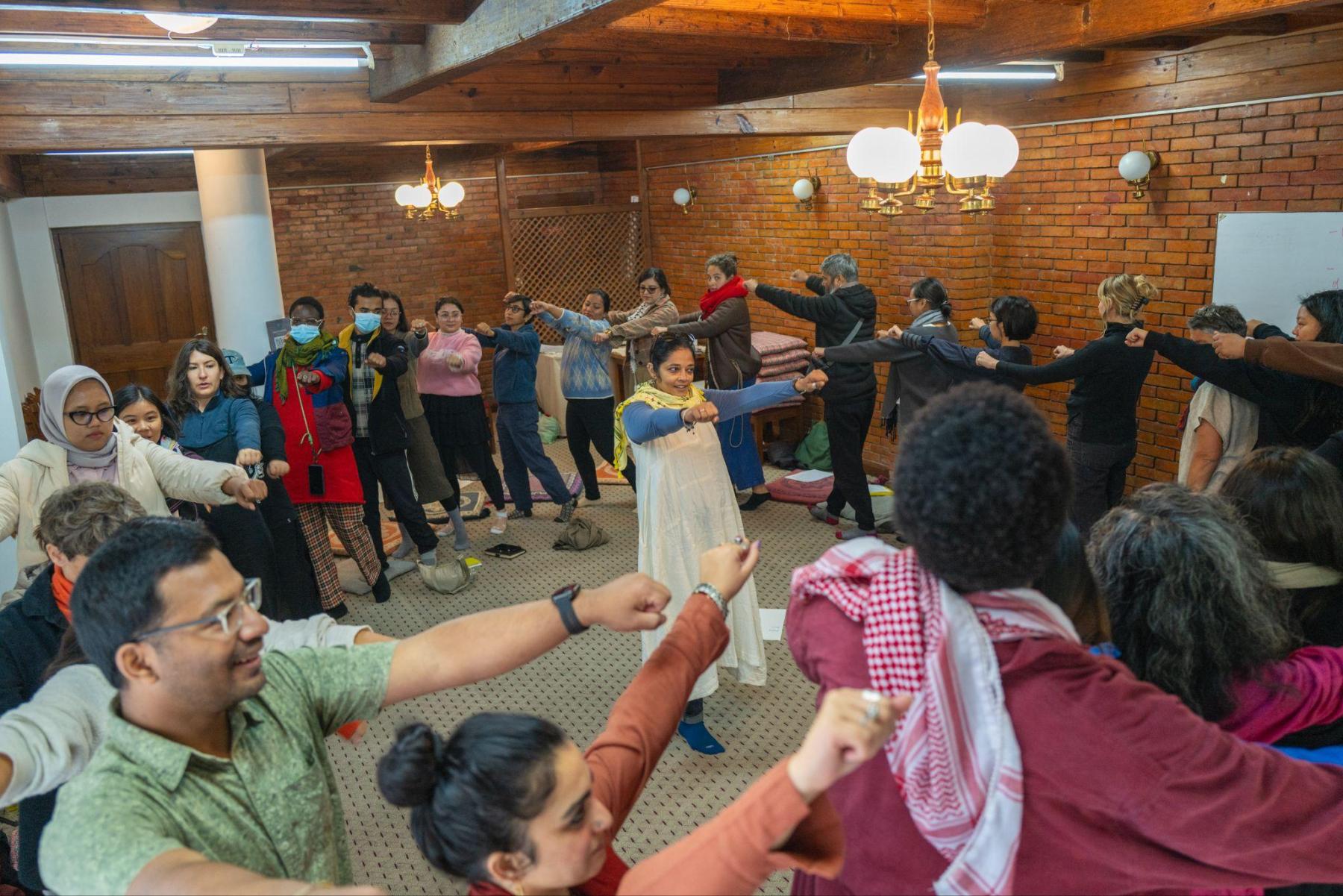
We were absolutely lucky to have two facilitators—yasmine and Prathama—who not only gave us prompts and questions that grounded us in emotions but also gave space for our questioning to be shared with everyone. I was very moved to have the opportunity to connect with people from India, Bangladesh, Pakistan and Nepal. I now have comrades from all these places and we are building bridges between us to be able to think about how we want to live in this world. I feel that now I am not alone and that there are many more people that are thinking about the same things.
I hope that all of us will take back what we learned and share it wherever we can—with our comrades from everywhere else, because it was really, really moving. I even talk about the whole festival in itself because can you imagine—in this world right now, in times of genocide, where have you seen artistic events taking place where they have given all the space to Palestine? This was a very intentional showing of solidarity. This is not how the art world is responding to this time. There have been biennales happening throughout the genocide; yet none of them have mentioned Palestine. So it is very significant that PhotoKTM gave space to the struggle of the oppressed people of the world. That was very powerful. That is what I love the most about this festival. I am very moved that there was space to think about these questions.
In the Assembly, somebody said something that I will never forget—they said solidarity is material. And this is a very important element because we cannot allow ourselves to be feeling solidarity with people and spaces and struggles while we do not endorse, for example, something as simple as the boycott, divest and sanction principles of the BDS movement. We can spend thousands of hours speaking about what we think or feel, but at the end of the day, we have to show up and we must fully be there for one another, for our brothers and sisters that are in struggle in all these places in the world. None of these things are abstract. We need to ground ourselves in this idea: solidarity is material.
Even when you talk about care, I will look at how you care for one and for the others and how you are being cared for. For me, it is no longer questions that I just theorise; this is about how I live my life. From my experience, in academia and the art world, there is a co-optation of the discourse; but then in practice, there is nothing. So I would like for us to think about what it means to use these words to claim this discourse. Are we truly doing this between ourselves? And this is where the Assembly comes in because we got to ground ourselves in the real world, in real-life situations.
To learn more about PhotoKTM6, read Mallika Visvanathan’s interviews with yasmine eid-sabbagh about her work Possible and Imaginary Lives and Diwas Raja KC on the approach of the curatorial team, Birat Bijay Ojha’s reflections on public talks by Sasha Huber and Siona O’Connell and Prabhakar Duwarah’s two-part conversation with Isadora Romero and Tanvi Mishra on Humo, Semilla, Raíz.
All images by and courtesy of Phoebe Chen.