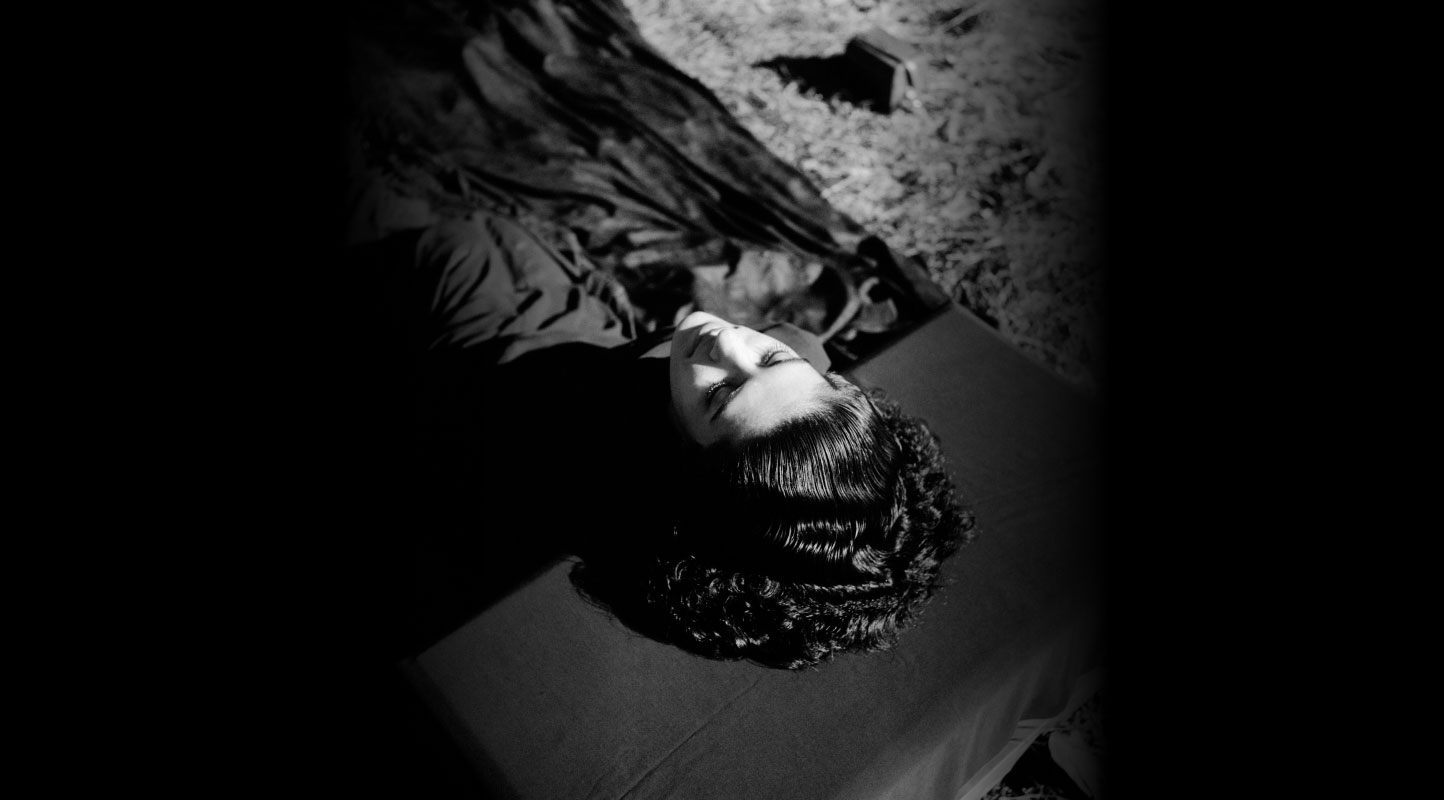


Against Image Reproduction: On Colonial Violence, Indigeneity and Sovereignty
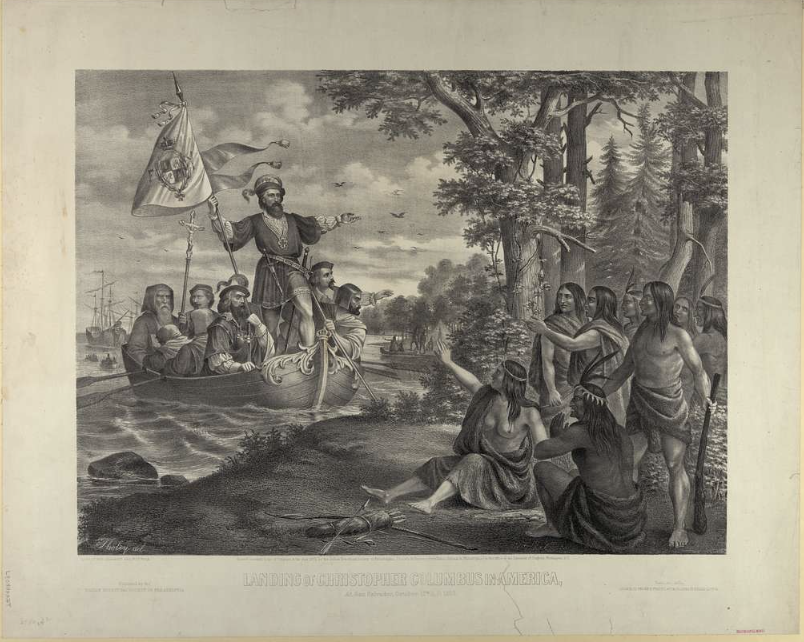
In his preface to the first German edition of Capital, Volume 1, published in 1867, Marx writes this often-quoted sentence: “The country that is more developed industrially only shows, to the less developed, the image of its own future.”
More than anything, this vision is a lament, a haunting spectre of what is to come—a warning of the operation of capital through which varied modes of life and ways of being would see a gradual death, forced to be reproduced in the image of the more industrialised. Such image reproduction would first occur within Europe—remember that this statement itself refers to Germany being developed in the image of England—and then, once capital had reached its geographical limit for expansion within Europe, it would spread its fangs to Asia, Africa and the Americas. Colonial conquest in the façade of ‘civilisation,’ dressed as ‘progress’ would be what Europe bequeathed the world: a narcissistic impulse to make the other like oneself, premised on the distorted belief and manufactured discourse that the other was barbaric and that the other desired to be like Europe. But in the self-image of the other, it was precisely the image of Europe—man dressed in suit and boot, alienated from oneself and nature—that was the picture of depravity.
Struggle ensued: between those who retained the image of themselves and those who would lose themselves to become shoddy reproductions of an image premised on falsity. Nowhere would this struggle be more persistent than amongst those who live amidst nature, in an interdependent relationship with what grows naturally and in abundance as long as it is not exploited. Indigenous peoples, first people, Adivasis—who belong to the land and to whom the land belongs, who nourish and are nourished by the land—are the footsoldiers in a 500-year-old battle that has burned out, appropriated, or vanquished a majority of those whose refusal is resistance. It is to them, the protectors of this Earth, that we owe our survival, our lives and our collective freedoms. And it is with them and with their friends that we ought to stand, learn from and sing songs. Especially when power applies pressure, in a repetitive and cyclical fashion, towards the extraction of natural resources. As it has done, yet again, this past week.

On 3 January 2026, the Donald Trump administration had the audacity to bomb Caracas, the capital of Venezuela, and abduct its head of state, President Nicolás Maduro and his wife, First Lady Cilia Flores. The American president has called this act—codenamed Operation Absolute Resolve—one of the “most stunning, effective and powerful displays of American military might and competence in American history.” Slave to repetitive compulsion, the bizarre impulse towards “intervention” for regime change, with no basis in international law—which in itself has proved, since 7 October 2023, to be impotent at best, but really in cahoots with capital—has seen an absurd image being drawn up. Disguised as an anti-drug operation against “two indicted fugitives” for alleged “narco-terrorism conspiracy and cocaine importation conspiracy,” Venezuelan-trafficked fentanyl has now been caricatured as a “weapon of mass destruction,” reminiscent of the flimsy excuse upon which America qualified its imperial violence in Iraq and Afghanistan. But now, as it was then, the civilisational impulse is really about oil, for Venezuela has the world’s largest oil reserves.
Unlike previous American presidents, who were able to keep up the façade of freedom for a wee bit longer, the present president wastes no time. Within hours of the attack, he claimed that the U.S. would “run the country” and “take out a tremendous amount of wealth out of the ground.” Trump translated the nationalisation of Venezuela’s oil industry between the 1970s and 2000s, that had forced out U.S. oil companies, as Venezuela taking away America’s energy rights. “And we want it back,” he said in December. Not just Venezuela, Trump has threatened military action against Colombia and said that “Cuba is ready to fall.” Colombian President Gustavo Petro has called for the unity of all Latin American countries to prevent being “treated as a servant and slave,” even as he pleads “we do not look only to the north, but in all directions.” Is this an urgent call, not merely in rhetoric but also in action, to a spirit of global solidarity and internationalism that Fidel Castro demonstrated when he provided military, medical and educational support to national liberation movements across Africa?
From the archives: Watch the violent capture of Patrice Lumumba, recorded on the evening of 27 November 1959. (Source: africa_global_news.)
On the same day as the kidnapping of Venezuelan President Maduro, a coup and assassination attempt was planned against Burkina Faso’s thirty-seven-year-old President Captain Ibrahim Traoré. Traoré’s inheritance is the legacy of another of Burkina Faso’s revolutionary leader, Thomas Sankara—once known as Africa’s Che Guevara—whose radical leadership was influenced by the Black Panther Party, with land reform and anti-imperialism being at the core of his politics. It is this historical lineage that informs Traoré’s decisive actions to nationalise gold mines and take control from foreign-owned firms. At the Russia-Africa Summit in July 2023, Traoré asked a rather simple but fundamental question: “The questions my generation is asking are… we do not understand how Africa, with so much wealth on our soil, with generous nature, water, sunshine in abundance, is today the poorest continent.”
To privilege African interests and protect national sovereignty, Burkina Faso, Mali and Niger have cut ties with France and the United States. They have formed the Alliance of Sahel States (AES) to “put an end to all occupation forces” in their countries.” The AES has set up a new finance and development bank without recourse to Western lenders, withdrawn from the International Criminal Court and proposed a Sahel penal court, and joint military forces. Increasingly becoming known as the “new rockstar of Pan-Africanism,” Traoré’s fight for an Africa free from Western imperialism and neocolonialism appears to honour the martyrdom of Patrice Lumumba, the first prime minister of the Democratic Republic of Congo. Lumumba was assassinated on 17 January 1961 in a detestable coup with the help of Belgian mercenaries in Katanga, which contained much of Congo’s natural resources and had attempted to secede from Lumumba’s Congo with the support of Belgium and the mining company Union Minière. The colonisers and collaborators were so afraid of the ideas and memory of Lumumba that they hacked his body into thirty-four pieces and dissolved it in sulphuric acid so that all that remained was a gold tooth. They wanted to erase his existence, but history remembers him as a symbol of pan-African solidarity, national sovereignty and non-alignment. Non-alignment—formalised after the 1955 Asia-Africa Bandung Conference, with India as a founding member—contains histories of shared struggle that are not mere totems or cultural legacies that lend themselves to fetish or nostalgia in our present, a time disjoint. Rather, they activate images of possible futures, for jal, jangal, jameen (water, forest, land), held in forest lands, whose lores are sung in prison cells by the guardians of citizenship, locked up for protecting the premise upon which freedom promises its arrival.
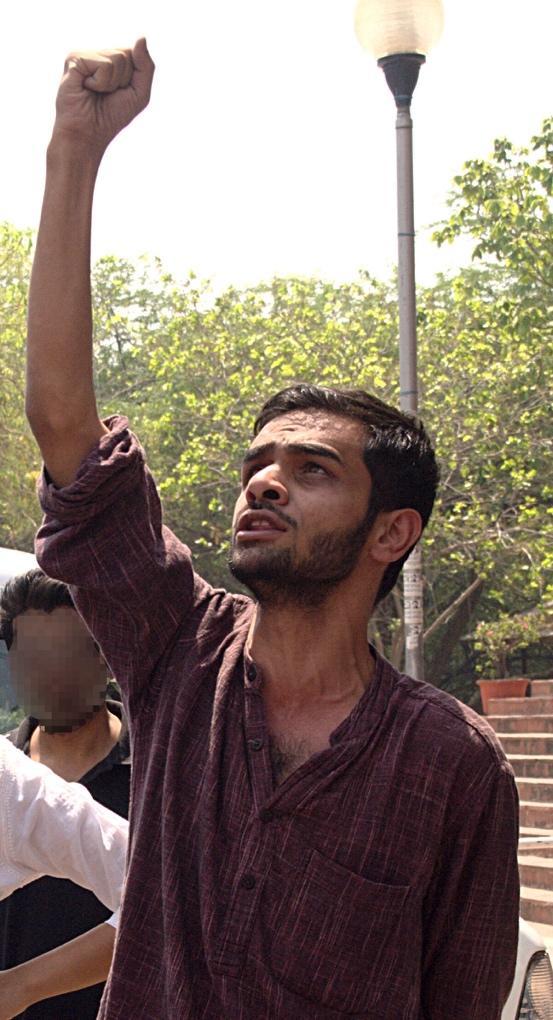
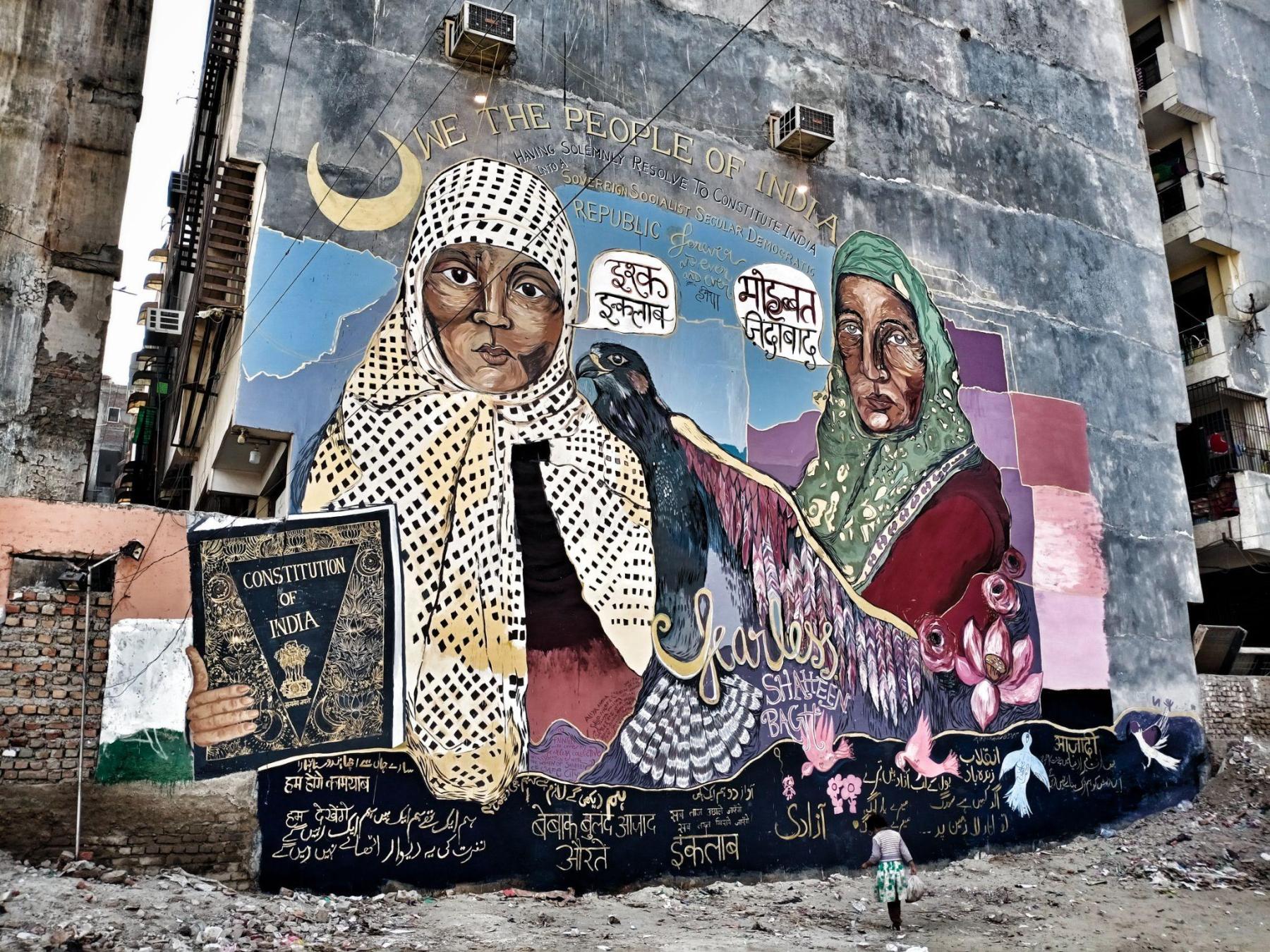
After spending five-and-a-half years behind bars for being booked under the Unlawful Activities (Prevention) Act, 1967, Sharjeel Imam and Umar Khalid were denied bail by the Supreme Court on 5 January 2026. The court alleged that they had “architectural” roles in the so-called Delhi Riots Conspiracy Case (2020)—which ought to actually read as protest against the 2019 Citizenship Amendment Act. The draconian act in concert with the National Register of Citizens puts at risk the citizenship of Muslims, Dalits, Adivasis and a majority of the nation’s population that lives on the margins and is unable to produce property documents as proof of their existence. In response to outrage against the rejection of the bail plea, former Solicitor General Harish Salve remarked on the significance of “context and course of conduct in conspiracy cases” aimed at “disrupting the state” and threatening national security, thus reawakening the semiotic sorcery of the colonial state through arrests of anti-colonial revolutionaries branded “terrorists” in multiple conspiracy cases—one of the most painful being, the Lahore Conspiracy Case which brought about the martyrdom of Bhagat Singh, Sukhdev and Rajguru. But history repeats itself, first as tragedy, then as farce. Who would know this better than a historian.
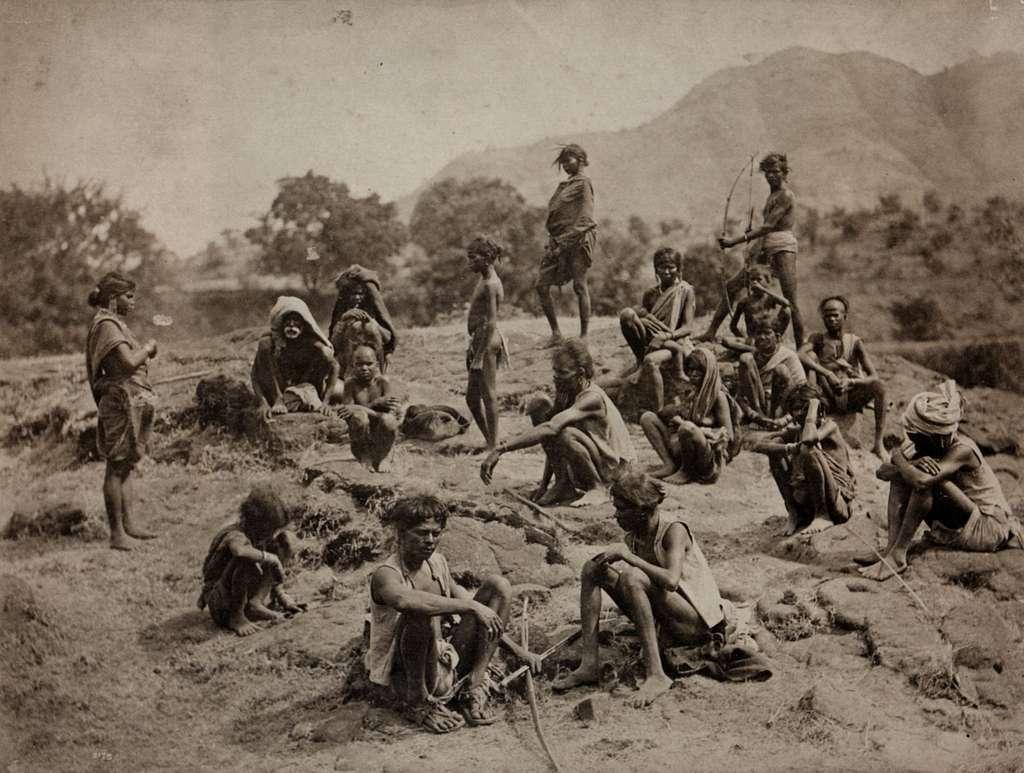
Khalid’s doctoral dissertation, titled “Contesting Claims and Contingencies of Rule: Singhbhum 1800–2000” is a historical study of Adivasis in Jharkhand. In the thesis, he documents how the colonial state reshaped forest land, the legal framework, and economic and political structures in Singhbhum, as well as the responses of Adivasi communities to the transformation of their lands and lives. Critiquing the drawing of a straight line between Adivasi protests in the colonial past and in the present for “essentialising Adivasis as homogeneous communities,” his work demonstrates that “while many Adivasis resist the incursions of the state,” others collaborate, while some negotiate to improve their standing in their communities. Khalid insists that there are many different kinds of Adivasis, but even as he is brandished as “urban Naxal,” Operation Kagar has collapsed into one another, the meanings embedded in the terms Adivasi and Naxal, the two no longer distinct in the logic of the state, still colonial, still profit-driven, still serving the national bourgeoisie—in Fanon’s schema, now become the substituted hegemon. All of this, without even raising the question, who is Naxal anyway? Has it become the new catchall for “terrorist,” whose legacy of use in the colony is pinned to those who struggled for the freedom of their people from colonial rule? The freedom to be self, to not be made into a ‘savage’ other, to not be an image-reproduction, but an image of reality—existing and potential.
Perhaps, this is the spectre that haunts, a spectre not fed by nostalgia of what was but of what can be. A spectre that produces desire. To act—and receive the inheritance of Babasaheb Ambedkar, who gifted the world’s largest democracy her constitution—to educate, to agitate, to organise.
To learn more about movements and solidarities across the Global South, read Natasha Gasparian’s essay on Johan Grimonprez’s Soundtrack to a Coup d’État (2024), Fatimah Fildzah Izzati’s two part essay on Bachtiar Siagian’s Turang (1957) and the legacy of Lekra, Neringa Tumėnaitė’s reflections on Souleymane Cissé’s Finye (1982) and Mallika Visvanathan’s interview with Diwas Raja KC on the curatorial impetus behind PhotoKTM6.