

Reproductive Work and Sexual Labour: Mira Nair’s India Cabaret
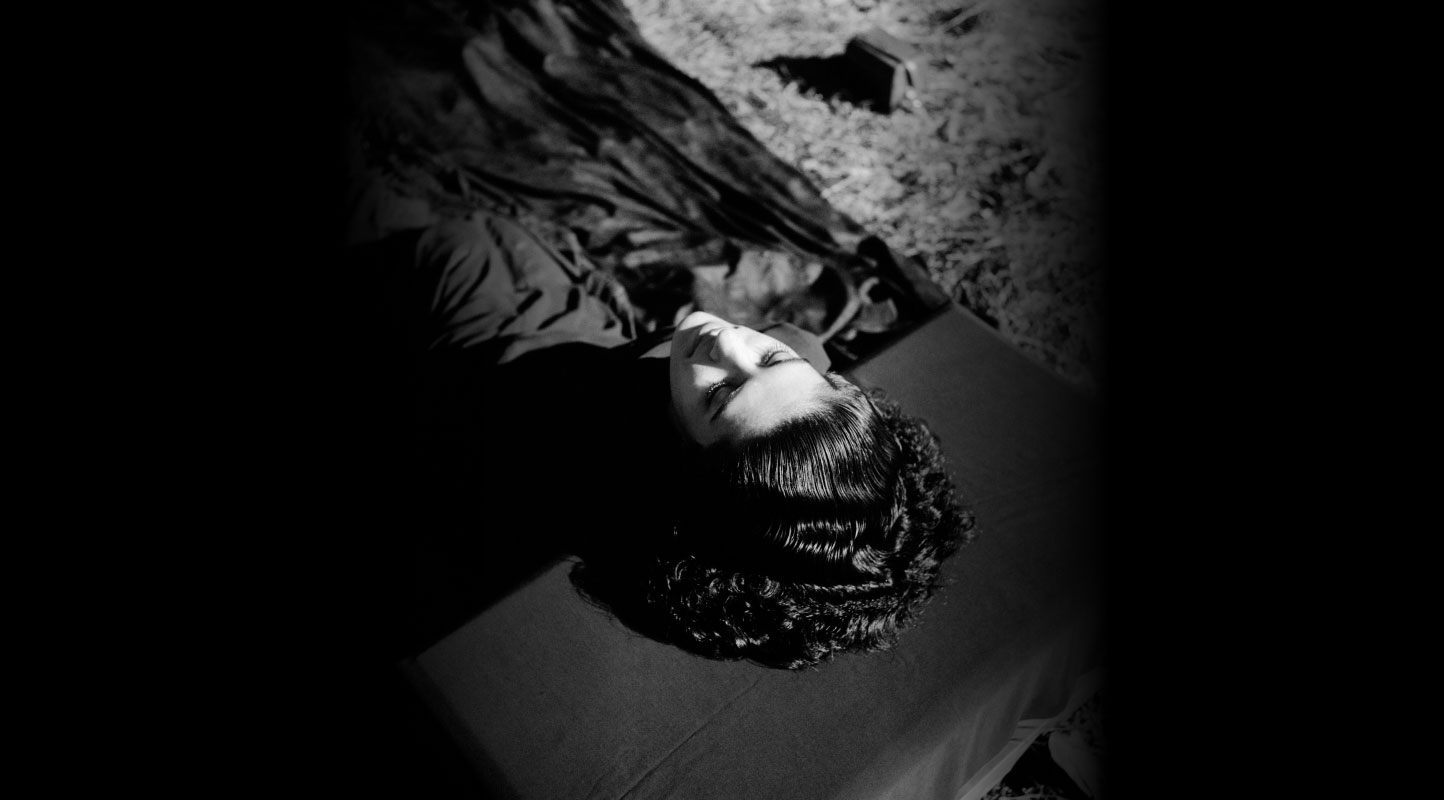
Mira Nair’s India Cabaret (1985) is one of the early feminist documentary films to explore the sexual economy of dance bars and prostitution in what was then Bombay. The 60-minute film screened last year as part of the programme Rewriting the Rules: Pioneers of Parallel Indian Cinema curated by Omar Ahmed at the Barbican Centre in London. It presents an intimate glimpse into the lives of bar dancers at the Meghraj Cabaret in Ghatkopar, located in suburban Mumbai. Striptease cabaret dancing as a profession emerged in the early '80s, where risqué choreographies were staged in working-class bars. The dance bars were inspired by mainstream Bollywood films from the 1950s onwards, with the rising fame of onscreen cabaret queens like Cuckoo Moray and Helen (the H-Bomb).
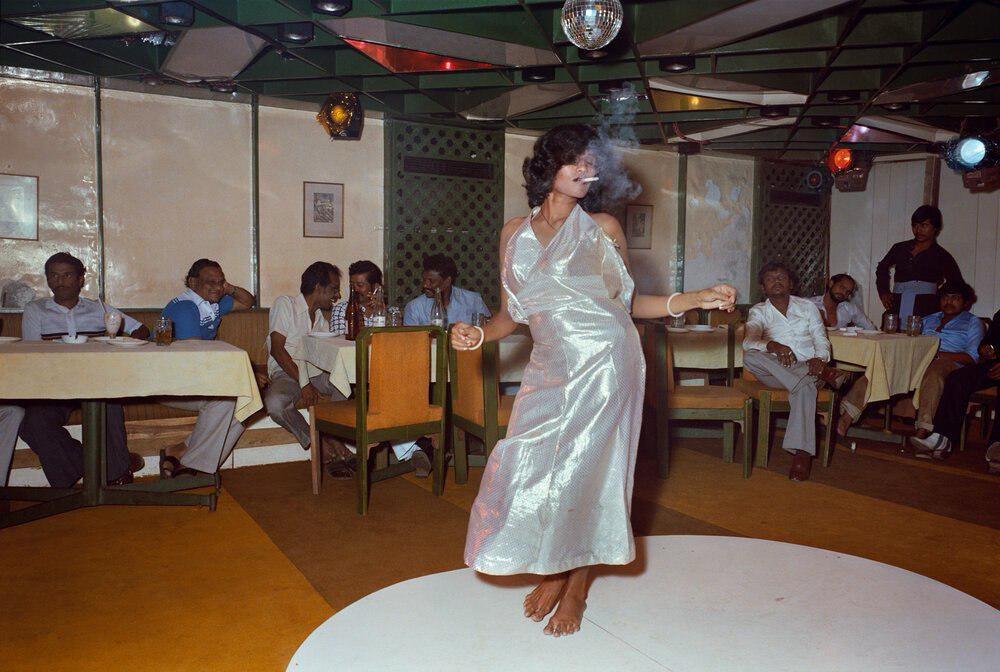
Cabaret dancing in bars and permit rooms was also the predecessor to the popular Mumbai dance bars of the twenty-first century. Set in Bombay in the mid-’80s, Nair’s documentary India Cabaret explores striptease cabaret dancing and sex work mainly through two protagonists—Rekha and Rosy—who are both shaped by the rapidly liberalised economy of the post-independence era, and who have widely different approaches to sex work, love, family and money.
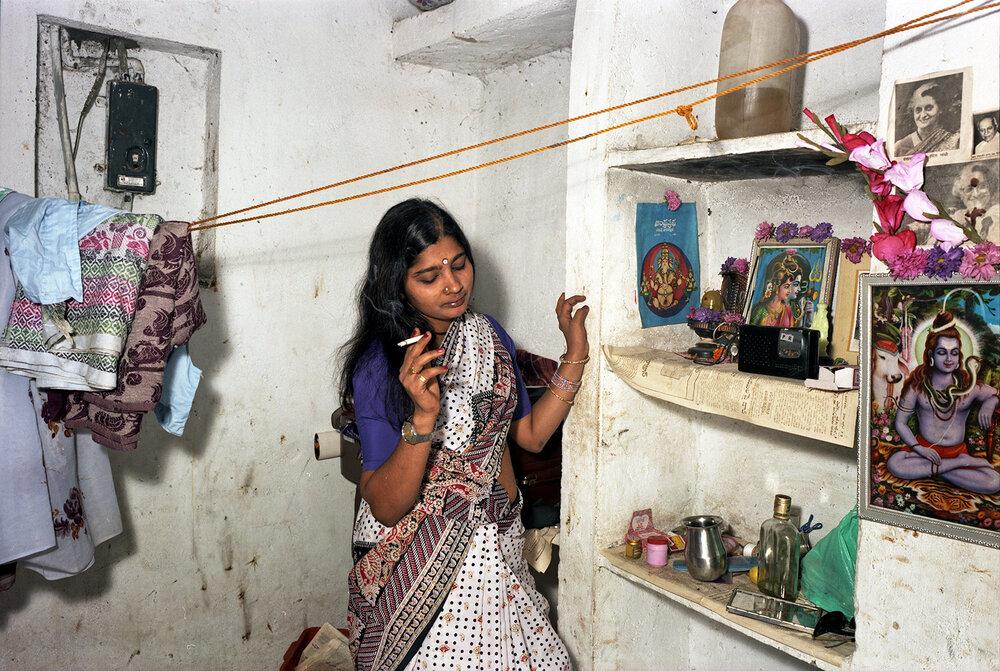
In the opening scene of the film, Rekha, draped in her traditional sari, with a reflective crystal bindi on her forehead and long dark hair, brazenly smokes cigarettes while claiming that among all the sex workers she is “number one wicked.” Rekha recounts a parable where God meets Sati Savitri (a virtuous woman) and a prostitute on Judgement Day and gives the prostitute the keys to his own bedroom; she laughs wickedly before adding that the moral of her story is that even “God wants to fuck her.”
For Rekha, sex work is incompatible with shame; she is mildly amused while explaining that no one in her village in South India would understand the concept of striptease cabaret dancing, it is a way of earning a livelihood that cannot be imagined or assimilated as a real factor in the life she has left behind. Her anonymity as part of the migrant workforce in the burgeoning liberalised economy of Bombay preceded the current technological infrastructures that keeps us networked and visible within 24/7 capitalism such as Instagram, Facebook and Tiktok. Having been sold into prostitution as a young girl by her husband, Rekha embodies a radical acceptance of fate. She is fearless and believes in the economic stability of her future, priding herself on her income and autonomy. Rekha plans on marrying her current lover and living in a house she has recently bought.
Rosy represents her antithesis; with her feathered bob and childlike smile, she retreats at the presence of the camera. Rosy’s relation to cabaret and sex work is riddled with shame. While none of the women working at the Meghraj are professional dancers, Rosy in particular is prone to drunken scenes before her striptease performance; she is either luminous or ends up drunk and unconscious on stage. In the second part of the film, the crew accompanies Rosy as she travels to her ancestral village in Andhra Pradesh to attend her sister's wedding. Unfortunately, she is left standing at the doorway; she is not allowed into the house, and her mother refuses to speak to her. Rosy remains deeply troubled by her loss of home and family, and despite the social ostracisation as a sex worker, she assumes the economic burden of her sister's wedding and the medical expenses relating to her mother’s health.
The differences between the two sex workers in the film are stark; while Rekha is determined to create her own destiny, Rosy allows herself to be exploited by a family that has long disowned her. While Rekha revels in anonymity and aspires to upward social mobility in the city that never sleeps, Rosy is plagued by loneliness and wounded by the loss of her identity and family.
The prominent Italian Marxist, Silvia Federici, in her groundbreaking manifesto Revolution at Point Zero (2012), has argued that at the heart of modern patriarchal capitalism lies the ongoing reproductive slavery within the private sphere. Federici argues for the right to demand wages for housework instead of proliferating stereotypes such as "loving wife" and "benevolent mother" that are feminised ideals created to extract a “labour of love.” Women in patriarchal societies are socialised right from childhood to provide round-the-clock access to their bodies and labour without adequate compensation or wages. The historical accumulation of unwaged reproductive labour extracted from women in patriarchal societies is what she calls "primitive accumulation," one that undergirds capitalist societies.
The ongoing reproductive labour within the private sphere of the household comprises the nurture and care required for the subsistence and maintenance of the family but also makes possible the social reproduction of workforces for capitalism to proliferate. The devaluation of reproductive work is even more acute in the developing world. Here, the infrastructures of social reproduction have been systemically dismantled through the privatisation of schools, crèches and hospitals that are no longer part of the social welfare state. The informal workforces of the service industries such as domestic and care workers consequently remain highly underpaid, while other forms of reproductive and sexual labour—such as surrogacy and sex work—remain highly contested and often illegal.
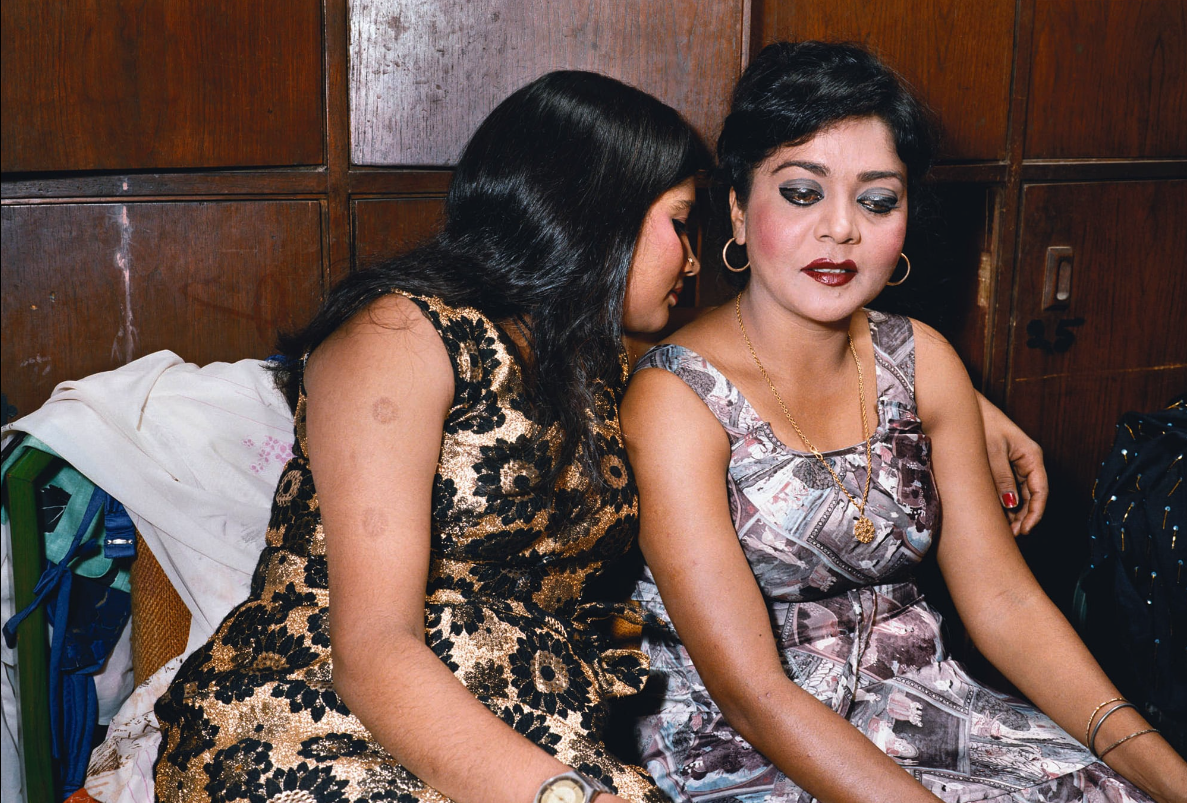
Both Rekha and Rosy are located on the fringe of society as precarious sex workers who are disenfranchised from political rights due to illegitimacy and stigmatisation. In the case of Rosy, there is a rejection of the reproductive labour she offers to obtain the love and acceptance of her family. The desire to provide the care labour required by her aging parents is obstructed, and she is excluded from her sister’s wedding despite having funded it. Through monetary transactions, she attempts to mend these irretrievably broken social bonds. Though sex work generates income, Rosy remains dispossessed; she does not own her economic independence, and it never becomes a source of pride or political autonomy. She remains trapped in a cycle of patriarchal disciplining and punishment through impositions of sexual morality and normativity that are inextricably linked to family honour and exercised via shaming and social exclusion. Rosy has internalised the punitive idea that her earnings through exchange of sexual labour do not rightly belong to her; she uses them to repair family bonds and as a bargaining chip to access otherwise forbidden social spaces but fails in this too.
In India Cabaret, there are numerous instances when the moral threat posed by bar dancers and sex workers is clearly defined. The film highlights the distinction between different kinds of reproductive labour, contrasting interviews with sex workers and traditional housewives of clients who frequent the Meghraj. While the sex workers dream of stable families and respect in society, the housewives imprisoned in the domestic sphere dream of freedom and travel. At one point, the sex workers complain that men in the working-class suburban neighbourhood eve-tease and harass them, and over the course of the film, we see that the presence of a film crew makes locals suspect them of filming porn on-site, and the threat of eviction becomes very real.
Nair’s documentary itself rests on the margins of parallel cinema in India; it offers a bold depiction of sex work and striptease cabaret because as an early feminist documentary on sex work, the narrative is not driven by the “saviour complex” or viewed through the lens of non-governmental organisations (NGOs) and their depiction of this demographic as rehabilitation and rescue projects. Instead, Nair takes as inspiration the French cinema verité documentaries that emphasise the filming of "reality as it appears," rather than relying on extraneous modifications such as voiceovers, scripted dialogues, montage or sound.
Moreover, unlike other parallel cinema from the ‘80s in India, Nair’s film about sex workers was not funded by the government, allowing her to follow a different trajectory than the didactic narratives found in feminist documentaries like those by the Yugantar Film Collective from the same period. This aspect positions Nair’s observational documentary on cabaret dancers and sex workers quite uniquely. Within a decade following the making of India Cabaret, Mira Nair’s feminist contestation and the consequent censorship of the on-screen portrayal of women’s sexuality in Kama Sutra: A Tale of Love (1996) would become a well-known polemic in India.
To learn more about films screened as part of Rewriting the Rules, read Sanjita Majumder’s essay on G. Aravindan’s Thamp̄ (1978) and Kshiraja’s reflections on John Abraham’s Amma Ariyan (1986).