
Between Street and White Cube: 'No Trespassing' at the Ishara Art Foundation
Ishara Art Foundation, a South Asian art institution based in Dubai, sits in the city’s industrial district, now turned into its arts and culture district. Referencing this provenance, the white cube is made of corrugated tin. The hot industrial façade and the cold pristine interiors contrast one another, adding to the effect of being transported from the outside world into the art world. On view at Ishara Art Foundation from 4 July to 30 August 2025, the exhibition No Trespassing, curated by Priyanka Mehra, confronted this very boundary, and also marked the first time that the Foundation showed non-South Asian artists and non-Emirati non-citizens from the region. Mehra’s impetus—to bring street aesthetics into the white cube—intends to unsettle the distinction between outside and inside, informal and formal and public and private.
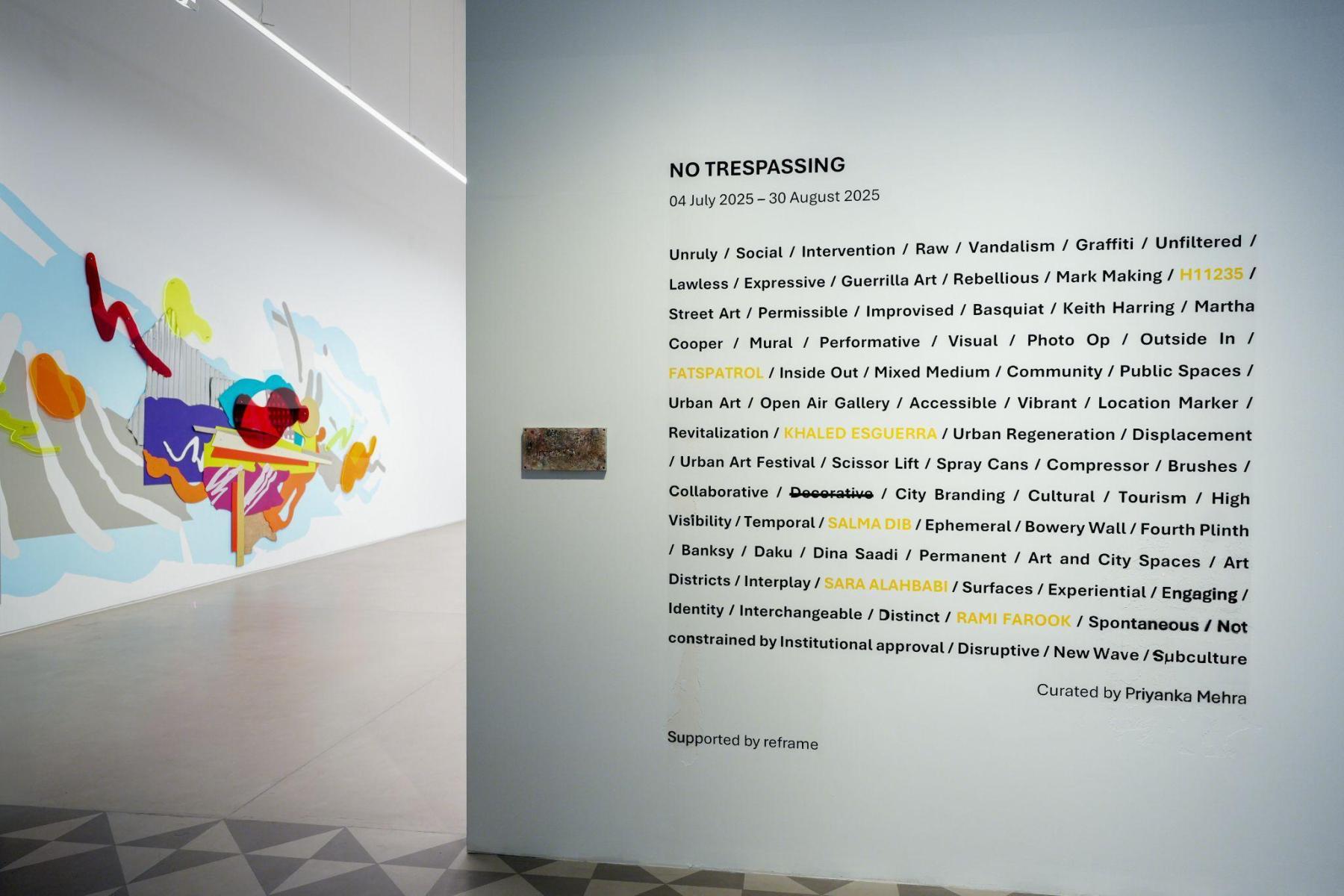
Installation view of No Trespassing at Ishara Art Foundation, 2025. (Image courtesy of Ishara Art Foundation. Photography by Faraz Khan.)
The artists’ engagements with the street are anthropological, biographical even. The street is present in concept and form, as well as in practice and production. Also figuring in the works are the artists’ bodies: where they have physically crossed, and in some cases, where they cannot go, making the show unexpectedly personal and vulnerable.
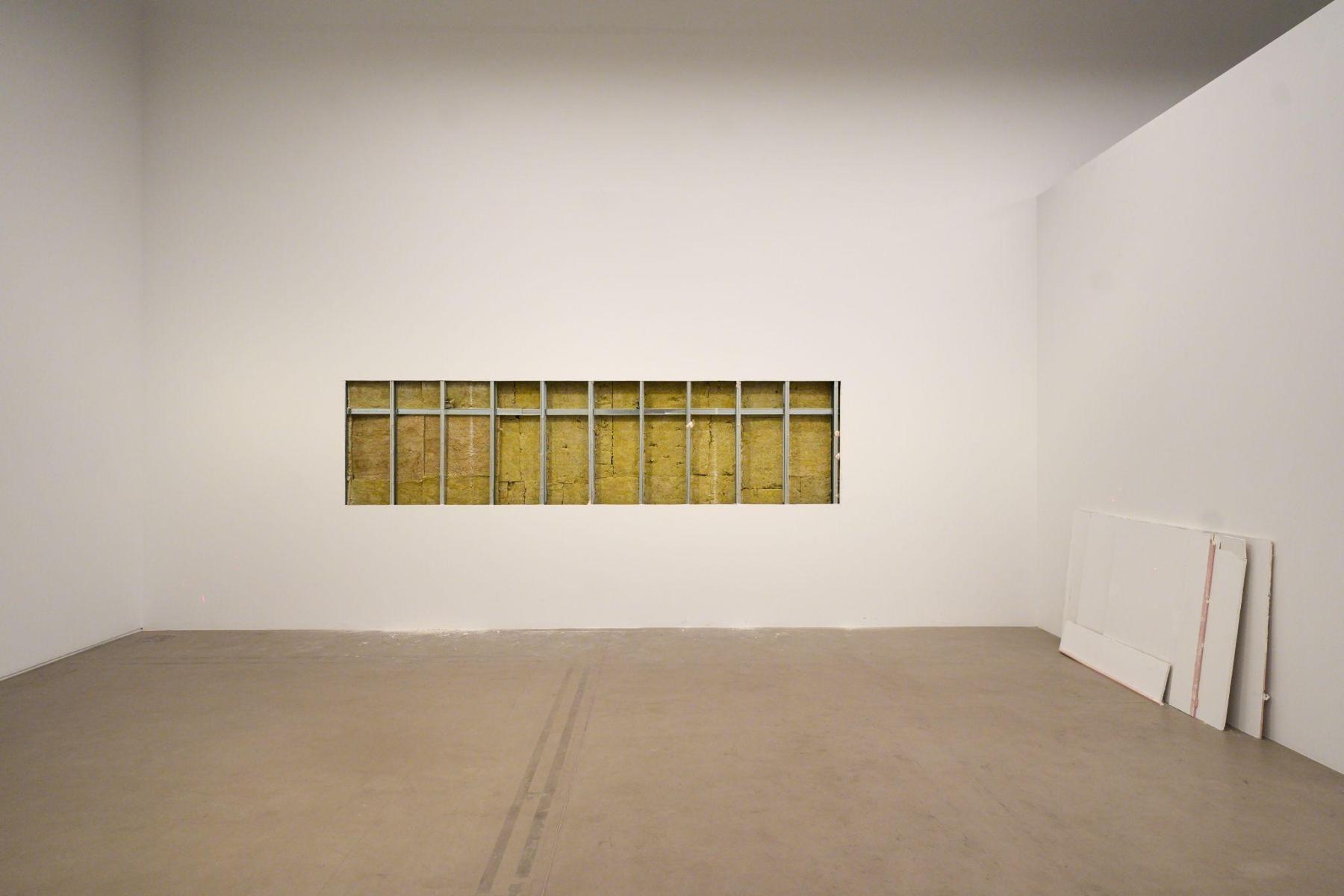
Gifts. (Rami Farook. 2025. Image courtesy of Ishara Art Foundation and the artist. Photography by Faraz Khan.)
Upon entering the space, one is confronted with a carved-up wall. The exhibition’s title, No Trespassing, crystallises immediately as one encounters the hidden infrastructure of the white cube. Definitively not a street artist, Rami Farook, the Emirati artist/curator/producer who manages his own brick and mortar, attempted to equate the act of tagging a street corner with a parallel he discovered inside the gallery. When you tag a wall, you claim public space. By cutting and gifting pieces of drywall to the foundation and its team, he makes a commentary on custodianship in private spaces. This powerfully underlines the point that No Trespassing is not only about the artworks but about the very wall itself.
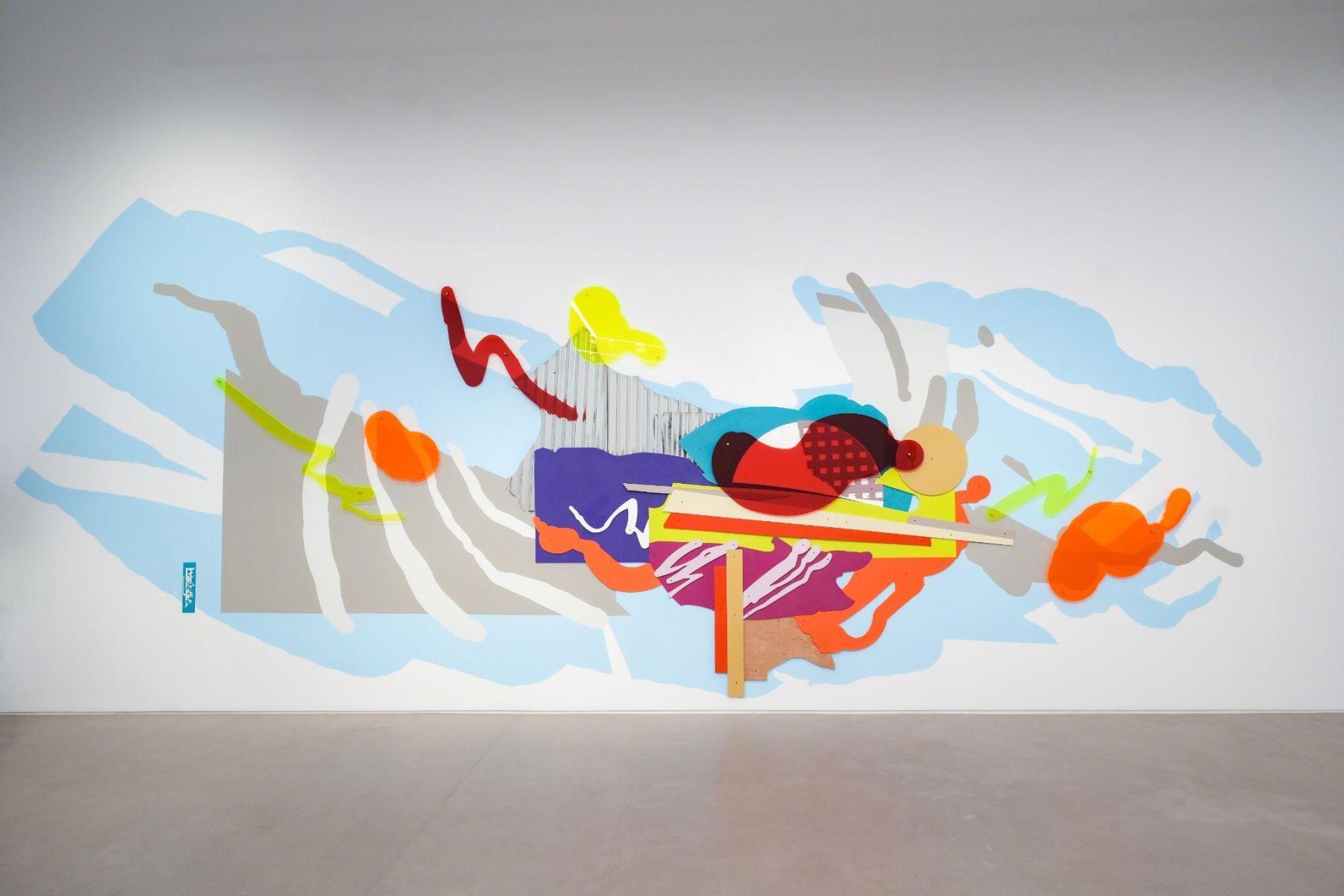
Our anthropocene conundrum. (H11235 [Kiran Maharjan]. 2025. Image courtesy of Ishara Art Foundation and the artist. Photography by Faraz Khan.)
Nepali muralist H11235 (Kiran Maharjan) could not get a visa to Dubai to execute his work for the exhibit. Street art would have never gone up on a wall it could not access, unless it broke the rules to get to it. Here, the institution stepped in to facilitate the work, affording resources to materialise an abstracted rendering of Maharjan’s original concept. The execution of the work within the white cube without the artist’s presence changed the essence of his art. While the work contained his signature colour blocks and the panelled texture from site-specific, found material, it lacked the photorealism the artist usually achieves with a fine brush. However, the significance of this work lies in its process, or the collaboration between artist and institution.
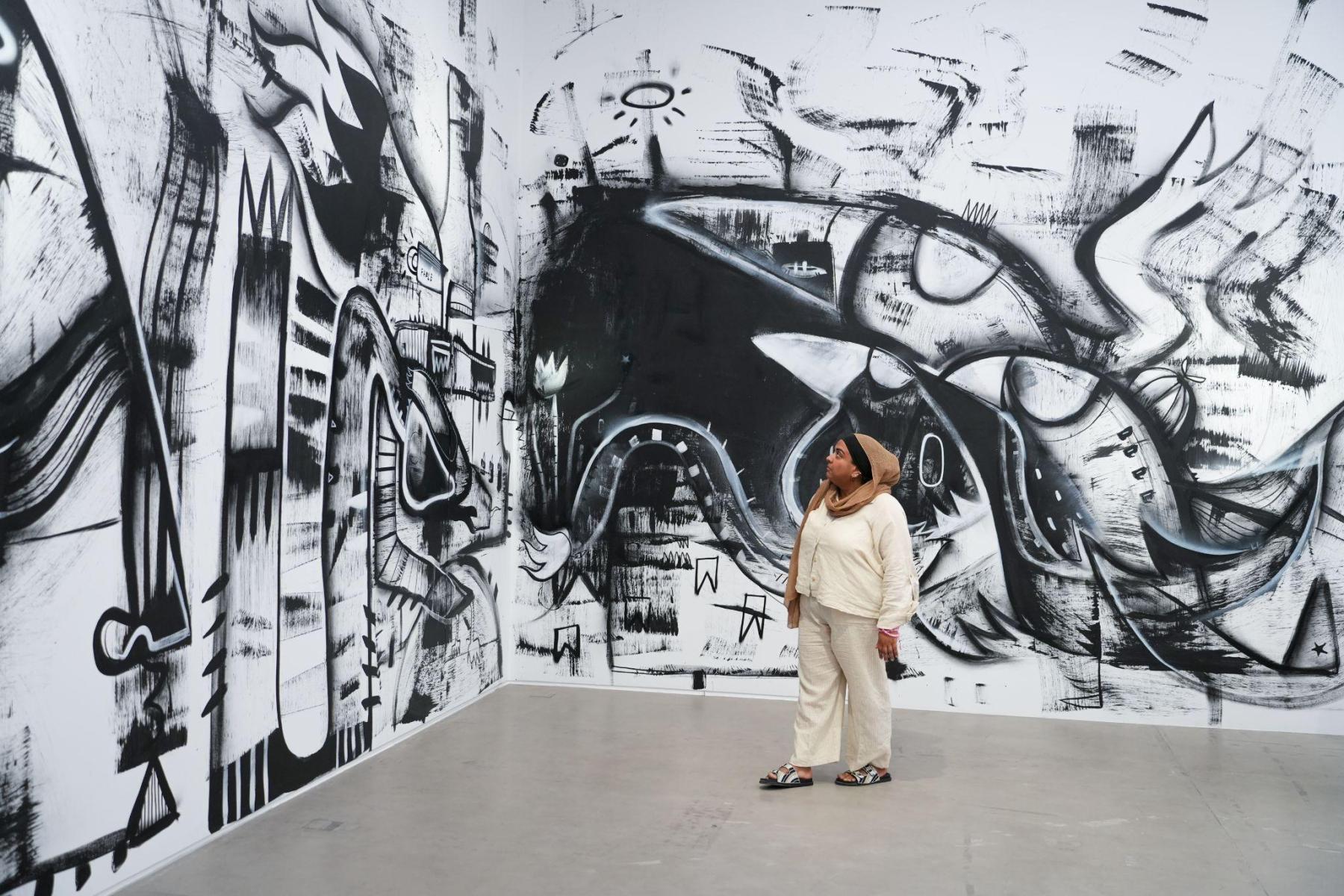
The World Out There. (Fatspatrol [Fathima Mohiuddin]. 2025. Image courtesy of Ishara Art Foundation and the artist. Photography by Faraz Khan.)
Fatspatrol (Fathima Mohiuddin), a multidisciplinary artist of Indian origin but born and bred in Dubai, is recognised as one of the first women street artists to emerge in the UAE. In her work titled “The World Out There,” she brings the street onto the wall in what is her first time working in a white cube space. While typically encountering the urban in its natural habitat, this time she scavenged and collected signs to display in the gallery, giving them a second life. As if a discourse on power between artist and space, she met the wall with a sweeping broom dipped in tar-black paint, matching the smooth, clean surface with her streetwise grit.
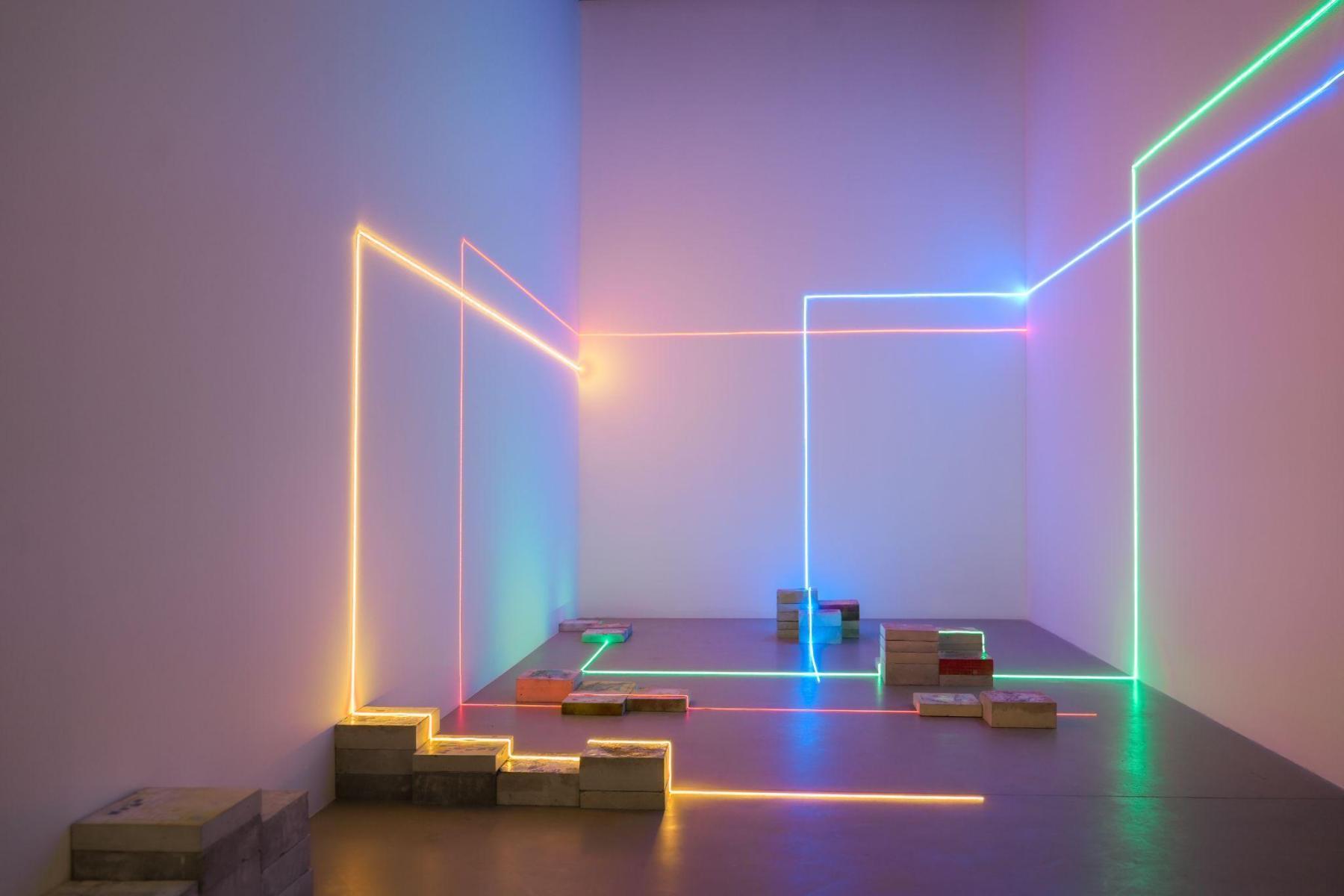
For a Better Modern Something. (Sara Alahbabi. 2025. Image courtesy of Ishara Art Foundation and the artist. Photography by Faraz Khan.)
Sara Alahbabi’s collection of maps of Abu Dhabi on cement blocks, integrated with LED lights, are an output of her practice of walking. Alahbabi documents the urban space of Abu Dhabi to remember it as it rapidly evolves with new development and placemaking projects. In the capital’s conservative and hot climate, her role as a pedestrian breaks free from the inclination and comfort of private space, almost as a gesture of duty and devotion to the street. Alahbabi makes a direct link between documentation of the street and the street itself. Describing her work, she says, “My brain started mapping out those paths, and the images became not just research but memory stimulators. When I see those prints on the cement blocks, it is like recognising familiar landmarks in my own personal atlas.”
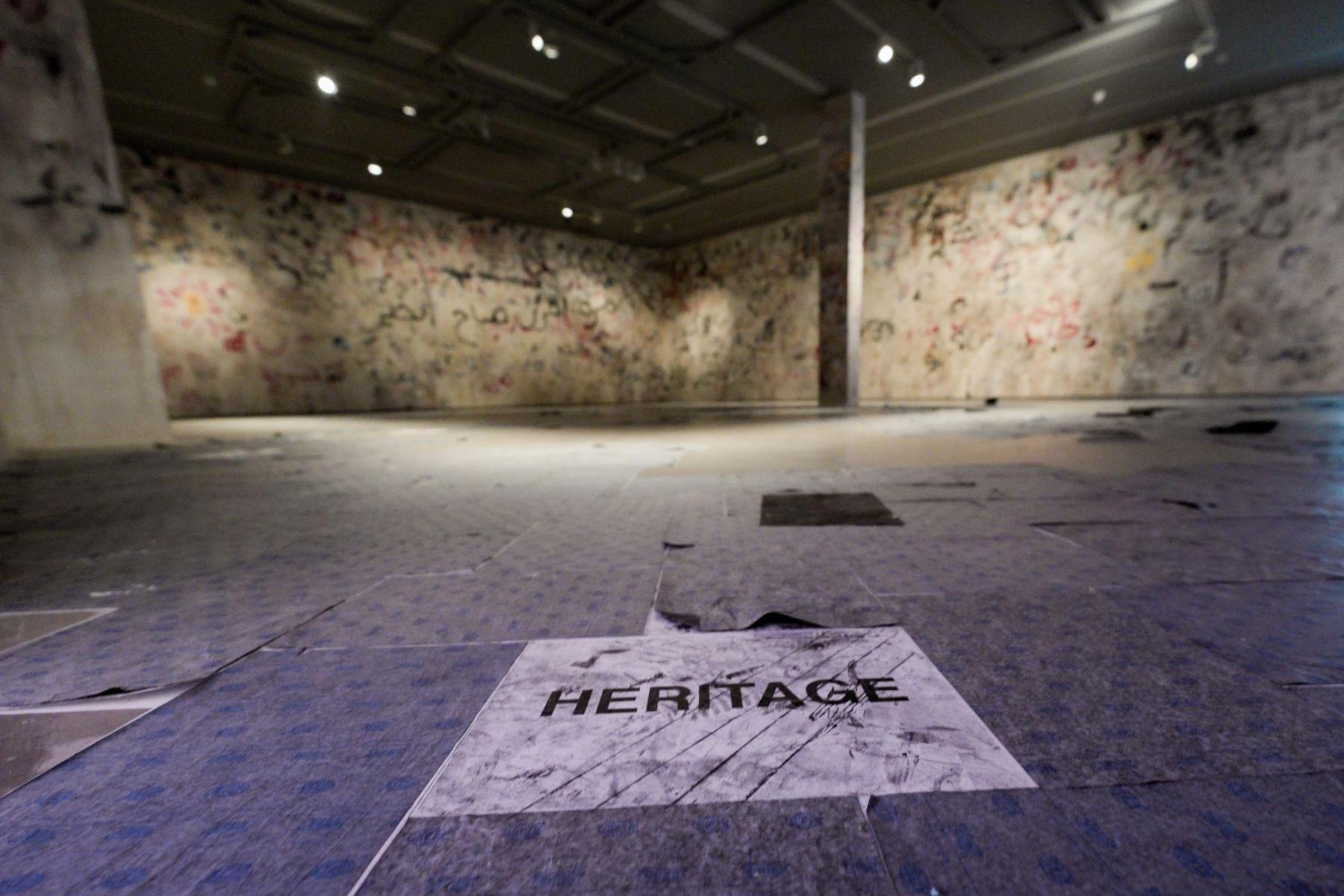
Installation view of “Heritage Legacy Authentic” (Khaled Esguerra. 2025) in the foreground; and “Generational Wall: Orders and Echoes” (Salma Dib. 2025) in the background at No Trespassing. (Image courtesy of Ishara Art Foundation and the artists. Photography by Faraz Khan.)
Abu Dhabi’s redevelopment and its ever-changing urban landscape also inspired Khaled Esguerra, who grew up there, to document how the city presents and represents itself. With “Heritage, Legacy, Authentic,” Esguerra questions the jargon that repeats itself on billboards across the city’s contemporary development and cultural projects. Playing with scale and power, Esguerra places these big billboard words on the gallery floor in sans serif font on A4 paper. Masked in copier paper, they reveal themselves as the leafing is torn by friction from steps taken atop them. The conceptual work has a similar effect to Farook’s carved wall, so to say that the public—or previously public—lies only a figurative nail-scratch away from the decorated wall or floor. Preoccupied with precarity amidst order, the artist highlights contradictions of how the new plastered onto the old destroys what comes before it while simultaneously laying claim to it.
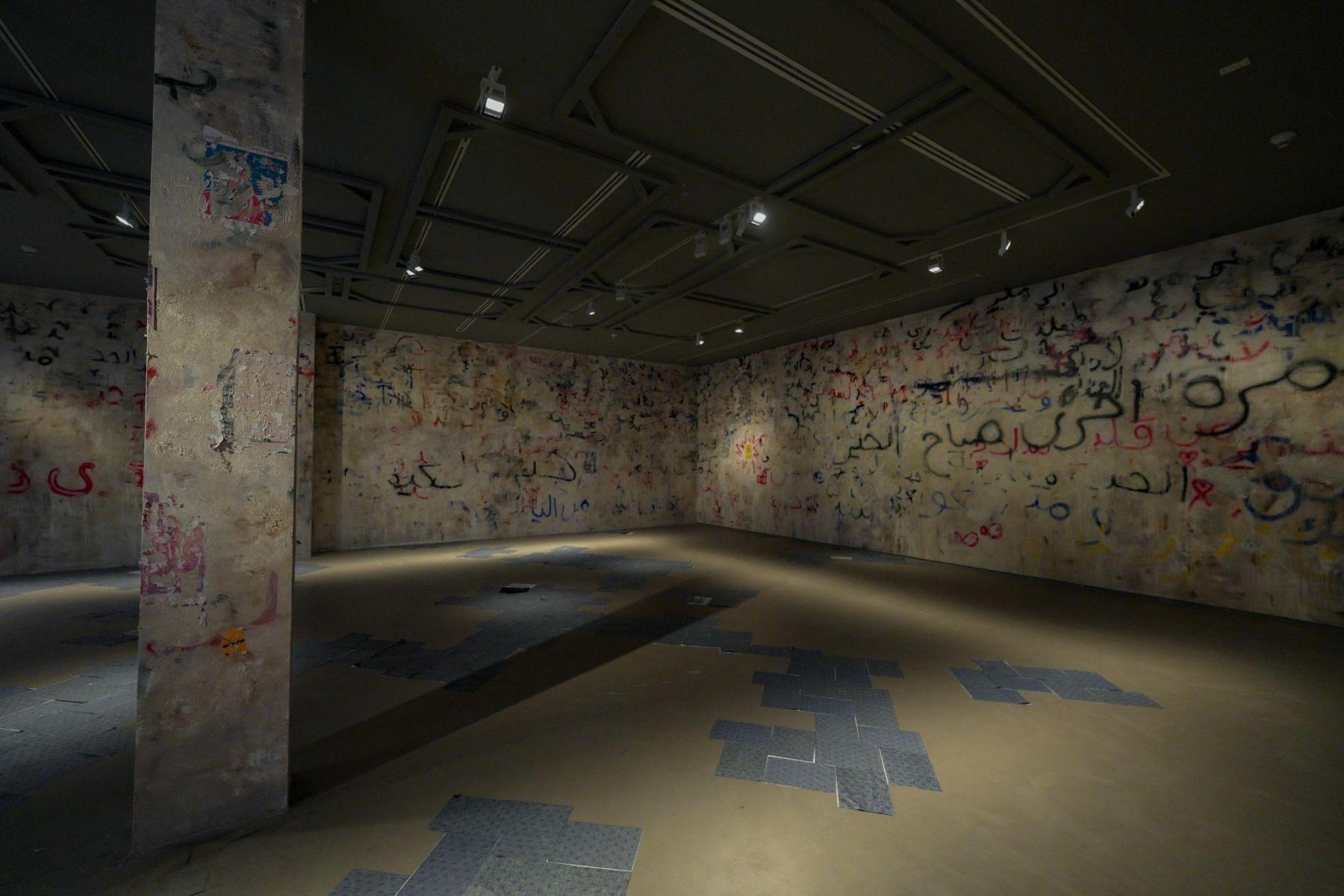
Detail of Generational Wall: Orders and Echoes. (Salma Dib. 2025. Image courtesy of Ishara Art Foundation and the artist. Photography by Faraz Khan.)
This final room is dark, surrounded with graffiti inspired by walls in Palestine, Syria and Jordan, as documented and executed by Palestinian artist Salma Dib. Like a scene from an abandoned, half-demolished building, it takes the visitor out of the gallery and to familiar places in the region. Multiple overlapping layers and their erasure leave only illegible traces that capture the very fleetingness that Esguerra and Alahbabi confront in their work.
“The exhibition became a way of reactivating those images in a new space, carrying their urgency into the white cube of Ishara while still acknowledging their roots in lived struggle and resistance,” Dib explains. Together, these ‘calls’ in Arabic graffiti are a chorus by a public—one that is not directly outside the gallery walls but that is regional and global. Especially in a cosmopolitan city, the politics of a global public are never far off. The white cube encircles the works, bringing them into a conversation, and under its ceiling, political critique takes cover as subversive artistic expression.
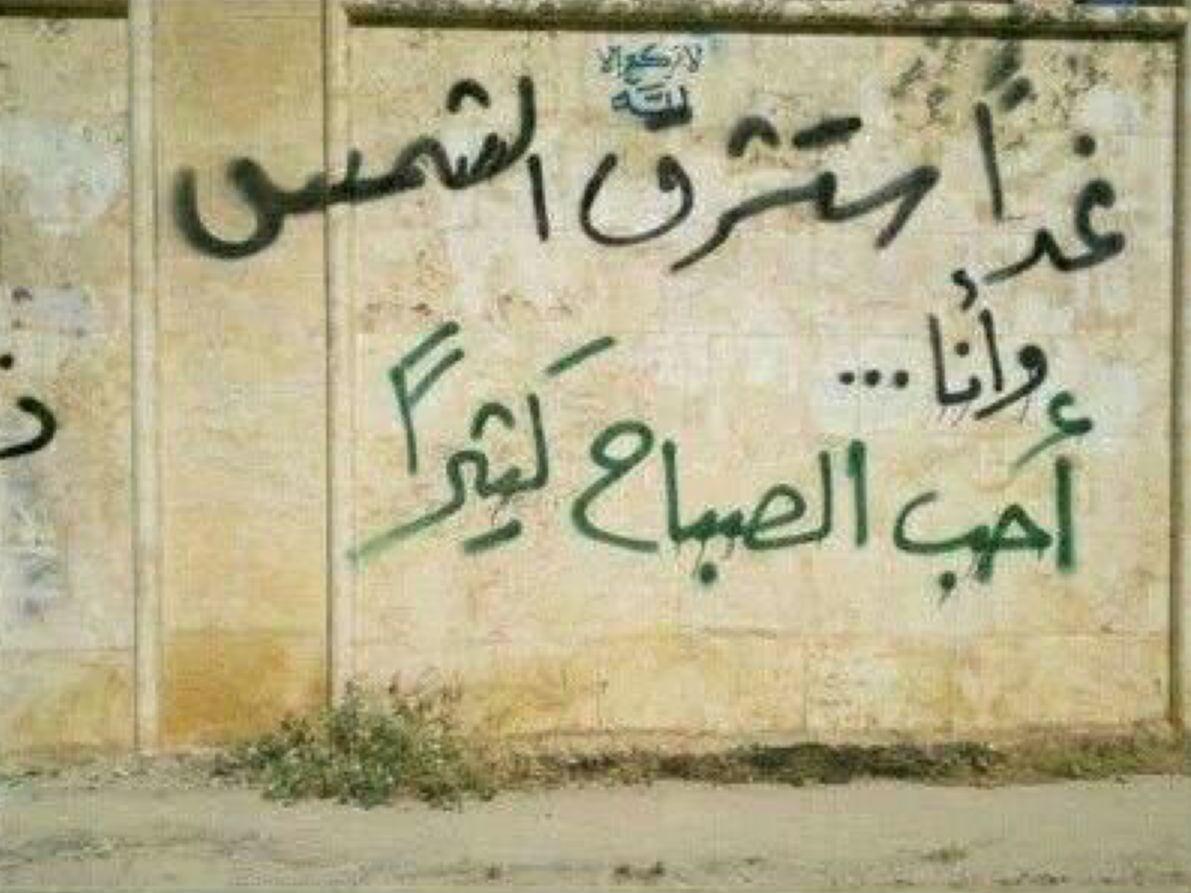
Image from Salma Dib's archive of documentation of graffiti writing in Palestine. (Original source unknown. Text in Arabic reads: “Tomorrow the sun will rise and…I love morning.”)
To learn about artists engaging with the streets through photography, read Annalisa Mansukhani’s reflections on the exhibition The Passerby (2022), Gulmehar Dhillon’s curated album from Gauri Gill’s series Nizamuddin at Night (2005–Ongoing), Avrati Bhatnagar’s engagement with William Gendey’s photographs of Varanasi from the photographer’s archive and Arushi Vats’ essay on Lukas Birk’s Afghan Box Camera project.