
Discourse through the Collective: Museum-Making as Praxis at the Curators’ Hub
The morning of the Experimenter Curators’ Hub had me pausing amidst the hurry to read writer and curator Najrin Islam’s essay “A Note on Omission: Navigating Institutional Censorship and the Need for Repair.” Having been published a couple of days previously, the author spoke for the first time about facing the ire of venue partner Alliance Française de Delhi during her first exhibition, upon her curatorial note referring to the genocide in Gaza and stating her focus on the “Muslim body.”
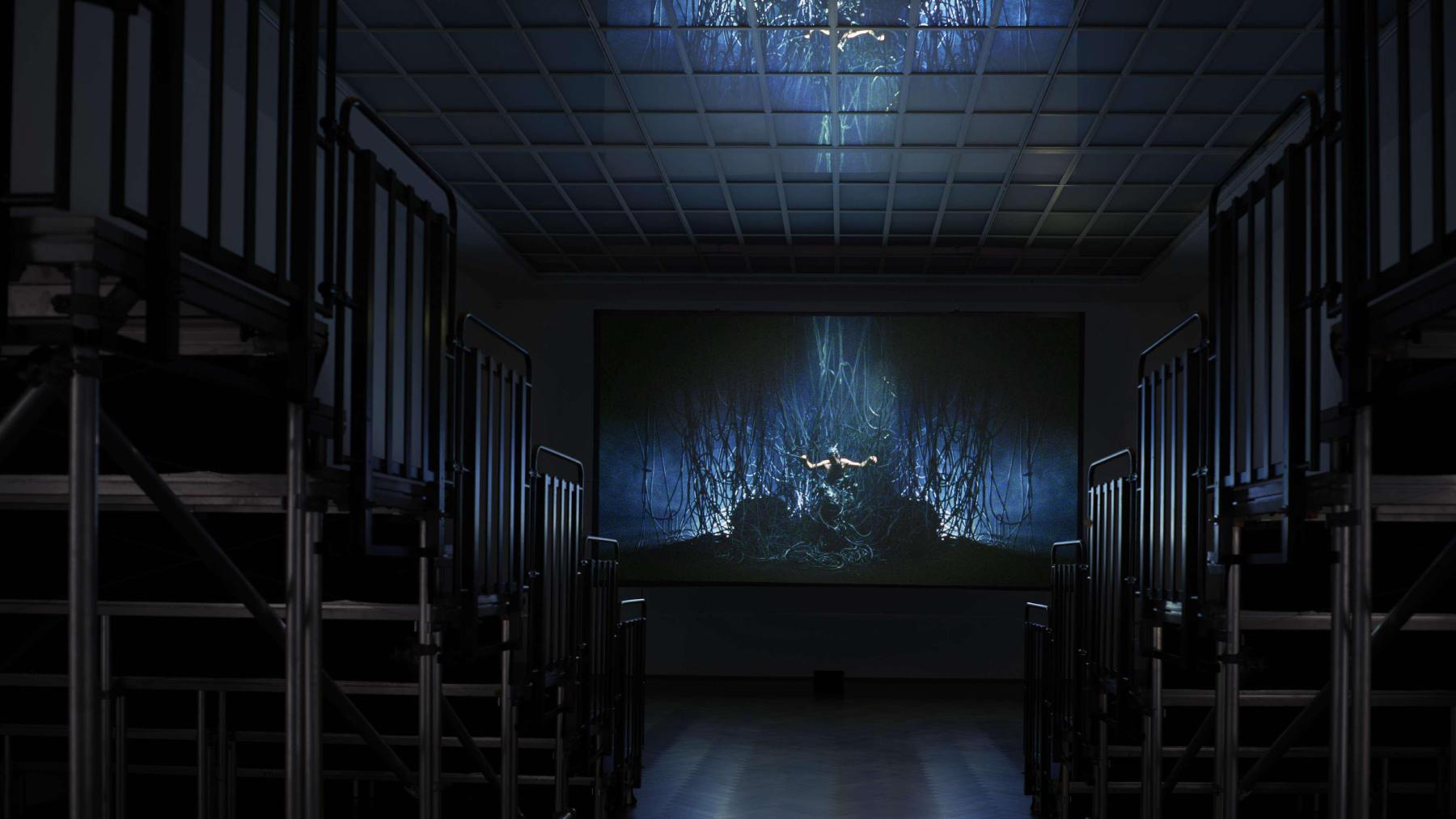
Installation view of La Défense Volume III - Demons to Diamonds (2025) by Valentin Noujaïm as part of PANTHEON at Kunsthalle Basel, 2025. (Photo: Philipp Hänger / Kunsthalle Basel.)
As if responding to some of the questions raised by the essay, Mohamed Almusibli, director and chief curator of Kunsthalle Basel, asked: “What does it mean to host as an institution? Almusibli continues to face deeper flak along the same vein from outside the Kunsthalle for programming artists like the filmmaker Valentin Noujaïm whose documentary Pacific Club was screened at the end of a hall of empty chairs to simulate the eponymous club’s origins in the basements of the business district of Paris in 1979. The first nightclub for Arabs from the suburbs of the region, right after the French-Algerian conflict, it never featured in French official narratives—much like the war itself. “Valentin has been outspoken on conflicts going on and specifically Palestine,” reflected Almusibli, “The press kept trying not to let the exhibition take place in Basel. An institution needs to protect its artists and their message and give them the capacity to still be artists.”
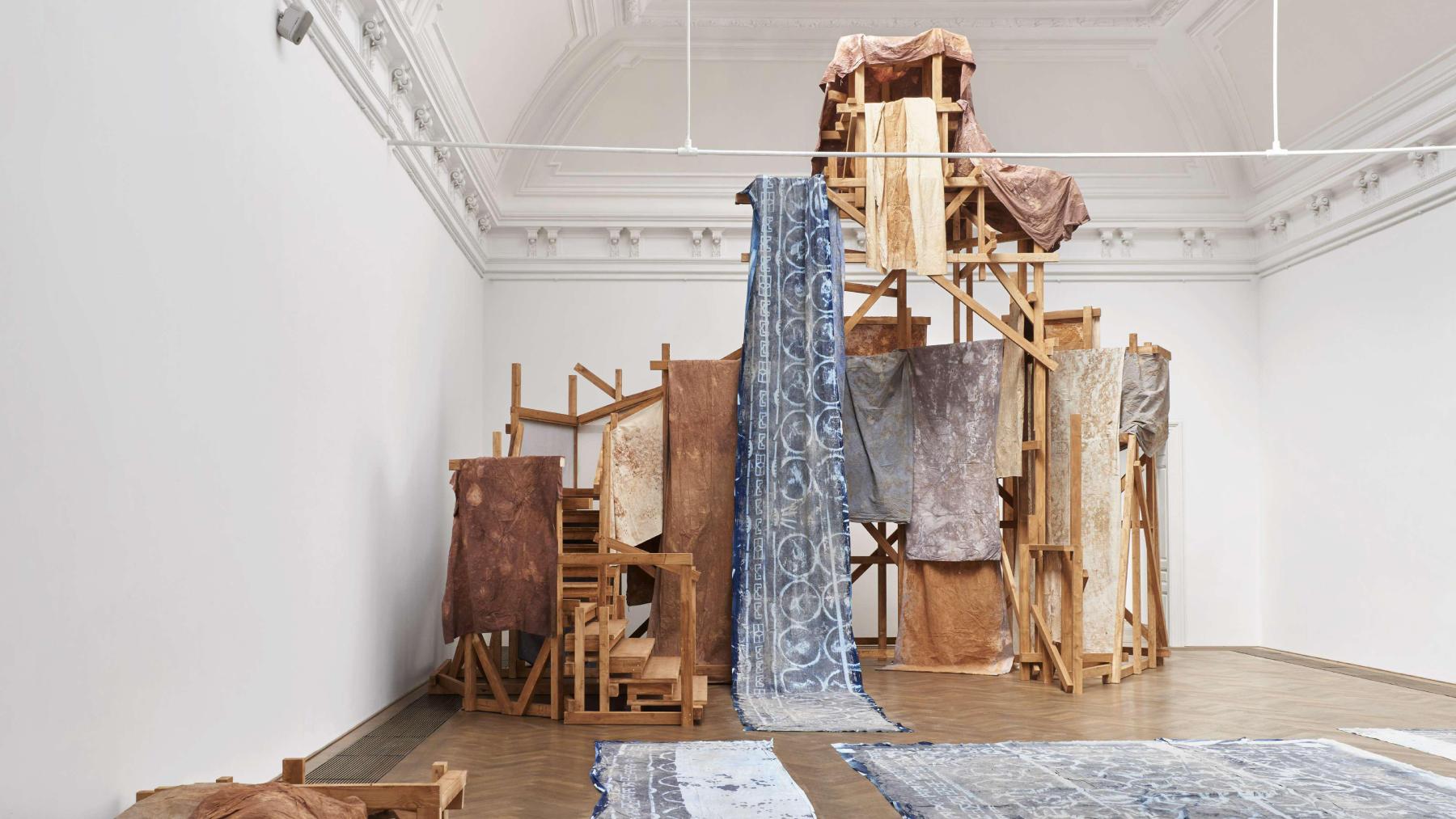
Installation view of Xíloma. MCCCLXXXVI by Dala Nasser at Kunsthalle Basel, 2025. (Photo: Philippe Hänger.)
Within his curatorial capacity at the Kunsthalle, Almusibli programmed two artists after their shows were cancelled at other institutions. One such artist is Dala Nasser, whose architectural reconstruction of the Kabr Hiram church in Qana, Lebanon, was perceived as “antisemitic” and dropped from the other institution’s programme. The installation is currently on view at the Kunsthalle, draped in fabrics bearing the blue-stained cyanotype prints of the original mosaic floor. “It is the construction of a church that was just destroyed by the Israeli army,” said Almusibli, “Qana is known in the Bible as where Jesus performed his first miracle. She (Nasser) went into the cave and dipped the fabrics inside the water and dyed it, in order to create this church. You cannot even visit the ruins now.”
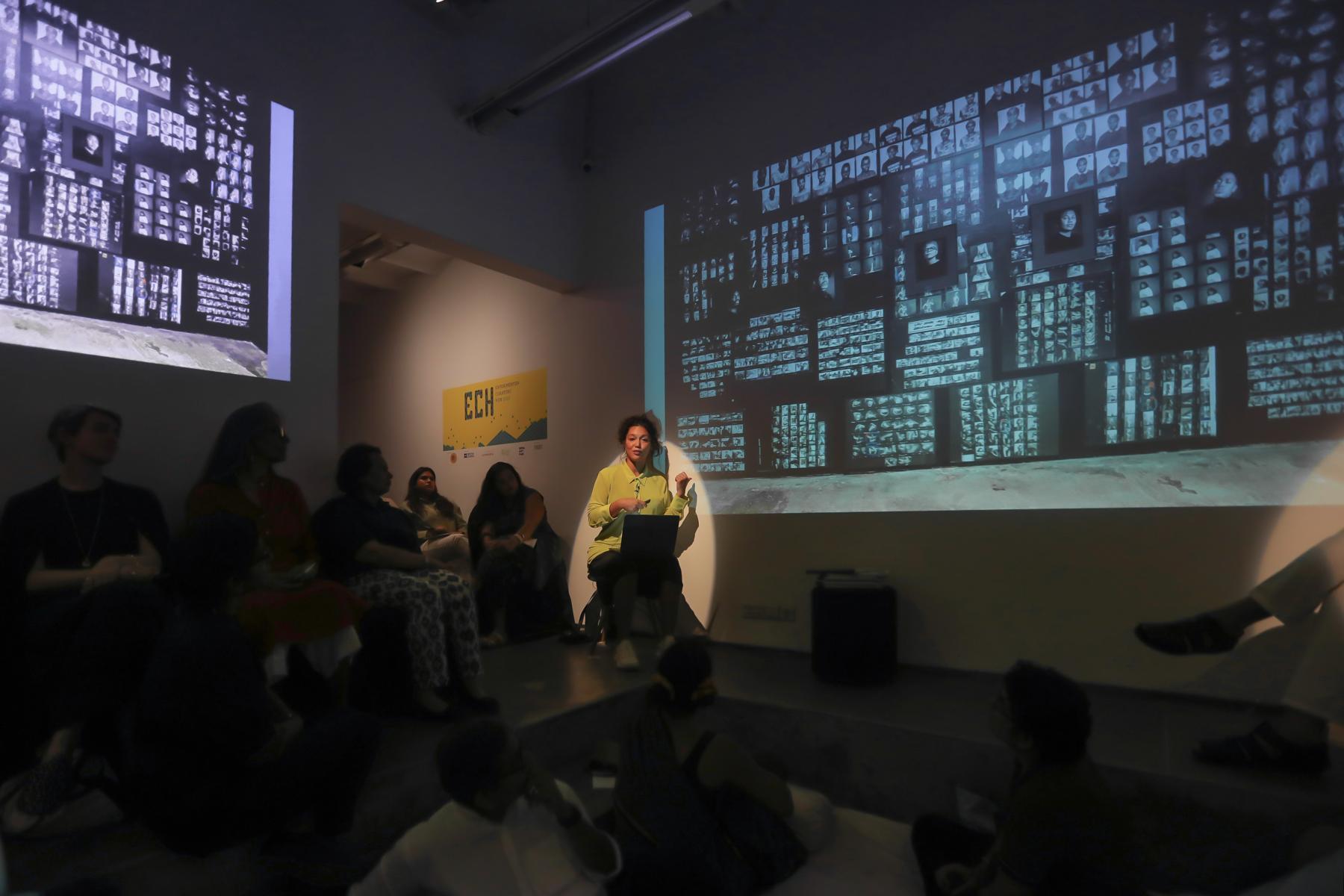
Amal Khalaf, one of the curators of the Sharjah Biennial 16, presenting at the Experimenter Curators' Hub, 2025. (Photo by Jeet Sengupta.)
In Almusibli’s hands, curation becomes an act of care, and so it is also for Amal Khalaf, one of the curators of the Sharjah Biennial 16 and previously Director of Programmes at Cubitt, London. She returned to the idea of “collaboration as co-liberation” as defined by transdisciplinary artist brontë velez, who reflected that for such co-liberation to happen, ecosystems must exist which centre the voices that need to be heard. How does one work within institutions built on histories of colonialism—that do not want someone like Khalaf to exist and are interested in enforcing white supremacist narratives—was something the curator had asked herself while starting her career almost two decades ago.
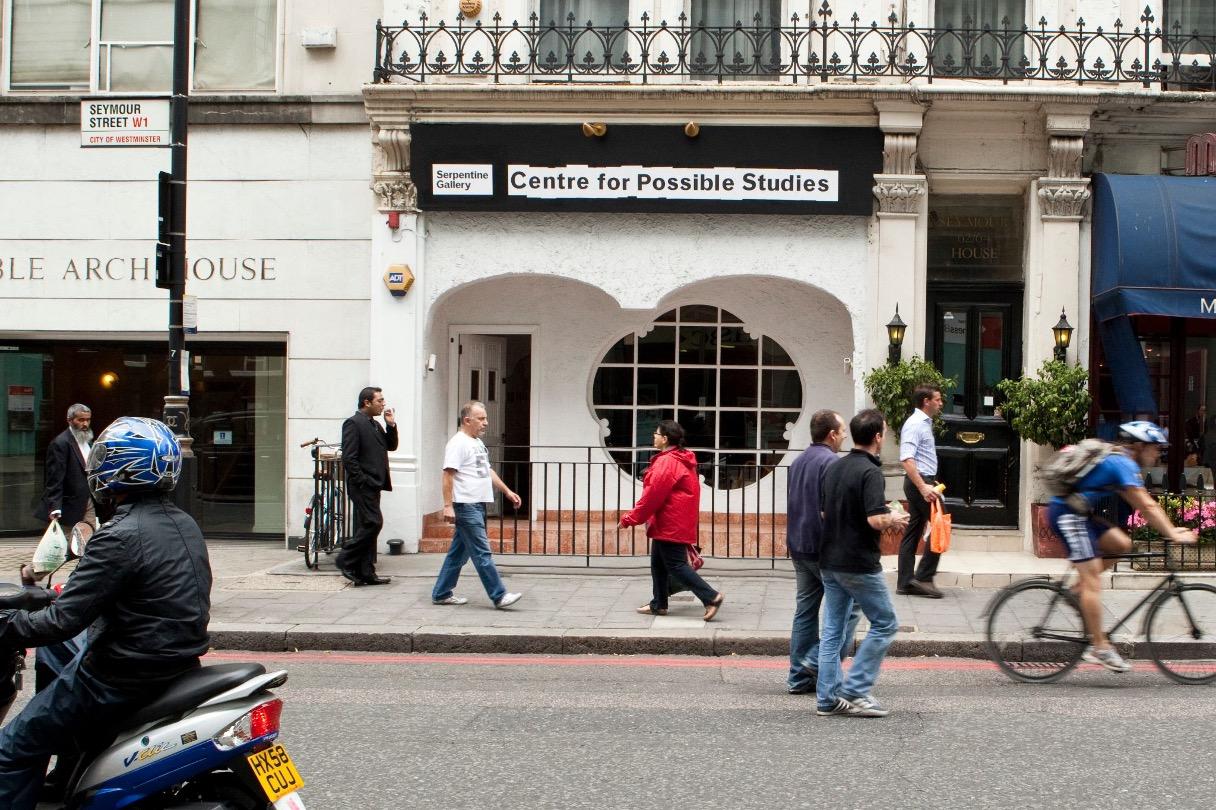
Centre for Possible Studies, Serpentine Gallery. (Photo: Peter Erni.)
At the Serpentine, Khalaf built the offsite programme Centre for Possible Studies which focused on lived experiences with curator Janna Graham, who was also involved in the collective Ultra-Red. The Centre’s residency programmes were grounded in neighbourhoods like the Arab locality of London’s Edgware Road or featured a series of film commissions over nine years on people facing immigration raids. “People asked if we were sponsored by Serpentine,” she said, “We said, ‘no, we are full-time workers (at the Serpentine)!’ We had curated the Centre’s space to not perform what the institution is performing.”
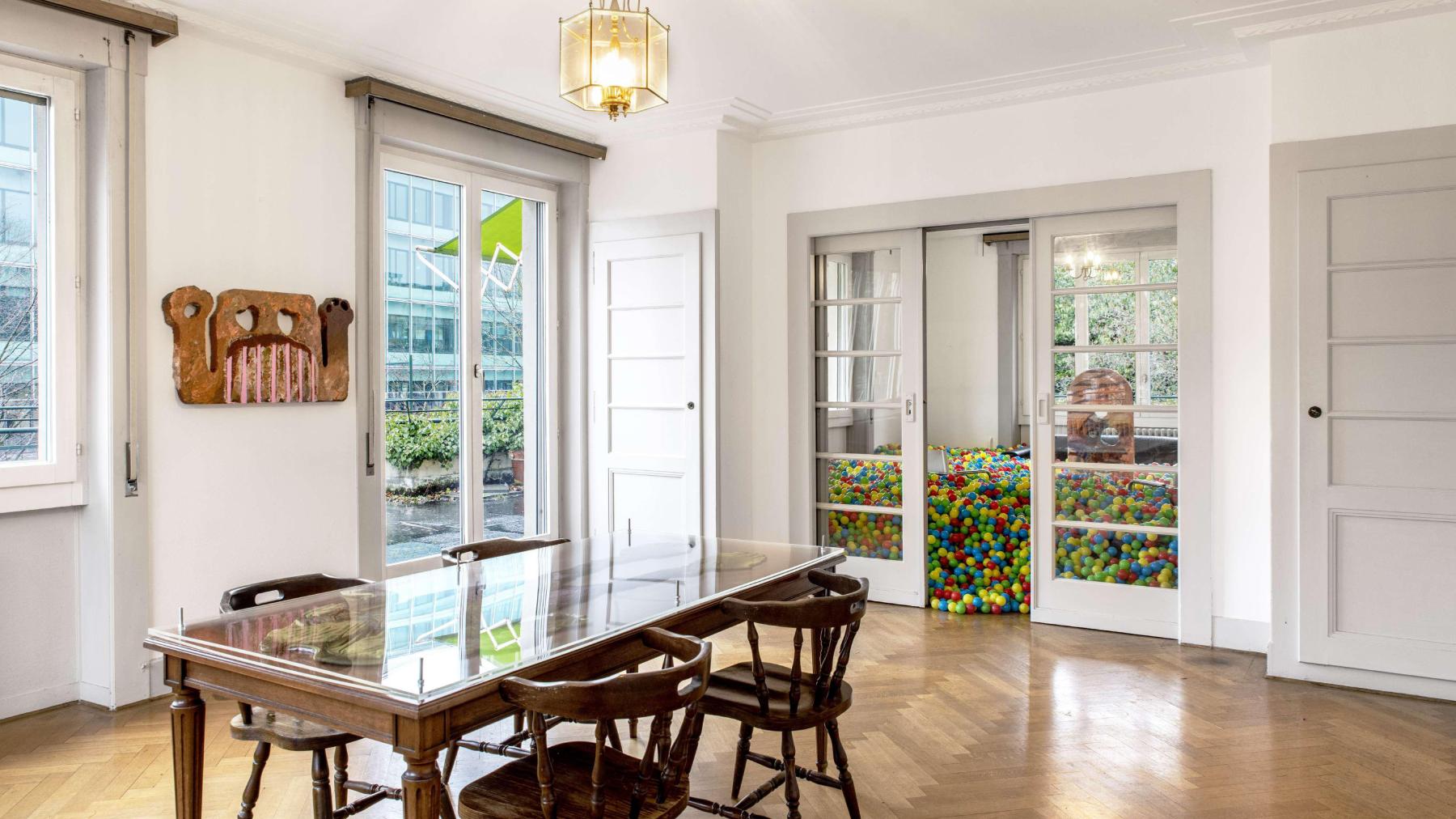
Exhibition view of Among Us (2021) by Shuang Li at Cherish, Petit-Lancy. (Image courtesy of the artist and Cherish, Petit-Lancy. Photo: James Bantone.)
It is another dimension of this intimacy—and the knowledge production with it—that fuelled Almusibli’s space Cherish, where he and three friends opened up their Geneva apartment as the space of curation, inviting artists like Shuang Li and Cajsa von Zeipel to stay with them for at least a month while they worked on their practice. “Some artists ended up moving with us at the end,” he laughed, “We were looking at art as welcoming, something you would like to come back to… so we started to organise dinners— and every day it was dinner with a different group of people looking at the show.” Extending a sense of sharing a lived space, the artist would cook for the five guests and everyone would sit around eating as they watched the show.
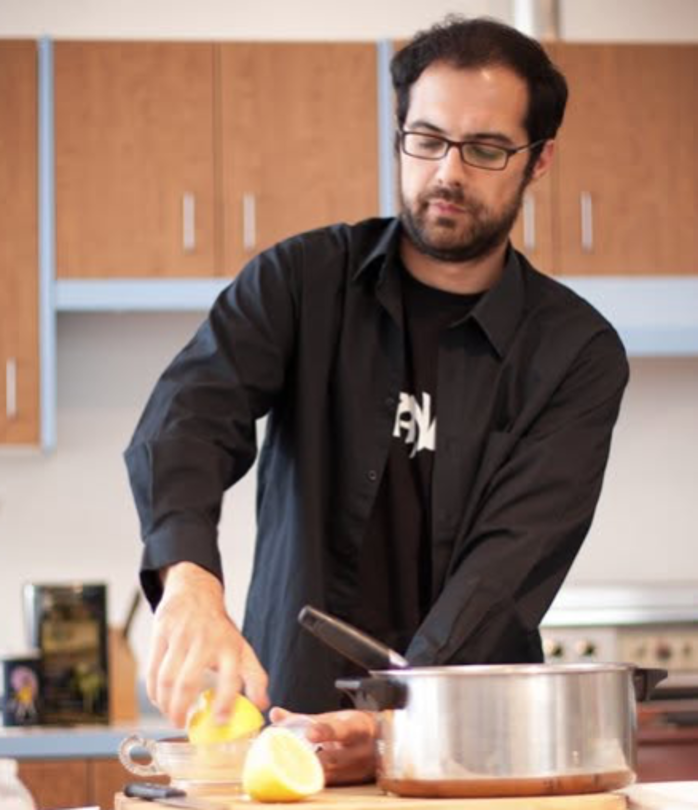
On 24th June 2010, a dinner and conversation was led by Turkish native Ufuk Adak, a University of Cincinnati PhD student from Izmir, Turkey. Adak cooked several traditional Turkish dishes and held a discussion about the Ottoman roots of Turkish food culture as part of CS13’s "COURSES: An Inquiry Into Place, Publics and Food." (Courses #3: Ufuk Adak. Photo: Ashley Walton.)
In 1992, the artist Rirkrit Tiravanija’s installations of rooms for sharing meals, titled Untitled (Free), saw the 303 Gallery in New York being converted into a kitchen where Tiravanija cooked rice and Thai curry and served it to museum visitors. “What Free did was literally free people to interact with contemporary art in a more sociable way,” stated Laura Hoptman, curator of MoMA’s Department of Painting and Sculpture in 2012, when the artist brought his installation to the museum. This collective act of eating led by an artist-turned-cook was also something that was steered by CS13, a collective in Cincinnati that the current Executive Director of Creative Time, Justine Ludwig, was part of from 2009 to 2013. They transformed the gallery into a functional kitchen many times, particularly for their Courses series where members of the community would cook over a lecture—like when then PhD student Ufuk Adak talked about the Ottoman roots of Turkish food as he cooked traditional Turkish dishes.
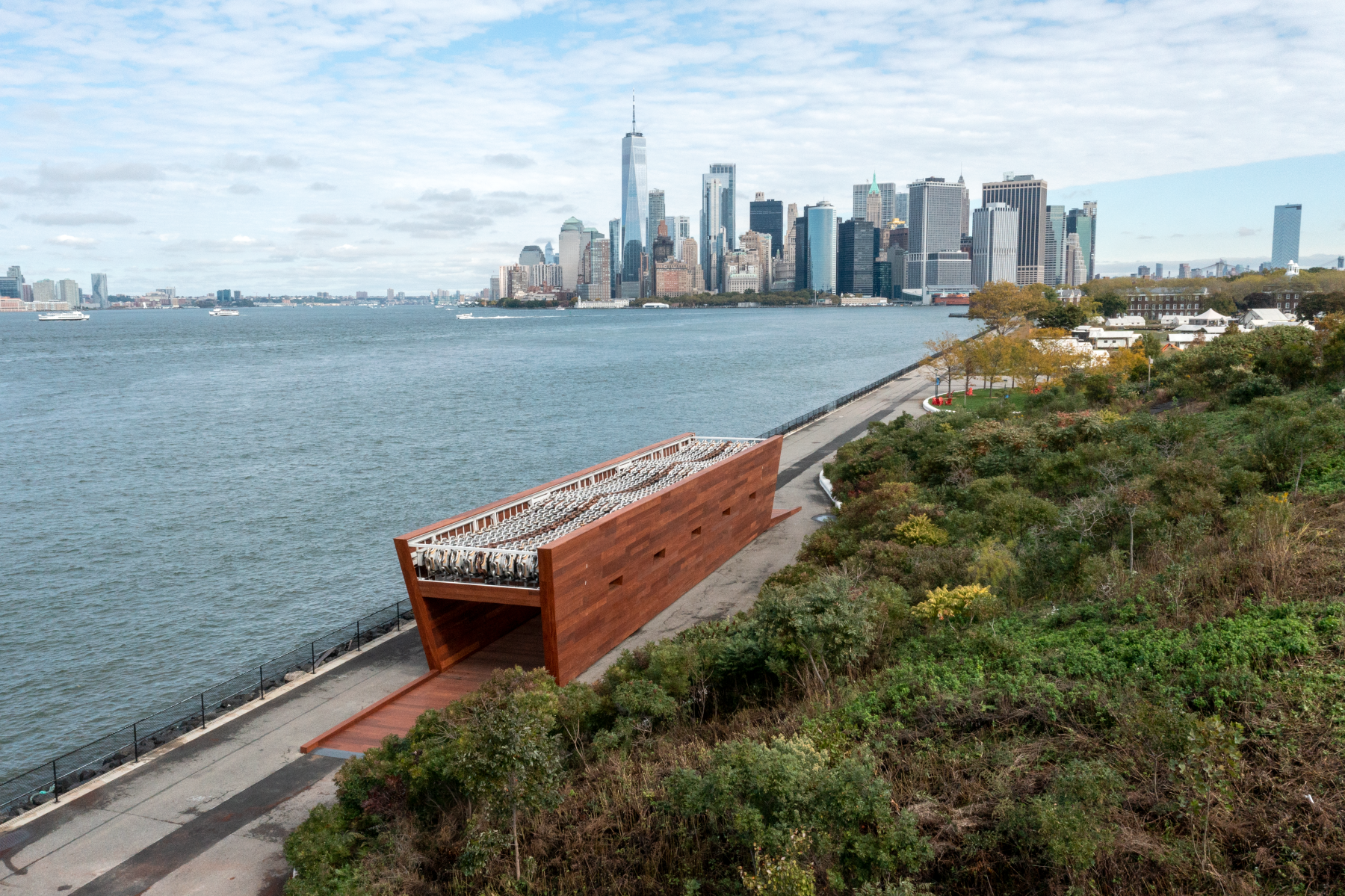
The American Manifest. Chapter 2: Moving Chains, Governors Island. (Charles Gaines, 2022-23. Photo: Timothy Schenck.)
Once CS13 had even hosted a potluck dinner with a $10 entry fee which guaranteed the payee a say in deciding a grant winner. It made decision-making in art spaces open to literally everyone who either wanted to be involved, or serendipitously inhabiting that space for the first time—caught in a near theatrical moment of expressing the art that they (and possibly others) would like to see. Public art that privileges the public is what governs Ludwig’s curatorial practice which is also focused on commissioning art that is of the moment. “What is your dream project that nobody else is crazy enough to take on,” is a question that she had asked herself while commissioning her first artist at Creative Time. This resulted in Jil Magid’s “Tender,” where the artist engraved the rims of pennies with the words “The body was already so fragile” in the light of the global pandemic. These were ingeniously circulated through the cash economy of bodegas across the US, which does not flag manipulations on coin rims. She returned to this question while working with Charles Gaines on the 110-feet-long sculpture that constitutes “Moving Chains” evoking the hull of a ship with nine chains weighing over 1,600 pounds rotating overhead—one of which is timed to mimic the pace of a moving ship, harking back to the transatlantic slave trade. She notes,“You feel the chains moving in your body, which becomes a percussive instrument.”
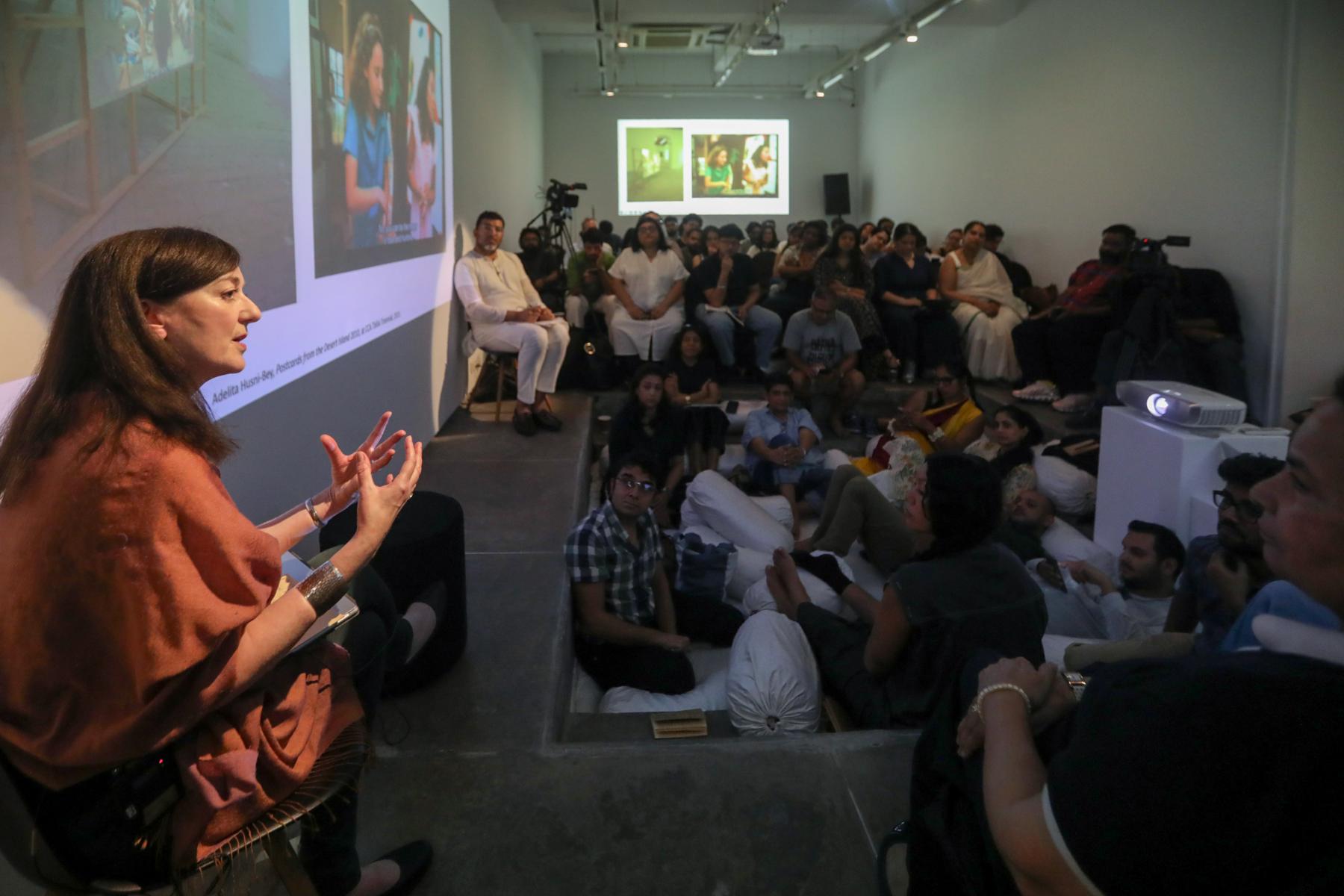
Anne Barlow, Director of Tate St. Ives in the UK, presenting at the Experimenter Curators' Hub, 2025. (Photo by Jeet Sengupta.)
While commissioning Magid’s Woman with Sombrero for Arts in General, Anne Barlow, the current Director of Tate St. Ives, was thinking about a similar question—of socio-political art that would not necessarily be supported by larger galleries or within a commercial context. Magid was looking at what it means to have a corporation own an artist’s archive, namely the Mexican architect Luis Barragán—an archive she was refused access to. Akansha Rastogi, Senior Curator of Exhibitions and Programming at the Kiran Nadar Museum of Art, recalled working on Hangar for the Passerby which brought together a rhizomatic perspective from collaborative artistic practices and the coming together of groups of artists and cooperatives in India from 1947 to 2017. The exhibition sought to generate a space for process and thereby give a spatial imagery to the incremental museum “in order to hold the materials that the space of the museum was not ready for yet.”
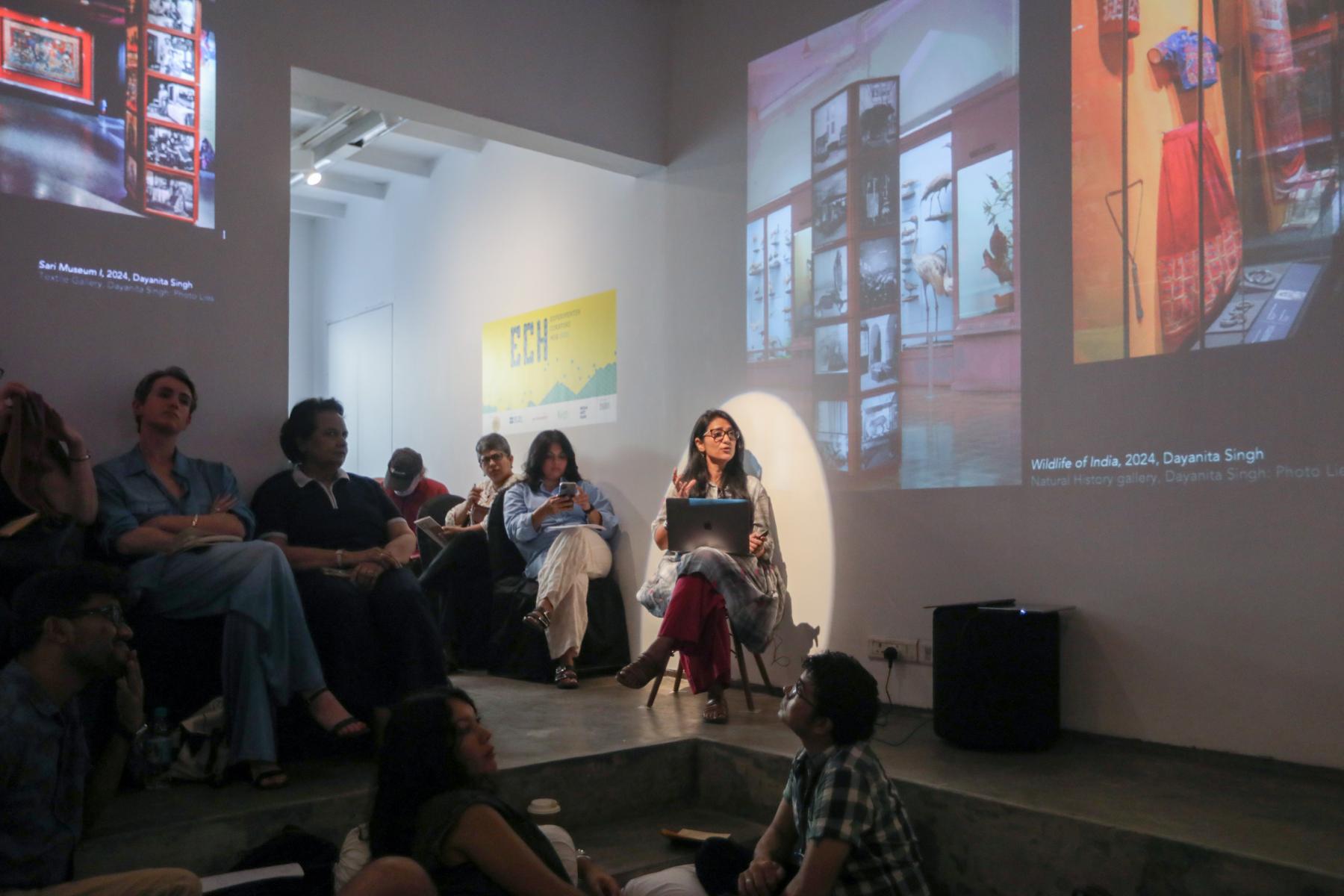
Puja Vaish, Director of the Jehangir Nicholson Art Foundation, presenting at the Experimenter Curators' Hub, 2025. (Photo by Jeet Sengupta.)
It is a certain kind of subversion to existing canons of art history that Puja Vaish, Director of the Jehangir Nicholson Art Foundation, considers while curating exhibitions. This is most recently evident in her attempt to look at Nasreen Mohamedi beyond the idea of a solitary genius always donned in white by instead situating her among her peers through photographs, oral narratives of people who knew her and the works of her contemporaries like Nalini Malani. “I hardly found pictures of her in white,” Vaish laughed. With JNAF being the modern and contemporary wing of CSMVS, porosity between the spaces was necessary to address difficult histories that exist in the collections of a colonial-era museum. “Perhaps there is scope for creating mischief within those set things,” she noted. Demystifying Mohamedi’s life also meant highlighting the processual over the celebratory.
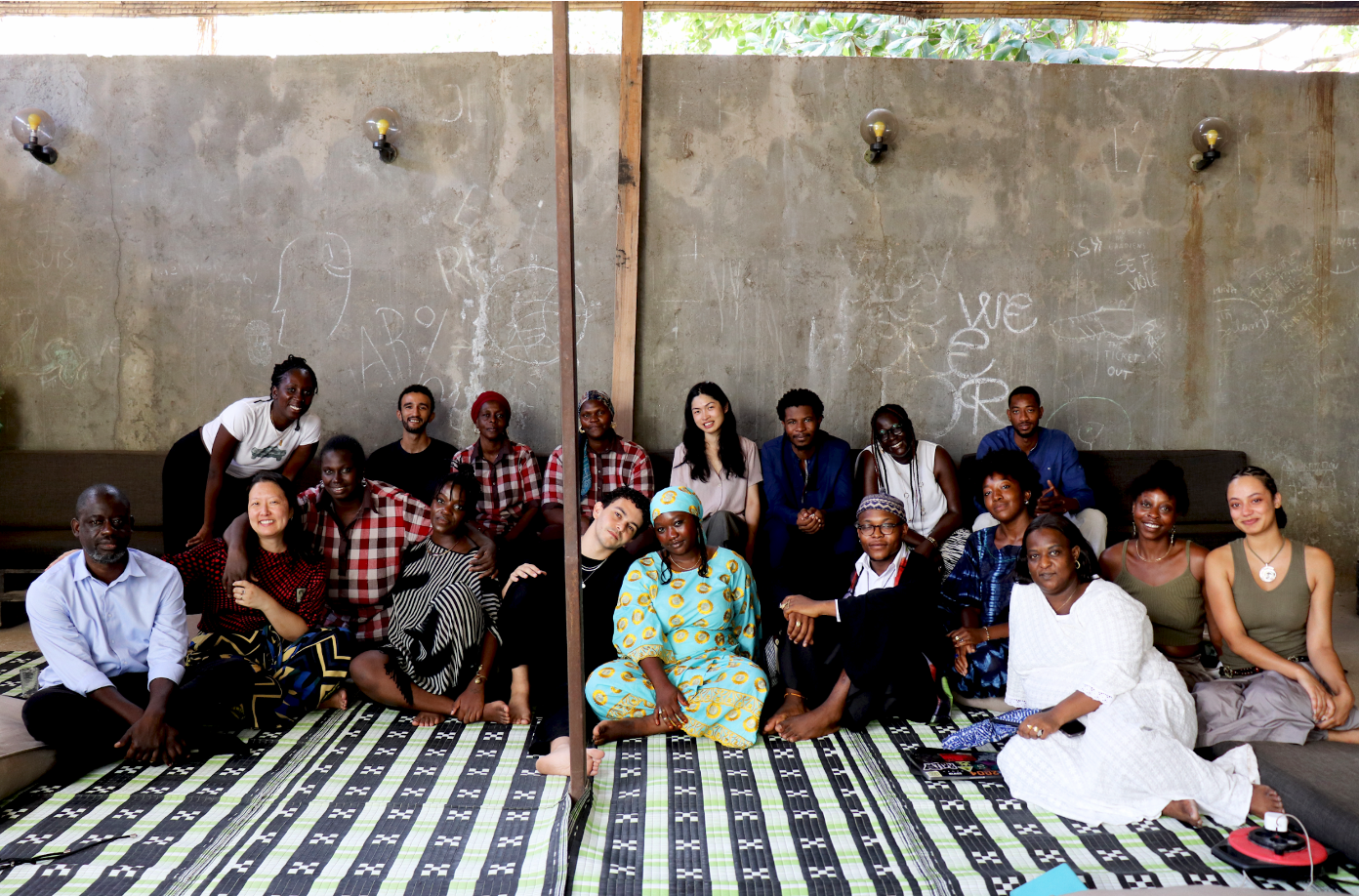
RAW académie, session 11, “A Sense of Place/Displacement, Replacement, Non-placement” led by Prof. Felwine SARR. (Image courtesy of RAW Material Company. Photo: Kerry Etola Viderot.)
Showing pictures from last month’s commemoration of the late founder of RAW Material Company, Koyo Kouoh, the Director of Programmes at RAW, Fatima Bintou Rassoul SY said that that is really what RAW is: people gathering around food with love and support. In interpreting the role of curators at RAW, Bintou Rassoul SY went back to the Latin roots of the term “curator” to mean “caring,” which in Dakar requires doing far more than the vision of a curator as defined under contemporary art, considering the co-opting of art institutions under the nationalist agenda. “In the years following independence, Senegal has had a centralised model of state-controlled production inherited from the French colonial period,” noted Bintou Rassoul SY. She and Kouoh established RAW to shift away from such control along with the demands of the art market to address an “artistic and critical void in the local environment” and to displace a “misplaced and deformed notion of traditional African art” along with being a “protector of a new collection.”
Working towards this, they shifted their intense programming of exhibitions to artistic education, recognising that “healthy and fruitful artmaking and display in its context had to go hand-in-hand with support for an emerging generation of artists, curators, art historians and critics.” When working at Arts in General, Barlow was thinking about programmatic formats and thinking about how institutions could evolve, with a collective of other organisations who were focusing on their identity and purpose like “How do you take care of it (the institution) in a meaningful way and allow possibilities for other people to take it on and what kind of alternative futures do you leave room for?”
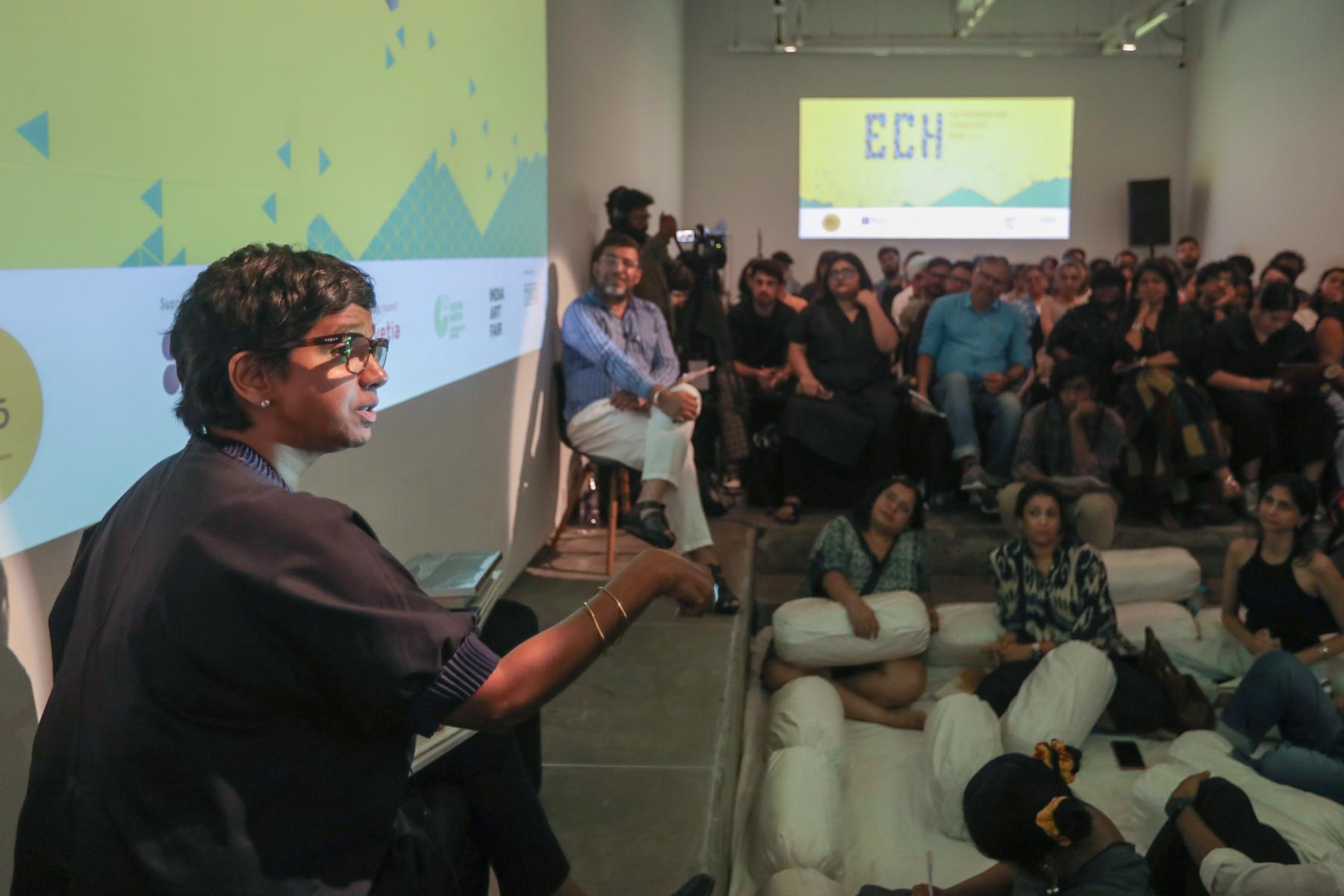
Sharmini Pereira, Chief Curator at the Museum of Modern and Contemporary Art Sri Lanka, presenting at the Experimenter Curators' Hub, 2025. (Photo by Jeet Sengupta.)
Sharmini Pereira feels that it is ironic that she is Chief Curator at the Museum of Modern and Contemporary Art (MMCA) Sri Lanka considering how she turned to publishing as an alternative way to distribute ideas about an artist’s practice rather than through an exhibition or institution. In similar vein, Bintou Rassoul SY sees RAW’s publishing practice as extending the reflection that happened during curation, rather than replicating it. Considering art spaces in Sri Lanka are elite spaces, with their associated acts of buying, Pereira was influenced by the 1960s when museums, libraries and artmaking as institutions were becoming too elitist and prescriptive and, in response, artists were beginning to question the authority of the art world by levelling that criticism towards such institutions. Independent publishing was a big part of alternative artist-led spaces which started as a response with artist books becoming this “experimental form.” So different from many hardbound, glossy artist books we see in the art world today, Pereira has always taken from that imagining of artist books in offset, inexpensive and mass-produced—as a “fragile vehicle for the weighty load of hopes.” Towards the end, we seem to return to individual curatorial acts of responsibility that every curator has taken up towards picking at the “incremental museum” and chipping away at the possibilities it allows for caregiving, perhaps through visualising a space that extends discourse without a certain kind of censorship or one that allows “mischief” as Vaish terms it.
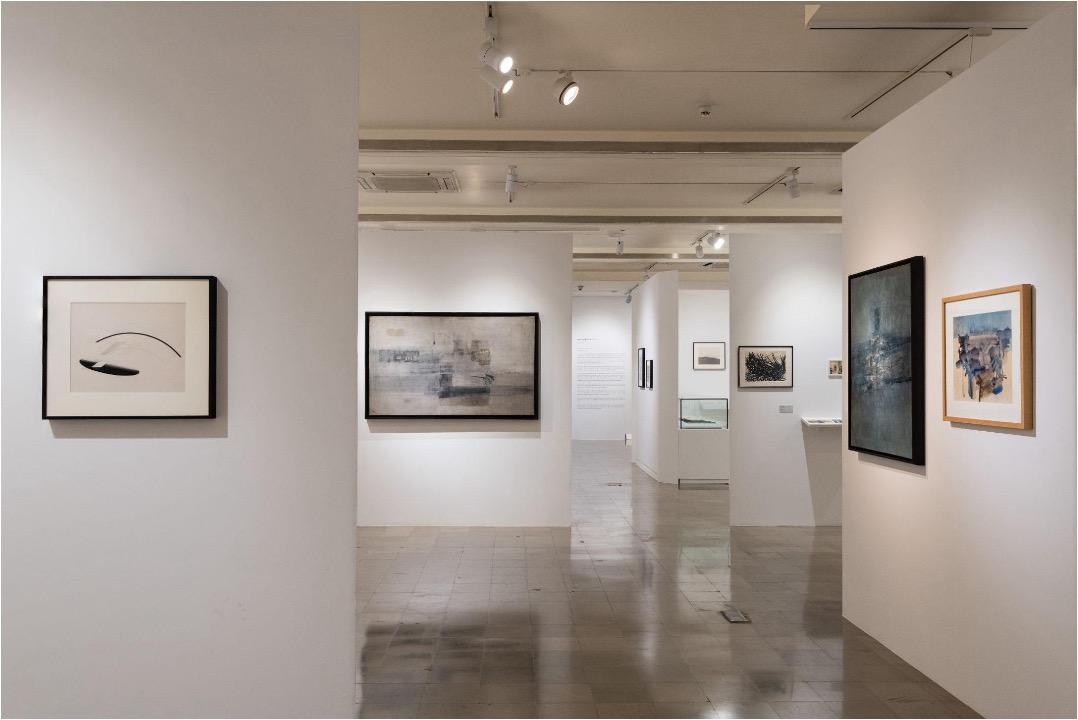
Installation view of The Vastness, Again & Again featuring works by Nasreen Mohamedi at JNAF, Mumbai, 2023. (Image courtesy of Jehangir Nicholson Art Foundation Gallery.)
To learn more about discussions by curators around their work and practice, watch the conversations with curators Salima Hashmi and Manmeet Walia as well as several artists who were part of the show (Un)Layering the Future Past of South Asia: Young Artists’ Voices and Abeer Gupta and Natasha Ginwala as they discuss the possibilities of curating in South Asia. Also read Mallika Visvanathan’s short interviews with curators participating in the Chennai Photo Biennale (2024–25) and observations on the panel Curators’ Roundtable: Criticality in the Contemporary as part of the India Art Fair 2024.