

Songs of Our Time: In Conversation with Salima Hashmi and Manmeet Walia
On 7 June 2025, ASAP | art was in conversation with curators Salima Hashmi and Manmeet Walia as well as several artists who are part of the ongoing show (Un)Layering the Future Past of South Asia: Young Artists’ Voices. The exhibition showcases the works of twenty-six emerging artists from Afghanistan, Bangladesh, India, Nepal, Pakistan and Sri Lanka. Generously supported by the Dhoomimal Gallery and the Ravi Jain Memorial Foundation, it is currently on view at the SOAS Gallery in the historic neighbourhood of Bloomsbury until 21 June. The gallery is housed in the same complex where colonial officials were once trained to rule the subcontinent and not far from where the manifesto of the Indian Progressive Writers’ Association was drafted in 1935—compelling us to rethink, in one sense, the question of decolonisation and to return it to a place of politics. In this conversation, "Songs of Our Time", Hashmi and Walia shared their process of curating works by artists who explore themes of ecological crises, gender justice, displacement and political unrest. These concerns foreground the connections between our various communities, of shared histories being forced to fade into elusive memory, of fragilities that bind us in our contemporary, and of imaginaries from which futures may be constructed.
If Manto’s Toba Tek Singh stood in no-man’s land, his madness turning the mirror onto the insanity of an arbitrary line that rendered home no longer home, these procedures of violence continue, escalated, sophisticated, protracted, but always present—a spectre that attempts to turn living space into a haunting abstraction. Hence, Operation Sindoor can claim to "save" Kashmir. So-called "illegal" Bangladeshis can be deported or drowned in the ocean. Baloch and Adivasis alike can be killed in an “encounter” or made to disappear. Rape that wages wars on women’s bodies in the name of the nation-state can be used against resistance fighters in Sri Lanka and in Bastar. And yet, Dalits and Marxists alike derive strength from Tamil Eelam martyrs; students in Delhi endure police repression to remind us that a shared past cannot simply be wished away by a sterile register for citizens; and as Rafales shoot or are shot down, Kashmiris make tender drawings of irises.
The question that emerges again and again, then, is: What is South Asia? A birdsong, a dream, a fever, a hallucination, a movement, a prayer? In our region, where one home is perpetually lost to another always in the making, where do we go to start again, where do we return, and how do we enact remembrance and nourish the courage for resistance in the spaces we inhabit?
Salima Hashmi is an artist, curator and contemporary art historian. She was a professor of Fine Arts, National College of Arts, Lahore for thirty years and its principal for four years. Hashmi is the founding dean of the Mariam Dawood School of Visual Arts and Design at Beaconhouse National University, Lahore, where she is currently Emerita Professor. She is recipient of the Sughra Rababi Lifetime Achievement Award (2024), an Honorary Doctorate by Bath Spa University, UK (2016) and the President's Medal for Pride of Performance for Art Education awarded by the Government of Pakistan (1999). Hashmi is also a Council Member of the Human Rights Commission of Pakistan and Chairperson of Faiz Foundation Trust.
Manmeet Walia is a curator and writer with an ongoing practice focusing on young South Asian voices. She holds a Master’s degree in Curatorial Practice from the Chelsea College of Art, University of the Arts London. Walia's curatorial projects include The Library Project, supported by the University of the Arts London (2023), Woven Expression, Chelsea Space, London (2023) and Lines (By)Lines, New Delhi (2022), amongst others.
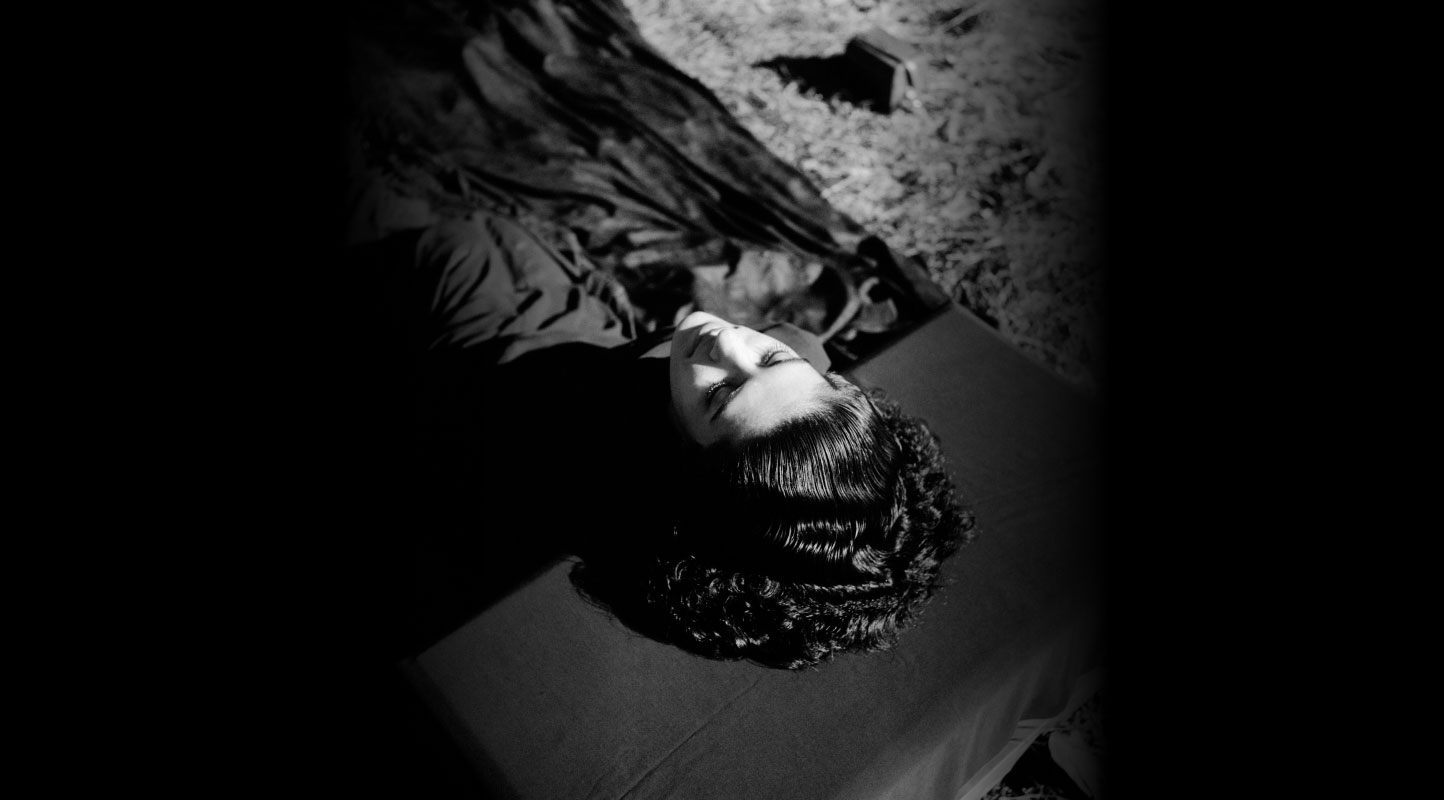
(Featured Image: Die to remain alive [Hanifa Alizada, 2012.])
Recorded on 7 June 2025.
To learn more about ASAP | art’s public programming, watch our previous recordings with Nathalie Johnston on art in Myanmar; Avijit Mukul Kishore on his practice as it explores home, autobiography and memory, and their inseparable link with political history; Kartik Nair and Vibhushan Subba on Bombay Horror and the spectral archive; Abeer Gupta and Natasha Ginwala discussing curating in South Asia; Naeem Mohaiemen discussing his book Midnight’s Third Child and Tapati Guha-Thakurta, Vazira Zamindar and Shuddhabrata Sengupta discussing How Secular is Art?