

On Camera South Asia: Between Origins and Elsewheres
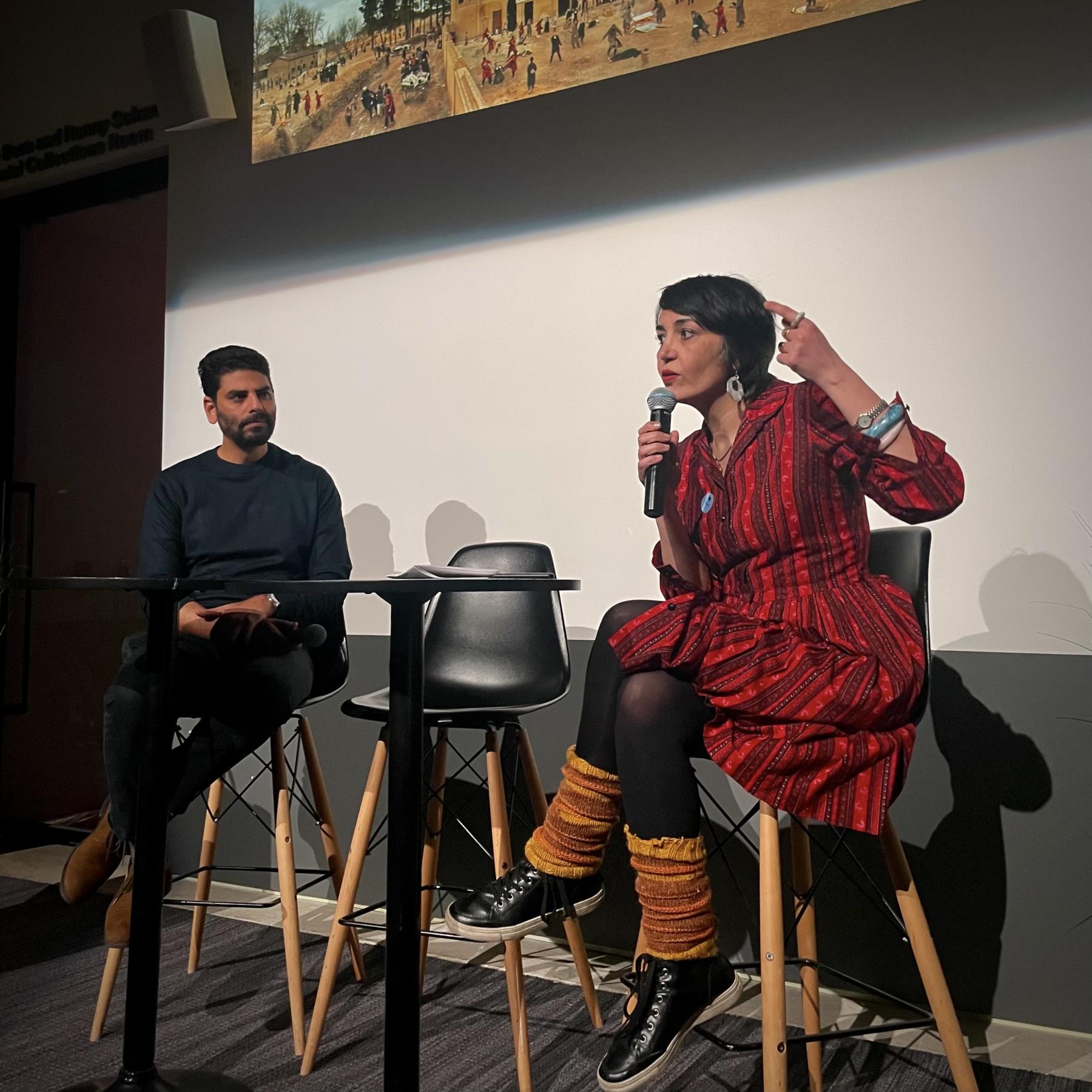
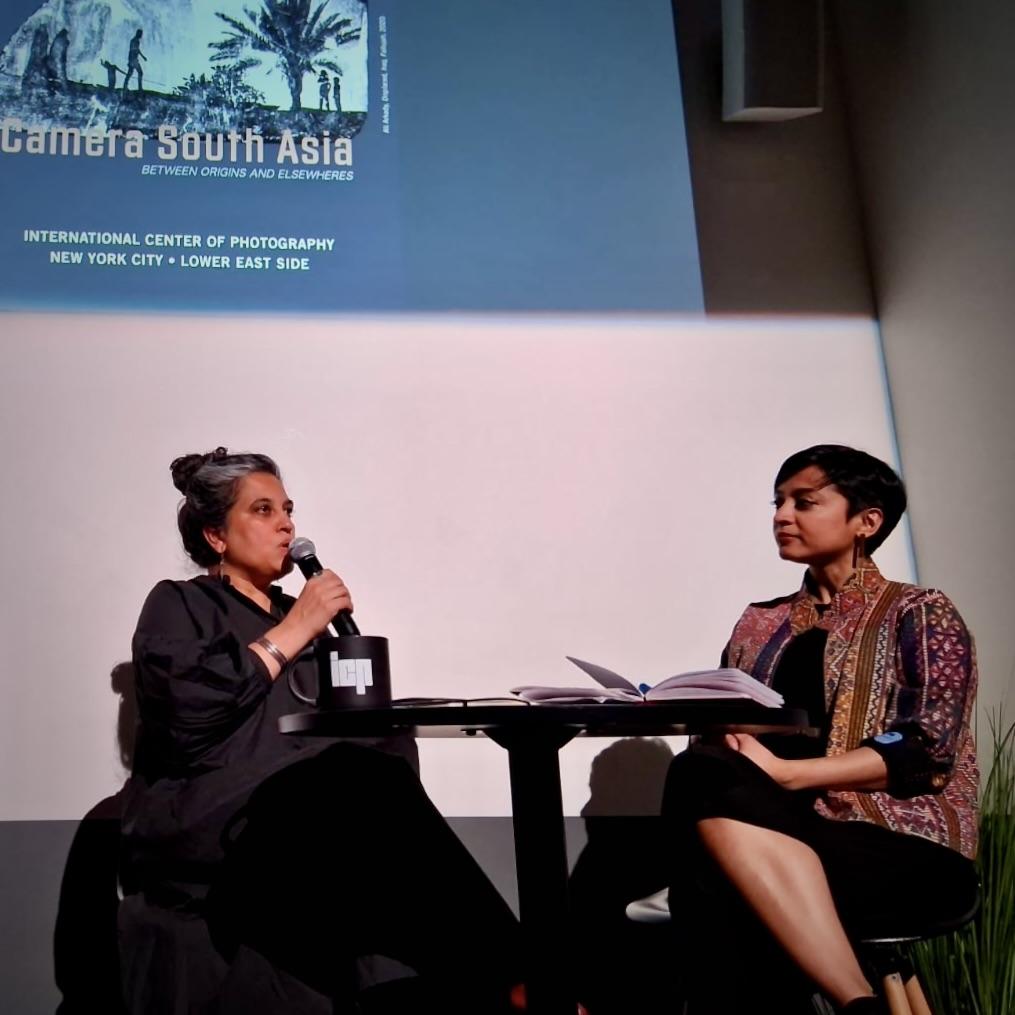
The third annual Camera South Asia symposium, titled “Between Origins and Elsewheres,” was held at the International Center of Photography in New York’s Lower East Side on 11 April 2026. Co-chair Debashree Mukherjee opened the symposium echoing Jamaican-British cultural theorist Stuart Hall, with the reminder that South Asian identities, like all others, are productions rather than already accomplished facts. Identity, Hall writes, is “always constituted within, not outside, representation. This view problematises the very authority and authenticity to which the term, 'cultural identity', lays claim.” Treating film and photography as examples of such representation, the symposium explored how lens-based media have been both product and producer of variants of South Asian identity across the past two centuries of photographic practice. To quote its organisers, Rahaab Allana at The Alkazi Foundation for the Arts and Mukherjee at Columbia University’s Department of Middle Eastern, South Asian and African Studies: “Rather than returning to stories of invention or singular beginnings, the symposium turns to movement—circulation, transit, displacement and dissonance—as a constitutive force in the life of images.”
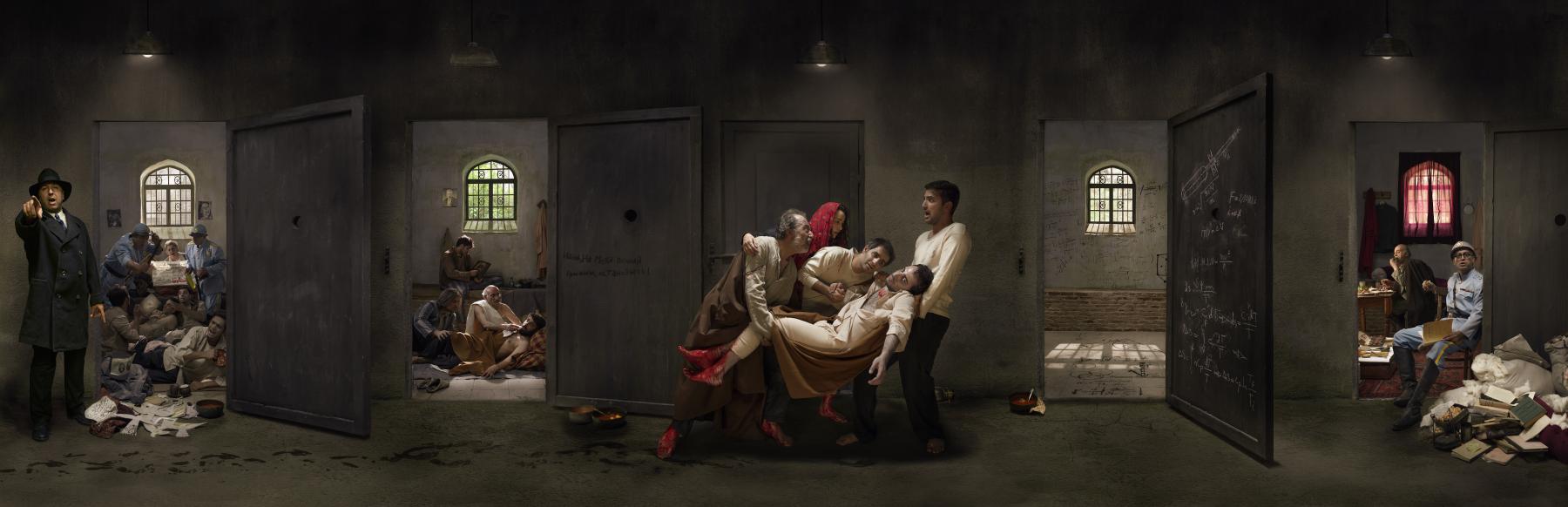
The first half of the day—consisting of the panel “Displacement Imaging: Tracing Unseen Cartographies” followed by an artist presentation by photographer Azadeh Akhlaghi—was concerned with the historical gaps and silences of the photographic archive. The presentations explored South Asian identity by looking beyond the subcontinent’s conventional borders—whether to Iran, South Africa or the Swahili coast. The participants highlighted how contemporary borders are themselves largely colonial constructions, thereby determining where they lie and how we understand their significance. In her presentation, Akhlaghi described her series of staged tableaux By An Eyewitness (2009–12) as giving form to pivotal events in Iran’s twentieth-century history that lack visual representation in the archive despite their existence in collective memory. Her series revealed how large the holes in the photographic archive might be and led her to turn to speculative and performance photography to fill these gaps in order to create space for collective reckoning.
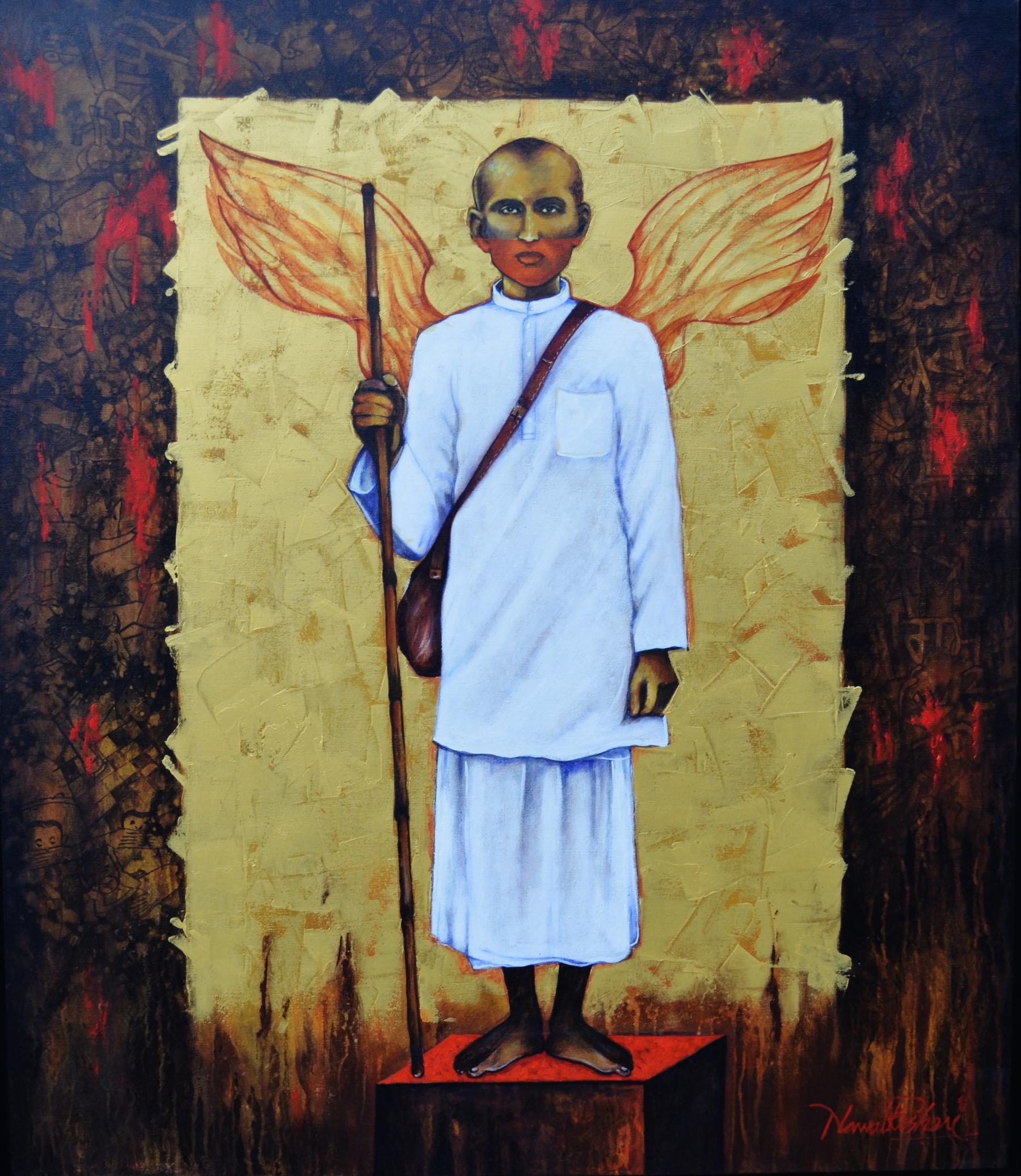
Sumathi Ramaswamy’s presentation reinforced this notion of imbalanced visibility. Her lecture investigated how M.K. Gandhi, despite not himself being a girmitiya (Indian indentured labourer)—as many of his supporters in colonial South Africa were—derived greater visibility by dressing as one. Prior to this change in dress, Gandhi, a London-educated lawyer, most often appeared before the camera as an English gentleman. However, images in which he mimicked the dress of the girmitiya have lived longer, more prevalent afterlives, arguably contributing to the erasure of the very labourers who gave rise to the movement that elevated him to the status of “Mahatma.”
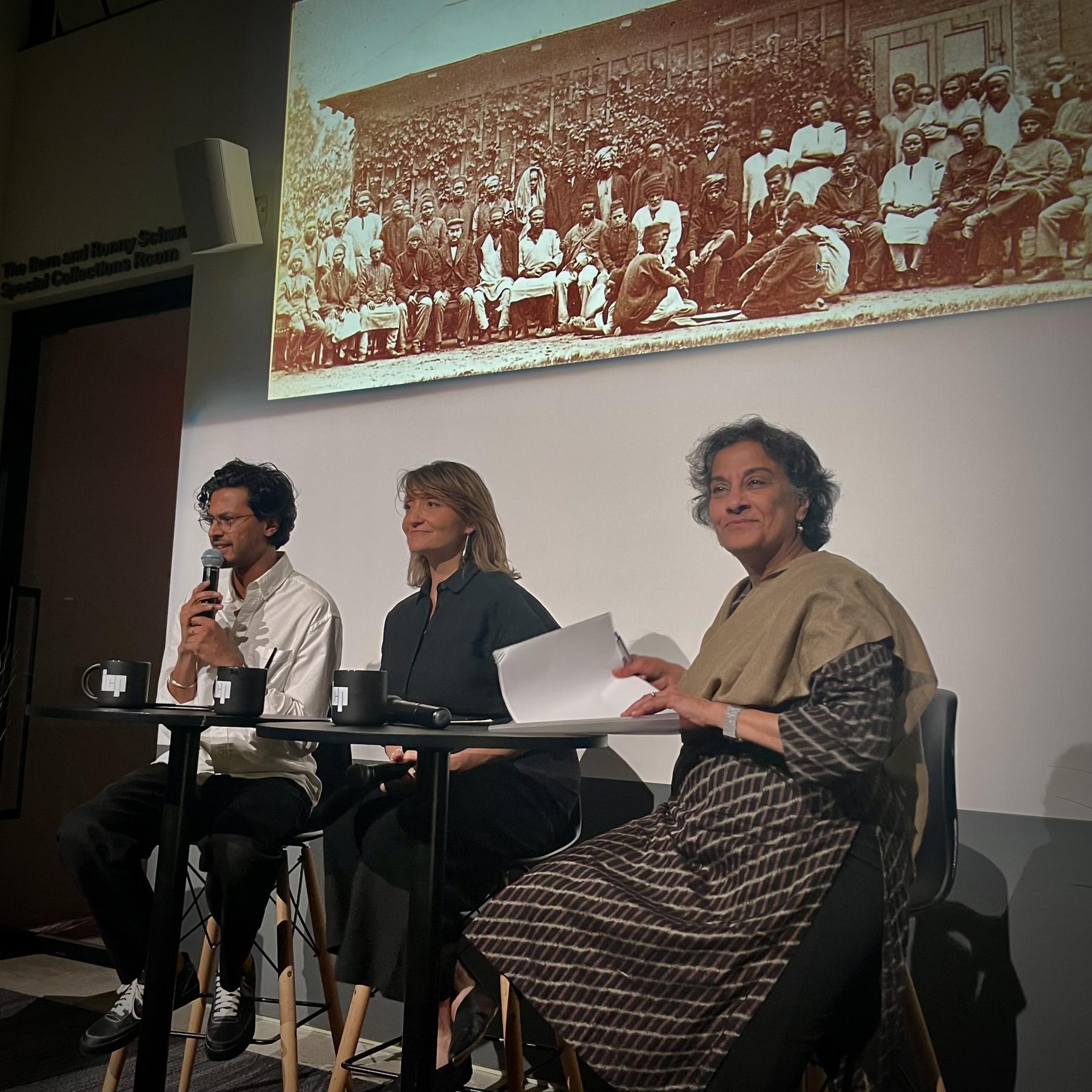
Shifting the focus to such labourers obscured in the archive, Prita Meier traced disparate museums and collections for records of a specific set of crewmates of the Sultanate of Zanzibar’s ship El Majidi, which sailed the Indian Ocean in the 1860s–70s. As the Swahili coast has a long history of Asian-African traffic, trade and settlement, the ship offered a lens into the cross-oceanic relationships and identities born of journeys not regulated by the modern nation-state. Primarily considered an Africanist, Meier demonstrated how photographic records made to fit the narrow narrative of archivable data show signs of lives far too rich and complex to be classified.
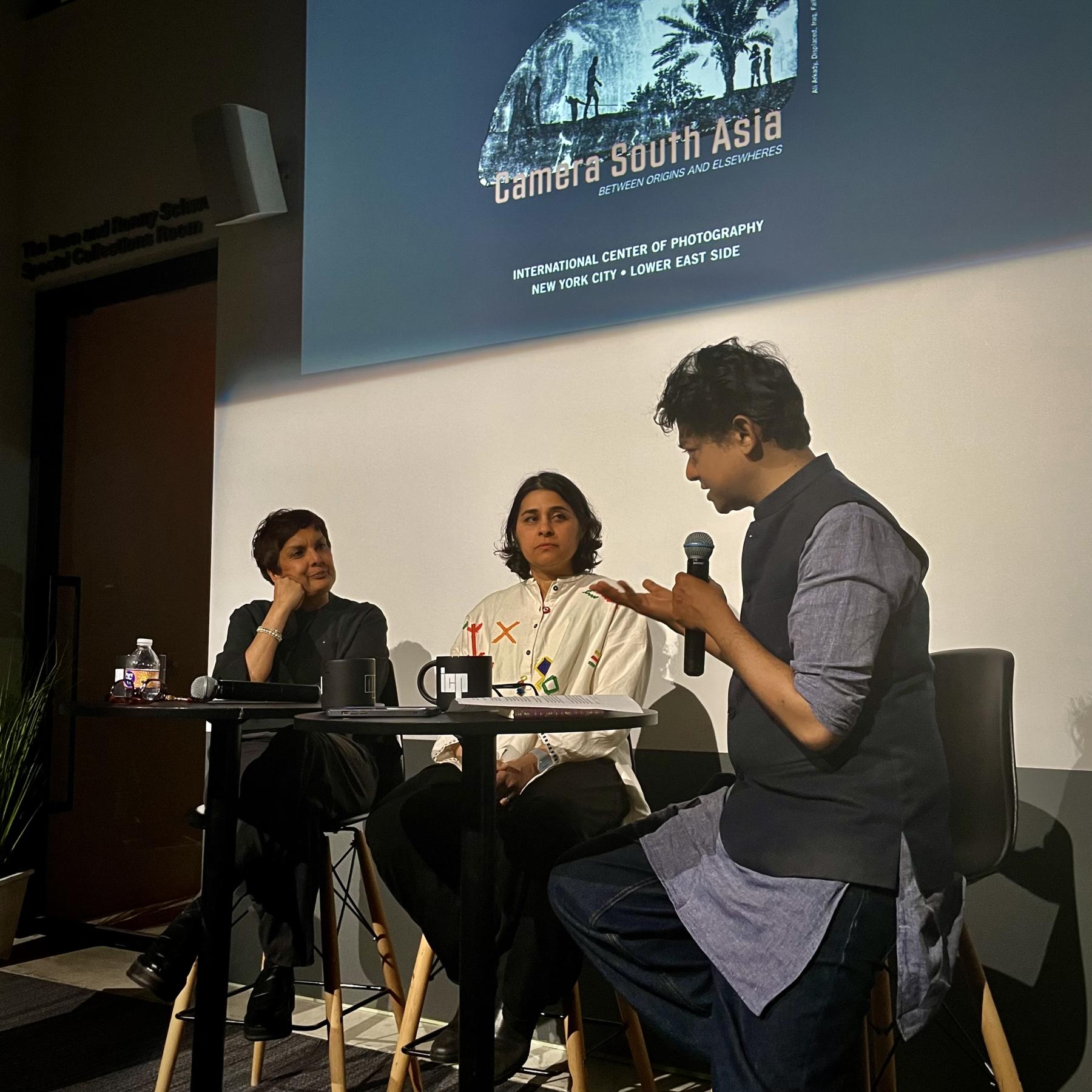
The speakers of the second panel, “Itinerant Media,” drew parallels between the unstable condition of the photograph and its displaced subjects. Art historian Saloni Mathur spoke to the relation between possession and dispossession, looking to representations of saamaan (baggage)—at times markers of luxury and leisure, and at others, of fragility, carrying the livelihoods of people rendered “invisible load-bearers” and forced from their homes. She examined representations of these burdens of migration and labour from Margaret Bourke-White’s iconic yet sometimes painstakingly staged photos of refugees of the Partition to luggage-bearing porters like the “coolie” or “Pullman porter.”
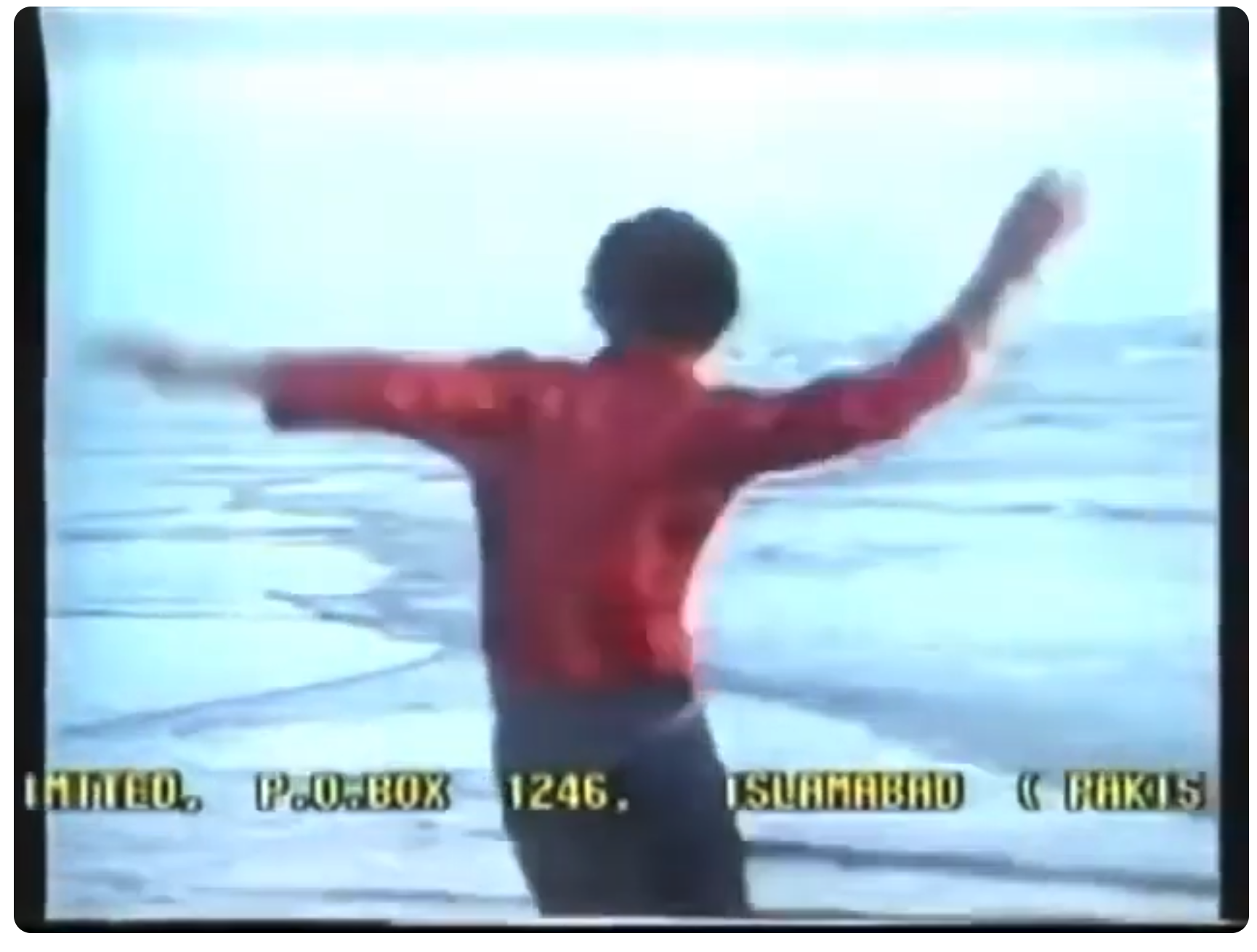
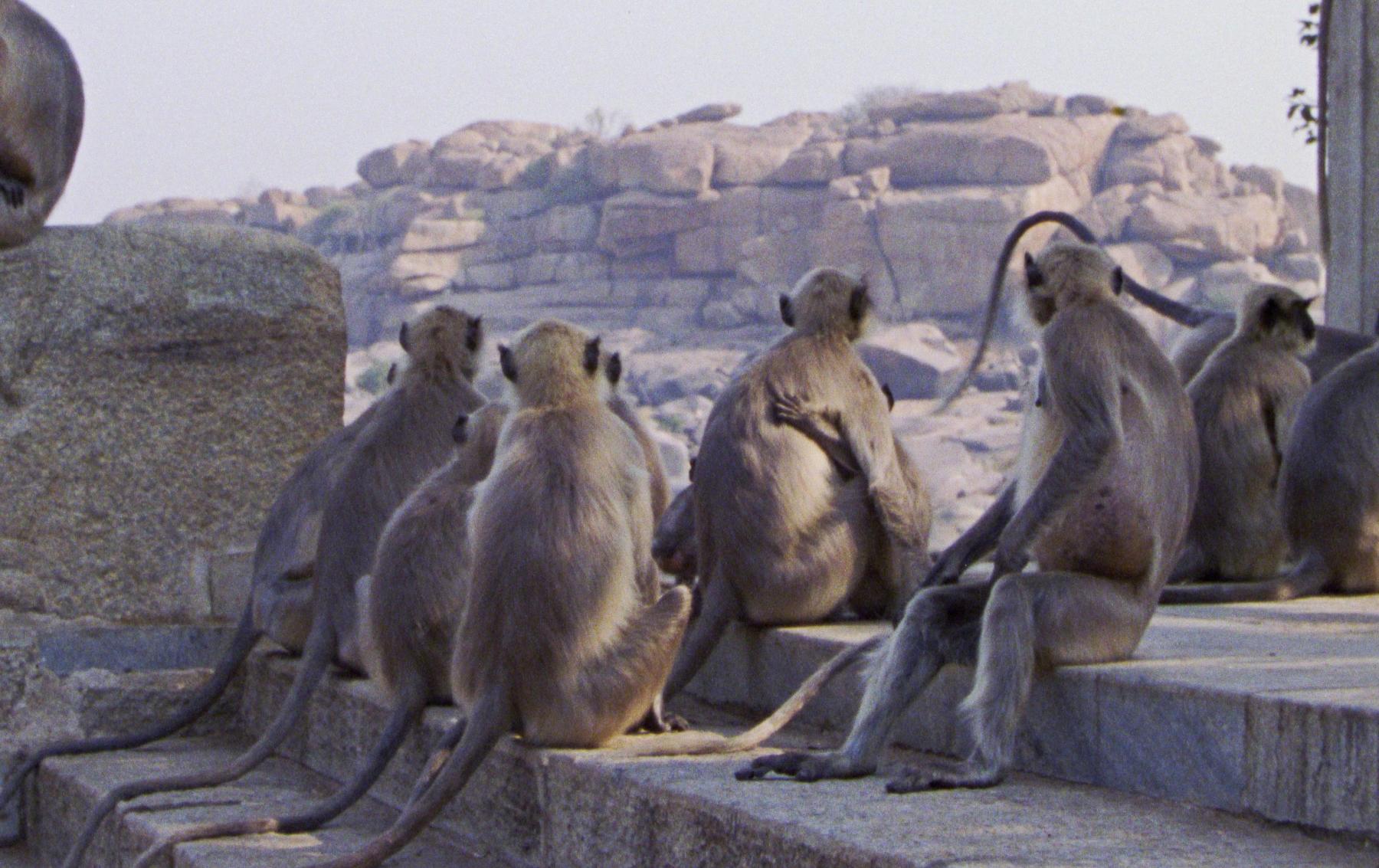
In artist Yaminay Chaudhri’s poetic presentation, in which she arranged her thoughts like tracks on a music tape, the unstable image in focus was instead the “cheap image”—not replicas, but poor originals in low resolution shot on cheap equipment. She wove together reflections on Karachi’s littoral zone at Seaview Beach—a haven for migrants—with excerpts of poor-image videos, such as the music video of “Hai Nazar Nazar Tere Hi Jalwe” by Muhammad Ali Shehki, featuring Pashtun Khattak dancers ankle-deep in the sea. These videos were part of Chaudhri’s collaborative project Mera Karachi Mobile Cinema, in which ethnically and socioeconomically diverse participants self-produced videos using vernacular technology which would then be screened in public city spaces, such as along the beach. Mathur and Chaudhri’s reflections on the border and the beach as hosts of transient populations gave way to artist Shambhavi Kaul’s presentation of experimental films featuring uncanny, science-fictive landscapes that pointed to the unknowability of that which is in the photograph.
As co-organiser Debashree Mukherjee stated at the event’s conclusion, all speakers foregrounded the question of resolution in the act of looking at a photograph and celebrated its lack thereof. Like the image, always unresolved and able to be read anew, identity, too, is constantly constructed through imaginings of affinities to land and community across time. Such reconstructions of identity are readily born in New York, which, as the symposium’s organisers write, is “a city shaped by diasporic aspiration and uneven arrival.” Taking the city as its referent in theory, the symposium centred subaltern figures such as the migrant, indentured labourer and refugee. Yet the symposium remained short of making explicit reference to New York as a site of labour, refuge and livelihood for diverse migrants, including hundreds of thousands of South Asians and Indo-Caribbeans. Their experiences and those of their predecessors nonetheless undergirded this edition of Camera South Asia—a unique space bringing together lens-based artists and academics of South Asia and the diaspora that is much needed in the city.
To learn more about artists reflecting on complex histories displacement and migration, read Radhika Saraf’s two-part essay on Samira Makhmalbaf’s film At Five in the Afternoon (2003), Santasil Mallik's essay on Mohamed Bakri's documentary Jenin, Jenin (2002), Vishal George’s conversation with Thomas Sideris on his film Gas Stations or The Pigeons of Lahore (2024), Mallika Visvanathan’s conversation with Shaima al-Tamimi about her film Don’t Get Too Comfortable (2021), Najrin Islam’s curated album from Renluka Maharaj’s series Pelting Mangoes (2020–21) and Jennifer Chowdhury Biswas’ reflections on the Instagram handle Gulf ⇄ South Asia.