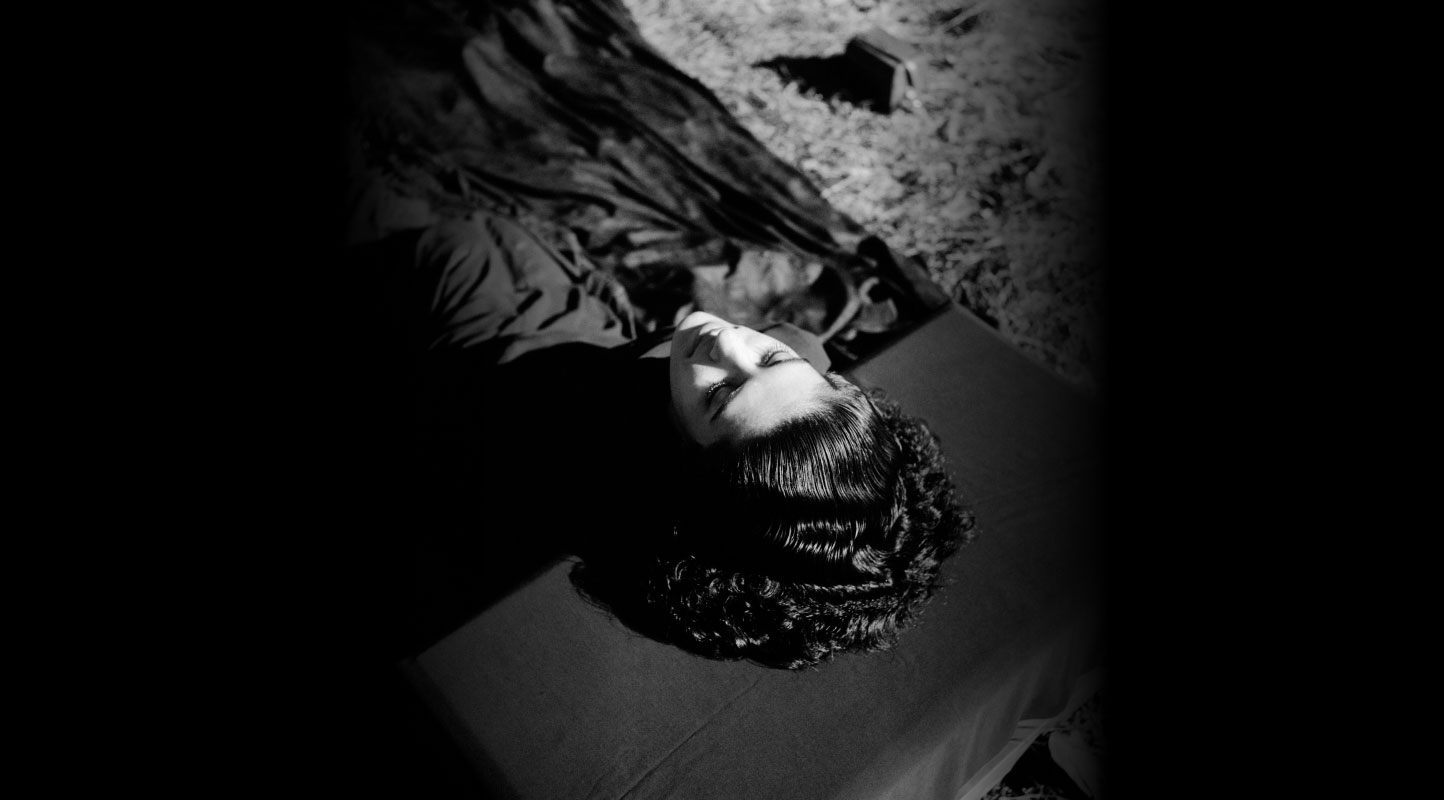


Disobedient Subjects, Bombay, 1930-31
On Saturday, 18 April 2026, ASAP | art organised a panel discussion with Avrati Bhatnagar and Sumathi Ramaswamy, moderated by Annalisa Mansukhani, on their collaboration, Photographing Civil Disobedience: Bombay 1930–1931, developed alongside the exhibition, Disobedient Subjects: Bombay, 1930–31. Largely centred on K.L. Nursey’s Old Congress Party Album from the Alkazi Collection of Photography, the images offer a rare glimpse of mass action in the city, and invite us to ask: How do we imagine the force of the historical photograph?
The Nursey album compels us to bear witness and presses us to interrogate—are we asking too much, or too little, of these photographs? While the album foregrounds the Desh Sevikas and the Gandhi-led salt satyagraha, which was to be the symbol and image of civil disobedience, along with mass action depicted through striking images of people storming into the streets, it is precisely in the showing that it obscures. If history were to attempt to erase the Mahad satyagraha, which saw Dr Ambedkar and 2500 Dalit satyagrahis draw water from a public tank, the first time any Dalit community had exercised its right to do so, the Nursey album shadows Dalit communities who were being "disciplined" by the Sevikas. If the images become evidence of the glorious celebration by Congress volunteers of Gandhi’s attendance at the Second Round Table Conference, what remains hidden is the black flag demonstrations and public criticism of his failure to have the British commute the death sentence of Bhagat Singh, Rajguru and Sukhdev. If we see a GIP (Great Indian Peninsula) railway worker lying prostrate in protest, what we do not see, or are not made to see, is Gandhi’s insistence during labour strikes that workers must resume work and cooperate with millowners, for the sake of swarajya (self rule). What the album asks of us then is: What was this swarajya, the freedom that propelled the kind of nationalist mass action the images are evidence of? And what were, and are, other forms of freedom that the masses, often overlapping publics, were participating in? The images leave us with historiographical as much as historical questions: What is the historical photograph without history, or rather, what kind of history does the historical photograph necessitate in order to be read in a way that is fidel to its time, and to ours?
In this edited conversation, the participants discuss how our attempts to make these images speak in the present is tied to our ability to sit with their disquiet and to confront our own distanced, often disingenuous, relation to the past.
Avrati Bhatnagar is currently an Instructor of History and International Comparative Studies at Duke University, and has been appointed as Assistant Professor of History at the University of Iowa, starting in Fall 2026. Her interdisciplinary research combines the study of image-based and textual archives to explore the political cultures of South Asia. She has published in History of Photography and co-edited Photographing Civil Disobedience: Bombay, 1930–1931, published by the Alkazi Collection of Photography in association with Mapin Publishing (2025). Currently, Bhatnagar is working on her first book-project titled Disobedient Women in a Consumer City: Picturing Swadeshi Culture in Colonial Bombay. The project highlights the role of women and gender relations in shaping political consumption in twentieth-century India, with a particular focus on urban visual culture.
Sumathi Ramaswamy is James B. Duke Distinguished Professor of History, Professor of Art, Art History and Visual Studies, and Chair of the Department of History, Duke University. She has published on language politics, gender studies, spatial studies and the history of cartography, visual studies and the modern history of art, and more recently, digital humanities and the history of philanthropy in modern India. She is a co-founder of Tasveerghar: A Digital Network of South Asian Popular Visual Culture (www.tasveerghar.net). Her most recent works are the monograph Gandhi in the Gallery: The Art of Disobedience (2020), the digital project B is for Bapu: Gandhi in the Art of the Child in Modern India (2020) and a co-edited volume Photographing Civil Disobedience: Bombay, 1930–1931 (2025). She is currently completing a new monograph titled Dying to Give: The Accidental Birth of Educational Philanthropy in Tamil India.
Annalisa Mansukhani is a writer, researcher and curator working with histories of photography and notions of the image in contemporary art and curatorial practices. She has led programmes across a range of arts infrastructures within organisations such as the Kochi-Muziris Biennale and the Foundation for Indian Contemporary Art (FICA). Her writing has been published with diverse platforms, including ASAP | art, Zubaan Books, Write | Art | Connect and Projects/Processes (Serendipity Arts Foundation), Shared Ecologies, Hakara Journal, TAKE on Art Magazine and nether Quarterly. She is one of the recipients of the first Critical Collective-PhotoSouthAsia Young Writer's Award for lens-based practices, and received the Art Scribes Award 2024, supported by the French Institute in India and Prameya Art Foundation, New Delhi.
(Featured image: "G.I.P. Railway Workers Offering Satyagraha in Front of the Shops at Parel." [From the album Collections of Photographs of Old Congress Party—K.L. Nursey, c. 1930–31. Gelatin silver print, 115 × 156 millimetres. ACP: 98.77.0002 (27a). Image courtesy of The Alkazi Collection of Photography.])
Recorded on 18 April 2026.
To learn more about representations of struggle in the pre-independence period in India, watch the online public talk with Vikrant Bhise, Diwas Raja KC and Aban Raza on their work around anti-caste, feminist and working people’s movements, taking as a cue their participation in the exhibition, revolutionary remembrance, held last year in Mahad and Gulmehar Dhillon’s essay on CAMP’s Photogenetic Line (2019). Also read Sujaan Mukherjee’s essay on funeral processions as spectacle in the early twentieth century and Ankan Kazi’s reflections on Sandhya Suri’s Around India with a Movie Camera (2018).