
Lost Fish Recipes: In Conversation with Biswajit Das and Chandan Borgohain
Made with the support of the Serendipity Food Matters Grant 2024, Lost Fish Recipes (2025) by Biswajit Das and Chandan Borgohain documents Indigenous fish recipes associated with the river Kulsi, which is on the brink of being completely erased due to sand mining and other extractive processes. In the first part of the conversation, the duo spoke about what drew them to mapping culinary traditions around the Kulsi and their process of collaboration. In the second part of this edited conversation, they discuss the interactive nature of the multimedia project and the forms it may take in the future.
Mallika Visvanathan (MV): How did the interactive element in the form of the game become a part of this project?
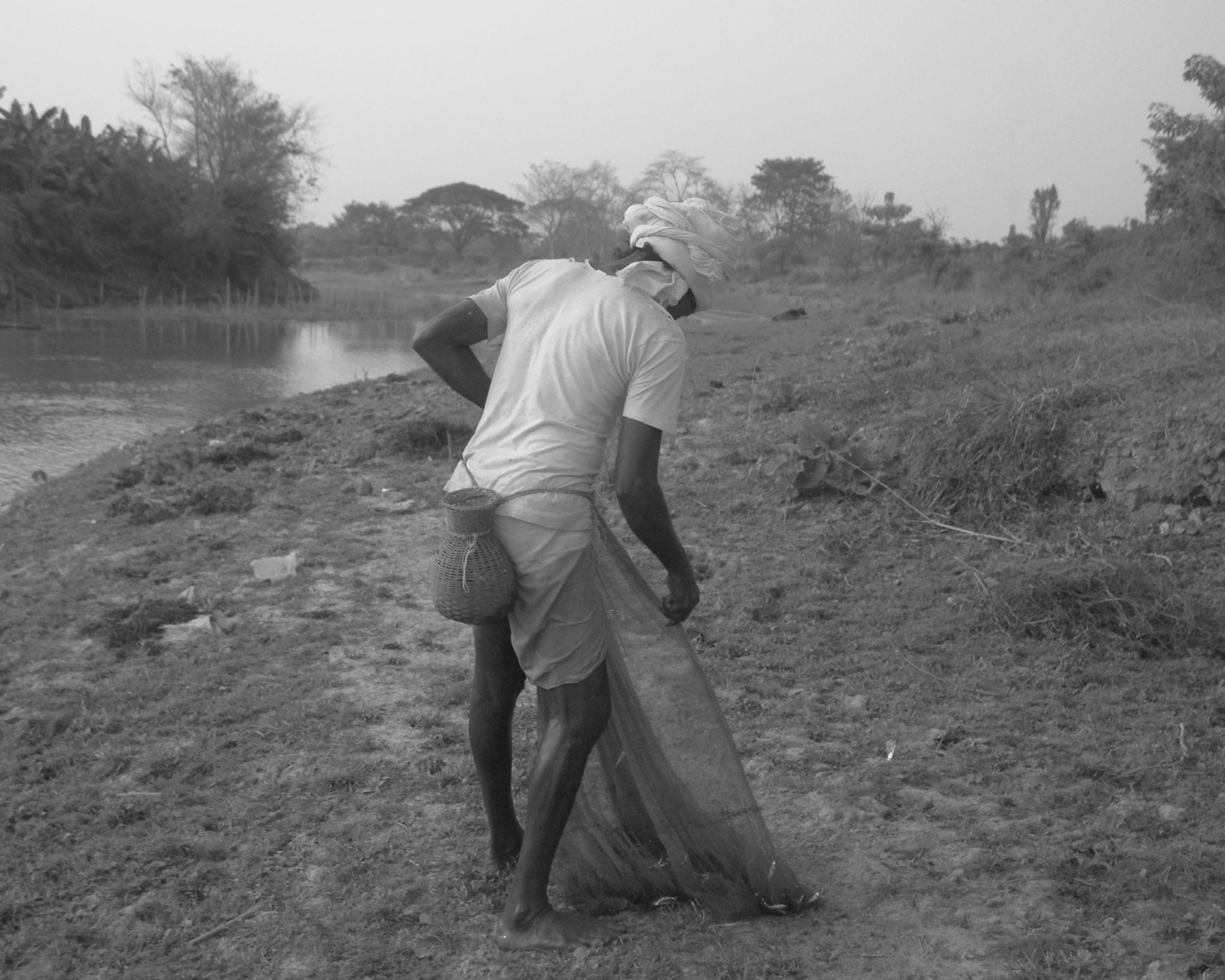
Biswajit Das (BD): As a filmmaker, video is an essential part of my practice. So when we pitched this project, we wished to research recipes from the river Kulsi, where fish are no longer found. In a way, we wanted to preserve those recipes forever, as they are associated with culture, livelihood and tradition. As the fish vanish, everything will disappear with them. Chandan and I started by collecting recipes—not only around the river Kulsi, but also from across Assam. We researched about how different communities like the Rabha or Boro, among others, would cook fish in their own way. We ended up collecting a large number of recipes.
One day, while buying art supplies in this shop in Guwahati, I saw a packet of small wooden blocks or cubes. There were nine of them for only 100 rupees. I bought it and showed it to Chandan. We thought maybe a dice game could come out of it.
For the first version, our friend Bulbul (Das) did the illustrations. A couple of other friends helped us with the first set. We kept it aside and then we did another more detailed set. Both of these early versions of the dice game were displayed at the Serendipity Arts Festival.
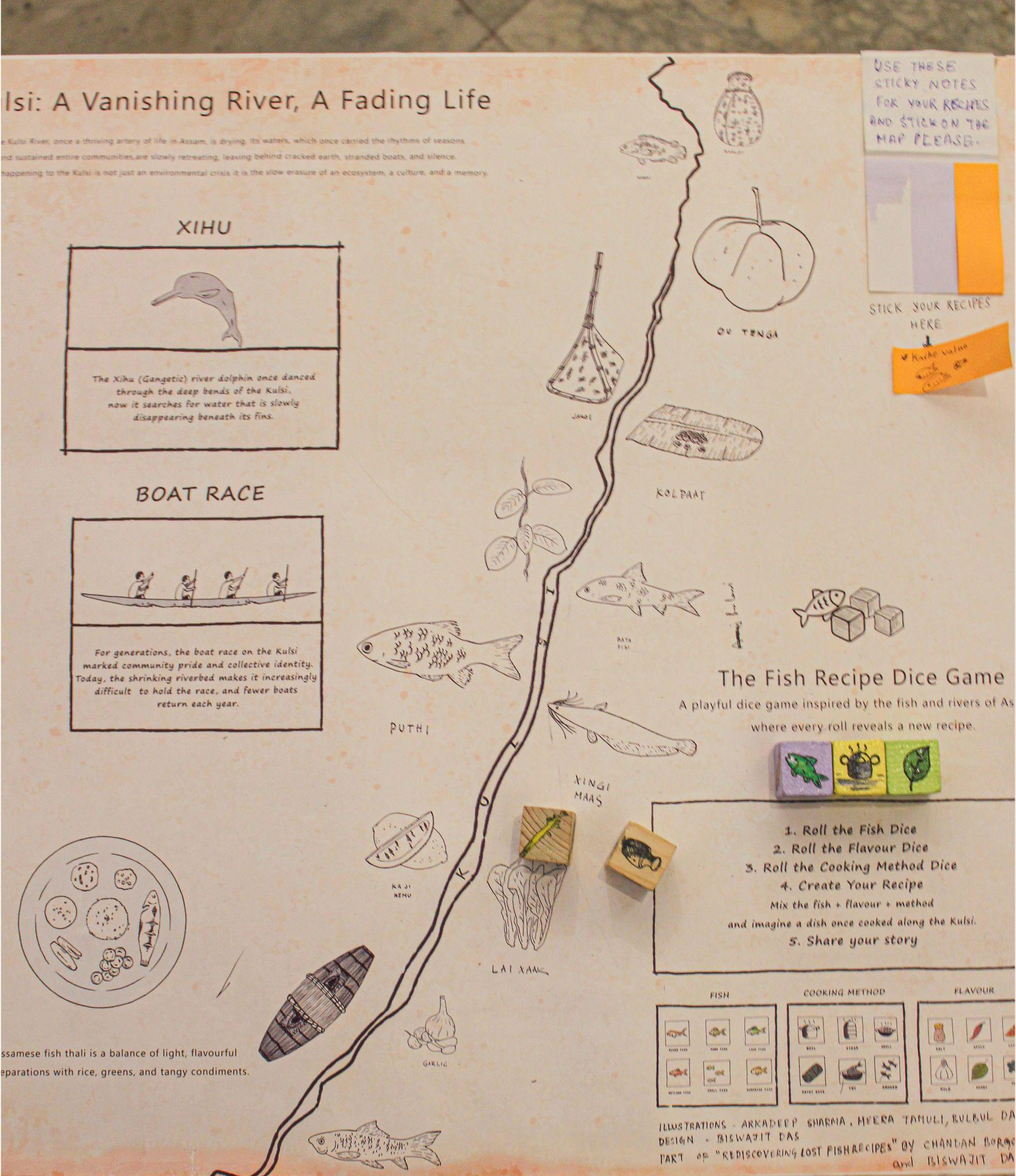
Serendipity Arts asked us to create a children's version of the game. So we were thinking of a simpler version that children can also play. The first idea that came to us was to add more colour to make it more engaging, as the earlier versions did not have any colour. So we created different icons for each part of the game. When a friend, Hrishitonoy Dutta, came over, and I showed him everything that we were doing, he said: “The colourful version looks like a game I would play.” He helped us see how it could all come together.
MV: Can you talk a bit about the interplay between the various media forms in the project?
BD: When we applied for the grant, we wanted to create an artist book. We had asked a friend of ours to design the book and gave her all the materials, but she had to let go of the project at the last moment because of some personal commitments. While the artist book did not happen, we want to continue thinking about it.
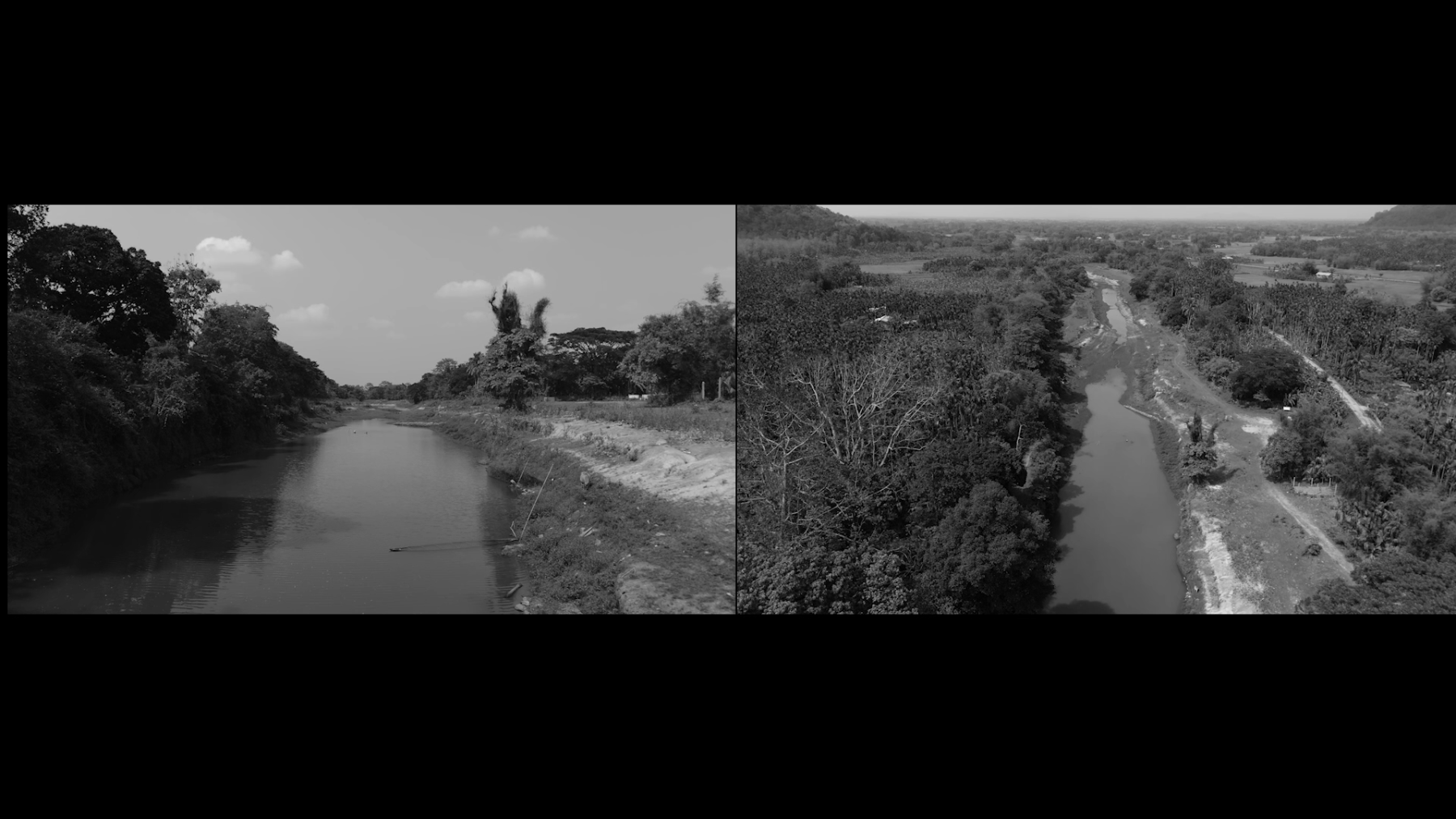
However, the two-channel video was one of the most challenging things for me, as an editor. We had shot a lot of material during our field visits, with different cinematographers and even used drones to shoot. When I started assembling the material as a two-channel video, I felt we needed something more.
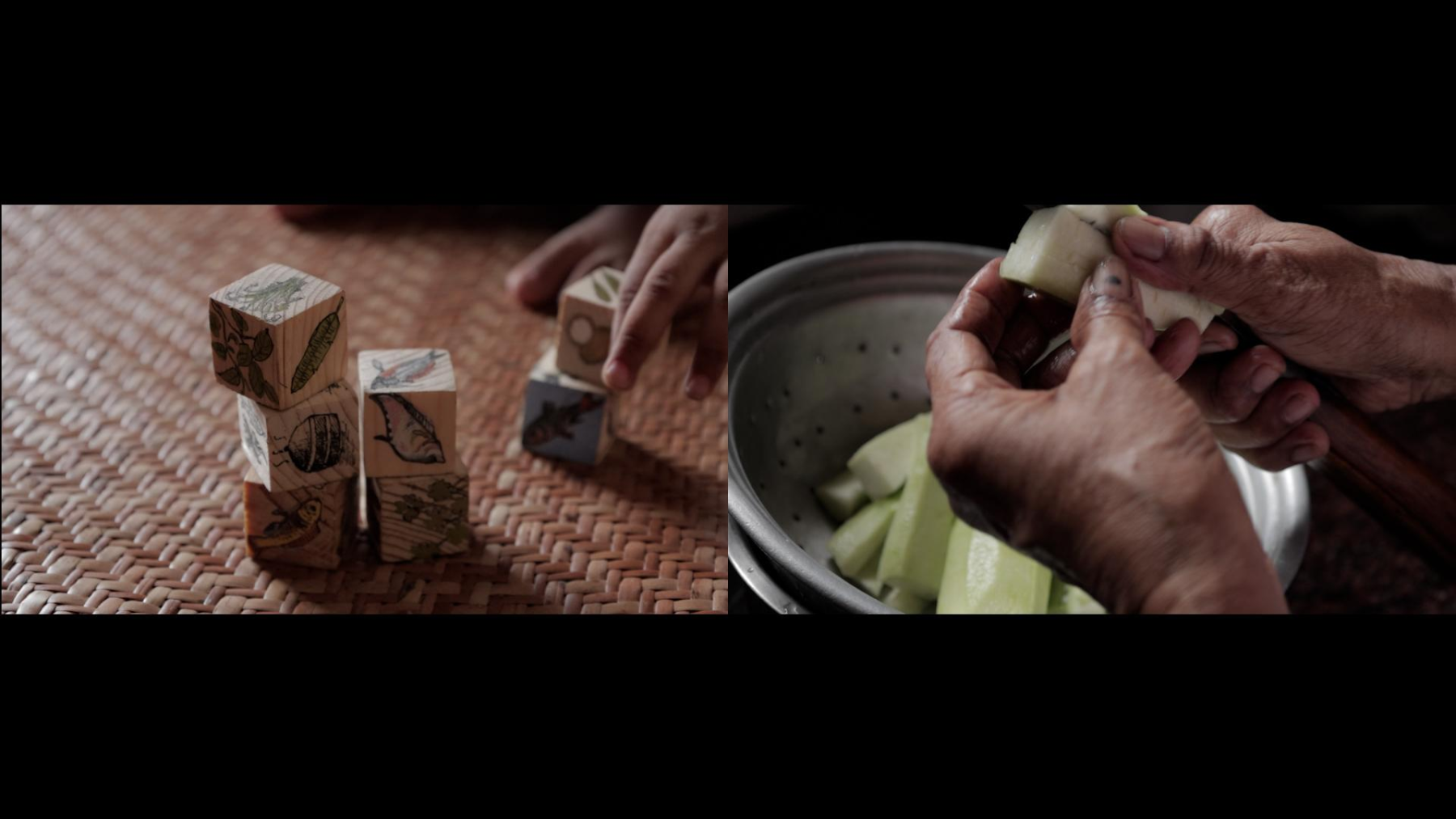
At that time, my son was one-year-old, so I gave him the dice and thought I would see what he does with it since he does not know or understand the instructions for how to play. When I filmed him playing, I really liked the material. That was how the structure of the two channels developed—initially, I wanted someone playing the game on one side of the screen while having someone cooking the recipes on the other. That was the seed of the idea, but then we extended and expanded it, while also attempting to simplify certain aspects. So then the river and the game became a part of the larger project.
I felt that the film otherwise might not stand on its own. But connecting the material game that people are playing with what they are watching on the video allows for the multimedia installation to generate more affect. The children loved playing it at the festival. Most of the feedback we got from the festival was that people felt that the interactive game combined with the video work and illustrations created more meaning for them.
We are planning to continue applying to other grants so that we can make the artist book as well. It will contain all the recipes, photographs, illustrations, the game, stories and poems related to the research that we have done. So that will potentially be the next step in this project.
In case you missed the first part of this conversation, read it here.
To learn more about the Serendipity Food Matters grant, read Mallika Visvanathan’s two-part conversation with Sumaiya Mustafa on her project Culinary Cosmopolitanism Through Parotta Shops of Rural and Coastal Tamil Nadu (2025) and Radhika Saraf’s conversation with Dayananda Nagaraju and Niranjan NB about their project The Everlasting River (2024).
To learn more about the tenth edition of the Serendipity Arts Festival, watch an episode of In Person featuring Shaima Al-Tamimi as she discusses her film Don’t Get Too Comfortable (2021), which was featured as part of the show Displacement curated by Rahaab Allana, and engage with an album from Kunga Tashi Lepcha’s series Children of the Snowy Peak (2019–ongoing), which was featured as part of the show Murmurations curated by Ravi Agarwal.