

Alternate Allegiances: The Rules of the Uyghur Underground

Sameer Farooq’s The Silk Road of Pop (2013), recently screened at Colomboscope: Rhythm Alliances, is a refracting dialogue between traditional and contemporary Uyghur music taking the forms of pop and hardcore rock. The first part of the essay explores how the film documents the rise of this phenomenon as a response to the marginalisation of the community within China. Through the film, Farooq positions the narrative from the dual sides of musicians ranging from underground basements to a hardcore crowd, but also from the perspective of the fangirl following them from arena to club to basement, as they revel in the shared energy of being allowed to be young and rebellious. However, who is allowed to be a fan of alternative music in Xinjiang?
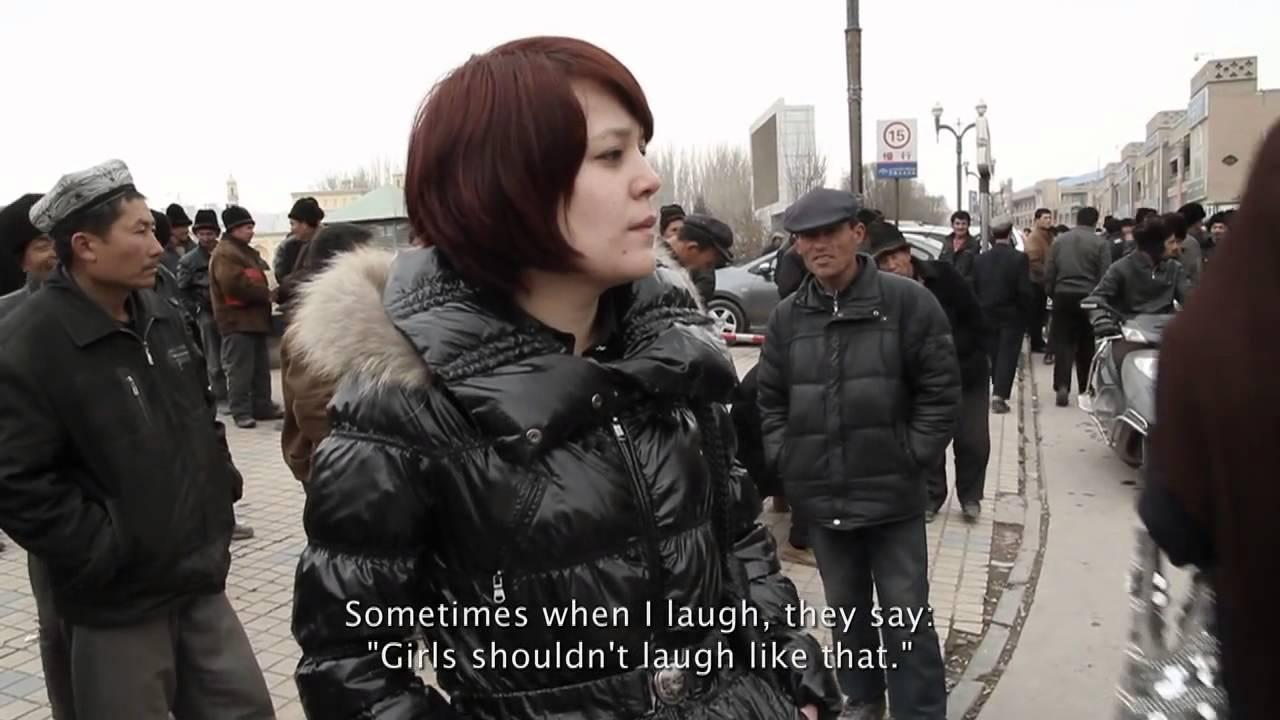
Certainly not Ay, drawing surprised and uncomfortable stares as she stalks around Kashgar in boots and faux leather like a scene kid—as Six City’s “Street Life” plays in the background, imitating the shrieking yowl of their self-proclaimed inspiration Michael Jackson. The obsession with the late pop star in Central and South Asia—particularly India—is interesting if one considers the kind of music cassettes of American music that were circulating in these regions even before liberalisation. As Elise Anderson writes, “In the 1990s, as cassette and VCD recording technologies reached the region and brought with them distant musical influences, Uyghurs began performing folksongs in pop style on electronic instruments while also incorporating styles like reggae, rock, and flamenco into longer-established, indigenous forms of music-making.” Six City’s sonic encounters with Eminem, 50 Cent or Snoop Dogg might have come about in the later era of CDs or the internet, unlocking a world of record scratching and low-hanging jeans style of the 1990s hip-hop stars—which at least one of them seemed to emulate, beyond the usual rapper hoodies—leading to the lyrical hip-hop of Memtimin Mahmut’s “Tash Yurek” playing on Ay’s laptop.
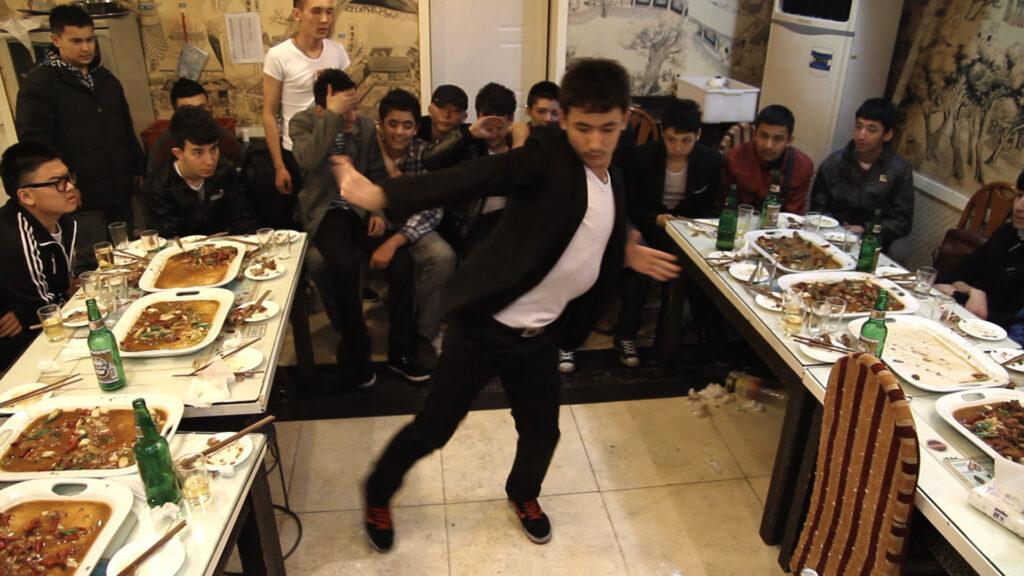
Her smorgasbord of references immediately comes through as she listens to a live performance of Alicia Keys singing “No One”—or at a club late at night when she is dancing to Ziyoda singing a rendition of Bappi Lahiri’s “Jimmy Jimmy” or singing a karaoke version of Britney Spears’ “...Baby One More Time.” Sangita Gopal and Sujata Moorti write in Global Bollywood: Travels of Hindi Song and Dance how the reception history of Bollywood in Russia and China revealed “curious disjunctures between official policies governing the import of Hindi film and popular response to them.” While the Chinese government upheld their disdain for Hindi cinema’s decadent music sequences, they could not withhold their mass appeal—particularly Disco Dancer (1982), whose soundtrack went on to win a Gold Award in China.
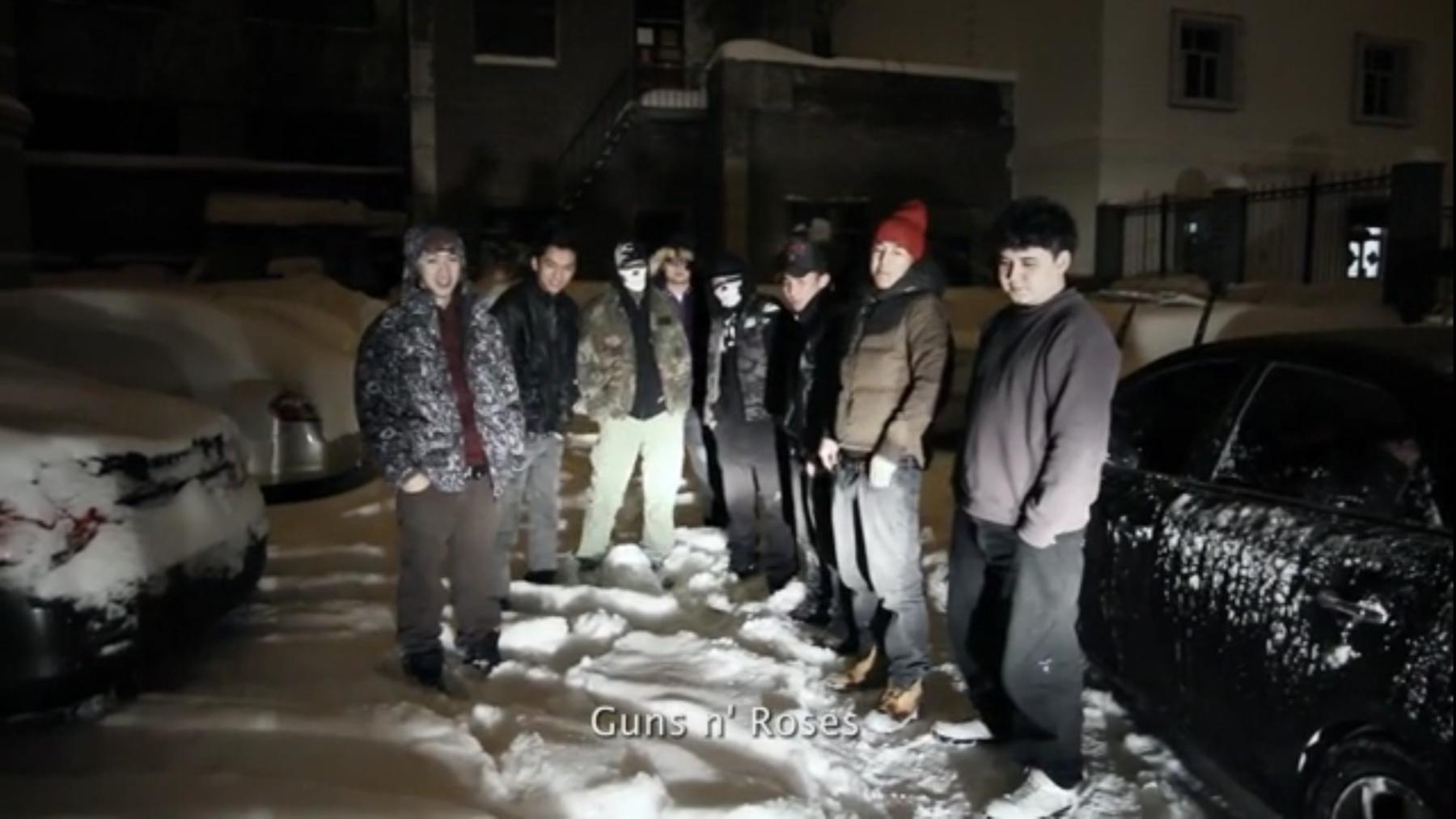
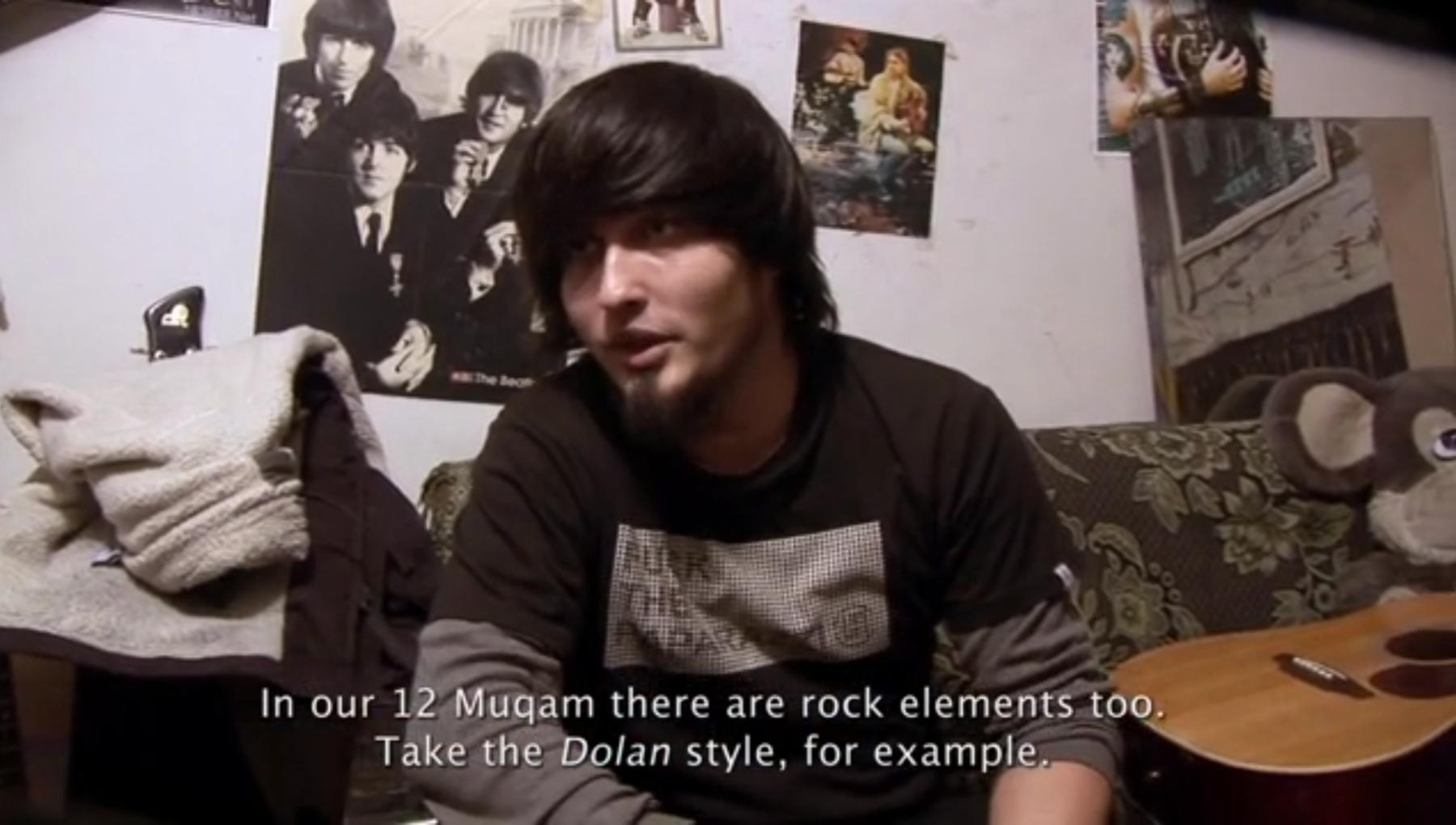
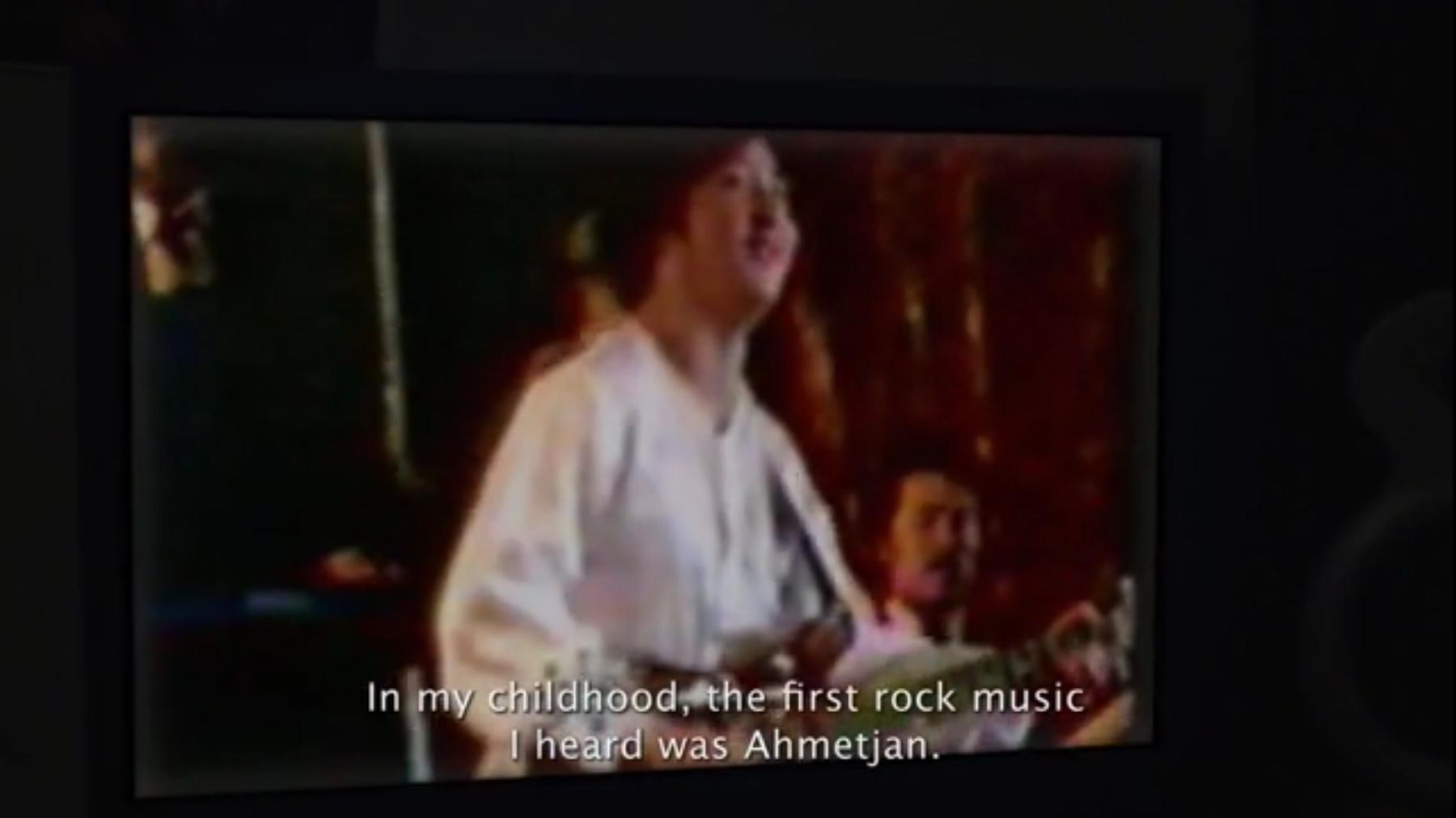
While Farooq presents a divide between two generations of music-makers and listeners, the film also concludes that the two cannot quite be separated after all. Even as rock back Karhan’s lead Adil’s song “Arzu” heavily takes from Nirvana’s “Smells Like Teen Spirit,” he introspects on an older generation of music, looking to rock ancestors like Ahmetjan, who formed the first rock band in Xinjiang. He attempts to find a lineage as he reinterprets how the sounds of hand-instrument beats in Muqam are sonically similar to rasping high-frequency beats in rock. It is Uyghur music which Ay returns to before she falls asleep. Their lives as they move around Xinjiang and the film's narrative are chaptered out by Uyghur folksongs and allegorical lyrics of fallen rabbits playing on the radio as Farooq moves around Xinjiang, or a music store owner in Kashgar, Mehmet, sings a song on the dutar about remembering brave ancestors who were envied by lions. A lineage is unmistakable as Adil performs the song "Ürümqi" about the capital city of Xinjiang.
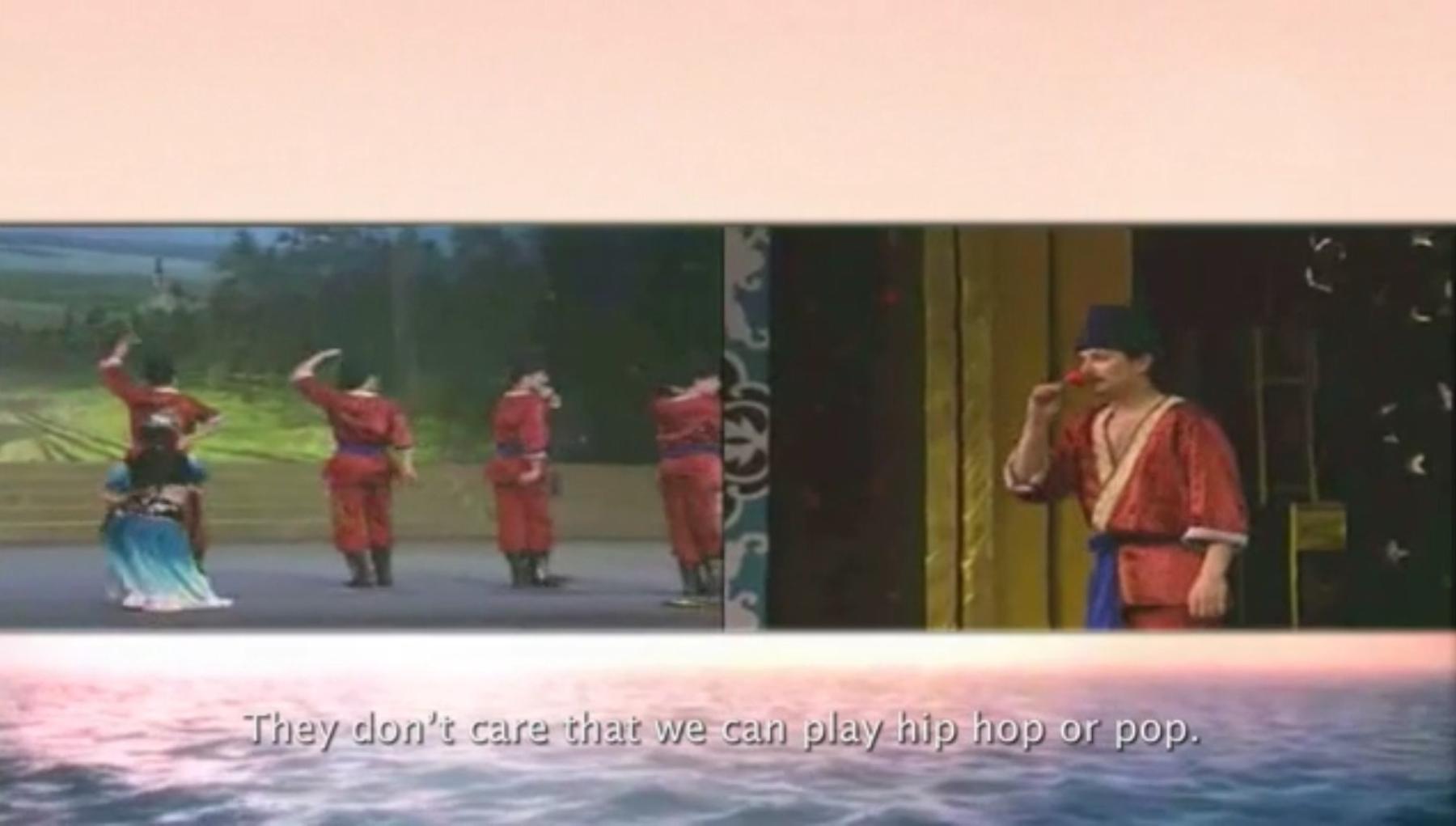
The car thus becomes an in-between space heavy with emotion and inner life, much like filmmaker Hooria Ahmadi and her friends pregaming in the car by listening to their young musician friends on their way to underground alternative scenes in Tehran. The police, who saw the Uyghurs as just being good for singing and dancing (it is like being a clown, a Six City member said), did not distinguish between traditional musicians and rappers. Dutarists Abdurehim Heyit and Sanubar Tursun would disappear into the camps in 2017 and 2018 only to reappear a year later, and even now, the Chinese government is cracking down on hip-hop. The younger musicians are attempting to go beyond ethnic divides as band members of both Uyghur and Han Chinese descent make music together. Even then it takes a lot to continue making music, as Six City reflected—the band would not perform for two years after the ethnic riots in July 2009—while looking nostalgically at an emerging band named X1, about whom not much can be found and one can only presume they discontinued.
“When young people hear (our) young music, they will think: ‘Oh! What is this music?’” said a Six City member, “It is Uyghur music. Google it.” Unfortunately, even today, Uyghur music remains an unnavigable domain for the World Wide Web with traditional music often mislabelled generically or the bands never having gotten to uploading their music online in open access platforms beyond Chinese ones, at a time when circulating music in the Uyghur language was dangerous—many of the groups having disbanded or disappeared. Even as expression thrives in the region, that statement by the rock band remains a dream to be achieved in the future—for both an older and younger generation of Uyghurs who demand to be remembered.
In case you missed the first part, read it here.
To learn more about various subcultures of music, read Upasana Das’ three-part interview with EXCISE DEPT and her reflections on Poulomi Desai’s music practice, Steevez’s review of MKP Gridaran’s Dalit Subbaiah: Voice of the Rebels (2025), Sagorika Singha’s reflections on the use of viral rap music in Assam at the time of tabling the NRC, Pramodha Weerasekera’s contemplation of music and solidarity in Sri Lanka, Arundhati Chauhan’s album of Maoists’ production of revolutionary songs in Nepal and Silpa Mukherjee’s essay on disco music and the diaspora.
To learn more about Colomboscope: Rhythm Alliances, read Radhika Saraf’s two-part interview with Mekh Limbu on Chotlung: traversing spirits, redemptive songs (2025) and an episode of In Person featuring Basir Mahmood as he discusses his film A Body Bleeds More Than It Contains (2026).
All images are stills from The Silk Road of Pop (2013) by Sameer Farooq. Images courtesy of the director.