
The Broken Image is a Meme: Navigating Sohrab Hura’s ‘Forest’
Sohrab Hura’s annotations are nearly as pervasive and consistent as his diaristic image-making practice, where he copiously pens down, on his website, a conversational artist’s note for many of his works. “I used to write a lot of fiction as a kid,” he mentions, and writing has now become a means to distill and foreground narratives during his own creative process. Perhaps a more physical representation of his annotations appears as work titles scrawled on frames in oil and scribbled on walls in charcoal, as if rebelling against the officious completeness of the art world’s usual printed captions, as they remain like marks rather than statements, perpetually in the process of reaching a contested finality.
The last weekend before the opening of two solos saw Hura hunched over a dry pastel work of gobsmacked fishes staring back at us, akin in expression to the silver, wizened fish with upturned lips, who Hura had photographed many years ago for his photobook The Coast (2018). Repetition becomes a significant aspect of Hura’s practice where he probes into his archive for universal signifiers, infusing them with metaphoric significance—enough for them to toe the thin line of memes. It is difficult to not find people laughing and smiling at this showcase of works at Experimenter Gallery, Kolkata, titled The Forest, pointing at a gutted fish, unsurprised their life is not going great, as it never usually is.
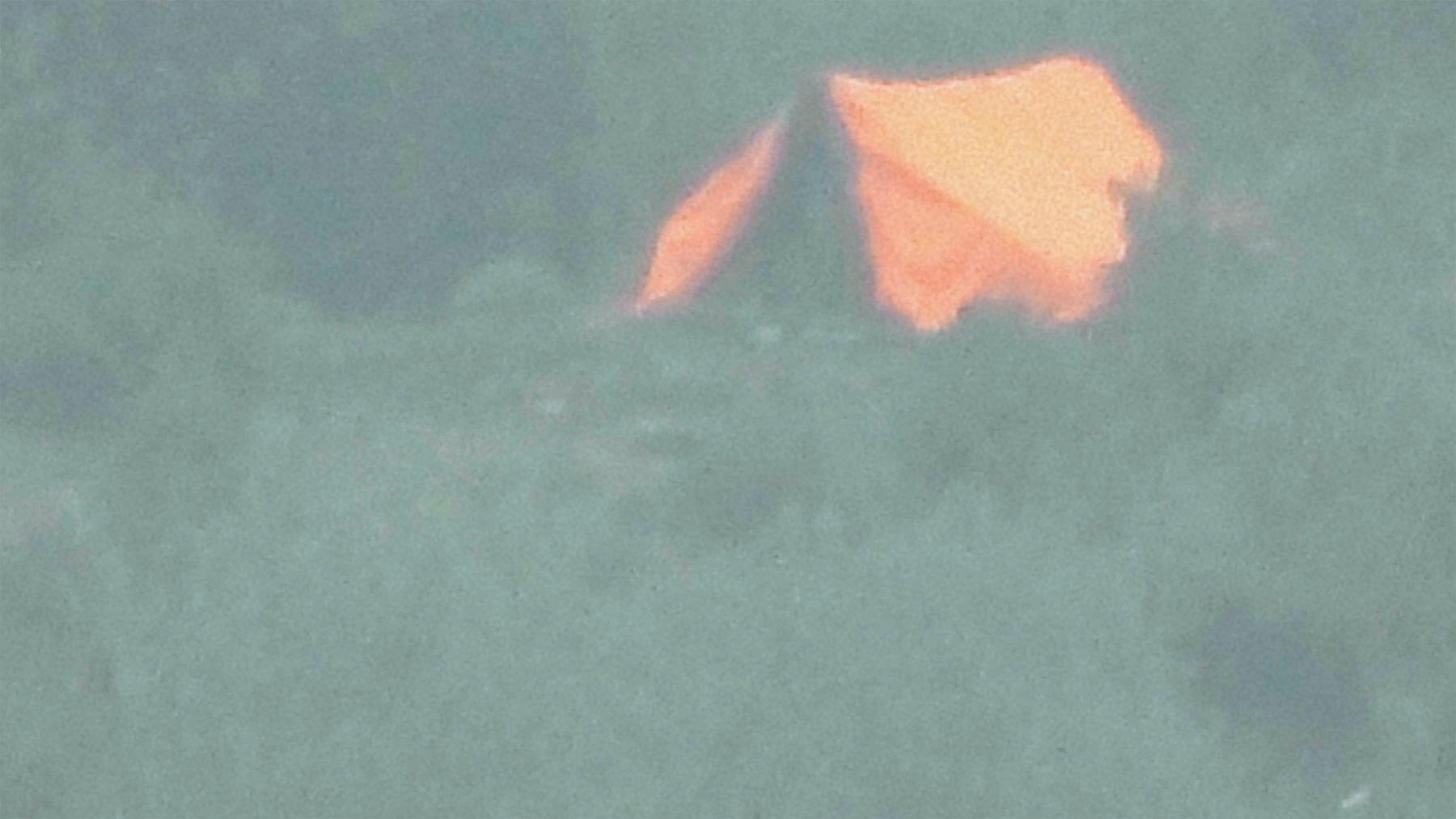
Living beside one of Delhi's many forests, the metaphor stayed with Hura while he curated Growing like a Tree at the Ishara Art Foundation. The artist as curator drew from clusters of interconnectedness while highlighting community within lens-based practices in South Asia along with a wide-angle view of photography as an expanded field within sound, film and bookmaking. His practice evokes the density of a forest that gradually gives us its secrets--—almost like blowing up a garden photograph and suddenly discovering a murder in one corner in the bushes in Antonioni’s Blow Up. We see similar traces in Hura’s short film Disappeared (2025), where he zones into the forest from his home, and we are pushed to stay with blurry blobs of colour until they reveal themselves to be a tent, people walking up a hill with bags or barking dogs.
.jpg)
The forest for him had become a place of solace, as it was for other people and animals he met during his sojourns. This includes a pair of yowling cats bathed in the colours of night, and two men hastily putting on their pants with guilty faces—after being discovered by powers of authority who continue to persecute queer people even as laws change at a snail’s pace in this country or after an interpersonal skirmish, it is not quite known. It is an interesting juxtaposition with the stillness of David Hockney’s works of throbbing gay desire. What role does the artist’s gaze play in this situation? Considering how he turned the camera towards his personal life after years of social journalism, Hura was asked about how much of his life he embeds into his fine art practice around the absurdities of being caught in sticky situations. “Some of the things are not literally my life—but could be,” he says, “My photography was from a more autobiographical space, but now I am seeing myself as an architect of a certain experience.”
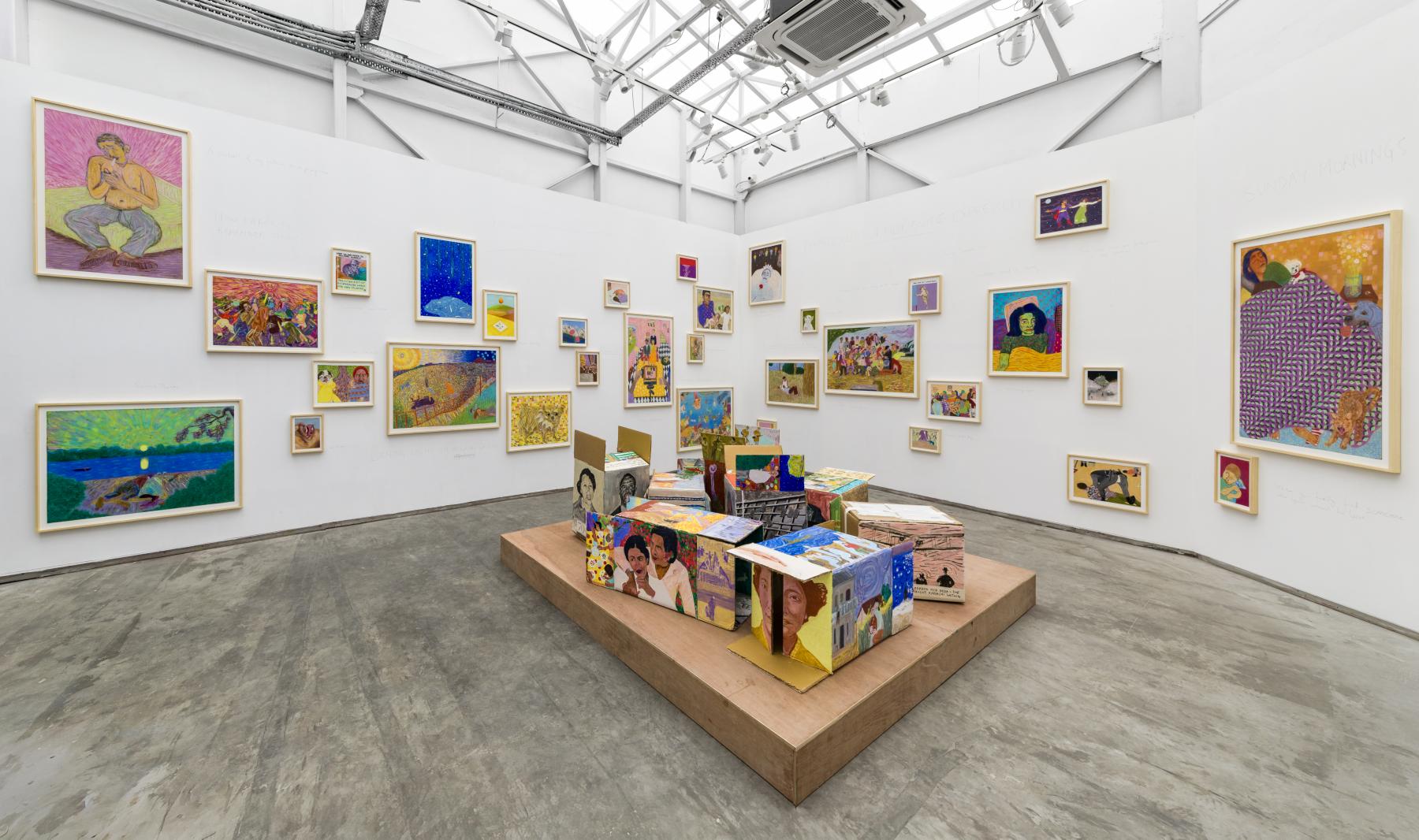
It is popular to use the word “bombarding” now in internetspeak when people refer to the number of images hitting our fried retinas every day—Delhi- and Mumbai-based sound collective EXCISE DEPT have called it “schizophrenic viewing”—and in his film The Lost Head and the Bird, Hura channels into that feeling of being bowled over by doctored WhatsApp forwards, overstimulating music videos, blurry images of violence on television and sharp newspaper articles. Visually at least, it is a similar experience when entering the heart of The Forest where works are stacked up from ceiling to floor, imitating our social media feed. Smiling chihuahuas from our sardonic reels have been arrested still in gouache and dry pastel, while an overhead image of a graveyard with multiple bodies immediately reminds us of Danish Siddiqui’s photograph of mass funerals during COVID.
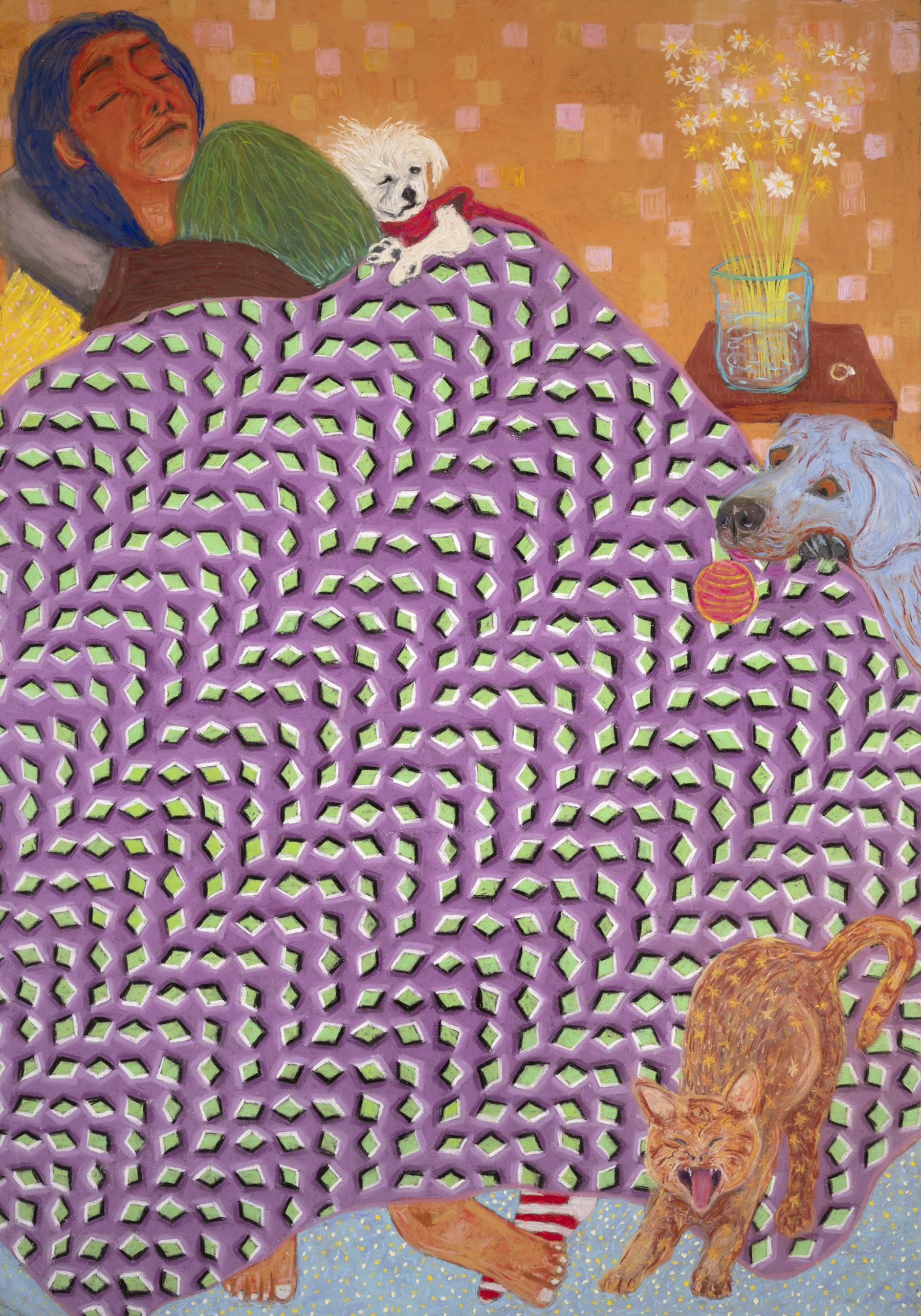
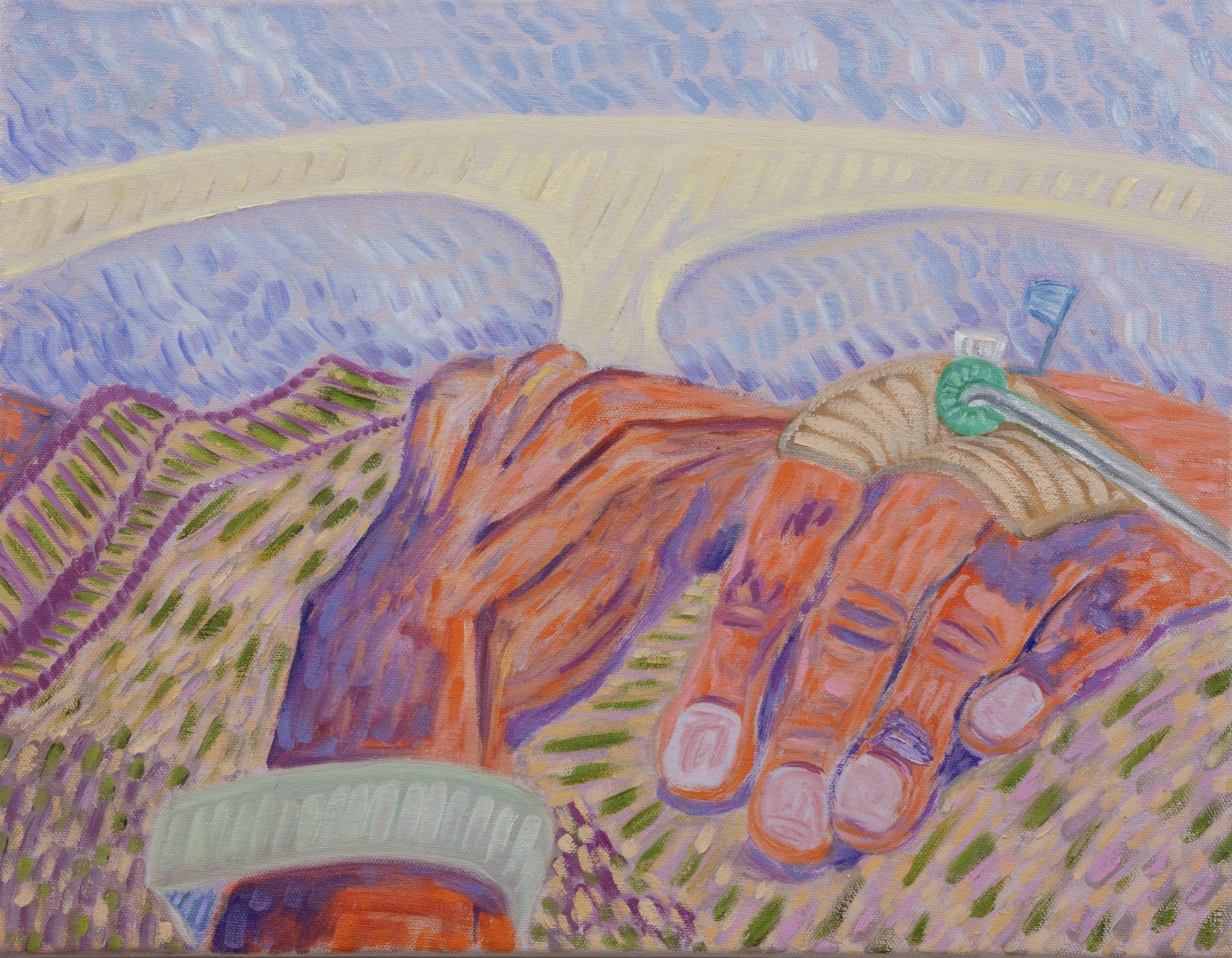
It is an eerie feeling that stays with us behind our laughter as we look at a portrait of the fallacy of family photographs in a Norman Rockwell-like portrait of an Indian family settling to get their picture taken, the uncle in a suit and pyjamas glaring at a Black man walking outside—his house, like most houses in the US, pegged with American flags in a public display of patriotism. Although the artist was once frustrated with how easily he could make a “good” image following certain codes of photography, there are certain codes that he still follows to generate that universal relatability. Hura takes from Western art movements in his smaller brushstrokes of Impressionism, which transform the evening light on Howrah Bridge into something very different. He is also looking at a certain collapsing of perspective like in Mughal miniatures reflected in the psychedelic patterns on a flattened blanket whose precise symmetry gives it a semblance of movement. Burnished yellow circles caught amidst a swirling blue sky, quite reminiscent of van Gogh, begs the question whether it is really the view outside the window as the title claims, or a more imaginative desire which makes people flock to the van Gogh immersive experience. A vase of sunflowers by the modernist artist transforms into deadened roses.
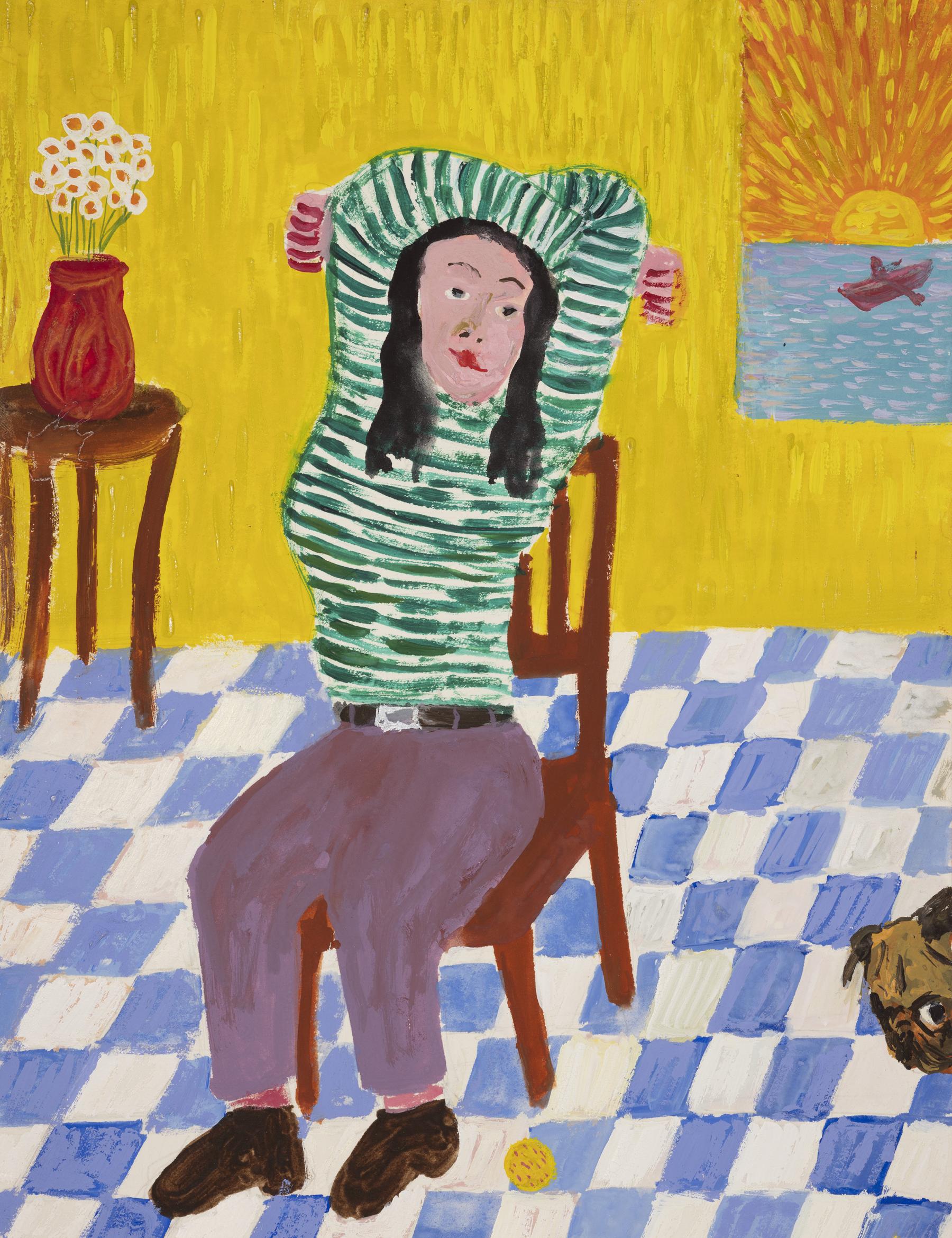
Movement in the gallery was curated for a certain public intimacy between the viewer and the portrait which forced us to look up, grovel down and peer closely. His works are splattered like a burst of paint in a child’s room, their scrawling an assertion of themselves. It was a similar colourful wall at The Museum of Modern Art exhibiting a “spillage” of Hura’s work and it is a conscious decision he makes in such spaces. Annotating his very first exhibition at Experimenter in 2017, he wrote about being charmed by the way children move with the camera. “Carefree, raw, and unconscious of the baggage that came with being a photographer,” he noted. “Awkwardly unabashed in the physicality of their movement with the camera and approach to whatever and whoever they photographed, it made me realise the stiffness in the formality, or more precisely, in the consciousness of my own process.” Breaking down the stoicism during photography which transferred onto movement in a gallery, it is perhaps impossible to get a full view of Hura’s show without sitting on the gallery floor.
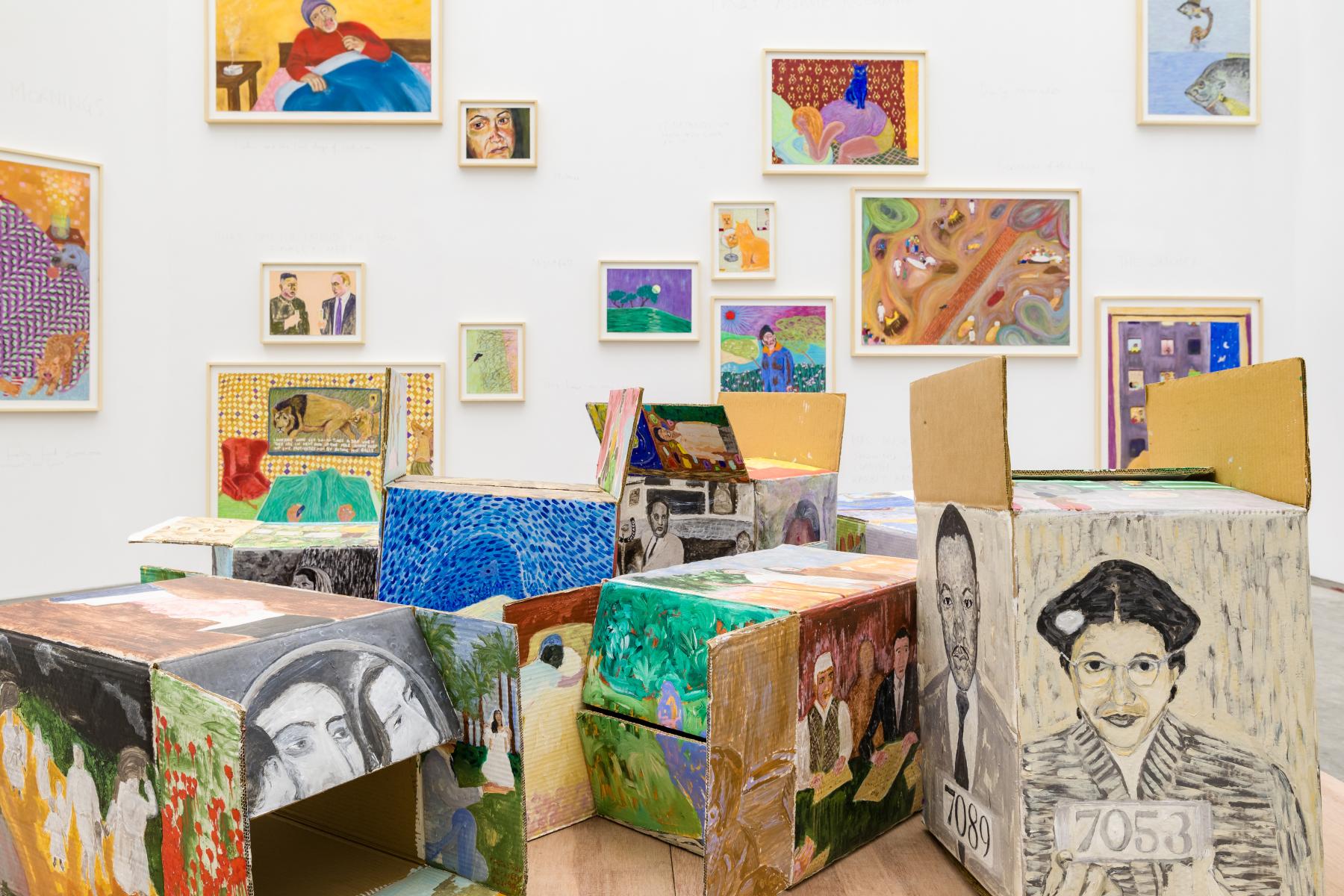
The floor is where the artist has also installed nine boxes where his photojournalistic work collides in painted gouache panels which almost become timestamps—like in The Lost Head and the Bird of forgotten and oft-remembered moments in public history or ones embedded deep within personal archives. Their juxtaposition is like a Rubik’s Cube, he notes, consistently changing at every iteration with some painted sides concealed. They can also shapeshift into flattened panels almost imitating a book spread—and it is left to us to decipher the images corresponding to a Puck-like bibliography on the wall which creates enough room for heteroglossia. A painted replication of Ruth Orkin’s photograph of three Jewish women refugees arriving from Iraq at Tel Aviv’s Lod airport in 1951 looks onto a wedding photograph from Al-Ameen studio which documented weddings in Palestine from the ’60s to the ’90s. The tiny figure of the Nizam of Hyderabad bowing down to King George V and Queen Mary at the Delhi Durbar of 1911, marking them as Emperor and Empress of the subcontinent, looks onto a panel recalling Hura’s first time on the Hudson River in the ’90s and being the only person of colour there.
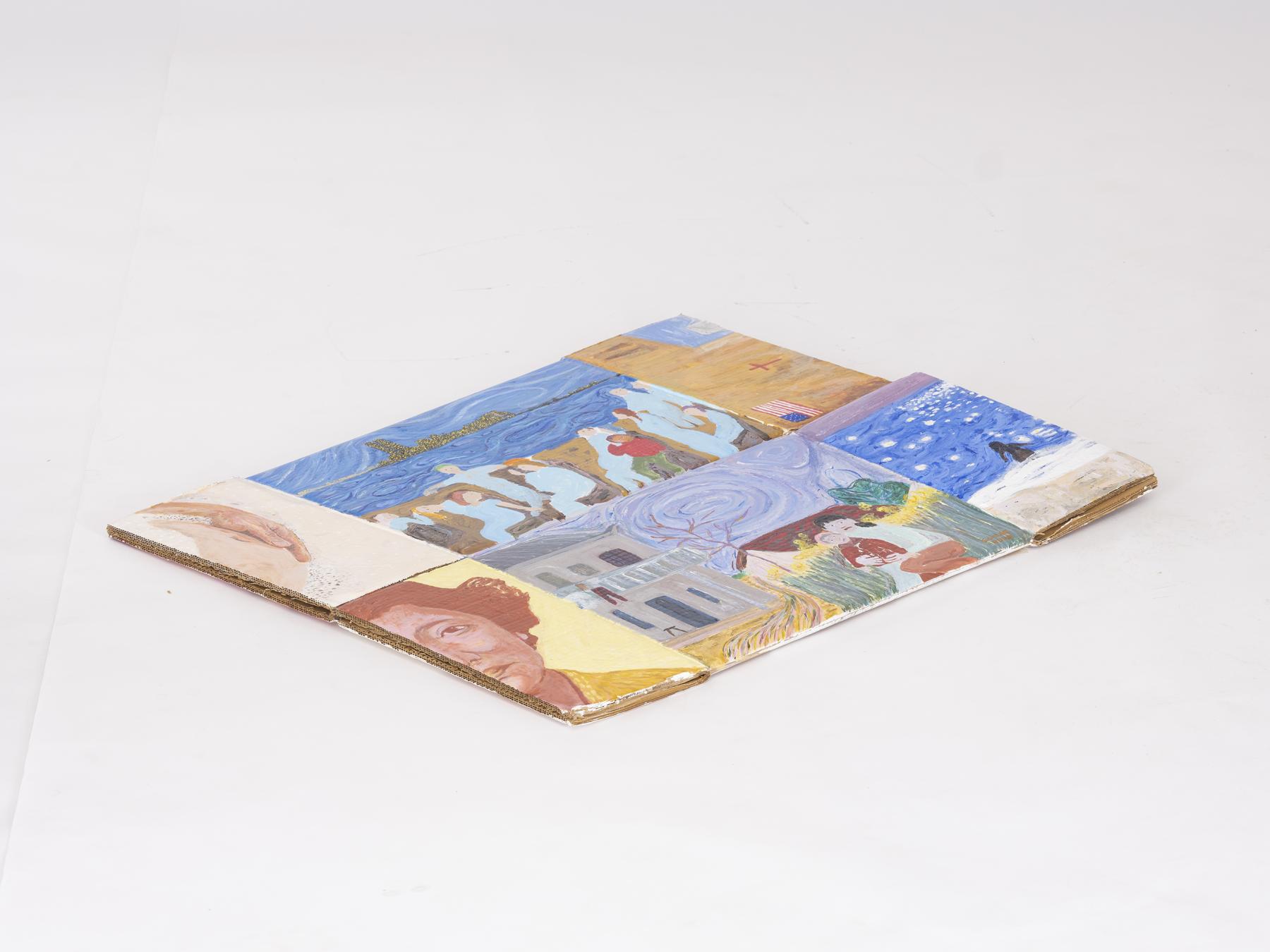
Hura sees himself as an editor who charts these narratives which might make people stay longer with an image, finding themselves within it or recalling the old grandfather cunningly and tediously turning National Geographic sexual in Mirzapur, seeing a lion’s sexual quirks in one of his works. It is like a director guiding us through a theatrical performance which paces itself into the colourful crescendo in the final room, where—almost like a non-signature—Hura added a pot-bellied man looking like a B-grade Tollywood villain stripped down to his underwear, smoking as he photographs a slightly annoyed woman. Titled "Bengali Photographer" the image is again universal, considering the ill repute of male photographic practices with female subjects who one can encounter anywhere from a photo studio to a wedding—they are the real idiot photographers.
To learn more about Sohrab Hura’s work, read Jigisha Bhattacharya’s reflections on Snow (2015–ongoing), Veeranganakumari Solanki’s essay on The Levee (2020), Gulmehar Dhillon’s curated album from the series Pati (2005–20) and Ketaki Varma’s observations on the exhibition Spill (2021).
All works by Sohrab Hura. Images courtesy of the artist and Experimenter.