

A Belief in Co-Existence: On Ajay Dhoke’s Waghoba
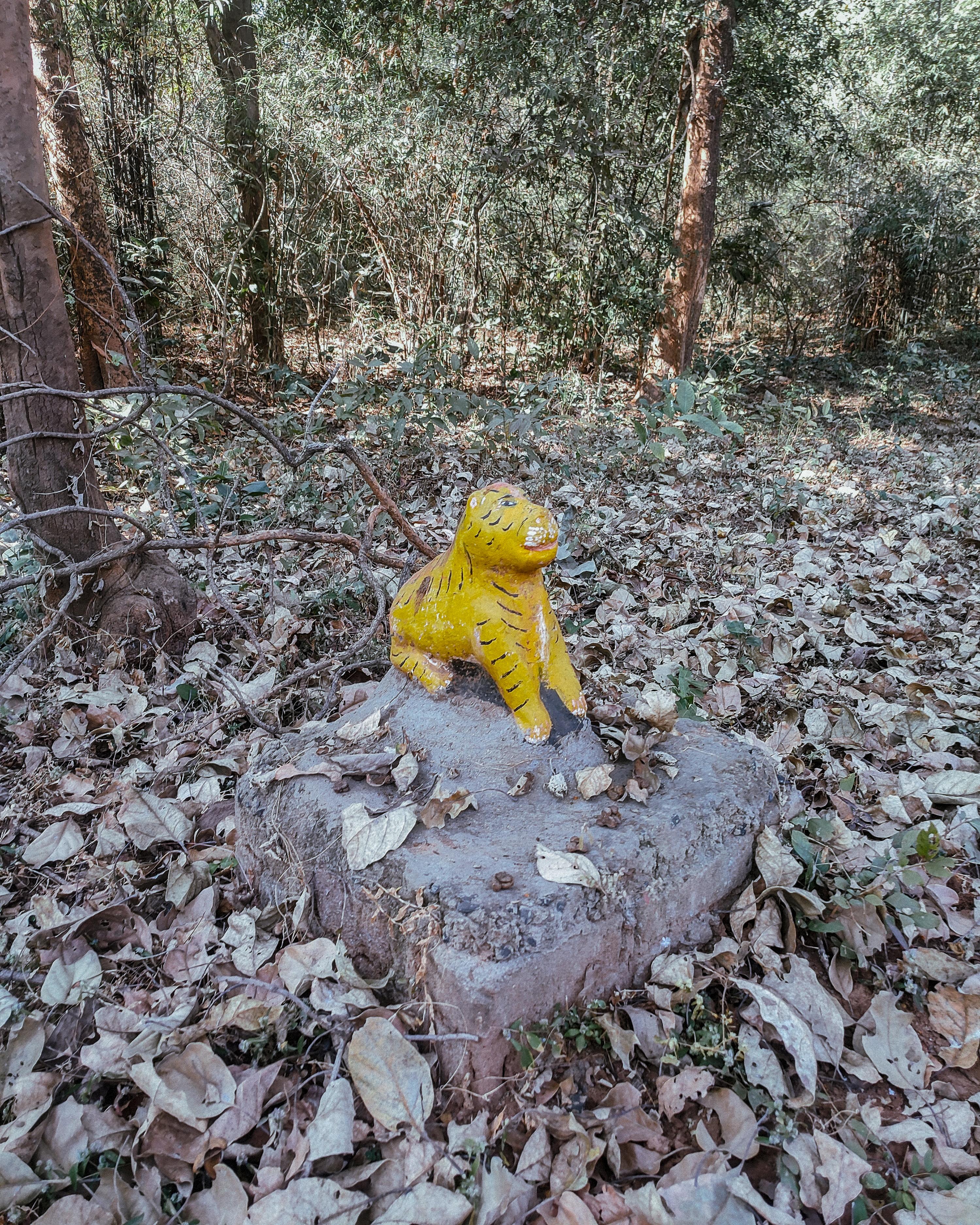
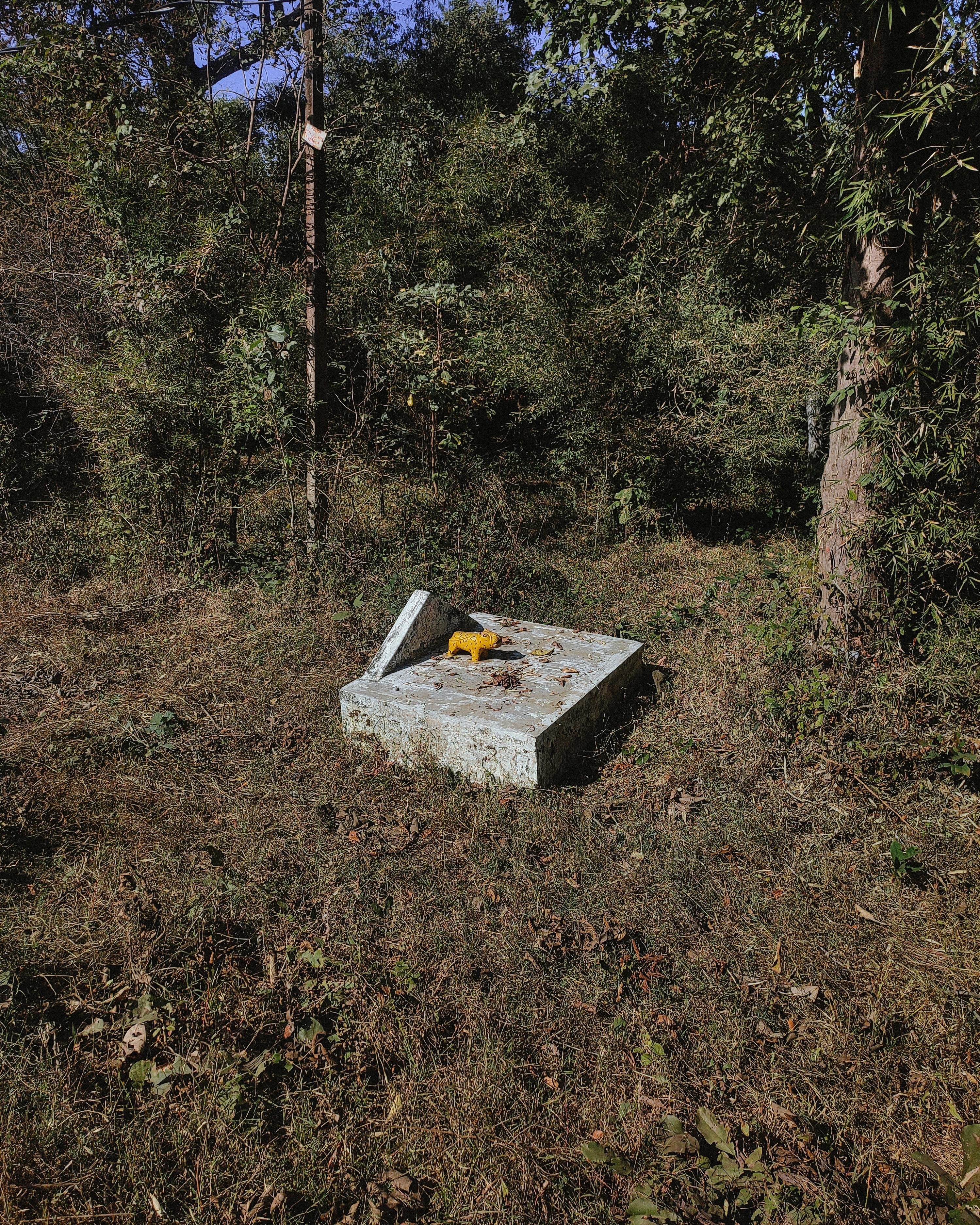
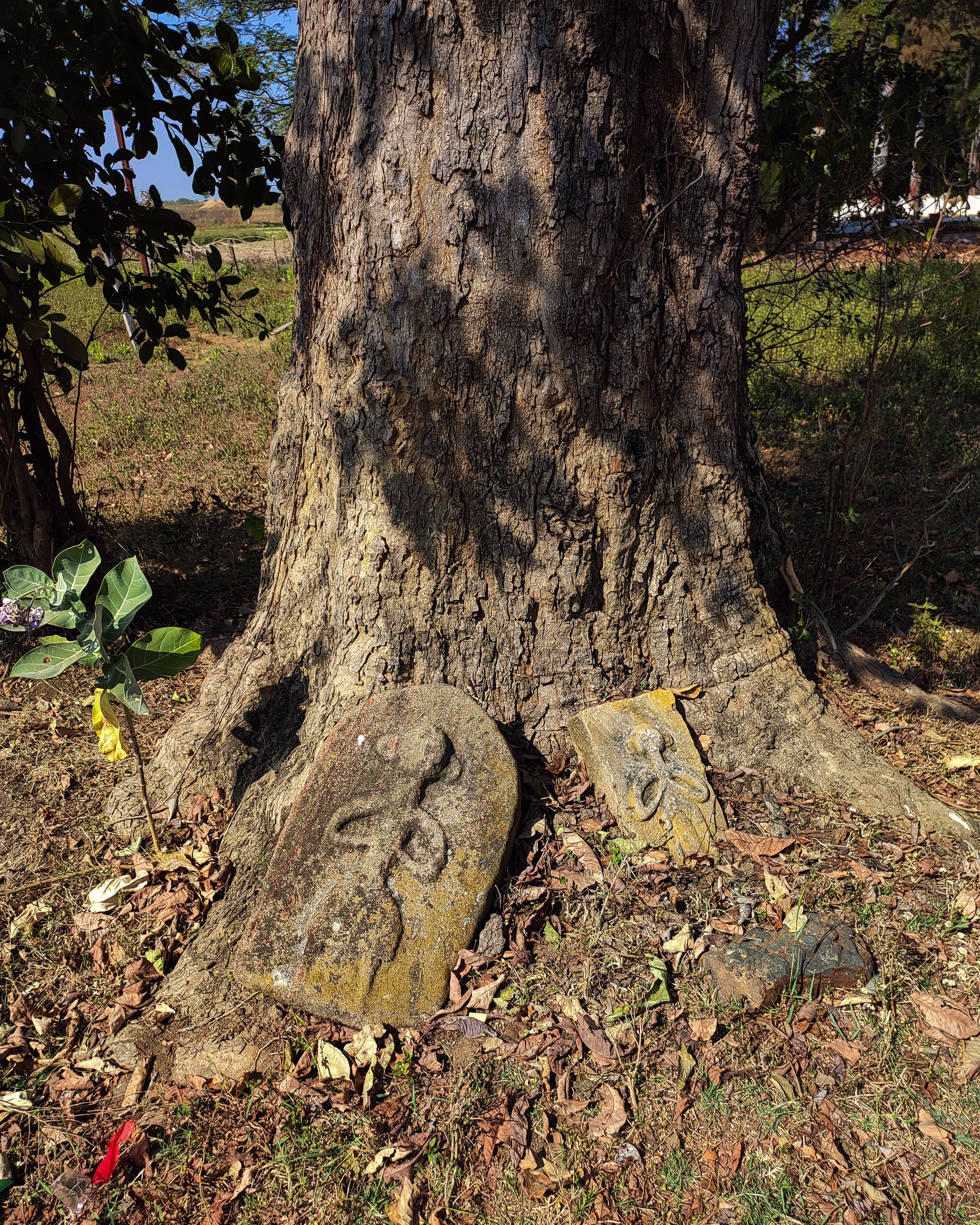
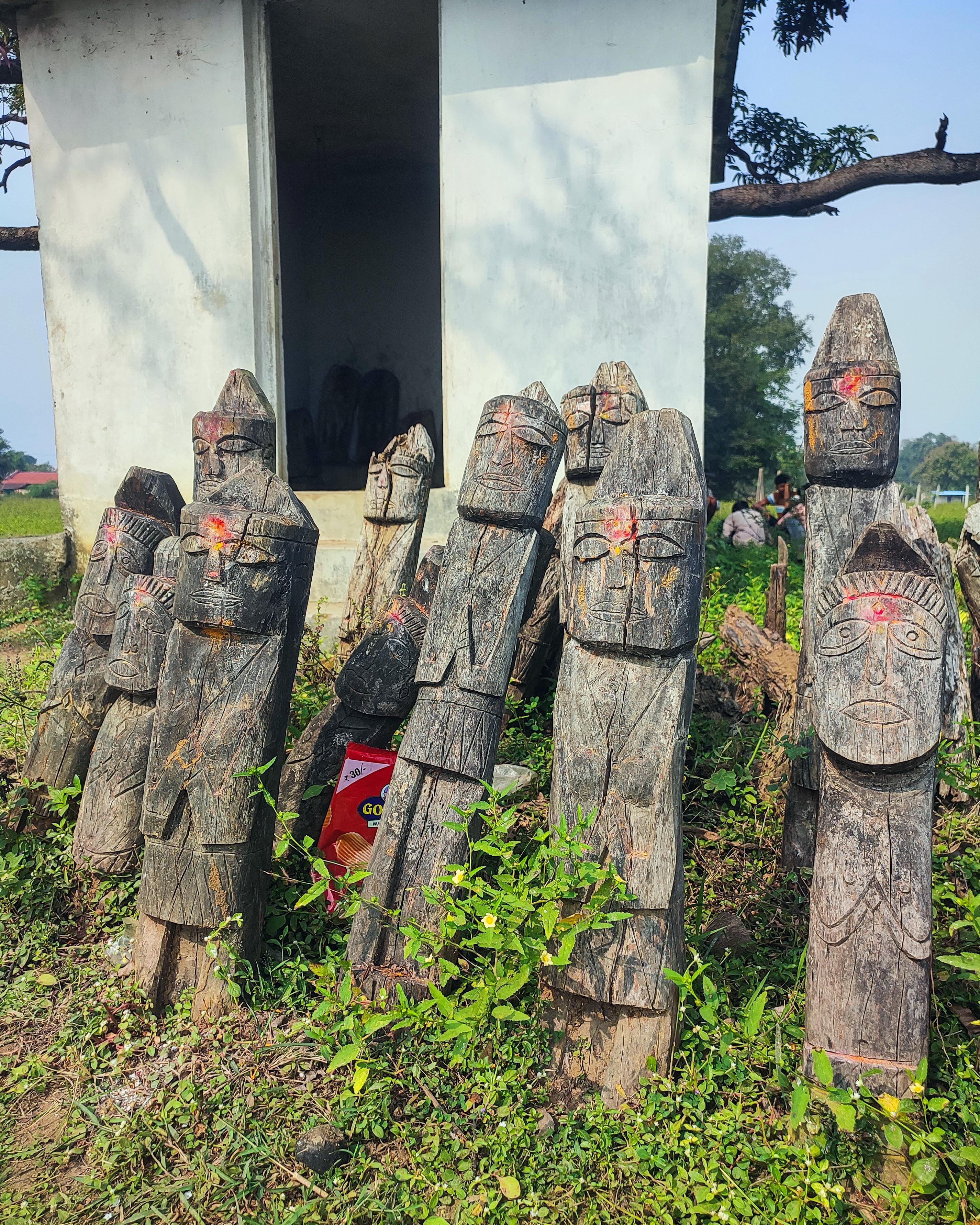
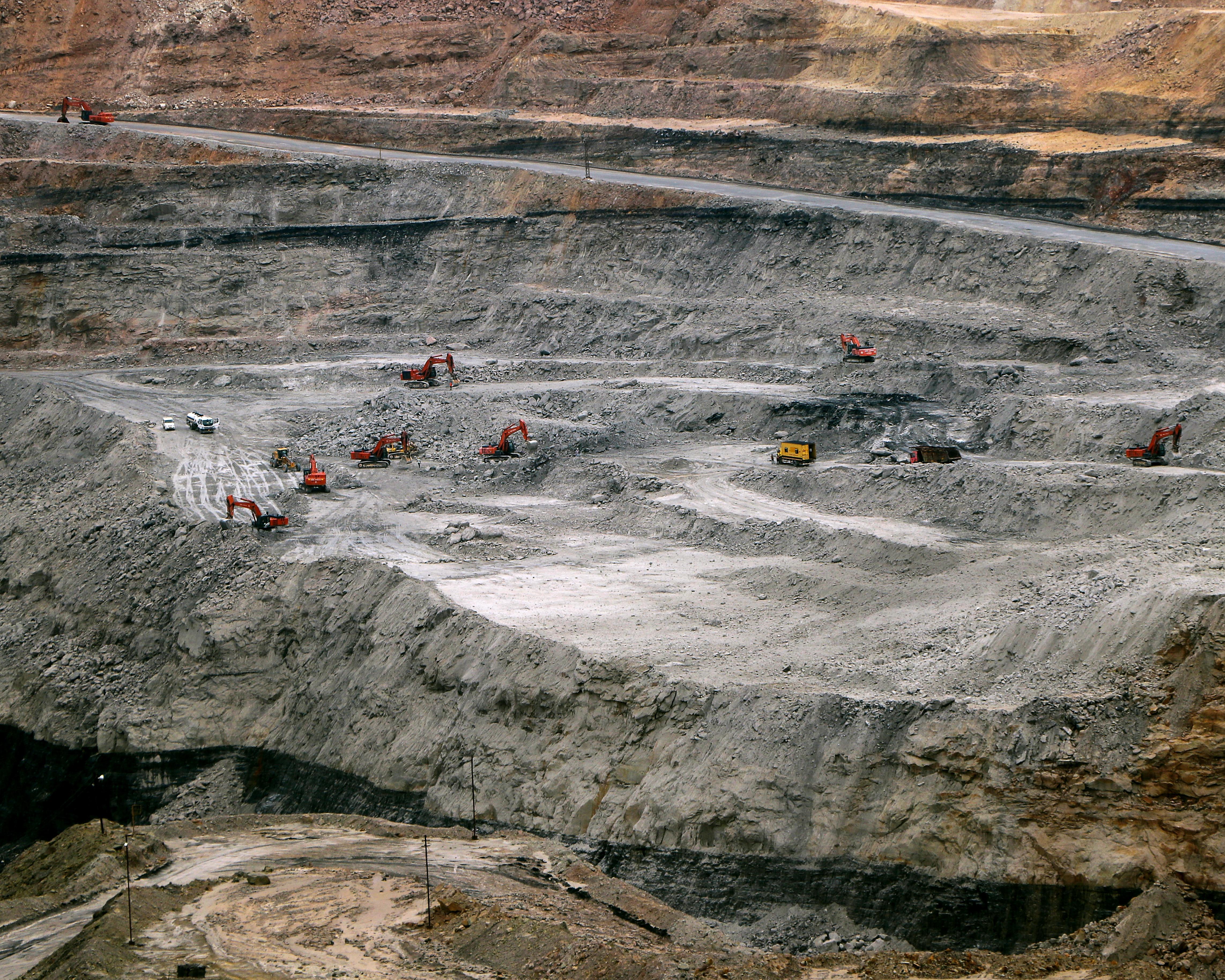
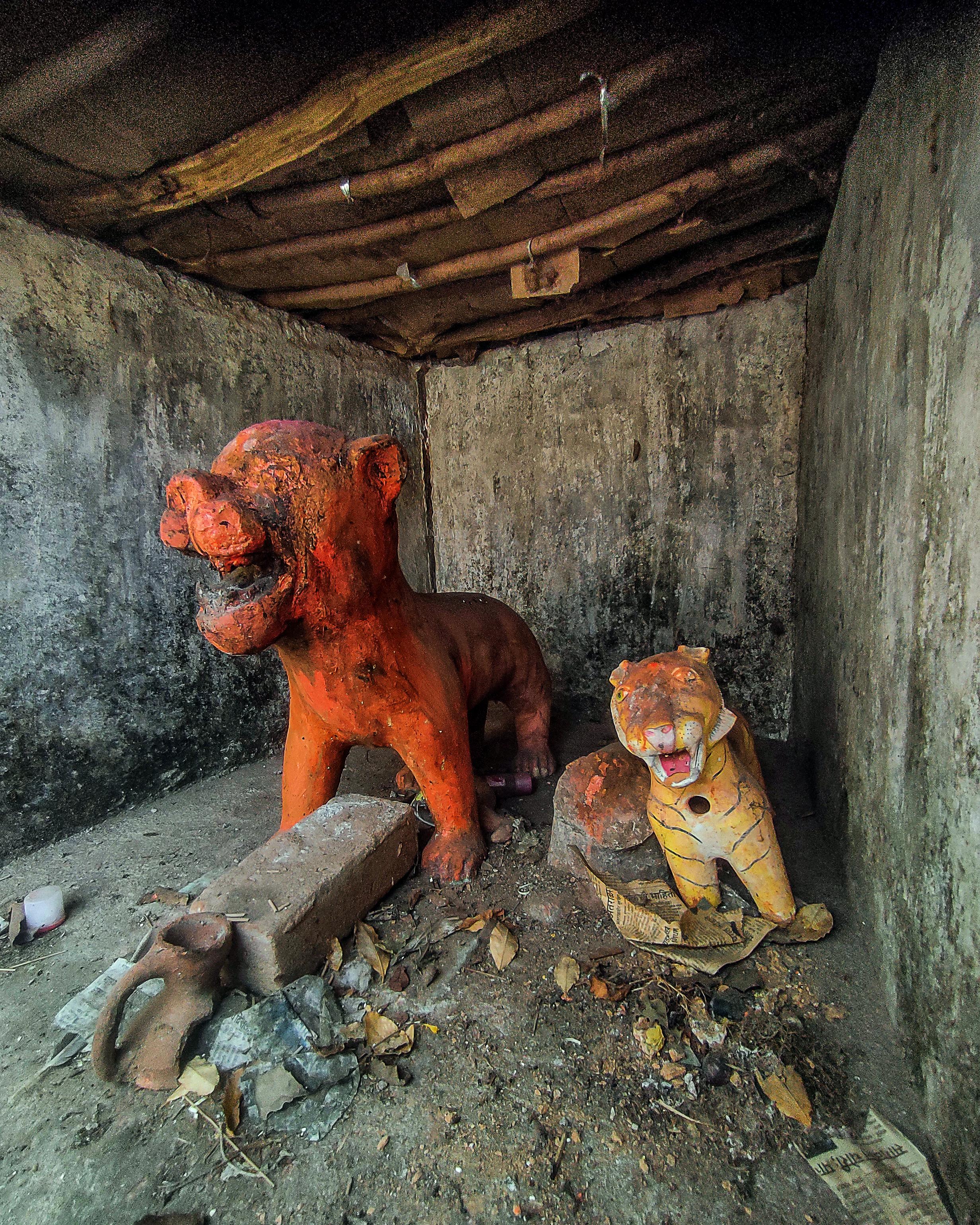
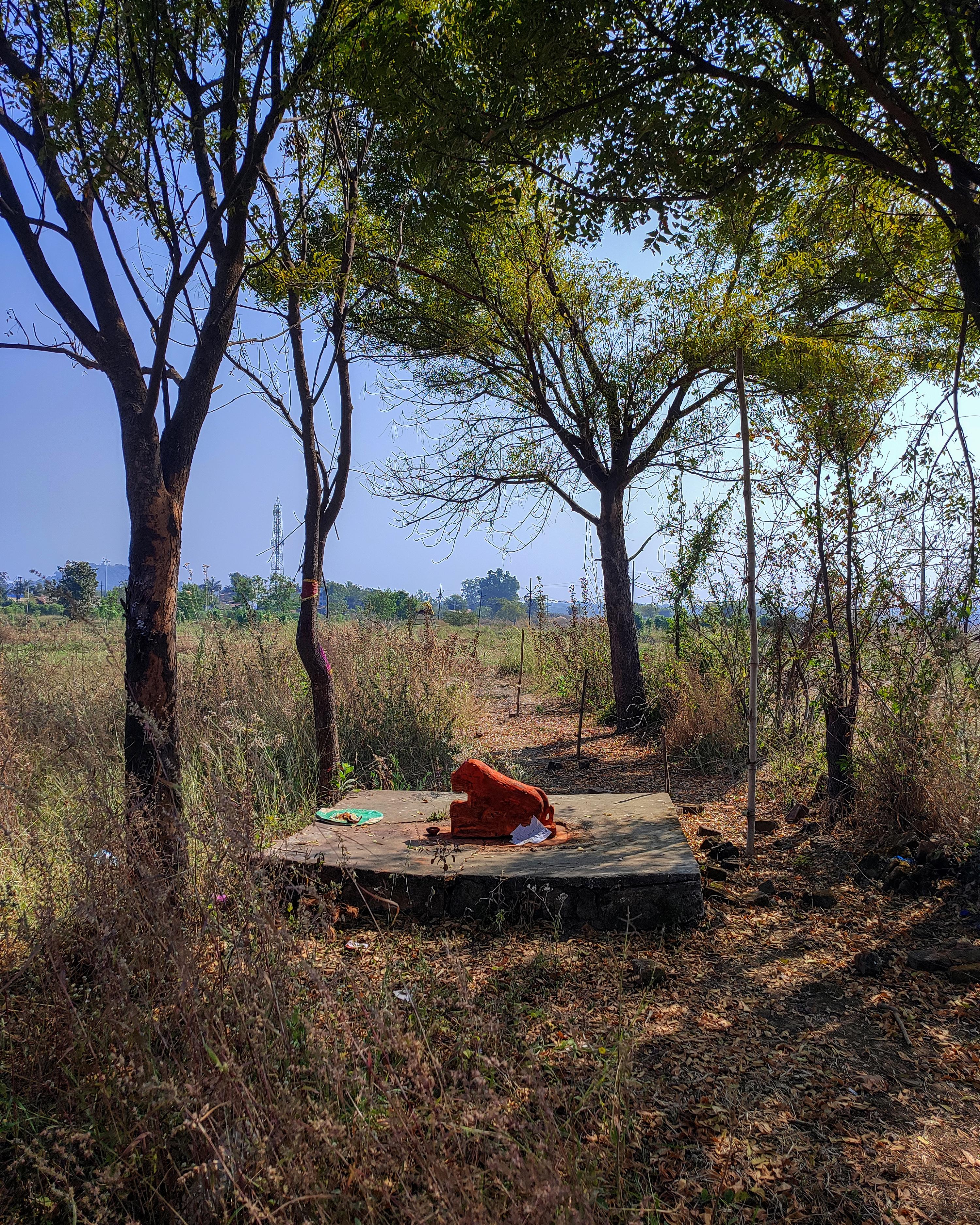
An orange figurine peeps through the bushes, a statue raised on a small pedestal, splashes of orange smeared across tree trunks—signs of belief and worship of tigers are everywhere in Tadoba Andhari Tiger Reserve (TATR), in the Chandrapur district of Maharashtra, home to around 100 tigers. Lying at the intersection of dense jungle on one side and barren coalfields on the other, Tadoba derives its name from a Gond deity, and its villages are dotted with unique tiger statues, some located deep within the forest and others at the entrances of the Gond villages. For the Gonds, the wagh (tiger) is not just an animal but Waghoba, a revered deity. This age-old Gond practice of crafting statues of ancestors and of tigers is deeply rooted in their culture, and this tradition continues to this day, some even serving as memorials for the dead amidst increasing tiger attacks on humans in the region. Ajay Dhoke’s photo project titled Waghoba (2018–ongoing) explores the fear and reverence of tigers amid deforestation and coal mining in TATR.
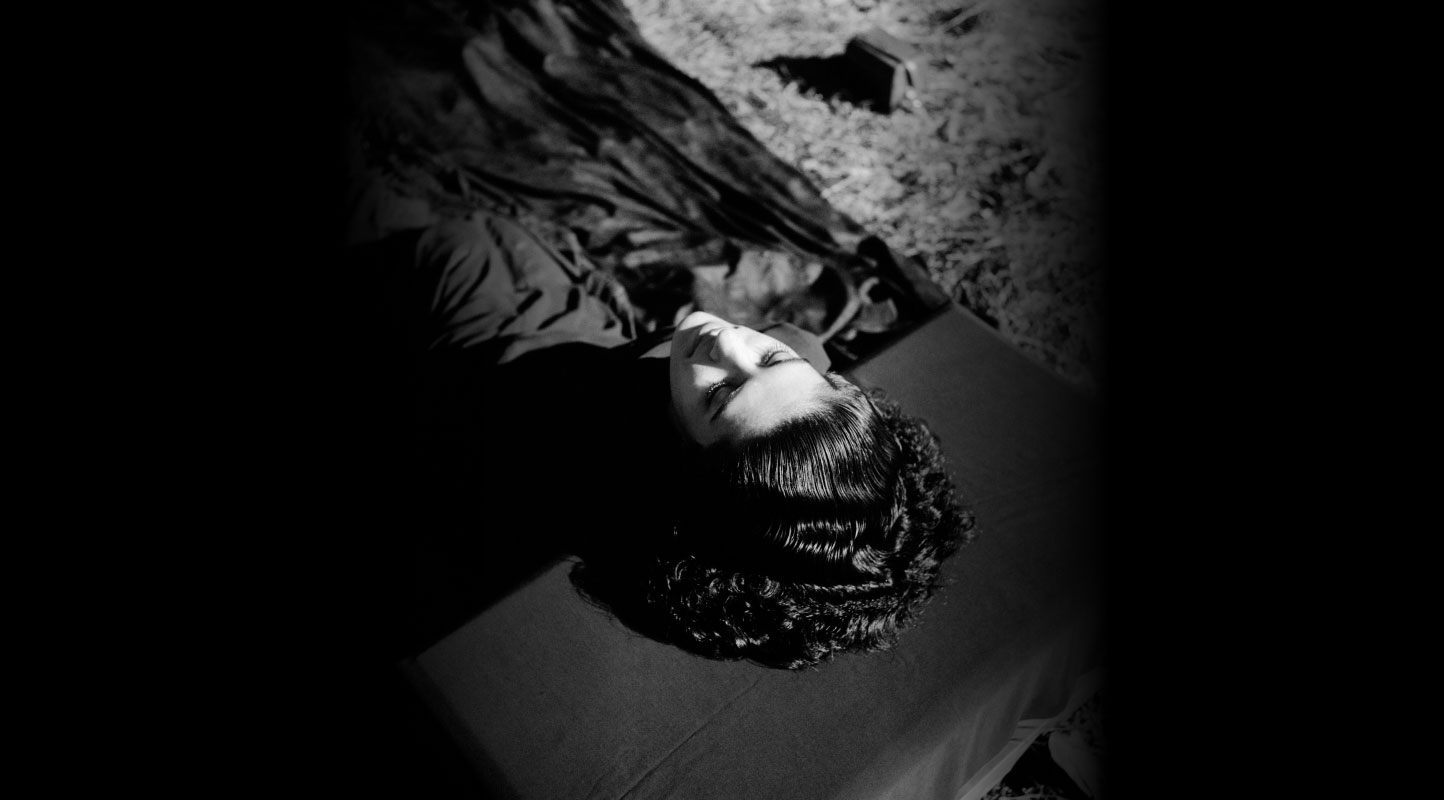
What started as a few images taken with a mobile camera in 2018 has evolved into a visual narrative of the region. Dhoke closely examines the living cultural and ecological belief systems of the Gond people and their villages in the TATR and extends this beyond the forest area to the adjoining coalfields, which emerged in the 1970s. The artist documents tiger statues, makeshift pedestals and ancestral sculptures—ambiguous spaces of worship and appeasement—found in and around the Tadoba jungles and Gond villages. They serve as a metaphor for fear, reverence, coexistence and change in the jungle. Waghoba captures the landscape of a dense jungle, where silent markers of identity and worship converge, serving both as protective markers to keep tigers from entering villages and as memorials for those who have been attacked. The statues near villages are painted orange, while those deep in the forests remain in their original mud form. The artist questions the change in practices, their shape and form, and how the infiltration of media and tourism has diluted and appropriated these markers of identity and culture.
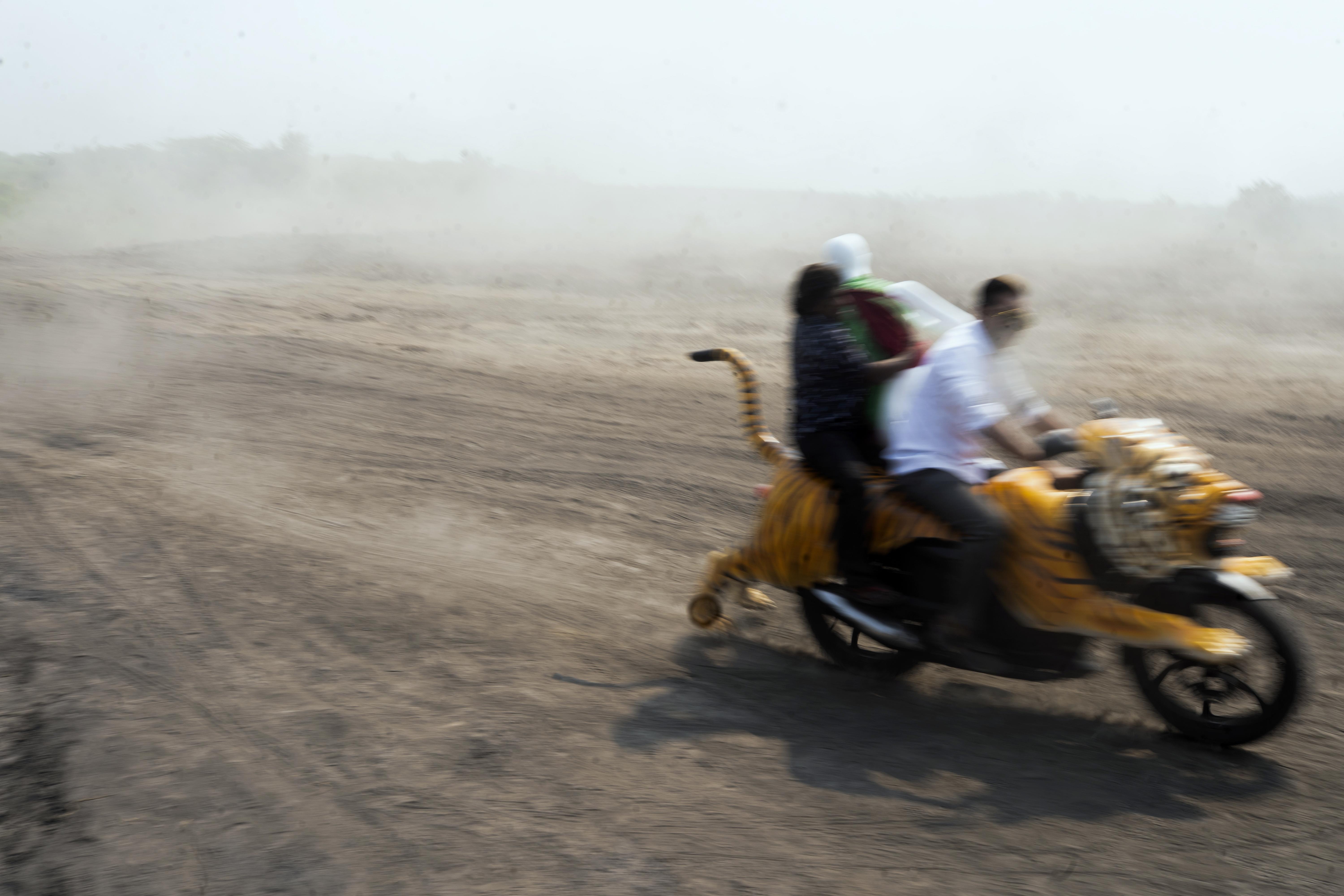
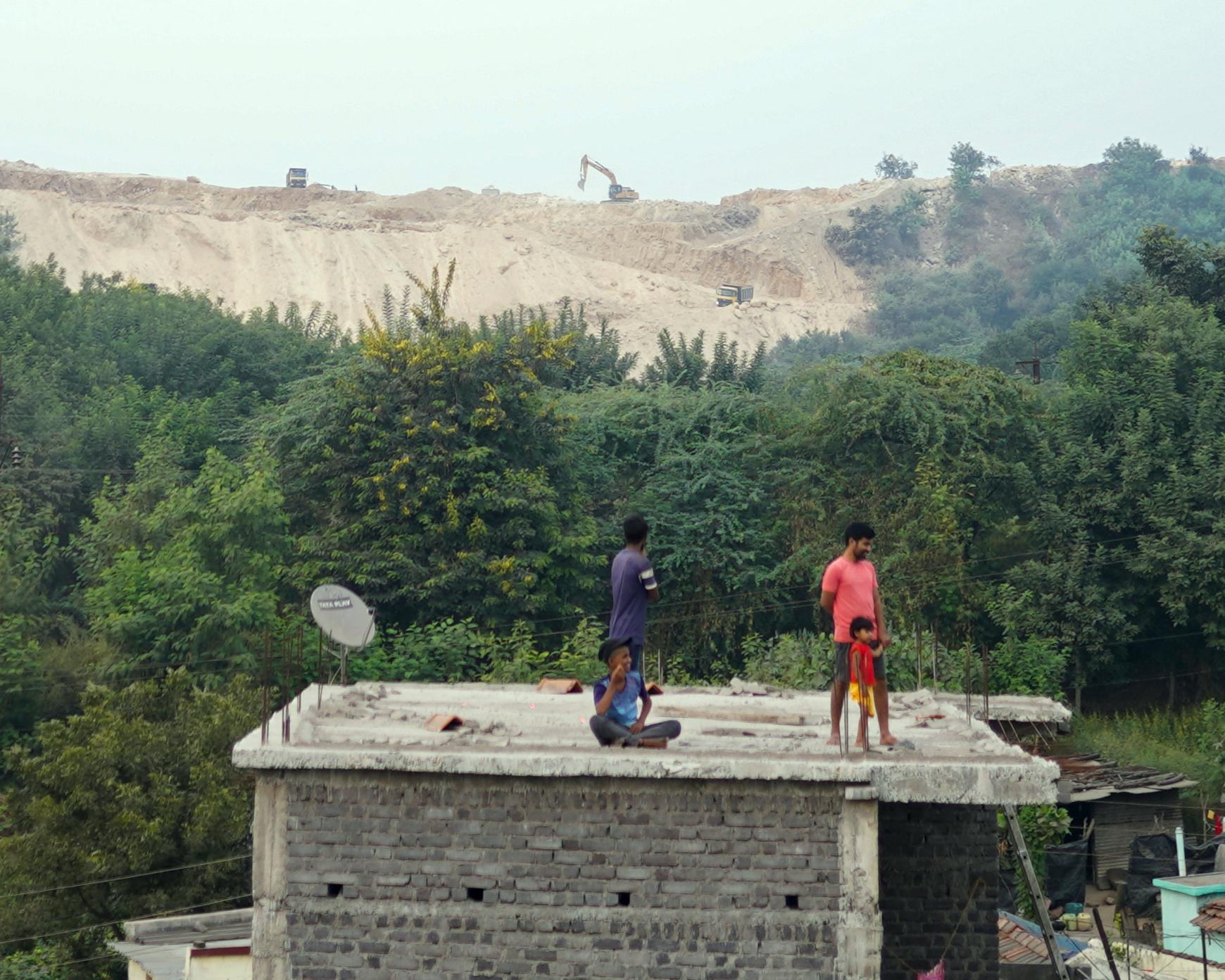
Mining and deforestation are driving tigers closer to villages. The coal mines are an unforgiving landscape for both humans and animals, where tiger sightings are equally rampant, and no soul is seen after dusk. “You will not see anyone after 7 pm,” Dhoke tells me, referring to the protocols people follow amid rampant tiger attacks and sightings in the region. Unlike the villages and forest areas, no statues are found in the mining region as this area is dotted by settlements of migrant labourers who work in the coal fields. As the incidents of tiger sightings and attacks increase, the jungles are increasingly dotted with tiger statues. Dhoke argues that these are “a stern reminder of the fragility of this ecosystem.”
Dhoke’s photo essay stems from his own lived experience as a young photographer growing up in Balharshah, also known as Ballarpur, an industrial city in the Chandrapur district of Maharashtra, approximately 200 kilometres away from the reserves. In Tadoba and its surrounding places like Balharshah, tigers are a way of life. Part of this region is dotted with vast coalfields, which were once dense jungles, and the remaining jungles continue to be home to villages of the Gond tribal community. Dhoke goes by the moniker “Unodhki,” meaning “unknown,” and has pursued documentary-style photography. He draws inspiration mainly from Indian counterparts such as M. Palini Kumar. For him, “The stories of my people and my place were the biggest inspiration. Our narratives rarely find space anywhere, and I felt compelled to document and share them.”
To learn more about artists exploring the cultural and social worlds of indigenous communities affected by mining and other forms of development, read Ishtayaq Rasool’s reflections on Fileona Dkhar’s Ancestral Echoes (2022), Radhika Saraf’s observations on Sonum Somaria’s Under the Open Sky (2024), Nikita Jain’s documentation of Adivasi resistance in Bastar and Koyna Tomar’s conversation with Aranya Sahay on his film Humans in the Loop (2024).
All images from Waghoba (2018–ongoing) by Ajay Dhoke. Images courtesy of the artist.
Click on the image to view the album