

Stepping Out Into the World: The Films of Mark LaPore
The following text is revised from an introduction I gave to the screening of Mark LaPore’s films at the Experimental Film Festival in Frankfurt, September 2025, which incidentally was a few days prior to the 20th anniversary of LaPore’s demise. I am thankful to Isobel McPhee for her presence during the screenings and for shedding light on some of the personal dimensions of LaPore’s films in private conversations.
Mark LaPore’s practice is best described as experimental ethnography which combines the reflexivity of experimental film that enables the analysis of the cinematic gaze with an interest in the subject of ethnography—the other. It results in films that, rather than looking at others as ethnographic documentaries have historically done, operate with an additional reflexive awareness; they look at themselves looking at others. LaPore fascinates in the way he conceives his films less as a process of elucidation than as a gesture of rupture or intervention. His films are observational in so far as the social realities that he encounters in alien geographies are concerned, but otherwise they look inwards, critically questioning representation and rationalisation of such realities within Western epistemological systems. There is a transcendental energy that permeates his work, while his position with regard to the romantic orientalism that distinguishes early colonial travelogue films and lyrical documentaries is deprecatory.
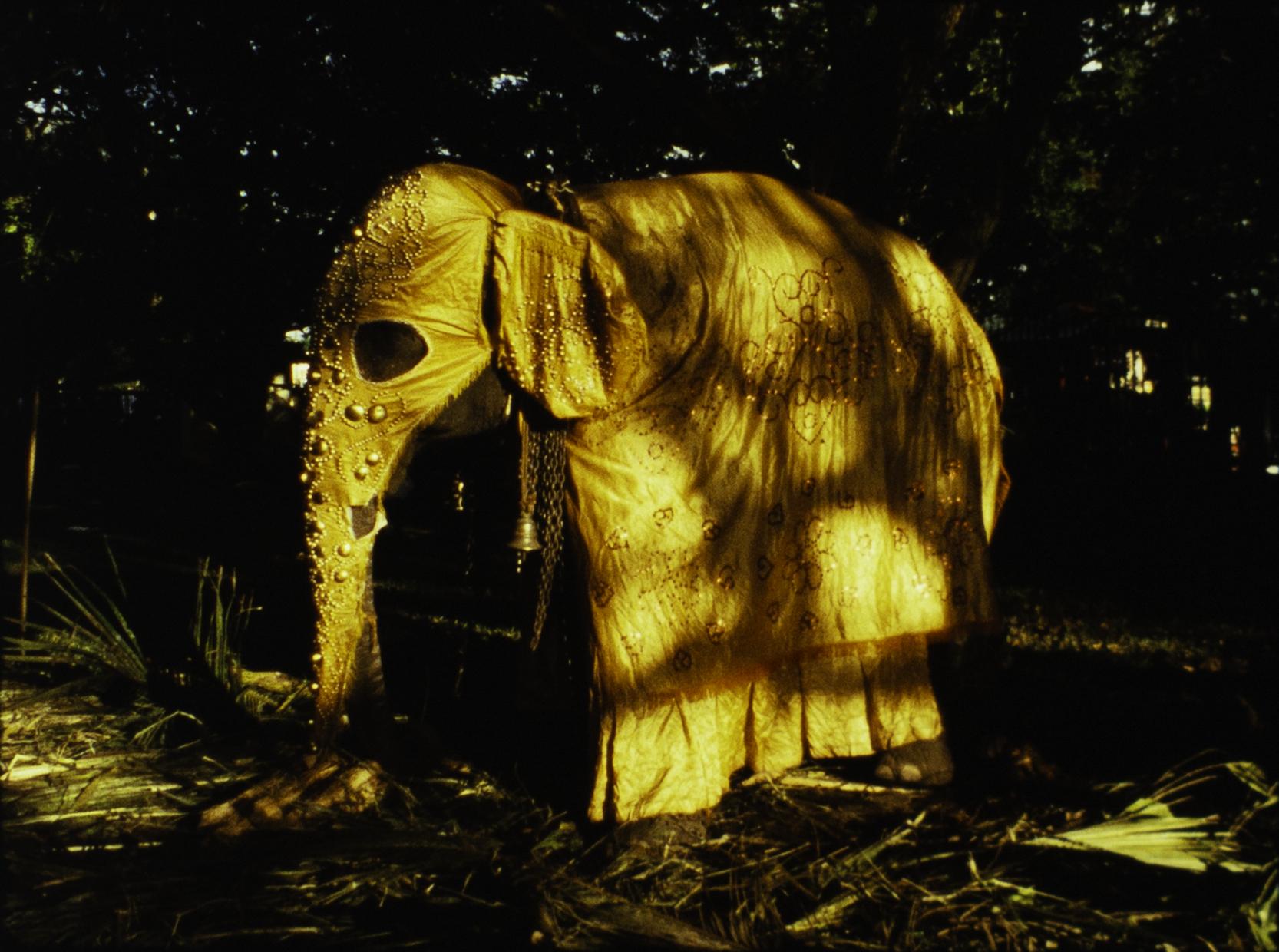
Made while on a Fulbright scholarship in 1993–94, LaPore’s tense portrait of the island nation of Sri Lanka in the midst of a raging civil war, A Depression in the Bay of Bengal (1996), was initially imagined as a remake of Basil Wright’s poetic chronicle of the customs of Sinhalese people, The Song of Ceylon (1934). However, LaPore soon realised the impossibility of a project that would inherit the classic’s idealist worldview. A little later than halfway into the 28-minute-long film, LaPore inserted shots from the Edison Company-produced Curious Scenes in India (1913) as a found footage sequence. In the final shot of this sequence, we see the rear legs of an elephant tethered to the trunk of a tree, hindering its attempts at moving forward. As soon as the footage ends, LaPore cuts to a shot of an elephant cloaked in golden regalia, standing under a tree, a shot that returns in its monochromatic variant in another film by him, The Five Bad Elements (1998). Stan Brakhage had once emphatically described this shot to Phil Solomon as the conveyer of the most beautiful elephant in the history of cinema. Evidently and perhaps not unexpectedly, what is lost on Brakhage is the high satire that LaPore is hinting at by presenting the majesticity of this decidedly non-European exotic animal in its heightened glory in the form of a portrait, rather than as part of the procession of the annual Buddhist Festival of the Tooth in Kandy where it would have otherwise participated. By doing so, LaPore sharply disparages the place of the animal as a trophy of colonial possession, pointedly in relation to the Edison footage, and implicitly in connection with Wright’s film and others before and after him, a line of criticism that LaPore seems to share with Harun Farocki who made About “Song of Ceylon” by Basil Wright in 1975. For LaPore, the placement of the shot next to the Edison footage is not a restorative act, from captivity to freedom, but rather an ironising one.
LaPore’s films attest to the impossibilities of cultural representation. In films shot in Sudan, Sri Lanka, India and Myanmar, he points to its incompleteness and toils against the stereotypification of these terrains within his own cultural making, grappling with the complexities of lived realities situated in the rhythms and movements of these places. Jason Fox best described it in a text where he said that:
"LaPore’s compositions leave unreconciled a struggle between, on the one hand, the historical particularities of the spaces with which he engaged, mediated by his camera, and on the other hand, a desire, informed by the poetic capabilities of early travelogues and films, such as Basil Wright’s, to abstract and romanticise those particulars.”
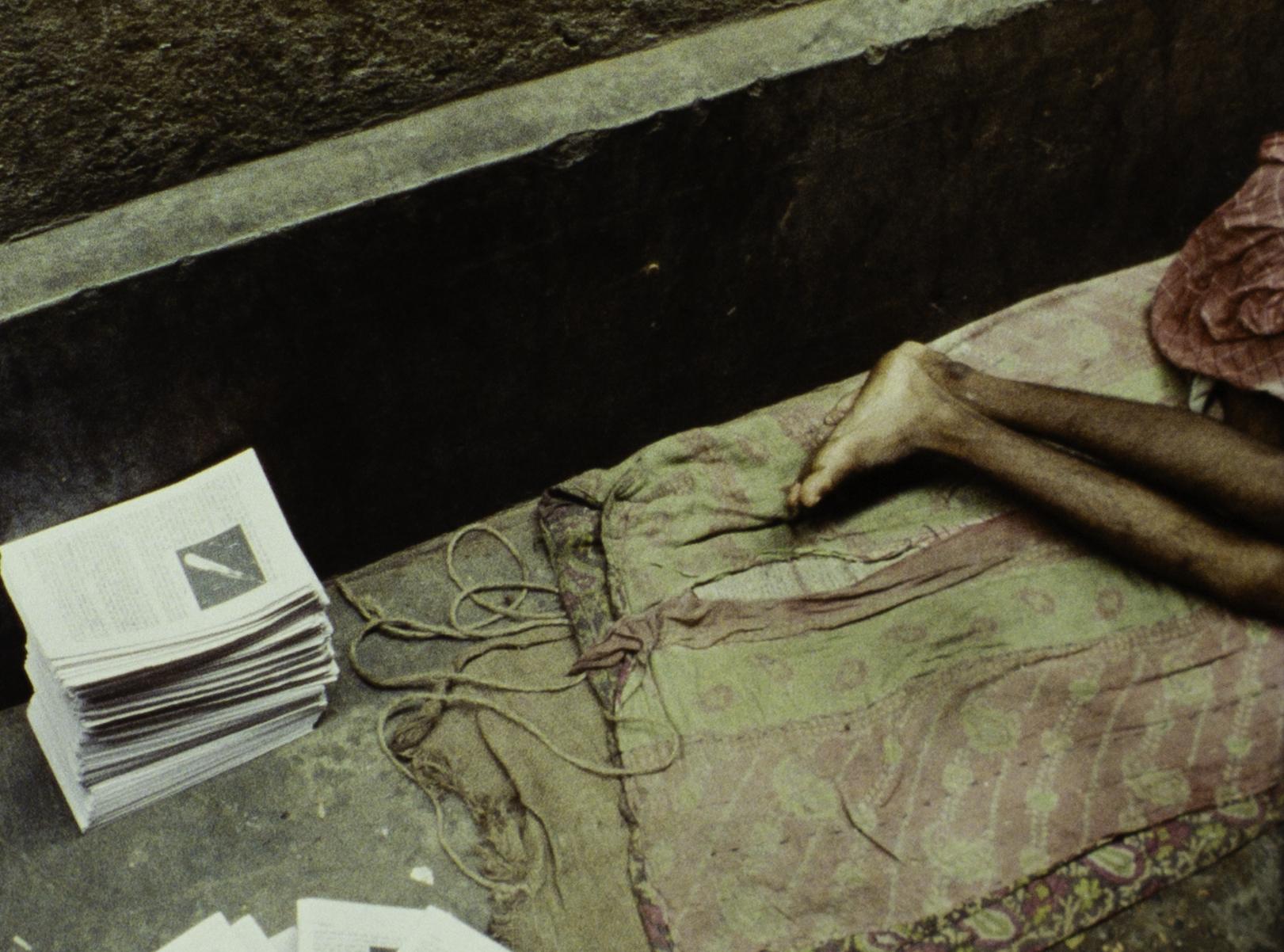
In LaPore’s films we often inhabit different spaces at one time and different timelines in one place. The films are concerned with the workings of the lowercase capital under and sometimes in defiance of the demands of Capitalism that has penetrated spaces with a colonial history and forced a transformation upon its natural economy, as the female voice spells out in The Sleepers (1989), which was shot in Sudan. His observant gaze and attentive ear seek out instances of traditional, pre-industrial labour that is yet to be transformed by extractionist Capitalism, like the women transporting haystacks or the men lifting soil-filled baskets overhead in Depression.
.jpeg)
Ample examples are also present in films that LaPore shot in Northern and Central Kolkata—The Glass System (2000) and Kolkata (2005)—like in the passages involving a young girl walking on a tightrope or men mechanically operating a sugarcane juicer and a knife sharpening cycle-driven lathe. These are LaPore’s two last films before his untimely death in 2005. Shooting in the late 1990s and early 2000s in Kolkata, LaPore was accompanied by his partner—the photographer Laura McPhee, who has extensively photographed the city in several of her own projects and who is seen occasionally in films like Depression, Five Bad Elements and Mekong (2002)—and Isobel, their then young daughter. During their stay in the city, they were among friends such as the novelist Amitav Ghosh, who hosted the family, and Kolkata-based photographer Arun Ganguly, who helped LaPore scout locations for the films. The sound in Kolkata is credited to Jonathan Schwartz, a young filmmaker at the time who travelled with LaPore and made his first film there, Den of Tigers (2002), and who would later return to India to make A Mystery Inside of a Fact (2016).
In terms of the form of the films, Tom Gunning—who in his influential 1990 essay, “Towards a Minor Cinema,” had identified LaPore as one of the key protagonists of a new vital energy endemic in American experimental film—was right in describing the films of LaPore (among others) as a cinema of restraint rather than minimalism. The "return to image" that is so often used to characterise experimental practices in the 1980s is an induction of parity between the representational real and the reality of the apparatus—the former being the concern of documentary cinema and the latter of avant-garde films in the 1960s and 1970s, a divide that collapses in the face of experimental documentaries in the 1980s. LaPore undoubtedly belongs to the tradition of the American avant-garde, and developments in the 1970s are not an alien context to him. His preference for continuous single shots and fixed frames echo some of the principles of structural and materialist practices of the preceding decade; combined with his penchant for minimal editing, the films suggest an alternate historiography of American experimental film than those suggested by P. Adams Sitney or Annette Michelson. This possible history begins with early cinema and the Lumière brothers and—via different non-fictional film genres in the 1920s and the ’30s, such as city symphony and poetic documentary—comes to share affinities with Andy Warhol’s and Fluxus’ films in the 1960s. In her influential book Experimental Ethnography, film scholar Catherine Russell has shown, in several guises, the accords between the rudimentary forms of early cinema and the legacy of the reductionist principles of structural film. The cinematic gaze in early cinema has already been the concern in films by Ken Jacobs and Ernie Gehr, among others.
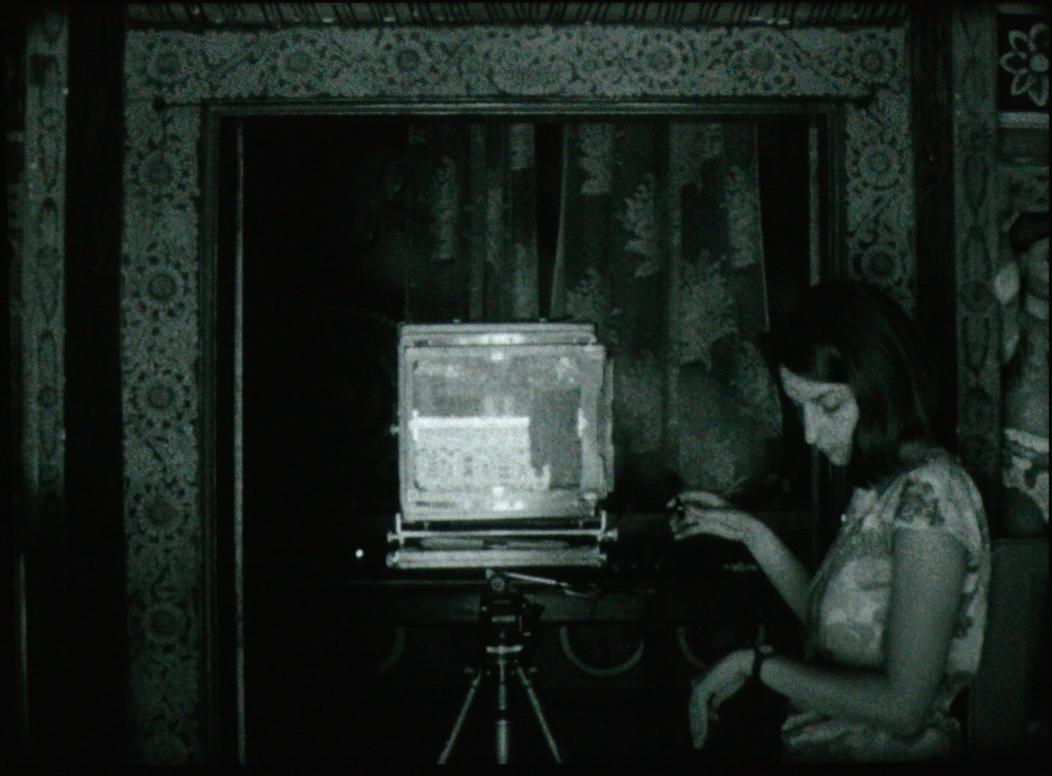
Sound plays a key role in all of LaPore’s films. On the one hand, it documents the dense acousmatics of the spaces he films, and on the other, through considered use of voice, renders incongruous, their geographic and historic situatedness. Recited texts feature prominently but never as descriptors; they often function by colliding against the image, undercutting, densifying, contradicting or mysticising what is signified by the image. A few examples: the voice that ruminates on the penetrative forces of Capitalism in The Sleepers; the one that recounts the history of the Tang dynasty in China at the beginning of The Five Bad Elements, and later in that film, the voice that reads passages from the puritan clergyman of New England, Cotton Mather’s The Wonders of the Invisible World written in 1691, and even later, the letter from a son serving in the Korean War to his father; and in The Glass System, where an English language primer for Bengali children authored by British missionaries is read out in a distinct Bengali accent. The Five Bad Elements—the title’s enigmatic allusion to Mao is noteworthy—comprising footage from Sudan, Sri Lanka and India, in particular, is an open challenge to the viewer to discern cultural and linguistic variances in image and sound: LaPore called it a Pandora’s box. They demand a careful consideration of not just the words but their intonation and accents, in aggregate, signalling a complex, non-linear relational dynamic of history, politics and the present.
LaPore ridicules the notion of the other in third person singular. The images of the other are deliberately mismatched with the sounds of the other; LaPore implores us to distinguish their specificities within the plurality that he confronts us with. Non-diegetic sound from the radio is always crucial for LaPore, it can broadcast news or entertainment, but also superimpose different cultures and realities in time. In The Sleepers, news of immigrants transported by sea in West Africa seeps through into a room; in Depression, a report of Tamil rebels bombing a tourist hotel in Colombo is read out on BBC radio; in Five Bad Elements, Lata Mangeshkar and Geeta Dutt’s film songs get injected as interludes.
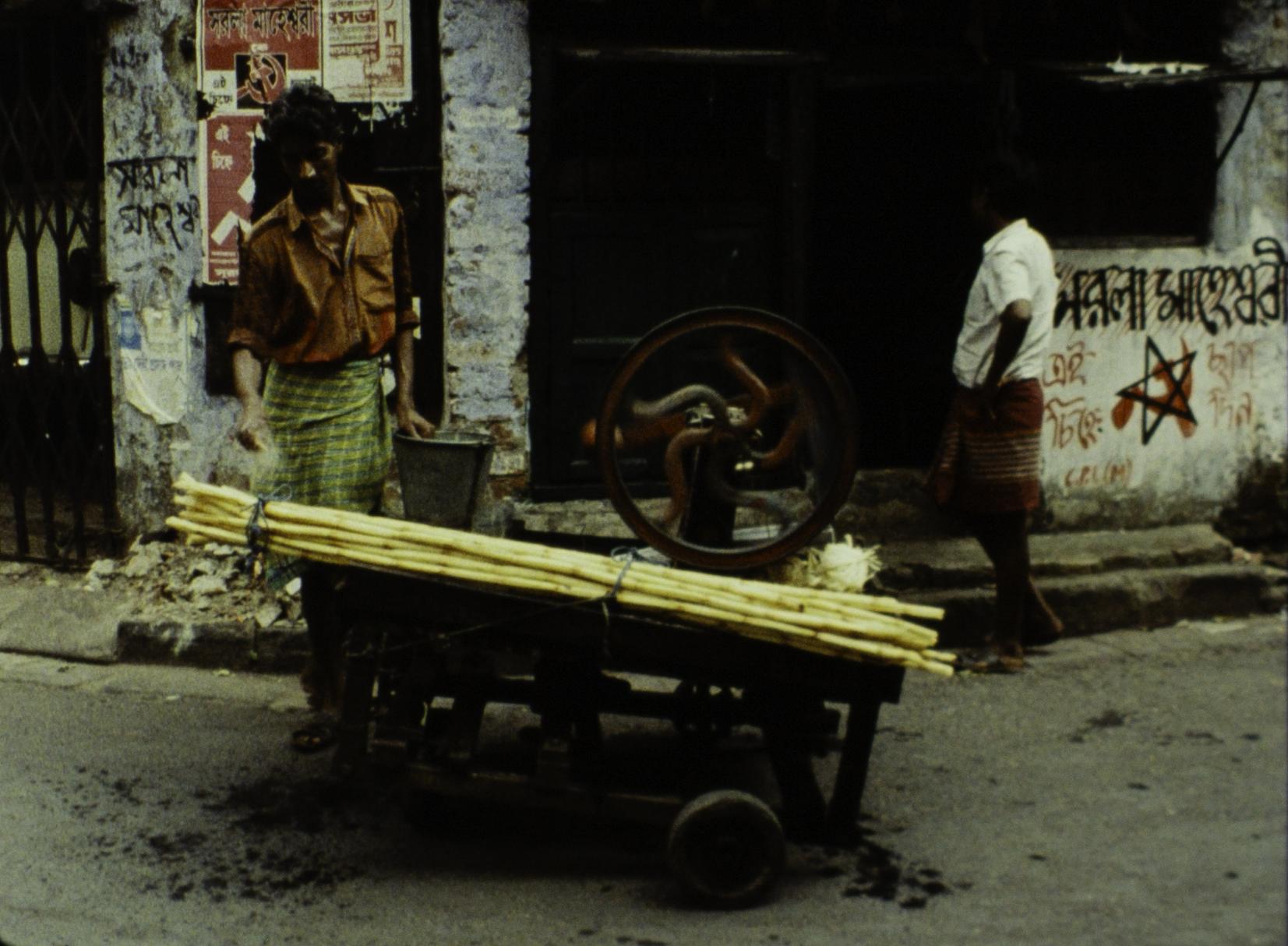
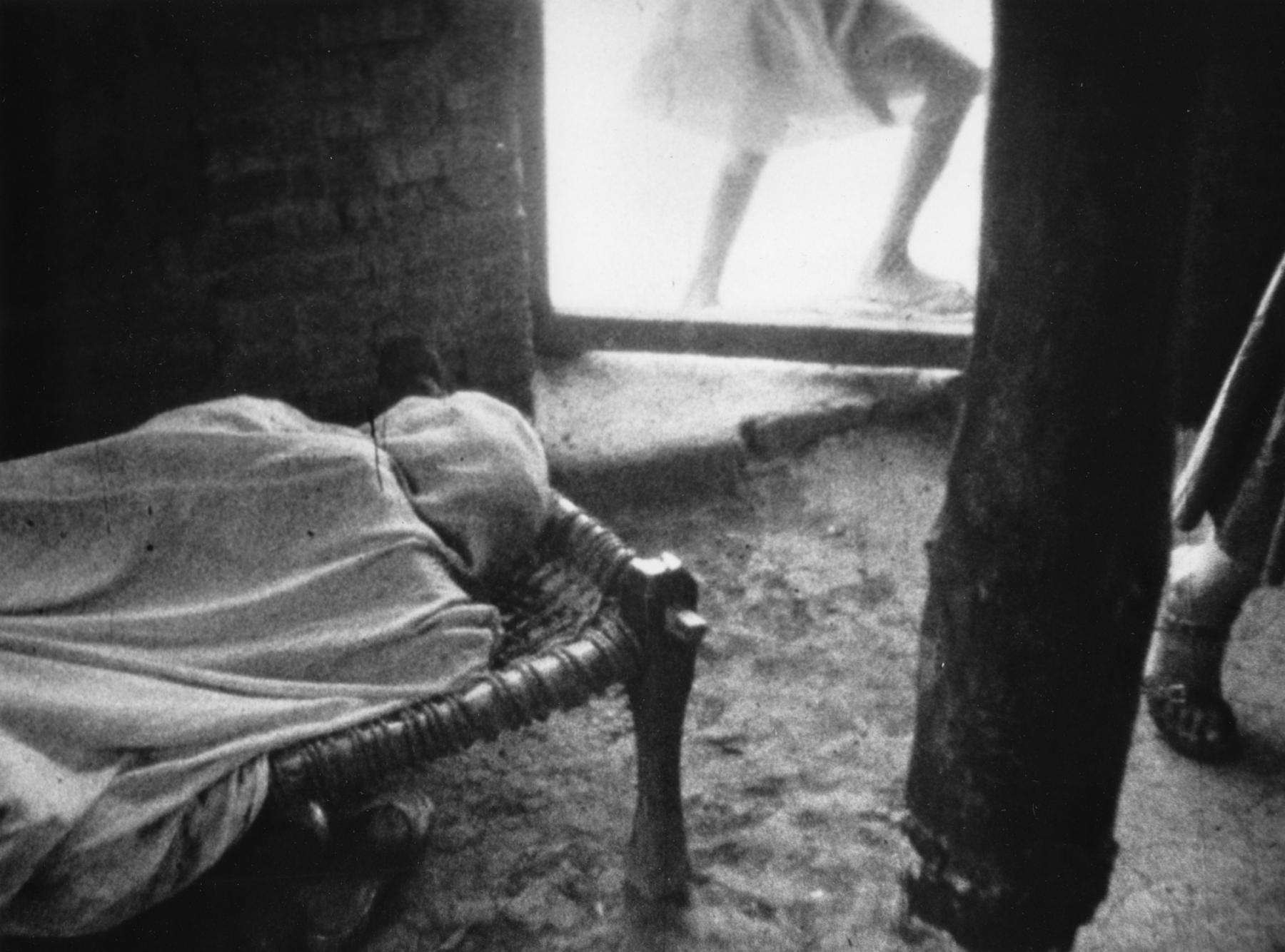
The Glass System is yet another abstruse title, an outcome of a half-forgotten joke involving a waiter in a restaurant about ice in a glass of water. In the film, prayers, devotional songs, loudspeakers, radio and the caw of crows can be heard. As in The Sleepers, here too is a sudden cut to New York’s Chinatown—LaPore’s prevarication is to indicate how impressions of the third world no longer reside in idyllic isolation, but are transported to corners of the first world by way of migrant economy and labour. LaPore’s gaze is always curious and wandering; it passes through mannequins in shop windows made of glass that reflect the adjacent traffic before transfixing on a pair of schoolgoing girls, where a game of looks ensues. LaPore’s interest in portraiture is lasting, as it was for Warhol. The mannequin shot returns in Kolkata, albeit with a slight adjustment in framing. Half of the footage in Kolkata is filmed from an empty cycle van, framing people’s midriffs, a paraphernalia of urban impressions without the awkwardness of people staring back at the camera unless they are meeting its eye from a sitting posture. His frames fragment the filmed bodies as if they are an index of abjection, while his intensely intimate gazes cast towards his partner’s body across films are charged with erotic absorption. For LaPore, stepping out into the world means simultaneously casting a glance inwards. The personal is always entangled in his negotiation with the world, which is why private elements are dispersed across his films. The Sleepers opens with a shot of LaPore’s first wife, Cindi Katz, who at the time was stationed in rural Sudan in relation to her work on children and the environment; in The Five Bad Elements, LaPore filmed his stepfather-in-law on his death bed, a person with a complicated past.
The obscurity of LaPore’s films from critical discourse two decades after his quietus is puzzling; they are obscure even by the modest standards of many protagonists of experimental film. Some of it can be explained away by the fact that, for LaPore, both operative categories—experimental and ethnography—are slightly recherché now. LaPore’s own resolve during his lifetime to disallow the films to partake in even the remotest commercial context might also have contributed to their marginalisation. But even then, given their radical reach, the burden of loss falls upon the experimental film community and the wider moving image culture.
To learn more about ethnographic film practices, read Arindam Sen’s essay on Deben Bhattacharya’s oeuvre and Ankan Kazi's reflections on Vipin Vijay’s Anthropocene Relooked (2018).
To learn more about experimental film practices, read Ritika Kaushik’s two-part essay on Pramod Pati’s film experiments and Ankan Kazi’s essays on Ayisha Abraham’s Straight 8 (2005) and on Nina Sugati SR’s approach.
All images are stills from works by Mark LaPore unless otherwise mentioned. Images courtesy of Laura McPhee.