

On Home in a Space Left Behind: Tracing Identities Through Migration
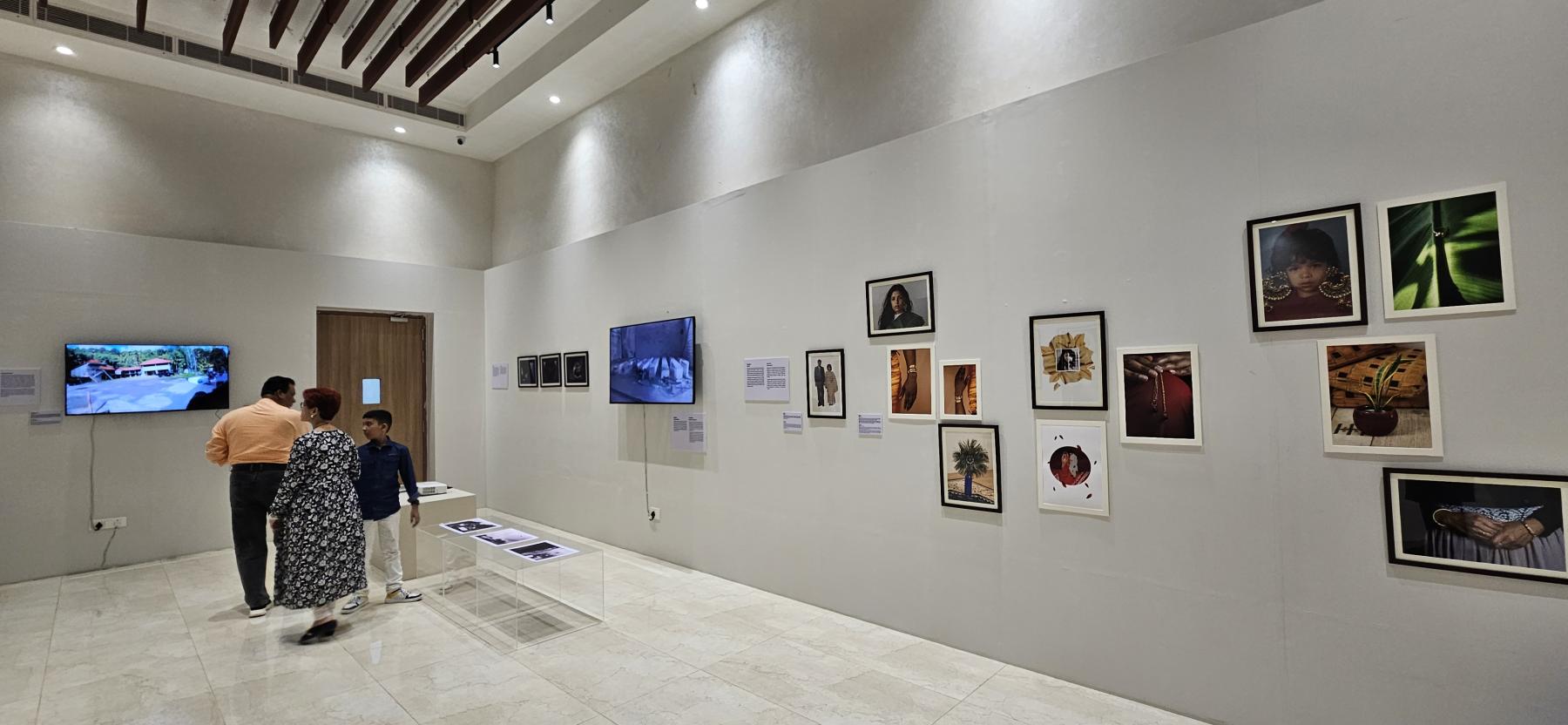
The exhibition Home in a Space Left Behind (2025), curated by Sarojini Lewis, brought together artists from Bihar, the Netherlands and the United States to trace the afterlives of indentured labour and their many migrations. Without tidying that history into a clear narrative, it moved through family histories and the past through images, stories, silences and imaginations. What one encountered here was not memory as something complete but as pieced together, often uncertain and deeply felt. Home in a Space Left Behind lingers in one’s memory less as an exhibition and more as a discontinuous feeling that one cannot quite place. It circled around a simple but difficult question—what does “home” mean when it is inherited in fragments?
The show first opened at the Bihar Museum on 7 November 2025 and later moved to the School of Arts and Aesthetics, JNU. The exhibition at JNU was accompanied by a discussion held on 15 November 2025 around Lewis’ recently released book titled Shift in Identity: Visuals of Migrant Women—Situating the Archive Through a Contemporary Lens (2025). The exhibit at the Bihar Museum was especially significant, as the bodies represented by Lewis in her work traced their roots or lineage from Bihar. This brought focus to the generational migration that the region has witnessed over a century, making even more significant contemporary work around displacement and bidesia (loosely translating to migrant or one who went to a foreign land), with the term believed to have been invented to describe indentured labour migration from the Bhojpuri-speaking region in India to British colonies during the nineteenth century.
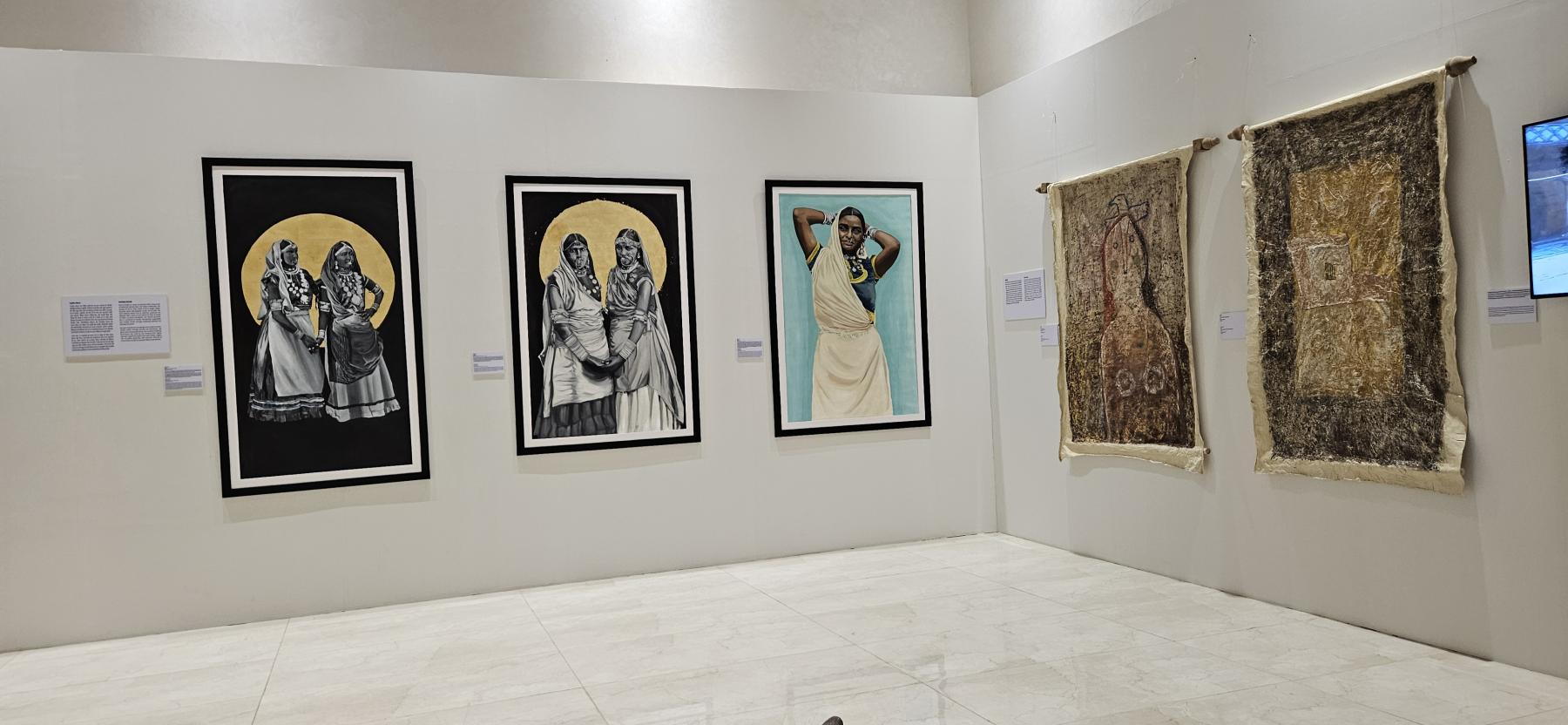
Andil Gosine’s Cane Portraiture (2013–) feels familiar at first as it echoes colonial-era photographs of indentured workers, but the familiarity is uneasy. The figures in these images are not passive; they seem aware, composed and even quietly assertive. There is a suggestion here that representation was never entirely one-sided, that even within unequal structures, there may have been moments of choice. This comes through strongly in the way the exhibition engages with archival images. The work does not try to correct the archive so much as sit with it, complicate and reopen it. A similar gesture appears in Nazrina Rodjan’s Kala Pani paintings (1873–2023)—by transforming small, circulated images of indentured women into large oil portraits, Rodjan shifts how we are asked to look. These women are no longer distant or anonymous; they hold space and demand attention. The use of oil painting—so tied to European traditions—feels deliberate, almost like a quiet reversal. But even here, there is no sense of closure. The past is not restored; it remains uneven and unresolved.
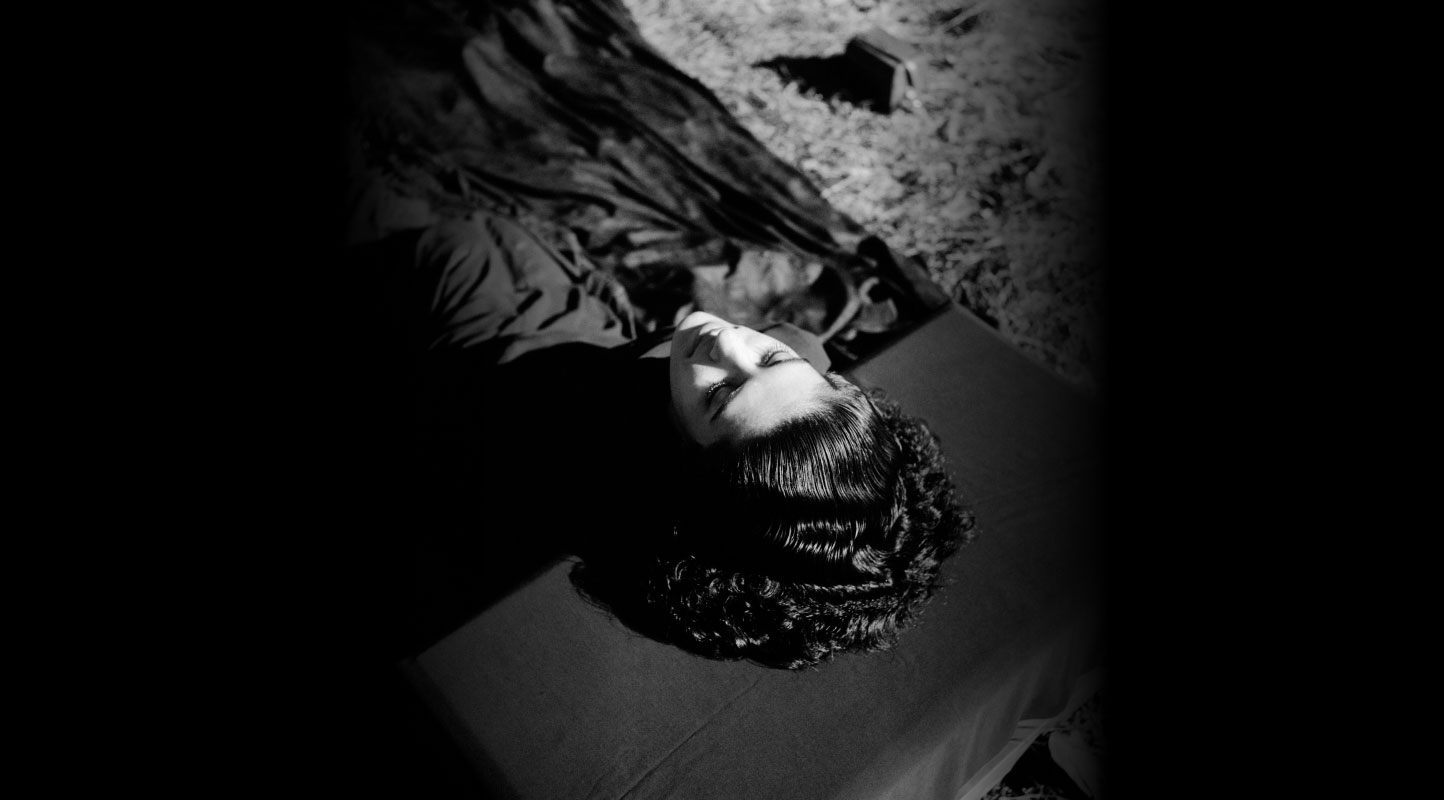
The exhibition then moves into questions around how identity is lived now, after many migrations across borders and water bodies. Kevita Junior’s When We Grow Up (2021) reflects on what it means to grow up across multiple cultural worlds—Indian, Surinamese and Dutch—without fully belonging to any one of them. The voices in the work do not claim certainty; instead, they reveal the small, everyday negotiations that shape identity. This sense of searching becomes more personal in Tamara Hartman’s project, which lingers on what it means to inherit a past that was never fully accessible. Through her relationship with her deaf mother, Hartman explores a form of absence that is not just about time or migration but about language itself. There are gaps here that cannot be filled, only approached with great sensitivity. The work does not try to smooth over these silences; rather it suggests that what is missing is as important as what remains.
The sea as a motif reappears across the exhibition. In works like Maya Mackrandilal’s Kal Pani (2014–15) and Lewis’ Reciting Footsteps (2022–23), it becomes more than a backdrop, transforming into a persistent presence. The sea marks a rupture—the crossing that severed people from land and community. It holds these histories of loss and displacement even as it obscures them. There is something fitting about this: the past here is not fully accessible, but it is not gone either. It moves, shifts and resurfaces. The conceptualisation of the sea as a living presence also reappears in Lewis’ book.
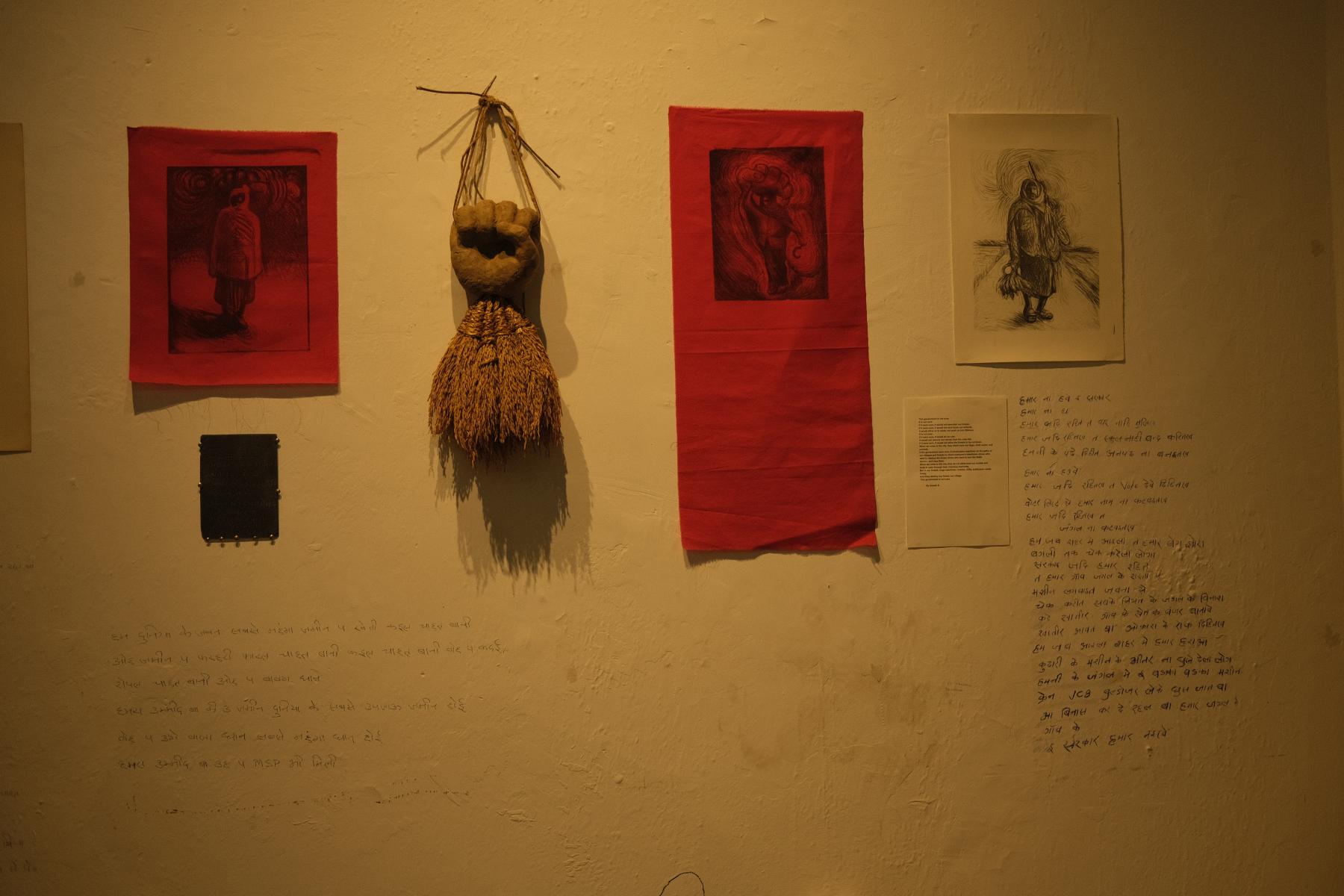
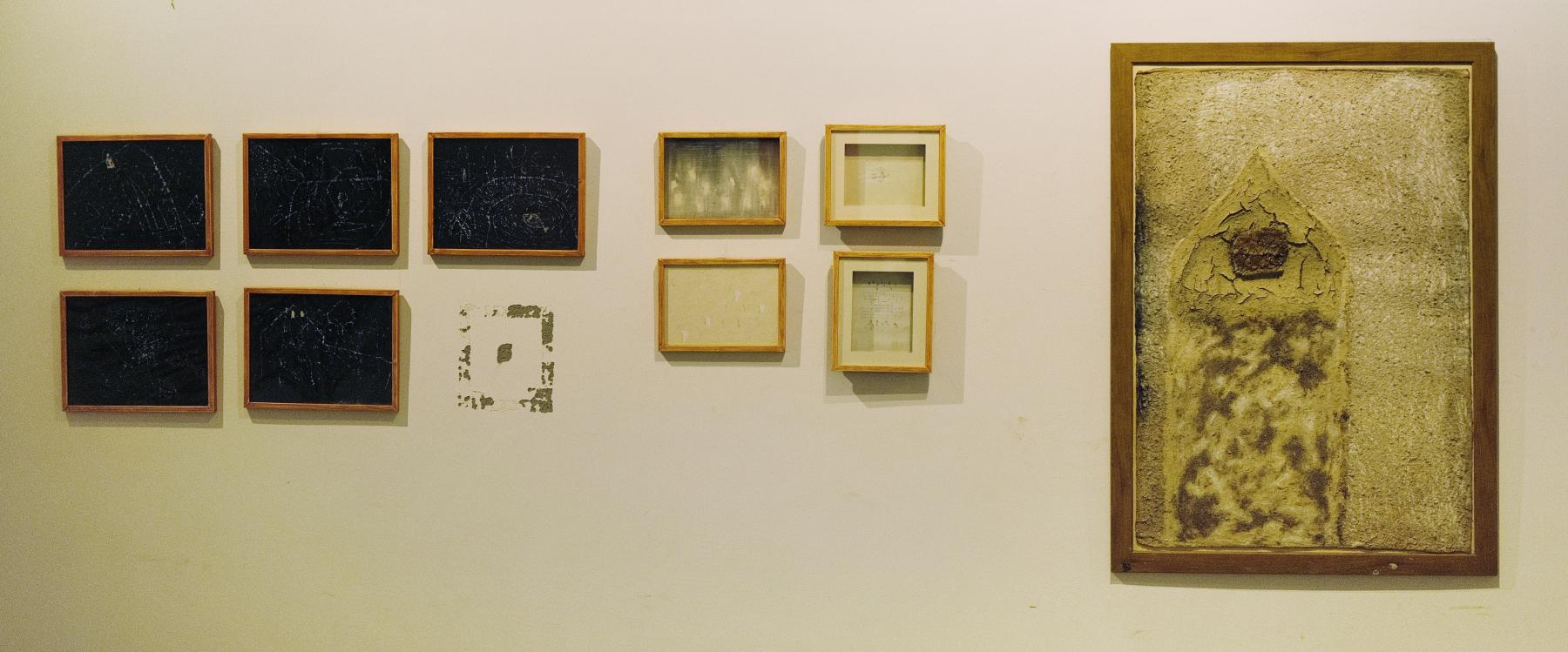
The exhibition’s thematic return to Bihar adds another layer, grounding these diasporic reflections in present-day realities. In Ranjeeta Kumari’s Poetry of Resistance (2018–21), everyday materials and domestic objects like mustard seeds carry the weight of caste, labour and struggle. There is nothing distant or abstract here; the work feels immediate and rooted in lived experience. Preeti Singh’s Old House offers a quieter but equally affecting reflection. Her focus on abandoned ancestral homes evokes a direct loss through which she presents the physical traces of migration. These spaces feel suspended, holding onto something that cannot quite be named. At times, the house begins to resemble the ship: both are spaces of movement—of leaving, of not quite returning. Umesh S’ practice focuses primarily on agricultural communities undergoing displacement due to loss of livelihood. His lived experience of being raised in a farming family comes alive through his choice of mediums and the conceptualisation of the artworks.
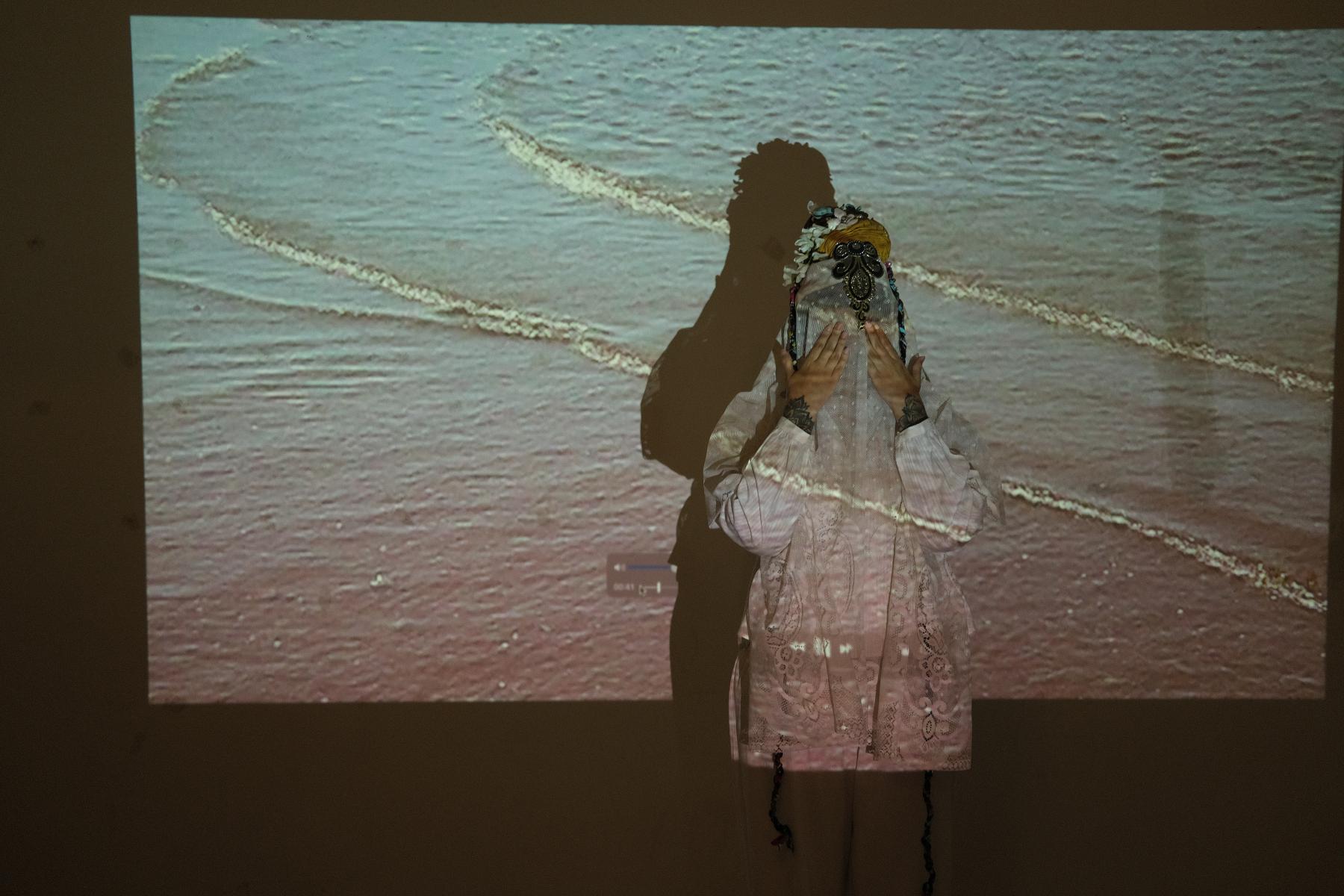
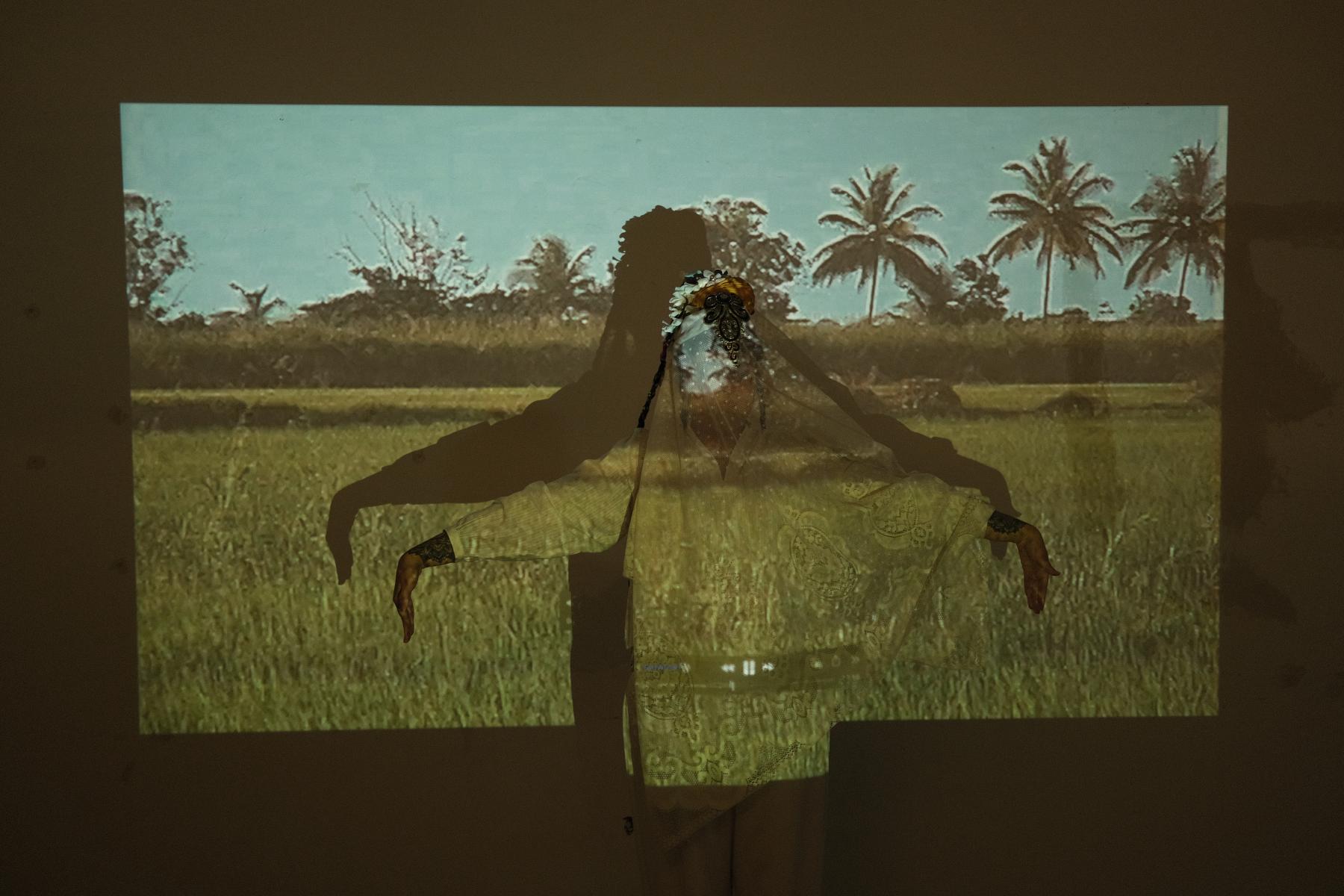
As part of the exhibition at JNU, Manmeet Devgun and Mackrandilal also presented solo performances. Both were based conceptually around displacement but were distinct in their use of material and content. Devgun focused her work on the mass displacement of workers during the Covid lockdown to bring attention to farming communities who were forced to migrate back and forth, driven by necessity and the loss of livelihood. In her performance, Devgun struggled to create a shelter using cardboard boxes, only to desecrate it finally. The performance deployed the form of a loop to emphasise how struggle and tension increase but never end. On the other hand, Mackrandilal used multiple mediums and materials to highlight the remnants of culture that continue to be significant as the communities travel from one land to another. She performed in front of a film projection showing forests, seas and other landscapes to show the transient nature of these bodies.
What made Home in a Space Left Behind compelling was that it did not try to resolve anything but rather showed the precarity and heterogeneity of migration from a singular space. It allowed things to remain partial and unsettled. The exhibition moved across many themes—archive, identity, caste and migration—that, at times, made it feel expansive and ambitious. But that expansiveness also felt true to what it was trying to hold. Home, here, is not one place or one memory. It is something carried in pieces—through images, stories and that which is left unsaid. The exhibition did not ask us to find these but rather to recognise how memories of home linger.
To learn more about complex histories of migration, read Dev Saraswat’s notes from the Umrao Singh Sher-Gil Grant for Photography special lecture delivered by Palestinian photographer Ahlam Shibli, Ayushi Koul’s observations on Mritunjay Kumar’s House of Blue (2025), Najrin Islam's conversation with Reluka Maharaj on her series Pelting Mangoes (2020–21), Radhika Saraf’s essay on Sonum Somaria’s Under the Open Sky (2024) and her two-part essay on Arpan Mukherjee's solo exhibition Impermanence (2025).